Backdated Medical Certificate Australia: Myths, Legality, and 2026 Rules
Unsure about a backdated medical certificate in Australia? Learn the 2026 rules, legal facts, and how to get a valid doctor's note for a past illness.

What if your request for a backdated medical certificate isn't actually illegal, but simply a matter of clinical terminology? You're likely feeling the pressure of a 24-hour HR deadline or a university census date while recovering from a sudden illness. It's stressful to worry that a missed day might lead to a formal warning or a failed grade. You want to be transparent with your doctor, yet the fear of being perceived as dishonest often prevents patients from seeking the documentation they require for legitimate recovery time.
This guide from Aussie Scripts clarifies exactly how Australian practitioners handle requests for a backdated medical certificate under the latest 2026 clinical guidelines. You'll learn how to secure a valid document that reflects your recovery period without compromising professional ethics or Australian Medical Association standards. We'll examine the critical distinction between backdating and certifying past events, the legal requirements for workplace compliance, and how to access a professional telehealth review today to resolve your absence efficiently.
Key Takeaways
- Understand the legal framework set by AHPRA and the AMA regarding retrospective documentation and clinical evidence.
- Learn the truth about obtaining a backdated medical certificate and why doctors cannot legally alter the date of a consultation.
- Discover how to prepare a clear symptom timeline to help your practitioner assess a recent period of illness effectively.
- Identify the most efficient way to book a telehealth consultation to secure a valid medical document as you recover.
- Access Australian-registered doctors 7 days a week through Aussie Scripts for a professional review and fast digital delivery.
What is a Backdated Medical Certificate in Australia?
A backdated medical certificate is a document that covers a period of illness or injury starting before the date of the actual medical consultation. In the Australian healthcare system, patients often face a dilemma when they fall ill suddenly. They may be too unwell to travel to a clinic or might prioritize immediate rest over administrative tasks. By the time they speak with a practitioner, they are often already in the recovery phase. This creates a gap between the first day of absence and the day they receive professional advice.
Understanding What is a Medical Certificate is essential for navigating workplace requirements. While the term "backdated" is common, it's often misunderstood by both employees and employers in 2026. A standard form contains two distinct dates: the 'Date of Examination' and the 'Period of Unfitness.' The former is fixed to the moment of the consultation, while the latter reflects the doctor’s clinical assessment of when the illness likely began based on the patient's history and symptoms.
To better understand this concept, watch this helpful video:
The Difference Between Issuance Date and Certified Period
The date the doctor signs the note must always be the current date. Falsifying an issuance date is a serious professional breach for Australian doctors and can lead to disciplinary action by the Medical Board of Australia. Practitioners record the start and end dates of the actual illness period separately. This ensures the document remains a truthful record of when the medical assessment took place while still providing the employee with the necessary evidence for their employer or academic institution.
Common Scenarios Requiring Retrospective Certification
There are several legitimate reasons why a patient might need a backdated medical certificate. These scenarios include:
- Sudden onset of severe illness, such as food poisoning or a migraine, which prevents immediate travel or digital engagement.
- Recovering over a weekend or public holiday when standard GP clinics were closed.
- Prioritizing rest and hydration during the first 24 hours of a viral infection before booking a telehealth consultation.
In these instances, the practitioner uses their clinical judgment to determine if the reported symptoms align with the requested period of leave. This process maintains the integrity of the Australian healthcare framework while providing a seamless solution for the patient.
The Legal and Ethical Framework for Australian Doctors
Medical documentation in Australia is governed by strict standards set by the Medical Board of Australia and the Australian Health Practitioner Regulation Agency (AHPRA). Practitioners must ensure every backdated medical certificate or retrospective document is accurate and reflects a genuine clinical assessment. Doctors use their professional judgement to determine if a patient's reported symptoms align with the requested period of leave. They don't simply take a patient's word at face value. They look for clinical consistency during the consultation.
Doctors risk their professional registration if they provide false or misleading information. AHPRA maintains a public register of practitioners, and any breach of the "Good Medical Practice" code can lead to significant disciplinary action. This regulatory pressure ensures that even when a doctor assists with a retrospective claim, the process remains rigorous and evidence-based. The practitioner's role is to act as an objective third party who validates the patient's inability to work based on medical facts.
AMA Guidelines on Retrospective Certificates
The Australian Medical Association (AMA) states that a doctor can certify a past period of illness if they're honestly satisfied that the patient was unwell at that time. This requires the certificate to be clearly marked as retrospective. It must show both the date the certificate was issued and the specific dates the illness occurred. If a patient's clinical story doesn't match known medical patterns, a doctor has an ethical obligation to refuse the request. This protects the integrity of the healthcare system and ensures that a backdated medical certificate remains a trusted document for employers.
Fair Work Act and Evidence of Illness
The The Legal and Ethical Framework for employee leave is defined by the Fair Work Act 2009. This legislation requires employees to provide "evidence that would satisfy a reasonable person" to justify their absence from work. Under these national criteria, a telehealth certificate is a valid form of evidence. It carries the same legal weight as a certificate issued in a physical clinic, provided it's issued by a registered Australian practitioner.
- Employers have the right to confirm a certificate is authentic by contacting the clinic.
- Employers cannot demand private clinical details or a specific diagnosis.
- Practitioners cannot be forced to override their professional opinion by an employer's internal policy.
Telehealth services provide a compliant and efficient way to secure medical evidence when you're unable to leave the house. If you're currently unwell and need professional validation, you can request a medical certificate through a streamlined digital consultation. This process ensures you meet your workplace obligations without the stress of long wait times in a physical surgery.
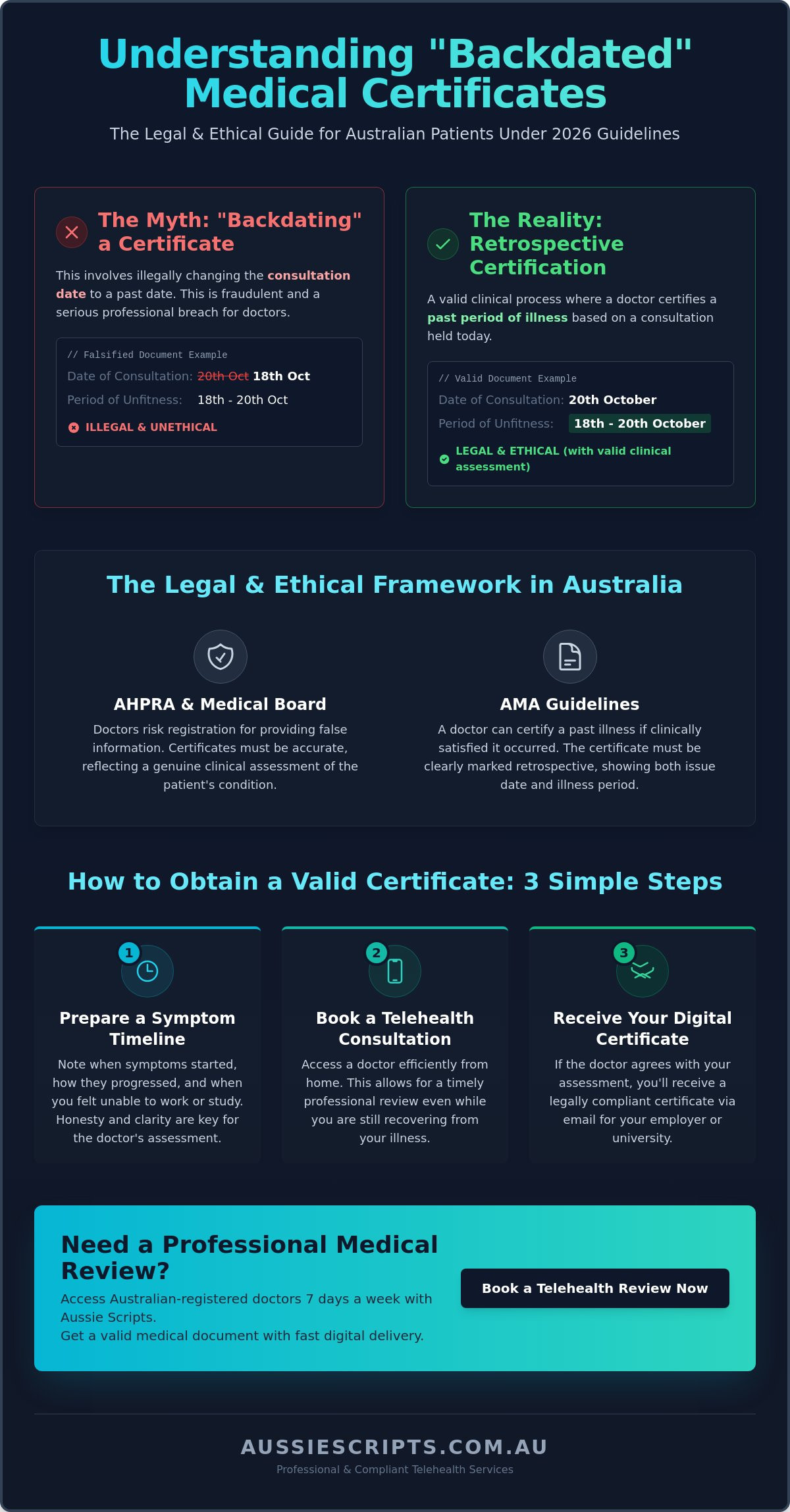
Backdating Myths vs. Reality: What is Actually Possible?
Many Australians misunderstand the legal boundaries of a backdated medical certificate. Medical practitioners follow strict guidelines set by the Medical Board of Australia. They can't simply change the calendar date on which they signed a document. Accuracy in medical record-keeping is a legal requirement that protects both the patient and the doctor.
One frequent myth suggests a doctor can sign a document today but date the signature for three days ago. This is false. A practitioner must always record the actual date of the consultation. They can, however, state that a patient was unfit for work starting from a previous date if their clinical findings support that conclusion.
Another common error involves the timeframe for evidence. Some believe they can secure a certificate for a week-long absence without any medical proof. This isn't how the system works. Doctors require a clinical basis to support a retrospective claim. If there's no evidence of illness during that specific period, a practitioner won't certify it.
Legally, employers don't have the right to reject a certificate just because it covers a past date. Under the Fair Work Act 2009, an employer must accept a valid medical certificate as evidence for personal leave. Rejection is typically only permitted if they have a reasonable, evidence-based reason to doubt the document's authenticity.
Retrospective notes rely entirely on clinical justification. The doctor must be satisfied that the patient's condition was consistent with the symptoms described for the period in question. Without this professional certainty, a backdated medical certificate cannot be issued.
The Truth About "Buying" Backdated Notes Online
Websites offering "instant" or "automated" certificates without a doctor review carry significant legal risks. These documents often lack the clinical oversight required by Australian regulations. Aussie Scripts ensures every certificate undergoes a review by a registered practitioner. This real-time assessment, conducted via telehealth, maintains the integrity of the medical record while providing the speed patients require. It's a process that balances digital convenience with strict medical compliance.
When a Doctor Must Refuse to Certify a Past Period
Practitioners have a professional obligation to refuse certification in specific scenarios to protect the validity of the healthcare system. Common reasons for refusal include:
- Inconsistent History: A lack of clinical symptoms described by the patient that match the requested leave period.
- Excessive Duration: Requests for long periods of backdating, such as more than 48 hours, without prior medical contact or supporting records.
- Suspected Fraud: Any suspicion of "doctor shopping" to bypass standard compliance protocols or obtain multiple notes for the same period.
If a doctor cannot verify the illness through a consultation, they won't issue a backdated medical certificate. This ensures all documents issued through Aussie Scripts remain legally robust and clinically sound.
How to Obtain a Valid Certificate for a Recent Illness
Obtaining a medical certificate for an illness that began 24 to 48 hours prior requires a structured approach to ensure the document meets Australian regulatory standards. You must book a telehealth consultation as soon as you're physically capable of speaking with a practitioner. While a doctor cannot legally provide a backdated medical certificate that misrepresents the date of the actual examination, they can provide a certificate covering a recent period of illness if they can clinically verify your condition during the call.
You should be prepared to provide a clear, chronological timeline of your symptoms. This includes noting the exact time your symptoms peaked and how they prevented you from performing your professional or academic duties. Honesty is essential. If you were unable to seek medical attention on day one because you were physically incapacitated or confined to bed, state this clearly. Australian practitioners prioritize clinical accuracy and need to understand why the consultation is occurring after the illness onset.
Ensure your chosen telehealth provider utilizes AHPRA-registered Australian doctors. This registration confirms the practitioner adheres to the Medical Board of Australia's code of conduct. A valid certificate must also include a secure verification method. This allows an employer or university coordinator to confirm the document's authenticity without accessing your private clinical notes.
Preparing for Your Telehealth Consultation
Efficiency during your consultation helps the doctor make an accurate assessment. Track specific metrics such as your body temperature, the duration of symptoms, and any medication you've already taken. You must describe your functional impairment in detail. Instead of stating you feel "sick," explain that you're unable to sit at a desk for more than 15 minutes or that you cannot safely operate machinery due to fatigue. Gathering evidence is also helpful. Have your positive RAT results, photos of visible symptoms, or pharmacy receipts ready to discuss during the video or phone call.
What to Do if Your Employer Challenges the Certificate
If an HR department questions your documentation, it's vital to understand your privacy rights under the Fair Work Act 2009. You're generally not required to disclose a specific diagnosis to your employer. The certificate's purpose is to confirm you're unfit for work, not to detail your medical history. If an employer requests more information, you can direct them to the secure verification portal provided on your Aussie Scripts document. This portal allows third parties to verify that a registered doctor issued the certificate, satisfying their evidence requirements while protecting your personal health data.
If you've been unwell and need to speak with a practitioner, you can request a medical certificate online through our secure platform.
Request a Professional Medical Review with Aussie Scripts
Aussie Scripts bridges the gap between traditional medical authority and the modern need for digital efficiency. We connect you with Australian-registered doctors 7 days a week, ensuring that medical advice is accessible when you need it most. Our platform operates strictly within the Australian healthcare regulatory framework, prioritizing clinical standards over mere convenience. While some patients mistakenly seek a backdated medical certificate, our service focuses on providing legitimate, contemporaneous documentation that adheres to the 2026 guidelines set by national health authorities.
Digital delivery is the core of our efficiency. Once a practitioner approves your request, your valid certificate arrives via email. This eliminates the need for physical waiting rooms and reduces the logistical friction of managing your health while balancing work commitments. By focusing on a streamlined, clinical approach, we help reduce the stress associated with missing work due to illness. You receive professional documentation that is both legally robust and easy to submit to your employer or educational institution.
The Aussie Scripts Process: Clinical, Fast, and Reliable
Our system is designed for speed without compromising on medical rigor. The process follows three distinct steps to ensure every request meets professional standards:
- Step 1: Request your certificate online through our secure, encrypted portal by providing your health details.
- Step 2: An Australian-registered doctor reviews your clinical assessment to determine eligibility based on your symptoms.
- Step 3: Receive your legally valid digital certificate instantly via email once the doctor grants approval.
Why National Compliance Matters
Documentation must stand up to scrutiny from major Australian employers and government agencies. Using a locally-owned telehealth facilitator ensures that your paperwork aligns with the Fair Work Act and relevant medical board codes of conduct. Every certificate issued through our partner doctors includes the necessary practitioner details and registration numbers required for verification. This level of transparency provides peace of mind for both the patient and the employer.
It's vital to remember that a backdated medical certificate is rarely compliant with Australian medical standards. Doctors usually only certify the period from the date of the consultation. By using Aussie Scripts as soon as symptoms appear, you ensure your documentation is timely and legally sound. Our commitment to compliance means you don't have to worry about the validity of your sick leave evidence.
Navigate Your Medical Documentation Requirements Today
Navigating the legalities of a backdated medical certificate requires a clear understanding of Australian healthcare standards. AHPRA guidelines and the 2026 regulatory updates confirm that while doctors cannot alter consultation dates, they can certify a period of illness that began before your assessment. This clinical distinction ensures your documentation remains legally robust for employers or educational institutions. You don't have to risk your recovery by sitting in a physical waiting room for hours.
Aussie Scripts simplifies this process by connecting you with AHPRA-registered Australian doctors who understand these specific compliance frameworks. Our service provides comprehensive national coverage across all Australian states, ensuring you receive professional care regardless of your location. Once your request is approved, expect secure digital delivery of your documentation within minutes. It's a pragmatic solution designed for the modern patient who values both speed and medical integrity. Take the friction out of your healthcare logistics so you can focus on getting better.
Request a professional Medical Certificate online now
Frequently Asked Questions
Can an Australian doctor legally backdate a medical certificate?
A doctor cannot change the date they actually signed the document, but they can issue a retrospective certificate. According to the Medical Board of Australia's Guidelines for Medical Certificates (2020), the document must clearly show the date of the consultation. It can also state the period the doctor believes you were unfit for work based on their clinical assessment of your symptoms.
How many days can a medical certificate be backdated?
There's no strict legal limit, but most practitioners prefer to see a patient within 24 to 48 hours of the illness starting. If you wait longer than 3 days, it's harder for a doctor to find clinical evidence of your condition. The Australian Medical Association (AMA) notes that certificates should be issued as close to the period of illness as possible to ensure accuracy.
What should I do if I was too sick to call a doctor on the first day?
You should book a telehealth appointment at the earliest opportunity. Under the Fair Work Act 2009, you're required to provide evidence that would satisfy a reasonable person. Explain your symptoms and the reason for the delay during your consultation. A practitioner can then provide a certificate that covers your absence if they're satisfied you were genuinely unwell during that time.
Is a telehealth medical certificate for a past date valid for work?
Yes, a digital certificate issued via telehealth is legally valid across Australia. Employers are required to accept these documents if they meet the Medical Board's professional standards. If the practitioner confirms you were unfit for work on a previous day, your backdated medical certificate serves as legitimate evidence for your leave claim. It's an efficient and accepted practice in modern healthcare.
Can my employer call my doctor to check the dates on my certificate?
Your employer has the right to contact the medical clinic to verify that the certificate is genuine. They can't ask about your specific diagnosis or medical history because of the Privacy Act 1988. The clinic will only confirm that the certificate was issued by them and that the dates on your copy match their internal medical records.
Do I need a Medicare card to get a retrospective certificate online?
You don't need a Medicare card to request a backdated medical certificate through most private telehealth platforms. While some local clinics require Medicare for bulk-billing, private services often charge a flat fee for the consultation. This makes the service accessible for international workers or students who don't have access to the national health system but need urgent medical evidence.
What happens if a doctor refuses to certify my past illness?
If a doctor can't find clinical evidence of your illness, they may refuse to issue a retrospective certificate. This often happens if the consultation occurs more than 72 hours after you've recovered. In these cases, you can provide your employer with a Statutory Declaration. This is a legal document signed under the Statutory Declarations Act 1959 that serves as alternative evidence for your absence.
Can I get a backdated certificate for carer's leave?
Yes, practitioners can issue retrospective certificates for carer's leave if you were supporting a sick family member. You'll need to provide details about the person's illness and why your presence was necessary for their care. The certificate will state that you were required to provide care during the specific period, adhering to the same professional standards as a personal sick leave note.
Disclaimer
The information provided by AussieScripts is for general informational purposes only and does not constitute medical advice, diagnosis, or treatment. For advice tailored to your specific symptoms or health concerns, please consult one of our doctors or your regular GP.