Blood Tests for Weight Loss Australia: 2026 Clinical Guide
Struggling with weight loss? Our 2026 guide to blood tests for weight loss Australia reveals the key biomarkers stalling your progress. Get a data-driven plan.

What if your inability to lose weight isn't a lack of willpower, but a specific metabolic deficiency hidden in your pathology results? If you're searching for blood tests for weight loss australia, you've likely felt the frustration of following a strict diet only to see the scale remain stationary. It's exhausting to deal with unexplained fatigue while receiving generic medical advice that doesn't address your unique biology. You deserve a diagnostic approach that prioritizes clinical data over guesswork.
This guide provides a professional framework to identify the exact biomarkers, from insulin resistance to thyroid dysfunction, that are stalling your progress. You'll discover the essential pathology tests required to optimize your metabolic health and learn how to secure a digital specialist referral via telehealth. We will also detail the current 2026 Medicare safety net thresholds, including the A$594.00 original safety net limit, and TGA requirements for therapeutic claims. This ensures your weight loss journey is supported by professional oversight and evidence-based standards, allowing you to move from frustration to a targeted, medical solution that respects your time and intelligence.
Key Takeaways
- Identify metabolic roadblocks such as insulin resistance and thyroid dysfunction that can make sustainable weight loss physiologically difficult.
- Navigate the essential blood tests for weight loss australia to transition from generic health advice to a data-driven clinical plan.
- Access digital pathology referrals through telehealth consultations with Australian-registered doctors, bypassing the delays of traditional physical clinics.
- Learn how comprehensive biomarkers like leptin and fasting insulin provide a deeper diagnostic snapshot than standard GP check-ups.
- Understand the clinical framework for interpreting results to determine eligibility for regulated weight loss management programs.
Why Blood Tests Are Essential for Sustainable Weight Loss
Sustainable weight loss is rarely a matter of simple calorie counting; it's a complex physiological process governed by your internal chemistry. Obtaining blood tests for weight loss australia provides a clinical snapshot of your metabolic environment, revealing why your body might be resisting fat loss despite your best efforts. Diagnostic testing shifts the focus from subjective guesswork to objective data. This allows Australian-registered doctors to identify specific hormonal imbalances or nutrient deficiencies that override even the most disciplined caloric deficits.
To better understand the role of diagnostics in weight management, watch this helpful overview:
Clinical intervention begins with a baseline assessment. By reviewing common medical and blood tests, patients can understand how specific markers like HbA1c or TSH influence their progress. Testing identifies conditions that make weight loss physiologically impossible without clinical intervention, such as untreated hypothyroidism or severe insulin resistance. Moving from a trial-and-error approach to a data-driven model is the most efficient way to ensure your efforts yield measurable results.
Identifying Metabolic Roadblocks
Subclinical issues often act as silent barriers to fat oxidation. For instance, insulin resistance means your body remains in a "fat storage" mode regardless of your activity levels. High levels of chronic inflammation, measured through markers like C-Reactive Protein (CRP), can further contribute to persistent weight retention. It's common for patients to receive a "normal" result on a basic screening, yet these figures may not be "optimal" for active weight loss. A clinical interpretation looks for these nuances to ensure your biology is primed for success, rather than just being free of acute disease.
Moving Beyond the Scale
Blood markers offer a way to track internal health improvements long before the numbers on the scale change. This is vital for maintaining motivation during the early stages of a Weight Loss Consultation or management program. Establishing baseline data is a prerequisite for safety and efficacy in medical weight loss, ensuring that any prescribed treatments are appropriate for your specific profile. Metabolic health is the balance of glucose, lipids, and hormones. When you utilize blood tests for weight loss australia, you gain a clear roadmap for long-term sustainability. This data-driven approach ensures that you're losing fat while preserving lean muscle and protecting your metabolic rate.
Key Biomarkers: What Your Blood Reveals About Your Weight
Identifying the specific biological levers that control your weight requires a precise set of blood tests for weight loss australia. While a standard check-up might look for general illness, a weight-focused diagnostic panel examines biomarkers that dictate your metabolic speed and fat storage tendencies. Understanding your pathology results is the first step toward a targeted clinical intervention rather than relying on generic advice. These tests provide the data necessary to move from a state of frustration to a structured medical plan.
Thyroid Function and Metabolism
A basic TSH screening is often insufficient for patients struggling with weight. A comprehensive thyroid panel includes TSH, Free T4, and Free T3 to assess how effectively your body converts and utilizes thyroid hormones. Hypothyroidism significantly slows the basal metabolic rate (BMR), making it difficult to burn calories even at rest. If you experience persistent cold intolerance, thinning hair, or unexplained weight gain, your thyroid requires a closer clinical inspection to rule out subclinical dysfunction that standard tests might overlook.
Insulin Resistance and Blood Sugar
Measuring fasting insulin is frequently more diagnostic than a standard glucose test for those with weight concerns. High insulin levels signal the body to store fat and inhibit fat breakdown. Doctors use the HOMA-IR (Homeostatic Model Assessment for Insulin Resistance) calculation to determine if your cells are responding correctly to this hormone. Additionally, the HbA1c test provides a three-month average of your blood sugar control. This offers a more stable view of your metabolic health than a single daily reading, helping to identify pre-diabetes or established resistance.
Vitamins and Minerals Affecting Energy
Nutrient deficiencies can create physiological barriers to exercise and healthy metabolism. These factors often explain why some individuals feel exhausted despite adequate sleep.
- Vitamin D: Low levels are clinically linked to increased abdominal fat and reduced metabolic efficiency.
- Iron (Ferritin): Anaemia prevents effective physical activity by reducing oxygen transport to muscles, leading to premature fatigue.
- Vitamin B12: This is essential for energy metabolism and cellular function; a deficiency can leave you too exhausted to maintain a weight loss program.
A complete assessment also includes a lipid profile to monitor cholesterol and triglycerides, alongside hormonal evaluations for Cortisol, Testosterone, and Oestrogen. These markers help Australian-registered doctors determine your eligibility for specific treatments. If you are ready to identify your metabolic roadblocks, booking a Weight Loss Consultation is the most efficient way to secure the necessary pathology referrals.
Standard vs. Comprehensive Weight Loss Blood Panels
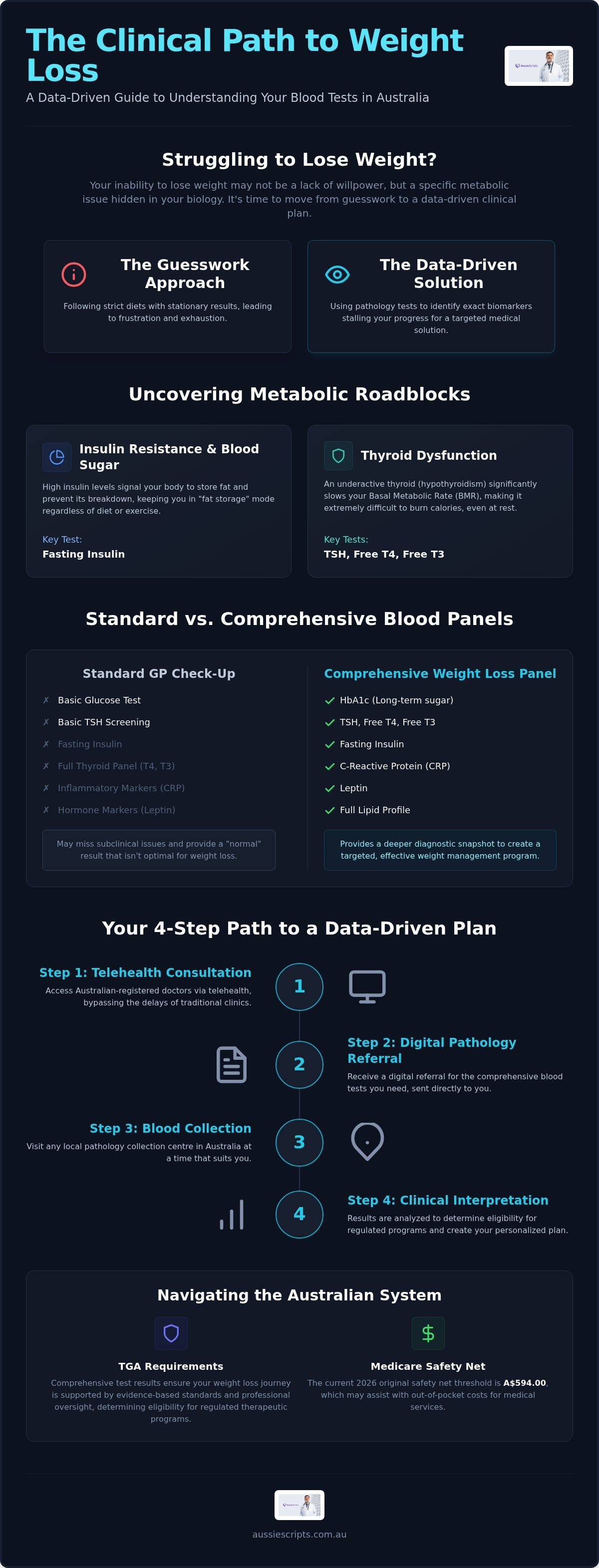
A standard annual physical often prioritizes the detection of acute disease rather than the optimization of metabolic function. When requesting blood tests for weight loss australia, it is vital to understand that a "normal" result on a basic screening does not necessarily mean your hormones are aligned for fat loss. Comprehensive panels go beyond the basics to include "deep dive" markers such as leptin, which regulates satiety, and fasting insulin, which governs fat storage. These specialized markers provide a clearer picture of why weight retention occurs despite dietary changes.
The Limitations of Basic Testing
Routine check-ups typically rely on a Full Blood Count (FBC) and basic electrolyte checks. While these are essential for general health, they rarely provide the granularity required for weight diagnostics. Markers like fasting insulin or reverse T3 are frequently omitted because they aren't part of a standard diagnostic checklist for asymptomatic patients. Understanding pathology tests and their specific clinical triggers is the first step in advocating for a more detailed analysis during your consultation. If your results consistently fall within the low-normal range, you may still be experiencing physiological resistance that a standard screening won't highlight.
Advanced Panels for Targeted Results
Choosing the right panel depends heavily on your clinical presentation and specific symptoms. For instance, those with suspected Polycystic Ovary Syndrome (PCOS) require a different set of markers, such as Free Androgen Index (FAI) and Sex Hormone Binding Globulin (SHBG), compared to those with suspected thyroid resistance. Liver Function Tests (LFT) also play a critical role in assessing metabolic health; a fatty liver can significantly impede your body's ability to process lipids efficiently. Identifying these specific roadblocks allows for a more tailored clinical intervention.
If advanced panels reveal complex underlying issues, your doctor may provide a specialist referral to an endocrinologist or metabolic specialist for further management. Data drives results. High-quality blood tests for weight loss australia should be viewed as a baseline that requires serial monitoring. Re-testing every 3 to 6 months allows for the objective tracking of progress, ensuring that your clinical weight loss program remains effective and safe as your body composition changes. This iterative process ensures that your treatment plan evolves alongside your biological needs.
How to Access Pathology and Blood Tests in Australia
Accessing blood tests for weight loss australia follows a standardized clinical pathway designed to ensure patient safety and data accuracy. You cannot simply request diagnostic testing from a laboratory without professional oversight. Instead, the process is structured into four distinct steps that prioritize clinical relevance and efficient results management. This workflow ensures that every biomarker tested is necessary for your specific health profile.
- Step 1: Clinical Consultation. You must first book a consultation to discuss your weight loss history, symptoms, and previous attempts at management.
- Step 2: Digital Pathology Referral. Following the assessment, an Australian-registered doctor will issue a digital pathology referral.
- Step 3: Sample Collection. You visit a local pathology collection centre, such as Sonic Healthcare, Healius, or Australian Clinical Labs, to have your blood drawn.
- Step 4: Clinical Review. Once results are processed, you review them with your doctor to interpret the findings and create a structured management plan.
The Role of Pathology Referrals
A formal referral is a legal requirement to access diagnostic laboratories in Australia. This document specifies which biomarkers are needed and provides the lab with the clinical context required for accurate reporting. Digital referrals have become the standard for modern healthcare, offering a paperless solution that is valid at all major Australian pathology providers. Utilizing an online prescription Australia platform allows you to secure these referrals efficiently, bypassing the long wait times often associated with physical clinics. Once issued, your referral is sent directly to your device, allowing you to visit a collection centre at your convenience.
Understanding Medicare and Private Costs
Medicare coverage for pathology depends on whether the tests meet specific clinical criteria outlined in the Medicare Benefits Schedule (MBS). Many standard tests are bulk-billed if the doctor identifies a diagnostic need, such as investigating symptoms of fatigue or metabolic distress. However, tests ordered purely for "optimization" or routine screening in asymptomatic adults may incur a private fee. As of 2026, the Original Medicare Safety Net (OMSN) threshold is A$594.00, which can help offset costs for those requiring frequent monitoring. Private costs for single biomarkers typically range from A$35 to A$80, while comprehensive panels can reach A$500. Pricing is set by the pathology provider, not the referring doctor. To begin your diagnostic journey and identify your metabolic roadblocks, you can book a Weight Loss Consultation to receive your required referrals today.
Integrating Results into a Clinical Weight Loss Program
Securing blood tests for weight loss australia is the foundational step, yet the raw data requires professional interpretation to be effective. A clinical expert synthesises these results to identify which physiological barriers are most critical to address first. This process moves your journey from a generic diet plan to a targeted medical strategy. Doctors use your specific biomarkers to determine your eligibility for various medical weight loss treatments, ensuring that any intervention is both safe and clinically indicated for your unique profile.
Under current 2026 clinical standards, medical intervention is typically considered for patients with a Body Mass Index (BMI) of 30 or higher. Individuals with a BMI of 27 or higher may also qualify if they present with at least one weight-related health condition, such as type 2 diabetes or hypertension. Your pathology results from the last six months are essential for assessing liver and kidney function before a doctor approves a management program. This rigorous oversight ensures that your metabolic health is protected as you transition into active weight loss, especially for the nearly 500,000 Australians now utilising GLP-1 medications for weight management as of May 2026.
Consultations with Australian Registered Doctors
Professional reliability is the cornerstone of a successful clinical program. Every weight loss plan must be supervised by a medical professional holding current AHPRA registration. This ensures that your treatment adheres to national safety standards and evidence-based protocols. Telehealth has transformed this process, allowing for regular check-ins and script renewals without the logistical burden of visiting a physical clinic. Digital consultations provide a secure environment to discuss your progress, adjust dosages, and review ongoing pathology results in real-time. This modern approach respects your time while maintaining a strictly professional and compliant distance.
Personalised Management via Aussie Scripts
Streamlining the transition from diagnostic testing to active treatment is essential for maintaining momentum. You can access comprehensive weight loss consultations from the comfort of home, connecting directly with Australian-registered doctors who specialise in metabolic health. This platform facilitates the entire journey, from issuing the initial pathology referral to providing clinical approval for ongoing management. Once a doctor confirms your eligibility based on your blood markers and health history, the process remains efficient and punctual. Having your approved medications delivered directly to your door eliminates the friction of traditional pharmacy visits, allowing you to focus entirely on your health outcomes. This digital-first model ensures that your weight loss journey is supported by expert partners who prioritise both clinical excellence and user convenience.
Securing Your Path to Metabolic Efficiency
Identifying the physiological barriers to weight loss requires more than willpower; it requires precise clinical data. By utilizing blood tests for weight loss australia, you move beyond the limitations of the scale to address the hormonal and metabolic drivers of weight retention. We've established that comprehensive panels, including fasting insulin and thyroid markers, provide the diagnostic clarity needed to tailor a successful medical intervention. This approach ensures your efforts are supported by your biology rather than hindered by it.
Aussie Scripts streamlines this diagnostic journey through a 100% digital process. You can secure pathology referrals issued remotely by Australian-registered doctors without the bureaucratic delays of a physical office. This modern model ensures you have the necessary baseline data to qualify for regulated weight loss management programs while maintaining strict professional oversight. Transitioning from guesswork to a structured, evidence-based plan is the most efficient way to achieve sustainable health outcomes and long-term metabolic health.
Take the first step toward a data-driven transformation. Book your Weight Loss Consultation with an Australian Doctor today to uncover your metabolic blueprint and begin a program designed for your unique biology. Your progress starts with professional clarity.
Frequently Asked Questions
What are the most common blood tests for weight loss in Australia?
The most frequent blood tests for weight loss australia include HbA1c for blood sugar control, a full thyroid panel (TSH, FT4, FT3), and fasting insulin to detect resistance. Doctors also typically request liver function tests (LFT), a lipid profile for cholesterol, and iron studies. These markers establish a clinical baseline to identify metabolic barriers that prevent fat oxidation despite a caloric deficit.
Can I get a pathology referral for weight loss through a telehealth doctor?
Yes, Australian-registered doctors can issue digital pathology referrals during a telehealth Weight Loss Consultation. These electronic documents are legally valid and functionally identical to paper referrals. Once your consultation is complete, the referral is sent directly to your device, allowing you to visit any major collection centre across the country at your convenience without visiting a physical clinic.
Are weight loss blood tests covered by Medicare?
Medicare often covers these tests if a doctor identifies a clinical diagnostic reason, such as investigating symptoms of fatigue or metabolic distress. Routine screening for asymptomatic individuals may not be bulk-billed. As of 2026, the Original Medicare Safety Net threshold is A$594.00, which helps manage costs for patients requiring frequent monitoring. Pricing for non-covered tests is determined by the pathology provider.
How long does it take to get blood test results back in Australia?
Standard metabolic panels usually return results within 24 to 48 hours. More complex investigations, such as specific hormonal assays or vitamin D levels, may take up to five business days. Once the laboratory processes your sample, the results are sent securely to your referring doctor for clinical review and interpretation during your follow-up appointment.
Do I need to fast before my weight loss blood test?
Yes, fasting for 8 to 12 hours is generally required for accurate metabolic data. This is essential for measuring fasting insulin, glucose, and triglycerides, as recent food intake can significantly skew these markers. You should only consume water during this period. Your doctor will provide specific instructions based on the exact biomarkers included in your pathology referral.
Can an online doctor interpret my blood test results for me?
Australian-registered doctors are qualified to interpret your results through a telehealth platform. During your review, the doctor analyzes your markers against standard reference ranges and your clinical history. This interpretation is critical for determining your eligibility for medical weight loss programs and ensuring that any prescribed treatments are safe for your specific renal and hepatic profile.
What if my blood test results come back as 'normal' but I still can't lose weight?
Standard reference ranges are broad and designed to detect acute disease rather than metabolic optimization. You might fall within a "normal" range while being at the sub-optimal end of the spectrum for fat loss. A clinical expert looks for these nuances, such as high-normal insulin or low-normal thyroid function, which often explain persistent weight retention despite "normal" lab reports.
Which pathology labs accept digital referrals from Aussie Scripts?
Digital referrals are accepted at all major pathology providers across Australia. This includes Sonic Healthcare networks like Douglass Hanly Moir and Sullivan Nicolaides, as well as Healius providers such as Laverty and QML. Australian Clinical Labs also processes these digital requests. You can present your electronic referral at any of their collection centres to proceed with your blood tests for weight loss australia.
Disclaimer
The information provided by AussieScripts is for general informational purposes only and does not constitute medical advice, diagnosis, or treatment. For advice tailored to your specific symptoms or health concerns, please consult one of our doctors or your regular GP.