Fear of Weight Gain After Quitting Smoking: What Helps
Overcome the fear of weight gain after quitting smoking. Discover why appetite shifts, how to manage cravings, and practical strategies to protect your health.

On average, people who quit smoking gain about 4 to 5 kg in the first 12 months, according to research reviewed by the BMJ. That figure can make the fear of weight gain after quitting smoking feel like a reason to wait. But weight changes vary from person to person, and concern about the scales doesn’t have to determine when you quit.
It’s understandable to wonder why appetite or eating habits might change. Nicotine affects appetite and energy use, while cravings, changes in routine and reaching for snacks can also influence what you eat. These shifts are manageable, and quitting remains an important step for your health.
This article explains why weight may change and offers practical ways to plan for cravings, build steadier eating routines and monitor your progress without making weight control the only focus. You’ll also learn when professional smoking cessation support may help. A clear plan can make quitting feel more manageable, even if you can’t predict exactly how your weight will respond.
Key Takeaways
- The fear of weight gain after quitting smoking is understandable, but group estimates can’t predict what will happen to you.
- Nicotine withdrawal and changes to appetite, routines and activity may affect weight differently for each person.
- Compare weight-gain estimates by checking their sources, measurement units and follow-up periods.
- Prepare for cravings by identifying triggers, choosing alternatives and planning meals and accessible snacks.
- If weight concerns or cravings are affecting your quit attempt, a smoking cessation consultation with an Australian-registered doctor can provide a clinical assessment.
Fear of weight gain after quitting smoking: why the concern is common
Quitting can bring mixed expectations: better health on one hand, concern about body changes on the other. The fear of weight gain after quitting smoking can feel especially pressing if you’ve worked hard to manage your weight or have seen someone else gain weight after stopping. That concern is real, but it doesn’t predict what will happen to you. Some people gain weight; others gain little, and individual experiences differ.
Weight is only one part of health. A possible change on the scales shouldn’t become a reason to keep smoking or postpone a quit attempt. Instead, include it in a practical plan alongside the situations that trigger cravings and the routines you want to change.
This short video discusses weight concerns that can arise when quitting:
Is weight gain after quitting smoking inevitable?
No. Weight gain is possible, not guaranteed. Some people notice little change, while others find that their appetite or daily habits shift. Estimates describe patterns in groups over a stated period; they can’t tell you how your own weight will change. Treat them as context, not a forecast or a measure of whether your quit attempt is going well.
The overview of weight gain after quitting smoking also identifies it as a possible effect associated with cessation. “Possible” matters: it doesn’t mean everyone will gain weight or that the same change will occur for everyone. No single food choice or activity can guarantee that your weight won’t change, so focus on habits you can maintain rather than a perfect number.
Why fear of weight gain can make quitting feel harder
Wanting to stop smoking and worrying about body changes can pull in opposite directions. You may feel that you need to solve the weight concern before you can quit. That can make postponing seem like the safer option, even when waiting keeps smoking part of your routine. You don’t need to predict every outcome before making a plan.
Food may also seem like an easy substitute when a cigarette used to mark a break, follow a meal or fill a stressful moment. Notice when that association is strongest. Planning an alternative for those moments gives you something concrete to try without expecting food to replace every aspect of smoking.
- Write down the situations when you’re most likely to want a cigarette.
- Choose a non-smoking response for each, such as taking a short walk or having water nearby.
- Plan meals and snacks so hunger and cravings don’t catch you unprepared.
Review what works and adjust your approach rather than judging progress by weight alone. If weight concerns are making it difficult to begin or continue a quit attempt, include them in a supported cessation plan. The aim is to address the concern while moving towards quitting, not to wait for certainty about how your body will respond.
Why appetite and weight may change after quitting smoking
Changes in appetite or eating patterns can be part of the adjustment after stopping smoking, but they don’t affect everyone in the same way. Nicotine withdrawal refers to the physical and emotional changes that can occur as the body adapts to having less nicotine. For some people, appetite may increase during this period. That can influence how much they eat, but a change in food intake doesn’t automatically mean their body weight will change by a particular amount.
Nicotine, appetite, and changes in energy use
Nicotine can suppress appetite and temporarily increase the body’s resting energy use. After quitting, those effects are no longer present in the same way. This is one possible influence on weight, not evidence that your metabolism has permanently slowed or that weight gain is inevitable. Metabolism and appetite vary between people, so a general explanation cannot predict an individual outcome.
It helps to separate the factors involved. Appetite may change, food choices or portions may shift, and everyday activity may also differ during the adjustment. These influences can happen together or separately. Eating more than usual may contribute to weight change, but it doesn’t guarantee it; changes in energy use alone don’t determine what the scales will show either.
If articles or discussions cite numbers about metabolism, check what was measured and who the estimate describes. A group average is not a personal forecast. The fear of weight gain after quitting smoking can make these figures feel like a prediction, but they can’t account for your individual appetite, routines, activity or circumstances.
Smoking routines, cravings, and food
A cigarette can become linked with familiar moments, such as taking a break or finishing a meal. When that cue remains after quitting, reaching for a snack may feel like an available substitute. It’s one possible response, not an inevitable outcome or a personal failing. Noticing the situation can help you decide what you actually need.
Hunger and a nicotine craving can feel similar, but they aren’t the same. Hunger is a physical cue to eat; a craving is an urge to smoke that may be tied to withdrawal or a familiar trigger. If you’re unsure which is present, pause and identify what was happening just before the urge. You could try a non-food response to a smoking cue while still eating when you’re hungry.
Changes in routines, appetite and activity can each play a role, and their effects differ from person to person. The National Cancer Institute explains that the health benefits of quitting outweigh the risks associated with a small amount of extra weight, and offers guidance on managing weight gain after quitting smoking. Focus on understanding your own patterns rather than trying to control every factor at once.
If withdrawal, cravings or weight concerns are making a quit attempt difficult, a smoking cessation consultation with an Australian-registered doctor can provide a clinical assessment.
How to interpret weight-gain estimates after quitting smoking
Weight figures can help set expectations, but only if you read them alongside their source and timeframe. An average describes a group. It can’t tell you how much your weight will change, or whether it will change at all. The figures below cover different periods, so they shouldn’t be treated as competing predictions for the same person or timeframe.
What the available weight-gain figures do and do not mean
Two commonly cited estimates illustrate why context matters:
- Better Health Channel: reports an average gain of about 4-5 kg over five years after quitting.
- MedlinePlus: reports an average gain of 5-10 pounds, or about 2.27-4.54 kg, in the months after quitting.
The Better Health Channel figure covers five years, while the MedlinePlus estimate refers to the months after quitting. One is not a direct check on the other: the follow-up periods differ, and weight may change at different points over time. The numbers also come from different sources, which may describe different groups or use different methods. Without matching those details, a simple comparison can’t show that one estimate is more accurate or that the figures conflict.
Read each number as an average reported for a group, not as a target to expect or a limit you must stay below. An average does not mean every person gained that amount. Some people may gain more, some less, and others may not gain weight. The estimates also don’t explain the reasons for any individual’s change.
Why your own experience may be different
Your appetite, daily routines and activity patterns are personal. They may shift after quitting, and those shifts can affect people differently. A group estimate can’t combine your circumstances into a reliable prediction. If a number increases your fear of weight gain after quitting smoking, bring the timeframe back into focus: it describes a group over a period, not what will happen to you next.
Monitoring your weight is optional. If weighing yourself feels useful, choose a consistent approach and look for a pattern over time rather than reacting to one reading. If it adds stress or pulls attention away from your quit plan, focus instead on practical indicators, such as whether you’re keeping regular meals or finding alternatives to smoking triggers. Either approach gives you information, not a test of your commitment or success.
Use estimates as background, not as a reason to delay quitting or set a rigid weight goal. Your immediate task is to follow a plan that supports your quit attempt and feels workable in daily life. If weight concerns are making that difficult, raise them as part of the support you seek. A clinician can consider your concerns in context rather than treating a population average as your personal forecast.
How to manage cravings and weight concerns while quitting
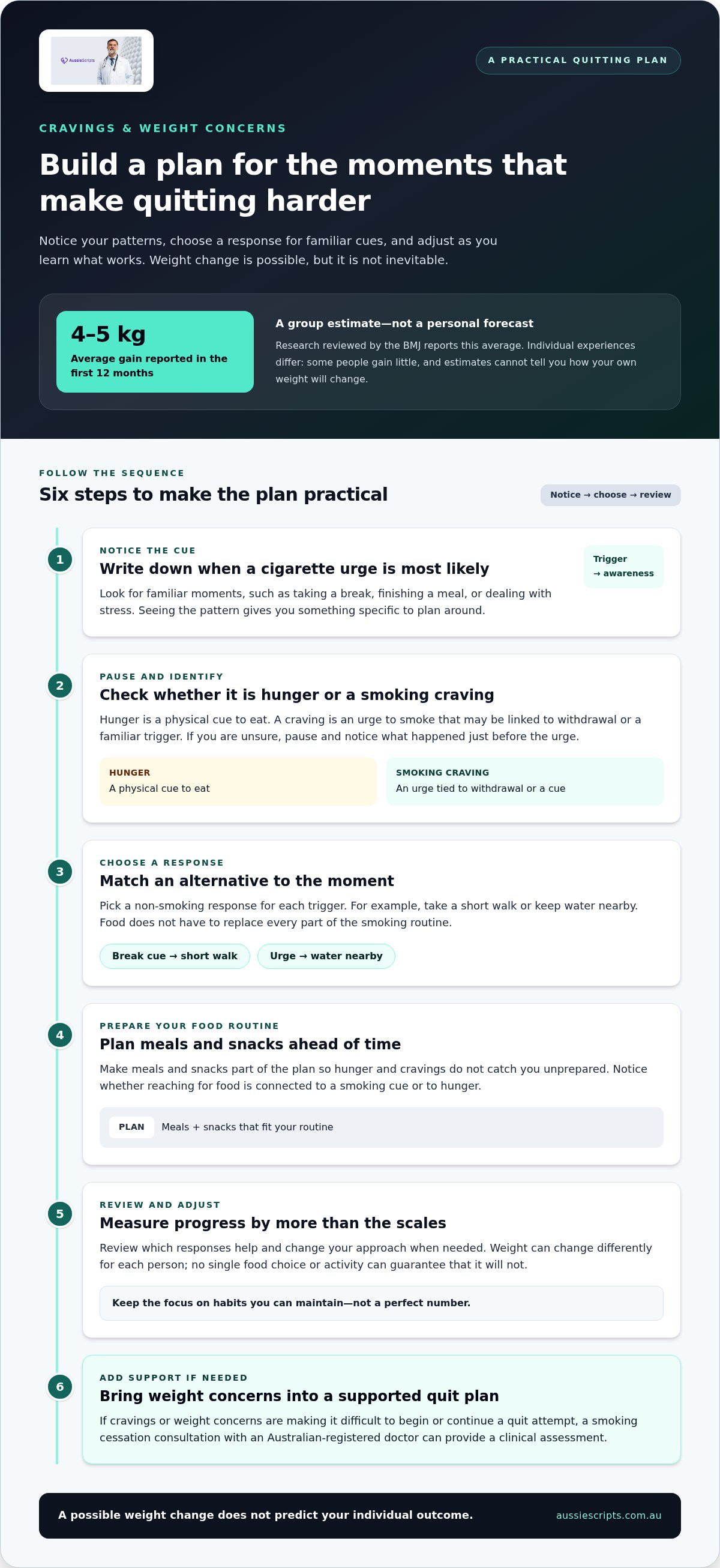
A simple plan can reduce the need to make decisions in the middle of a craving. Focus on three steps: notice likely triggers, choose a response in advance, then review what helped. The aim isn’t to control every urge or prevent every change in weight. It’s to make your quit attempt more manageable while keeping food and activity routines practical.
Prepare alternatives for smoking and food triggers
Start by noting the situations when you usually smoke or snack without planning, such as during a work break, after a meal, while driving or when stress builds. A short record can help you spot patterns. For each situation, choose an option before it happens rather than relying on willpower in the moment.
- For a routine cue: change the activity around it. After a meal, for example, you could clear the table, brush your teeth or step outside for fresh air.
- For restlessness: try a brief walk, stretching, a hands-on task or another activity that keeps your attention occupied.
- For hunger: have a planned snack available, such as fruit or another option that suits your preferences and needs.
- For a strong craving: pause, change location and use the response you chose for that trigger. If it continues, reassess what you need rather than automatically reaching for food.
These are options, not rules. A craving linked to a smoking cue may ease when you change the routine; physical hunger is a reason to eat. If one response doesn’t help, note that and try a different approach next time. Avoid treating a snack as failure. Planning is meant to make deliberate choices easier, not to judge yourself.
Build manageable eating and activity routines
Regular meals can make eating feel more predictable while your routines are changing. Plan meals that are satisfying and balanced for you, and keep convenient foods available for times when preparing something isn’t realistic. You might place a suitable snack where you can reach it easily or decide in advance what you’ll have during a usual smoke break. Flexible planning is more useful than strict food rules.
Include physical activity in a way that fits your circumstances and ability. This could mean adding movement to an existing part of your day or choosing an activity you can return to comfortably. There’s no need to set a demanding regimen or use exercise to compensate for eating. Review your plan after a few days: Which triggers came up? Which alternatives were realistic? What would you adjust?
If practical planning isn’t enough and cravings or weight concerns are interfering with your quit attempt, an Aussie Scripts smoking cessation consultation connects you with an Australian-registered doctor for clinical assessment.
When a smoking cessation consultation may help with weight concerns
Consider professional support if worry about weight is delaying your quit attempt, cravings feel difficult to manage, or you’ve tried to stop and found it hard to maintain your plan. You don’t need to wait until you feel completely ready or have every concern resolved. A clinical discussion can help put your concerns in context and identify possible next steps.
What to discuss with a doctor
Be specific about what feels difficult. Explain your quit goals, what has happened during previous attempts, and how the fear of weight gain after quitting smoking is affecting your decisions. If appetite changes or weight concerns feel hard to manage, mention when they occur and what you’ve tried so far.
- Your smoking patterns and situations that trigger cravings.
- Any changes in appetite, eating routines or weight that concern you.
- Relevant health context, including existing conditions or medicines.
- What kind of support you’re hoping to discuss as you plan to quit.
These details help inform the clinical assessment. The doctor can consider your circumstances and discuss appropriate next steps. A consultation doesn’t guarantee a particular quit or weight outcome, and it doesn’t mean you’ll automatically receive a prescription. Any decision depends on the assessment and what is clinically appropriate for you.
Accessing support through Aussie Scripts
Aussie Scripts connects patients with Australian-registered doctors through telehealth. Its dedicated smoking cessation consultation pathway provides clinical assessment for people who want professional support with quitting, including those whose weight concerns are affecting their plans.
Use the consultation to raise both priorities: stopping smoking and managing concerns about possible body changes. Explain which routines are hardest to change and discuss suitable support for your situation. The purpose is to assess your needs and discuss next steps, not to promise that quitting will be easy or that your weight will stay the same.
If you’re ready to discuss your quit goals and weight concerns with a doctor, explore the smoking cessation consultation.
Take the next step at your own pace
You don’t need to wait until every concern about weight has been resolved before making a change. Choose one manageable next step, such as setting a quit goal or noting the support you’d like to discuss with a doctor. If the fear of weight gain after quitting smoking is holding you back, make it part of that conversation rather than a reason to put your health goals aside.
Aussie Scripts is an Australian-owned telehealth platform with a dedicated smoking cessation consultation pathway connecting patients with Australian-registered doctors. A consultation provides a clinical assessment and discussion of your circumstances; it can’t guarantee a particular quit or weight outcome.
Explore an Aussie Scripts smoking cessation consultation to discuss your next step with a doctor. You can begin with a clear goal and take the process one decision at a time.
Frequently Asked Questions
Is weight gain inevitable after quitting smoking?
No. Some people gain weight after stopping smoking, while others gain little or no weight. Estimates describe averages or patterns across groups, not what will happen to one person. Weight gain isn’t a condition of quitting, and it isn’t a measure of whether your quit attempt is successful. If you want to stay informed, decide whether occasional weight checks feel useful or focus on your daily routines instead.
How much weight do people usually gain after quitting smoking?
Estimates differ by timeframe and units. Better Health Channel reports an average of about 4-5 kg over five years after quitting. MedlinePlus reports about 5-10 pounds, approximately 2.27-4.54 kg, in the months after quitting. These figures describe different follow-up periods and may refer to different groups, so they aren’t directly comparable. Neither number is a personal forecast or an amount you should expect to gain.
Can quitting smoking permanently slow your metabolism?
Nicotine can temporarily increase resting energy use and affect appetite. After you stop smoking, those effects change, but that doesn’t establish that quitting permanently slows your metabolism. This is one possible influence on weight, not a prediction of lasting metabolic damage or your individual outcome. If you notice changes that concern you, discuss your health history, appetite and activity with a doctor who can consider your circumstances.
What happens if I gain weight in the first few weeks after quitting?
An increase in the first few weeks doesn’t establish what your weight will be over the longer term. Avoid making decisions based on one measurement or responding with restrictive eating. If you choose to monitor your weight, use a consistent routine and review the pattern over time. You can also note whether your meals or daily activity have changed, and discuss persistent or troubling changes with a doctor.
Should I delay quitting until I have a plan to control my weight?
No. The fear of weight gain after quitting smoking doesn’t need to be resolved before you stop. Rather than waiting for a perfect weight-control plan, choose a couple of manageable habits, such as planning meals or deciding what to do during a usual smoke break. If weight worries feel like a barrier to quitting, a doctor can discuss support options in light of your health and goals.
When should I speak with a doctor about weight concerns while quitting smoking?
Speak with a doctor if worry about weight is delaying a quit attempt, appetite changes feel difficult to manage, or weight changes are causing distress. Before the discussion, note when the changes began, any routines that have shifted and what you’ve tried. A clinician can assess your individual health context and discuss appropriate next steps. Any advice or treatment depends on that assessment, and a particular result can’t be promised.
Disclaimer
The information provided by AussieScripts is for general informational purposes only and does not constitute medical advice, diagnosis, or treatment. For advice tailored to your specific symptoms or health concerns, please consult one of our doctors or your regular GP.
