How to Ask a Doctor for Weight Loss Pills: A 2026 Patient Guide
Wondering how to ask a doctor for weight loss pills? Our 2026 Australian guide provides a script, TGA criteria, and steps for a successful consultation.

Nearly 500,000 Australians, or almost 2% of the adult population, are now using GLP-1 medications to manage their weight in 2026. Despite this widespread adoption, many patients still feel a sense of hesitation or fear of being dismissed when entering a medical appointment. You've likely experienced the frustration of lifestyle-only approaches that don't yield results, leading to a need for a more clinical solution. Learning how to ask a doctor for weight loss pills shouldn't be an intimidating process; it's a standard medical enquiry that requires the right preparation.
This guide provides the exact steps and clinical information needed to have a productive conversation with an Australian practitioner. You'll gain a clear understanding of TGA eligibility criteria, such as BMI thresholds and health risk factors, which doctors use to determine suitability. We include a structured script to help you present your history clearly and confidently. This ensures you can access a professional Weight Loss Consultation through a discreet, efficient digital framework that avoids unnecessary delays and prioritises your long-term health outcomes.
Key Takeaways
- View medical weight loss as a legitimate clinical intervention for chronic metabolic conditions rather than a temporary lifestyle shortcut.
- Prepare a data-driven "Clinical Case" before your appointment by calculating your current BMI and identifying any weight-related comorbidities.
- Use a structured approach to learn how to ask a doctor for weight loss pills by linking your request to specific long-term health improvements.
- Verify your eligibility against TGA safety guidelines, which prioritise treatment for patients with a BMI of 30 or higher, or 27 with existing health risks.
- Access a discreet Weight Loss Consultation through a digital platform to avoid traditional waiting room anxiety while maintaining strict professional oversight.
Understanding Medical Weight Loss: Why It’s a Clinical Conversation
Medical weight loss is a formal healthcare strategy designed to treat obesity through evidence-based protocols. In 2026, the clinical consensus has moved away from viewing weight management as a matter of personal discipline. Instead, medical professionals recognise obesity as a chronic metabolic condition. This shift is vital when considering how to ask a doctor for weight loss pills; it frames the request as a medical necessity rather than a cosmetic preference. It acknowledges that for many, the body's internal systems work against sustained weight reduction.
Research consistently shows that biology, not just behaviour, dictates weight retention. Hormonal signals often override willpower, making it difficult to maintain weight loss through diet and exercise alone. Doctors now utilise various pharmacological agents for weight loss to address these underlying physiological barriers. Practitioners look for clinical indicators, such as metabolic markers and body mass index (BMI), to justify intervention. They focus on health outcomes like improved glycemic control and reduced cardiovascular risk.
To better understand the clinical role of these medications, watch this summary from the American Medical Association:
The Role of Pharmacotherapy in 2026
Modern treatments, particularly GLP-1 agonists, work by mimicking natural hormones that regulate appetite and blood sugar. These medications target brain-gut signals to reduce hunger and increase satiety. It's essential to view these as tools that support, rather than replace, lifestyle adjustments. Professional oversight remains mandatory to monitor for side effects and ensure the treatment aligns with your metabolic profile. Doctors assess your history to ensure the medication is safe for your specific physiology. They also help manage the transition as your metabolic rate adjusts to a lower weight. This clinical supervision ensures that weight loss is both sustainable and safe.
Moving Past the Stigma of Asking for Help
Many patients hesitate to seek help because they feel like they're cheating. This stigma is outdated. Seeking a professional Weight Loss Consultation is a proactive health decision, similar to treating hypertension or high cholesterol. If you're wondering how to ask a doctor for weight loss pills, remember that Australian doctors are increasingly trained in modern obesity management. They understand that medical assistance is often the missing piece in a successful long-term plan. Don't let embarrassment stop you; taking this step demonstrates a commitment to long-term health and risk reduction. It shows you're taking ownership of your metabolic health using every available clinical resource.
Preparing for Your Consultation: Data Over Desperation
Entering a consultation with specific data shifts the dynamic from a request for help to a collaborative clinical review. When considering how to ask a doctor for weight loss pills, your goal is to present a "Clinical Case" that aligns with Australian medical standards. Doctors don't prescribe based on aesthetic desires; they prescribe based on metabolic necessity. Having your metrics ready demonstrates that you're approaching this as a serious health intervention. It reduces the friction of the appointment and allows the practitioner to move straight to the eligibility assessment.
Preparation also helps manage the anxiety of the "waiting room" conversation. By documenting your history, you remove the pressure to remember every detail on the spot. This objective approach ensures your request is taken seriously as a medical inquiry. Understanding how to ask a doctor for weight loss pills involves showing that you've moved past the phase of unassisted lifestyle changes and now require pharmacological support to reach safe health markers.
Essential Health Metrics to Know
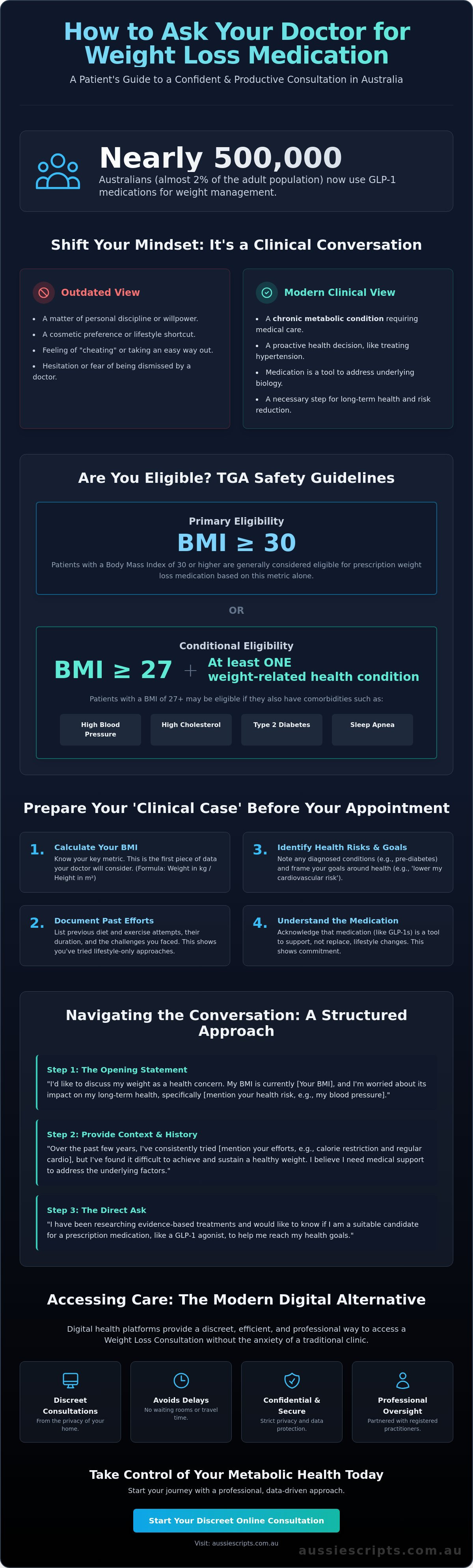
You should calculate your Body Mass Index (BMI) before your appointment. This is done by dividing your weight in kilograms by your height in metres squared. The TGA generally recommends prescription intervention for individuals with a BMI over 30, or a BMI between 27 and 30 if you have weight-related health risks. These risks, or comorbidities, include hypertension, sleep apnoea, or pre-diabetes. Australian clinics also increasingly prioritise waist circumference as a key metric. For men, a measurement over 94cm indicates increased risk; for women, the threshold is 80cm. Providing these numbers helps your doctor align your case with FDA-approved medications for chronic weight management and local Australian guidelines.
Your Weight Loss History Log
Documenting your "Treatment History" is a clinical requirement. Practitioners need to see that lifestyle-only approaches have been trialled without sustained success. List any previous diets, such as intermittent fasting or ketogenic protocols, and any exercise programmes you've followed. Note how long you sustained these efforts and specifically where the biological challenges occurred, such as plateauing or uncontrollable hunger. A 3-day snapshot of your current eating patterns and activity levels provides a baseline for the doctor to review. Once you have gathered this data, you can submit it through a Weight Loss Consultation for a professional clinical review. This structured preparation ensures that your conversation is efficient, compliant, and focused on achieving measurable health outcomes.
Navigating the Conversation: What to Say and How to Say It
Successfully communicating your needs requires a shift from personal frustration to clinical reporting. When you initiate the dialogue, frame it as a professional enquiry into metabolic health. Doctors respond best to structured information that allows them to make an informed assessment. Understanding how to ask a doctor for weight loss pills involves using precise language that highlights your physiological struggles rather than just aesthetic goals. This approach establishes you as a proactive patient seeking a legitimate medical intervention.
Focus your narrative on health outcomes like improved mobility, reduced joint pain, or better blood sugar management. Use "I" statements to describe biological hurdles. For example, instead of saying "I can't stop eating," try "I struggle with persistent hunger signals even after balanced meals." This helps the practitioner identify issues with appetite regulation or satiety. Medical professionals use specific criteria to determine who can take weight-loss drugs, so aligning your language with these clinical standards is essential for a productive consultation.
A Step-by-Step Conversation Script
- Step 1: State your goal clearly. Start with: "I want to discuss a formal medical plan for weight management to improve my long-term health markers."
- Step 2: Present your data. Follow with: "My current BMI is 32, and I am concerned about my family history of type 2 diabetes and hypertension."
- Step 3: Detail your efforts. Explain: "I've followed a structured exercise and calorie-controlled diet for eight months, but my weight has remained stagnant despite these interventions."
- Step 4: Ask the direct question. Conclude with: "Based on my history and metrics, do you believe I am a suitable candidate for pharmacotherapy to support my weight loss?"
Key Phrases to Use (And What to Avoid)
The vocabulary you choose influences the clinical tone of the appointment. Use terms like "metabolic health," "appetite regulation," and "sustainable management." These phrases signal that you understand the chronic nature of obesity. Avoid using emotive or non-clinical language such as "miracle cure," "quick fix," or "beach body." These terms can trivialise the request and may lead a doctor to believe you're looking for a short-term shortcut rather than a long-term health solution.
Clinical language builds trust. It shows you've researched the biological aspects of weight management and are prepared for the responsibilities of medical treatment. If the doctor agrees that medication is appropriate, transition to a "Collaborative Closing." Ask: "What are the specific clinical milestones we should monitor during this treatment?" This reinforces your commitment to a supervised, safe medical process. If you prefer a digital environment to start this process, a structured Weight Loss Consultation can facilitate this exchange efficiently while ensuring all TGA safety requirements are met.
Understanding Eligibility and Safety Standards in Australia
Every prescription issued in Australia is governed by the Therapeutic Goods Administration (TGA). When you are learning how to ask a doctor for weight loss pills, it helps to understand the legal boundaries your practitioner must follow. These aren't arbitrary rules; they are safety standards designed to ensure the benefits of pharmacotherapy outweigh the potential risks for your specific profile. Doctors are legally required to verify that you meet specific clinical "indications" before issuing a script. This ensures that medication is reserved for those whose health is significantly impacted by their weight.
Adherence to these standards is non-negotiable for Australian practitioners. It protects you from using medications that may be inappropriate for your metabolic state. In 2026, the regulatory environment is particularly focused on ensuring that supply remains available for those who meet the strictest clinical criteria. Understanding these guardrails allows you to present your case in a way that directly addresses the doctor's regulatory obligations. This shifts the conversation from a personal request to a formal eligibility assessment.
TGA Criteria for Prescription Medication
The TGA generally defines clinical obesity as a Body Mass Index (BMI) of 30 or higher. If your BMI is between 27 and 29.9, you may still be eligible if you present with at least one weight-related comorbidity. Common qualifying conditions include hypertension, dyslipidaemia, or obstructive sleep apnoea. Practitioners must adhere to these legal indications to remain compliant with Australian prescribing laws. While some medications like Wegovy are TGA-approved specifically for weight management, others like Ozempic are primarily indicated for type 2 diabetes. Doctors must exercise clinical judgement when prescribing "off-label," a process handled with extreme caution in Australia to ensure patient safety and medication availability.
Potential Side Effects and Risk Management
Pharmacotherapy is a serious medical intervention with a defined risk profile. Common side effects often include gastrointestinal issues like nausea, vomiting, or constipation. These are typically managed through a gradual dose titration overseen by your doctor. However, some contraindications are absolute. For instance, individuals with a personal or family history of medullary thyroid carcinoma or Multiple Endocrine Neoplasia syndrome type 2 should not use GLP-1 agonists. Doctors also screen for active gallbladder disease and a history of pancreatitis. Ongoing monitoring is essential. This includes periodic blood tests to check kidney function and heart rate screenings. The TGA has also enforced strict regulations on compounded medications, stopping pharmacies from creating their own versions of GLP-1s since October 1, 2024, due to safety concerns. You can begin your eligibility check through a formal Weight Loss Consultation to ensure you meet all current Australian safety standards.
Accessing Professional Weight Loss Support via Aussie Scripts
The traditional medical environment often introduces unnecessary friction when discussing weight management. Many patients find the physical waiting room experience stressful or judgmental. Telehealth platforms like Aussie Scripts provide a streamlined alternative that prioritises your privacy and time. By moving the consultation to a digital framework, you can address the question of how to ask a doctor for weight loss pills from a secure, comfortable environment. This modern approach ensures that the focus remains on your clinical data rather than the logistics of a physical appointment. It removes the barriers that often prevent individuals from seeking the medical support they need for metabolic health.
Telehealth is not just about convenience; it's about creating a safe space for clinical dialogue. In 2026, healthcare delivery has evolved to meet the needs of busy Australians who require expert advice without the bureaucratic delays of a traditional clinic. This digital-first model allows you to present your health metrics and history clearly, ensuring the practitioner has everything required to make a safe, informed decision regarding your treatment plan.
Why Telehealth is Ideal for Weight Management
A discreet digital environment significantly reduces the social anxiety often associated with weight loss discussions. You don't need to worry about long commutes or awkward face-to-face interactions. Aussie Scripts maintains high clinical standards by using structured health assessments that every patient must complete. These assessments ensure that Australian-registered doctors have all the necessary data to make an informed clinical decision. This process mirrors a traditional office visit but removes the bureaucratic delays. It allows for a brisk, purposeful evaluation of your eligibility based on the TGA criteria discussed earlier. With nearly 500,000 Australians already using GLP-1 medications in 2026, the demand for efficient, professional access is higher than ever. Digital reviews provide a logical, step-by-step progression that guides you through the medical process without ambiguity.
Starting Your Journey with Aussie Scripts
The process is designed for clarity and speed. It begins with a comprehensive digital health assessment where you provide your medical history, BMI, and previous weight loss efforts. Once submitted, a qualified Australian GP conducts a thorough review of your file. This professional oversight is critical, especially following the TGA decision to stop pharmacies from compounding their own versions of GLP-1 medications. You can be certain that any treatment recommended is a legitimate, regulated pharmacological agent that meets national safety standards.
If you meet the clinical requirements for pharmacotherapy, the doctor will issue an eScript or arrange for medication delivery directly to your door. This integrated system ensures you receive professional oversight without the friction of traditional healthcare models. It represents a tech-savvy extension of professional medical care. If you're ready to learn how to ask a doctor for weight loss pills through a professional channel, Book your Weight Loss Consultation with Aussie Scripts today. This ensures your treatment plan is managed by local experts who understand the Australian regulatory framework and prioritise your safety.
Take Control of Your Metabolic Health Today
Preparation serves as the most effective tool for transforming a daunting medical enquiry into a successful clinical outcome. By focusing on your metabolic data and understanding TGA eligibility, you can approach your next appointment with total clarity. You now have the script and the clinical knowledge of how to ask a doctor for weight loss pills without the anxiety or friction of traditional waiting rooms. The modern shift toward treating obesity as a chronic metabolic condition means that medical professionals are ready to partner with you using evidence-based pharmacotherapy.
Accessing this support is a streamlined, digital process designed for the modern patient. Aussie Scripts connects you with Australian-registered doctors through a 100% digital and discreet platform. If you're eligible, you can receive your script or medication via national delivery; this ensures your treatment plan is both professional and efficient from start to finish. Start your professional weight loss assessment now. Your health journey deserves a structured, clinical approach that respects your time and prioritises your long-term metabolic stability. Take the first step toward a medically supervised plan today.
Frequently Asked Questions
Do I need to see a doctor in person for weight loss pills in Australia?
No, you don't necessarily need an in-person visit to access medical weight loss support. Telehealth provides a compliant pathway for Australian-registered doctors to review your clinical data remotely. This digital process includes a comprehensive health assessment to ensure any prescription meets TGA safety standards. If you are eligible, you can receive your medication or script without visiting a physical clinic.
What is the most common weight loss medication prescribed in 2026?
GLP-1 receptor agonists like Wegovy and Mounjaro are the most frequently prescribed weight loss medications in 2026. Wegovy is specifically TGA-approved for chronic weight management, while others may be used depending on your metabolic profile. These medications work by regulating appetite signals between the gut and the brain. Your doctor will determine which specific agent is most appropriate for your health history.
Will my doctor be annoyed if I ask for a specific brand of medication?
Your doctor won't be annoyed if you mention a specific medication, provided you frame it as a clinical enquiry. Practitioners appreciate patients who have researched their options and understand the biological mechanisms of treatment. Instead of demanding a brand, ask if you are a suitable candidate for a specific class of medication based on your BMI and comorbidities. This collaborative approach focuses on safety rather than brand preference.
What happens if my BMI is under 30 but I still want to lose weight?
If your BMI is between 27 and 30, you may still qualify for medication if you have weight-related comorbidities. These include conditions like high blood pressure, sleep apnoea, or pre-diabetes. Doctors look for clinical markers that indicate your weight is impacting your long-term health. If your BMI is below 27, practitioners generally recommend lifestyle-only interventions as the risks of medication may outweigh the potential benefits.
Are there any weight loss pills available over the counter in Australia?
Effective medical weight loss treatments are not available over the counter in Australia. These are Schedule 4 medications that require a formal prescription from a registered practitioner following a clinical review. While some supplements are sold in pharmacies, they don't contain the active pharmacological agents found in prescription treatments. A professional Weight Loss Consultation is required to access regulated medications that safely target metabolic pathways.
How long does a typical weight loss consultation take online?
A digital health assessment typically takes 10 to 15 minutes to complete. This efficiency is a core benefit of using a digital facilitator, as it removes the wait times associated with physical offices. Once you submit your data, an Australian-registered doctor reviews your file within a professional timeframe. This ensures your request is handled with clinical rigour without the logistical delays of a traditional appointment.
What should I do if my doctor says 'no' to medication?
If a doctor declines your request, it is usually because you don't meet the TGA safety criteria or have a specific contraindication. You should ask for the clinical reasoning behind the decision to better understand your metabolic health. If you're wondering how to ask a doctor for weight loss pills and receive a negative response, it's often because your current health profile makes the medication unsafe for your specific needs.
Can I get a repeat prescription for weight loss pills through Aussie Scripts?
You can access repeat prescriptions through Aussie Scripts if you have been previously prescribed the medication and remain eligible. Our Standard Script or Express Script services facilitate these requests after a clinical review by a GP. This ensures that your progress is monitored and that the medication remains safe and effective for your ongoing weight management journey.
Disclaimer
The information provided by AussieScripts is for general informational purposes only and does not constitute medical advice, diagnosis, or treatment. For advice tailored to your specific symptoms or health concerns, please consult one of our doctors or your regular GP.