How to Switch from Smoking to Vaping Successfully
Learn how to switch from smoking to vaping successfully with practical tips, trigger management, and guidance on navigating Australian doctor consultations.

How to switch from smoking to vaping successfully is about more than choosing a vape. Cravings, withdrawal and conflicting advice can make a change difficult, so start by deciding what you want to achieve and how you’ll get support. Vaping isn’t harmless, and it isn’t the right option for everyone.
Before changing how you use nicotine, compare the risks and limitations of vaping with other cessation supports. This guide explains the differences, outlines practical steps for planning a transition and covers what Australian access rules mean. An individual assessment with an Australian-registered doctor can help you consider your health needs and next steps.
Aussie Scripts offers smoking cessation consultations through telehealth. A doctor can discuss your smoking pattern, health context and cessation options with you. The aim is a considered plan, not device shopping.
Key Takeaways
- Set a clear goal and plan for cravings, triggers and follow-up when considering a switch from smoking to vaping.
- Compare vaping with nicotine-replacement therapy, approved cessation medicines and behavioural support, including their different limitations.
- Track your smoking patterns, routine cigarettes and previous quit attempts to make a doctor’s assessment more useful.
- If you continue smoking while vaping, review your plan with a health professional rather than assuming dual use is the intended outcome.
- A telehealth smoking cessation consultation can help you discuss your health context and options. A doctor determines appropriate care, and a particular treatment isn’t guaranteed.
Before switching from smoking to vaping: understand the health trade-offs
Before deciding how to switch from smoking to vaping successfully, separate two issues: exposure to cigarette smoke and dependence on nicotine. Burning tobacco produces smoke containing harmful substances. Vaping avoids tobacco combustion, but exposes users to an aerosol that isn’t harmless, and nicotine can maintain dependence. Stopping cigarettes, reducing them and using cigarettes alongside a vape are different outcomes with different implications.
Replacing cigarettes completely may reduce exposure to some harmful chemicals produced by combustion. That change in exposure doesn’t prove vaping is safe or establish that it will help a particular person quit. For a general overview of electronic cigarettes, including their types and health considerations, see the linked reference. The health-focused goal remains quitting tobacco and, where appropriate, working towards freedom from nicotine. Vaping is one option to discuss, not a guaranteed route to that goal.
The video below offers further general background on nicotine and quitting.
What does switching actually mean for an adult smoker?
A complete switch means stopping combustible cigarettes and not using cigarettes alongside vaping. Cutting down is different: even fewer cigarettes mean continued exposure to smoke. Using both products is dual use, not a complete switch, and cigarette-related risks remain. Be specific about your aim, whether it’s a quit date, a supported reduction plan or exploring cessation options with a clinician.
Cravings, withdrawal symptoms and familiar smoking routines may continue, and changing products doesn’t automatically end nicotine dependence. Vaping can also cause unwanted effects. Don’t assume that a device, nicotine level or approach that suits someone else will suit you. Non-smokers shouldn’t start vaping.
Who should seek medical advice before considering vaping?
Speak with a health professional before considering vaping if you’re pregnant, have an existing health condition, take medicines that raise concerns, or have previously had an adverse reaction to vaping or nicotine products. An Australian-registered doctor can consider your health history and smoking pattern when discussing cessation options. A consultation supports an individual assessment, but doesn’t guarantee a particular treatment or prescription.
This article provides general information, not an individual diagnosis or treatment plan. If symptoms are severe or urgent, seek appropriate medical care rather than relying on routine telehealth. For a life-threatening emergency in Australia, call Triple Zero (000).
Compare vaping with smoking cessation options available in Australia
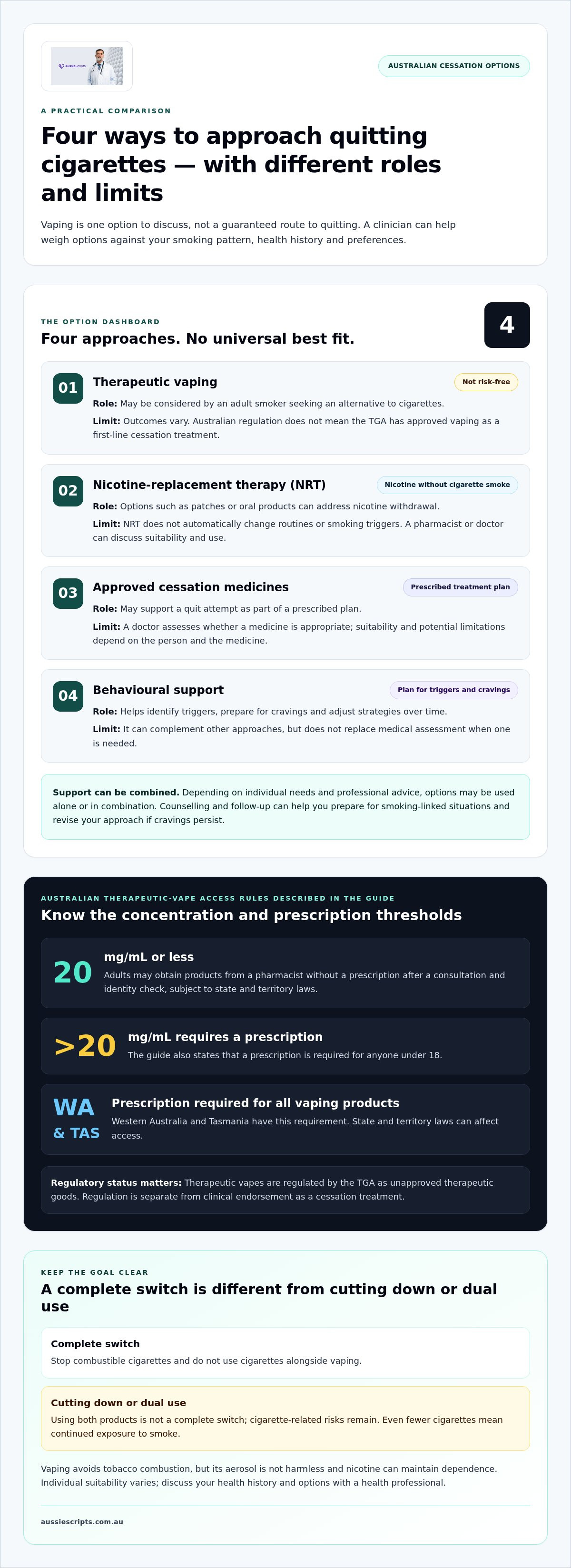
Vaping is one option to discuss, but it isn’t the only route away from cigarettes. Nicotine-replacement therapy (NRT), approved cessation medicines and behavioural support work differently. A clinical assessment can help you consider which approaches may fit your smoking pattern, health history and preferences. Suitability depends on your personal health, and no option is universally best.
How does vaping compare with established quitting support?
Use this comparison as a starting point, not a treatment recommendation. Depending on individual needs and professional advice, support options may be used alone or in combination.
| Option | Purpose | Professional input | Evidence considerations and limitations |
|---|---|---|---|
| Therapeutic vaping | May be considered by an adult smoker seeking an alternative to cigarettes. | Access is regulated; a pharmacist or prescriber may be involved depending on the product and local rules. | It isn’t risk-free, and outcomes vary. Australian regulation doesn’t mean the TGA has approved vaping as a first-line cessation treatment. |
| NRT | Provides nicotine without cigarette smoke, through options such as patches or oral products. | A pharmacist or doctor can discuss product use and suitability. | It can address nicotine withdrawal, but doesn’t automatically change routines or triggers. |
| Approved cessation medicines | May support a quit attempt through a prescribed treatment plan. | A doctor assesses whether a medicine is appropriate and discusses its use. | Suitability and potential limitations depend on personal health and the specific medicine. |
| Behavioural support | Helps identify triggers, plan for cravings and adjust strategies over time. | Can involve a health professional or structured quit support. | It doesn’t replace medical assessment where that’s needed, but can complement other approaches. |
Counselling and follow-up can help you prepare for situations linked to smoking, such as a work break or social occasion, and revise your approach if cravings persist. The NHS guidance on vaping to quit smoking offers practical information, but reflects UK guidance and doesn’t determine Australian access rules or individual care.
What should Australians know about TGA rules?
In Australia, therapeutic vapes are regulated by the TGA as unapproved therapeutic goods. This regulatory status is separate from clinical endorsement as a cessation treatment. Under the access rules described in current guidance, adults may obtain products with nicotine concentrations of 20 mg/mL or less from a pharmacist without a prescription after a consultation and identity check, subject to state and territory laws. A prescription is required for concentrations above 20 mg/mL and for anyone under 18. Western Australia and Tasmania require prescriptions for all vaping products.
A smoking cessation consultation can help you discuss your history and options with a doctor. If you’re weighing up smoking cessation support, an individual assessment can help clarify appropriate next steps.
Build a clinician-guided plan for switching away from cigarettes
A practical plan starts with your smoking pattern and health context, not assumptions about which option will suit you. If you’re considering how to switch from smoking to vaping successfully, use a consultation to discuss your goal, alternatives and follow-up. A doctor can assess your circumstances and advise on next steps, though a particular treatment or prescription isn’t guaranteed.
- Record your smoking pattern. Note how many cigarettes you usually smoke, when you have your first cigarette after waking, and which situations prompt you to smoke.
- Prepare your health information. List relevant health conditions, medicines, pregnancy status if applicable, previous adverse reactions and earlier attempts to quit.
- Discuss cessation options. Explain what has and hasn’t worked before, and ask about approaches that may fit your needs. Be open about whether you’re considering vaping, another form of support or are still deciding.
- Agree on a goal and review point. Clarify what you’ll work towards and when you’ll review progress with a clinician. This gives you a planned opportunity to adjust support if circumstances change.
Prepare for a useful smoking cessation consultation
Brief notes can make it easier to explain your situation clearly. Include routine cigarettes, such as one with coffee or during a work break, and triggers like stress, driving or social occasions. Record previous quit strategies and what made them difficult to continue. This gives the doctor useful context for an individual assessment rather than relying on a general plan.
During a smoking cessation consultation, an Australian-registered doctor can consider your smoking history, health conditions and medicines, then discuss suitable options. Share relevant details as accurately as you can. A consultation informs clinical decisions, but doesn’t guarantee a particular treatment or prescription.
If you’d like to discuss your circumstances and cessation options, you can Discuss smoking cessation options with an Australian-registered doctor.
Set a realistic transition goal and review point
Be clear about what you’re aiming to do first. Your immediate goal might be to stop smoking cigarettes, or to explore support options before choosing a plan. If you and your doctor decide on a transition approach, agree how you’ll review progress and what to do if cravings, routines or other challenges make the plan difficult to follow.
A review point helps you assess the plan rather than treating it as a test of willpower. If your circumstances change or you continue smoking, revisit the approach with your clinician. Adjusting the plan is part of responding to your experience, not evidence that you’ve failed.
Manage cravings, setbacks and dual use during a transition
Cravings can persist even after you change how you use nicotine. Smoking may also be tied to routines, stress or social situations, so a new plan can feel difficult at predictable moments. Progress isn’t always quick or linear. Notice what’s happening, then use the coping steps you’ve agreed on with your clinician rather than assuming you need to manage every craving alone.
A pause can create space to respond deliberately. If a craving appears during a familiar routine, identify the trigger first. You might step away from the usual smoking spot, take a short walk, drink water or contact someone in your support network. These actions don’t guarantee a craving will pass, but can help you follow your plan while deciding what support you need.
What if you continue smoking while vaping?
If you’re still smoking cigarettes, you haven’t reached the transition goal of stopping combustible tobacco. Using both products is called dual use. Don’t treat it as a safe endpoint or assume that adding vaping removes the risks associated with cigarette smoke. Record when cigarettes still occur, such as with a morning coffee or during a stressful moment, and discuss the pattern with a clinician.
A review can help clarify whether the plan needs to change, whether nicotine dependence or specific triggers are making the transition difficult, and what other cessation support may be appropriate. Be direct about how often you’re smoking and vaping. An accurate account gives your clinician a clearer basis for discussing next steps.
How can you respond to cravings or a lapse?
Start by naming the situation: what was happening, how you felt and what routine came just before the craving? Then choose a response from your agreed plan. Delaying a response briefly, changing your setting or contacting a support person may help you avoid acting automatically. If cravings keep disrupting your plan, arrange a review rather than making unsupported changes to treatment.
A lapse, such as smoking a cigarette after a period without one, differs from returning to regular smoking, but neither needs to be ignored. Treat a lapse as a prompt to reassess triggers and support, not a reason to abandon care. If smoking becomes regular again, tell your clinician so you can review the plan and discuss appropriate help.
Social events or seeing others smoke can make it harder to follow a transition plan. Before these situations, consider what you’ll do if a craving arises and who you can contact afterwards. Keep your response practical and specific to your triggers; a strategy that helps one person may not suit another.
If continued smoking or recurring cravings are making your plan difficult to follow, a smoking cessation consultation can help you discuss your experience with an Australian-registered doctor and review possible next steps.
Access Australian smoking cessation support through telehealth
A telehealth consultation gives you a way to discuss smoking cessation with an Australian-registered doctor without attending an in-person appointment. It can be a useful next step if you’re weighing up how to switch from smoking to vaping successfully, but the conversation should cover your health and suitable cessation options rather than assume vaping is the answer.
The doctor determines appropriate care after considering your individual circumstances. A consultation supports a clinical assessment and helps clarify what steps may be appropriate for you; it doesn’t guarantee a particular treatment or prescription.
What can a smoking cessation consultation cover?
You can discuss your smoking habits, previous quit attempts, cravings and the situations that make cigarettes difficult to avoid. Share relevant health conditions, medicines, pregnancy status if applicable, and any concerns about treatments you’ve tried or are considering. These details help the doctor understand your context before discussing possible cessation pathways.
To make the conversation focused, keep a short note of what you want help with. For example, you may be unsure whether to pursue a quit attempt now, need support because cigarette use continues, or want to compare vaping with other cessation approaches. A doctor can discuss options based on your health and history, then explain appropriate next steps.
Telehealth can also make it easier to revisit your plan if your circumstances change. Raise new concerns, describe what has been difficult to follow, and ask whether the approach still fits your needs. Clinical advice is individual, so the next step may differ from what another person has been advised.
When should you seek further support?
Arrange follow-up if cravings persist, you continue smoking, or the plan feels unsuitable. Be specific about what’s happening. For instance, explain whether cigarettes are still part of a daily routine, whether a previous strategy hasn’t been manageable, or whether you’ve noticed a concern you want assessed. This information can help the doctor reconsider the plan and discuss other support options.
Ongoing professional support can help you adapt your approach as your needs change. You don’t have to wait until a plan has completely broken down to ask for a review. If you’re uncertain about continuing, or you’re using cigarettes alongside another nicotine product, describe that clearly so the discussion reflects your experience.
Telehealth is for planned clinical discussions, not urgent assessment. If symptoms are severe or you need emergency care, seek urgent medical services instead.
To discuss your smoking history, health context and cessation options with a doctor, Arrange a smoking cessation consultation.
Make your next step a considered one
You don’t need to settle every decision about vaping before asking for clinical guidance. Start by identifying the question that matters most to you, such as how to manage cravings, whether your current approach is appropriate, or what support could help you stop smoking. A focused conversation can make your next decision clearer without locking you into a particular treatment.
Learning how to switch from smoking to vaping successfully means weighing the trade-offs and getting advice that reflects your health and circumstances. Aussie Scripts offers smoking cessation consultations through national telehealth access seven days a week. An Australian-registered doctor assesses your situation and determines appropriate care; no specific treatment or prescription is guaranteed.
When you’re ready, Arrange a smoking cessation consultation to discuss your options with a doctor. Start with one clear conversation, then adjust your approach with professional guidance as your needs change.
Frequently Asked Questions
Is switching from smoking to vaping a safe way to quit?
No. Vaping isn’t risk-free, and its suitability depends on the person. Replacing cigarettes may reduce exposure to some substances produced by tobacco combustion, but that doesn’t prove vaping is safe or guarantee that it will help you quit. Consider the risks alongside other cessation options, and discuss your health circumstances with a doctor before making a change. The health-focused aim remains stopping tobacco use and, where appropriate, nicotine.
Can vaping help you stop smoking completely?
Some adults consider vaping as a way to move away from cigarettes, but it doesn’t guarantee complete cessation. Nicotine dependence or smoking routines may continue, and experiences vary. If you’re considering how to switch from smoking to vaping successfully, decide what “stopping” means for you and discuss that goal with a clinician. Continuing to smoke while vaping means cigarettes remain part of the pattern, so review your approach if that happens.
How long does it take to switch from smoking to vaping?
There’s no fixed timeframe. The transition may differ according to your smoking pattern, nicotine dependence, routines and the support you use. Rather than relying on a deadline, agree on a review point with a clinician and track whether cigarette use is changing. Note when cigarettes still occur during your day and bring that information to the review. If the plan isn’t working for you, discuss adjusting it instead of simply extending it without guidance.
Is it harmful to smoke and vape at the same time?
Using both products, known as dual use, isn’t the same as stopping cigarettes. Smoking continues to expose you to substances from burning tobacco, so don’t assume vaping cancels out that exposure or makes dual use a safe endpoint. If you’re still smoking while vaping, record when it happens and discuss the pattern with a doctor. This can help you review your goal and consider whether your cessation plan needs to change.
Do you need a prescription to access vaping products in Australia?
It depends on the product, nicotine concentration, age and state or territory rules. Under the Australian access rules described in current TGA guidance, adults aged 18 and over may access therapeutic vapes with nicotine at or below 20 mg/mL from a pharmacist without a prescription after consultation and an identity check, subject to local laws. A prescription is required above that concentration and for people under 18. Western Australia and Tasmania require prescriptions for all vaping products.
What should I do if vaping does not reduce my cigarette cravings?
Don’t change a product or treatment without appropriate advice. Note when cravings occur, what you’re doing at the time and whether you continue smoking. A morning cigarette, a stressful moment or a social setting may reveal a routine that needs attention alongside nicotine dependence. If cravings persist or your plan feels unsuitable, arrange a review with a doctor to discuss other cessation support and an approach tailored to your health history.
Disclaimer
The information provided by AussieScripts is for general informational purposes only and does not constitute medical advice, diagnosis, or treatment. For advice tailored to your specific symptoms or health concerns, please consult one of our doctors or your regular GP.
