Is Telehealth Weight Loss Effective? Clinical Evidence and Outcomes in 2026
Wondering is telehealth weight loss effective? A 2026 study shows a 20% weight reduction. Discover the clinical evidence and see if virtual care is right for...

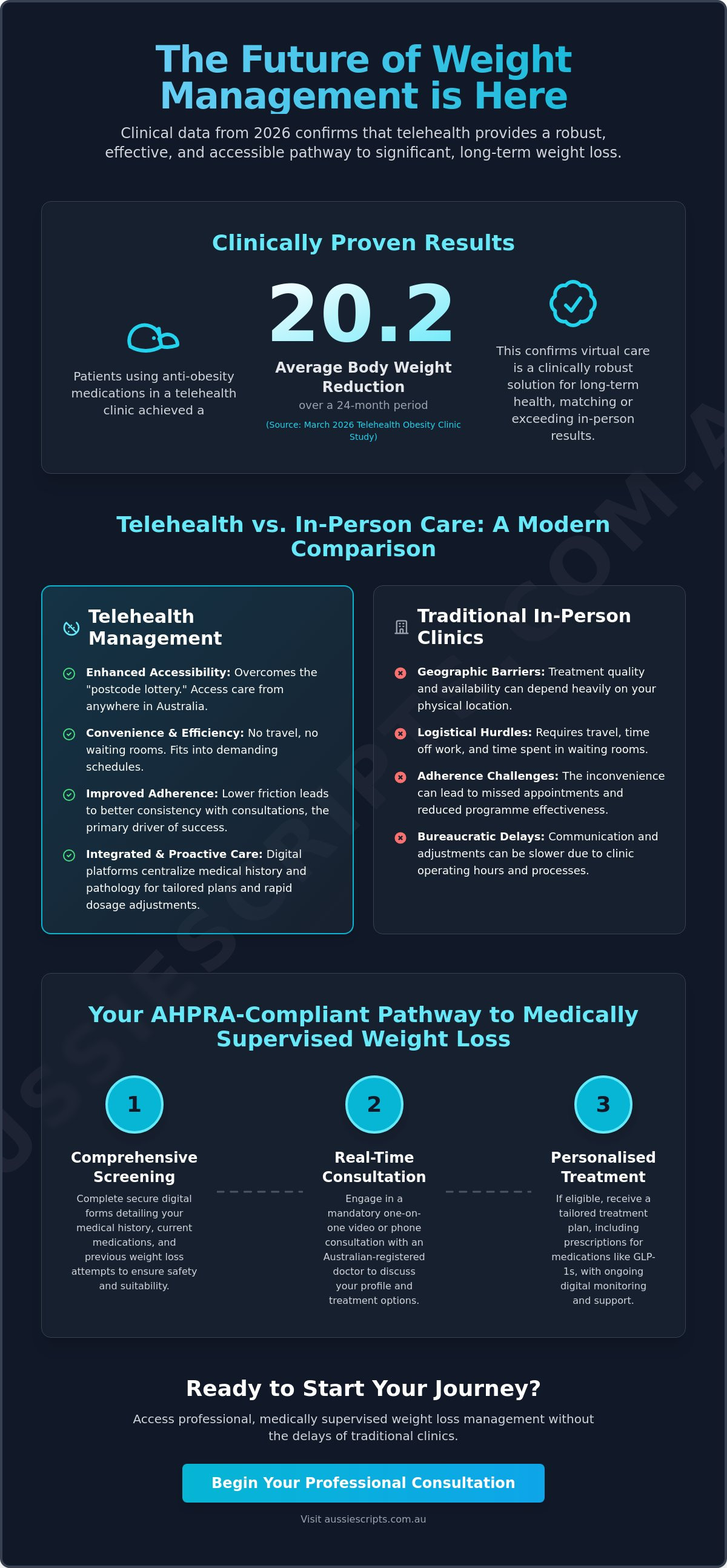
A March 2026 study of a telehealth obesity clinic revealed that patients using anti-obesity medications achieved an average total body weight reduction of 20.27% over 24 months. This data confirms that virtual care isn't just a convenient alternative; it's a clinically robust solution for long-term health. You've likely felt the frustration of the Australian "postcode lottery" or struggled to fit regular GP visits into a demanding schedule. It's natural to wonder, is telehealth weight loss effective when you aren't sitting in a physical medical office.
You'll discover the clinical evidence supporting virtual weight management and how Australian telehealth standards ensure your safety through real-time consultations. We'll outline the rigorous screening process required by AHPRA and provide a clear pathway to starting a medically supervised Weight Loss Consultation. This guide examines how digital accessibility removes the primary barriers to treatment adherence, ensuring you receive professional oversight without the bureaucratic delays of traditional clinics.
Key Takeaways
- Review recent 2026 clinical data confirming that virtual weight management outcomes match or exceed traditional in-person clinic results.
- Evaluate the specific evidence to determine is telehealth weight loss effective for long-term health goals and sustainable body weight reduction.
- Compare the convenience and clinical depth of digital models against traditional GP visits, specifically regarding the integration of pathology and medical history.
- Identify the standard medical criteria and eligibility requirements used by Australian doctors to screen for safe treatment participation.
- Learn the efficient three-step pathway to secure a professional Weight Loss Consultation and access medically supervised treatment plans.
Is Telehealth Weight Loss Effective? Examining the 2026 Clinical Evidence
Telehealth weight loss is a structured clinical management programme delivered through secure digital platforms. It integrates medical oversight, pathology review, and pharmacological intervention without the need for physical office visits. By 2026, clinical data has confirmed that the question isn't just "is telehealth weight loss effective," but rather how it compares to traditional models. Modern telehealth weight loss programs focus on two primary metrics: total body weight reduction and improvements in metabolic health markers such as blood pressure and glucose regulation.
The efficacy of these virtual programmes is significantly enhanced by GLP-1 medications. These treatments require strict clinical governance, which digital platforms provide through regular, synchronous reviews. Evidence from the last two years shows that when these medications are paired with digital monitoring, patient outcomes are often superior to unmonitored or purely lifestyle-based approaches. This shift is supported by AHPRA regulations that mandate real-time consultations, ensuring that virtual care maintains the same high standards as an in-person GP visit.
To better understand how these virtual consultations function in a clinical setting, watch this helpful video:
The Role of Accessibility in Patient Adherence
Removing the requirement for travel and waiting rooms directly impacts how often patients attend their reviews. Digital touchpoints allow for faster communication between a patient and their practitioner, making it easier to manage side effects or adjust dosages. Clinical adherence is the primary driver of weight loss success. When the friction of attending a physical clinic is removed, patients are more likely to remain in a programme for the 12 to 24 months required for sustainable results.
Weight Loss Statistics: Telehealth vs. Traditional Clinics
A real-world study published in March 2026 showed that patients in a telehealth obesity treatment clinic achieved an average body weight reduction of 20.27% at 24 months. These figures are comparable to results seen in high-end physical clinics. Data from 2026 preprints also indicate that patients on semaglutide via telehealth lost a mean of 13.8% at 12 months. This confirms that is telehealth weight loss effective regardless of a patient's geographic location. Regular virtual monitoring provides the accountability needed to maintain these results over the long term.
How Virtual Consultations Drive Real-World Results
The efficacy of digital weight management relies on a structured, multi-step clinical framework. Australian-registered doctors don't simply provide a prescription; they facilitate a comprehensive medical review that mirrors the depth of an in-person consultation. This rigorous approach is a major reason why the answer to whether is telehealth weight loss effective is a clear yes. By integrating pathology results and historical medical data into a centralized digital profile, practitioners can develop treatment plans tailored to your specific metabolic profile. Personalized care is essential. A one-size-fits-all approach often fails because it ignores the unique hormonal and lifestyle factors that drive weight gain.
Telehealth platforms act as a modern extension of a traditional professional office. They remove the bureaucratic delays associated with physical clinics while maintaining a strictly compliant environment. This efficiency allows for more frequent, purposeful interactions between the patient and the doctor. This consistent oversight facilitates the long-term lifestyle changes necessary for fat loss. This ongoing relationship is why is telehealth weight loss effective for those who have previously struggled with clinical adherence in the past.
The Clinical Screening Process
Safety begins with a deep dive into your medical history. You'll complete secure digital forms detailing current medications, previous attempts at weight loss, and existing health conditions. Per AHPRA standards updated in October 2025, a real-time video or telephone consultation is mandatory for prescribing high-risk medications like GLP-1 agonists. Doctors evaluate your Body Mass Index (BMI), typically requiring a BMI of 30 or above, or 27 with a related condition like hypertension or Type 2 diabetes. Recent blood tests are reviewed to confirm your liver and kidney function are suitable for treatment. This ensures the clinical pathway is both safe and evidence-based.
Ongoing Monitoring and Medication Adjustments
Weight management isn't a static event. It's a dynamic process that requires consistent professional oversight. Doctors use virtual check-ins to manage dosage titration, which is the gradual increase of medication to minimize side effects. If you experience common issues like nausea, your doctor can adjust your plan immediately through the platform. Digital scripts are updated in real-time based on your progress and tolerance. This level of punctuality and communication ensures you aren't left guessing between appointments. If you're ready to begin this structured process, you can speak with a practitioner through a Weight Loss Consultation to determine your eligibility.
Telehealth vs. In-Person Weight Loss Management: A Comparison
Comparing traditional clinics to virtual platforms reveals that clinical depth remains consistent when regulated standards are followed. A common misconception is that a physical examination is always required for obesity management. While some complex cases benefit from in-person checks, the majority of weight management relies on metabolic markers, pathology results, and patient-reported data. This makes virtual care a pragmatically effective choice. Australian Health Practitioner Regulation Agency (AHPRA) standards apply equally to both delivery methods, ensuring that the question of is telehealth weight loss effective is answered by the quality of clinical oversight rather than the location of the consultation.
Convenience and cost-efficiency are the most visible differentiators. Traditional clinics often involve significant travel time and wait times in crowded environments. In contrast, digital models prioritize the user's immediate needs by moving from problem identification to solution quickly. This momentum is vital for patients who are time-poor or live in regional areas. While in-person care may be necessary for emergency medical care, virtual weight loss consultations offer a specialized, tech-savvy extension of professional care that respects your schedule.
Addressing the 'Script Mill' Misconception
It's critical to distinguish between regulated Australian telehealth services and unregulated international websites. Regulated platforms require a mandatory clinical review for every prescription. This isn't a click-and-buy service; it's a legitimate medical process governed by professional standards. Just as practitioners follow strict guidelines for issuing a Medical Certificate Online Australia: The 2026 Practitioner’s Guide, weight loss treatments require synchronous, real-time consultations. This ensures that every patient is screened for contraindications and suitability before any medication is issued.
Privacy and Discretion in Weight Management
Seeking help for weight management can often be accompanied by social anxiety or friction. Virtual consultations reduce this emotional burden by allowing patients to discuss sensitive health concerns from the security of their own homes. There's no risk of running into acquaintances in a waiting room or feeling judged in a public setting. Secure, encrypted platforms protect your sensitive patient data, maintaining a professional distance while providing expert support. This environment of trust and safety is why is telehealth weight loss effective for those who might otherwise avoid seeking medical intervention due to privacy concerns.
Determining Your Eligibility for Digital Weight Loss Programmes
Clinical eligibility for weight management is governed by strict Australian medical guidelines. A digital platform is a tool for clinical oversight, not a guaranteed pathway to a prescription. Doctors use virtual consultations to determine if medical intervention is safe and appropriate for your specific health profile. To access these services, you must be an Australian resident and provide a valid Medicare or Individual Healthcare Identifier (IHI) number. This ensures your treatment is recorded accurately within the national health system and allows for proper coordination of care.
Practitioners evaluate your suitability based on evidence-based thresholds. The question of is telehealth weight loss effective for you depends entirely on whether you meet these clinical markers. If your health history suggests a high risk of complications, the doctor will prioritize your safety over convenience. This may result in a referral to a local specialist for in-person monitoring. This professional distance ensures that the medical advice you receive remains objective and rooted in current regulatory standards.
BMI and Comorbidity Thresholds
Australian doctors typically follow standard BMI ranges to identify candidates for pharmacological treatment. Intervention is generally considered for patients with a BMI of 30 or higher. You may also be eligible with a BMI of 27 or higher if you manage at least one weight-related condition. Common comorbidities include hypertension, Type 2 Diabetes, or Polycystic Ovary Syndrome (PCOS). These metrics are verified during a weight loss consultation. The doctor will review your metabolic markers and recent pathology to confirm that you meet the necessary medical criteria for a supervised programme.
Who Should Avoid Telehealth Weight Loss?
Certain medical conditions make digital weight management unsuitable. High-risk groups include individuals who are pregnant, breastfeeding, or those with a personal or family history of specific endocrine cancers. Patients with a history of pancreatitis or severe gastrointestinal disease also require cautious, often in-person, evaluation. Age restrictions are strictly enforced; programmes are generally reserved for adults between 18 and 75 years old. If you fall outside these parameters, a practitioner will guide you toward a safer alternative. You can request a Specialist Referral if your case requires the physical resources of a bariatric clinic or hospital setting.
If you believe you meet the baseline criteria for medical support, the most efficient next step is a professional review. You can start your journey by booking a Weight Loss Consultation to discuss your goals with an Australian-registered doctor.
Starting Your Weight Loss Journey with Aussie Scripts
Transitioning from clinical evidence to personal action requires a reliable facilitator. Aussie Scripts offers a structured three-step process designed to prioritize both medical safety and digital speed. This model addresses the common question of is telehealth weight loss effective by ensuring that every patient receives individual attention from Australian-registered doctors. The process moves quickly from an initial digital assessment to a professional review and, if suitable, direct medication delivery. This eliminates the logistical friction of traditional pharmacy visits and waiting rooms.
The efficiency of this system does not come at the expense of clinical governance. Every consultation is conducted by a practitioner who adheres to the latest AHPRA prescribing standards. This includes the requirement for real-time communication to discuss your health history and treatment goals. By centralizing the medical review and the prescription process, Aussie Scripts maintains a high standard of care while respecting your time. This modern approach is particularly beneficial for those who have found traditional pathways too slow or inaccessible.
The Consultation Process: What to Expect
Your journey begins with a comprehensive online health questionnaire. This digital assessment captures critical data points including your current weight, height, medical history, and any existing medications. You'll be prompted to upload necessary documentation, such as recent pathology results or previous health records, to support your application. Once submitted, the medical team reviews your information to determine your suitability. You can typically expect a clinical decision or a request for a real-time consultation within a prompt timeframe, ensuring your progress isn't stalled by bureaucratic delays.
Ongoing Support and Prescription Management
Sustained weight loss requires more than an initial consultation. It's a long-term commitment that necessitates consistent medical oversight. For patients who are successfully managing their treatment, obtaining a repeat Standard Script is a straightforward digital process. This ensures you never face a gap in your care. The medical team remains available for follow-up questions or to manage side effects as your treatment progresses. This continuous relationship is a key reason why is telehealth weight loss effective for long-term health outcomes. If you're ready to take the first step, you can start your clinical weight loss assessment today.
Advancing Your Health with Evidence-Based Virtual Care
The clinical landscape of 2026 has confirmed that virtual obesity management is a robust alternative to traditional clinics. By removing the logistical friction of travel and waiting rooms, digital platforms allow for the consistent oversight necessary for long-term metabolic improvement. Whether is telehealth weight loss effective for your specific needs depends on a personalized medical review that prioritizes your safety and clinical history. This process ensures you receive specialized care from Australian-registered doctors who adhere to the highest AHPRA and TGA standards.
Aussie Scripts provides a 100% digital process that bridges the gap between expert medical advice and modern convenience. From the initial assessment to medication delivery, every step is designed to be efficient and strictly compliant with national health regulations. You don't have to navigate a "postcode lottery" or manage bureaucratic delays; accessing professional guidance is now a matter of clinical eligibility rather than geographic location. Take the next step toward a medically supervised health plan today.
Book your clinical weight loss consultation with an Australian doctor and start your journey with a reliable digital partner.
Frequently Asked Questions
Is telehealth weight loss as effective as seeing a doctor in person?
Clinical evidence from 2026 indicates that virtual care is as successful as traditional models for most patients. Research published in March 2026 showed that patients achieved an average total body weight reduction of 20.27% over two years. This data confirms that is telehealth weight loss effective when supported by regular digital reviews and professional oversight. Success depends on patient adherence and the quality of clinical governance rather than the physical location of the practitioner.
Can I get a weight loss prescription online in Australia?
You can obtain a weight loss prescription online if you meet specific clinical criteria during a synchronous consultation. Australian regulations updated in October 2025 mandate a real-time video or telephone discussion for high-risk medications such as GLP-1 agonists. A prescription is never guaranteed; it is only issued if an Australian-registered doctor determines the treatment is safe and appropriate for your health profile after a thorough review.
What medications are typically prescribed via weight loss telehealth?
Practitioners typically prescribe GLP-1 agonists such as semaglutide or tirzepatide for clinical weight management. These are the primary options following the discontinuation of Saxenda in December 2025. It's important to note that compounded replicas of these medications were banned in Australia in October 2024. Your doctor will determine which approved medication is suitable for your metabolic needs based on your BMI and health history.
Do I need a blood test before starting a telehealth weight loss programme?
Recent pathology results are a standard safety requirement for starting a medically supervised programme. Doctors must review your liver and kidney function along with metabolic markers like glucose and cholesterol to ensure the treatment is appropriate. If you don't have results from the last few months, your practitioner can provide a referral for the necessary blood tests during your initial assessment.
How much does a telehealth weight loss consultation cost?
Consultation fees for virtual weight management vary across the industry. Patients should check with their chosen provider for current rates before booking. It's important to understand that the consultation fee covers the medical evaluation and the development of a personalized plan. The cost of the medication itself is a separate private prescription expense paid to the dispensing pharmacy.
Is my data safe when using an online weight loss platform?
Regulated Australian platforms use high-level encryption and secure digital frameworks to protect sensitive health information. Your medical data is handled in strict accordance with national privacy standards and AHPRA requirements. This ensures your records are as secure as those in any traditional professional medical office. Always ensure the platform uses Australian-registered doctors to guarantee professional standards are met.
Can I use telehealth if I have pre-existing health conditions?
Eligibility depends on the specific nature and severity of your pre-existing conditions. While many conditions like hypertension, Type 2 diabetes, or PCOS are compatible with treatment, others may be contraindications. For example, a history of pancreatitis or certain endocrine cancers may make you ineligible for specific medications. The doctor will assess these risks during your clinical review to ensure your safety.
How long does it take to see results from a medical weight loss programme?
Most patients begin to see measurable results within the first three to six months of a supervised programme. Clinical data from 2026 shows mean weight reductions of 8% to 12% during this initial phase. Long-term success and significant metabolic health improvements are typically achieved through a commitment of 12 to 24 months. This timeline allows for sustainable fat loss and the establishment of new lifestyle habits.
Disclaimer
The information provided by AussieScripts is for general informational purposes only and does not constitute medical advice, diagnosis, or treatment. For advice tailored to your specific symptoms or health concerns, please consult one of our doctors or your regular GP.