Male Androgen Deficiency and Treatment Options: The 2026 Australian Guide
Explore Male Androgen Deficiency and treatment options in Australia. Our 2026 guide covers PBS rules, TGA-approved therapies, and safe telehealth access.

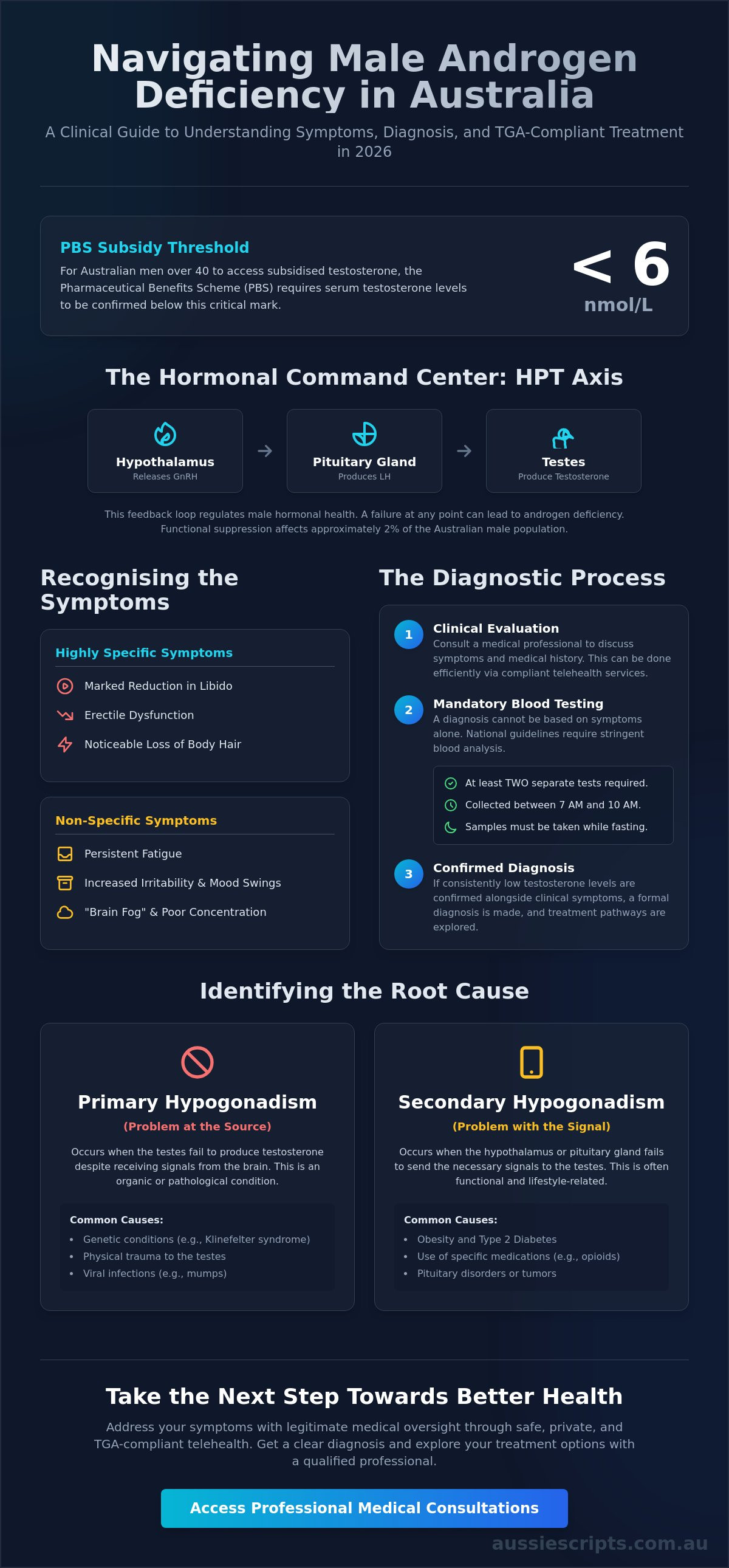
Did you know that for an Australian man over 40 to access subsidised testosterone, his serum levels must now fall below 6 nmol/L? This strict threshold, established by the Pharmaceutical Benefits Scheme (PBS), highlights the rigorous clinical standards governing Male Androgen Deficiency and treatment options in 2026. If you're struggling with persistent fatigue that's impacting your work and home life, it's natural to feel frustrated by the conflicting information found in unregulated "online clinics" and social media ads. You deserve a path that prioritises safety and TGA compliance over marketing hype.
While testosterone levels naturally decrease by 0.5 to 2.0% per year from early adulthood, distinguishing between age-related changes and clinical deficiency is essential for safe care. This guide provides a clinical framework for navigating the Australian healthcare system without the bureaucratic delays of traditional physical offices. We will examine diagnostic requirements for organic versus functional hypogonadism, compare available therapy pathways, and outline how to access professional medical consultations safely through efficient telehealth channels. You'll gain a pragmatic understanding of how to address your symptoms through legitimate medical oversight and clear, step-by-step diagnostic protocols.
Key Takeaways
- Learn how the hypothalamic-pituitary-testicular (HPT) axis functions as the primary regulator of your hormonal health.
- Identify the specific clinical markers and non-specific symptoms that signal a need for professional medical intervention.
- Evaluate the clinical differences between various Male Androgen Deficiency and treatment options available under Australian TGA guidelines.
- Understand the essential safety protocols and blood monitoring requirements necessary to manage potential side effects effectively.
- Discover a streamlined pathway to obtain specialist referrals and medical consultations through a compliant telehealth framework.
What is Male Androgen Deficiency (Hypogonadism)?
What is Male Androgen Deficiency (Hypogonadism)? It is a clinical syndrome defined by the body's inability to produce sufficient physiological levels of testosterone. This condition arises from a failure at any stage within the hypothalamic-pituitary-testicular (HPT) axis. When investigating Male Androgen Deficiency and treatment options, it's vital to recognize that this isn't simply a consequence of aging. It's a specific medical state where low serum testosterone concentrations are accompanied by persistent clinical signs that affect daily function.
The HPT axis operates as a complex feedback loop. The hypothalamus releases gonadotropin-releasing hormone (GnRH), which prompts the pituitary gland to produce luteinizing hormone (LH). LH then signals the testes to produce testosterone. Any disruption in this communication chain leads to a deficiency that requires clinical evaluation. In Australia, recent data suggests that functional suppression of this axis, often referred to as late-onset hypogonadism, affects approximately 2% of the male population.
To better understand the biological mechanisms and diagnostic indicators of this condition, watch this clinical overview:
The Biological Role of Testosterone
Testosterone is the primary male sex hormone responsible for androgenic effects. It regulates far more than just sexual drive. It's essential for maintaining bone mineral density and supports the development of muscle mass. It also plays a critical role in erythropoiesis, which is the production of red blood cells. Beyond physical traits, testosterone significantly impacts psychological health. Men with low levels often report decreased cognitive function, persistent irritability, and a higher risk of depressive symptoms, making a precise diagnosis essential for mental well-being.
Primary vs. Secondary Hypogonadism
Identifying the specific type of deficiency is a prerequisite for safe care. Primary hypogonadism occurs when the testes themselves fail to produce testosterone. This can result from genetic conditions like Klinefelter syndrome, physical trauma, or certain viral infections. Secondary hypogonadism involves a failure of the hypothalamus or pituitary gland. This is more common and is frequently linked to manageable factors such as obesity, type 2 diabetes, and the use of specific medications like opioids.
Distinguishing between these causes is the first step in exploring Male Androgen Deficiency and treatment options. Without a clear diagnosis of the root cause, clinicians cannot determine if the condition is organic (pathological) or functional (lifestyle-related). This distinction dictates whether the treatment focus should be on hormone replacement or addressing underlying metabolic health issues through specialist intervention.
Recognising Symptoms and the Diagnostic Process
Identifying Male Androgen Deficiency and treatment options begins with a careful evaluation of physical and psychological changes. Clinical signs often present as a cluster rather than isolated incidents. Highly specific symptoms include a marked reduction in libido, erectile dysfunction, and a noticeable loss of body hair. While these are primary indicators, many men first seek care for non-specific issues such as persistent fatigue, increased irritability, and a persistent "brain fog" that affects professional performance. Understanding Recognising Symptoms and the Diagnostic Process is the first step toward reclaiming functional health.
In Australia, the diagnostic requirements are stringent to ensure patient safety and regulatory compliance. A diagnosis cannot be made based on a single measurement. National guidelines require at least two separate fasting morning blood tests, typically performed on different days. These samples must be collected between 7 am and 10 am when serum testosterone levels are at their physiological peak. If levels are measured later in the day, they may appear falsely low, leading to an inaccurate diagnosis of Male Androgen Deficiency and treatment options.
Clinicians look at both Total Testosterone and Free Testosterone. Total Testosterone measures the entire amount of the hormone in your bloodstream, but much of it is bound to proteins like Sex Hormone Binding Globulin (SHBG). Free Testosterone represents the unbound portion that's actually available for your tissues to use. As men age, SHBG levels often rise, meaning your "Total" number might look acceptable while your "Free" levels are clinically deficient. If you're experiencing these symptoms, you may need a specialist referral to consult with an endocrinologist or urologist.
Clinical Signs vs. Biochemical Data
Low biochemical numbers alone don't justify medical intervention. 2026 standards prioritise patient-reported outcomes and clinical symptoms alongside pathology results. During a consultation, a doctor will also evaluate metabolic markers such as BMI and waist circumference. Since obesity and type 2 diabetes can functionally suppress testosterone production, these physical metrics are essential for determining if the deficiency is organic or related to reversible lifestyle factors.
The Australian Diagnostic Pathway
The path to care follows a logical, step-by-step progression. It starts with an initial clinical consultation to document your history and symptom severity. From there, you'll receive pathology referrals for the required morning blood tests. If your results show serum testosterone levels below the PBS subsidy threshold of 6 nmol/L, or if your case involves complex comorbidities, a specialist referral to an endocrinologist or urologist is often the next step to ensure a safe and compliant treatment plan.
Male Androgen Deficiency Treatment Options in 2026
The primary goal of Testosterone Replacement Therapy (TRT) is to restore serum testosterone to a physiological range that alleviates clinical symptoms while minimising long-term risks. It's not about performance enhancement; it's about hormonal restoration. All androgen products in Australia are strictly regulated by the Therapeutic Goods Administration (TGA), ensuring that Male Androgen Deficiency and treatment options meet high safety and quality standards before they reach patients. Modern formulations are significantly safer and more effective than historical treatments, providing more stable hormone levels and fewer side effects.
Choosing a delivery method involves balancing clinical requirements with lifestyle preferences. Your doctor will consider your diagnostic data, comorbidities, and the specific cause of your deficiency when recommending a pathway. Whether you require a Standard Script for ongoing care or a new consultation, understanding the differences between these methods is essential for long-term success.
Transdermal Gels and Creams
Topical options are a common first-line choice because they provide steady-state hormone levels that closely mimic the body's natural daily rhythm. These are applied once daily to clean, dry skin on the shoulders, upper arms, or abdomen. Because they're used every day, they avoid the significant fluctuations often seen with older injectable formats. However, users must be diligent about preventing transfer to others, particularly women and children, through skin-to-skin contact. While highly effective, some men experience localised skin irritation or redness at the application site. If this occurs, rotating the application area or switching to a different formulation is usually necessary.
Injectable Testosterone Options
Injectable treatments have evolved considerably, offering a range of dosing schedules to suit different patient needs. Short-acting injections are typically administered every one to two weeks, but they can sometimes lead to a "peak and trough" effect. This is where patients feel a surge in energy shortly after the injection followed by a decline before the next dose is due. To avoid this, many Australian men now utilise long-acting (depot) injections. These formulations are administered by a healthcare professional approximately every 10 to 14 weeks. This long-acting approach provides a much more stable release of testosterone, reducing the frequency of clinic visits and maintaining consistent symptom relief over several months. Choosing between these Male Androgen Deficiency and treatment options requires a clear understanding of your own physiological response to therapy.
Safety, Monitoring, and Lifestyle Integration
Safety is the cornerstone of long-term hormone management. When investigating Male Androgen Deficiency and treatment options, patients often worry about potential risks to their cardiovascular or prostate health. Current clinical consensus clarifies that TRT does not cause prostate cancer. However, because testosterone can stimulate the growth of pre-existing malignant cells, rigorous screening is a non-negotiable part of the Australian diagnostic and maintenance framework. It's a controlled medical process designed to improve quality of life while maintaining strict safety margins.
Ongoing monitoring involves regular blood work to assess prostate-specific antigen (PSA) levels, liver function, and haematocrit. Haematocrit monitoring is particularly critical as it detects polycythaemia, a condition where the blood thickens due to increased red blood cell production. Regular assessments, typically every three to six months during the first year of therapy, allow your doctor to adjust dosages and maintain your health within safe physiological parameters. Current evidence does not show increased cardiac risk when TRT is prescribed correctly and monitored by registered medical professionals.
If you are managing comorbidities alongside hormonal health, you may benefit from a Weight Loss Consultation to address functional suppression of your natural hormone production.
Managing Cardiovascular and Prostate Health
Regular blood work prevents polycythaemia by identifying elevations in red blood cell count before they lead to complications. The 2026 guidelines for PSA screening require a baseline test followed by periodic reviews to ensure any changes are caught early. This proactive approach transforms hormone therapy into a transparent and manageable healthcare pathway. It's about maintaining a precise balance that supports your vitality without compromising your internal stability or long-term safety.
The Impact of Diet and Exercise
Medical treatment is a complement to, not a replacement for, fundamental lifestyle changes. Resistance training naturally supports hormonal health by improving insulin sensitivity and stimulating androgen receptor activity in muscle tissue. Your diet also plays a fundamental role in how your body processes hormones. Ensuring adequate intake of zinc, Vitamin D, and healthy fats provides the raw biological materials your body needs for androgen production and metabolic regulation.
Metabolic health is inextricably linked to your testosterone levels. Obesity often leads to increased aromatisation, a process where testosterone is converted into oestrogen within fat tissue. Additionally, untreated sleep apnoea can severely disrupt the nocturnal pulses of testosterone production that occur during deep sleep. Managing alcohol consumption and chronic stress is equally vital, as high cortisol levels can directly inhibit the HPT axis. By integrating these habits, you maximize the efficacy of your prescribed Male Androgen Deficiency and treatment options.
Accessing Modern Men’s Health Care via Telehealth
Telehealth has transformed how Australian men manage sensitive health concerns by removing the logistical barriers of traditional physical clinics. It provides a discrete, efficient, and clinically rigorous environment for discussing Male Androgen Deficiency and treatment options without the friction of a public waiting room. This digital-first approach ensures that patients can access specialized care from their own environment while maintaining the highest standards of medical privacy. By leveraging modern technology, the gap between recognizing symptoms and starting a compliant treatment plan is significantly reduced.
Aussie Scripts facilitates this process by connecting patients directly with Australian-registered doctors who understand the specific regulatory framework of the TGA and PBS. Whether you require an initial consultation or a standard script for ongoing management, the platform ensures that every step is governed by professional oversight. This model prioritizes your time and intelligence, providing a service that is defined by competence and punctuality rather than bureaucratic delays.
The Digital Consultation Process
The clinical review process is thorough and evidence-based. After submitting your health information, an Australian doctor reviews your medical history and specific symptoms. Because 2026 regulations prioritize safety, doctors frequently request recent blood results to confirm a diagnosis before approving any Male Androgen Deficiency and treatment options. Once the clinician approves the request, a digital script (eScript) is sent directly to your phone via SMS or email. This allows you to fulfill your prescription at any local pharmacy immediately, ensuring your treatment remains uninterrupted and legally compliant.
Why Clinical Oversight Matters
Obtaining androgen products through "underground" or non-prescription channels carries significant health and legal risks. These unregulated products often lack quality control and can lead to severe side effects without medical recourse. Legitimate clinical oversight ensures that your dosage is tailored to your physiological needs and that your health markers are monitored regularly. If your treatment pathway requires time off work for clinical procedures or specialist appointments, you can also obtain a medical certificate online through a professional digital review.
Taking the first step toward hormonal health doesn't have to be complicated. By choosing a regulated telehealth pathway, you ensure that your care is managed by professionals who adhere to national safety standards. This pragmatic approach allows you to focus on your recovery and long-term vitality while the logistics of your healthcare are handled with modern efficiency. Start your digital review today to secure a safe, discrete, and professional path to medical care.
Secure Your Path to Hormonal Health
Managing hormonal health in 2026 is a structured medical process that balances clinical diagnostics with digital accessibility. You now understand that a legitimate diagnosis requires two fasting morning blood tests and a thorough review of both physical and psychological symptoms. Whether you're comparing transdermal gels or long-acting injections, the priority remains TGA compliance and regular monitoring of health markers. Modern medical treatment is most effective when integrated with metabolic management and consistent lifestyle habits.
Navigating Male Androgen Deficiency and treatment options doesn't have to be a bureaucratic burden. You can bypass the delays of traditional physical offices while maintaining strict professional standards. As an Australian-owned and operated platform, we connect you with Registered Australian Doctors for secure and confidential digital consultations. This ensures your care remains legitimate, private, and efficient. It's a pragmatic way to address your symptoms with expert oversight.
Consult an Australian-registered doctor online for your health needs today. You deserve a clear, safe, and professional path toward restoring your long-term vitality.
Frequently Asked Questions
Is androgen deficiency the same as "Male Menopause"?
No, these terms aren't clinically identical. While "male menopause" is a popular term for the gradual age-related decline in hormones, androgen deficiency is a specific medical syndrome. It involves a pathological or functional failure of the HPT axis that leads to symptoms impacting daily life. A clinical diagnosis requires consistent symptoms alongside low serum testosterone levels confirmed by multiple blood tests.
Can I get a testosterone prescription online in Australia?
Yes, you can obtain a prescription through regulated telehealth platforms after a thorough clinical review. You must consult with an Australian-registered doctor and provide the necessary pathology results to confirm your eligibility. This process ensures that your Male Androgen Deficiency and treatment options are managed safely and within the legal framework established by the TGA.
How much does TRT typically cost in Australia under the PBS?
For patients who meet the strict PBS criteria, such as having serum testosterone levels below 6 nmol/L, the cost is the standard PBS co-payment. As of May 2026, this is approximately $31.60 for general patients or $7.70 for concession holders. If you don't meet these specific criteria, you'll need a private prescription, which involves significantly higher out-of-pocket costs for the medication.
What are the side effects of testosterone replacement therapy?
Common side effects include acne, skin oiliness, and localised irritation from topical gels or creams. Some men may experience an increase in red blood cell count, known as polycythaemia, which requires regular monitoring. Because therapy can affect fertility and prostate health, ongoing clinical oversight and blood testing are essential to manage these risks and adjust your treatment plan accordingly.
How long does it take to see results from androgen treatment?
Most men notice improvements in libido and energy levels within 3 to 6 weeks of starting therapy. Psychological benefits, such as improved mood and reduced irritability, often follow shortly after. However, physical changes like increased muscle mass or improved bone density are more gradual. These physiological shifts typically take 6 months or longer to become fully evident during your treatment.
Do I need to see an endocrinologist for androgen deficiency?
A GP can diagnose the condition and issue private prescriptions, but a specialist is often required for PBS subsidies. An endocrinologist or urologist must be involved if you're seeking government-subsidised treatment for the first time. If your case is complex or involves underlying pituitary issues, your doctor will provide a Specialist Referral to ensure you receive expert care.
Can lifestyle changes alone fix low testosterone?
Lifestyle modifications can sometimes restore natural levels if the deficiency is functional and linked to obesity or type 2 diabetes. Significant weight loss and improved sleep hygiene can naturally stimulate the HPT axis in some men. However, if the deficiency is organic or caused by permanent damage to the testes or pituitary gland, medical intervention is usually necessary alongside these healthy habits.
Is TRT legal for athletes in Australia?
Medical treatment is legal, but competitive athletes must adhere to strict anti-doping regulations. If you compete in sanctioned sports, you must obtain a Therapeutic Use Exemption (TUE) from Sport Integrity Australia before starting Male Androgen Deficiency and treatment options. Using testosterone without a TUE can lead to a doping violation, even if the medication was legally prescribed by your doctor.
Disclaimer
The information provided by AussieScripts is for general informational purposes only and does not constitute medical advice, diagnosis, or treatment. For advice tailored to your specific symptoms or health concerns, please consult one of our doctors or your regular GP.
