Managing Contractions: Guide to Care and Follow-up
Navigate contractions and management and follow up with confidence. Learn to spot true labor, understand hospital protocols, and streamline your postnatal care.

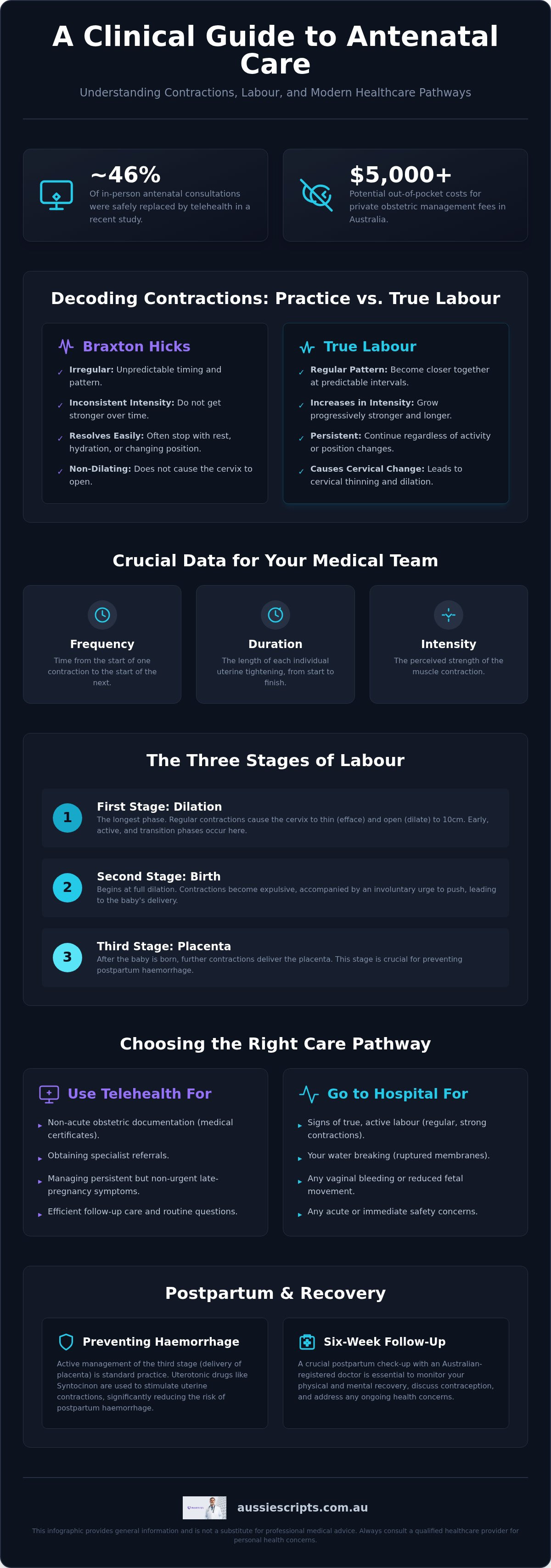
Did you know that recent clinical data from Monash Health indicates that telehealth-integrated antenatal care replaced approximately 46% of in-person consultations without compromising safety? For many expectant parents, the primary challenge isn't just the physical sensation of labor, but the logistical complexity of contractions and management and follow up care. It's understandable to feel overwhelmed when distinguishing between Braxton Hicks and active labor, especially when navigating a healthcare system where out-of-pocket costs for private obstetric management fees can reach $5,000 or more.
This guide provides a professional framework to help you understand the clinical stages of labor and the protocols medical teams use to ensure safety. You'll learn the specific differences between various contraction types and how to navigate the transition from hospital-based delivery to primary follow-up care. We also outline the streamlined digital pathways available for obtaining necessary medical certificates or specialist referrals. This ensures your recovery and ongoing obstetric needs are managed efficiently without the bureaucratic delays often associated with traditional physical clinics.
Key Takeaways
- Learn to distinguish between physiological Braxton Hicks and active labour to streamline your clinical path for contractions and management and follow up care.
- Understand standard Australian hospital protocols for monitoring contraction frequency and non-pharmacological techniques for managing early labour.
- Establish a clear threshold for emergency department attendance versus using telehealth for non-acute obstetric documentation and specialist referrals.
- Discover how to manage persistent late-pregnancy symptoms and administrative health needs through efficient digital medical reviews.
- Recognise the importance of the six-week postpartum follow-up and the role of Australian-registered doctors in your ongoing recovery.
Understanding Contractions: Types and Clinical Significance
A uterine contraction is defined as the rhythmic tightening and relaxing of the uterine muscle, representing a physiological process essential for childbirth. During pregnancy, these Uterine Contractions facilitate the thinning and opening of the cervix to allow for delivery. Understanding the nuances of these movements is critical for effective contractions and management and follow up care. The hormone oxytocin plays a central role here, acting as the primary chemical trigger that initiates and sustains uterine activity throughout the labour process. This hormonal surge ensures that the uterus contracts with enough force to progress the infant through the birth canal. Oxytocin facilitates this process.
Clinicians require precise data. This assessment ensures safety. When reporting to your medical team, it's necessary to track three specific metrics: frequency, duration, and intensity. Frequency refers to the time from the start of one contraction to the start of the next. Duration measures how long each individual tightening lasts. Intensity describes the perceived strength of the muscle contraction. Accurate tracking allows healthcare providers to differentiate between physiological practice and active labour. This data is also vital for Australian-registered doctors when providing non-emergency follow-up care or specialist referrals via telehealth services later in the pregnancy period.
Braxton Hicks vs. True Labour
Braxton Hicks are non-dilating uterine tightenings common in the third trimester. These practice contractions are typically irregular and don't increase in intensity over time. They often resolve with rest, changing position, or increasing hydration. True labour contractions follow a predictable, regular pattern, becoming closer together and more physically intense. They're often accompanied by other signs like the loss of the mucus plug. This distinction is a cornerstone of professional contractions and management and follow up protocols, ensuring patients receive the correct level of intervention at the right time.
The Three Stages of Labour Contractions
The first stage of labour involves regular contractions that lead to full cervical dilation and effacement. This is often the longest phase. In the second stage, contractions become expulsive to aid the birth of the baby. These are often accompanied by an involuntary urge to push. Finally, the third stage requires further contractions to facilitate the delivery of the placenta. While it's usually less intense than the previous stages, these contractions are vital for preventing postpartum haemorrhage and ensuring a safe physiological recovery.
Clinical Management of Contractions and Labour
Standard hospital protocols in Australia focus on intermittent auscultation for low-risk women. This clinical approach avoids unnecessary interventions while ensuring safety. Medical teams monitor uterine activity and fetal heart rates to guide patients through the stages of labor. Effective contractions and management and follow up care require a precise balance between physiological support and medical readiness. If labour progresses normally, clinicians prioritize a woman-centred environment that respects individual birth plans while maintaining strict safety standards.
Non-pharmacological techniques focus on mobility and comfort. Walking, swaying, and specialized breathing exercises help manage early-stage discomfort. If pain relief is required, clinicians offer tiered pharmacological options. Nitrous oxide gas provides rapid, short-term relief. Pethidine injections offer stronger systemic sedation. Epidurals provide the most comprehensive pain block but require continuous electronic monitoring. If labour becomes prolonged or obstructed, Australian standards dictate specific interventions, such as oxytocin augmentation or instrumental delivery, to maintain maternal health. If you require documentation for work leave following a non-emergency obstetric review, you can request a medical certificate online.
Active Management of the Third Stage
Active management is the recommended clinical standard to reduce the risk of postpartum haemorrhage. This process involves the administration of uterotonic drugs, most commonly Syntocinon, immediately following the birth. These medications stimulate the uterus to contract firmly, facilitating the delivery of the placenta. Active management significantly lowers blood loss compared to physiological management. Post-delivery, clinicians perform regular checks of uterine tone and fundal height. These checks ensure the uterus is returning to its pre-pregnancy state effectively.
Managing Preterm Contractions
Preterm labour occurs before 37 weeks of gestation. Clinical management focuses on delaying delivery to allow for foetal maturation. Doctors use tocolytics, which are medications designed to temporarily slow or stop uterine activity. Simultaneously, corticosteroids are administered to accelerate foetal lung development. These interventions are time-sensitive. Any signs of preterm contractions require immediate hospital transfer for emergency assessment. Telehealth is not suitable for acute preterm symptoms, but it remains a primary tool for managing non-urgent documentation once a patient is stabilised.
Management Framework: Telehealth vs. Emergency Care
The modern obstetric journey involves two distinct pathways: the acute clinical environment and the digital primary care space. Understanding when to use each is vital for maternal safety and peace of mind. Acute labour and heavy bleeding are strictly emergency department matters that require immediate, in-person clinical intervention. Conversely, telehealth has emerged as the primary tool for non-acute contractions and management and follow up care, providing a safe distance for professional oversight without bureaucratic delays. This framework allows hospitals to focus on high-risk deliveries while digital facilitators handle the essential administrative and follow-up logistics.
Digital consultations serve as a tech-savvy extension of traditional professional offices. They're designed for speed and clarity, helping you move quickly from identifying a non-urgent problem to implementing a clinical solution. It's important to recognise that while these services are fast, they remain a legitimate medical process governed by Australian professional standards. Aussie Scripts focuses on this logistical efficiency, ensuring that your non-emergency needs are met by Australian-registered doctors without the wait times of a physical clinic. We don't provide emergency medical care, physical examinations, or prescriptions for controlled drugs, as these require in-person monitoring.
When to Seek Immediate Emergency Review
Emergency departments are the only appropriate setting for suspected obstetric crises. If you experience signs of preterm labour before 37 weeks, you must seek immediate in-person review. Other critical indicators include the rupture of membranes, commonly known as your waters breaking, or a noticeable decrease in foetal movement. Severe abdominal pain or significant vaginal bleeding also necessitates urgent hospital admission. These scenarios require physical diagnostic tools and continuous monitoring that cannot be provided via a digital interface. In these instances, punctuality in reaching a hospital is the priority.
Appropriive Use of Telehealth in Pregnancy
Telehealth is the primary tool for managing the secondary and administrative aspects of obstetric care. It's particularly effective for reviewing blood test results or discussing specialist reports after an initial hospital assessment. Patients often use digital services to manage persistent but non-acute symptoms like reflux or mild insomnia that don't require a physical exam. Additionally, obtaining a Medical Certificate Online Australia is a streamlined way to manage work-related leave requirements. This digital pathway ensures that your contractions and management and follow up documentation remains compliant with national regulatory standards while respecting your recovery needs.
Follow-Up Care and Managing Pregnancy Symptoms
The conclusion of the birth event does not signal the end of the clinical journey. A postpartum follow-up is a critical assessment of physical and mental recovery. This standard six-week review allows Australian-registered doctors to evaluate uterine involution, wound healing, and pelvic floor function. It's a necessary step to ensure that the transition from pregnancy to recovery is progressing without complication. This period requires a pragmatic approach to health that balances the demands of a newborn with the necessity of maternal self-care.
Managing ongoing gestational health concerns is a priority in the weeks following delivery. Iron deficiency is a common clinical finding in the postpartum period, often requiring supplementation to combat fatigue and support breastfeeding. Mental health follow-up is equally essential. Clinicians use standardised screening tools to identify early signs of postnatal depression. Proactive management reduces the risk of long-term psychological distress. This comprehensive framework ensures that contractions and management and follow up care address the whole person, not just the physiological event of birth.
Post-Contraction Symptom Management
Late-pregnancy symptoms often persist or evolve after Braxton Hicks episodes conclude. Pelvic girdle pain is a frequent musculoskeletal concern that may require physiotherapy referrals for effective management. For patients experiencing pregnancy-related heartburn or significant sleep disturbances, safe pharmacological options can be discussed during a digital review. Effective contractions and management and follow up protocols ensure these symptoms are addressed promptly to improve daily function. If you require documentation for work-related leave during this recovery phase, you can apply for a medical certificate online for a fast, compliant result.
Coordinating Multidisciplinary Care
A GP acts as the central facilitator between your obstetrician, midwife, and allied health providers. This coordination ensures that no aspect of your recovery is overlooked. Utilising telehealth for brief reviews between major specialist appointments is a tech-savvy way to maintain continuity of care. It allows for the rapid discussion of blood test results or minor symptom changes without the bureaucratic delays of a physical office. Ensuring all follow-up documentation is digitally stored and accessible simplifies communication across your entire medical team. This modern, logical progression helps reduce the anxiety often associated with navigating complex healthcare systems.
Accessing Specialist Referrals and Documentation via Aussie Scripts
Managing the administrative side of pregnancy is a necessity that often adds friction to an already demanding period. While the physical aspects of contractions and management and follow up care occur in clinical settings, the logistical requirements for specialist oversight and workplace documentation are best handled through efficient digital channels. Aussie Scripts functions as a modern extension of the professional office, providing a streamlined pathway for these essential services. This approach respects your time and intelligence, offering a service defined by competence and punctuality.
If your health journey requires an obstetric or gynaecological review, a Specialist Referral is the necessary entry point. Obtaining this document through a digital consultation ensures that your care remains within the established Australian healthcare framework while avoiding the bureaucratic delays of physical clinics. Similarly, if you require a Standard Script for pregnancy-safe medications, such as those for managing iron levels or reflux discussed in previous sections, the process is designed for speed and clinical reliability. Every review is conducted by Australian-registered doctors; this ensures that while the delivery is digital, the professional standard remains strictly compliant with national regulations.
How to Request a Specialist Referral Online
The process for securing a referral is straightforward and instructional. It follows a logical, step-by-step progression to ensure all clinical information is captured accurately for the reviewing doctor. This transparency regarding professional oversight reinforces the legitimacy of the service.
- Step 1: Select the 'Specialist Referral' service on the Aussie Scripts platform to initiate your request.
- Step 2: Complete the clinical assessment form, providing a detailed history of your pregnancy and the specific reasons for the specialist review.
- Step 3: Undergo a digital review by an Australian-registered doctor who will assess your eligibility and issue the referral if clinically appropriate.
Securing Medical Certificates for Pregnancy Leave
Digital medical certificates issued through Aussie Scripts carry the same legal validity as those from a physical clinic. They're a reliable tool for Australian employers and adhere to the standards set by national regulatory bodies. If you're experiencing pregnancy-related fatigue, morning sickness, or recovering from the physical demands of labour, securing documentation is a pragmatic step. You don't need to navigate a waiting room while unwell. Instead, you can request documentation for these symptoms through a professional digital interface. This commitment to reliability ensures that your administrative health needs are met with the same authority as your in-person clinical care. This allows you to focus on your immediate recovery and newborn care without unnecessary logistical stress.
Streamlining Your Post-Obstetric Recovery
Navigating the physiological and administrative demands of pregnancy requires a structured approach. By understanding the clinical significance of different contraction types and the protocols for hospital management, you can make informed decisions during each stage of labour. It's essential to distinguish between acute emergencies and non-urgent follow-up needs. Effective contractions and management and follow up care involves utilizing hospital resources for delivery while leveraging digital health for administrative documentation and specialist referrals. This dual-pathway model ensures that you receive immediate intervention when required and efficient logistical support during your recovery.
Aussie Scripts supports this journey through a modern, efficient platform. You can access consultations with Australian-registered doctors for non-emergency reviews, ensuring your recovery is managed with professional reliability. Our service operates seven days a week, providing secure digital delivery of all medical scripts and certificates directly to your device. This eliminates bureaucratic delays and respects your intelligence by providing a service that is as much about logistics as it is about clinical excellence.
Request a Specialist Referral or Medical Certificate from Aussie Scripts today to streamline your healthcare logistics. Professional support is available when you need it most.
Frequently Asked Questions
What is the clinical management for Braxton Hicks contractions?
Clinical management focuses on symptom relief through hydration and rest. These are non-dilating practice tightenings. If they're irregular and don't increase in intensity, doctors recommend changing positions or taking a warm bath. This helps differentiate them from active labour. Professional oversight ensures these episodes are monitored as part of your broader contractions and management and follow up plan, though they don't require hospital intervention or acute medical care.
When should I follow up with a doctor after experiencing contractions?
Follow up immediately if contractions become regular, increase in intensity, or are accompanied by a rupture of membranes. For non-urgent tightenings like Braxton Hicks, a follow-up consultation is appropriate to discuss patterns and documentation needs. Aussie Scripts provides a digital pathway for these non-emergency reviews with Australian-registered doctors. This ensures your pregnancy history is updated and any administrative requirements, like medical certificates, are handled promptly without the delays of physical clinics.
Can I get a specialist referral for an obstetrician via telehealth?
You can obtain a Specialist Referral for an obstetrician or gynaecologist through a digital consultation. The process involves selecting the service on the Aussie Scripts platform and completing a clinical assessment form. An Australian-registered doctor then reviews your pregnancy history and symptoms. If clinically appropriate, they issue a formal referral. This method avoids the bureaucratic delays of physical offices while maintaining compliance with national healthcare standards and supporting the Australian medical framework.
How do doctors manage prolonged labour in Australian hospitals?
Australian clinical standards for managing prolonged labour involve specific interventions like oxytocin augmentation or instrumental delivery. If labour progresses slower than expected, medical teams monitor fetal heart rates and uterine activity closely. Non-pharmacological techniques like movement are encouraged first. If these are insufficient, doctors may recommend pharmacological options or surgical intervention to ensure maternal safety. This acute management occurs strictly within a hospital environment, as telehealth is not suitable for emergency obstetric care.
What follow-up care is required after a preterm labour scare?
After a preterm labour scare is stabilised in hospital, follow-up care focuses on monitoring for recurring symptoms and managing foetal development. This often includes scheduled reviews to assess uterine tone and cervical stability. Patients may also need to discuss the results of previous tocolytic or corticosteroid treatments. Telehealth is a highly efficient tool for these non-acute discussions and for coordinating ongoing care between your GP and specialist obstetrician within a national framework.
Can an online doctor provide a medical certificate for pregnancy-related leave?
Australian-registered doctors on the Aussie Scripts platform can provide legally valid medical certificates for pregnancy-related leave. If you're experiencing morning sickness, fatigue, or discomfort from Braxton Hicks, you can request an assessment online. This digital pathway is designed for speed and professional reliability. It ensures your documentation meets national regulatory standards for employers without the need for an in-person physical examination. It's a pragmatic solution for managing work requirements while unwell.
What is the difference between active and physiological management of the third stage?
Active management involves the clinical use of uterotonic drugs like Syntocinon to facilitate the delivery of the placenta and reduce blood loss. It's the standard recommendation in Australian hospitals to prevent postpartum haemorrhage. Physiological management relies on the body's natural oxytocin release without medical intervention. Active management is generally preferred for its safety profile in reducing maternal morbidity. Follow-up checks after either method ensure the uterus returns to its pre-pregnancy state effectively.
How can I manage pregnancy symptoms like reflux through Aussie Scripts?
Manage non-acute symptoms like reflux or mild insomnia by requesting a digital consultation for a Standard Script. An Australian-registered doctor will review your symptoms and medical history to ensure any prescribed medication is pregnancy-safe. This streamlined process allows you to address persistent discomfort quickly. It forms a key part of your contractions and management and follow up strategy by handling secondary health concerns through a tech-savvy digital facilitator that respects your time.
Disclaimer
The information provided by AussieScripts is for general informational purposes only and does not constitute medical advice, diagnosis, or treatment. For advice tailored to your specific symptoms or health concerns, please consult one of our doctors or your regular GP.
