Managing Pollen Allergies in Australia: A 2026 Guide to Relief
Struggling with pollen allergies in Australia? Our 2026 guide covers triggers, treatments, and how to legally request a script online for fast, effective rel...

Imagine sitting in a 10:00 AM board meeting while persistent sneezing and streaming eyes make it impossible to focus on your presentation. For the 19% of Australians currently living with allergic rhinitis, this isn't just a minor seasonal nuisance; it's a significant barrier to daily productivity. When the pollen count rises, standard supermarket antihistamines often fail to provide the level of relief you need to function effectively.
You've likely experienced the frustration of trying to book a GP appointment during peak allergy season, only to find the next available slot is weeks away. This 2026 guide provides a clear path to identifying your specific triggers and comparing the most effective clinical treatments available today. You'll learn how to bypass the traditional waiting room and access a fast, legal way to request a script for prescription-strength nasal sprays or medications. This professional overview ensures you have the medical guidance required to manage your symptoms with precision and speed.
Key Takeaways
- Understand why hay fever affects 1 in 5 Australians and how to identify the specific immune triggers behind your symptoms.
- Prepare for the 2026 season by identifying peak timing and how climate cycles like La Niña impact pollen counts across different states.
- Evaluate the limitations of over-the-counter treatments and determine when a transition to prescription-strength relief is medically indicated.
- Implement practical environmental controls and hygiene habits to significantly reduce your daily allergen exposure.
- Learn how to bypass physical waiting rooms by using a secure, three-step digital process to request a script online from Australian practitioners.
Understanding the Impact of Pollen on Australian Health
Pollen serves as a primary environmental trigger for millions of Australians. Allergic rhinitis is the clinical term for hay fever. Data from the Australian Institute of Health and Welfare indicates that 1 in 5 people across the country suffer from this condition, making it one of the most common chronic respiratory issues in the nation. When an individual with a sensitivity inhales these microscopic grains, their immune system misidentifies the protein as a dangerous pathogen. This error triggers the production of immunoglobulin E (IgE) antibodies, which lead to the release of histamine and other inflammatory chemicals into the bloodstream.
Understanding Allergic Rhinitis is essential for managing these physiological responses effectively, especially as environmental factors evolve. Beyond the standard sneezing and itchy eyes, many Australians now face complex presentations like 'pollen food syndrome', where the body reacts to certain raw fruits or nuts that share similar proteins with pollen. Even more critical is the risk of thunderstorm asthma. This occurs when moisture causes pollen grains to burst into tiny particles that penetrate deep into the lungs, a phenomenon that has caused significant public health emergencies in cities like Melbourne.
To better understand this concept, watch this helpful video:
In 2026, climate patterns are significantly shifting the traditional Australian allergy calendar. Rising average temperatures and increased carbon dioxide levels are extending the growing seasons for many allergenic plants. This means the window for pollen exposure starts earlier in the spring and lasts longer into the summer than in previous decades. These shifting cycles require a more proactive approach to symptom management and medical consultation.
The Science of Allergic Rhinitis
The body's reaction to pollen is an overzealous defense mechanism. Once histamine is released, it causes the nasal passages to swell and produce excess mucus. It's vital to distinguish between seasonal and perennial allergies. Seasonal reactions occur during specific windows when plants flower, whereas perennial allergies persist throughout the year, often aggravated by dust mites or mould in addition to various plant cycles. Clinical intervention focuses on blocking this histamine response to reduce inflammation.
Identifying Your Specific Pollen Triggers
Pinpointing the exact source of your symptoms is the first step toward relief. Australia's diverse landscape means triggers vary by region:
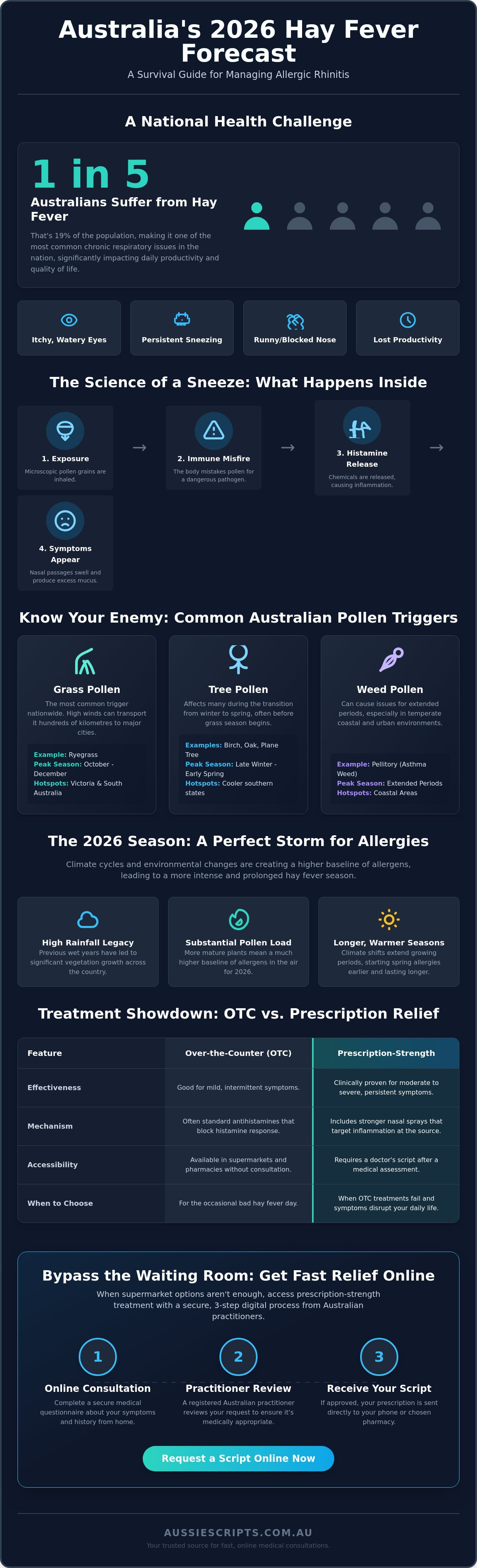
- Grass Pollen: This is the most common trigger. Ryegrass is particularly dominant in southern states like Victoria and South Australia, peaking between October and December.
- Tree Pollen: Species such as Birch, Oak, and Plane trees often cause symptoms in late winter and early spring.
- Weed Pollen: Plants like Pellitory-of-the-wall (Asthma Weed) are prevalent in coastal areas and can trigger symptoms for extended periods.
Windy conditions often make symptoms worse. High winds transport pollen grains hundreds of kilometres from their source, meaning you don't need to be near a park or garden to be affected. Monitoring local counts is a practical way to prepare for high-risk days.
The 2026 Australian Pollen Season: Timing and Geography
The 2026 season is heavily influenced by the transition in climate cycles observed throughout 2025. Following several years of high rainfall, the Australian landscape has accumulated significant vegetation density, particularly across the Murray-Darling Basin and the South East. This residual moisture ensures that the pollen load for 2026 will be substantial, even if the year trends toward a drier El Niño phase. Grasses and trees that flourished during the wet years are now reaching peak maturity, creating a higher baseline of allergens compared to previous decades.
Geography and wind patterns are critical factors in daily symptom severity. Allergens don't remain stationary; northerly winds frequently transport microscopic particles over 500 kilometres from inland grazing territories to coastal cities like Sydney, Melbourne, and Adelaide. This means your local garden may be clear, yet you could experience severe symptoms due to inland Ryegrass being carried toward the coast. Monitoring national forecasts is essential for daily planning. These tools provide a 24-hour to 7-day outlook, allowing you to limit outdoor exposure during peak transit times. If you find your symptoms escalating as the season progresses, you can request a script online through a professional telehealth consultation to ensure your treatment remains effective.
Peak Periods by Pollen Type
Spring remains the most volatile period for Australians, with tree varieties peaking in September and the significant Ryegrass season dominating October through December. Summer brings a secondary peak for weed varieties such as Plantain and Parietaria, which often affects those in southern coastal regions. In northern climates like Queensland, the lack of a traditional winter means there is no true off-season for allergens. According to the ASCIA on Pollen Allergy, the timing of these peaks varies significantly by state, making regional awareness a priority for effective management.
Thunderstorm Asthma: A National Priority
Thunderstorm asthma is a serious clinical event triggered when high humidity causes pollen grains to absorb moisture and burst. This process releases thousands of microscopic fragments that are small enough to be inhaled deep into the lungs. Individuals with seasonal hay fever or a history of asthma are at the highest risk during the October to December window. When a storm warning coincides with a high count day, you should stay indoors with all windows closed. It's vital to have a current asthma management plan and keep reliever medication ready during these high-risk weather events.
Comparing Allergy Relief: OTC vs. Prescription Treatments
Managing seasonal symptoms requires a strategic approach to medication. While many Australians rely on supermarket shelves for initial relief, these options often provide only partial coverage against high pollen counts. A transition to clinical-grade treatments becomes necessary when symptoms disrupt sleep or daily productivity. Clinical reviews indicate that early intervention with targeted therapies prevents the escalation of allergic rhinitis into chronic conditions.
Common Medication Categories
Non-drowsy oral antihistamines are the first line of defense for mild cases. They work by blocking H1 receptors to reduce sneezing and itchy eyes. However, they frequently fail to address nasal congestion or severe inflammation because they don't treat the late-phase allergic response. If symptoms persist for more than four days a week, relying solely on oral tablets is often ineffective.
Intranasal corticosteroids (INCS) are the gold standard for moderate to severe symptoms. These sprays reduce underlying inflammation in the nasal passages rather than just masking immediate reactions. For additional support, saline washes and medicated eye drops serve as effective adjunct therapies. You can find detailed symptom management strategies in this pollen allergy guide provided by Healthdirect Australia. These tools help clear physical allergens from the nasal cavity, improving the efficacy of medicated sprays.
Prescription-Only Options
Severe or resistant cases often require combination sprays. These formulations pair an antihistamine with a corticosteroid in a single application for faster, more comprehensive relief. Accessing these advanced treatments requires a clinical review to ensure the medication is appropriate for your specific health profile. The Express Scripts service ensures treatment continuity, allowing patients to maintain their medication regimen without the interruption of physical appointment wait times during peak season.
Aussie Scripts facilitates this process by connecting patients with qualified practitioners through a streamlined digital platform. This avoids the logistical delays of traditional clinics. Before starting long-term immunotherapy or high-dose steroids, a medical review is essential to monitor for side effects and efficacy. Once approved, you can Request a Script online, ensuring your treatment plan remains consistent throughout the spring and summer months.
A cost-benefit analysis shows that multiple trials of ineffective OTC products often exceed the price of a single telehealth consultation. Relying on a professional clinical review reduces the financial waste of trial and error purchasing. It ensures you receive the correct strength of medication during the peak pollen season. This proactive management prevents the escalation of symptoms into secondary infections like sinusitis. A single, effective prescription is more economical than a basket of various supermarket remedies that provide limited relief.
How to Manage High Pollen Days: A Practical Guide
Managing high-risk days in 2026 requires a multi-layered defense strategy. You cannot control the environment, but you can control your exposure levels through specific environmental and personal protocols. Reducing the allergen load in your immediate vicinity is the most effective way to prevent the onset of severe symptoms. Focus on physical barriers and mechanical removal to keep your respiratory system clear.
Environmental Control at Home
Seal your home during peak pollen release times. Levels generally peak between 5:00 am and 10:00 am, and again during the evening cooling period. Keep windows and doors closed. Use the "recirculate" setting on your air conditioning to prevent external air from entering the living space. Most modern Australian homes now utilize H13 or H14 HEPA filters, which capture 99.97% of airborne particles. If your system is older, a portable air purifier can cycle the air in a standard bedroom every 15 minutes. Don't dry laundry outside on high-count days. Grains adhere to damp fibers, meaning you'll bring allergens directly into your bed via your sheets.
Personal Decontamination Routine
Your body and clothing act as magnets for microscopic grains. Establish a strict decontamination protocol to stop cross-contamination. Shower and wash your hair immediately after arriving home to remove trapped allergens before they transfer to your pillow. Wipe down pets with a damp cloth if they've been outdoors; long-haired breeds can carry significant amounts of debris into the house. Use a saline nasal douche twice daily. Clinical data from the National Asthma Council Australia suggests that mechanical irrigation physically clears the nasal passages and can reduce the need for oral antihistamines by approximately 25% in regular users.
Mechanical barriers provide an extra layer of protection when you must be outdoors. Wear wrap-around sunglasses to protect the eyes from direct contact. Apply a thin layer of nasal balm or petroleum jelly around the base of the nostrils to trap grains before you inhale them. These small, pragmatic adjustments significantly reduce the physiological impact of a high-count day. If these environmental controls aren't sufficient for your needs, you can request a script for clinical-grade relief through a streamlined online consultation.
Request a Script Online: Fast Relief via Aussie Scripts
Managing seasonal hay fever often requires timely access to prescription medication. If your symptoms are triggered by high pollen counts, waiting days for a GP appointment isn't practical. Aussie Scripts provides a streamlined alternative. This platform allows you to bypass the physical waiting room and complete a medical review from your own home. It's a pragmatic solution for Australians who need to maintain their health without disrupting their daily schedule.
The system follows a logical, three-step progression. First, you complete a digital health assessment. Second, a qualified practitioner reviews your history. Finally, if you're approved, an eScript is issued directly to your device. This ensures medical oversight without the logistical friction of traditional clinics. The digital health assessment is thorough yet efficient. It asks targeted questions about your hay fever history and any previous medications that have worked for you. This data allows the doctor to make an informed decision quickly.
Safety remains the priority in allergy management. Every consultation is handled by Australian-registered doctors. These AHPRA-registered practitioners ensure that any treatment suits your specific medical profile. This adherence to national frameworks like the TGA provides the same level of safety you'd expect from a face-to-face visit. Because the service is digital, you don't have to worry about travel time or sitting in a room with other sick patients. It's a modern approach to healthcare that respects your time and health.
The Telehealth Consultation Process
You'll start by filling out a brief medical questionnaire. This document details your current symptoms, past history, and any known allergies. A practitioner then conducts a professional review to confirm treatment suitability. It's a fast, simple way to ensure your medication is appropriate for your needs. Aussie Scripts operates 7 days a week to provide national coverage across all Australian states and territories.
Seamless eScript Delivery
Once approved, you'll receive your digital script via SMS or email within minutes. This speed is critical when pollen levels spike and symptoms become unmanageable. The convenience of the 'Express Script' option is designed for those needing immediate relief. You can take your digital token to any local pharmacy or choose to have your medication delivered to your door. This flexibility allows you to manage your health on your own terms.
Take Control of Your 2026 Allergy Management
Managing your respiratory health during the 2026 Australian allergy season requires a proactive approach based on local environmental data. Peak levels of pollen typically impact major metropolitan areas between September and January, making early preparation essential for effective symptom control. By understanding the timing of local triggers and distinguishing between standard over-the-counter options and targeted prescription treatments, you'll maintain your daily routine without the burden of severe hay fever. Efficiency is vital when the season reaches its peak.
If you require professional medical support to manage your allergies, Aussie Scripts provides a streamlined telehealth solution. You can consult with 100% Australian-registered doctors who are available 7 days a week to provide national support. Once approved, your fast digital eScript is delivered directly to your smartphone for immediate use at any local pharmacy. This clinical approach removes the friction of traditional waiting rooms and ensures you have access to relief exactly when you need it. You don't have to navigate the high-count days without professional assistance.
Request a Standard or Express Script for Allergy Relief and secure your path to a clearer, more comfortable season.
Frequently Asked Questions
Can I get a prescription for hay fever online in Australia?
Yes, you can obtain a prescription for hay fever medications through registered Australian telehealth services. If your symptoms require prescription-strength treatment, you can request a script via a digital consultation. A partner doctor reviews your medical history to ensure the treatment is suitable. Once approved, your electronic prescription is sent directly to your phone via SMS, allowing you to collect your medication from any local pharmacy immediately.
What is the strongest antihistamine available without a prescription?
Fexofenadine 180mg is widely considered the strongest non-drowsy antihistamine available over the counter in Australia. Clinical trials indicate that second-generation antihistamines like cetirizine and fexofenadine effectively block H1 receptors without causing the sedation typical of older medications. These are TGA-approved for daily use when pollen counts are high. Most adults find relief within 60 minutes of the first dose, with effects lasting for a full 24 hours.
How long does it take for a nasal steroid spray to start working?
Nasal steroid sprays typically take 3 to 7 days of consistent use to reach their full therapeutic effect. While some users notice a slight improvement within 12 hours, these medications work by reducing underlying inflammation rather than providing instant relief. You should start using these sprays 2 weeks before the Australian spring season begins. This proactive approach ensures the medication is fully active before pollen levels peak in late September.
Why are my pollen allergies worse in the morning?
Your symptoms are often worse in the morning because most plants release their grains between 5:00 AM and 10:00 AM. As the air warms up, these particles rise and circulate more aggressively. Additionally, allergens that settled on your bedding or hair overnight can trigger a concentrated reaction when you wake up. Keeping windows closed during these early hours can reduce your exposure by up to 90 percent.
Is an online medical certificate valid for hay fever-related work absence?
An online medical certificate is legally valid in Australia if a registered medical practitioner issues it following a consultation. Under the Fair Work Act 2009, employers must accept digital certificates that confirm you're unfit for work. If hay fever symptoms like severe sinus pain or fatigue prevent you from performing your duties, a telehealth provider can assess your condition. Once approved, the document is emailed to you instantly for submission to your employer.
Can pollen cause a cough or asthma-like symptoms?
Yes, allergens can trigger a persistent cough and exacerbate asthma-like symptoms through a process called post-nasal drip. When irritants affect the lining of your lungs, it can lead to wheezing or shortness of breath. The National Asthma Council Australia reports that 80 percent of people with asthma also suffer from hay fever. If you experience chest tightness during the spring months, you should consult a doctor to discuss a combined management plan.
How do I know if I have a cold or a pollen allergy?
You can distinguish an allergy from a cold by the presence of itchy eyes and the duration of symptoms. A common cold usually resolves within 7 to 10 days and often includes a fever or body aches. In contrast, hay fever symptoms persist as long as the allergen is present and rarely cause a fever. If your nasal discharge is clear and your throat feels itchy rather than sore, it's likely an allergic reaction.
What should I do if my current hay fever medication isn't working?
If your current over-the-counter treatment fails to provide relief, you should request a clinical review with a healthcare professional. You might require a combination of therapies, such as adding a prescription-strength nasal spray to your daily antihistamine. A doctor can also discuss immunotherapy or refer you to an immunologist if your symptoms remain refractory. Don't continue using ineffective treatments; an adjusted medical plan can often provide the necessary relief within 48 hours.
Disclaimer
The information provided by AussieScripts is for general informational purposes only and does not constitute medical advice, diagnosis, or treatment. For advice tailored to your specific symptoms or health concerns, please consult one of our doctors or your regular GP.
