Non-Surgical Weight Loss Options Australia: The 2026 Clinical Guide
Explore the top non-surgical weight loss options Australia in our 2026 clinical guide. Learn about GLP-1s like Wegovy & access telehealth consultations.

With 65.8% of Australian adults now classified as overweight or obese, the clinical demand for effective intervention has reached a record peak. Most individuals find themselves caught between the cycle of failed traditional diets and a valid fear of surgical complications. Identifying legitimate non-surgical weight loss options Australia requires a balance of medical evidence and practical accessibility, especially as wait times for in-person specialists continue to grow.
It's understandable to feel frustrated by the lack of sustainable results from lifestyle changes alone. You deserve a professional medical pathway that prioritizes metabolic health without the risks of invasive procedures. This 2026 clinical guide details the latest non-invasive treatments and explains how you can access them through streamlined telehealth services.
The following sections examine the current status of GLP-1 medications like Wegovy and Mounjaro, provide clarity on TGA advertising regulations, and outline the step-by-step process for securing a professional weight loss consultation from your own home.
Key Takeaways
- Identify the three primary pillars of modern weight management: pharmacotherapy, endoscopic procedures, and clinical lifestyle management.
- Understand how GLP-1 and GIP receptor agonists regulate appetite to provide effective non-surgical weight loss options australia without traditional bariatric surgery.
- Compare the clinical outcomes and convenience of medical pharmacotherapy against invasive alternatives like gastric balloons or endoscopic sleeve gastroplasty.
- Learn the streamlined two-step process for securing a clinical review and a weight loss consultation with an Australian-registered doctor via telehealth.
- Discover how digital health assessments provide a fast, compliant pathway to professional medical oversight and personalized treatment plans.
Understanding Non-Surgical Weight Loss Options in Australia for 2026
Non-surgical weight loss options australia represent a clinical category of medical interventions designed to treat obesity without the invasive nature of bariatric surgery. Unlike a gastric sleeve or bypass, these treatments don't involve permanent anatomical changes or long hospital stays. The Therapeutic Goods Administration (TGA) strictly regulates this space to ensure patient safety and clinical efficacy. For many Australians, 2026 is a turning point. With obesity rates projected to reach 67.1% by 2027, the focus has shifted toward scalable, evidence-based solutions that prioritize metabolic health.
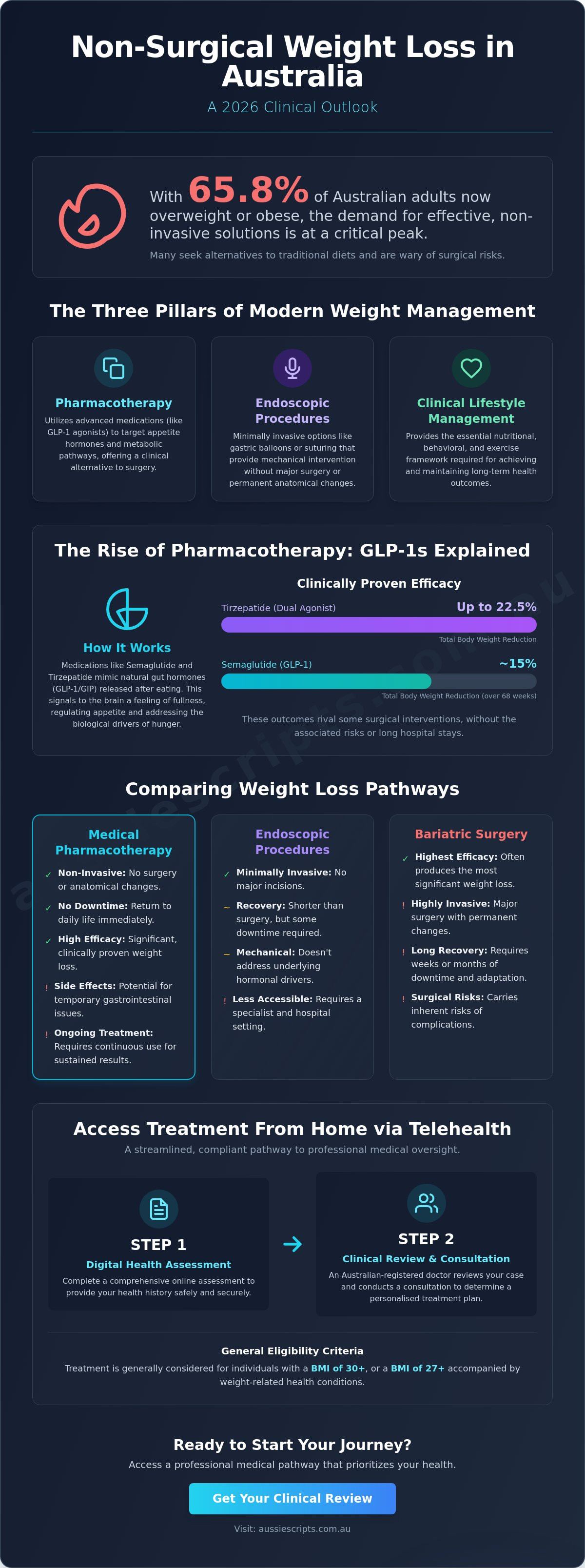
The clinical management of obesity currently rests on three specific pillars. Pharmacotherapy utilizes modern medications to target appetite hormones and insulin sensitivity. Endoscopic procedures, such as gastric balloons or suturing, offer mechanical intervention through minimally invasive means. Finally, clinical lifestyle management provides the nutritional and behavioral framework necessary for long-term maintenance. Each pillar serves a distinct patient profile, often depending on individual health history and weight loss goals.
The Shift from Surgery to Science
Australians are increasingly moving away from traditional surgery in favor of medical science. This preference for non-invasive pathways stems from a desire to avoid surgical risks and extended recovery periods. Hospital-based procedures often require weeks of downtime; however, modern clinical interventions allow for a faster return to daily life. Eligibility generally begins at a Body Mass Index (BMI) of 30, or a BMI of 27 when accompanied by weight-related conditions like hypertension. This scientific approach treats obesity as a chronic medical condition that requires ongoing professional oversight rather than a one-time surgical fix.
The Role of Telehealth in Modern Weight Management
Digital platforms have changed how patients access specialized care across the country. Telehealth removes the geographic barriers that once limited access to experts in regional Australia. It's now possible to complete a comprehensive digital health assessment and receive a clinical review from an Australian-registered doctor without visiting a physical clinic. These platforms maintain high clinical standards by ensuring every Weight Loss Consultation is conducted by a qualified professional. This model prioritizes safety and compliance while respecting the user's time. By integrating non-surgical weight loss options australia into a digital framework, patients can secure a Specialist Referral or a treatment plan with minimal friction.
The Rise of Medical Pharmacotherapy: GLP-1s and Beyond
Pharmacotherapy has emerged as a cornerstone of modern weight management. Unlike previous generations of weight loss aids that relied on stimulants, today's treatments use advanced biological pathways. These medications primarily function by mimicking naturally occurring gut hormones. By targeting the endocrine system, these non-surgical weight loss options australia provide a clinical alternative to invasive surgery. They offer a sustainable way to manage chronic obesity by addressing the underlying biological drivers of hunger rather than relying on willpower alone.
The science focuses on receptor agonists like Glucagon-like peptide-1 (GLP-1) and Gastric inhibitory polypeptide (GIP). These hormones are usually released after eating to signal the brain that the body is satisfied. Clinical trials have demonstrated significant results. For instance, patients using high-dose semaglutide often achieve a 15% reduction in total body weight over 68 weeks. Tirzepatide, a dual agonist, has shown even higher efficacy, with some participants losing up to 22.5% of their weight in clinical settings. These outcomes rival some surgical interventions without the associated hospital downtime or surgical risks.
Safety remains a primary consideration for any medical intervention. Common side effects are generally gastrointestinal, including nausea, constipation, or diarrhea. These symptoms often subside as the body adjusts to the medication over several weeks. Because these are potent medical treatments, they require careful titration and professional monitoring. When evaluating Weight management services, it's vital to prioritize those that offer evidence-based medical oversight and clear safety protocols.
Understanding GLP-1 Receptor Agonists
GLP-1 medications work by slowing gastric emptying and signaling the brain's hypothalamus to increase satiety. This process significantly reduces "food noise," which is the intrusive and constant preoccupation with eating. These non-surgical weight loss options australia are particularly effective for patients who haven't seen results from diet and exercise alone. Beyond weight reduction, these treatments offer metabolic benefits like improved insulin sensitivity. Because of these systemic effects, an Australian-registered doctor must assess your suitability. You can start this process by booking a Weight Loss Consultation to discuss your specific health profile.
Emerging Treatments and Combination Therapies
By 2026, the clinical landscape has expanded to include dual and even triple agonist medications. These "multi-receptor" drugs target several metabolic pathways simultaneously to maximize results. While weekly injectables remain the standard, oral formulations are becoming more accessible for those who prefer a pill-based regimen. Dosing is never a one-size-fits-all approach. Doctors customize schedules based on patient tolerance and specific weight loss targets. This personalized titration ensures the best balance between efficacy and patient comfort throughout the treatment journey.
Comparing Procedures vs. Medication: Finding the Right Path
Choosing between non-surgical weight loss options australia involves evaluating the trade-off between physical intervention and biological management. While both categories avoid major surgery, they differ significantly in their clinical application and logistical requirements. Endoscopic procedures focus on the mechanical restriction of the stomach, whereas pharmacotherapy targets the underlying hormonal drivers of obesity. Understanding these differences is vital for selecting a pathway that aligns with your lifestyle and health goals.
A primary clinical concern with temporary procedures is the "rebound" effect. Gastric balloons, for example, are usually removed after six to twelve months. If the patient hasn't established permanent behavioral changes, weight regain is a significant risk once the physical restriction is gone. In contrast, medical treatments allow for a more gradual and adjustable maintenance phase. For those beginning their research, Australian government information on weight loss medicine offers a reliable overview of how these treatments function within a broader health framework.
Risk profiles also vary between these two paths. Sedation-based procedures carry the inherent risks of any hospital-based intervention, including potential complications from anesthesia or the device itself. Pharmacotherapy, while requiring a prescription and clinical oversight, is self-administered and doesn't involve the physical trauma of an endoscopic suite. This makes it a pragmatic choice for many who prioritize safety and convenience.
Gastric Balloons and Endoscopic Options
Australian clinics commonly utilize the Allurion or Orbera systems to induce early satiety through stomach volume reduction. These balloons occupy significant space in the gastric cavity, making it physically difficult to consume large meals. However, these aren't entirely "set and forget" solutions. They require day-surgery and specialized endoscopic facilities for placement or removal. Endoscopic Sleeve Gastroplasty (ESG) takes this further by using internal sutures to reshape the stomach, offering a more durable but still non-surgical alternative to a traditional sleeve.
Why Pharmacotherapy Often Wins on Accessibility
Medical weight loss eliminates the need for physical devices inside the body. This approach provides a less intimidating entry point for patients who want to avoid the hospital environment entirely. Because it doesn't require a surgical suite, the entry costs are significantly lower than the five-figure fees often charged for private endoscopic procedures. Clinical agility is another benefit; a doctor can adjust your dosage in real-time based on your specific response. You can start this journey by booking a Weight Loss Consultation or requesting a Specialist Referral through a streamlined digital platform.
How to Access Medical Weight Loss via Telehealth
Accessing non-surgical weight loss options australia has evolved into a precise digital workflow. This modern approach prioritizes patient safety while removing the logistical friction of physical clinic visits. The process follows a logical progression designed to ensure that clinical interventions are both appropriate and safe for your specific metabolic profile. By utilizing secure digital platforms, you can move from an initial inquiry to a medical treatment plan without the delays often associated with traditional specialist waitlists.
The journey begins with a structured five-step pathway:
- Step 1: Digital Health Assessment. You complete a comprehensive online form detailing your medical history, current weight, and health goals.
- Step 2: Clinical Review. An Australian-registered doctor reviews your data to identify any potential contraindications or specific health risks.
- Step 3: Eligibility Confirmation. Suitability is determined based on clinical guidelines, typically involving a BMI of 30 or higher, or 27 with weight-related comorbidities.
- Step 4: Treatment Plan and eScript. If eligible, you receive a personalized plan and a digital prescription (eScript) sent directly to your phone or chosen pharmacy.
- Step 5: Ongoing Monitoring. Your progress is tracked through regular check-ins to manage dosage titration and monitor for side effects.
This streamlined system ensures that you remain under professional oversight throughout your treatment. It's a pragmatic solution for those seeking modern non-surgical weight loss options australia via telehealth. You can initiate this process today by booking a Weight Loss Consultation with a qualified practitioner.
The Clinical Assessment Process
The digital assessment is more than a simple questionnaire. It requires precise data including your current weight, height, and a detailed history of existing medical conditions. In many cases, a doctor will request recent pathology tests to confirm your metabolic health before starting pharmacotherapy. Identity verification is also a mandatory step. Doctors use secure digital tools to confirm you are the individual seeking treatment, maintaining the same level of integrity as an in-person physical examination. This data-driven approach ensures that your treatment plan is built on a foundation of clinical fact.
Safety and Regulatory Compliance
While the digital pathway is efficient, it's strictly governed by the Australian Health Practitioner Regulation Agency (AHPRA). Every consultation must be led by a doctor registered to practice in Australia. This oversight is non-negotiable for securing a legitimate Standard Script for weight loss medication. Furthermore, your personal health information is protected by high-level encryption to ensure privacy and data security. Choosing a compliant provider means your treatment isn't just fast; it's legally and clinically sound. This professional distance ensures that patient safety remains the primary focus of every digital interaction.
Aussie Scripts: Streamlined Medical Weight Loss Consultations
Aussie Scripts provides a streamlined pathway for individuals exploring non-surgical weight loss options australia. Our platform connects you with Australian-registered doctors seven days a week to ensure your medical needs are met with punctuality and professional oversight. This model prioritizes your time while maintaining the high clinical standards required for safe weight management. By removing the bureaucratic delays of traditional physical offices, we facilitate a faster transition from clinical assessment to active treatment.
Transparency is a core component of our service. Many providers in the industry utilize complex subscription models or include hidden facility fees that can inflate the total cost of care. Aussie Scripts operates on a clear, consultation-based fee structure. Whether you require a Weight Loss Consultation or a Standard Script, you'll know the costs upfront. This pragmatic approach reduces the friction often associated with medical weight loss and allows you to focus entirely on your metabolic health outcomes.
Our integration with eScript technology ensures that your treatment plan is actionable immediately. Once a doctor approves your prescription during a consultation, the digital script is sent directly to your mobile device. This allows for instant access at any local pharmacy across Australia, eliminating the need for paper paperwork or mail-order delays. It's a modern, tech-savvy extension of a professional medical office, stripped of unnecessary administrative hurdles to prioritize the user's immediate needs.
Why Choose Aussie Scripts for Weight Management?
We focus on clinical reliability and professional efficiency. Our doctors understand the complexities of metabolic health and the nuances of modern pharmacotherapy. We bridge the gap between traditional medicine and digital convenience by offering a service that is as much about logistics as it is about clinical expertise. If your specific health situation requires more complex care, our practitioners can provide a Specialist Referral to ensure you receive the appropriate level of intervention. This commitment to safety remains our primary brand promise.
Getting Started with Your Consultation
The process of beginning your medical weight loss journey is straightforward. You start by booking a weight loss review through our secure online portal. During the digital medical assessment, you'll provide the necessary health data for a doctor to evaluate your eligibility based on AHPRA guidelines. If the clinical review confirms that treatment is appropriate, you'll receive your digital script and a clear treatment plan. From there, you can choose local pharmacy pick-up for your medication. This structured progression ensures you have access to non-surgical weight loss options australia with full professional oversight. Start your medical weight loss consultation with Aussie Scripts today.
Advancing Your Metabolic Health Strategy
The landscape of weight management has transitioned from invasive surgical procedures to evidence-based medical science. Modern pharmacotherapy, specifically GLP-1 and GIP receptor agonists, offers a clinically proven alternative to traditional bariatric surgery. These non-surgical weight loss options australia prioritize long-term metabolic health by addressing the hormonal drivers of appetite. Accessing these treatments doesn't require navigating hospital waitlists or attending in-person physical examinations.
Aussie Scripts provides a secure and private telehealth environment where you can connect with Australian-registered doctors. Consultations are available 7 days a week to accommodate your schedule and ensure timely clinical reviews. Every treatment plan is backed by professional oversight and integrated with eScript technology for your convenience. It's now possible to manage your weight through a streamlined, digital process. Book Your Weight Loss Consultation Now and begin your journey with a trusted medical partner.
Frequently Asked Questions
Are non-surgical weight loss medications covered by Medicare in Australia?
Medicare does not typically cover the cost of weight loss medications themselves. While your consultation with a doctor may be eligible for a rebate depending on the service provider, the medications are generally issued as private prescriptions. As of May 2026, Wegovy is not listed on the Pharmaceutical Benefits Scheme (PBS) for weight loss, meaning patients must pay the full private price at the pharmacy.
What is the minimum BMI required for medical weight loss treatment?
Clinical eligibility for medical weight loss generally requires a Body Mass Index (BMI) of 30 or higher. If you have weight-related comorbidities such as hypertension, type 2 diabetes, or sleep apnoea, the threshold often drops to a BMI of 27. An Australian-registered doctor will review your specific health data during a consultation to determine if these treatments are clinically appropriate for you.
How much weight can I expect to lose with non-surgical options?
Weight loss outcomes vary based on the specific medication and your adherence to lifestyle changes. Clinical trial data for GLP-1 receptor agonists shows that patients can lose between 15% and 22.5% of their total body weight over a 68-to-72-week period. These results are significantly higher than what is typically achieved through diet and exercise alone, though individual results depend on your unique metabolic response.
Can I get a weight loss script online without a physical exam?
You can access a prescription for non-surgical weight loss options australia through a telehealth consultation if a doctor determines it's safe. While a physical exam in a traditional office isn't required, you must provide accurate health metrics including your current weight, height, and medical history. Doctors use this data to conduct a clinical review and ensure the treatment is suitable for your profile.
What are the most common side effects of GLP-1 medications?
Gastrointestinal issues are the most frequent side effects reported by patients using these medications. You might experience nausea, constipation, or diarrhea, particularly when you first start the treatment or when your dose increases. Most of these symptoms are mild to moderate and usually subside as your body adjusts. Doctors typically use a gradual titration schedule to help minimize these effects during the first few months.
How long do I need to stay on weight loss medication?
Obesity is managed as a chronic condition, which often requires long-term treatment to maintain results. Some patients use medication until they reach their target weight, while others remain on a lower maintenance dose to prevent weight regain. Your doctor will work with you to develop a long-term plan that balances your weight loss goals with your overall metabolic health and lifestyle.
Is a specialist referral required for medical weight loss?
A specialist referral isn't usually necessary to begin a weight loss program with a general practitioner or through a telehealth platform. Most patients can start their journey with a standard Weight Loss Consultation. However, if you have complex medical needs or pre-existing conditions that require advanced care, your doctor may provide a Specialist Referral to an endocrinologist or a bariatric physician.
Can I use weight loss medication if I have type 2 diabetes?
Many non-surgical weight loss options australia were originally developed to treat type 2 diabetes and are highly effective for blood sugar regulation. Medications like semaglutide and tirzepatide help improve insulin sensitivity while promoting weight reduction. If you're already managing diabetes, a doctor will evaluate your current medications to ensure that adding a weight loss treatment is safe and won't cause adverse interactions.
Disclaimer
The information provided by AussieScripts is for general informational purposes only and does not constitute medical advice, diagnosis, or treatment. For advice tailored to your specific symptoms or health concerns, please consult one of our doctors or your regular GP.
