Online Pediatrician Referral Australia: Telehealth for Toddler Fever
Need an online pediatrician referral australia? Find out when telehealth is safe for toddler fever, what clinicians assess, and when urgent care is needed.
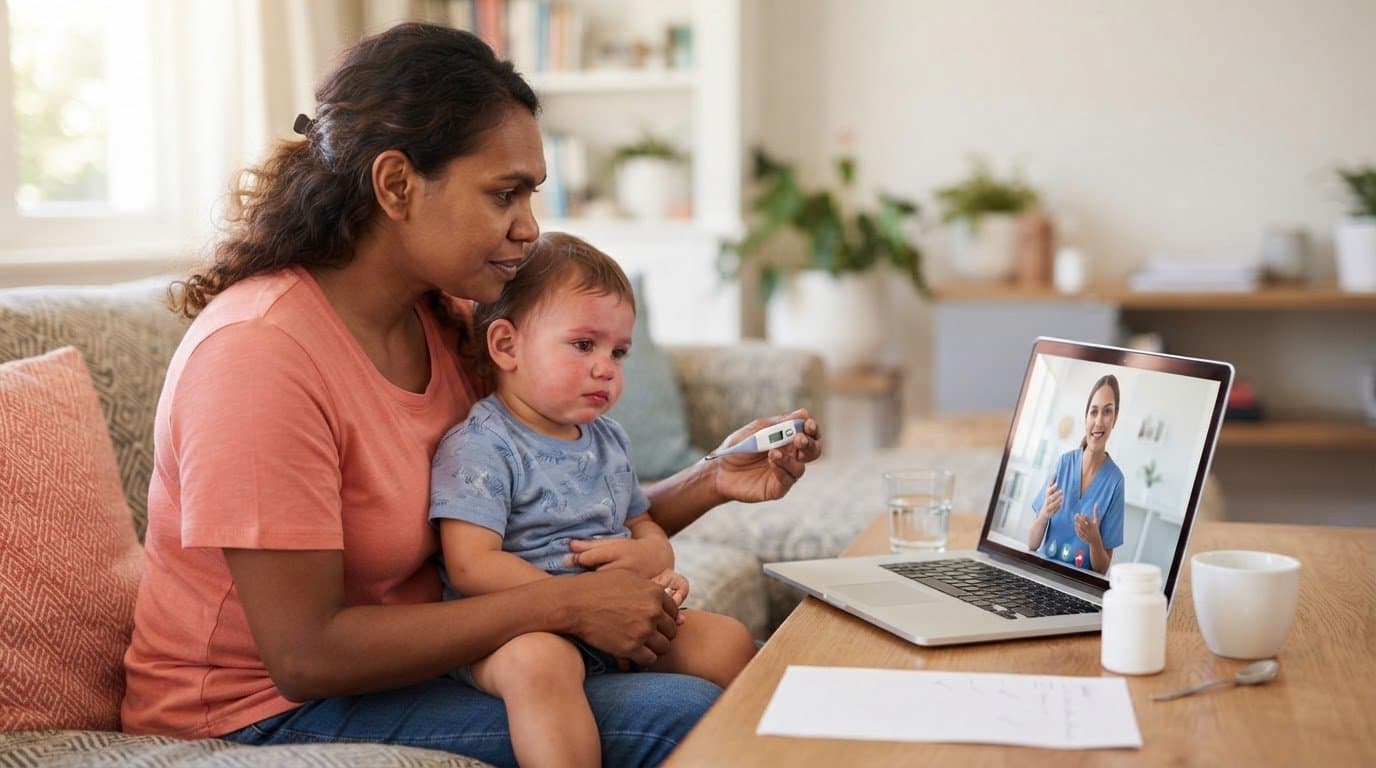
Could a video consultation help with your toddler’s fever, or is an in-person assessment safer? Parents often want advice quickly but may worry that a clinician can’t properly assess a young child remotely. If you’re searching for “online pediatrician referral australia,” first consider whether telehealth is appropriate for your child’s symptoms.
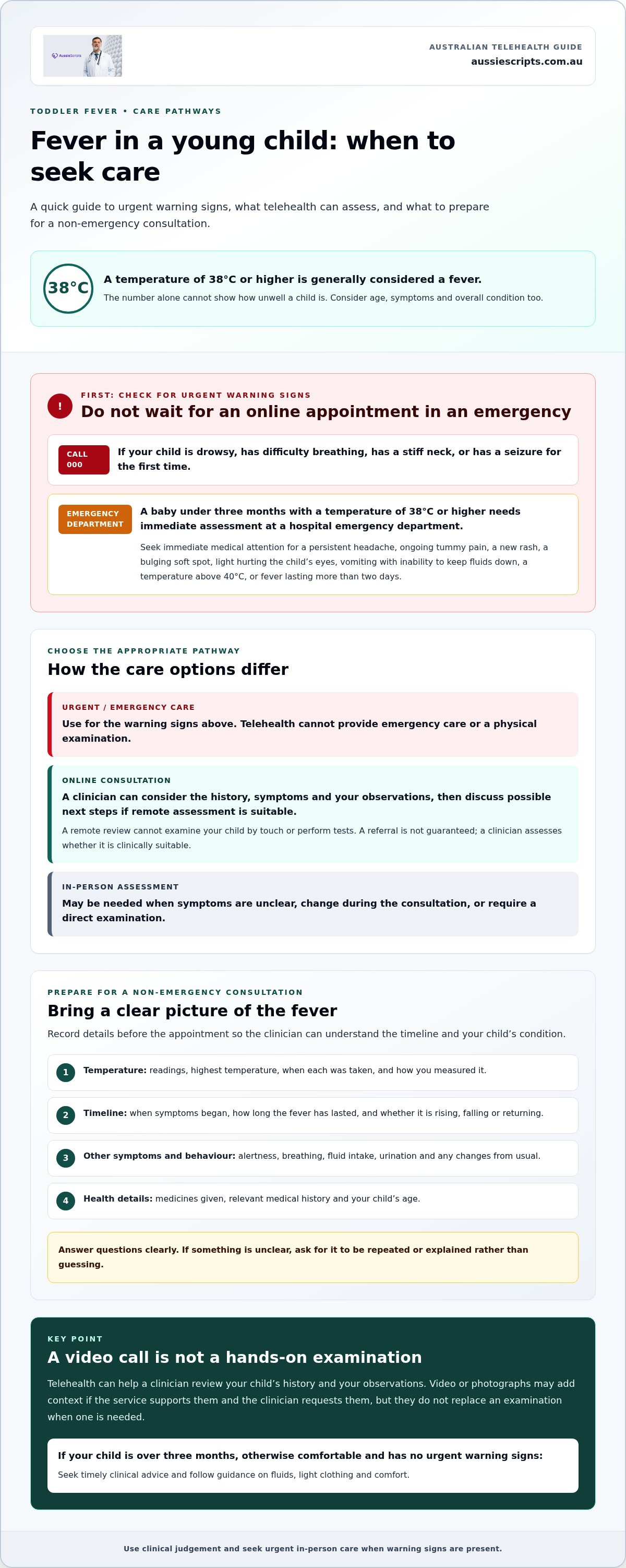
This guide explains what an online consultation may help with, what a clinician can and can’t assess remotely, and how a specialist referral may be considered after clinical review. Telehealth isn’t a substitute for urgent care. A child who is struggling to breathe, unusually drowsy, has a stiff neck or has a first seizure needs emergency help. A baby under three months with a temperature of 38°C or higher needs immediate assessment at a hospital emergency department.
For a non-emergency consultation, prepare your child’s temperature readings, how and when they were taken, how long the fever has lasted, fluid intake and other symptoms. Whether a clinician can assess your request remotely depends on the service and clinical suitability. A referral isn’t guaranteed.
Key Takeaways
- Assess your toddler’s overall condition alongside their temperature; a number alone can’t show how unwell they are.
- Telehealth lets a clinician consider your history and observations, but it cannot provide a hands-on examination.
- Understand how online advice, an in-person GP visit and paediatric specialist care differ before choosing a pathway.
- An online pediatrician referral australia request is assessed by a clinician, and a referral depends on clinical suitability.
- Prepare a clear record of symptoms, temperature readings, medicines and relevant health history for a non-emergency consultation.
Toddler fever in Australia: decide what care is needed first
A fever in a young child can be worrying, but temperature alone can’t show how serious an illness is or explain its cause. A temperature of 38°C or higher is generally considered a fever. Your child’s age, symptoms and overall condition matter too. For a general overview of what is a fever, see Wikipedia, but use Australian health advice and a clinician’s assessment to guide care.
Before considering an online pediatrician referral australia, check whether your child needs urgent in-person attention. Remote advice may be appropriate only when the symptoms and the clinician’s judgement support it.
This video provides general information about online health services and referrals:
What details about a toddler’s fever matter?
Give the clinician a clear timeline. Note your child’s age, when symptoms began, the highest temperature, when it was taken and how you measured it. Include whether the temperature is rising, falling or returning, and any medicines given. Don’t rely on one reading alone to decide how urgently your child needs care.
Describe any changes in your child’s alertness and behaviour, breathing, drinking and urination. For example, mention if they’re harder to wake, breathing differently, taking much less fluid or passing urine less often than usual. These observations can inform a clinical assessment, but they don’t replace an examination when one is needed.
When should parents seek urgent help?
Go to a hospital emergency department immediately if a baby under three months has a temperature of 38°C or higher. For a child of any age with fever, seek immediate medical attention for a persistent headache, ongoing tummy pain, a new rash, a bulging soft spot, light hurting their eyes, vomiting and inability to keep fluids down, a temperature above 40°C, or fever lasting more than two days.
Call 000 if your child is drowsy, has difficulty breathing, has a stiff neck or has a seizure for the first time. Don’t wait for an online appointment or referral request in an emergency. Telehealth can’t provide a physical examination or emergency care. If your child is over three months, otherwise comfortable and has no urgent warning signs, seek timely clinical advice and follow guidance on fluids, light clothing and comfort.
What an online appointment can assess, and what it cannot
Telehealth is a consultation with a clinician by phone or video rather than in person. It can help a clinician understand a child’s symptoms and discuss possible next steps, but it isn’t right for every situation. Suitability depends on the information available, the child’s symptoms and the clinician’s judgement.
If you’re considering an online pediatrician referral australia, distinguish a remote clinical review from a physical examination. A clinician may ask questions and listen to your observations. If the service supports it and the clinician requests it, video or photographs may provide additional context. Neither allows the clinician to examine your child by touch or perform tests.
What information can a clinician review remotely?
Be ready to describe when the fever began, how it has changed and how you measured your child’s temperature. The clinician may also ask about other symptoms, medical history, medicines given and your child’s behaviour, breathing, drinking and urination. Give clear, accurate answers. If a question isn’t clear, ask for it to be repeated or explained rather than guessing.
Visual information is only part of the picture. Don’t assume you need to send a photograph or join a video call unless the service offers that option and the clinician requests it. Healthdirect Australia’s advice on when to see a doctor for your child's fever can also help you understand when further assessment may be needed.
When might an in-person examination be needed?
A remote conversation may not provide enough information to assess a child safely. Symptoms might be unclear, change during the consultation or require a clinician to examine the child directly. In those situations, the recommended next step may be an in-person GP appointment or urgent assessment, depending on the clinical circumstances.
A clinician may recommend in-person care when remote information is insufficient. Follow that advice, and seek urgent care if your child’s condition worsens or you’re told an examination is needed. Telehealth does not provide emergency care, and an online appointment can’t guarantee a diagnosis, treatment or specialist referral.
If a remote consultation appears suitable and you’re exploring referral options, review Aussie Scripts’ specialist referral information. Aussie Scripts connects patients with Australian-registered doctors, and specialist referrals follow clinical review. Check with the service whether it can assess your particular concern. Don’t use an online referral request instead of urgent or face-to-face care.
Online doctor or paediatrician referral: how the pathways differ
There are several ways to seek care for a toddler with a fever, and each has a different role. An online consultation doesn’t automatically lead to a specialist referral. The appropriate care setting depends on symptoms, findings and urgency. The Royal Children’s Hospital Melbourne’s guidance on the clinical assessment of a febrile child shows why clinicians consider more than temperature alone.
| Care option | How you access it | Can the child be examined? | Possible role |
|---|---|---|---|
| Telehealth advice | Phone or video consultation, if offered and clinically suitable | No hands-on examination | Discuss symptoms and possible next steps; the clinician may direct you to in-person care |
| In-person GP assessment | Appointment with a general practitioner | Yes, depending on the assessment needed | Assess the child directly and decide whether further care or referral is appropriate |
| Paediatric specialist care | Arrange care through the relevant referral pathway | Depends on whether the specialist appointment is in person or remote | Specialist assessment when the child’s needs warrant it |
When might an online doctor be a reasonable first contact?
If there are no emergency warning signs and you’re seeking clinical advice, a remote consultation may be a possible first contact. Suitability depends on your child’s symptoms and the clinician’s judgement. The clinician may ask about the fever and other changes, then recommend an in-person GP assessment if the information available isn’t enough. Don’t assume every toddler’s fever can be assessed safely online.
What does a paediatrician referral involve?
A referral is a clinical decision, not an automatic result of booking an appointment or requesting one. A doctor considers the available information and whether specialist assessment is appropriate. The specialist, appointment format and timing depend on the referral pathway and the care your child needs.
Aussie Scripts connects patients with Australian-registered doctors and offers specialist referrals following clinical review. If you’re considering a toddler-fever consultation or a paediatrician referral, check with the service whether it can assess your concern and what referral options may be available. An online pediatrician referral australia request should never delay urgent assessment or replace in-person care when a clinician recommends an examination.
How to prepare for a telehealth appointment about toddler fever
For a non-emergency consultation, a brief record of your child’s symptoms can help you give the clinician a clear account. You don’t need to have every detail worked out. Describe what you’ve observed and say if you’re unsure about anything.
What should you have ready before the appointment?
- Your child’s age and symptom timeline: Note when the fever and other symptoms began, and how they’ve changed.
- Temperature readings: Record the readings, when you took them and the method used. Include the highest reading you’ve observed.
- Changes in your child’s condition: Note their alertness, breathing, fluid intake and urination, as well as any new symptoms.
- Medicines and health history: List medicines given, when they were given, any known allergies, relevant medical conditions and other health information the clinician may need.
- Your questions: Write down what you want to know about monitoring symptoms, next steps and when your child may need in-person care.
- Your setup: Check your device and connection, and find a private space where you can speak clearly. Have your child nearby if appropriate and practical.
Don’t delay urgent care to collect information or set up a call. If your child needs immediate assessment, seek appropriate in-person or emergency care instead.
What should you ask the clinician?
Use the consultation to clarify the care plan. You could ask:
- Can these symptoms be assessed remotely, or does my child need a physical examination?
- What changes should prompt urgent help, and where should I go if my child worsens?
- What should I monitor, and when should I seek further advice?
- If I’m asking about a specialist referral, does the clinician consider it appropriate, and what would happen next?
Answer questions as accurately as you can. If something is unclear, ask the clinician to explain it. An online consultation may not be suitable for every child, and a referral depends on clinical review. If you’re exploring an online pediatrician referral australia, check whether the service can assess your situation before proceeding. Aussie Scripts connects patients with Australian-registered doctors and offers specialist referrals following clinical review, but a referral isn’t guaranteed.
Check whether an online consultation may suit your situation.
Choose your next step: safe telehealth access with Aussie Scripts
Use a simple sequence: check whether your toddler needs urgent care, choose a suitable care setting, then prepare relevant information for the clinician. Telehealth may be an option for a non-emergency concern, but it isn’t suitable for every child or every fever. The clinician must decide whether the information available is enough to assess the request remotely.
Aussie Scripts is an Australian-owned telehealth platform connecting patients with Australian-registered doctors. It offers specialist referrals following clinical review. Before proceeding, check whether the service can assess your toddler’s concern and whether a referral may be considered. The clinician decides whether remote assessment is suitable and whether a referral is appropriate.
What to confirm before choosing an online service
Before booking, check whether the service assesses your child’s age group and the concern you want to discuss. Review the current consultation steps, fees and any stated clinical limitations. If you’re seeking an online pediatrician referral australia, ask how referrals are assessed, what happens if one is considered appropriate, and whether the service explains how to access in-person or emergency care. Referral availability and next steps depend on the service and clinical review.
If a consultation is suitable, have your child’s symptom timeline, temperature records, medicines and relevant health history ready. If the service can’t assess the concern, ask where to seek appropriate care. Confirming these details can help you choose a pathway without treating an online appointment as a substitute for an examination.
When online care is not the right next step
Seek emergency help rather than booking online if your child is drowsy, having difficulty breathing, has a stiff neck or has a first seizure. Call 000 for these emergencies. A baby under three months with a temperature of 38°C or higher needs immediate assessment at a hospital emergency department. Other concerning symptoms may also require prompt in-person medical attention.
If a clinician can’t assess your child adequately from the information available, they may recommend an in-person examination or urgent assessment. Follow that advice. If your child’s condition worsens, act promptly and seek appropriate care rather than waiting for an online referral.
If the concern is non-urgent and an online consultation appears suitable, explore Aussie Scripts’ online consultation service. Check the service’s current suitability, process and limitations before proceeding.
Choose the safest next step for your child
A toddler’s temperature matters, but so do their symptoms and overall condition. If there are urgent warning signs, seek emergency or in-person care rather than waiting for an online appointment. For a non-emergency concern, telehealth may help when a clinician considers remote assessment appropriate, but it can’t replace a hands-on examination.
If you’re exploring an online pediatrician referral australia, remember that a referral isn’t automatic. A clinician reviews the information and decides whether a referral is appropriate. Check whether the service can assess your child’s age group and concern, and what steps it recommends if in-person care is needed.
Aussie Scripts is an Australian-owned telehealth platform connecting patients with Australian-registered doctors. It operates seven days a week and offers specialist referrals following clinical review. Check whether a consultation about your toddler’s fever is suitable and whether a referral may be considered before proceeding.
If an online consultation may suit your situation, explore Aussie Scripts’ online consultation service. Check the service’s process and limitations, and seek in-person care if your child needs an examination.
Frequently Asked Questions
Can I get an online paediatrician referral in Australia for my toddler?
An online consultation may provide a way to discuss whether a specialist referral is appropriate, but a referral isn’t automatic. A clinician first considers your child’s symptoms and needs. If you’re looking for an online pediatrician referral australia, check whether the service can assess toddlers and consider paediatric referrals. Aussie Scripts offers specialist referrals following clinical review. Ask the service whether a paediatric referral may be considered for your situation.
Can a telehealth appointment assess a toddler’s fever?
Sometimes. A clinician may discuss your toddler’s symptoms, fever timeline, medical history and your observations by phone or video. Whether this is suitable depends on your child’s condition and the clinician’s judgement. Telehealth can’t provide a hands-on examination or tests, so the clinician may recommend an in-person assessment if remote information isn’t sufficient. Seek urgent care instead of waiting for a telehealth appointment if your child has emergency warning signs.
When should I take my toddler with a fever to emergency care?
A baby under three months with a temperature of 38°C or higher needs immediate assessment at a hospital emergency department. For a child of any age, call 000 if they’re drowsy, having difficulty breathing, have a stiff neck or have a seizure for the first time. Seek immediate medical attention for other serious symptoms, including a new rash, vomiting and inability to keep fluids down, fever above 40°C or fever lasting more than two days.
What information should I provide during an online appointment about fever?
Tell the clinician your child’s age, when the fever and other symptoms began, the temperature readings, when you took them and how you measured them. Describe changes in alertness, breathing, drinking and urination. Have details of medicines given, allergies and relevant health conditions ready. Be accurate, and ask for clarification if a question is unclear. Don’t delay urgent care to gather information or prepare for an online appointment.
Can an online doctor diagnose the cause of a toddler’s fever?
An online doctor may assess the information you provide and discuss possible next steps, but a remote consultation can’t guarantee a diagnosis. Fever has different possible causes, and a physical examination or further assessment may be needed to understand what’s happening. Share your observations clearly, including any changes in your child’s condition. Follow the clinician’s advice if they recommend an in-person examination or urgent assessment.
Will an online consultation guarantee a paediatrician referral?
No. A referral depends on the clinician’s assessment of your child’s needs and whether specialist care is appropriate. Booking a consultation or requesting a referral doesn’t guarantee one. If a referral is considered suitable, ask which specialist it’s for and what steps to take next. Check that the service can assess your child’s age group and concern, as paediatric referral options may depend on the service and clinical review.
Is telehealth suitable if my toddler’s fever is getting worse?
Not necessarily. Worsening symptoms may mean your toddler needs an in-person assessment, and a clinician may recommend one if remote information isn’t enough. Seek urgent medical attention for concerning symptoms, and call 000 if your child is drowsy, struggling to breathe, has a stiff neck or has a first seizure. Don’t wait for an online booking if your child needs urgent care. Act promptly if their condition worsens.
Disclaimer
The information provided by AussieScripts is for general informational purposes only and does not constitute medical advice, diagnosis, or treatment. For advice tailored to your specific symptoms or health concerns, please consult one of our doctors or your regular GP.
