Online Sports Physician Referrals for Australian Parents
Need an online sports physician referral australia for your child? Learn how telehealth injury reviews work, what to prepare, and when to seek in-person care.
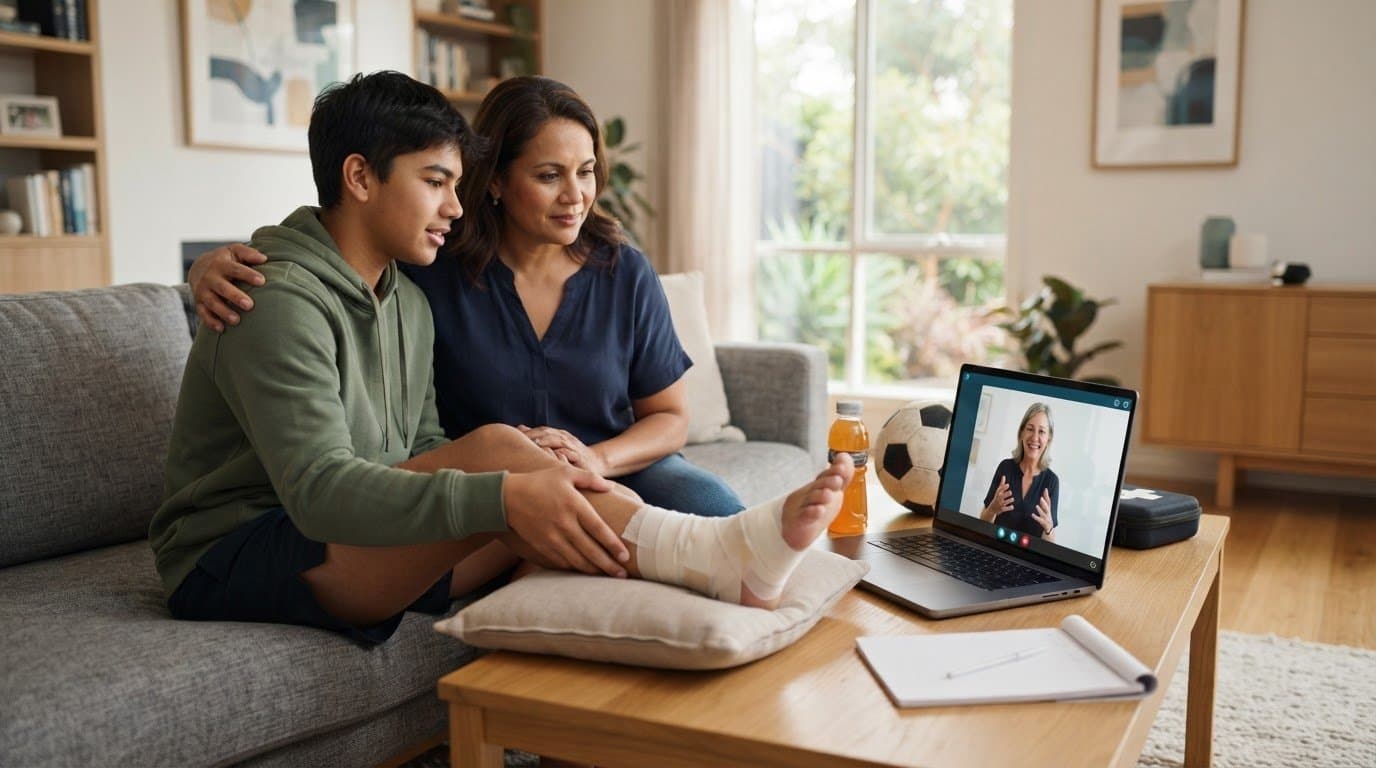
Can an online doctor assess your child’s sports injury and refer them to a sports physician if needed? For parents considering an online sports physician referral australia pathway, telehealth can be a convenient first step, but it doesn’t guarantee a referral. An Australian-registered doctor reviews the information available and decides what care is appropriate. If the injury seems severe or your child needs immediate attention, seek urgent in-person care rather than waiting for a virtual consultation.
A sports physician and a sports physiotherapist have different roles. A sports physician is a medical specialist who assesses and manages sports-related injuries and health concerns. A physiotherapist focuses on movement, rehabilitation and recovery. An online consultation may help clarify a suitable next step, but some injuries need a physical examination. This guide explains how a doctor reviews an injury, when telehealth may not be appropriate, and what to prepare, including how the injury happened, your child’s symptoms and any care they’ve already received.
Key Takeaways
- Prepare clear details about the injury, your child’s symptoms and how the injury affects daily activities.
- An online sports physician referral australia pathway starts with a clinical review. A referral is considered only if appropriate.
- Understand the different roles of a GP, sports physician and physiotherapist before discussing possible next steps.
- Have the injury timeline, symptoms and relevant health history ready, and include your child in the consultation when appropriate.
- Know when a virtual assessment may not be suitable and in-person care may be needed.
When should a child’s sports injury be assessed by a doctor?
It can be hard to judge the seriousness of a sports injury, particularly when your child is upset or symptoms change after the game. The right care pathway depends on what happened, the symptoms and a clinician’s assessment. An online consultation may help a doctor review the concern and discuss next steps, but telehealth isn’t emergency care and can’t physically examine the injured area.
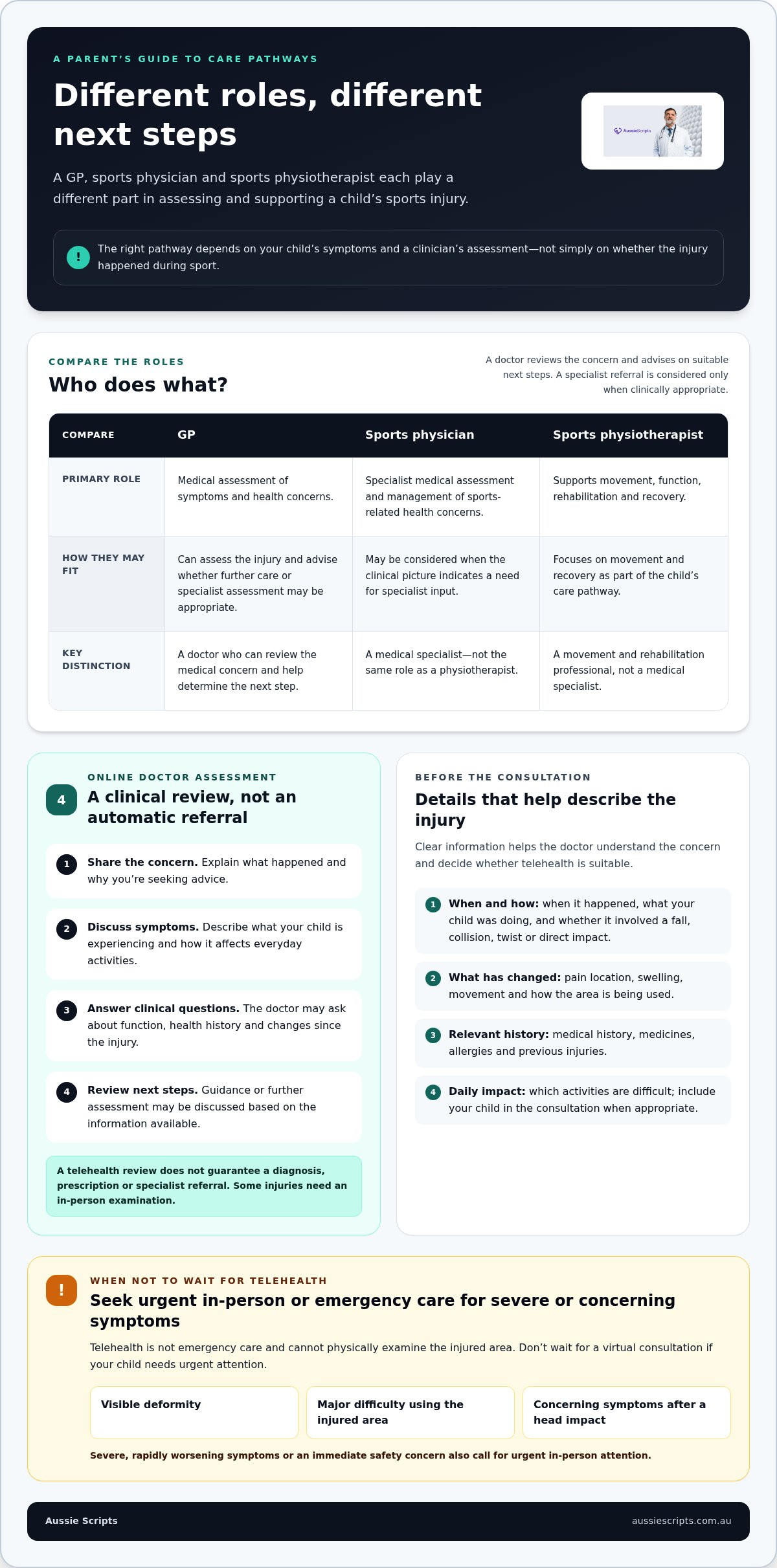
Seek urgent in-person or emergency care if symptoms are severe, rapidly worsening or raise an immediate safety concern. A visible deformity, major difficulty using the injured area, or concerning symptoms after a head impact are reasons to seek prompt medical attention. Don’t wait for a virtual consultation if your child needs urgent care.
Sports medicine covers health concerns connected with physical activity and sport. The practical question for parents is whether the injury can be discussed through telehealth or needs an in-person assessment. A doctor can review the information available and advise on a suitable next step.
Which details help describe a child’s sports injury?
Before speaking with a doctor, note when the injury happened and what your child was doing. Describe how it occurred, such as a fall, collision, twist or direct impact. Explain where the pain is, whether there’s swelling, how the area moves and what has changed since the injury. Include relevant medical history, medicines, allergies and previous injuries. These details help the doctor understand the concern and decide whether telehealth is suitable.
When might telehealth not be the right first step?
Severe symptoms or immediate safety concerns call for urgent in-person attention. If it isn’t an emergency but the doctor can’t assess the injury adequately online, they may recommend a face-to-face examination. That decision depends on the information available. An online sports physician referral australia pathway can begin with a doctor reviewing the concern, but a referral isn’t automatic. The doctor will recommend next steps based on an individual assessment.
How can an online doctor assess a child’s sports injury?
A telehealth consultation lets a doctor hear what happened, ask focused questions and decide what next step may be appropriate. It isn’t simply an online form or an automatic route to a sports physician. The doctor considers the information available and whether the injury can be assessed safely by phone or video.
The process usually follows four steps:
- Share the concern: Explain what happened and why you’re seeking medical advice.
- Discuss symptoms: Describe what your child is experiencing now and how it affects everyday activities.
- Answer clinical questions: The doctor may ask about function, relevant health history and changes since the injury.
- Review next steps: The doctor discusses suitable guidance or whether further assessment is needed.
A specialist referral is a doctor’s clinical recommendation for further assessment by a specialist. The doctor may consider one after reviewing the available information, but an online assessment doesn’t guarantee a diagnosis, prescription or referral. For parents exploring an online sports physician referral australia pathway, the consultation is a starting point for clinical decision-making, not a guaranteed outcome.
What happens during a virtual consultation?
The parent or carer explains the injury and the child’s current symptoms. The doctor may ask how the child is moving or using the affected area, which activities are difficult and whether there’s relevant health history. If appropriate, having your child present can help the doctor hear their experience directly. The doctor then discusses guidance based on the information available.
What can a doctor decide after reviewing the injury?
Depending on the assessment, the doctor may provide next-step guidance, recommend further medical assessment or consider a specialist referral if clinically appropriate. Not every sports injury needs a sports physician. Some concerns require an in-person examination. If imaging is needed, it also requires an appropriate care pathway. If the doctor can’t assess the injury adequately through telehealth, they may recommend face-to-face care rather than draw conclusions from limited information.
Aussie Scripts connects patients with Australian-registered doctors for telehealth consultations and provides specialist referrals following clinical review. If an online consultation is a suitable first step for your family, learn more about online doctor consultations.
Sports physician, GP, or sports physiotherapist: which pathway fits?
These practitioners have different roles. A GP can assess medical concerns and help determine whether further care is appropriate. A sports physician is a medical specialist focused on sports-related health concerns. A physiotherapist supports movement, function and rehabilitation. The right pathway depends on your child’s symptoms and a clinician’s assessment, not simply on whether the injury happened during sport.
| Practitioner | Primary role | How they may fit |
|---|---|---|
| GP | Medical assessment of symptoms and health concerns. | Can assess the injury and advise on suitable next steps, including whether specialist assessment may be appropriate. |
| Sports physician | Specialist medical assessment and management of sports-related health concerns. | May be considered when the clinical picture indicates a need for specialist input. |
| Sports physiotherapist | Movement, function, rehabilitation and recovery support. | May help address functional limitations and support recovery, based on the child’s needs. |
Medical specialist assessment and allied health treatment aren’t interchangeable, although they can complement each other depending on the injury and clinicians’ advice. A referral is a recommendation for further assessment, not a guarantee of an appointment, funding or a particular clinical outcome. The appropriate next steps depend on the circumstances and the clinician’s judgement.
What does a sports physician do?
A sports physician assesses and manages health concerns related to sport and exercise, including injuries where specialist medical input may be suitable. Whether this is the right pathway depends on the symptoms and the doctor’s assessment. A parent can discuss the concern with a doctor first, who can then consider whether specialist assessment is an appropriate next step. A sports injury alone doesn’t mean a sports physician is needed.
How is a sports physiotherapist’s role different?
Physiotherapy focuses on how the child moves and functions, with support for rehabilitation and recovery. A doctor’s medical assessment instead considers the injury and broader health information to guide care. For example, difficulty with movement may make rehabilitation relevant, while other symptoms may call for medical review first. A doctor’s assessment can help families understand whether specialist medical input is appropriate rather than assume every injury requires it.
How to prepare for an online sports injury consultation
A few notes before the appointment can help you describe the injury clearly and keep the consultation focused. You don’t need to work out what the injury is. Record what you’ve observed, including changes since it happened, and let the doctor assess the information.
What information should parents have ready?
Use this checklist to organise the details:
- Timeline and activity: When did the injury happen, and what was your child doing? Note how it occurred, such as a fall, twist or collision.
- Symptoms and function: Where is the discomfort? Describe any swelling, changes in movement and activities your child finds difficult. Note whether symptoms have improved, worsened or changed.
- Relevant health history: Be ready to discuss medical conditions, medicines, allergies and previous injuries.
- Care so far: Keep details of any assessment or care already received available, including relevant information shared by another clinician.
If appropriate, have your child join the consultation so the doctor can hear how they describe the injury and its effect on them. You can add observations as their parent or carer. If your child can’t explain something clearly, share what you’ve noticed instead.
Preparation helps the doctor understand your concern, but it doesn’t replace an examination. A virtual consultation has limits, and the doctor may recommend an in-person assessment if needed to evaluate the injury.
What should happen after the consultation?
Before the consultation ends, make sure you understand the recommended next steps. These may include the doctor’s guidance, further assessment or a referral if specialist input is clinically appropriate. A referral doesn’t guarantee an appointment or a particular outcome.
Follow the advice provided. If your child’s symptoms change or your concerns increase, seek further medical guidance. If symptoms become severe or there’s an immediate safety concern, seek urgent in-person or emergency care rather than waiting for another online appointment.
Having the timeline, symptom notes and health history ready can make it easier to discuss an online sports physician referral australia pathway with a doctor. Aussie Scripts connects patients with Australian-registered doctors through telehealth and provides specialist referrals following clinical review. Arrange an online doctor consultation to discuss your child’s injury and appropriate next steps.
Getting an online sports physician referral in Australia
The process starts with a telehealth consultation. Explain your child’s injury, describe their symptoms and answer the doctor’s questions as clearly as you can. The doctor reviews the information and advises on appropriate next steps. A sports physician referral may be provided after clinical review if the doctor considers specialist assessment suitable. It isn’t automatic, and recommendations may differ depending on your child’s circumstances.
What to expect from Aussie Scripts
Aussie Scripts connects patients across Australia with Australian-registered doctors through a telehealth service that operates seven days a week. During the consultation, the doctor considers the concern and information available, then determines whether telehealth is appropriate and what care pathway to recommend. If an in-person assessment is needed, the doctor may advise that as the next step.
An online sports physician referral australia pathway therefore begins with a medical assessment, not a promise of specialist access. A referral is a possible clinical outcome when appropriate. It doesn’t guarantee a specialist appointment, funding or a specific diagnosis or treatment.
Take the next step with clear expectations
For a non-emergency concern, an online consultation can be a convenient first step to discuss your child’s injury with a doctor. Have notes about the injury, symptoms and relevant health history ready, then follow the doctor’s advice. If your child’s symptoms are severe, rapidly worsening or otherwise concerning, seek urgent in-person or emergency care first. Telehealth is not a substitute for emergency care.
If the concern is suitable for online assessment, arrange a consultation and explain what has happened. The doctor will review the information and guide the next step, including whether a specialist referral is clinically appropriate.
Start an online consultation with Aussie Scripts.
Take the next step with confidence
Your child’s symptoms and how the injury happened help determine the right care pathway. A telehealth consultation lets a doctor review the concern and recommend appropriate next steps, but it can’t replace an examination when one is needed. A referral to a sports physician is a possible outcome of clinical review, not a guaranteed result.
The online sports physician referral australia process starts by discussing the injury with a doctor. Aussie Scripts connects patients with Australian-registered doctors through a national telehealth service that operates seven days a week, and provides specialist referrals following clinical review. If a referral is clinically appropriate after review, it may be provided. For severe or concerning symptoms, seek urgent in-person or emergency care instead of waiting for an online consultation.
If your child’s concern isn’t an emergency, you can start an online consultation with Aussie Scripts and explain what’s happened. Prepare a clear account of the injury and your child’s symptoms to help make the discussion focused. You don’t need to decide the diagnosis or specialist pathway yourself. A doctor can assess the information and guide the next step.
Frequently Asked Questions
Can an online doctor refer my child to a sports physician in Australia?
Yes. An online doctor may provide a referral if it’s clinically appropriate after assessing the information available. Explain how the injury happened, your child’s symptoms and any relevant health history. The doctor will decide whether telehealth is suitable and recommend next steps. A referral is a clinical recommendation for further specialist assessment, not a guarantee of an appointment or a particular outcome.
Is a virtual doctor consultation suitable for a child’s sports injury?
It can be a suitable first step for discussing a non-emergency injury, but not every concern can be assessed adequately online. The doctor will consider your child’s symptoms and the information you provide, then decide whether telehealth is appropriate. A virtual consultation can’t physically examine the injured area. If an examination or other in-person assessment is needed, the doctor may recommend that pathway.
What happens during an online consultation for a child’s sports injury?
You’ll explain what happened and describe your child’s current symptoms. The doctor may ask when the injury occurred, how it affects movement or everyday activities, whether symptoms have changed and about relevant health history. Your child can join when appropriate to describe their experience. After reviewing the information, the doctor will discuss suitable next steps, which may include further assessment or a referral if clinically appropriate.
What is the difference between a sports physician and a sports physiotherapist?
A sports physician is a medical specialist who assesses and manages sports-related health concerns. A sports physiotherapist focuses on movement, function, rehabilitation and recovery support. Their roles differ, and one doesn’t automatically replace the other. Depending on the injury, a child may need medical assessment, physiotherapy or care involving both. A doctor can help determine whether specialist medical input is appropriate based on the child’s symptoms.
When should I take my child to urgent care instead of booking telehealth?
Seek urgent in-person or emergency care if your child has severe or rapidly worsening symptoms, or an immediate safety concern. Don’t delay urgent care to arrange an online consultation. If you’re unsure whether the situation is an emergency, use your judgement and seek urgent medical help when concerned. Telehealth is for assessment when suitable, not a substitute for emergency care or a physical examination when one is needed.
What information should I prepare for an online sports injury consultation?
Note when and how the injury happened, including the sport or activity involved. Be ready to describe the location of discomfort, swelling, movement, changes in symptoms and how your child’s function has been affected. Prepare details of relevant medical conditions, medicines, allergies and previous injuries. Keep information about any care or assessment already received available. Having your child present may help the doctor hear their experience directly.
Does an online assessment guarantee a specialist referral?
No. The doctor decides whether a referral is appropriate after reviewing your child’s symptoms and the information available. The consultation may instead lead to other guidance or a recommendation for in-person assessment. If a referral is made, it doesn’t guarantee an appointment, funding or a specific clinical outcome. Treat an online sports physician referral australia pathway as a clinical starting point, not an automatic route to specialist care.
Disclaimer
The information provided by AussieScripts is for general informational purposes only and does not constitute medical advice, diagnosis, or treatment. For advice tailored to your specific symptoms or health concerns, please consult one of our doctors or your regular GP.