Private Blood Tests in Australia: The Complete 2026 Guide
Discover how private blood tests in Australia let you skip GP waits. Our 2026 guide covers costs, NATA labs, and getting results fast for proactive wellness.

Why should you wait weeks for a GP appointment just to request a routine vitamin profile or a specific hormone panel? Many Australians find the traditional gatekeeping of diagnostic data restrictive, especially when seeking proactive wellness insights rather than reactive sick care. Accessing private blood tests australia wide has emerged as a streamlined alternative for those who value efficiency and clinical autonomy. It's a pragmatic shift toward digital health that prioritises your time without compromising on the quality of laboratory standards.
We understand that navigating the intersection of Medicare eligibility and private pathology costs can be confusing. While the Medicare Benefits Schedule indexation factor for applicable services rose by 2.6 percent in July 2026, private out-of-hospital tests remain a personal investment. This guide provides a clear framework for accessing private pathology, from understanding current A$ price points to ensuring your data is processed by NATA-accredited laboratories. You'll discover how to bridge the gap between raw results and professional interpretation through targeted Australian telehealth consultations. We'll outline the logistical steps to secure fast, confidential testing and the vital role of professional oversight in turning data into a clinical plan.
Key Takeaways
- Understand how private blood tests in Australia bypass traditional GP wait times for proactive wellness and hormone monitoring.
- Learn the practical differences between Medicare-rebated pathology and private out-of-pocket expenses to better manage your diagnostic budget.
- Identify the most relevant health panels for 2026, including comprehensive wellness, fertility, and thyroid function checks.
- Navigate the efficient digital workflow to receive pathology request forms directly via SMS or email for immediate laboratory access.
- Bridge the gap between raw data and clinical action by connecting your results to professional telehealth interpretations and specialist referrals.
Understanding Private Blood Tests in Australia (2026)
Private pathology in Australia refers to diagnostic testing funded entirely by the patient rather than through the government-subsidised Medicare system. While the traditional model of Health care in Australia relies on a GP's clinical assessment to trigger a rebate, many individuals now opt for self-funded screening. This shift is driven by a growing interest in proactive health monitoring and "biohacking," where Australians track specific biomarkers to optimise performance rather than simply treating illness. It is a transition from reactive care to personal health management.
To better understand the logistical process of accessing these services, watch this helpful video:
In 2026, industry standards prioritise a digital-first referral model. This allows patients to bypass physical waiting rooms and receive pathology requests via secure digital channels. All private blood tests australia wide must be processed by laboratories accredited by the National Association of Testing Authorities (NATA). Major providers, such as Australian Clinical Labs and Sonic Healthcare, maintain these rigorous standards. This ensures that data accuracy remains consistent whether the test is Medicare-rebated or privately funded.
The Legal Framework for Private Testing
Australian regulations allow for private health screening provided there is professional oversight. While you can order a test independently, significant abnormalities must be reviewed by a qualified practitioner to ensure patient safety. This ensures that a digital-first approach remains a legitimate medical service. Data protection is equally stringent; as of July 1, 2026, pathology providers must comply with the "share by default" mandate for My Health Record, ensuring your data is accessible across the national health framework while maintaining high-level encryption for private results.
Why Go Private? Convenience vs. Traditional Pathways
Choosing the private route is often a matter of logistics and clinical depth. The "GP bottleneck" remains a primary motivator, as wait times for bulk-billing appointments can delay routine monitoring for weeks. Private testing allows for immediate action. Many Australians also use private pathways to access tests that don't fit strict Medicare rebate criteria. This includes:
- Advanced hormone and fertility panels for performance tracking.
- Comprehensive vitamin and mineral profiles for nutritional optimisation.
- Sensitive screenings, such as STIs or genetic markers, where total confidentiality is a priority.
By opting for a private referral, you maintain control over your health data and the timeline of your diagnostics. It's a pragmatic solution for those who value efficiency and clinical transparency.
Medicare vs. Private Pathology: The Cost and Access Debate
The core of the debate between public and private diagnostics lies in the Medicare Benefits Schedule (MBS). The MBS is a list of medical services the Australian Government subsidises; however, it is strictly governed by clinical necessity. If a test is categorised as "screening" rather than "diagnostic," it often falls outside rebate eligibility. As of July 2026, while MBS fees for specific pathology groups were indexed by 2.6 percent, many preventative wellness markers remain excluded. This creates a significant barrier for those seeking proactive health data. Paying for diagnostic testing involves understanding these nuances. For many, the choice between private blood tests australia and Medicare is a pragmatic trade-off between upfront cost and immediate access.
Bulk-billing for pathology is increasingly reserved for patients with clear clinical symptoms or established chronic conditions. For Australians focused on performance optimisation or preventative health, finding a GP to bulk-bill a comprehensive wellness panel is difficult. Private pathology removes this friction. You pay for the speed of service and the autonomy to choose your own biomarkers. Market data from 2026 indicates that private tests typically range from A$35 for single markers to over A$500 for extensive panels. This cost covers the laboratory analysis and the administrative speed of a digital-first pathway.
When is Medicare the Right Choice?
Medicare remains the primary choice for chronic disease management and acute clinical episodes. If you are experiencing specific symptoms or managing a long-term condition like diabetes, government-funded care plans provide essential financial support. In these scenarios, a traditional GP consultation is necessary to coordinate complex care across the health system. Medicare is designed for medical necessity. It ensures that those with urgent health needs receive prioritised, rebated diagnostics without significant out-of-pocket expenses.
The Advantages of the Private Model
The private model serves a different functional purpose. It eliminates the need to justify a request for a specific test to a medical gatekeeper. If you want to track your testosterone levels or check your vitamin D status for personal optimisation, you can do so without a lengthy in-person consultation. Pricing is transparent and paid at the point of request. This avoids the "gap fee" surprises often associated with non-bulk-billed physical clinics. Results are delivered digitally to a secure portal, allowing for rapid review and personal record-keeping. If your results indicate a need for expert intervention, securing a specialist referral through a telehealth platform ensures your data leads to a concrete clinical outcome.
Essential Private Blood Test Panels for Modern Australians
Modern health monitoring in 2026 has moved beyond simple symptomatic checks. Comprehensive wellness panels provide a detailed baseline for private blood tests australia wide, covering liver function, kidney health, and full blood counts. These panels align with the standards overseen by the Australian Government Department of Health and Aged Care, ensuring that self-funded data remains clinically relevant. For those on plant-based or restricted diets, nutritional monitoring is a priority. Regular tracking of iron stores, Vitamin B12, and Vitamin D levels helps prevent deficiencies before they manifest as chronic fatigue or reduced immunity. This baseline data is essential for anyone transitioning to a new dietary framework or lifestyle.
Hormone and Performance Testing
Athletes and fitness enthusiasts often require more granular data than standard clinical checks provide. Tracking biomarkers like cortisol and C-Reactive Protein (CRP) allows for the assessment of systemic inflammation and recovery capacity. It's equally important to monitor testosterone, oestrogen, and thyroid function (including TSH and free T4) to understand hormonal balance and its impact on energy levels. This is particularly vital for those pursuing alternative medicine pathways, where baseline testing ensures a safe starting point. Monitoring these markers over time helps detect potential side effects early. It maintains a strictly compliant and safe approach to health optimisation.
Pathology for Weight Loss Management
Effective weight management in 2026 relies on metabolic data rather than just the scales. Key markers such as HbA1c, fasting insulin, and lipid profiles provide a clear picture of insulin sensitivity and cardiovascular risk. Accessing private blood tests australia wide is often the first step in this process. Blood tests are a standard prerequisite for medical weight loss consultations to ensure any prescribed program is safe for the individual's biological profile. By tracking progress through these biological markers, patients can see physiological improvements even when weight loss plateaus. This data-driven approach reduces the anxiety of the process by providing objective evidence of health gains. It ensures that any intervention is based on your unique biochemistry rather than generic advice.
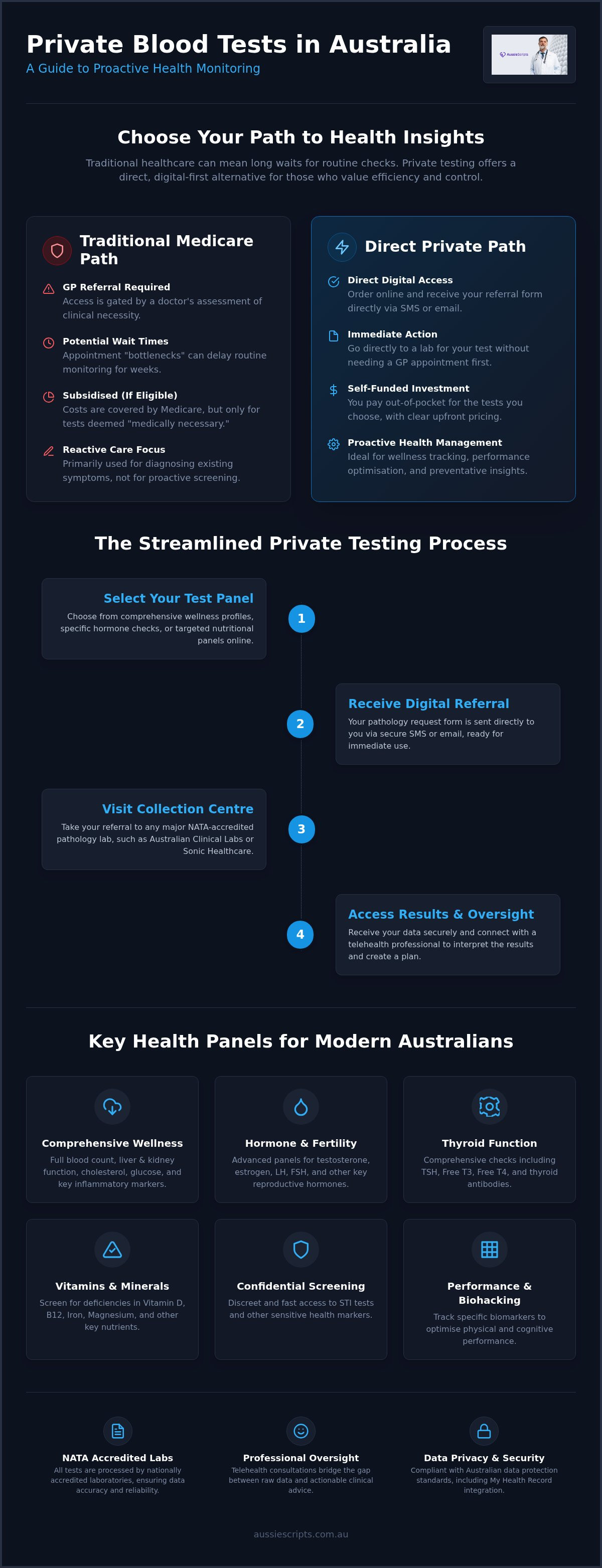
How to Order and Prepare for Your Private Blood Test
Accessing private blood tests australia wide is a structured, five-step digital process designed for clinical efficiency. It begins with selecting a pre-configured panel or requesting a custom referral through a telehealth consultation. Once your request is processed, you receive a digital pathology request form via email or SMS. This electronic referral is valid at any NATA-accredited collection centre within the provider's national network. You can typically locate a nearby facility through an online map; no appointment is usually required for standard blood draws.
Australia's pathology infrastructure is supported by major networks including Sonic Healthcare (operating as Laverty, QML, or Dorevitch), Australian Clinical Labs, and Healius. These providers maintain over 3,000 collection sites nationwide, ensuring accessibility even in regional areas. When you arrive, present your digital referral on your smartphone along with a valid form of photo identification. The collection process is brief, and samples are dispatched to a central laboratory for analysis. Results are typically available within 48 to 72 hours, depending on the complexity of the markers requested.
Fasting and Preparation Tips
Accuracy in pathology depends heavily on correct patient preparation. Lipids, glucose, and iron studies usually require a 10 to 12 hour fast. During this time, only plain water is permitted; black coffee or tea can interfere with metabolic results. For hormonal markers like testosterone or cortisol, the draw should occur before 10:00 AM to account for diurnal rhythm. You should continue taking regular medications unless specifically advised otherwise by a practitioner. Being well-hydrated is essential, as it makes the venepuncture process faster and reduces the risk of sample haemolysis.
Understanding Your Lab Report
Once processed, your results are delivered to a secure digital dashboard. Each marker is listed alongside a reference range, which represents the statistical "normal" for the general population. If a result is flagged, it indicates a value outside this standard range. However, a flagged result does not always indicate a medical emergency; it requires clinical context to determine its significance. Longitudinal tracking is the most effective way to use this data. By comparing current results against previous tests, you can identify trends in your metabolic or hormonal health before they reach a critical threshold. If you require a professional review of your findings, you can book a telehealth consultation to discuss your data with a registered doctor.
The Aussie Scripts Advantage: Clinical Oversight for Your Data
A raw lab report provides a snapshot of your biomarkers, but without clinical context, it remains just data. Accessing private blood tests australia wide is the first step; the second is ensuring that information leads to a safe medical outcome. Aussie Scripts bridges this gap by providing a comprehensive telehealth framework where registered Australian doctors interpret your results within the context of your overall health history. This ensures that a flagged marker isn't just a source of anxiety, but a starting point for a targeted treatment plan. By connecting your results directly to online prescriptions and evidence-based care, the process moves from simple observation to active health management.
If your pathology results indicate a need for more intensive care, the platform facilitates specialist referrals based on objective data. This is particularly critical for complex conditions where private tests reveal abnormalities that require expert intervention. Beyond general diagnostics, pathology data is seamlessly integrated into specialised health programs. For individuals in weight loss or smoking cessation programs, regular blood monitoring ensures that physiological changes are tracked and treatments remain appropriate for your metabolic profile. It's a system built on continuity of care, ensuring you aren't left to navigate high-risk medical data on your own.
Expert Consultations for Result Interpretation
Booking a telehealth review allows you to discuss your findings with an Australian-registered doctor who understands the local regulatory framework. These consultations focus on translating complex biomarkers into actionable lifestyle changes. Instead of guessing the significance of a low iron reading or a high cortisol level, you receive professional guidance on supplementation, diet, or further investigation. This approach maintains strict safety and compliance standards in digital healthcare. It provides the same level of professional oversight found in a traditional office, but with the punctuality and convenience of a modern digital interface.
Beyond Testing: A Holistic Health Roadmap
Pathology data serves as the foundation for your personalised health roadmap. It informs every aspect of your program, from nutritional adjustments to pharmaceutical interventions. With 7-day-a-week clinical support available across Australia, you can access professional advice whenever your results are ready. This removes the bureaucratic delays often associated with physical clinics and ensures your health journey maintains momentum. You aren't just buying a test; you're accessing a partner in your long-term wellness. If you're ready to take the next step in your health journey, Speak to a doctor today about your pathology needs.
Future-Proof Your Health with Data-Driven Insights
Managing your health in 2026 requires a proactive approach that prioritises both speed and accuracy. By choosing private blood tests australia wide, you gain immediate access to critical biomarkers without the logistical delays of traditional bulk-billing pathways. Whether you're monitoring hormonal balance or tracking metabolic markers for a weight loss program, the ability to bypass clinical gatekeeping ensures your health journey remains on your terms. It's a pragmatic shift toward digital autonomy that respects your time and intelligence.
However, raw data is only useful when paired with professional oversight. True health optimisation occurs when pathology results are reviewed within a secure, clinical-grade platform. Aussie Scripts connects you with Australian-registered doctors who provide national service coverage to interpret your findings. This ensures your diagnostics lead directly to actionable treatment plans, prescriptions, or specialist referrals. You don't have to navigate complex medical data in isolation; professional guidance is always available to bridge the gap between data and care.
Take control of your diagnostic journey and eliminate the uncertainty of self-screening. Access Professional Telehealth and Referrals Today to ensure your health data is managed with the professional expertise it deserves. Your path to a clearer health profile starts with a single, streamlined request.
Frequently Asked Questions
Do I need a GP referral for a private blood test in Australia?
Every blood test in Australia requires a valid request form from a registered medical practitioner. You don't need to see your regular GP in person; you can obtain a digital referral through a telehealth consultation. This form is then presented at a NATA-accredited collection centre. This ensures that private blood tests australia wide remain within a regulated clinical framework while offering the convenience of digital access.
How much do private blood tests cost in Australia?
Costs vary depending on the complexity of the biomarkers being tested. In 2026, a single marker typically starts at approximately A$35, while comprehensive health panels can exceed A$500. Because these are private tests, they don't qualify for Medicare rebates. You'll receive a transparent, upfront price at the time of your digital referral, which avoids the unexpected gap fees often found in traditional clinics.
Can I get my private blood test results sent to my My Health Record?
Yes, your results will be uploaded to your My Health Record by default. As of July 1, 2026, Australian pathology providers are required to comply with "share by default" standards. This ensures your data is accessible to your healthcare team through the national system. If you prefer to keep specific private blood tests australia results confidential, you must discuss this with your practitioner at the time of the referral.
How long does it take to get results from a private pathology lab?
Most routine results are available within 48 to 72 hours of your blood draw. The specific timeframe depends on the laboratory's processing schedule and the complexity of the markers requested. Some specialised hormone or genetic tests may take up to 10 business days. You'll receive your results via a secure digital portal as soon as the NATA-accredited laboratory finalises the analysis.
Are private blood tests covered by private health insurance?
Private health insurance in Australia generally doesn't cover out-of-hospital pathology. Coverage is typically limited to tests performed while you're an admitted inpatient in a private hospital. For routine wellness or hormone screening, you should expect to pay the full cost as an out-of-pocket expense. It's best to check your specific policy details, but most extras cover doesn't include private diagnostic testing.
What happens if my private blood test results show an abnormality?
If a result falls outside the standard reference range, it will be flagged on your lab report. An abnormality doesn't always indicate a serious condition, but it does require professional interpretation. You should book a telehealth consultation to review the findings with a doctor. They'll determine if the result is clinically significant and if you require a specialist referral or a specific treatment plan.
Can I order a private blood test for my child in Australia?
Yes, you can order private testing for minors, but it requires parental or guardian consent. Some collection centres have specific hours or locations for pediatric blood draws to ensure a comfortable experience for the child. The referral process remains the same, requiring a consultation with a registered doctor to ensure the requested tests are appropriate for the child's age and health status.
Is fasting required for all private blood tests?
Fasting is only required for specific markers, such as fasting glucose, iron studies, and lipid profiles. For these tests, you must fast for 10 to 12 hours, consuming only plain water. Other tests, such as routine blood counts or certain hormone panels, don't require fasting. Your digital referral will include specific preparation instructions so you know exactly how to prepare before visiting the collection centre.
Disclaimer
The information provided by AussieScripts is for general informational purposes only and does not constitute medical advice, diagnosis, or treatment. For advice tailored to your specific symptoms or health concerns, please consult one of our doctors or your regular GP.
