TRT Blood Test Results Explained: A 2026 Guide to Hormone Markers
Get your TRT blood test results explained with our 2026 guide. Understand key markers like free testosterone & SHBG to finally make sense of your lab report.

Your doctor says your blood work is "normal," yet you still feel exhausted, foggy, and physically depleted. It's a common frustration for men who find that a generic lab report doesn't align with their daily reality. You shouldn't have to navigate complex medical data alone or settle for feeling less than your best simply because your numbers fall within a broad statistical average.
This guide provides your TRT blood test results explained with clinical precision, tailored specifically to the 2026 Australian healthcare landscape. You'll learn exactly how to interpret your numbers, from the standard Total Testosterone range of 8 to 27 nmol/L to the more nuanced Free Testosterone levels that often tell the real story. We'll clarify the confusion between different measurement units and explain why secondary markers like SHBG, Prolactin, and Haematocrit are vital for your long-term safety and treatment eligibility.
By the end of this article, you'll have a clear understanding of your hormone profile and the specific criteria required for a specialist referral in Australia. We've mapped out a logical, step-by-step pathway to help you move from confusing paperwork to a professional clinical review without the typical bureaucratic delays or wait times.
Key Takeaways
- Learn why blood draws must occur between 8 AM and 10 AM in a fasted state to meet Australian clinical diagnostic standards.
- Get your TRT blood test results explained by distinguishing between Total Testosterone and the Free Testosterone that your body actually utilizes.
- Understand how secondary markers like SHBG and Oestradiol impact your hormonal balance and determine your overall treatment eligibility.
- Identify critical safety thresholds for Haematocrit and PSA levels to ensure your therapy remains within healthy parameters.
- Discover the streamlined pathway to a professional clinical review through a digital Specialist Referral for borderline or symptomatic results.
Understanding TRT Blood Tests in Australia: The Basics
A TRT blood panel is a specialized set of laboratory tests designed to evaluate your endocrine health and determine if you are a candidate for Androgen replacement therapy. Unlike a standard wellness check, this panel focuses on the delicate interplay between your brain and your testes. In Australia, the Therapeutic Goods Administration (TGA) and the Endocrine Society of Australia set strict protocols for how these tests are conducted and interpreted. These standards ensure that any subsequent treatment is both clinically justified and safe for long-term use.
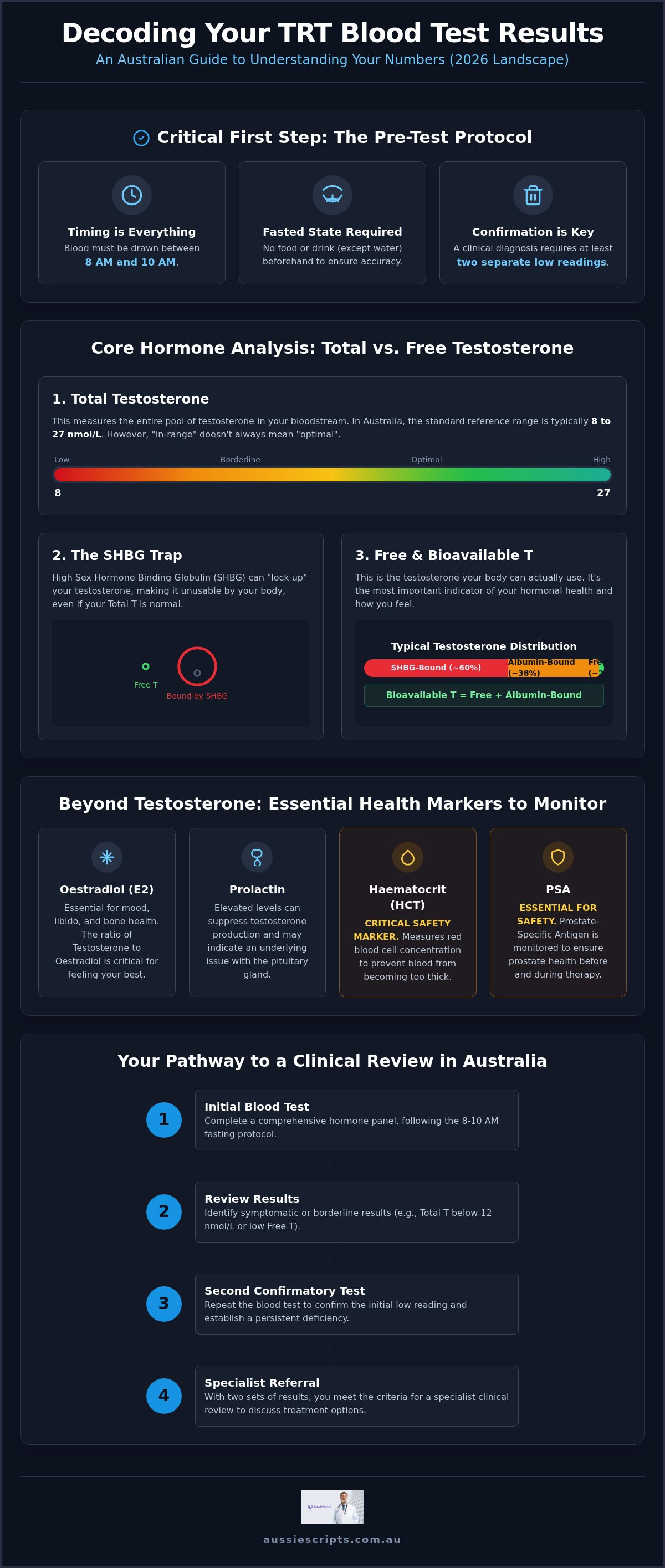
Accuracy begins with timing. You must have your blood drawn between 8 AM and 10 AM while in a fasted state. Testosterone levels naturally peak in the early morning and can drop significantly as the day progresses. Consuming food before a test can also cause a temporary dip in circulating testosterone. If you don't follow these timing requirements, your TRT blood test results explained by a doctor may be inaccurate, potentially masking a deficiency or leading to a false diagnosis.
One low result is never enough for a clinical diagnosis in the Australian medical system. Hormonal levels fluctuate based on sleep quality, stress, and recent illness. To meet PBS subsidy criteria or specialist guidelines, you generally need two separate morning fasting samples. This repetition confirms that a low reading is a persistent state rather than a temporary fluctuation.
Why GPs Order Specific Hormone Panels
General Practitioners use these panels to screen for hypogonadism, but they also look for the root cause of the deficiency. Identifying whether you have primary hypogonadism (a testicular issue) or secondary hypogonadism (a pituitary or hypothalamus issue) is essential. Without a comprehensive baseline, it's impossible to track how therapy affects your system later. These initial markers act as a diagnostic map, allowing your doctor to rule out other underlying health conditions that might mimic low testosterone symptoms.
Australian Reference Ranges vs. Optimal Levels
The standard reference range for Total Testosterone in Australia typically sits between 8 and 27 nmol/L. However, these ranges are based on a broad population average that includes men of all ages and health statuses. This often leads to "borderline" results where a patient feels symptomatic despite being technically within the range. Having your TRT blood test results explained requires looking beyond the lab's "normal" stamp. Doctors must consider age-adjusted ranges, as a 30-year-old with a level of 9 nmol/L is in a very different clinical position than an 80-year-old with the same result. The goal of modern hormone management is to resolve clinical symptoms while maintaining levels that are safe and sustainable.
Total Testosterone, Free Testosterone, and SHBG Explained
Total Testosterone represents the entire pool of the hormone circulating in your bloodstream. In Australia, this is measured in nanomoles per litre (nmol/L). While international sources often use nanograms per decilitre (ng/dL), using local units is essential to avoid dangerous dosing errors. Most of this testosterone is not immediately available to your tissues because it's bound to proteins. Specifically, your TRT blood test results explained will show a breakdown of how much hormone is "locked" versus how much is ready for use.
Sex Hormone Binding Globulin (SHBG) is the primary protein that binds to testosterone. Think of it as a transport vehicle that holds the hormone tightly, preventing it from entering your cells. Albumin is another carrier protein, but it binds to testosterone much more weakly. This albumin-bound portion is considered a "weakly bound" reserve that your body can access relatively easily when needed. Together, the free and albumin-bound portions are often referred to as bioavailable testosterone.
The SHBG Trap: Why High Total T Isn't Always Good
High SHBG levels can create a clinical paradox where your Total Testosterone appears healthy, but you still feel the effects of a deficiency. If your SHBG is too high, it binds an excessive amount of hormone, leaving your tissues "starved" despite a high total number. SHBG levels fluctuate based on liver health, thyroid function, and even certain diets. Clinicians often calculate the Free Androgen Index (FAI) by comparing Total T to SHBG to get a clearer picture of your hormonal status. If your ratios seem imbalanced, a digital specialist referral can help you access an expert opinion on these complex markers.
Free Testosterone: The Most Critical Marker
Free Testosterone is the biologically active hormone that actually interacts with your androgen receptors. It typically represents only 1% to 2% of your total pool, yet it's the most accurate predictor of symptoms like fatigue, low libido, and muscle loss. In Australian pathology, Free T is measured in picomoles per litre (pmol/L). A "low-normal" result in this category is often more significant than a low Total T result, as it directly reflects the hormone available for your brain and muscles. When you have your TRT blood test results explained by a specialist, they will prioritize this marker to determine if your symptoms align with your physiological data.
Beyond Testosterone: Secondary Markers You Must Know
A comprehensive hormonal profile looks far beyond a single testosterone figure. To have your TRT blood test results explained accurately, you must understand the Hypothalamic-Pituitary-Gonadal (HPG) axis. This is the communication loop between your brain and your testes. Sometimes, low testosterone isn't a failure of the testes themselves but a breakdown in the signals sent from the pituitary gland. Secondary markers like Luteinizing Hormone (LH) and Follicle Stimulating Hormone (FSH) act as the "gas pedals" for your endocrine system, telling your body when to produce more hormone and when to stop.
Prolactin is another critical marker that clinicians monitor closely. While primarily known for its role in lactation, elevated prolactin in men can suppress the HPG axis and mimic the symptoms of low testosterone. If your prolactin is significantly high, it might indicate a different underlying medical issue that requires investigation before starting any hormone therapy. Understanding these interactions is vital for a safe and effective clinical outcome.
Diagnosing Primary vs. Secondary Hypogonadism
The relationship between LH, FSH, and testosterone determines the type of hypogonadism you may have. If your TRT blood test results explained show high LH and FSH levels alongside low testosterone, it suggests primary hypogonadism. This means the brain is signaling for more production, but the testes are unable to respond. Conversely, if both your signaling hormones and your testosterone are low, it indicates secondary hypogonadism, where the pituitary gland isn't sending the necessary "start" signal. This distinction is essential because it dictates whether a specialist might recommend direct replacement or a different approach to restart natural production.
The Oestradiol Balance
Oestradiol (E2) is often mistakenly viewed as a "female" hormone that men should eliminate. In reality, your body creates oestradiol through a process called aromatization, where a portion of your testosterone is converted into E2. Men need healthy oestradiol levels for bone density, cognitive function, and cardiovascular health. Imbalances can cause issues regardless of whether the level is too high or too low.
- High Oestradiol symptoms: Water retention, mood swings, or sensitive breast tissue.
- Low Oestradiol symptoms: Joint pain, extreme fatigue, and "brain fog."
Modern clinical practice avoids "crushing" oestradiol with aggressive blockers. Instead, the goal is to find a physiological balance where your testosterone and oestradiol levels rise and fall in a natural, healthy ratio. Maintaining this equilibrium is a key part of long-term safety monitoring in the Australian healthcare system.
Safety Monitoring: Haematocrit, PSA, and Liver Function
While testosterone levels drive the clinical conversation, safety markers are the essential guardrails of any treatment plan. Having your TRT blood test results explained requires a deep dive into your Full Blood Count (FBC) and metabolic health. These secondary tests ensure that optimizing your hormones doesn't inadvertently strain your cardiovascular system or overlook underlying organ health. Monitoring these markers is a non-negotiable requirement for Australian-registered doctors managing hormone therapy.
Haematocrit and Blood Thickness
One of the most significant physiological changes during therapy is erythrocytosis, which is an increase in red blood cell production. Haematocrit measures the percentage of your blood made up of these cells. If this level exceeds 0.52 (52%), your blood becomes more viscous. This thickening increases the workload on your heart and raises the risk of clots or strokes. Management typically involves adjusting your dosage, improving hydration, or performing a therapeutic venesection through Australian Lifeblood. Regular monitoring ensures your haematocrit stays within a safe range, preventing long-term cardiovascular complications.
Prostate Health and PSA Tracking
For men over 40, a baseline Prostate-Specific Antigen (PSA) test is mandatory before starting therapy. Contrary to older myths, modern research like the 2023 TRAVERSE trial indicates that TRT doesn't increase the risk of high-grade prostate cancer in hypogonadal men. However, testosterone can stimulate the growth of pre-existing prostate issues. Australian clinical guidelines require a referral to a urologist if your PSA rises by more than 1.4 ng/mL in a single year or if your total PSA exceeds 4 ng/mL. This proactive screening is vital for maintaining prostate health throughout your treatment journey.
Beyond the blood count, Lipid Profiles and Liver Function Tests (LFTs) provide a snapshot of your metabolic safety. Hormone therapy can influence your cholesterol levels, specifically HDL and LDL ratios. Consistently monitoring these markers, alongside your blood pressure, allows for a holistic approach to your health. If your latest labs show borderline safety markers, you can request a specialist referral to ensure your treatment remains compliant with professional standards.
Next Steps: Navigating the Australian Medical System
Many men find that having their TRT blood test results explained by a GP is only the first step in a longer clinical process. General Practitioners often operate under strict RACGP guidelines that prioritize conservative management. If your results fall within the lower end of the reference range but aren't technically "deficient," a GP might be hesitant to initiate therapy. This caution is rooted in the regulated nature of hormone treatments in Australia, which often requires a specialist's authority for specific PBS subsidies or complex cases.
Endocrinologists and urologists are the primary specialists responsible for managing androgen deficiency. While an endocrinologist focuses on the broader hormonal system, a urologist specifically looks at the male reproductive and urinary tracts. Both can provide the specialized oversight necessary for long-term therapy. Accessing these specialists typically requires a formal referral, which acts as a clinical handover of your medical history and blood data.
Getting a Specialist Referral Online
Using Aussie Scripts to secure a Specialist Referral Online Australia streamlines the transition from testing to expert consultation. Our Australian-registered doctors perform a rigorous clinical review of your uploaded blood panels to determine if your case warrants a specialist's attention. This digital process eliminates the bureaucratic delays often found in traditional clinics, providing you with the necessary documentation to see a private endocrinologist or urologist of your choice. It acts as an efficient bridge, ensuring your TRT blood test results explained in the previous sections are reviewed by a professional with the specific authority to manage your care. The service operates 7 days a week, catering to the schedules of busy men who require punctuality and competence.
What to Bring to Your Specialist Appointment
Efficiency in your first specialist appointment depends on your preparation. Specialists require specific data points to make an informed diagnosis and determine your eligibility for treatment. Ensure you have the following ready for your consultation:
- A documented history of symptoms: Complete the ADAM (Androgen Deficiency in the Aging Male) questionnaire. This standardized tool helps quantify the severity of your symptoms, such as reduced libido or physical exhaustion.
- Two sets of fasting blood results: As previously established, Australian clinical standards require at least two separate morning samples to confirm that a deficiency is persistent.
- Current health profile: Provide a detailed list of all current medications and supplements. Many common medications can impact your hormone levels or interact with potential therapy.
This proactive approach ensures that your specialist has a complete clinical picture from the start. By arriving with organized data and a clear history, you reduce the friction often associated with the diagnostic process and move toward a resolution more quickly.
Moving Toward Hormonal Clarity
Accurately interpreting the relationship between your Total and Free Testosterone levels is the only way to identify a true clinical deficiency. As we've detailed, long-term success in the Australian healthcare system requires a balanced focus on both symptom relief and the critical safety markers like Haematocrit and PSA. Having your TRT blood test results explained by a qualified professional ensures that any potential treatment remains safe, compliant, and strictly tailored to your physiological requirements.
If your recent lab results are borderline or your symptoms continue to impact your quality of life, a formal specialist review is the next pragmatic step. You don't need to navigate these medical complexities alone or endure long wait times for a traditional clinic appointment. Our secure and private Australian telehealth platform connects you with AHPRA-registered doctors who prioritize efficiency and clinical accuracy. We offer fast, digital delivery of specialist referrals to ensure you get the expert oversight you need without unnecessary delay.
Request a Specialist Referral for a Hormone Review today and transition from confusing paperwork to a clear, professional health plan. You're now equipped with the data and the pathway to regain your vitality safely.
Frequently Asked Questions
What is a 'normal' testosterone level for a man in Australia?
In Australia, the standard reference range for Total Testosterone is generally between 8 and 27 nmol/L. However, these figures are population averages and don't account for individual symptoms or age-specific declines. A result at the lower end of this range might still be considered "normal" by a lab but clinically significant for a symptomatic patient. Specialists often look for a balance between these numbers and your reported quality of life.
Can I get a TRT blood test through a telehealth doctor?
Yes, telehealth doctors can order comprehensive pathology for hormone monitoring. While Aussie Scripts doesn't conduct physical exams, our AHPRA-registered doctors can review your existing pathology to provide a digital Specialist Referral. This process is designed for efficiency, allowing you to bypass traditional waiting rooms and move directly toward a professional clinical review of your TRT blood test results explained by an endocrinologist or urologist.
Why is my Free Testosterone low but my Total Testosterone normal?
This discrepancy is usually caused by high levels of Sex Hormone Binding Globulin (SHBG). While your Total Testosterone counts every molecule in your system, SHBG acts like a sponge that binds to the hormone, making it biologically inactive. If your SHBG is elevated, it can leave you with very little "Free" or active testosterone available for your cells to use, leading to deficiency symptoms despite a seemingly healthy total number.
How often should I test my blood while on TRT?
Monitoring follows a structured clinical schedule to ensure safety. You'll need two baseline tests before starting. Once treatment begins, follow-up tests typically occur at 6 to 12 weeks to adjust dosages. After reaching a stable state, full panels are conducted at the 3-month and 6-month marks. For long-term maintenance, most Australian specialists require a review of your blood markers every 6 to 12 months to monitor haematocrit and PSA levels.
Does Medicare cover TRT blood tests and specialist referrals?
Medicare often covers the cost of pathology tests in Australia if you meet specific clinical criteria for androgen deficiency. While the blood tests themselves are frequently bulk-billed at pathology centers, private telehealth services like Aussie Scripts operate on a fee-for-service basis. Our platform provides the necessary documentation and specialist referrals required to access expert care, though the consultation fees for private specialists will vary outside of the Medicare safety net.
What happens if my haematocrit levels are too high on my results?
If your haematocrit exceeds 0.52 (52%), it indicates that your blood has become too thick, which increases cardiovascular strain. A specialist will typically recommend a dose adjustment or a therapeutic venesection through Australian Lifeblood to reduce red blood cell concentration. Staying hydrated is a basic management step, but clinical intervention is mandatory to prevent the risk of clots or heart strain when TRT blood test results explained show levels above the safety threshold.
Is oestradiol testing necessary for men?
Oestradiol testing is essential because men require healthy levels of this "female" hormone for bone density and cognitive function. During hormone therapy, some testosterone naturally converts to oestradiol through aromatization. Monitoring this marker ensures that your levels don't drop too low, which causes joint pain and fatigue, or rise too high, which can lead to mood swings and water retention. Maintaining a healthy ratio between testosterone and oestradiol is a key goal.
How long does it take to get blood test results back in Australia?
Standard hormone panels in Australia typically take between 24 and 72 hours to process once the lab receives your sample. Most major pathology providers deliver results directly to your referring doctor electronically. If you've used a digital service to facilitate your testing, you can often access these results through a secure patient portal or during your follow-up telehealth consultation. Factors like laboratory location and the specific markers requested can occasionally extend this timeframe.
Disclaimer
The information provided by AussieScripts is for general informational purposes only and does not constitute medical advice, diagnosis, or treatment. For advice tailored to your specific symptoms or health concerns, please consult one of our doctors or your regular GP.