TRT Monitoring in Australia: The 2026 Patient Guide to Safety and Protocols
Master your TRT monitoring in Australia with our 2026 guide. Learn key safety protocols, testing schedules, and how to use telehealth for efficient care.

TRT monitoring is not a bureaucratic box to tick; it's a precision-health data loop that ensures your therapy remains restorative rather than risky. You likely understand that managing hormones requires more than just a script, yet the complexity of tracking PSA, Hematocrit, and SHBG often feels overwhelming. It's frustrating to balance the necessity of frequent pathology reviews with the friction of in-person clinic visits. You deserve a protocol that prioritises safety without sacrificing your time.
This guide simplifies your clinical requirements by providing a clear testing schedule and a breakdown of essential biomarkers. You'll learn how to master your TRT monitoring using modern telehealth tools to secure specialist referrals and scripts efficiently. We will examine the specific blood panels required by Australian standards, such as the critical 6-week and 6-month reviews. We also show you how to streamline your ongoing care through digital consultations. This article provides a functional checklist to ensure your therapy stays compliant, safe, and effective.
Key Takeaways
- Identify the essential safety biomarkers, including Hematocrit and Haemoglobin, required to prevent cardiovascular complications and manage blood viscosity.
- Master the timing of the induction and maintenance phases to stay compliant with Australian clinical standards for hormone replacement.
- Discover how to streamline your TRT monitoring by obtaining pathology referrals and specialist reviews through digital consultations.
- Learn why measuring free testosterone provides a more accurate representation of your hormone health than total levels alone.
- Find out how to secure repeat scripts and specialist referrals from Australian-registered doctors using efficient eScript services.
The Clinical Necessity of TRT Monitoring: Safety and Efficacy
TRT monitoring is the cornerstone of safe hormone management in Australia. It ensures that Androgen Replacement Therapy remains within the physiological window. This prevents the risks associated with supra-physiological levels. Without regular oversight, patients face increased cardiovascular strain and the development of secondary polycythemia. This condition involves an overproduction of red blood cells. It makes the blood more viscous. This puts unnecessary pressure on the heart and increases the likelihood of stroke or heart attack. Effective monitoring also identifies if your body is converting too much testosterone into oestrogen, which can lead to unwanted side effects like mood swings or gynaecomastia.
Clinical protocols require consistent data to adjust dosages as your body changes. Factors like weight loss, stress levels, or aging alter how you metabolise hormones. Regular TRT monitoring allows a practitioner to refine your treatment plan. This ensures the therapy matches your current lifestyle needs. It's not a set-and-forget treatment. It's a dynamic process that requires active participation and regular check-ins to maintain peak efficacy. Consistent oversight ensures that your hormone levels remain stable rather than fluctuating wildly, which can negatively impact your mental health and energy levels.
To understand why tracking specific blood markers like hematocrit is vital for your safety, watch this clinical overview:
Preventing Common Side Effects
Monitoring acts as an early warning system. It catches rising red blood cell counts before they become a clinical issue. High hematocrit levels thicken the blood. This increases the risk of clots. While many men report improved energy, "feeling good" isn't a reliable safety metric. You can feel excellent while your blood markers are reaching dangerous thresholds. Unmonitored therapy can also exacerbate sleep apnoea or cause persistent skin issues like cystic acne. Regular blood work identifies these trends before they manifest as physical symptoms. It provides the objective evidence needed to stay healthy.
Compliance with Australian Standards
The Therapeutic Goods Administration (TGA) and the Pharmaceutical Benefits Scheme (PBS) set strict criteria for testosterone use. Maintaining a consistent clinical record is vital for long-term health. It also ensures you meet the legal requirements for ongoing prescriptions. Australian doctors must document that the therapy is both necessary and safe for the patient. While a GP can initiate basic care, a Specialist Referral is often necessary for complex cases or specific PBS subsidies. A specialist provides the advanced oversight required for high-risk patients. This collaborative approach between digital facilitators and medical experts keeps your treatment compliant and safe.
Essential Biomarkers: What Your TRT Blood Tests Actually Measure
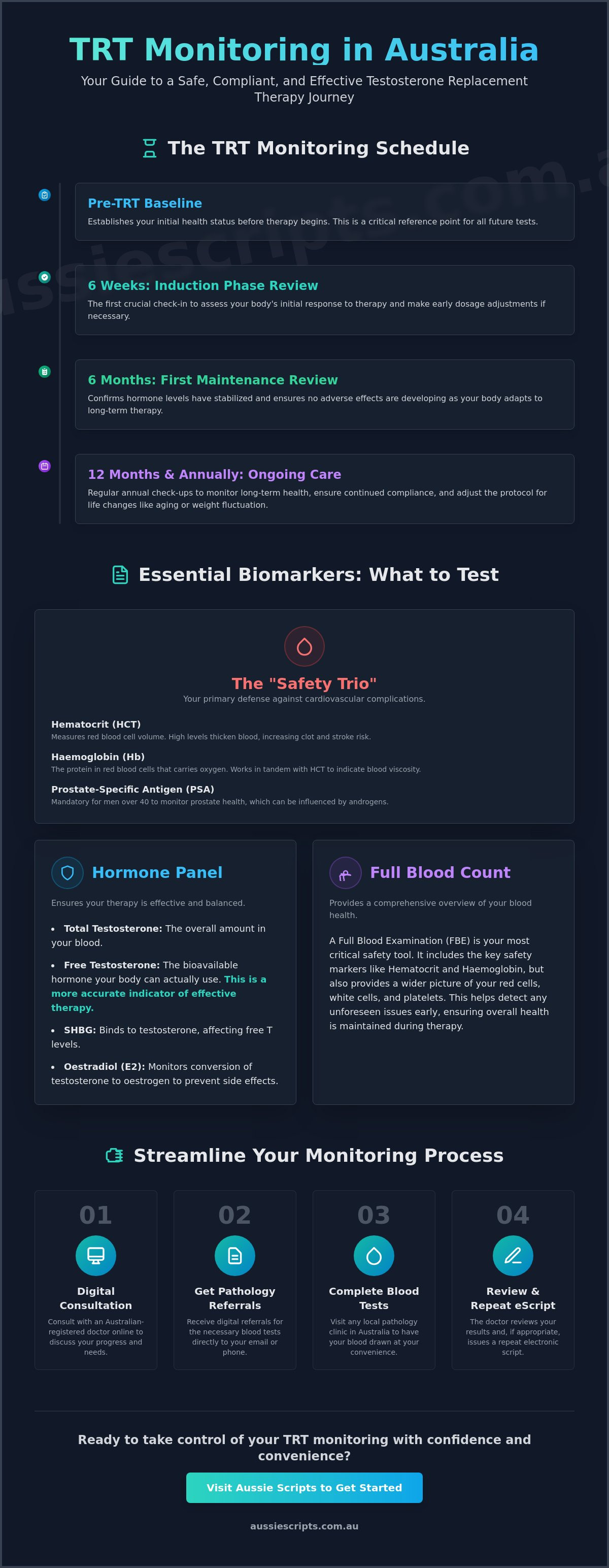
Effective TRT monitoring requires a granular look at specific blood panels rather than a simple testosterone check. While total testosterone shows the gross amount of hormone in your blood, free testosterone measures what's actually bioavailable for your tissues to use. According to the Official Endocrine Society Guidelines, tracking these specific levels ensures you remain within a therapeutic range that mimics natural production. This data allows your doctor to confirm the treatment is working at a cellular level.
A Full Blood Examination (FBE) is your most critical safety tool. It tracks Hematocrit and Haemoglobin to ensure your blood hasn't become too viscous. Prostate-Specific Antigen (PSA) screening is also mandatory for men over 40. It monitors for changes in prostate health that may be influenced by androgen therapy. Finally, Oestradiol (E2) levels help manage the aromatisation process. This is where the body converts excess testosterone into oestrogen. If E2 climbs too high, you might experience mood swings, water retention, or reduced libido.
The "Safety Trio": FBE, PSA, and LFTs
Liver Function Tests (LFTs) are vital for patients using specific oral or compounded formulations. While modern injectable options usually bypass the liver, LFTs remain a standard safety precaution in Australian clinical practice. Hematocrit thresholds are particularly strict. If your level exceeds 54%, your practitioner will likely suggest a dosage adjustment or a therapeutic blood donation. PSA monitoring provides a baseline for your prostate. A rapid rise in PSA often triggers a more detailed investigation to rule out underlying issues. These tests work together to keep your therapy within safe parameters.
Secondary Markers for Holistic Health
TRT can influence your lipid profile by altering your cholesterol levels. Regular monitoring ensures that your HDL and LDL ratios remain healthy while on therapy. Sex Hormone Binding Globulin (SHBG) is another critical metric that dictates how much hormone is actually active. SHBG is a protein produced by the liver that binds to testosterone, effectively regulating the amount of active hormone available to your tissues. If your SHBG is too high, you may still feel symptoms of low testosterone despite having normal total levels. If you need a Specialist Referral to review these complex biomarkers with an expert, digital consultations provide a fast and compliant pathway.
The 2026 Monitoring Schedule: How Often Should You Test?
Effective TRT monitoring follows a strict timeline designed to catch physiological changes before they become problematic. In Australia, the standard protocol begins with an induction phase that requires testing 6 to 8 weeks after your first dose. This initial window allows your doctor to see how your body absorbs the medication and whether your red blood cell count is responding safely. A second test follows at the 12-week mark or after any dose adjustment to confirm your levels have reached a steady state. These early data points are vital for establishing your long-term treatment baseline.
The "Trough Level" rule is a non-negotiable part of this schedule. You must schedule your blood draw for the morning of your next dose, before you apply a gel or receive an injection. Testing at this low point ensures that your testosterone never dips below the therapeutic range. If you test shortly after administration, you'll see a peak level that doesn't represent your true baseline. Different delivery methods require slight adjustments; for example, patients on daily gels reach a steady state much faster than those on long-acting 12-week injections, which require patience to monitor correctly.
Year One: The Stabilisation Period
During the first 12 months, your clinical team focuses on stabilisation. You'll likely test every 3 to 6 months during this period. These reviews help identify your personal peak and trough, ensuring consistent symptom relief without the "rollercoaster" effect. If your hematocrit or PSA levels fluctuate during these first sets of results, your doctor might tweak your protocol to maintain safety. Frequent oversight in the first year is the best way to prevent long-term side effects and ensure the dosage is perfectly calibrated to your metabolism.
Long-term Maintenance Protocols
Once your levels are stable, you transition to the maintenance phase. This typically involves 6-month or annual reviews. It's best to use the same pathology lab for every test. This ensures consistent longitudinal data, as different labs may use slightly different reference ranges. You shouldn't wait for your annual check-up if you notice a return of symptoms or new side effects like excessive water retention. Triggering an unscheduled test allows for rapid adjustments. Digital facilitators make this process easier by providing a Standard Script or referral without the need for a physical office visit.
Navigating the Australian Pathology System for TRT
Securing a pathology referral in Australia no longer requires a physical waiting room. Digital health platforms have streamlined the process, allowing you to obtain the necessary paperwork for TRT monitoring through a secure online consultation. Once you receive your digital referral, you can visit any major pathology provider, such as Sonic Healthcare or Healius labs. The results are then transmitted directly back to your telehealth provider for clinical review. This digital loop ensures that your data is handled securely and is available for your next medical assessment without the need for paper records.
Understanding the financial aspect of pathology is also important. Medicare provides rebates for specific hormone tests under MBS Item 66695, which covers total testosterone and SHBG when specific clinical criteria are met. However, a comprehensive safety panel often includes secondary markers like full lipid profiles and high-sensitivity oestradiol that may not be fully covered. Private pathology for TRT monitoring typically costs between $80 and $290, depending on the number of biomarkers requested. Choosing a private request often allows for a more extensive data set, which is vital for precise dosage adjustments and long-term safety tracking.
Pathology Logistics and Preparation
Timing and physical state are critical for result accuracy. You should always schedule your blood draw for the early morning, ideally between 7 am and 10 am. This window aligns with the natural peak of androgen production and provides the most reliable baseline for comparison. Fasting for 8 to 12 hours is generally required, especially if your panel includes metabolic markers or lipid profiles. You should also focus on these preparation steps:
- Hydration: Drink plenty of water before your appointment. Dehydration can lead to an artificially high hematocrit reading, which might cause unnecessary concern regarding blood viscosity.
- Exercise: Avoid heavy weightlifting or high-intensity interval training for 24 to 48 hours before the test. Intense exercise can temporarily elevate liver enzymes and alter hormone readings.
- Consistency: Use the same pathology brand for every test to ensure the reference ranges and testing methodologies remain identical across your health history.
Interpreting Your Results with a Professional
Raw lab data can be misleading without clinical context. You should never self-adjust your medication based on a single high or low reading found in your digital portal. Small fluctuations are normal and often don't require a change in protocol. A telehealth practitioner will review your results against your reported symptoms and previous history to determine if an adjustment is necessary. If your results indicate a need for more specialised oversight, you can easily request a Specialist Referral through our platform to consult with an endocrinologist or urologist. Maintaining a centralised digital record of these results is the most efficient way to manage your long-term health and ensure your scripts remain compliant with Australian standards.
Streamlining Your TRT Administration with Aussie Scripts
Managing your hormone health requires a balance between rigorous TRT monitoring and efficient administrative support. Once you've completed your scheduled pathology and reviewed your biomarkers, the next step is securing your ongoing medication or specialist oversight. Aussie Scripts acts as a digital facilitator, connecting you with Australian-registered doctors who assess your medical history and pathology results. This process ensures that your treatment remains compliant with national standards while removing the logistical hurdles of traditional clinic environments. By using a secure online platform, you can maintain your therapy with the precision and punctuality your health demands.
The transition to eScripts has transformed how patients access their medication. Once a doctor approves your assessment, your script is issued digitally. You can choose to have your medication delivered directly to your door or made available for local pick-up at any Australian pharmacy. This system is particularly beneficial for those on stable, long-term protocols who require consistent access without the delay of physical appointments. It bridges the gap between clinical necessity and modern convenience, allowing you to focus on your recovery rather than the bureaucracy of the healthcare system.
Efficient Script Renewals and Referrals
For patients with established TRT protocols, requesting a script renewal is a straightforward digital process. You provide your recent pathology data, which is then reviewed by a practitioner to ensure your levels remain within the safe physiological window. If your monitoring results indicate a need for more specialised care, the platform allows you to request a specialist referral for an endocrinologist or urologist. This ensures you have the necessary documentation to access subsidised care or advanced clinical investigations when required. Every interaction involves a thorough medical review to prioritise your safety and maintain a clear clinical record.
Your Partner in Digital Healthcare
Aussie Scripts is designed to reduce wait-room friction and eliminate the delays often associated with chronic condition management. While digital consultations are highly efficient, they operate within strict professional boundaries. Telehealth is ideal for TRT monitoring and renewals, but it doesn't replace the need for an in-person physical examination if your doctor identifies a specific clinical concern. Professional oversight remains the priority in this digital-first environment. You can request your standard script or specialist referral today to experience a streamlined approach to your hormone health management.
Securing Your Long-Term Hormonal Health
Maintaining safety during testosterone therapy requires more than subjective feeling. You must commit to the clinical data provided by regular blood panels. By tracking essential biomarkers and adhering to a strict induction schedule, you ensure your therapy remains within the physiological window. Effective TRT monitoring protects against cardiovascular strain while confirming that your dosage still matches your metabolic needs. This data-driven approach is the only way to sustain the benefits of therapy while mitigating long-term risks.
Modern digital health tools have removed the friction from this process. You can now manage your health records and pathology requests without the delays of physical waiting rooms. Aussie Scripts provides access to Australian-registered doctors who offer professional medical reviews and secure digital prescriptions (eScripts). The platform operates 7 days a week to ensure your care remains uninterrupted and compliant with national standards. Take control of your health journey with a protocol that prioritises both safety and convenience.
Access professional medical reviews and repeat scripts online with Aussie Scripts
Frequently Asked Questions
Can I get a TRT monitoring blood test referral online in Australia?
Yes, you can obtain a pathology referral for TRT monitoring through an online medical consultation. Telehealth platforms provide digital referrals that are valid at all major Australian pathology providers, including Sonic Healthcare and Healius labs. This process allows you to skip the physical waiting room while ensuring your blood work is ordered and reviewed by a qualified practitioner.
How often do I really need to check my testosterone levels on TRT?
You must check your levels 6 to 8 weeks after starting treatment or changing your dose to confirm the protocol's safety. During the first year of therapy, testing usually occurs every 3 to 6 months to establish a stable baseline. Once your levels are consistent, you will transition to a maintenance phase, which typically requires annual or bi-annual reviews.
What happens if my hematocrit levels are too high during monitoring?
If your hematocrit levels exceed the clinical safety threshold of 54%, your doctor will likely recommend a dosage adjustment or therapeutic venesection. High hematocrit increases blood viscosity, which can lead to cardiovascular strain or clotting issues. Regular monitoring identifies these trends early, allowing for proactive management through blood donation or a refined administration schedule.
Do I need to fast before my TRT monitoring blood test?
You are generally required to fast for 8 to 12 hours before your blood draw to ensure the accuracy of your lipid profile and metabolic markers. It is essential to schedule your appointment between 7 am and 10 am to capture your peak hormone levels. You should continue to drink plenty of water, as dehydration can cause artificially elevated hematocrit readings.
Can an online doctor renew my testosterone prescription?
An online doctor can renew your testosterone prescription if you have an established protocol and provide up-to-date monitoring results. Following a digital review of your health history and pathology data, a practitioner can issue a secure eScript. This digital prescription is sent directly to your mobile device, making it ready for local pharmacy pick-up or delivery.
What is the difference between free and total testosterone in my results?
Total testosterone measures the entire amount of the hormone in your bloodstream, while free testosterone represents the bioavailable portion that your tissues can actually use. Most testosterone is bound to proteins like SHBG, which renders it inactive. Monitoring both markers is vital because you may still experience symptoms if your free levels are low, even if your total levels appear normal.
Why is my doctor checking my PSA levels during TRT monitoring?
Doctors monitor PSA (Prostate-Specific Antigen) to screen for prostate health, as androgen therapy can influence the growth of prostate tissue. Regular testing identifies rapid elevations that may require a specialist referral for further investigation. This is a mandatory safety component for all men on long-term therapy, particularly those over the age of 40.
Is TRT monitoring covered by Medicare in 2026?
Medicare provides rebates for specific testosterone tests under MBS Item 66695 if the patient meets strict clinical criteria, such as a confirmed androgen deficiency. If your monitoring doesn't meet these requirements, you will need to use private pathology services. Private panels are often preferred as they provide a broader range of biomarkers that Medicare may not subsidise for routine monitoring.
Disclaimer
The information provided by AussieScripts is for general informational purposes only and does not constitute medical advice, diagnosis, or treatment. For advice tailored to your specific symptoms or health concerns, please consult one of our doctors or your regular GP.
