Weight Loss Medication Options: Australian Clinical Guide
Start understanding my options for weight loss medication with our Australian guide to TGA-approved treatments, clinical BMI criteria, and telehealth care.

When traditional diet and exercise routines fail to produce sustainable results, understanding my options for weight loss medication shouldn't mean sifting through conflicting social media hype or facing uncomfortable waiting room conversations. Sustainable weight management isn't a test of willpower. It's a complex metabolic process that often requires structured clinical care rather than another restrictive lifestyle cycle. If you feel overwhelmed by contradictory advice and anxious about discussing your weight with a healthcare professional, your hesitation is completely normal.
Prescription weight management requires an individualised medical assessment, not one-size-fits-all claims. This guide outlines the therapeutic treatments approved by the Therapeutic Goods Administration (TGA) in Australia, covering both modern injectable therapies and oral tablets. You'll learn the precise clinical criteria Australian-registered doctors use to determine eligibility, such as Body Mass Index thresholds and metabolic risk factors, and discover how to book a confidential, doctor-led telehealth consultation from home. Read on for a clear breakdown of your clinical options.
Key Takeaways
- Recognising how targeted treatments alter metabolic and neural hunger signals provides a clear starting point when understanding my options for weight loss medication.
- Compare the primary classes of TGA-approved treatments in Australia, from GLP-1 receptor agonists to oral formulations, to see how each mechanism impacts daily satiety.
- Review the objective clinical benchmarks Australian doctors evaluate, including Body Mass Index thresholds and existing metabolic health conditions.
- Learn how structured dosage titration protocols help minimise common gastrointestinal side effects during the initial phases of therapy.
- Discover how confidential, doctor-led telehealth consultations allow you to complete a thorough medical evaluation and receive digital prescriptions nationwide.
Understanding Prescription Weight Loss Medication in Australia: Clinical Foundations
Prescription weight loss medications are doctor-supervised, evidence-based pharmacological treatments indicated for chronic weight management in patients with elevated health risks. These therapeutic agents target neurochemical and endocrine pathways that control appetite, enhance metabolic satiety, and moderate digestive processing. They do not replace foundational lifestyle changes; instead, they serve as a regulated adjunct to clinical nutrition plans and regular physical activity. By achieving sustained weight reduction, this treatment paradigm aims to lower the long-term risk of cardiovascular events, non-alcoholic fatty liver disease, and type 2 diabetes.
To see how emerging treatments are viewed within the national healthcare landscape, watch this news report:
For patients actively understanding my options for weight loss medication, recognizing the therapeutic role of anti-obesity medications requires moving past outdated misconceptions about willpower. Pharmacological agents offer targeted metabolic support when standard caloric deficits fail to overcome homeostatic biological resistance.
The Biological Role of Pharmacotherapy in Weight Regulation
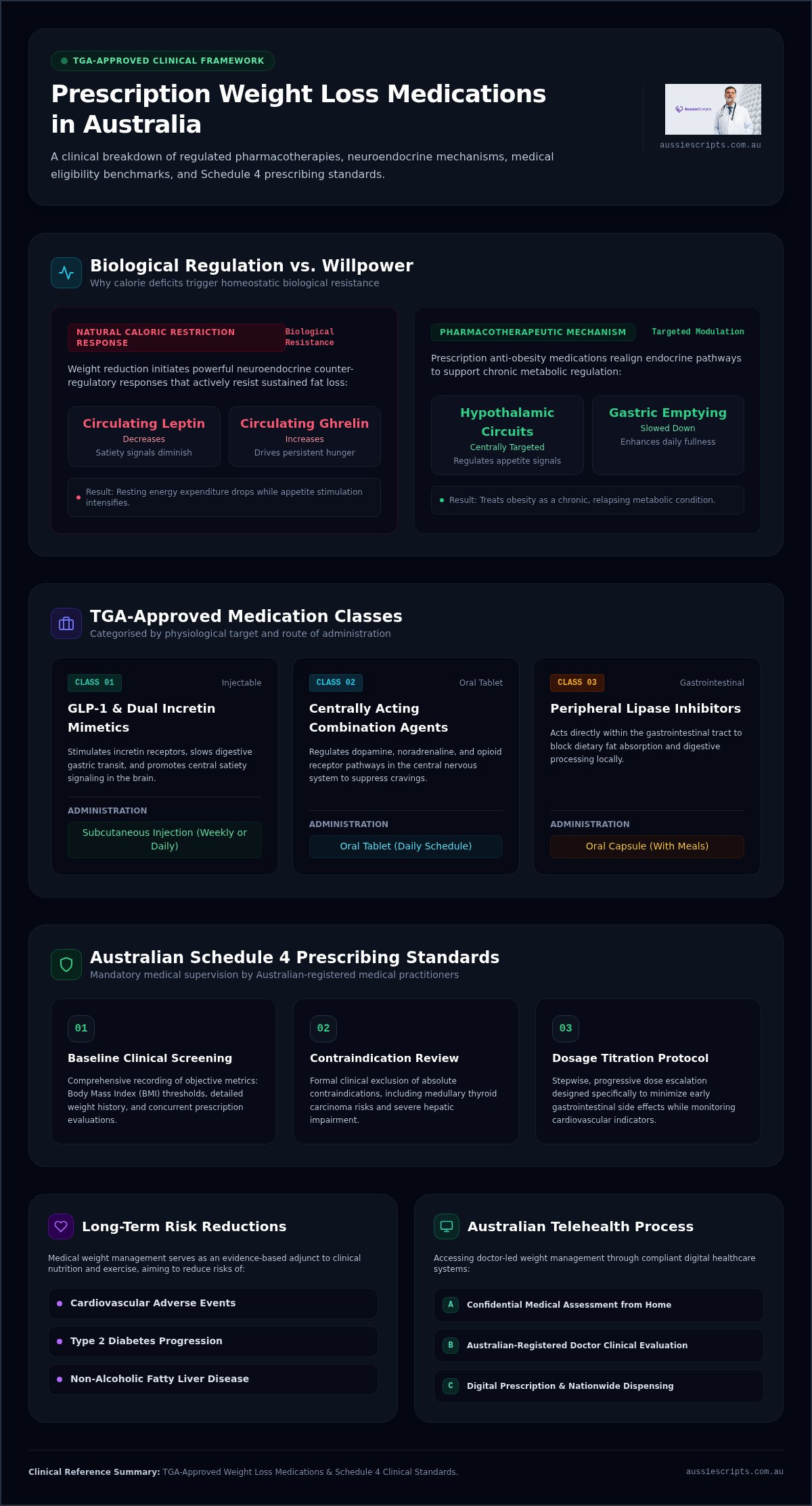
Weight reduction triggers powerful neuroendocrine counter-regulatory responses. As caloric intake drops, circulating leptin levels decrease while ghrelin rises, driving persistent hunger and lowering resting energy expenditure. Prescription therapies alter these biological signals by acting on central hypothalamic circuits and slowing gastric emptying. This mechanism helps manage obesity as a chronic, relapsing metabolic condition rather than an acute behavioural failure.
Why Medical Supervision Is Mandatory Under Australian Standards
All prescription weight management drugs supplied in Australia are classified as Schedule 4 (Prescription Only) medicines. They legally require an assessment and prescription from an Australian-registered medical practitioner. Clinical oversight ensures safe prescribing practices through specific checks:
- Baseline screening: Documenting accurate weight metrics, medical history, and concurrent prescriptions.
- Contraindication review: Ruling out clinical contraindications such as medullary thyroid carcinoma risks or severe hepatic impairment.
- Tolerability monitoring: Titrating dosages progressively to manage adverse events while tracking cardiovascular indicators.
A structured clinical assessment ensures that understanding my options for weight loss medication translates into a safe, medically supervised management strategy tailored to individual risk factors.
Comparing Approved Weight Loss Medication Classes in Australia
Australian doctors evaluate several therapeutic categories to match treatment to individual metabolic profiles. Rather than relying on singular solutions, therapeutic reviews of Australian weight loss medicines categorize treatments by their physiological target. A clinical approach to understanding my options for weight loss medication distinguishes centrally acting hormonal mimetics from agents working directly in the gastrointestinal tract.
| Medication Class | Primary Mechanism | Administration Format |
|---|---|---|
| GLP-1 and Dual Incretin Mimetics | Stimulate incretin receptors, slow gastric emptying, and promote central satiety | Subcutaneous injection (weekly or daily) |
| Centrally Acting Combination Agents | Regulate dopamine, noradrenaline, and opioid receptors to control cravings | Oral tablet (daily) |
| Peripheral Lipase Inhibitors | Inhibit gastric and pancreatic lipases to block dietary fat breakdown | Oral capsule (with meals) |
GLP-1 Receptor Agonists and Incretin Mimetics
Incretin mimetics replicate endogenous peptide hormones that signal post-meal fullness to the hypothalamus. Administered via subcutaneous injections, these therapies significantly slow gastric emptying to prolong satiety. Clinical trials demonstrate substantial reductions in baseline body mass, with average outcomes reaching 15% to 22.5% depending on the specific agent. Mild, transient gastrointestinal adaptation symptoms, particularly nausea, commonly occur during early dose escalation.
Oral Appetite Suppressants and Combination Agents
Centrally acting oral medications modify hunger signalling through neurotransmitter pathways. Short-term sympathomimetic agents suppress appetite but mandate prior cardiovascular screening to check for elevated blood pressure or resting tachycardia. Dual-action combination tablets combine bupropion and naltrexone to target hypothalamic hunger circuits alongside mesolimbic reward systems. If you want clinical advice on oral treatments, booking a telehealth Weight Loss Consultation allows an Australian doctor to review your medical history and determine appropriate options.
Peripheral Agents and Fat Absorption Modifiers
Lipase inhibitors offer a non-systemic approach by acting locally within the gut lumen. They bind to digestive enzymes, preventing roughly 30% of ingested dietary fats from being hydrolysed and absorbed. Because unabsorbed fats pass through the digestive system, patients must follow a reduced-fat dietary plan to minimise gastrointestinal side effects. This class provides an alternative for individuals with contraindications to systemic incretins or central nervous system stimulants.
Clinical Eligibility Criteria: How Doctors Determine Suitability
Prescription access in Australia adheres to strict regulatory frameworks established by the Therapeutic Goods Administration (TGA). Prescribing practitioners do not issue treatments based on aesthetic requests; therapy requires verifiable clinical necessity. When understanding my options for weight loss medication, patients must meet specific diagnostic thresholds designed to balance metabolic benefits against potential pharmacotherapeutic risks.
Australian practitioners follow a systematic four-step clinical assessment workflow:
- Metric calculation: Recording current weight, height, and waist circumference to establish baseline indices.
- Comorbidity audit: Documenting chronic conditions exacerbated by excess adiposity.
- Safety and contraindication screening: Reviewing medical history, family risks, and concurrent drugs.
- Readiness and lifestyle review: Confirming prior non-pharmacological interventions and commitment to ongoing monitoring.
Calculating BMI and Assessing Weight-Related Health Markers
Suitability starts with Body Mass Index (weight in kilograms divided by height in metres squared). Standard clinical indications for approved weight loss medications in Australia require:
- A baseline BMI of 30 kg/m² or greater (classified as clinical obesity).
- A baseline BMI of 27 kg/m² or greater alongside at least one diagnosed comorbidity.
Qualifying comorbidities include hypertension, dyslipidaemia, obstructive sleep apnoea, non-alcoholic fatty liver disease, and impaired glucose tolerance or type 2 diabetes. Doctors often evaluate recent pathology results, including HbA1c and lipid profiles, to assess systemic metabolic strain.
Evaluating Medical Contraindications and Safety Warnings
Patient safety requires identifying medical contraindications before initiating treatment. GLP-1 receptor agonists carry specific restrictions for individuals with a personal or familial history of medullary thyroid carcinoma or Multiple Endocrine Neoplasia syndrome type 2. Prescription therapies are not indicated during pregnancy or breastfeeding. Severe renal impairment, end-stage liver disease, or a history of pancreatitis also preclude treatment initiation across multiple drug classes. Practitioners review active prescriptions to prevent adverse drug-to-drug interactions.
Assessing Prior Lifestyle Interventions and Readiness
Clinical guidelines mandate that pharmacotherapy serves as an adjunct to behavioural modification rather than a standalone fix. Doctors must confirm that patients have attempted structured, calorie-controlled dietary regimens and exercise plans without achieving sustainable clinical outcomes. Long-term compliance requires routine check-ins, dosage adjustments, and ongoing lifestyle integration. A patient's readiness to commit to persistent medical follow-ups forms an essential part of understanding my options for weight loss medication and establishing realistic expectations for sustained health improvement.
Managing Treatment: Side Effects, Administration, and Lifestyle Integration
Pharmacological weight management requires clinical planning that extends beyond the initial prescription. Achieving long-term outcomes while avoiding treatment cessation depends on systematic administration protocols, early side effect management, and nutritional adaptation. When understanding my options for weight loss medication, patients need a clear grasp of day-to-day treatment logistics to manage expectations effectively.
| Treatment Dimension | Clinical Best Practice | Patient Management Objective |
|---|---|---|
| Dose Titration | Stepwise escalation every 4 weeks | Minimise gastrointestinal intolerance and allow receptor adaptation |
| Nutrition Balance | High dietary protein intake (1.2-1.5g/kg) | Prevent sarcopenia and protect metabolic resting rate |
| Cold-Chain Storage | Maintain 2°C to 8°C prior to initial activation | Preserve peptide stability and clinical potency |
Understanding Dose Titration and Administration Practicalities
Dosing schedules for incretin therapies follow a structured titration protocol. Starting at a low baseline dose allows the central nervous system and digestive tract to adapt gradually. Monthly dose increases occur only if the current tier remains well-tolerated. For injectable medications, unopened pens require continuous refrigeration between 2°C and 8°C. Patients must use sterile, single-use pen needles for subcutaneous administration into the abdomen, upper arm, or thigh, disposing of spent sharps in compliant yellow puncture-proof bins returnable to local community pharmacies.
Proactive Management of Common Gastrointestinal Symptoms
Transient gastrointestinal symptoms represent the primary adverse reaction during early treatment. Nausea, mild constipation, loose stools, and acid reflux frequently occur as gastric emptying slows. Patients manage these events proactively by splitting food into smaller portions, eating slowly, and avoiding high-fat or greasy meals that delay digestion further. Consistent hydration remains essential. Severe, radiating abdominal pain, relentless vomiting, or inability to retain fluids requires immediate medical re-evaluation to exclude rarer complications like pancreatitis.
Preserving Lean Muscle Mass and Nutritional Adequacy
Substantial caloric restriction often induces lean muscle loss alongside adipose tissue reduction. To protect functional strength and resting energy expenditure, patients must prioritize dietary protein and integrate progressive resistance training at least twice weekly. Reduced meal volumes also elevate the risk of subtle micronutrient shortfalls, making daily multivitamin supplementation a sensible baseline consideration.
If you experience persistent adverse effects or need guidance on step-up titration, you can request a clinical review through a digital consultation to discuss dose adjustments safely.
Accessing Medical Weight Loss Care via Australian Telehealth Services
Geographic barriers and clinic wait times no longer limit access to specialised healthcare. Modern digital health platforms connect Australians nationwide with registered medical practitioners, removing the friction of physical waiting rooms and clinic commutes. Virtual reviews provide thorough clinical evaluations while maintaining patient privacy. When understanding my options for weight loss medication, telehealth streamlines the assessment process without compromising on regulatory compliance or clinical standards.
The Virtual Consultation Process for Weight Management
Initiating care begins with an online medical intake questionnaire. Patients record current biometric data, medical history, concurrent treatments, and weight management history. An Australian-registered doctor examines these clinical details to determine whether pharmacotherapy is indicated. The practitioner discusses realistic therapeutic outcomes, contraindications, and treatment schedules. Prescriptions are never guaranteed; issuing an order remains strictly at the doctor's professional discretion, ensuring treatment aligns with national safety guidelines.
How Electronic Prescriptions (eScripts) and Dispensing Work
Following clinical approval, doctors issue an electronic prescription delivered instantly via an encrypted SMS or email token. These compliant eScripts function across the national pharmacy exchange system. Patients have the flexibility to present their QR code token at any community pharmacy nationwide or forward it to accredited dispensing services for direct home delivery. Secure digital recordkeeping ensures seamless continuity of care, making repeat assessments and regular dosage titration reviews simple to coordinate.
Beginning Your Clinical Assessment Today
Achieving sustainable metabolic health requires qualified clinical oversight rather than unverified online advice. Digital health services operate seven days a week, allowing patients to schedule comprehensive evaluations around existing personal and professional commitments. As you continue understanding my options for weight loss medication, engaging with a registered medical practitioner ensures every decision is grounded in safety, clinical efficacy, and regular therapeutic supervision. You can start by booking a confidential digital assessment online today.
Moving Forward With Evidence-Based Weight Management
Navigating prescription treatments requires aligning medical evidence with your personal health profile. When understanding my options for weight loss medication, remember that clinical therapy addresses complex metabolic biology rather than a lack of willpower. Whether a practitioner determines that incretin mimetics or oral agents are suitable, lasting health outcomes depend on verified clinical eligibility, structured titration schedules, and sustained lifestyle modifications.
Accessing qualified medical care no longer requires clinic waiting rooms. Consultations are conducted exclusively by Australian-registered medical practitioners through a secure telehealth platform operating seven days a week nationwide. If treatment is clinically indicated, you will receive an instant digital eScript delivery straight to your smartphone or email. You don't have to manage metabolic health alone. Take the next practical step and book a confidential Weight Loss Consultation with an Australian-registered doctor today.
Frequently Asked Questions
How much weight can someone typically expect to lose on prescription medication?
Average weight loss varies by medication class, baseline health, and lifestyle adherence. Clinical trials for incretin mimetics demonstrate average body weight reductions ranging from 15% to 22.5%, whereas oral combination agents typically yield around 5% beyond lifestyle changes alone. Individual results differ significantly, and sustained outcomes require pairing pharmacotherapy with balanced nutrition, routine resistance training, and long-term medical supervision rather than relying on medication as an isolated solution.
Can any Australian doctor prescribe weight loss injections or tablets online?
Any Australian-registered medical practitioner can legally prescribe Schedule 4 weight loss medications via telehealth, provided the consultation adheres to national clinical guidelines. Doctors must evaluate your medical history, current body metrics, and potential contraindications before issuing an order. Online script issuance isn't guaranteed. It remains strictly at the doctor's clinical discretion to ensure the requested treatment is safe and medically indicated for your specific metabolic profile.
What happens if I stop taking my prescribed weight loss medication?
Discontinuing weight loss medication typically results in the gradual return of pre-treatment hunger levels and metabolic baseline rates. Because these therapies manage chronic appetite signalling rather than permanently altering genetics, patients often experience weight regain without established behavioural habits. When understanding my options for weight loss medication, discuss maintenance plans with your doctor. They can help you transition safely or adjust lifestyle strategies to protect metabolic progress over time.
Is prescription weight loss medication covered under the Pharmaceutical Benefits Scheme (PBS)?
Most prescription medications approved solely for weight management are not subsidised under the PBS. Patients generally access them via private, non-subsidised prescriptions, paying the full dispensing cost determined by community pharmacies. Some incretin treatments have PBS listings restricted strictly to type 2 diabetes management under specific clinical criteria. Your prescribing practitioner will confirm the private prescription requirements and financial considerations during your initial medical assessment.
What is the difference between daily and weekly weight loss injections?
The primary difference lies in the medication's molecular half-life and dosing frequency. Daily injections use older peptide formulations that break down quickly, requiring daily administration to maintain steady blood levels. Newer weekly formulations possess extended half-lives, allowing a single subcutaneous dose to provide consistent appetite suppression for seven days. Both options slow gastric digestion, but weekly options generally offer superior convenience and higher average weight reduction in clinical trials.
Can I take weight management medication if I have high blood pressure or diabetes?
Yes, preexisting conditions such as hypertension and type 2 diabetes often support eligibility for clinical intervention. In Australia, a Body Mass Index of 27 or greater combined with weight-related comorbidities qualifies patients for therapeutic consideration. However, certain stimulant-based oral tablets may increase heart rate or blood pressure, making incretin mimetics or lipase inhibitors preferred choices. A comprehensive medical review ensures your treatment plan doesn't conflict with current cardiovascular therapies.
How do electronic prescriptions (eScripts) work after an online telehealth consultation?
Once an Australian-registered doctor completes your consultation and approves treatment, they generate an electronic prescription token delivered instantly via SMS or email. This encrypted QR code connects directly to the national prescription exchange network. You can present the token at any community pharmacy across the country for dispensing, or forward it to accredited delivery services. This seamless process simplifies understanding my options for weight loss medication through accessible virtual care.
Disclaimer
The information provided by AussieScripts is for general informational purposes only and does not constitute medical advice, diagnosis, or treatment. For advice tailored to your specific symptoms or health concerns, please consult one of our doctors or your regular GP.
