What to Ask Before Starting Phentermine: The 2026 Patient Checklist
Know what to ask before starting phentermine with our 2026 patient checklist. Understand TGA criteria, heart safety, side effects, and telehealth guidelines.

Around 31.7% of Australian adults are now classified as obese, the highest rate ever recorded nationally. If you are considering medical intervention, you have likely encountered conflicting online reviews or felt anxious about how stimulants might affect your heart. It is common to feel overwhelmed by technical details while trying to fit a GP visit into a busy schedule. Understanding exactly what to ask before starting phentermine is the most effective way to replace this uncertainty with clinical confidence.
This expert-led guide prepares you for a professional medical consultation by providing a structured checklist of essential questions. You will gain a clear understanding of current TGA eligibility criteria and the safety protocols required for short-term treatment. We will outline how to discuss your medical history with an Australian-registered doctor and what to expect from a modern telehealth weight loss programme. By the end of this article, you will have a pragmatic toolkit to ensure your health journey remains safe, compliant, and focused on sustainable results.
Key Takeaways
- Understand the pharmacological role of sympathomimetic amines and why phentermine is strictly a short-term tool within a comprehensive weight management plan.
- Identify the critical cardiovascular history and hidden supplements, such as herbal fat burners or high-caffeine products, that you must disclose to ensure clinical safety.
- Develop a specific checklist of what to ask before starting phentermine to differentiate between common side effects and severe reactions that require immediate cessation.
- Prepare for the "Plateau Phase" by discussing nutritional support and transition strategies with your doctor to maintain progress once the medication course concludes.
- Streamline your telehealth consultation by gathering essential data, including recent blood pressure readings and current weight, to facilitate a precise digital eligibility review.
Understanding Phentermine as a Weight Management Tool in Australia
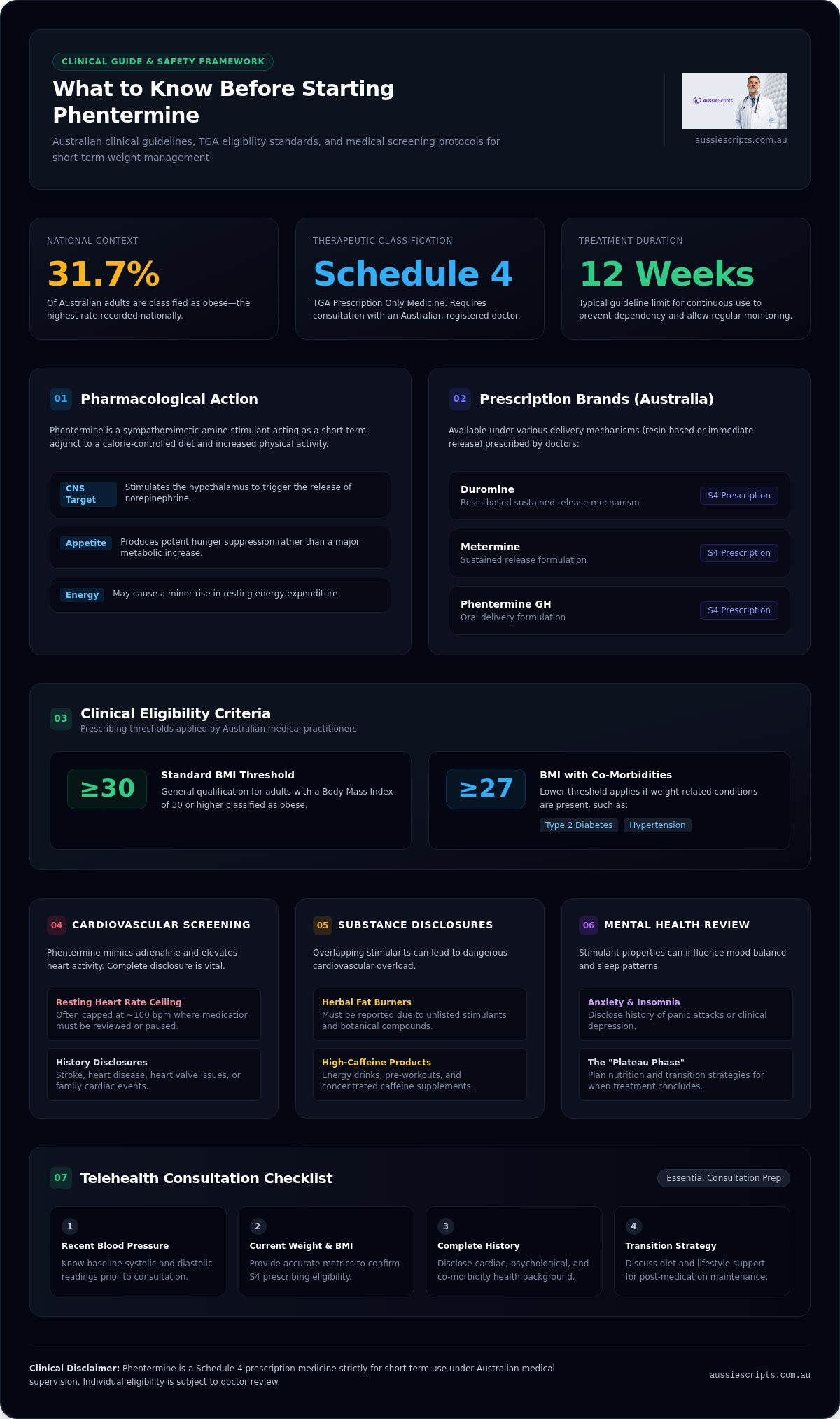
Phentermine is a sympathomimetic amine used as a short-term adjunct in weight management for patients living with obesity. In the Australian clinical framework, the Therapeutic Goods Administration (TGA) classifies it as a Schedule 4 (S4) Prescription Only Medicine. This means you can't purchase it over the counter; a consultation with Australian-registered doctors is mandatory to assess your clinical suitability. Popular brand names available in Australia include Duromine, Metermine, and Phentermine GH, which utilize various resin-based or immediate-release delivery mechanisms to manage appetite throughout the day.
When you're considering this treatment, understanding the pharmacological foundation helps you decide what to ask before starting phentermine during your medical review. It isn't a standalone solution but a tool to facilitate significant lifestyle changes. For a comprehensive overview of phentermine and its clinical history, medical research highlights its effectiveness when integrated into a calorie-controlled diet and increased physical activity plan.
To better understand how this medication fits into a modern weight loss strategy, watch this helpful video:
How Phentermine Works in the Body
Phentermine targets the central nervous system, specifically the hypothalamus. It triggers the release of neurotransmitters like norepinephrine, which stimulates a physiological response that naturally reduces hunger signals. While some patients experience a slight increase in resting energy expenditure, the primary benefit is potent appetite suppression rather than a significant metabolic boost. Because it's a stimulant, Australian guidelines typically limit continuous use to 12 weeks to prevent dependency and allow for regular cardiovascular monitoring.
Eligibility Criteria in 2026
Medical practitioners follow strict guidelines when prescribing S4 weight loss medications. Generally, eligibility requires a Body Mass Index (BMI) of 30 or higher. If you have weight-related co-morbidities like Type 2 diabetes or hypertension, the threshold often lowers to a BMI of 27. Doctors also review your heart rate and blood pressure, as phentermine can elevate both. Knowing what to ask before starting phentermine ensures you understand how these specific health metrics affect your eligibility for a Weight Loss Consultation and a subsequent script.
Vital Safety Questions Regarding Your Medical History
Clinical safety starts with total transparency. When you are preparing your list of what to ask before starting phentermine, your cardiovascular health must be the priority. Phentermine is a sympathomimetic amine; its chemical structure is designed to stimulate the central nervous system. You can view phentermine's pharmacological profile to understand how it influences sympathetic activity and heart rate. Because this medication mimics the effects of adrenaline, any underlying heart condition can increase the risk of adverse events.
Screening for Cardiovascular Risks
Ask your doctor about specific blood pressure targets for your treatment. You should know your baseline reading before taking the first dose. It's essential to disclose any family history of stroke, heart disease, or heart valve issues, even if you currently feel healthy. Most clinicians establish a heart-rate ceiling, often around 100 beats per minute at rest, where the treatment must be paused or adjusted to ensure patient safety. If you have any concerns about your heart health, you can book a Weight Loss Consultation with an Australian-registered doctor to discuss your specific history.
Mental health history is equally relevant. Stimulants can occasionally exacerbate underlying anxiety, insomnia, or mood disorders. If you have a history of panic attacks or clinical depression, ask your practitioner how this medication might interact with your emotional stability. A proactive approach allows for better monitoring of potential mood shifts during the first few weeks of the programme.
Disclosing Current Medications and Supplements
Drug interactions are a primary concern for clinical safety. Combining phentermine with certain antidepressants, specifically SSRIs or SNRIs, increases the risk of serotonin syndrome. This is a rare but serious condition that requires immediate medical attention. You also need to discuss how the medication affects blood sugar management if you're treating diabetes, as weight loss can change your insulin requirements.
- Thyroid Treatments: Phentermine can interact with levothyroxine, potentially increasing the risk of heart palpitations.
- OTC Decongestants: Many cold and flu medicines contain pseudoephedrine. When paired with phentermine, these can dangerously spike your blood pressure.
- Herbal Supplements: Disclose the use of "natural" fat burners, St. John's Wort, or high-caffeine pre-workout powders.
Many patients overlook the impact of "hidden" stimulants. Herbal weight loss products often contain ingredients like bitter orange or guarana. Mixing these with a prescription stimulant creates unnecessary cardiac strain and can lead to severe jitters or hypertension. Ensure your doctor has a complete list of every pill, powder, and tea you consume daily to avoid these preventable risks.
Managing Side Effects and Setting Realistic Expectations
Phentermine is a potent stimulant, and its effects on the body are immediate. While the primary goal is appetite suppression, the physiological impact extends to your energy levels and mood. One of the most critical points regarding what to ask before starting phentermine is the maximum duration of use. Australian TGA guidelines generally limit continuous treatment to 12 weeks to minimize the risk of dependency and adverse cardiac effects. Understanding this timeline helps you plan for the transition to long-term weight maintenance.
Setting realistic expectations includes preparing for the "Phentermine Crash." As the medication wears off late in the day, some patients experience a sharp decline in energy or a noticeable dip in mood. Preparing for this transition by scheduling demanding tasks earlier in the day can help manage these fluctuations effectively. If these mood swings become disruptive, they require a clinical review to ensure the treatment remains appropriate for your needs.
Common Side Effects and Prevention
Most patients experience mild to moderate side effects during the first two weeks of treatment. Xerostomia, or dry mouth, is the most frequently reported issue. You can manage this by increasing water intake or using sugar-free lozenges. If you experience the "jitters" or a slightly elevated heart rate, discuss these sensations with your doctor to determine if your dosage requires adjustment. For detailed instructions on managing daily use, refer to this Phentermine Patient Medication Guide.
Gastrointestinal changes, such as constipation or nausea, are also common. While these are often temporary, you should report any persistent symptoms to your healthcare provider. Maintaining a high-fiber diet and consistent hydration usually mitigates these digestive issues during the initial adjustment phase.
Mental and Emotional Health Monitoring
Because phentermine stimulates the central nervous system, it can impact your emotional regulation. Some patients report increased irritability, sometimes colloquially referred to as "phen-rage." It's vital to monitor your reactions to daily stressors and maintain an open dialogue with your practitioner. Knowing what to ask before starting phentermine regarding sleep hygiene ensures you don't compromise your recovery. Consider these specific monitoring points:
- Insomnia: Take your dose as early as possible in the morning to prevent sleep disruption.
- Anxiety: If you feel a significant increase in baseline anxiety or panic, this may indicate the medication isn't suitable for your profile.
- Check-ins: Establish a regular check-in schedule with your Australian-registered doctor to review your mental wellbeing throughout the 12-week course.
Integrating Phentermine into a Long-Term Health Strategy
Phentermine functions as a physiological bridge. It assists you while you establish the lifestyle foundations required for permanent weight management. One of the most overlooked aspects of what to ask before starting phentermine is the "Plateau Phase." Weight loss rarely follows a linear path. Around the eight-to-ten-week mark, your body may adapt to the medication and the reduced caloric intake, causing progress to stall. You must ask your doctor how they plan to adjust your strategy when this occurs, rather than simply assuming the medication has failed.
Physical activity requires a calibrated approach. Because phentermine is a sympathomimetic amine, it naturally elevates your resting heart rate. You shouldn't jump into high-intensity interval training without first establishing your safe cardiovascular zones with a professional. Discussing your heart rate limits ensures you don't place unnecessary strain on your system while trying to maximize fat loss. If you're unsure about your current cardiovascular fitness, a dietitian or exercise physiologist can provide tailored support alongside your medical treatment.
Building Sustainable Habits
The 12-week clinical window is a period for neurological and behavioral retraining. Use the time of suppressed appetite to relearn portion control without the interference of intense hunger signals. You should also ask your healthcare provider about specific protein requirements. Rapid weight loss can lead to muscle catabolism; adequate protein intake is essential to preserve lean tissue and maintain your metabolic rate. Track your progress through body measurements and energy levels, as the scale doesn't always reflect changes in body composition.
Planning for Life After Phentermine
The TGA guidelines are clear: phentermine is for short-term use, typically capped at 12 weeks. An effective exit strategy is just as important as the initial script. Stopping the medication abruptly can sometimes lead to a rebound in appetite, so ask about a tapering schedule. Identifying trigger behaviors, such as emotional eating or late-night snacking, allows you to develop coping mechanisms before the pharmacological support ends. Sustainable success depends on the transition from medication to a structured maintenance programme.
If you're ready to build a medically supervised plan that prioritises long-term health, you can book a Weight Loss Consultation with an Australian-registered doctor today. Starting with professional oversight ensures your journey is both safe and compliant with national standards.
How to Prepare for Your Telehealth Weight Loss Consultation
Telehealth has transformed how Australians access weight management support. It eliminates the need for physical waiting rooms while ensuring that specialised medical advice remains accessible. Before you begin your session, you must gather objective data to facilitate an accurate clinical assessment. This includes a recent blood pressure reading, ideally taken within the last month, and your current weight in kilograms. Having these metrics ready ensures the practitioner can calculate your BMI and evaluate your cardiovascular baseline with precision.
Privacy and security are paramount in digital health. Legitimate platforms use encrypted systems to protect your medical records and personal information. When considering what to ask before starting phentermine, you should also inquire about the follow-up process. Telehealth providers typically require regular reviews to monitor your progress and side effects before issuing repeat scripts. This ongoing oversight is a mandatory component of safe stimulant therapy in Australia.
The Telehealth Process at Aussie Scripts
The digital journey begins with a comprehensive clinical questionnaire. This tool captures your medical history, current medications, and weight loss goals. Once submitted, an Australian-registered doctor reviews your profile to determine suitability. If the doctor confirms you meet the TGA eligibility criteria, they'll issue an eScript. This digital prescription is sent directly to your phone or email, allowing you to fulfill it at any local pharmacy. For those requiring consistent oversight, the Standard Script service provides a streamlined pathway for ongoing management.
Quality and Safety Standards
A professional telehealth service prioritises patient safety over transactional speed. While the process is efficient, it remains a strictly regulated medical review. Our doctors will decline a request if the clinical data indicates that phentermine would pose an unacceptable risk to your health. This commitment to safety reinforces the brand's legitimacy within the Australian healthcare framework. Using Australian-registered practitioners ensures that your treatment adheres to local poisons standards and TGA guidelines. If you're ready to begin, you can book your specialised weight loss consultation to start your clinical review.
Take Command of Your Weight Loss Journey
Navigating a weight loss programme requires more than just a prescription; it demands a structured clinical plan. By identifying exactly what to ask before starting phentermine, you ensure that your 12-week treatment window serves as a springboard for permanent lifestyle changes. You now understand the necessity of cardiovascular transparency and the importance of an exit strategy that extends beyond the final dose.
Telehealth provides a streamlined pathway to this specialised care without the logistical delays of traditional clinics. You can access secure and confidential medical reviews through a 100% digital process, ensuring your health data remains protected while you receive expert guidance. Consultations with Australian-registered GPs provide the professional oversight needed to manage stimulants safely and effectively.
If you are ready to move forward with a medically supervised strategy, you can Book Your Telehealth Weight Loss Consultation with Aussie Scripts. Taking this proactive step positions you to achieve sustainable results through a programme built on clinical safety and digital convenience. You have the tools to start your journey with confidence.
Frequently Asked Questions
Is phentermine legal and safe to use in Australia?
Phentermine is legal in Australia and classified as a Schedule 4 (S4) Prescription Only Medicine. It's safe for use when prescribed by an Australian-registered doctor who has reviewed your medical history and BMI. The Therapeutic Goods Administration (TGA) regulates its distribution to ensure clinical standards are met. Safety depends on following the prescribed dosage and adhering to the recommended short-term duration, typically limited to 12 weeks to prevent dependency or cardiac strain.
Can I get a phentermine prescription through a telehealth consultation?
Yes, you can obtain a script via a telehealth consultation if a doctor deems it clinically appropriate. Australian-registered doctors use digital reviews to assess your eligibility based on your BMI, blood pressure, and health history. If you're approved, an eScript is sent directly to your mobile device. This process ensures you receive professional oversight while benefiting from the convenience of a modern, digital health platform without visiting a physical clinic.
What are the most common side effects I should ask my doctor about?
The most frequent side effects include xerostomia (dry mouth), insomnia, and increased heart rate. You should also inquire about potential jitters or feelings of restlessness. When considering what to ask before starting phentermine, focus on how to manage these symptoms and at what point they require medical intervention. While most side effects are mild and resolve within the first two weeks, persistent issues like severe chest pain or shortness of breath require immediate cessation.
How long can I stay on phentermine for weight loss?
Australian clinical guidelines generally restrict the continuous use of phentermine to a maximum of 12 weeks. It's designed as a short-term tool to kick-start weight loss rather than a permanent maintenance solution. Staying on the medication beyond this timeframe increases the risk of side effects and pharmacological tolerance. Your doctor will use this period to help you establish sustainable lifestyle habits, ensuring you can maintain your progress once the script concludes.
Will phentermine interact with my current antidepressants?
Phentermine can interact with several antidepressants, particularly Selective Serotonin Reuptake Inhibitors (SSRIs) and SNRIs. This combination may increase the risk of serotonin syndrome, a serious condition characterised by agitation, rapid heart rate, and muscle rigidity. You must provide a complete list of your current medications during your Weight Loss Consultation. Your doctor will evaluate these interactions to determine if phentermine is a safe option for your specific mental health profile.
Do I need to see a doctor in person for a weight loss script?
You don't need an in-person physical examination to obtain a weight loss script in Australia. Telehealth consultations are a compliant and legal pathway for accessing Schedule 4 medications. You'll need to provide accurate data, including your current weight and a recent blood pressure reading, so the doctor can conduct a thorough digital medical review. This digital-first approach prioritises efficiency while maintaining the same clinical standards as a traditional professional office.
What happens if I stop taking phentermine suddenly?
Stopping phentermine abruptly can lead to a rebound in appetite or feelings of significant fatigue, often called a crash. Some patients also experience temporary mood fluctuations or irritability as the stimulant effects leave the system. It's best to discuss a tapering strategy with your doctor to ensure a smooth transition. Establishing a structured exit plan helps you manage hunger signals effectively as you move into the maintenance phase of your health journey.
How much weight can I expect to lose with phentermine?
Weight loss results vary significantly based on your starting BMI, diet, and physical activity levels. Clinical data indicates that phentermine is highly effective when used as an adjunct to a calorie-controlled plan. Knowing what to ask before starting phentermine regarding realistic targets helps you set achievable goals. Rather than focusing solely on a specific number, doctors look for a steady reduction in body weight that is supported by improved metabolic health markers.
Disclaimer
The information provided by AussieScripts is for general informational purposes only and does not constitute medical advice, diagnosis, or treatment. For advice tailored to your specific symptoms or health concerns, please consult one of our doctors or your regular GP.
