Who is Eligible for Weight Loss Medication in Australia? 2026 Clinical Guidelines
Wondering who is eligible for weight loss medication in Australia? Our 2026 guide breaks down the BMI rules, TGA regulations, and PBS costs for you.

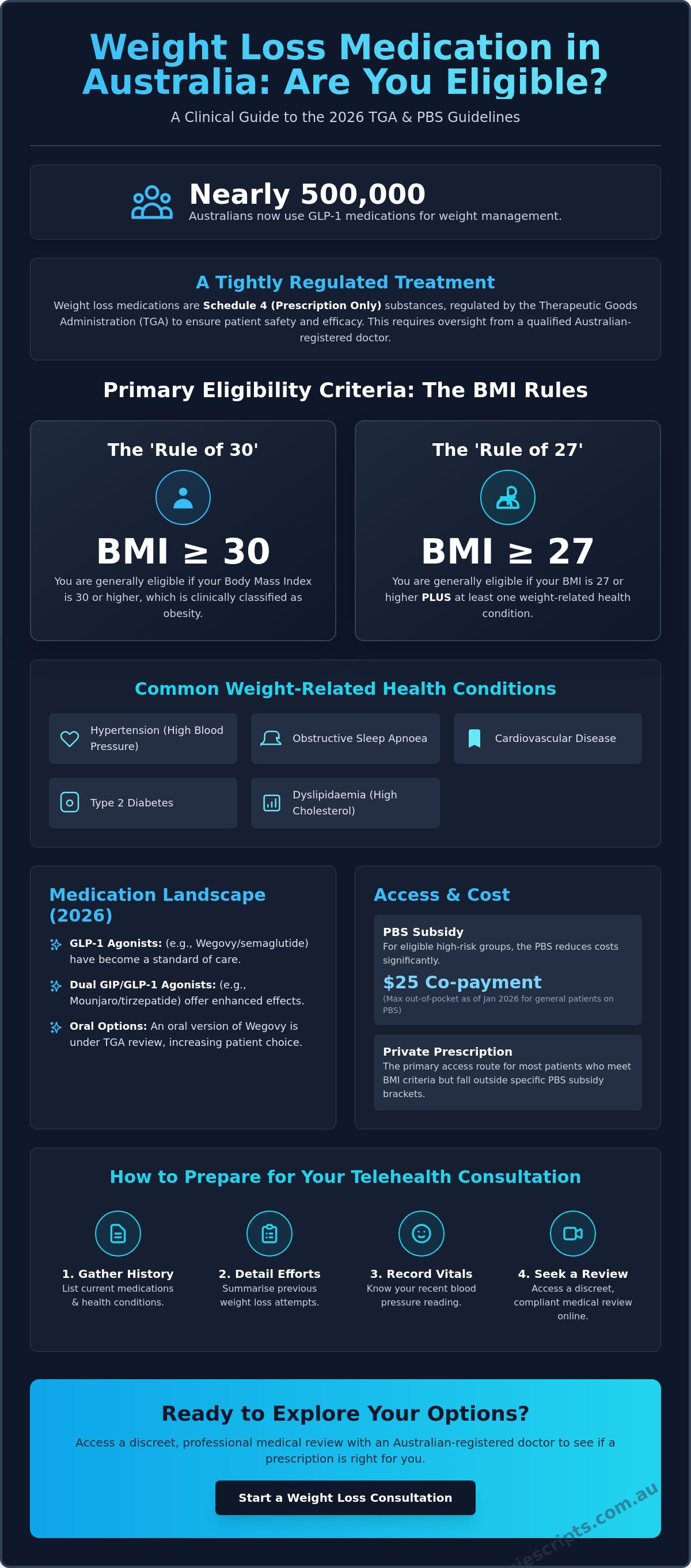
Nearly 500,000 Australians now use GLP-1 medications for weight management, yet many individuals remain stuck in a cycle of restrictive dieting without seeing sustainable results. It's frustrating when traditional methods fail, especially when TGA regulations and PBS eligibility rules change frequently. If you've felt anxious about discussing your weight in person or confused by conflicting online advice, you aren't alone. Determining exactly who is eligible for weight loss medication in australia is the first step toward a safe, regulated medical solution that prioritizes health outcomes over willpower alone.
We provide a clinical breakdown of the 2026 guidelines to help you understand your options for medical intervention. You'll learn about the strict BMI thresholds, including the requirement for a BMI of 30 or a BMI of 27 with weight-related health conditions like hypertension or sleep apnea. We also examine how recent PBS updates have reduced co-payments to $25 for eligible patients. This guide outlines the streamlined process for securing a Weight Loss Consultation through a professional telehealth platform, ensuring your medical review is efficient, compliant, and tailored to your clinical history.
Key Takeaways
- Understand why weight loss medications are Schedule 4 substances and how the TGA regulates their use for patient safety.
- Learn exactly who is eligible for weight loss medication in australia by applying the 'Rule of 30' and the 'Rule of 27' to your clinical profile.
- Identify the medical contraindications that could make certain treatments unsuitable for your specific health history.
- Prepare for your Weight Loss Consultation by gathering essential data like blood pressure and a summary of previous weight loss attempts.
- Discover how a digital medical review provides a discreet, professional alternative to traditional clinics; it's an efficient path to expert care.
The Regulatory Landscape of Weight Management in Australia
In the Australian healthcare system, weight management treatments are strictly classified as Schedule 4 (Prescription Only) substances. This classification ensures that any medical intervention is overseen by a qualified professional to maintain patient safety. The Therapeutic Goods Administration (TGA) serves as the national regulator, setting rigorous safety and efficacy standards for every anti-obesity medication approved for use. By May 2026, the clinical approach has evolved significantly. Medical bodies now recognize obesity as a chronic metabolic disease, requiring long-term management rather than short-term fixes.
Understanding who is eligible for weight loss medication in australia involves looking at these treatments as an adjunct to lifestyle changes. They aren't a replacement for a balanced diet or regular physical activity. Instead, they function as a clinical tool to help regulate metabolic pathways that often resist traditional weight loss efforts. This integrated approach ensures that patients achieve sustainable health outcomes while minimizing the risks associated with unsupervised use of potent medications.
Why Prescription Oversight is Mandatory
Clinical monitoring is essential because weight management medications directly impact the endocrine and metabolic systems. Doctors must assess patients for metabolic adaptation, a process where the body slows its energy expenditure in response to weight loss. Regular reviews allow for the identification and management of side effects, ensuring the treatment remains safe for the individual's specific profile. Australian health authorities strictly discourage 'off-label' prescribing for weight loss when TGA-approved alternatives are available. Utilizing Australian-registered doctors for a Weight Loss Consultation ensures that your treatment plan aligns with the latest national safety protocols and clinical evidence.
Medication Classes Available in 2026
The current therapeutic landscape includes several advanced pharmacotherapy options. GLP-1 receptor agonists, like Wegovy (semaglutide), and dual GIP/GLP-1 agonists, such as Mounjaro (tirzepatide), have become the standard for many clinical pathways. Additionally, an oral version of Wegovy is under TGA review as of May 2026, potentially offering more choice for patients. It's important to distinguish between medications listed on the Pharmaceutical Benefits Scheme (PBS) and those available via private prescription. From 1 January 2026, the maximum out-of-pocket cost for general patients for medicines on the PBS was reduced to $25 per script. While PBS listings, such as the January 2026 recommendation for Wegovy for specific high-risk groups, offer reduced costs, private prescriptions remain the primary route for many Australians who meet general eligibility criteria but fall outside specific subsidy brackets.
Primary Clinical Eligibility Criteria: BMI and Health Markers
Clinical eligibility for medical weight management in Australia is governed by standardized safety protocols. These benchmarks ensure that pharmacological intervention is reserved for those who will benefit most from a metabolic shift while maintaining a high safety profile. Determining who is eligible for weight loss medication in australia starts with a clear assessment of two primary Body Mass Index (BMI) thresholds, often referred to by clinicians as the 'Rule of 30' and the 'Rule of 27'.
The 'Rule of 30' applies to individuals with a BMI of 30 or higher. At this level, medical guidelines categorize the patient as having obesity, making them eligible for a Weight Loss Consultation to discuss prescription options. The 'Rule of 27' applies to those with a BMI of 27 or higher, provided they also present with at least one weight-related comorbidity. These health markers include hypertension (high blood pressure), dyslipidaemia (abnormal cholesterol levels), or Type 2 diabetes. While BMI is an efficient screening tool, it isn't the sole diagnostic factor. Doctors also consider waist circumference and overall body composition to ensure the treatment is clinically appropriate.
Understanding Weight-Related Comorbidities
When comorbidities are present, the threshold for medical intervention lowers because the health risks associated with excess weight are amplified. Conditions such as obstructive sleep apnoea and cardiovascular disease are primary indicators that a patient requires more than just lifestyle changes. According to the RACGP guidelines on pharmacotherapy for obesity, treating these underlying issues is a priority. By 2026, the clinical focus has shifted toward identifying 'metabolically unhealthy' patients. This means a doctor might prioritize treatment for someone with a lower BMI if their blood markers show significant metabolic distress, such as insulin resistance or chronic inflammation.
Age and Demographic Considerations
Standard eligibility typically encompasses adults between the ages of 18 and 75. While some medications are TGA-approved for use in adolescents, these cases usually require specialized pediatric oversight and aren't typically managed through standard adult telehealth protocols. For older adults, clinicians carefully weigh the benefits of weight loss against the risk of muscle mass depletion. A critical component of any eligibility assessment is a recent blood test. These results provide a baseline for liver and kidney function, which is essential for ensuring the medication can be processed safely. If you haven't had blood work done in the last six months, your doctor will likely request a new panel before confirming your eligibility for a prescription.
Medical Contraindications: When Medication May Not Be Suitable
Determining who is eligible for weight loss medication in australia involves a rigorous safety assessment that extends beyond weight and health markers. Clinical safety requires a clear understanding of contraindications. These are specific medical reasons or pre-existing conditions that make a particular treatment unsafe for an individual. While GLP-1 and GIP medications offer significant metabolic benefits, they aren't universal solutions. A professional medical review ensures that the pharmacological profile of the treatment doesn't conflict with your unique physiology.
Full disclosure of your medical history during your Weight Loss Consultation is essential for risk mitigation. Rapid weight loss, while often the goal, carries inherent physiological risks such as the development of gallstones or acute pancreatitis. Clinicians must evaluate your history for these conditions to prevent complications. Additionally, mental health screening is a standard component of the eligibility process. Because certain medications can influence mood or interact with psychological health, doctors screen for a history of depression or eating disorders to ensure the treatment plan supports your overall well-being.
Absolute vs. Relative Contraindications
Clinicians categorize exclusions into two groups. Absolute contraindications are non-negotiable factors that immediately disqualify a patient from specific treatments for safety reasons. These include pregnancy, breastfeeding, or a personal or family history of Medullary Thyroid Carcinoma (MTC) and Multiple Endocrine Neoplasia syndrome type 2. Relative contraindications are conditions that don't necessarily prohibit treatment but require extreme caution, lower dosages, or more frequent monitoring. This includes patients with moderate renal impairment or those taking specific medications for thyroid issues or Type 2 diabetes. Interactions with other scripts must be mapped out to avoid hypoglycaemia or other adverse metabolic events.
The 'Red Flag' Symptoms Doctors Look For
During the assessment, doctors look for 'red flag' symptoms that indicate potential intolerance. Severe gastrointestinal issues or a diagnosed history of gastroparesis (delayed stomach emptying) are significant concerns, as GLP-1 medications naturally slow digestion. Any previous allergic reactions to GLP-1 or GIP ingredients, such as semaglutide or tirzepatide, will also result in a clinical exclusion. These safeguards prevent severe adverse reactions and ensure that your journey is managed with professional oversight. Clinical exclusion is a protective measure designed to prioritize your long-term physical safety over immediate weight loss goals.
How to Prepare for Your Clinical Weight Loss Assessment
Preparing for a clinical assessment is essential for a fast and accurate medical review. When a doctor evaluates who is eligible for weight loss medication in australia, they rely on precise, objective data to ensure compliance with TGA safety standards. Arriving at your digital consultation with the right information reduces friction and allows for a more focused discussion on your long-term health goals. Efficiency in this stage ensures that your clinical profile is assessed without unnecessary delays.
- Know your vitals: Have an accurate current weight and height ready for BMI calculation. A recent blood pressure reading from a pharmacy or home monitor is also required for the safety screening.
- Summarize your journey: Document what has and hasn't worked in the past. This includes specific diet programs, exercise regimens, and any previous attempts at pharmacological weight management.
- List current scripts: Include all prescription medications, over-the-counter supplements, and a clear record of any known allergies to prevent adverse drug interactions.
- Define your objectives: Consider what health improvements you want to see beyond the scale, such as improved blood sugar levels, reduced joint pain, or better sleep quality.
The Importance of Recent Pathology
A comprehensive medical review often requires recent pathology results to establish a metabolic baseline. Tests for HbA1c (average blood sugar), lipid profiles, and liver and kidney function are critical. These markers are essential because GLP-1 and GIP receptor agonists are processed through the metabolic system, and a doctor must confirm your organ function is within safe limits before prescribing. If you've had blood tests in the last six months, you can upload these results directly during your digital intake to accelerate your assessment. It's important to clarify that while medical certificate online services offer quick documentation for workplace absence, weight management reviews are comprehensive clinical evaluations that prioritize long-term safety.
Setting Realistic Expectations for 2026
In 2026, the clinical consensus treats obesity as a chronic condition requiring sustained management. These medications are not one-off solutions or 'quick fixes'. The process involves dosage titration, where your doctor gradually increases the amount of medication over several months to find the therapeutic level that balances efficacy with your body's tolerance. This titration period is essential to minimize adverse events while allowing your metabolism to adapt. You should prepare for potential gastrointestinal side effects, such as nausea or mild reflux, particularly during the initial four weeks of treatment. Understanding who is eligible for weight loss medication in australia also means acknowledging that medication is a tool to be used alongside continued lifestyle adjustments. If you have your health data ready, you can request a Weight Loss Consultation to begin your clinical review.
Accessing Professional Weight Management via Telehealth
Telehealth has emerged as the primary facilitator for medical weight management in 2026. It offers a level of discretion and efficiency that traditional GP clinics often struggle to provide. For many, the anxiety of a face-to-face consultation is a significant barrier to seeking help. Digital platforms solve this by offering a streamlined, professional environment where health goals are the priority. Determining who is eligible for weight loss medication in australia no longer requires long wait times or bureaucratic delays.
The Aussie Scripts platform connects patients with Australian-registered doctors who specialize in weight management. These practitioners adhere strictly to AHPRA standards and national prescribing guidelines, ensuring that every consultation is both safe and compliant. With 7-day-a-week access, patients can complete their health reviews at a time that suits their schedule. Once eligibility is confirmed, digital scripts are delivered directly to the patient's phone, allowing for immediate fulfillment at a local pharmacy.
The Aussie Scripts Consultation Process
The path to medical weight management is designed to be logical and transparent. It follows a three-step progression to ensure clinical safety and regulatory compliance.
- Complete a comprehensive digital health assessment: Provide your vitals, medical history, and any recent pathology results as discussed in the preparation section of this guide.
- Clinical review by a qualified doctor: An Australian-registered practitioner reviews your data to determine if you meet the TGA eligibility criteria and ensures no contraindications are present.
- Secure delivery: If you're eligible, you'll receive your prescription or a specialist referral via a secure digital link, ready for use at any Australian pharmacy.
Why Choose Aussie Scripts for Weight Management?
Choosing an Australian-owned and operated platform ensures that your care is grounded in local regulatory frameworks. Aussie Scripts prioritizes professional distance and patient privacy, creating a space where you can focus on your metabolic health without judgment. The platform is built for speed without compromising safety. For those who require a faster turnaround, the Express Script delivery option ensures your clinical review is prioritized by the medical team.
By choosing a dedicated digital facilitator, you gain access to a supportive environment that respects your time and intelligence. The process is as much about logistics and efficiency as it is about clinical excellence. If you meet the BMI and health markers required by the TGA, the next step is a professional evaluation. Start your weight loss consultation with Aussie Scripts today to see if you qualify for a medically supervised weight management plan.
Take the Next Step Toward Clinical Weight Management
Clinical weight management in 2026 is defined by safety, transparency, and professional oversight. You now understand how BMI thresholds of 30, or 27 with specific comorbidities, serve as the primary benchmarks for medical intervention. Identifying exactly who is eligible for weight loss medication in australia is a structured process designed to prioritize your metabolic health while minimizing risks. By screening for contraindications and preparing your pathology results, you ensure your assessment is both accurate and efficient.
Aussie Scripts provides a modern, AHPRA-compliant pathway to expert care without the delays of traditional clinics. Our Australian-registered doctors are available 7 days a week to conduct thorough clinical reviews. If you meet the eligibility criteria, your digital scripts are sent directly to your phone for immediate fulfillment at your local pharmacy. This streamlined approach respects your time and your privacy while maintaining the highest medical standards. It's a pragmatic solution for those ready to address weight management with clinical precision. Book Your Weight Loss Consultation with an Australian Doctor and begin your journey with confidence.
Frequently Asked Questions
What is the minimum BMI for weight loss medication in Australia?
The minimum BMI for eligibility is generally 30, or 27 if you have at least one weight-related health condition such as high blood pressure or type 2 diabetes. These thresholds are defined by TGA safety standards to ensure the medication is used by those with the highest clinical need. Doctors use these numbers as a screening tool during your assessment to determine if pharmacological intervention is appropriate.
Can I get a prescription for weight loss injections online?
You can obtain a prescription for weight loss injections through a telehealth platform after a clinical review by an Australian-registered doctor. If the doctor determines who is eligible for weight loss medication in australia based on your health data, the script is sent directly to your phone as an e-script. This process provides a discreet, efficient alternative to visiting a physical clinic while maintaining strict AHPRA standards.
Do I need blood tests to be eligible for medical weight loss?
Most doctors require recent pathology results to confirm your metabolic health before prescribing weight management medication. These tests usually include HbA1c, lipid levels, and liver and kidney function panels to ensure your body can process the medication safely. If you have blood test results from the last six months, you can provide these during your consultation to streamline the review process.
Are these medications covered by the PBS for weight loss?
PBS coverage depends on your specific health profile and the medication prescribed. As of 2026, Ozempic is only subsidized for type 2 diabetes, while Wegovy is recommended for those with a BMI of 35 or higher and established cardiovascular disease. If you meet the general criteria for who is eligible for weight loss medication in australia but fall outside these narrow PBS categories, you'll require a private prescription.
What happens if I don't meet the BMI requirements?
If you don't meet the minimum BMI requirements, prescription medication is generally not considered safe or appropriate for your clinical profile. Doctors will instead recommend evidence-based lifestyle interventions, such as tailored nutrition and exercise programs. It's essential to follow these clinical guidelines to avoid the risks associated with unnecessary pharmacological intervention when it isn't medically indicated.
How much weight can I expect to lose if I am eligible?
Clinical data for modern GLP-1 and GIP medications show average weight loss results ranging from 5% to over 15% of total body weight when used correctly. However, individual results depend on your metabolic response and adherence to lifestyle changes. Your doctor will discuss realistic targets during your consultation based on your starting health markers and the specific medication prescribed for your journey.
Can I get weight loss medication while pregnant or breastfeeding?
No, weight loss medications are not suitable for individuals who are pregnant or breastfeeding. These are absolute contraindications due to the potential risks to fetal development and infant health. If you're planning a pregnancy, doctors recommend stopping these medications several months before conception to ensure the substances are entirely cleared from your system for the safety of the pregnancy.
Is a specialist referral required for weight loss treatment?
A specialist referral is not strictly required to access weight loss medication in Australia. General practitioners and telehealth doctors who follow the 2026 clinical guidelines can assess your eligibility and issue prescriptions. However, if you have complex metabolic issues or underlying health concerns, a doctor might provide a Specialist Referral to an endocrinologist to ensure you receive the most appropriate level of care.
Disclaimer
The information provided by AussieScripts is for general informational purposes only and does not constitute medical advice, diagnosis, or treatment. For advice tailored to your specific symptoms or health concerns, please consult one of our doctors or your regular GP.
