Can I Get Antibiotics for My Child Online in Australia?
Find out whether you can get antibiotics for your child online in Australia, how telehealth prescriptions work, and when urgent or in-person care is needed.

You can get antibiotics for your child online in Australia if a doctor assesses them and decides the medicine is clinically appropriate. An Australian GP can issue an electronic prescription after a telehealth consultation, which you can take to a pharmacy. Antibiotics are prescription-only medicines, so an online seller offering them without a prescription is a warning sign.
It’s understandable to want a convenient option when your child is unwell, but antibiotics don’t treat every infection. A doctor needs to assess your child’s symptoms and consider whether they suggest an infection that may respond to antibiotics.
This article explains how online assessments and prescriptions work in Australia, what a doctor considers, and when your child may need urgent or in-person care instead. It also explains why antibiotics should be used only as prescribed, helping you decide what to do next.
Key Takeaways
- An online GP can assess your child and issue an electronic prescription if antibiotics are clinically appropriate.
- Antibiotics require a prescription and should only be used for the infection they were prescribed to treat.
- For signs of serious infection, Healthdirect Australia advises calling 000 or going to the nearest emergency department.
- Coughs and sore throats don’t always need antibiotics; supportive care may help when antibiotics are unlikely to work.
- Learn what information can help a telehealth doctor assess your child’s symptoms and decide on suitable care.
Can online doctors prescribe antibiotics in Australia?
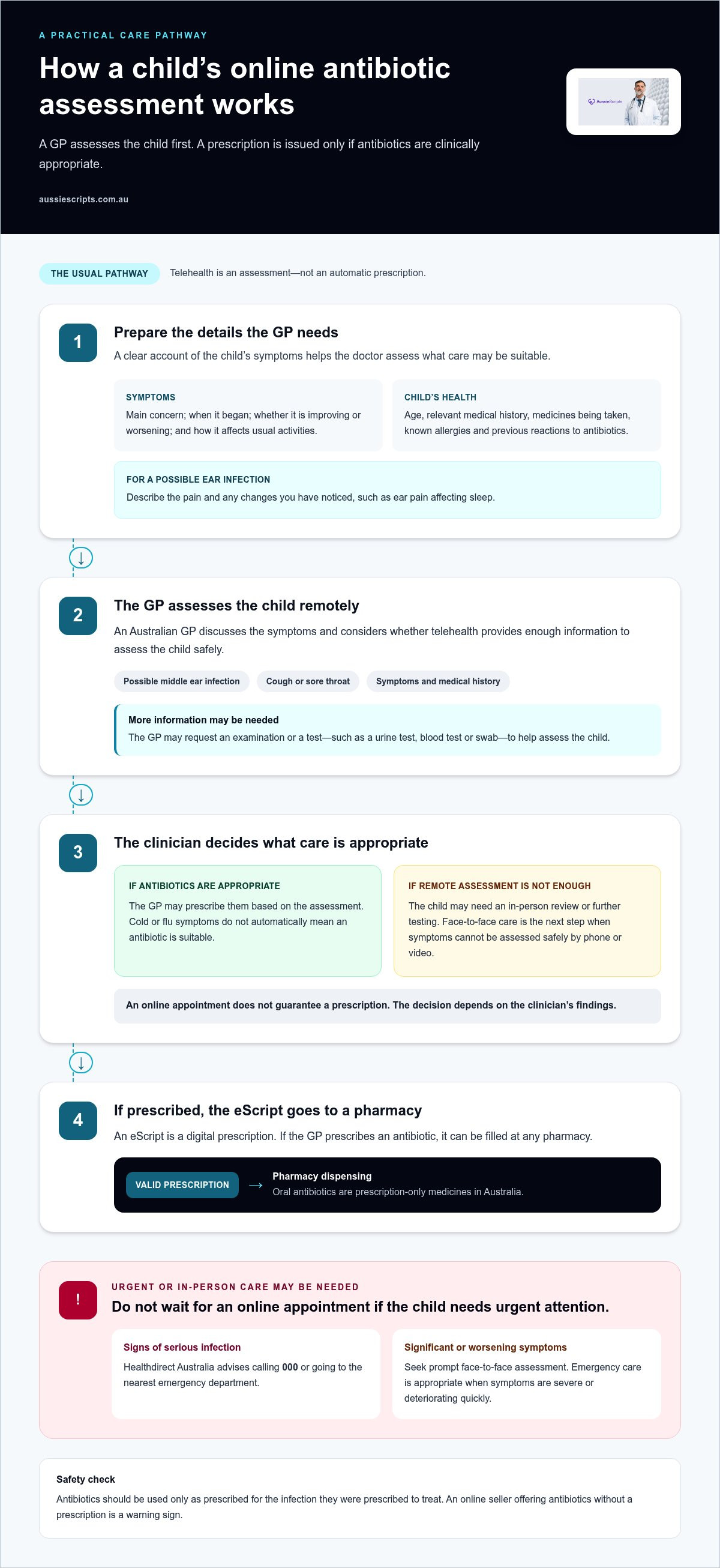
Yes. An Australian GP can prescribe antibiotics during a telehealth consultation when they’re clinically appropriate for the child’s symptoms. The doctor assesses the child first; booking an online appointment doesn’t guarantee a prescription.
Telehealth can help families discuss a child’s symptoms without travelling to a clinic. The doctor considers whether a remote assessment provides enough information or whether the child needs an in-person review.
Telehealth assessments for children
A paediatric telehealth consultation is a remote discussion between a child’s parent or carer and a doctor about the child’s health. It can help assess concerns such as a possible middle ear infection and whether antibiotics may be needed. Symptoms that require a physical examination, or appear severe, can limit what a doctor can assess remotely.
During the consultation, describe what has changed and when the symptoms began. For example, explain whether ear pain is affecting sleep or whether a cough is getting worse. If results are needed to help confirm a diagnosis before prescribing, a GP may request a pathology test, such as a urine test, blood test or swab.
Electronic prescriptions after consultation
An electronic prescription, or eScript, is a digital prescription a doctor can issue after assessing a patient. If the GP prescribes an antibiotic, the eScript can be filled at any pharmacy.
Oral antibiotics are Schedule 4 prescription-only medicines in Australia. This means the pharmacy needs a valid prescription before dispensing them. The GP selects whether an antibiotic is suitable based on the assessment, rather than providing one automatically because a child has cold or flu symptoms.
Information needed to assess a child
A doctor needs a clear account of the child’s symptoms to assess whether antibiotics may be appropriate. Explain the main concern, when it started, whether it’s improving or worsening, and how it affects the child’s usual activities. Mention relevant medical history and any medicines the child is taking.
Have practical details ready for the consultation, including the child’s age and the symptoms you’ve observed. For a possible ear infection, describe the pain and any changes you’ve noticed. Clear answers help the GP decide whether telehealth is suitable or whether an examination or test is needed.
Which Australian telehealth services prescribe antibiotics for children? Australian telehealth services with an AHPRA-registered GP can prescribe antibiotics when clinically appropriate after a consultation. The decision depends on the child’s assessment, not simply on a request for a particular medicine.
How can I check whether an online medical service and pharmacy are legitimate in Australia? Check that the service connects you with an AHPRA-registered GP and that antibiotics are supplied only with a prescription. A seller offering antibiotics without a prescription is a warning sign.
Some providers offer bulk-billed telehealth consultations for children under 16, but eligibility depends on the provider. Check the consultation terms before booking so you understand whether bulk billing applies to your child’s appointment.
How to get antibiotics without seeing a doctor in person?
A child can be assessed by telehealth, but avoiding an in-person appointment doesn’t mean avoiding medical assessment. A GP needs enough information to evaluate the infection and decide whether antibiotics are suitable. If the child’s symptoms can’t be assessed safely by video or phone, face-to-face care is the next step.
For signs of serious infection, Healthdirect Australia advises calling 000 or going to the nearest emergency department. Don’t wait for an online appointment to decide what to do if your child needs urgent attention. Emergency care is also appropriate when symptoms are severe or deteriorating quickly.
Telehealth may be less suitable when a doctor needs to examine the child directly. A possible ear infection, for example, can be discussed online, but an examination may be needed to assess the ear properly. Significant infection symptoms in a young child call for in-person or urgent care rather than waiting for an online decision about antibiotics.
- Choose urgent care if your child’s symptoms are significant and need prompt face-to-face assessment.
- Call 000 or go to an emergency department for signs of serious infection, as advised by Healthdirect Australia.
- Use a telehealth consultation when the child is stable and a doctor can assess the symptoms remotely.
Urgent care centres can prescribe antibiotics after assessing a child. A prescription still depends on the clinician’s findings, including the child’s symptoms and medical history. Attending an urgent care centre doesn’t automatically result in a prescription, just as an online consultation doesn’t guarantee one.
For either type of appointment, note when the symptoms began, how they’ve changed, and what medicines the child has taken. Share any known allergies and previous reactions to antibiotics. These details help the clinician consider treatment risks and decide whether an examination, test or follow-up is needed.
After an antibiotic is prescribed, follow the directions and arrange further medical review if the child’s condition worsens or a severe allergic reaction develops. Severe symptoms of an antibiotic allergy need immediate in-person medical attention. Tell the treating clinician which medicine caused the reaction so the information can guide future care.
Follow-up can also clarify what to do if symptoms continue or return after treatment. Keep the prescription details and the child’s medical history available for that conversation. If the child needs urgent assessment, prioritise their care; documentation for a parent’s absence from work is a separate matter, and an online Medical Certificate consultation may address that administrative need.
Antibiotic resistance and inappropriate use
Antibiotics treat some bacterial infections, but they don’t treat viral illnesses such as common colds. Using them when they aren’t appropriate exposes bacteria to medicines without treating the cause of the child’s symptoms. Over time, resistant bacteria can survive antibiotic treatment and become harder to treat.
In Australia, antibiotic prescribing for acute respiratory tract infections is 4-9 times higher than recommended. That matters for children with coughs, colds or sore throats, which may not need antibiotics. A doctor assesses the symptoms and medical history before deciding whether treatment is appropriate. The goal is to treat likely bacterial infections, not to prescribe antibiotics for every respiratory illness.
Parents can help prevent inappropriate use by following the prescription exactly. Give the medicine at the prescribed dose and intervals, and complete the full course directed by the doctor. Don’t use leftover antibiotics from an earlier illness or give a child medicine prescribed for someone else. A previous prescription may not suit a new infection, even if the symptoms seem similar.
A child’s response to antibiotics also needs attention. Five out of 100 children experience allergies due to antibiotics. Tell the doctor about any known allergy or previous reaction before treatment begins. If a child develops severe allergy symptoms, seek in-person medical attention immediately rather than waiting for an online follow-up.
Keep the medicine’s instructions handy while giving each dose. Check the label against the doctor’s directions, and contact the treating clinician if you’re unsure what to do about a missed dose or a change in your child’s symptoms. Don’t stop, extend or restart a course based on leftover medicine or someone else’s advice. The doctor’s directions apply to that child and that infection.
Antibiotic resistance is a reason to use these medicines carefully, not to delay needed treatment. If an examination is needed to identify the infection, a clinic or emergency department can provide face-to-face assessment. A Medicare card may help with clinic billing or eligibility questions, but it doesn’t determine whether antibiotics are appropriate. The doctor bases that decision on the child’s symptoms, history and assessment.
Before a consultation, note the child’s symptoms, current medicines and any previous antibiotic reactions. This gives the doctor useful information when assessing treatment options. If antibiotics are prescribed, keep the medicine in its original packaging and follow the directions. These steps help prevent accidental use for the wrong illness or confusion between medicines.
Antibiotic eScripts and pharmacy dispensing
An antibiotic eScript links a doctor’s prescribing decision with pharmacy dispensing. In Australia, antibiotics are prescription-only medicines, so a pharmacy needs a prescription before supplying them. A pharmacist can help with dispensing, while the decision to prescribe depends on clinical assessment. A doctor must assess the child and issue the prescription.
After a telehealth assessment, a GP may issue an electronic prescription if an antibiotic is clinically appropriate. You can fill it at a pharmacy. An eScript isn’t approval to buy a medicine over the counter, nor does it oblige the pharmacy to supply it. It records a doctor’s prescribing decision for a particular child and treatment.
For parents, the steps are straightforward: complete the consultation, receive a prescription if one is issued, then take it to a pharmacy. If the doctor doesn’t prescribe an antibiotic, the pharmacist can’t issue one instead. A child with a cough, for example, may need assessment and advice rather than an antibiotic.
Dispensing is separate from diagnosis. The doctor assesses whether the symptoms suggest a bacterial infection and whether treatment is suitable. The pharmacy then supplies the medicine against the prescription. This means antibiotics are linked to medical assessment, helping prevent unnecessary use that can contribute to resistance.
Keep the eScript details accessible when arranging to fill the prescription. If the prescription isn’t available or the pharmacy can’t use it, contact the prescribing service for help with the prescription record. Don’t use another child’s medicine or old antibiotics as a substitute. A prescription is for the patient and treatment assessed by the doctor.
A pharmacist’s role remains important after dispensing. They can explain the medicine supplied and its directions, and you can raise questions about using it. Follow the doctor’s directions and the pharmacy label. If they appear to differ, pause and ask the pharmacist or prescribing doctor to clarify before giving a dose.
Keep the medicine’s packaging and prescription information together while your child is being treated. This makes it easier to identify the antibiotic if you need to discuss a reaction or treatment question with a clinician. Tell the doctor about known allergies and relevant medical history, especially any previous reaction to an antibiotic.
Don’t seek antibiotics from an online seller that supplies them without a prescription. A legitimate pharmacy dispenses prescribed medicines, while a doctor makes the prescribing decision after assessment. Telehealth can make medical care more accessible while keeping antibiotic treatment linked to clinical review.
Antibiotics for coughs and sore throats
A child’s cough or sore throat doesn’t automatically mean antibiotics are needed. Antibiotics treat bacterial infections, not common viral illnesses, so the cause of the symptoms matters more than the symptom itself. A registered doctor assesses the child’s symptoms and decides whether an antibiotic could help.
For common childhood illnesses where antibiotics are unlikely to work, rest, fluids and pain relievers may help ease symptoms. For example, a child with a sore throat and cough may need comfort measures rather than an antibiotic. A pharmacy can dispense prescribed medicine, but it can’t determine whether an illness is bacterial.
Symptom duration and pattern can help guide assessment. Symptoms lasting more than 10 days, or worsening after initial improvement, may indicate a bacterial infection. These patterns don’t prove that antibiotics are needed. The doctor considers the full history and symptoms, and may recommend an examination if a remote consultation cannot provide enough information.
Antibiotics may be prescribed for between 3 and 14 days, depending on the infection. Follow the specific course and directions given for your child. Don’t reuse leftover medicine if a cough returns, or stop treatment early because the child seems better. The prescription applies to the illness assessed by the doctor.
If treatment is prescribed, children should start showing improvement within 24 to 72 hours. Contact the doctor if there’s no improvement after 48-72 hours of antibiotics. Report any worsening symptoms, too. Breathing difficulty or a child becoming severely unwell needs urgent medical attention, rather than waiting for routine follow-up.
Ear infections are another example where symptoms alone don’t settle the treatment decision. A doctor may assess ear pain alongside the child’s medical history and other signs. An examination may be needed to determine whether the infection is bacterial. If a remote assessment can’t establish the cause of the symptoms, a face-to-face review may be more suitable.
Keep a brief record of when the cough or sore throat began, whether it’s improving, and any treatment already given. Share this information during a consultation with an Australian doctor. It helps the doctor assess the illness and explain whether supportive care, further examination or a prescription is appropriate.
If your child’s cough or sore throat needs medical assessment, request a Standard Script consultation to discuss suitable care. A doctor may prescribe antibiotics when they are appropriate for the child’s illness.
Aussie Scripts: Standard Script
Aussie Scripts offers Standard Script consultations for people seeking an online medical assessment and prescription support. If your child has symptoms that need review, a consultation lets you discuss them with an Australian-registered doctor. Any prescription, including an antibiotic, depends on the doctor’s clinical assessment and whether treatment is appropriate.
Use this service for a non-emergency concern that can be assessed remotely. If your child has signs of a serious infection or needs urgent attention, seek emergency care instead. A Standard Script consultation isn’t a substitute for emergency treatment or an in-person examination when one is needed.
For a separate medical need, Aussie Scripts also offers Express Script, Medical Certificate and Specialist Referral services. Visit aussiescripts.com.au to learn more or contact Aussie Scripts.
Choose the right next step for your child
If you’re asking whether you can get antibiotics for your child online, focus first on an appropriate medical assessment, not on securing a particular medicine. Choose care based on how your child is presenting: an online assessment may suit a non-emergency concern, while severe or rapidly worsening symptoms need urgent attention.
Before booking an online consultation, prepare a clear description of the symptoms and consider whether your child may need an examination. This helps you choose an appropriate care setting and gives the consultation a clear starting point. A prescription remains a clinical decision, not an automatic result of booking.
Aussie Scripts provides a digital pathway for non-emergency medical consultations. If that suits your child’s situation, visit Aussie Scripts to explore your next step. Take the time to choose the care option that fits your child’s needs, and act promptly if their condition becomes urgent.
Frequently Asked Questions
First, What Are Antibiotics?
Antibiotics treat certain bacterial infections. They work against bacteria, not viruses, so they won’t treat illnesses such as a typical cold or flu. For example, a doctor may consider an antibiotic when the symptoms and assessment suggest a bacterial cause. The appropriate medicine and directions depend on the infection and the child’s circumstances.
Are antibiotics useful for colds, flu, or most sore throats?
Antibiotics usually aren’t useful for colds or flu because these illnesses are viral. A sore throat doesn’t automatically mean a bacterial infection either. A clinician considers the child’s symptoms, how they’re changing and any relevant history before recommending treatment. If antibiotics aren’t appropriate, ask what supportive care may ease discomfort and what changes would mean your child needs reassessment.
Can I choose which antibiotic I want online?
No. You can describe your concerns, but the doctor decides whether an antibiotic is appropriate and which medicine suits the assessment. The choice may depend on the suspected infection, the child’s medical history and known allergies. Don’t request a specific antibiotic based only on a previous illness or someone else’s prescription. If treatment is prescribed, follow the directions for your child.
How does it work?
Book an online consultation and provide details about the child’s symptoms, medical history and current medicines. The doctor reviews the information, asks follow-up questions and decides whether remote assessment is suitable. If an examination or test is needed, the doctor can explain the next step. A prescription is issued only when the clinical assessment supports one.
Can children in Australia get antibiotics through an online doctor?
Yes, you can get antibiotics for your child online if an Australian GP assesses them and decides an antibiotic is clinically appropriate. The doctor may ask when symptoms began, how they’ve changed, and about allergies and previous treatment. Telehealth isn’t suitable for every illness, so have the child’s information ready and describe your concerns clearly during the appointment.
Do you need a prescription for antibiotics in Australia?
Yes. Oral antibiotics are prescription-only medicines in Australia, so a pharmacy needs a valid prescription before dispensing them. A pharmacist’s role in supplying or prescribing antibiotics can depend on the circumstances. Avoid online sellers offering antibiotics without a prescription. If you have an existing prescription, follow its directions and ask the pharmacist about dispensing.
How can I get an online medical consultation for my child in Australia?
Choose a telehealth consultation for a non-emergency concern and provide accurate details about the child’s symptoms and medical history. Keep a list of current medicines and known allergies nearby. During the appointment, answer the doctor’s questions and mention any changes. If the doctor recommends an examination or further assessment, follow the advised care pathway.
Can an online doctor send a child’s antibiotic prescription to a local pharmacy or provide delivery?
If the doctor issues an eScript, you can fill it at any pharmacy. The doctor writes the prescription; the pharmacy dispenses the medicine. An online consultation service doesn’t necessarily deliver medication. Ask the dispensing pharmacy about its collection or delivery arrangements, and check that the prescription details match your child and the medicine supplied.
Disclaimer
The information provided by AussieScripts is for general informational purposes only and does not constitute medical advice, diagnosis, or treatment. For advice tailored to your specific symptoms or health concerns, please consult one of our doctors or your regular GP.
