Creating a Sustainable Weight Loss Plan With a Doctor
Creating a sustainable weight loss plan with a doctor can help you set realistic goals, build balanced meals and track progress with regular reviews too.

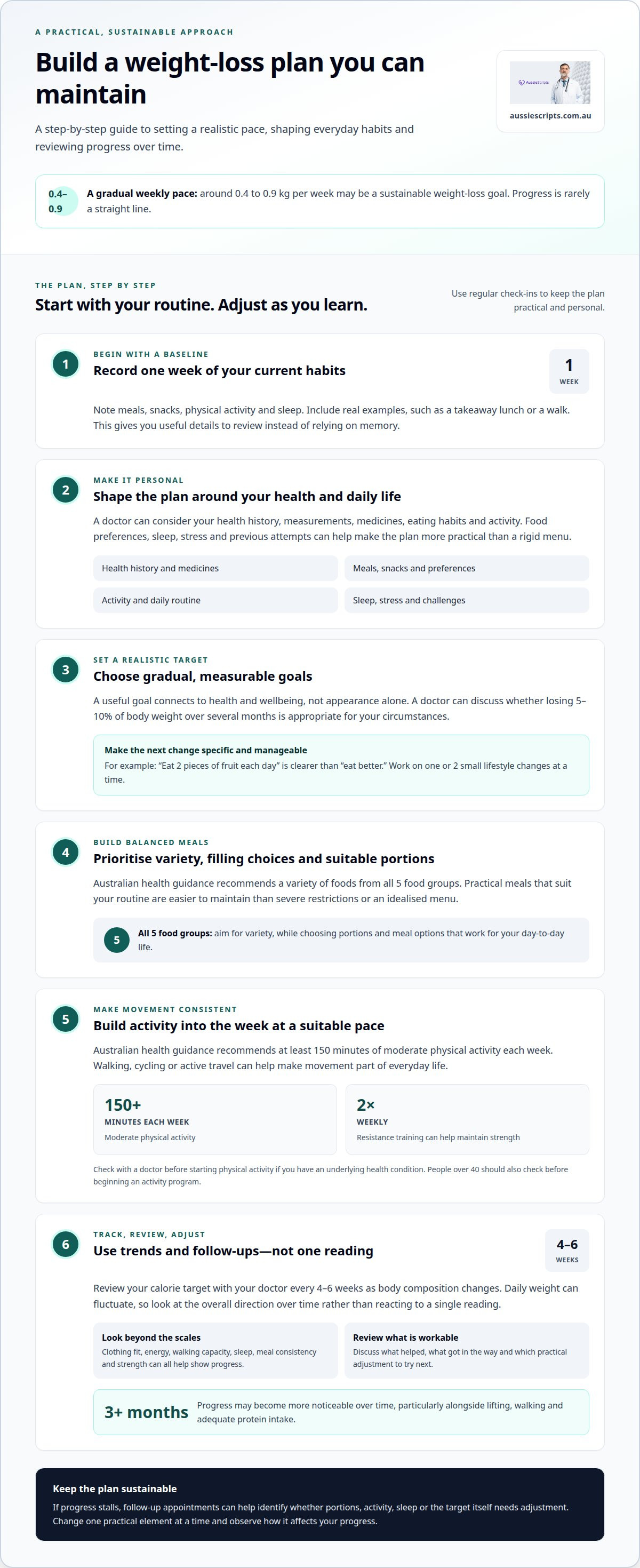
A steady pace is usually more useful than a dramatic short-term drop. A sustainable weight-loss goal may be around 0.4 to 0.9 kg per week, and creating a sustainable weight loss plan with a doctor can help align that goal with your health, routine and needs.
Meal plans can support weight loss when they’re practical to follow and include balanced nutrition and suitable portions. A sustainable approach avoids severe restrictions and recognises that progress is rarely a straight line.
This article explains how a doctor can help set realistic goals, plan meals and make everyday food choices, as well as what to expect from the pace of weight loss. You’ll also learn how balanced meals, portion awareness and regular reviews can make a plan easier to maintain.
Key Takeaways
- A doctor can use your health history, measurements, eating habits and activity to help shape a meal and movement plan around your needs.
- Track progress beyond the scales, then use follow-up appointments to review what’s working and adjust your goals.
- Set gradual, wellbeing-focused goals that are specific and manageable, rather than relying on rapid dieting.
- Build meals around nutritious, filling choices and practical portions; the Australian Guide to Healthy Eating recommends variety from all 5 food groups.
- A Weight Loss Consultation with Aussie Scripts can help you discuss your goals and possible next steps with a doctor.
Are meal plans effective for losing weight?
Meal plans are more useful when they reflect your health needs, food preferences and daily routine. A doctor can assess your starting weight, BMI and waist circumference alongside your medical history and medicines. BMI is based on height and weight; waist measurement adds information about where body fat is carried. Together, these measures provide context, but not a complete picture of health or progress.
Eating habits and activity matter too. A doctor may ask about your usual meals, snacks, previous weight-loss attempts, sleep, stress and health conditions. A food diary kept for a week can reveal patterns, such as skipped breakfasts or frequent takeaway meals. This information helps shape a practical plan instead of a rigid menu that’s hard to maintain.
Medicare coverage depends on the appointment type and your eligibility. Don’t assume GP, dietitian or other weight-management support is automatically covered. Before arranging care, ask about the specific service and any Medicare benefit that may apply.
Australian health guidance recommends a variety of foods from all 5 food groups, as set out in the Australian Guide to Healthy Eating. For activity, aim for at least 150 minutes of moderate physical activity each week. A consistent routine is more useful than occasional intense sessions, and movement can be built into daily habits through walking or active travel.
Check with a doctor before starting physical activity if you have an underlying health condition, such as diabetes. People over 40 should also check before beginning an activity program. A doctor can account for fitness, age, joint health and medical conditions when suggesting suitable activities.
Walking, cycling or another moderate activity can help build regular movement into your week. Resistance training twice weekly can help maintain strength, while combining strength work with cardio supports overall fitness. Start with activity that fits your current routine, then build consistency at a pace that suits your capacity.
Rapid dieting may carry health risks, so gradual weight reduction is preferable to extreme restriction. Prescription weight-loss medicines can have side effects, and the risks depend on the medicine and the person. A doctor can assess whether medication is appropriate and monitor treatment. These medicines work best alongside healthy eating and regular physical activity.
Where should I start when making a weight loss diet plan?
Start with a simple record of your current routine. For one week, note meals, snacks, physical activity and sleep. Include examples such as a takeaway lunch or a 30-minute walk. This baseline gives follow-up appointments practical information to review, rather than relying on memory alone.
At each appointment, compare your progress with the goals you agreed on. Discuss what felt manageable, what got in the way and what may need adjusting. If your meal plan includes whole grains but preparation time is a barrier, a doctor can help you consider more practical options. A tailored plan should fit your lifestyle, not an idealised routine.
Track more than body weight. Note changes in clothing fit, energy, walking capacity, sleep and how consistently you follow planned meals. If you do resistance exercise, record changes in strength or performance too. Muscle development can affect scale readings, so stable weight doesn’t necessarily mean you’ve made no progress.
Daily weight can fluctuate because of fluid changes, hormone cycles and other factors. Look at trends over time rather than reacting to a single reading. A weekly record can show whether the overall direction is changing, while notes about eating habits may help explain the pattern.
Review your calorie target with your doctor every 4-6 weeks as body composition changes. Progress may also become more noticeable after 3+ months, particularly alongside lifting, walking and adequate protein intake. If the trend stalls, appointments can identify whether portions, activity, sleep or the target itself needs adjustment.
Regular follow-ups are also a chance to review medicines, laboratory results and new challenges. Bring your tracking notes, including missed workouts or changes in appetite. A busy work week, for example, may explain less activity without meaning you need to replace the whole plan. Adjust one practical element at a time, then observe how it affects your progress.
In Australia, Wegovy is TGA-approved for chronic weight management in eligible adults with a BMI ≥30 kg/m², or BMI ≥27 kg/m² with a weight-related comorbidity. It is not yet PBS-listed; the PBAC recommendation for a proposed listing is limited to people with obesity and established cardiovascular disease, subject to pricing and risk-sharing arrangements. Wegovy is available on private prescription, so patients should expect the private prescription price. Ozempic is PBS-listed for specific diabetes indications, not weight loss.
If reviewing your progress with a doctor would help, consider a Weight Loss Consultation.
Setting realistic weight-loss goals
A useful goal is gradual, measurable and connected to health, not appearance alone. Losing 5-10% of body weight over several months can bring health benefits, including lower blood pressure and improved blood sugar. A doctor can discuss whether that range suits your circumstances and establish a starting point for reviewing progress.
Rapid targets can be difficult to maintain and may encourage restrictive dieting. Instead, choose a change that fits your routine, such as adding 2 pieces of fruit each day or planning a walk after work. Working on one or 2 small lifestyle changes at a time can make the goal more manageable before you add another.
SMART goals make intentions specific: they should be specific, measurable, achievable, relevant and time-bound. For example, “eat 2 pieces of fruit each day” is clearer than “eat better”. A meaningful goal might also focus on wellbeing, such as improving stamina for everyday tasks or supporting blood sugar management, rather than pursuing a particular clothing size.
A doctor tailors goals by considering your health conditions, medicines, eating habits, activity, sleep, stress and previous weight-loss attempts. Joint pain, for example, may affect which exercise goals are practical, while a medicine or health condition may influence the pace or approach. If a health issue could be affecting your weight, the clinician can also consider whether investigations are appropriate.
Make reviewing progress part of the goal. Record the behaviour you chose, how often you managed it and any effect on your wellbeing. If your work schedule makes an evening walk unrealistic, try lunchtime or another practical option. At follow-up, discuss your notes and adjust one element at a time, rather than treating a missed target as failure.
Goals can change as your circumstances and health change. A target that worked initially may need adjusting after a change in medication, mobility or daily routine. Keep the next step clear and relevant: for instance, build a consistent meal-planning habit before adding a new exercise commitment. This keeps the plan focused on realistic actions and health priorities, not a deadline for rapid weight loss.
Balanced nutrition and portion control
A balanced eating pattern supports nutrition while creating a manageable approach to losing weight. According to the Australian Guide to Healthy Eating, choose a variety of foods from all 5 food groups. This gives meals a broader mix of nutrients than relying on one restricted food group or removing favourite foods entirely. Consistency matters more than following a short-term menu perfectly.
Build meals around vegetables, fruit, whole grains, lean protein and healthy fats. For example, pair vegetables and brown rice with eggs, beans or lean meat. These foods can make meals filling and add variety throughout the day. The Australian Guide to Healthy Eating’s plate model suggests filling half your plate with vegetables and fruit, then adding other meal components.
Start portion control by serving food onto a plate instead of eating from a packet or shared container. Begin with a smaller serving, then pause and notice your hunger and fullness before deciding whether to have more. At a café, you could share a large side or save part of the meal for later.
A nutrition plan should reflect your preferences, culture, budget, cooking facilities and health needs. Someone who works shifts may need portable meals, while someone avoiding certain foods will need suitable alternatives. A doctor can consider your medical conditions, medicines and eating patterns when discussing nutrition. If a dietitian is involved, their advice can help turn goals into meal choices.
A moderate energy deficit of 300-500 calories per day is described as a sustainable approach, but the right intake depends on the person. Avoid treating a calorie target as permission to skip meals or remove essential foods. Very restrictive diets can be difficult to maintain; most people who lose weight through them regain it within a few years, according to the National Institute of Diabetes and Digestive and Kidney Diseases.
Practical meal planning can reduce last-minute decisions. Prepare ingredients for a few meals, keep fruit handy for snacks and include a protein source with meals. For example, batch-cook vegetables and whole grains, then combine them with different proteins during the week. This can support consistent eating without requiring the same meals every day.
Success depends on an eating pattern you can sustain, not claims that particular foods will speed up metabolism. Keep favourite foods in reasonable portions, and adjust the plan if meals leave you hungry or are difficult to prepare. A doctor can tailor the approach to your health priorities and review whether it remains practical as your circumstances change.
Expected pace of weight loss
A sustainable target may be around 0.4 to 0.9 kg per week, but weight loss rarely follows a straight line. Starting weight, eating patterns, activity, health conditions and medications can all affect the trend. Creating a sustainable weight loss plan with a doctor means using this range as a discussion guide, not as a weekly pass-or-fail test.
During the first 1-2 weeks, some weight change may reflect fluid rather than fat loss. Daily readings can also shift with fluid balance, hormone cycles and other factors. For example, a higher reading after a salty meal doesn’t show whether your overall plan is working. Compare measurements over time instead of changing your calorie intake after one day.
Weeks 3 to 8 may give a clearer indication of fat-loss progress as routines settle. Keep meals, vegetables, portions and planned activity consistent during this period. A short burst of strict dieting offers less useful information about what you can maintain. Record the overall direction using the same weighing routine rather than focusing on isolated readings.
Calories matter because a sustained energy deficit supports weight loss, but the appropriate intake varies from person to person. Cutting food sharply can make a plan harder to maintain and leave you hungry or low on energy. If progress changes, review portions, meal consistency, activity and health factors before deciding whether to adjust your approach.
Scale weight is only one measure. Resistance exercise may build muscle while body fat decreases, affecting the number on the scales. Also note whether walking feels easier or planned meals are becoming more consistent. These details provide useful context when weight changes slowly or stays level for a while.
If you’re considering prescription weight-loss treatment, discuss expected progress over the first three to six months with your doctor. Medication is considered alongside nutrition, physical activity and ongoing medical supervision. Creating a sustainable weight loss plan with a doctor also means reviewing how treatment and daily habits fit your health needs over time.
For medical guidance on weight management and progress, book a Weight Loss Consultation.
Aussie Scripts: Weight Loss Consultation
Aussie Scripts’ Weight Loss Treatment connects you with an Australian-registered doctor through a virtual consultation. It can be a practical next step if you want medical input before changing your eating pattern or activity routine, or before considering prescription treatment. The discussion can focus on your health needs and goals rather than assuming one plan suits everyone.
Consider a consultation if previous attempts have been difficult to maintain, your weight is affecting your wellbeing, or a health condition or medicine may influence your approach. You can also seek advice if you’re unsure how to begin or want to discuss whether medical support could form part of a broader plan. The doctor can consider the information you share and discuss relevant next steps.
Useful topics to discuss include your medical history, current medicines, eating habits, activity, sleep, stress and previous weight-loss efforts. Explain what has worked, what has been difficult and which changes feel realistic. For example, if shift work makes regular meals challenging, describe how your schedule affects your eating. Specific details help make the discussion relevant to everyday life.
A consultation gives you the opportunity to discuss weight-management approaches, including nutrition, activity and whether prescription treatment may be appropriate. Medication isn’t automatically recommended or prescribed. The doctor considers your circumstances and clinical suitability, then explains options relevant to the assessment. You can also raise concerns about side effects, ongoing monitoring or how treatment may fit with your other health needs.
Before your appointment, note your current medicines, relevant health conditions and the main questions you want answered. Records of meals, activity or weight may help explain patterns and obstacles. You don’t need to arrive with a perfect routine. A clear account of your usual habits gives the doctor a useful starting point for discussing manageable changes.
The consultation is for medical advice about weight management, not emergency care. If you have urgent symptoms, seek appropriate urgent care. For non-urgent support, a Weight Loss Treatment consultation can help you discuss goals, concerns and possible medical next steps with a doctor. Advice and treatment decisions depend on your clinical assessment.
Contact Aussie Scripts to arrange a Weight Loss Consultation.
Make your next step practical
A useful next step is to decide what you want medical guidance to help you resolve. You might want to discuss a health concern, understand whether treatment options suit your circumstances, or identify an achievable change to start with. Bringing one clear priority to a consultation can keep the conversation focused on decisions that matter to you.
Creating a sustainable weight loss plan with a doctor is a collaborative process. Your questions, preferences and day-to-day constraints help shape the discussion, while a doctor provides clinical guidance based on your individual situation. You can revisit your approach as your needs or routine change, rather than treating the plan as fixed.
If you’re ready to discuss a medically guided next step, contact Aussie Scripts today about a Weight Loss Consultation. Start with the concern or goal you want to address, and take the next step at a pace that feels practical for your life.
Frequently Asked Questions
How Fast Will You Lose Weight on a Sustainable Diet?
A reasonable pace is about ½ to 1 kg per week, and gradual loss is more likely to be maintained. Your actual trend can vary with starting weight, health, activity, eating patterns and fluid changes. Compare progress over several weeks rather than judging a diet by a single weigh-in. If the approach feels too restrictive or difficult to maintain, review it with your doctor.
How can an Australian GP help create a sustainable weight loss plan?
An Australian GP can assess your health context and discuss a plan that fits your goals, daily routine and medical needs. For example, they can consider whether joint discomfort affects your exercise choices or whether medicines could influence your weight. They can also discuss suitable nutrition and activity changes, review progress and consider whether further assessment or treatment options are relevant.
What health checks and tests might a doctor recommend before starting a weight loss plan?
A doctor may review your medical and family history, medicines, previous weight-loss attempts and current health concerns. Depending on the assessment, laboratory tests may help investigate factors such as thyroid disorders, hormonal imbalances or metabolic conditions. Testing isn’t the same for everyone. Your symptoms, health history and medicines help determine which checks, if any, could inform your plan.
What is a safe, sustainable rate of weight loss for adults?
A gradual rate of around 0.4 to 0.9 kg per week is a practical guide for many adults. A suitable target depends on factors such as health conditions, starting weight, medicines and the changes made to eating and activity. Rapid dieting can be difficult to sustain. Focus on a steady trend and health-supporting habits, rather than trying to force quick results.
How can people track progress and maintain weight loss with ongoing medical support?
Track more than scale readings: note your activity, energy, sleep, meal routines and how manageable the plan feels. Bring those observations to follow-up appointments so your doctor can discuss barriers and whether your goals need adjusting. For example, a change in work hours might disrupt planned meals or walks. A practical review can help you adapt your routines and maintain useful habits as circumstances change.
Disclaimer
The information provided by AussieScripts is for general informational purposes only and does not constitute medical advice, diagnosis, or treatment. For advice tailored to your specific symptoms or health concerns, please consult one of our doctors or your regular GP.
