Dealing With Insomnia From Phentermine: Sleep Tips
Dealing with insomnia from phentermine? Learn how long it may last, what can worsen sleep, practical tips, and when to seek professional advice if needed.

Melatonin has no known drug interaction with phentermine, but that doesn’t mean you should take it without advice. Speak with a healthcare professional before using melatonin or another supplement. Dealing with insomnia from phentermine can involve more than the medicine itself, and sleep disruption may last from the first few days to a few weeks.
It’s understandable to look for a quick way to sleep when a medication keeps you awake. Phentermine can affect sleep, and caffeine or other stimulants may make the problem worse. Caffeine can remain in the body for several hours, so when you consume it may matter as much as how much you have.
This article explains how phentermine may affect sleep, how long insomnia can persist, and which substances may worsen it. It also covers practical sleep habits and when ongoing sleep problems call for professional advice.
Key Takeaways
- Phentermine-related sleep disruption may ease within days or take a few weeks; the medicine can remain in the body for around four days after stopping.
- Melatonin has no known interaction with phentermine, but speak with a healthcare professional before adding it or another supplement.
- Caffeine can stay in the body for several hours, so reducing intake later in the day may help limit its effect on sleep.
- A regular sleep schedule, less screen exposure before bed and avoiding stimulants close to bedtime can support healthier sleep habits.
- If sleep problems persist despite these changes, seek professional advice to review the symptoms and your treatment.
How long phentermine side effects last
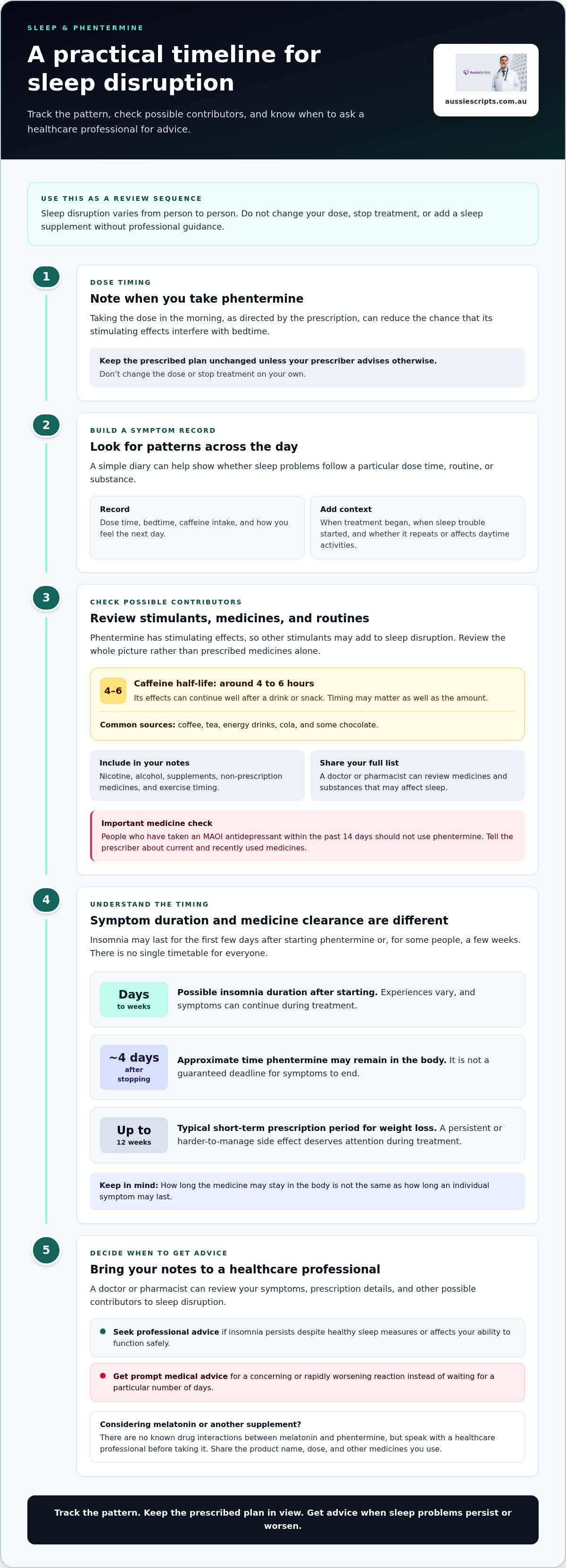
Phentermine side effects don’t follow one fixed timetable. Insomnia is a common side effect, and it can continue during treatment even when other effects change. After someone stops taking phentermine, the medicine typically remains in the body for around 4 days, though this varies between people. That figure describes how long the medicine may remain in the body, not a guaranteed deadline for every symptom to stop.
People can experience different effects. One person might mainly have trouble falling asleep, while another notices appetite changes alongside disrupted sleep. The dose, timing, other medicines or substances, and individual response can all affect the experience. A symptom diary can help reveal patterns: record dose time, bedtime, caffeine intake, and how you feel the next day.
For insomnia specifically, symptoms after starting phentermine can last for the first few days or, for some people, a few weeks. This is different from the roughly 4-day period the medicine may remain in the body after it is stopped. Taking the dose in the morning, as directed by the prescription, can reduce the chance that its stimulating effects interfere with bedtime. Don’t change the dose or stop treatment without discussing it with the prescriber.
Phentermine is typically prescribed for short-term weight loss for up to 12 weeks. A side effect that persists or becomes harder to manage deserves attention during that period, rather than being judged only by how long the medicine stays in the body. Note whether sleep disruption is occasional or repeated, and whether it affects daytime concentration or routine activities. These details help a healthcare professional assess how the effects are influencing you and what adjustments are appropriate.
If you stop phentermine, symptoms may not disappear at the same pace as the medicine leaves your system. Around 4 days is an approximate body-clearance timeframe, and individual variation matters. Seek professional advice if insomnia is severe, continues despite healthy sleep measures, or affects your ability to function safely. If you experience a concerning or rapidly worsening reaction, get prompt medical advice instead of waiting for a particular number of days.
For a practical review, bring your prescription details and symptom notes to a consultation. Include when you started treatment, when you take each dose, and when sleep problems began. A clear timeline can help distinguish a medicine-related effect from other possible contributors, such as caffeine or a change in routine. Don’t add a sleep supplement or change your dose without professional guidance.
Medications and substances that can contribute to insomnia
Phentermine is an appetite suppressant with stimulating effects, so other stimulants may add to sleep disruption. Caffeine is a common example. Its half-life is around 4 to 6 hours, meaning its effects can continue well after a drink or snack. Coffee, tea, energy drinks, cola and some chocolate can all contribute to daily caffeine intake. Check product labels and consider the timing and total amount you consume.
Review the full picture, not just prescribed medicines. Record caffeine, nicotine, alcohol, supplements, and non-prescription medicines alongside your phentermine dose. This can help show whether sleep problems follow a particular combination or timing. Don’t change prescribed medication on your own. A doctor or pharmacist can review your list and explain whether a medicine or substance could be affecting sleep.
Some combinations need particular care. People who have taken an MAOI antidepressant within the past 14 days should not use phentermine. Tell the prescriber about current and recently used medicines, including antidepressants, before starting or changing treatment. Don’t stop an antidepressant or skip a phentermine dose to manage insomnia without professional advice. The relevant concern is the medicine combination, not simply whether each medicine is taken at bedtime.
Melatonin is sometimes considered for sleep, but don’t assume a supplement is automatically suitable alongside prescription treatment. There are no known drug interactions between melatonin and phentermine, but speak with a healthcare professional before taking melatonin or another supplement. Share the product name, dose, and any other medicines you use. This helps a professional consider your overall treatment, rather than focusing on one ingredient in isolation.
Alcohol can interfere with healthy sleep habits, even if it initially makes you feel sleepy. Don’t use alcohol to counteract phentermine’s effects. If you exercise, notice whether vigorous activity late in the day leaves you alert at bedtime, and adjust its timing if you see that pattern. These observations can help separate lifestyle factors from medication effects while you work to lose weight safely.
- List every medicine and supplement, including non-prescription products.
- Track caffeine intake and when you consume it.
- Note alcohol, exercise timing and the nights sleep becomes difficult.
Bring your record to a doctor or pharmacist, especially if insomnia begins after adding a medicine or increasing caffeine. They can assess the timing, ingredients, and combination with phentermine. Don’t add a sleep aid or alter your prescription based only on general advice.
Phentermine-related insomnia
Insomnia is a common phentermine side effect and has been described as the second most-common effect. Its impact on sleep, appetite, and daytime comfort varies between people.
Changing or Stopping the Phentermine Dose
Changing or stopping a phentermine dose means altering the prescribed amount or schedule to address sleep disruption. Don’t make that change on your own. If you have trouble falling asleep, record the dose time and the nights affected, then discuss those details with the prescriber. A clear pattern helps them assess the problem without risking an unsupervised treatment change.
Should I stop or change my phentermine dose if I cannot sleep? No. Don’t stop or adjust your dose without speaking with the prescriber. Explain how often you have trouble sleeping and whether the problem began after starting treatment.
Symptoms Requiring Urgent Medical Attention
Urgent symptoms are severe or rapidly worsening problems that need prompt assessment, rather than routine discussion at a later appointment. Seek urgent medical care if sleep disruption comes with severe distress, sudden physical symptoms, or feeling unable to stay safe. Don’t wait for insomnia to last a particular length of time when symptoms are intense or worsening.
What symptoms with phentermine-related insomnia require urgent medical attention? Seek urgent help for severe or rapidly worsening symptoms, especially if you feel unsafe or experience sudden physical symptoms. Insomnia alone calls for a treatment review, but severe accompanying symptoms need prompt attention.
Treatment Adjustments by Australian Doctors or Pharmacists
A treatment review considers phentermine use and other factors affecting sleep. In Australia, a doctor can assess ongoing insomnia and discuss changes to your treatment plan. A pharmacist can review your medicines and explain possible medication-related concerns. Bring your prescription details and a short sleep record to make the discussion specific.
Can a doctor or pharmacist in Australia adjust phentermine treatment for insomnia? A doctor can review your treatment and decide whether an adjustment is appropriate. A pharmacist can help assess your medicines, but discuss prescription dose changes with the prescriber.
Include caffeine, supplements, and other medicines in your notes. These details can help distinguish phentermine-related insomnia from other contributors. Don’t add a sleep aid instead of reviewing your treatment.
If sleep problems continue for two months after starting phentermine, consult a healthcare professional. Contact them sooner if insomnia persists despite healthy sleep measures or interferes with normal daytime activities. A brief record of bedtime, dose timing, and sleep disruption gives the discussion a practical starting point.
Sleep hygiene and bedtime stimulant avoidance
Take phentermine in the morning if that matches your prescription, and follow its instructions. Don’t move a dose or change the amount yourself to improve sleep.
Timing matters because phentermine’s peak effects appear between 2 and 4 hours after a dose. A dose taken later may leave its stimulating effects closer to bedtime. Keep a note of dose time and sleep difficulty, then discuss recurring problems with your prescriber. That pattern can help show whether timing is relevant to your routine.
Caffeine can also make sleeping difficult. It may be found in coffee, tea, cola, energy drinks and chocolate, and its half-life is around 4 to 6 hours. Avoid caffeine after 12:00pm as a practical starting point. If you still have trouble sleeping, record when you consume it and consider reducing your intake earlier in the day.
Review the evening routine as well. Avoid caffeine and alcohol before bedtime, and avoid stimulants, alcohol and large meals in the 2-4 hours beforehand. A late heavy meal or an evening energy drink can keep your body active when you’re trying to rest. Don’t use alcohol to counteract phentermine’s stimulant effects.
A consistent schedule gives your body a predictable sleep and wake pattern. Choose regular bedtimes and wake times, including weekends, and keep your bedroom dark and quiet. Reduce bright screen exposure a few hours before bed. Light can affect the body’s sleep-wake signals, including melatonin, a hormone involved in sleep timing.
Make the bedroom comfortable for sleeping. One suggested temperature range is 60-67 degrees Fahrenheit. If that feels too cool or warm in your Australian home, adjust the room to a comfortable level and keep it consistent. Remove distracting light sources, silence notifications and use the bed primarily for sleep rather than late-night scrolling.
- Keep a brief record of phentermine dose time, caffeine intake and bedtime.
- Move exercise earlier if an evening workout leaves you alert.
- Use a calm wind-down routine, such as reading a printed book.
- Avoid eating a large meal close to bedtime.
These habits support sleep but don’t replace a treatment review. If sleep remains difficult despite a steady routine and fewer evening stimulants, speak with a healthcare professional. Bring notes about your sleep patterns, caffeine, and dose timing. Don’t take melatonin or another supplement while using phentermine without professional advice.
How long does phentermine-related insomnia usually last?
Phentermine-related insomnia may last for the first few days after starting treatment or continue for a few weeks. There isn’t one timeline that applies to everyone. The pattern matters: difficulty falling asleep every night differs from occasional restless sleep, and either can affect daytime function.
Individual experiences show that range, but they don’t predict what will happen for someone else. One report described insomnia easing after the first couple of weeks. Another described sleep improving by the third week while taking Adipex. These examples suggest symptoms can settle during treatment, but they aren’t a reason to ignore persistent or worsening sleep problems.
Timing can also vary within a course. One reviewer reported that insomnia began during the second month of phentermine use and took 3 days off because of it. That experience shows why a symptom diary can be useful: record when sleep trouble starts, whether it repeats, and how it affects the following day. Don’t take a break or change a dose without discussing it with the prescriber.
Use a simple nightly record to make the timeline clearer:
- Note the date treatment began and when sleep disruption first appeared.
- Record bedtime, estimated time to fall asleep and any overnight waking.
- Track the next day’s fatigue, concentration and ability to manage routine tasks.
- Include dose timing, caffeine and other medicines or supplements.
Reviewing several nights together can reveal whether the problem is easing, staying the same, or getting worse. For example, a shift from repeated difficulty falling asleep to occasional disruption differs from worsening sleep accompanied by increasing daytime tiredness. Share the record with a healthcare professional rather than drawing conclusions from one bad night.
If insomnia continues for two months after starting phentermine, consult a healthcare professional. Seek advice sooner if sleep problems persist despite healthy sleep measures or interfere with daily activities. Duration isn’t the only consideration: frequency, severity, and the effect on alertness all help describe how the problem is affecting you.
Don’t add melatonin or another sleep supplement to manage the wait without professional advice. If insomnia eases after a few weeks, keep following your prescribed treatment plan and note whether symptoms return. If sleep remains difficult or worsens after initially improving, discuss the pattern with the prescriber. A clear timeline makes that conversation more specific and supports a safer review of your care.
Aussie Scripts: Standard Script
Aussie Scripts offers Standard Script through online consultations with Australian-registered doctors. If phentermine is affecting your sleep, a professional discussion can help you explain your symptoms and prescription concerns. Don’t change or stop your dose without medical advice.
Before a consultation, note when you take phentermine, when sleep problems occur, and whether caffeine or other medicines may contribute. This gives the doctor useful context for discussing your prescription needs. A Standard Script consultation is for routine care, not urgent medical attention.
For ongoing insomnia or concerns about your treatment, visit aussiescripts.com.au to explore a Standard Script consultation.
Make your next step a focused conversation
When sleep concerns affect your weight-management plan, clarify what you need from treatment and what has become difficult. For people dealing with insomnia from phentermine, that could mean describing how disrupted sleep affects concentration, work, or daily routines, then discussing suitable options with a healthcare professional. Keep the conversation focused on your needs rather than making medication changes alone.
Aussie Scripts offers Express Script and Medical Certificate services alongside Standard Script. These services address different needs, so choose the one relevant to your situation. A consultation can help you raise prescription concerns and explain what support you’re seeking.
For a professional discussion about your next step, contact Aussie Scripts. Taking a clear, informed approach can help you move forward with confidence.
Frequently Asked Questions
Can You Take Melatonin While on Phentermine?
There are no known drug interactions between melatonin and phentermine, but speak with a healthcare professional before taking melatonin. “No known interaction” doesn’t establish that a supplement is suitable for your health circumstances or other medicines. For a useful review, share the melatonin product and dose, your phentermine prescription, and any other medicines or supplements you use. Don’t change your phentermine dose to make room for a sleep supplement.
Can You Take ZzzQuil While on Phentermine?
Don’t assume ZzzQuil is suitable with phentermine based on its brand name alone. Products sold under one brand can have different active ingredients, so read the Australian pack and show its ingredient list to a pharmacist or doctor before taking it. Include your phentermine dose and other medicines in that discussion. Don’t combine sleep products with your prescription without professional advice, and don’t use an over-the-counter sleep aid to adjust phentermine treatment yourself.
How long do phentermine side effects last?
Side effects can vary, and insomnia may last from the first few days to a few weeks after starting phentermine. The medicine typically remains in the body for around 4 days after it’s stopped, but this varies between people. That timeframe doesn’t predict exactly when every side effect will end. Keep a note of symptoms and when they occur, then discuss persistent or disruptive effects with the prescriber.
Is Insomnia Common When Taking Phentermine?
Yes. Phentermine can cause insomnia, so dealing with insomnia from phentermine may involve tracking how sleep changes after treatment begins. You might struggle to fall asleep, wake during the night, or feel less rested. Note when the problem began and whether it affects daytime activities. This gives a healthcare professional clearer information than simply describing your sleep as “bad”.
What are natural treatments for insomnia?
Regular sleep and wake times, a quiet bedroom, and a calm pre-bed routine are practical non-medicine measures. For example, replace late-night scrolling with a relaxing activity and keep a brief record of your bedtime and wake time. A consistent routine can support people dealing with insomnia from phentermine, alongside reducing late caffeine and avoiding alcohol near bedtime. Persistent insomnia while taking phentermine still warrants a treatment discussion.
What is insomnia, and what causes it?
Insomnia means difficulty falling asleep, staying asleep, or getting sleep that feels restorative. It can have several contributors, including a stimulating medicine such as phentermine, caffeine, alcohol, stress, or changes to sleep habits. More than one factor may be involved. To look for patterns, note medication timing, drinks containing caffeine, bedtime, and the nights when sleep is difficult.
What over-the-counter (OTC) medicines are there for insomnia?
Over-the-counter sleep products can contain different active ingredients, so there isn’t one option that suits everyone taking phentermine. Check the Australian product label and ask a pharmacist to review the ingredients alongside your prescription and other medicines. Don’t combine an over-the-counter sleep aid with phentermine without professional advice, and don’t exceed the product directions. If insomnia persists, seek a review rather than relying on repeated self-treatment.
Can phentermine cause insomnia and how common is it?
Yes. Phentermine can cause insomnia because it is an appetite suppressant with stimulating effects. Sleep disruption is described as a common side effect and the second most-common effect reported with phentermine. Its frequency and severity can vary between individuals. If your sleep changes after starting treatment, note the timing and impact, then discuss the pattern with the prescriber instead of changing the dose yourself.
Disclaimer
The information provided by AussieScripts is for general informational purposes only and does not constitute medical advice, diagnosis, or treatment. For advice tailored to your specific symptoms or health concerns, please consult one of our doctors or your regular GP.
