Foods to eat and limit while taking Contrave
Find the best diet plan while taking Contrave. Learn which high-fat foods to avoid, what nutritious meals to eat, and how to reach your weight goals safely.
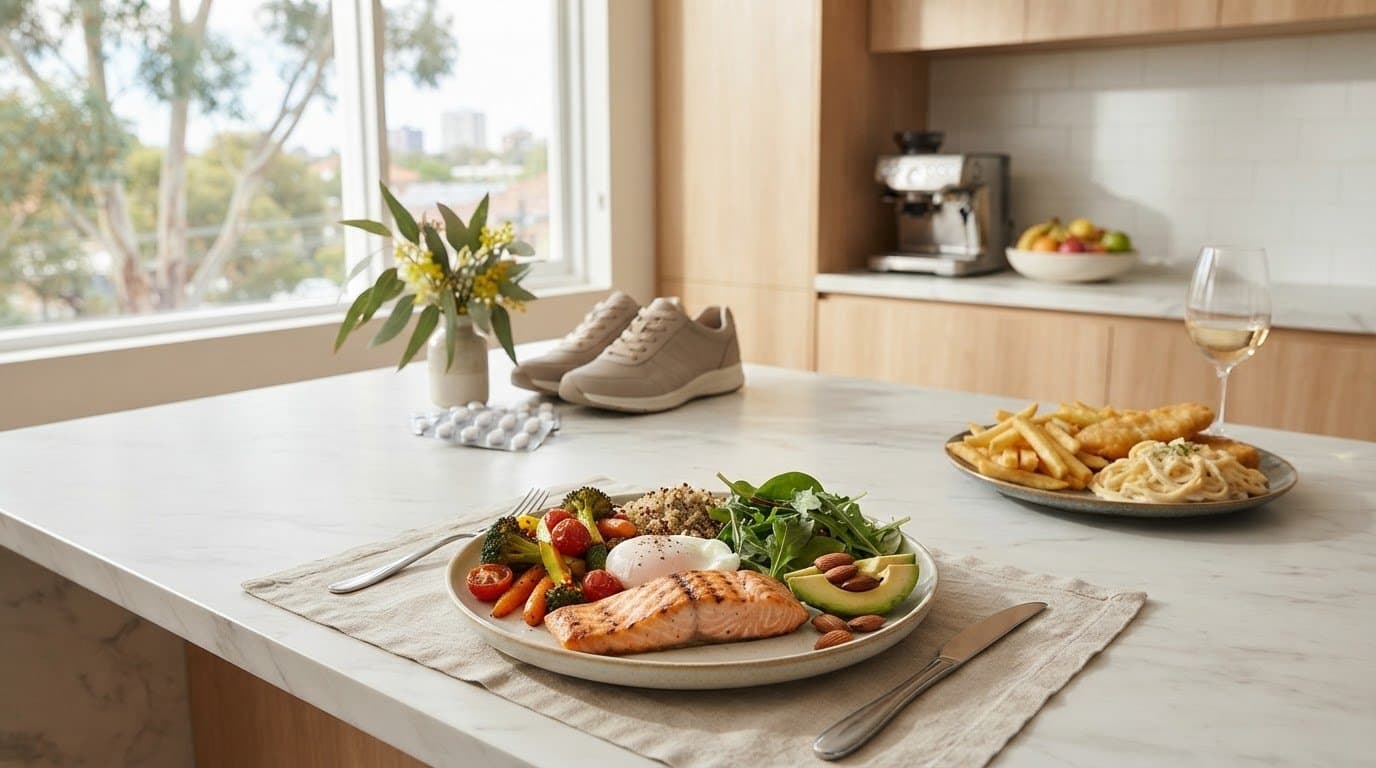
High-fat meals and alcohol are the main things to limit while taking Contrave. The best diet plan while taking Contrave centres on a reduced-calorie eating pattern with protein, whole grains, fibre, fruit, vegetables and polyunsaturated fats. Take the medicine as prescribed and pair your eating plan with increased physical activity.
It’s reasonable to want a clear list of foods to avoid, especially when you’re adjusting to a new medicine. The practical focus is less about cutting out entire food groups and more about limiting high-fat meals, being cautious with alcohol and building balanced meals you can maintain.
This guide explains what to limit, what to include and how diet and activity fit into Contrave treatment in Australia. It also covers why high-fat meals matter, how to plan manageable meals and when a weight management consultation may help you discuss whether treatment suits your circumstances.
Key Takeaways
- Choose filling meals built around protein and fibre, and use foods such as eggs as one option within a balanced eating pattern.
- Fatty foods can affect how much Contrave your body absorbs, so meal composition matters when taking the medicine.
- Contrave is intended to support, not replace, a reduced-calorie diet and increased physical activity.
- Small, sustainable food and activity changes can help make your plan easier to follow over time.
- A dietitian can review your eating plan and help tailor it to your needs during treatment.
1. What foods should I avoid while taking Contrave?
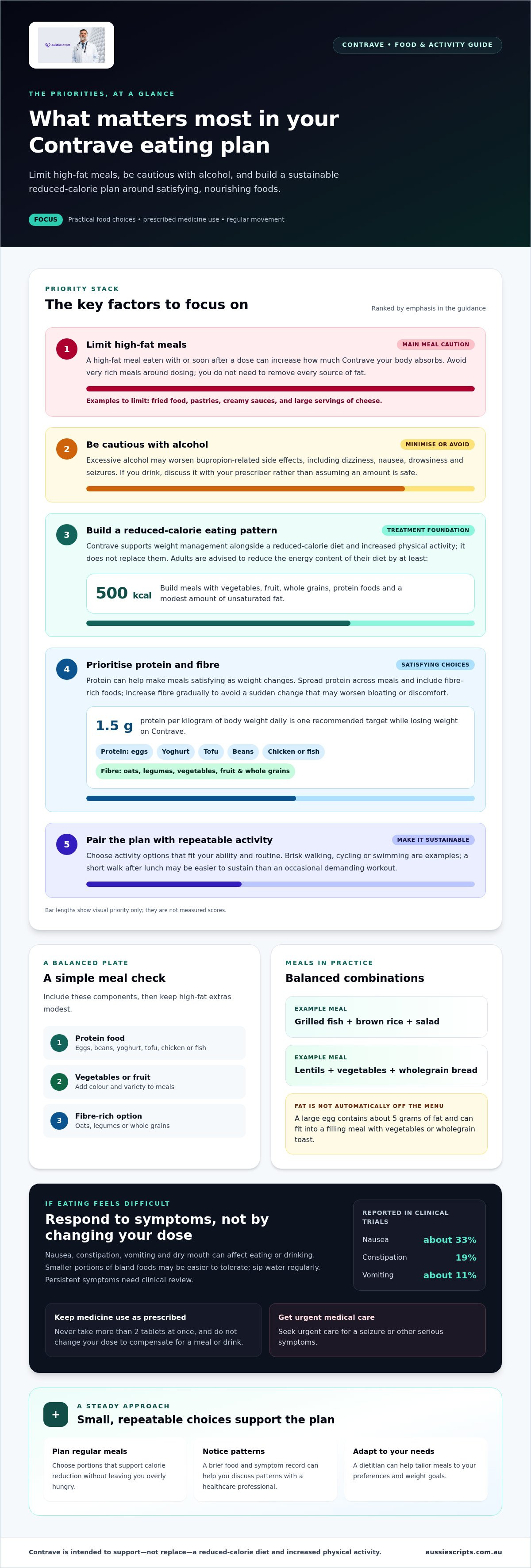
Limit high-fat meals while taking Contrave. According to the FDA, avoiding high-fat meals and never taking more than 2 tablets at once can help reduce seizure risk. A fatty meal can increase how much medicine your body absorbs, so a large serve of fried food or a creamy takeaway meal is a poor choice around a dose. This does not mean you need to remove every source of fat from your diet.
Alcohol is another item to minimise or avoid during treatment. Excessive alcohol may worsen bupropion-related side effects, including dizziness, nausea, drowsiness and seizures. If you drink, discuss it with your prescriber rather than assuming a particular amount is safe with Contrave. Don’t change your dose to compensate for a meal or drink.
Common Contrave side effects that can affect appetite or eating include nausea, constipation and vomiting. In clinical trials, nausea occurred in about 33% of participants, constipation in 19%, and vomiting in about 11%. These effects can make regular meals less appealing, so note when symptoms occur and what you ate. Blood pressure and heart rate may also increase, particularly during the first 3 months of treatment.
For nausea or constipation, try smaller portions of bland foods and drink plenty of water. Examples include plain toast, rice, soup or yoghurt, depending on what you tolerate. For dry mouth, sip water regularly and choose moist foods such as porridge or soft fruit. These steps can support eating and hydration, but persistent symptoms need clinical review.
Healthy eating does not require banning eggs or all fats. A large egg contains about 5 grams of fat, and can be part of a filling meal with vegetables or wholegrain toast. Instead, limit meals where fat adds up quickly, such as fried chicken with chips, pastries, creamy sauces or large servings of cheese. For weight management, also reduce frequent sugary drinks, confectionery and highly processed snack foods; they can displace more filling, nutrient-rich choices.
When should you consult a doctor or dietitian about diet while taking Contrave? Seek advice if nausea, constipation, vomiting or dry mouth makes it difficult to eat or drink, or if side effects persist. A doctor can assess your symptoms and treatment, while a dietitian can help adapt meals to your preferences and weight goals. Seek urgent medical care for a seizure or other serious symptoms.
Use a simple meal check: include a protein food, vegetables or fruit, and a fibre-rich option, then keep high-fat extras modest. Eggs, beans, oats and vegetables can make filling choices without relying on fried or heavily packaged foods. This practical approach supports healthy weight management while reducing avoidable meal-related risks.
2. What foods are part of a healthy diet?
In Australia, Contrave is indicated for eligible adults aged 18 years or older as an adjunct to a reduced-calorie diet and increased physical activity. It supports weight management alongside those changes; it doesn’t replace regular meals, nutritious choices or movement. A practical calorie diet creates a moderate energy deficit while still providing enough food to meet nutritional needs.
During treatment, adults are advised to reduce the energy content of their diet by at least 500 kcal. Build meals around vegetables, fruit, whole grains, protein foods and a modest amount of unsaturated fat. For example, combine grilled fish, brown rice and salad, or serve lentils with vegetables and wholegrain bread. These combinations add variety and fibre without relying on large portions of energy-dense extras.
Protein can help make meals satisfying as weight changes. One recommended target while losing weight on Contrave is 1.5 grams per kilogram of body weight daily. Spread protein across meals using options such as eggs, yoghurt, tofu, beans, chicken or fish. Fibre-rich foods include oats, legumes, vegetables, fruit and whole grains. Increase them gradually, since a sudden change may worsen bloating or discomfort.
How much protein, fibre and water should you aim for while taking Contrave? Use the protein target of 1.5 grams per kilogram daily; include fibre-rich foods across meals, and drink water regularly rather than relying on a fixed daily volume. Your needs can vary with your usual intake, activity and health conditions.
Meal timing can be simple. Plan regular meals that fit your routine, with portions that support calorie reduction without leaving you overly hungry. If nausea makes a full meal difficult, try smaller servings and bland choices, then return to balanced meals as tolerated. Keep a brief food and symptom record to identify patterns and discuss them with your healthcare professional.
Physical activity works alongside your eating plan. Choose repeatable options, such as brisk walking, cycling or swimming, and build them into your week according to your ability. A short walk after lunch may be easier to sustain than an occasional demanding workout. If diabetes or another condition affects food choices or exercise, account for it when planning meals and activity.
Alcohol, prescription medicines and health conditions can also affect safe treatment and appetite. Tell your prescriber about the medicines you take and any nausea or other serious side effects that disrupt eating or movement. A dietitian can review your meals during Contrave treatment and help adapt portions, protein and fibre to your needs. These adjustments can keep calorie reduction practical and nutritionally balanced.
3. Avoiding high-fat meals when taking Contrave
Contrave combines naltrexone and bupropion, and meal composition can affect absorption. A high-fat meal eaten with or soon after a dose can increase the amount of medicine absorbed. Avoiding a very rich meal around dosing matters, but it doesn’t mean removing every source of fat. Follow your prescribed schedule. Don’t shift or skip a dose to accommodate a takeaway meal.
In a single-dose study, a high-fat meal increased peak naltrexone levels by about 3.7 times compared with taking Contrave without that meal. Peak bupropion levels increased by about 1.8 times. These findings show why a large, fatty meal is different from a balanced meal containing a modest amount of fat. They don’t provide a personal food threshold for every patient.
During regular Contrave use, a high-fat meal was associated with peak naltrexone levels about 1.9 times higher, and peak bupropion levels about 1.3 times higher, than without that meal. These differences are relevant because medicine exposure can affect side effects. Keep meals consistent around your usual dose, and discuss recurring nausea or other problems with your prescriber.
Use the meal itself as a practical guide. Fried fish with chips, creamy pasta or a pastry-heavy breakfast can contain substantial fat. By contrast, porridge with berries, wholegrain toast with tomato, or yoghurt with fruit can make simpler breakfast choices. Preparation matters: grilled fish differs from battered fish, and a light topping differs from a rich cream sauce.
For snacks, choose options that are nourishing and moderate in fat. Examples include fruit with low-fat yoghurt, carrot sticks with a small serve of hummus, or wholegrain crackers with cottage cheese. Check how foods are prepared and portioned rather than treating a single ingredient as automatically unsuitable. A small amount of fat in a meal is not the same as a high-fat meal.
The FDA’s standard high-fat meal for drug food-effect testing contains about 500 to 600 calories from fat. That figure describes a testing meal, not a daily target or a cutoff for deciding whether a meal is safe. In practice, limit meals dominated by fried foods, pastry, creamy sauces or large amounts of cheese, especially around a Contrave dose.
Plan ahead when eating out: choose grilled or baked dishes, request sauces separately, and swap chips for vegetables or salad. If breakfast is your dosing meal, prepare oats or fruit and yoghurt instead of a fried breakfast. These steps support a healthy lifestyle while keeping meal-related absorption changes in mind. Ask your prescriber about persistent side effects or concerns involving other medicines.
4. Contrave’s use with diet and physical activity
In Australia, Contrave is indicated for eligible adults aged 18 years or older as an adjunct to a reduced-calorie diet and increased physical activity. That means bupropion and naltrexone are part of a wider weight-management plan, not a substitute for lifestyle changes. The recommended calorie reduction during treatment is at least 500 kcal. Pair that change with manageable movement, such as walking for errands or choosing stairs.
Set up a routine you can repeat. Plan meals and activity around your work, sleep and existing health needs. For example, prepare lunch before a busy day and take a walk after dinner. Keep a simple record of meals, activity, body weight and symptoms. This can help you see whether your plan is sustainable and identify changes to discuss with your doctor.
Clinical trial results show how Contrave was studied alongside behaviour changes. In the COR-BMOD study, participants taking Contrave lost an average of 8.1% of their starting body weight over the 56-week study. In that study, 57% lost at least 5% of their body weight. Participants also attended 28 behaviour-modification sessions over 56 weeks, so the results reflect more than medication alone.
Treat your records as a way to review your progress, not as a promise of a particular outcome. Track weight alongside practical measures, such as whether you took a planned walk or included vegetables and protein in meals. Review the pattern over time rather than reacting to one weigh-in. A consistent record gives your doctor useful context about your plan and any symptoms affecting eating or activity.
Australian treatment guidance includes a review point: discontinue Contrave after 16 weeks if you haven’t lost at least 5% of your initial body weight. This makes tracking your starting weight and follow-up measurements important. If you’ve made lifestyle changes but aren’t losing weight after 3 months, talk with your prescriber. They can review your progress, treatment and any medicines that may affect the plan.
Side effects can interfere with your routine. Constipation, nausea or other symptoms may make exercise or regular meals harder to maintain. Drink plenty of water and choose small portions of bland foods if nausea or constipation affects eating. Don’t compensate by sharply restricting calories or increasing activity beyond what you can manage. Record symptoms and changes, then discuss persistent problems with your doctor.
Build activity around your current ability: walking, cycling or household tasks can provide a practical starting point. Increase duration or effort gradually as your routine allows. The useful measure is whether the activity fits consistently alongside meals and treatment. A reduced-calorie plan, movement and regular review work together; none replaces prescribed dosing or monitoring.
5. What diet plan is recommended while taking Contrave (naltrexone/bupropion)?
The best diet plan while taking Contrave is a reduced-calorie pattern that remains varied and nourishing. Include protein, whole grains, fibre, fruit, vegetables and polyunsaturated fats. Aim for a practical routine, not a rigid menu that removes whole food groups. Choose meals that fit your preferences, health needs and usual schedule.
Build each main meal from a few familiar components. For example, serve grilled chicken with brown rice and vegetables, or lentils with wholegrain bread and salad. At breakfast, try eggs with wholegrain toast and tomato, or oats with fruit and yoghurt. These combinations make it easier to include protein and fibre without relying on highly processed snacks.
Vary protein sources across the week. Eggs, fish, tofu, beans, yoghurt and lean meat can all fit, depending on your preferences. Add vegetables such as broccoli, carrots or leafy greens, and choose whole grains such as oats, barley or brown rice. For polyunsaturated fats, include foods such as seeds, walnuts or oily fish in appropriate portions.
Plan snacks around hunger and your daily routine rather than grazing automatically. Fruit with yoghurt, a boiled egg, or wholegrain crackers with hummus are practical examples. Keep convenient options available for busy days, such as washed fruit or prepared vegetable sticks. If nausea affects your appetite, smaller portions of bland foods may be easier to manage temporarily.
A dietitian’s review is recommended during Contrave treatment in Australia. A dietitian can assess your usual meals, food preferences and health circumstances, then help adapt your plan. This can be useful if diabetes affects meal choices, constipation changes what you tolerate, or weight loss has led you to cut out important foods.
Use a simple weekly plan. Choose several breakfasts, lunches and dinners you can repeat, then make a shopping list based on those meals. For instance, batch-cook lentils, roast vegetables and prepare oats for quick weekday options. Track meals and symptoms if nausea or constipation makes eating difficult. Take your notes to your dietitian or prescriber for a focused discussion.
A healthy plan should work alongside the prescribed medicine and physical activity, not replace either. Keep portions aligned with your reduced-calorie goal, and adjust food choices rather than skipping meals when plans change. If you need clinical support to discuss a structured approach, book a weight loss consultation to review your treatment and weight-management goals.
Aussie Scripts: Standard Script
Aussie Scripts’ Standard Script provides access to an online consultation with an Australian-registered doctor for prescription needs. If you’re taking Contrave and need to discuss your prescription or treatment, this can be a relevant next step. The doctor can assess your circumstances and discuss whether a prescription is appropriate. A prescription isn’t automatic, and the consultation doesn’t replace ongoing care from your usual treating team.
Prepare a clear list of your current medicines, any side effects, and questions about your eating plan or activity. Mention symptoms such as nausea or constipation if they affect your routine. This information can help the doctor understand your needs and guide the discussion. For prescription support, contact Aussie Scripts or visit aussiescripts.com.au.
Make your next step practical
Turn your food choices into a routine you can review, rather than aiming for a perfect menu. Choose a few meals that suit your schedule, note any eating-related symptoms, and bring those details to a healthcare discussion. A practical version of the best diet plan while taking Contrave should fit your treatment and daily life, not add unnecessary complexity.
If you need prescription support, Aussie Scripts offers Standard Script and Express Script. Its Medical Certificate service is also available for eligible needs. These services address different requests, so choose the one relevant to your situation.
Contact Aussie Scripts today to explore the appropriate next step. Keep building your routine one manageable choice at a time.
Frequently Asked Questions
What foods should I avoid while taking Contrave?
Limit very high-fat meals and minimise or avoid alcohol while taking Contrave. For example, choose grilled fish with vegetables instead of fried fish with chips, especially near a dose. Don’t take extra tablets after eating a rich meal. If nausea disrupts eating, try a smaller, plain meal such as toast or rice and record whether symptoms change.
What Healthy Meals Are Good for Weight Loss?
Choose meals with a clear protein source, vegetables and a satisfying high-fibre side. For example, try bean and vegetable soup with wholegrain toast, or chicken salad with chickpeas. For a quick lunch, use canned beans, pre-washed salad leaves and a wholegrain wrap. These combinations offer practical alternatives to takeaway meals while making portions easier to manage.
What are good food substitutes for weight loss?
Swap sugary drinks for water or unsweetened tea, and replace confectionery with fruit or plain yoghurt. Choose baked potatoes instead of chips, and try tomato-based pasta sauce instead of a cream-based one. For snacks, replace pastries with wholegrain crackers and a protein-rich topping. Make one substitution at a time so you can identify options that suit your taste and routine.
What foods are part of a healthy diet?
A healthy eating pattern can include vegetables, fruit, whole grains, legumes, lean protein and unsaturated fats. Try adding spinach to an omelette, choosing oats at breakfast, or including lentils in a vegetable curry. Variety across the week helps prevent meals from becoming repetitive. Frozen vegetables and no-added-salt canned beans can also make convenient, nutritious pantry and freezer staples.
How many calories should you eat while taking Contrave for weight loss?
There isn’t one calorie total that suits every person. During Contrave treatment in Australia, the recommended energy reduction is at least 500 kcal from your usual diet. That is a reduction, not a daily calorie target. Your starting intake, body size, activity and health needs affect the resulting total, so track portions and discuss a suitable plan with a dietitian.
What foods and meals best support weight loss on Contrave?
Meals that combine protein, vegetables and fibre-rich carbohydrates can make a reduced-calorie routine easier to maintain. A simple dinner could be baked salmon, brown rice and steamed broccoli; a plant-based option is tofu with vegetables and barley. Prepare extra portions for another meal, and keep ingredients such as frozen vegetables, eggs and beans available for days when cooking time is limited.
Should you follow a high-protein, low-carb, or Mediterranean diet with Contrave?
Contrave doesn’t require one named diet style. A high-protein approach can include suitable protein foods, while a Mediterranean-style pattern can include vegetables, legumes, whole grains and unsaturated fats. You don’t need to eliminate carbohydrates to create a reduced-calorie plan. Choose an approach you can follow consistently, and ask a dietitian to review it if diabetes or another health condition affects your food choices.
What foods, alcohol, or supplements should you avoid with Contrave?
Limit high-fat meals and minimise or avoid alcohol during treatment. Don’t start a supplement or herbal product without discussing it with your prescriber, particularly if you take other medicines. Keep the product name and ingredient list handy for that discussion. This helps your prescriber consider your complete medication and supplement routine rather than assessing Contrave in isolation.
Disclaimer
The information provided by AussieScripts is for general informational purposes only and does not constitute medical advice, diagnosis, or treatment. For advice tailored to your specific symptoms or health concerns, please consult one of our doctors or your regular GP.