Holistic PCOS care: from supplements to acupuncture
Explore a holistic approach to managing PCOS symptoms, with practical advice on lifestyle, supplements and acupuncture, plus guidance on evidence and safety.
PCOS care rarely follows a single path. A holistic approach to managing PCOS symptoms can combine nutrition and supplements with stress reduction, weight management and exercise, while treating acupuncture as a complementary option rather than a proven cure.
It makes sense to look beyond one symptom or intervention. The most useful approach is individualised: lifestyle strategies may support wellbeing, while supplements and alternative therapies can have side effects or interact with medication. Treat them as part of an ongoing discussion about your care, not a replacement for it.
This guide explains how supplements, sleep, stress-management practices, gradual weight management, acupuncture, traditional Chinese medicine and enjoyable exercise may fit into PCOS care. It also explains where evidence remains limited, including the need for larger, more rigorous studies on acupuncture. The aim is practical: to help you understand the options and consider how they may complement appropriate medical care.
Key Takeaways
- Consider probiotic foods such as kimchi and kombucha as part of a varied diet, rather than relying on them as a treatment for PCOS.
- Build practical stress and sleep routines, such as regular bedtimes, gentle yoga or meditation, to support day-to-day wellbeing.
- Focus on sustainable habits for weight management, and remember that PCOS care should be tailored to individual needs.
- Treat acupuncture and traditional Chinese medicine as complementary options; current evidence is not strong enough to establish reliable treatment protocols.
- Choose enjoyable, manageable exercise and discuss a suitable balance with your doctor, especially before making major changes to your routine.
Table of Contents
1. Which supplements support naturopathic management of PCOS?
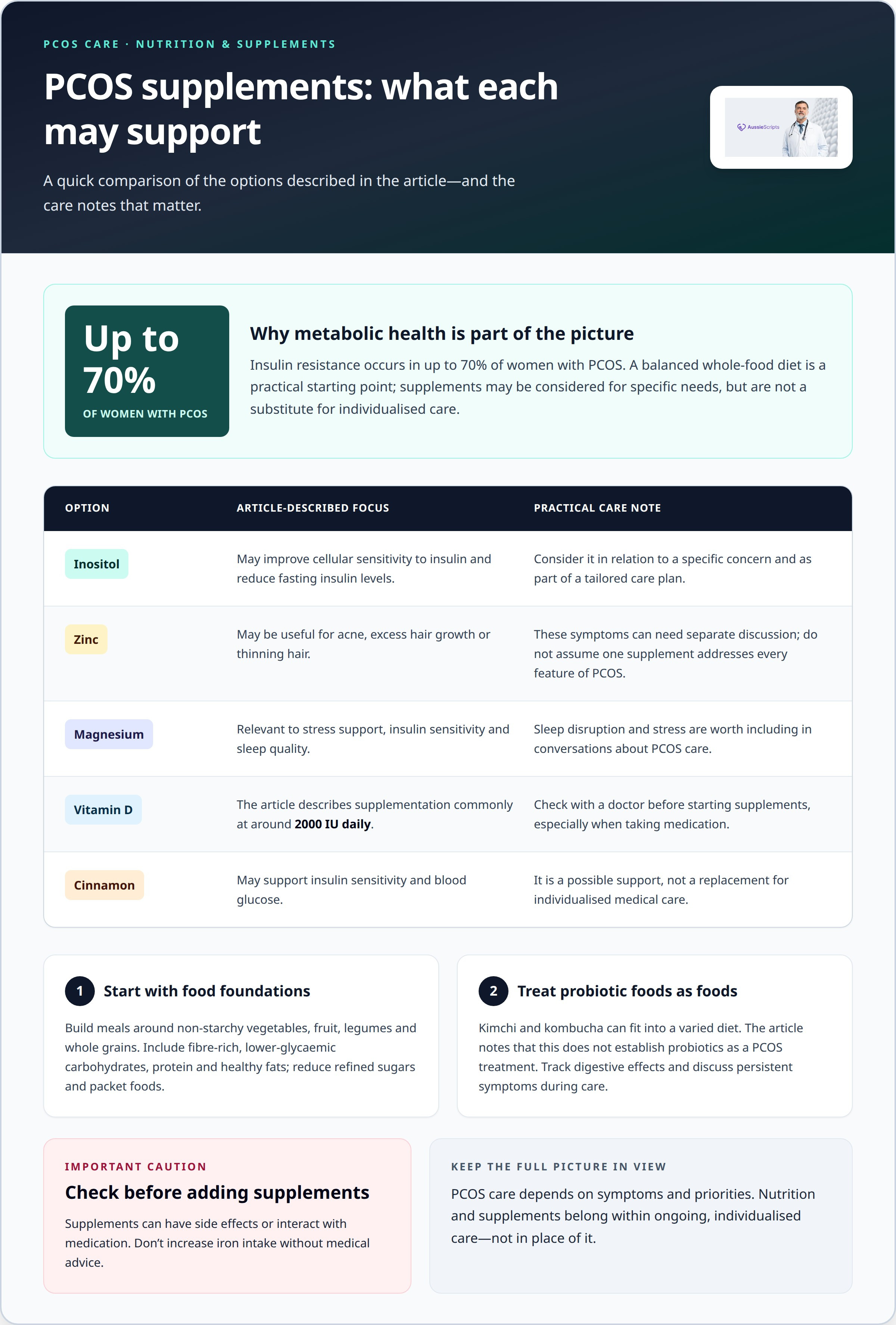
For PCOS, a balanced whole-food diet is a practical starting point, not a supplement regimen. Build meals around non-starchy vegetables, fruit, legumes and whole grains, with fibre-rich, lower-glycaemic carbohydrates. Include protein and healthy fats, and reduce refined sugars and packet foods. These choices can support metabolic health, particularly because insulin resistance occurs in up to 70% of women with PCOS. Supplements such as inositol, zinc, magnesium, vitamin D and cinnamon may be considered for specific needs, but they are not substitutes for individualised care.
PCOS, or polycystic ovary syndrome, can involve irregular or absent menstrual periods, acne, excess hair growth and thinning scalp hair. It may also affect fertility, sleep and emotional wellbeing. Treatment depends on your symptoms and priorities. Contraceptive pills may help address hormonal imbalance and menstrual symptoms, while diabetes medicines may support insulin-related concerns. Acne, hirsutism and fertility needs call for separate discussion; one supplement should not be assumed to treat every feature. Diagnosis also involves clinical features and medical assessment, not symptoms alone.
Insulin resistance is a key metabolic concern in PCOS, alongside other risks that need ongoing attention. Discuss screening with a clinician, including how to monitor metabolic health over time. The appropriate checks depend on your health history and symptoms. Mention changes in menstrual patterns, weight or mood, as well as sleep disruption or stress. These details can guide a review more effectively than relying on a supplement to address several concerns.
Gut health is another area people ask about. Kimchi and kombucha are examples of probiotic foods that can fit into a varied diet. Gut dysbiosis may worsen inflammation and disrupt sex-hormone regulation, potentially aggravating symptoms, but this does not establish probiotics as a PCOS treatment. Track how foods affect your digestion and discuss persistent symptoms during care. To reduce exposure to potential endocrine disruptors, consider glass or stainless-steel containers instead of plastic and non-toxic personal-care products. Potential endocrine disruptors include BPA, phthalates, pesticides, dioxins and glycol ethers, which may occur in items such as canned foods, soaps and makeup.
Supplement choice should match the concern. Inositol may improve cellular sensitivity to insulin and reduce fasting insulin levels. Zinc may be useful for acne, excess hair growth or thinning hair. Magnesium is relevant to stress support, insulin sensitivity and sleep quality. Vitamin D supplementation is commonly described at around 2000 IU daily, while cinnamon may support insulin sensitivity and blood glucose. Check with a doctor before starting supplements, especially when taking medication. Don’t increase iron intake without medical advice. Combine nutrition with suitable exercise and ongoing review, since PCOS care has no single plan for everyone.
2. Stress reduction
Stress management can complement care for PCOS symptoms, including irregular periods and concerns about ovulation or androgen-related changes. Stress can also make routines harder to maintain, such as preparing meals, exercising or keeping regular sleep hours. Treat these as connected parts of health, not proof that stress caused PCOS. Cortisol often features in stress advice, but focusing on one hormone does not address every PCOS symptom.
Choose practical strategies that fit an ordinary week. A walk outside, short meditation, gentle yoga or journalling can create a regular pause in the day. Start with one manageable activity and link it to an existing routine, such as walking after lunch or stretching before bed. Consistency matters more than adding several demanding activities at once. Exercise can support stress relief as well as physical health.
Sleep deserves specific attention. Women with PCOS are twice as likely to experience sleep disturbances as women without PCOS. Aim for eight to ten hours of sleep per night and keep bedtime and waking times consistent where possible. A repeatable routine might include dimming the lights, putting devices aside and preparing for the next day before bed. Avoid stimulants and rich, fatty foods close to bedtime.
A restful sleep environment can make that routine easier to follow. Keep the bedroom comfortable, quiet and dark, and reserve it for sleep where practical. If worries interrupt rest, write them in a journal earlier in the evening and note one next step for the following day. Persistent sleep disruption can affect energy, mood and your ability to maintain daily health habits, so include it in conversations about PCOS care.
Diet, movement and stress relief work best as practical routines, not strict rules. Regular meals can add structure, while enjoyable physical activity provides a planned break from work or caregiving. Try combining strategies: take a walk outdoors, then set aside a few minutes for breathing or gentle stretching. If a routine adds pressure or disrupts sleep, simplify it rather than adding more tasks.
Yoga is a mind-body therapy studied in PCOS. Evidence describes possible support for reproductive function through changes in neurohormonal profiles and stress markers. It should complement, not replace, discussion of menstrual changes, fertility goals or other symptoms. Record sleep patterns, stress triggers and activities that help; these details can make a clinical conversation more specific. For a clinician-led discussion, use an online health consultation.
3. Weight management
For people with PCOS who are overweight, gradual weight loss through a low-calorie diet is described as a promising first-line treatment. A modest reduction of 2-5% of body weight may improve metabolic and reproductive outcomes. Even a small change may help decrease insulin resistance, support more regular periods and reduce the risk of conditions associated with PCOS. These possible benefits make weight one part of care, not the sole measure of progress.
Another estimate suggests that losing 5-10% of body weight can improve PCOS symptoms and menstrual regularity. A reduction of about 5% may also help normalise menstrual cycles, enhance ovulation and reduce insulin resistance. These figures describe potential outcomes, not a required target for every person. If weight loss is relevant to your health, set a gradual goal rather than relying on restrictive changes that are difficult to maintain.
A holistic approach to managing PCOS symptoms can include practical lifestyle adjustments. Plan meals around your schedule, choose portions that support gradual calorie reduction and keep nutritious options available for busy days. For example, prepare a simple meal at home rather than relying on packet food. Track habits that matter to you, such as meal patterns, activity and changes in periods. This record can help you identify manageable adjustments.
Pair nutrition changes with exercise you can keep up. Walking, swimming, cycling or a home-based routine can add movement without making weight management depend on intense workouts. Build activity into existing routines, such as walking to a nearby destination or taking a short walk after a meal. Exercise supports an active lifestyle, and consistency helps make the routine sustainable. The next section examines exercise and insulin sensitivity in more detail.
Weight maintenance also deserves a plan. After reaching your chosen goal, retain the habits that helped, including regular meals and enjoyable physical activity. Do not treat a temporary change in weight as the only measure of progress. Period regularity, metabolic health and reproductive outcomes also matter in PCOS care. If your weight or symptoms change, review your plan rather than responding with extreme restriction.
For a holistic approach to managing PCOS symptoms, consider how weight goals fit your health needs, symptoms and medical history. A weight loss consultation can help assess whether weight management is appropriate and discuss a sustainable plan. It should be part of broader care, not a substitute for attention to irregular periods, fertility goals or other health concerns. Focus on changes you can maintain, then review their effect on your health and daily life.
4. Acupuncture and traditional Chinese medicine
Acupuncture and traditional Chinese medicine (TCM) are sometimes considered alongside care for polycystic ovary syndrome. They may appeal to people seeking support for menstrual changes, excess androgen symptoms or fertility concerns. However, larger, more rigorous studies are needed to establish whether these approaches help with PCOS and which treatment protocols are appropriate. They should not replace ongoing, individualised discussions with a doctor.
If you are trying to conceive, let your fertility goals guide treatment discussions with a doctor. Acupuncture and TCM have not been established as effective PCOS fertility treatments, and available evidence does not define reliable protocols. A doctor can discuss medical options based on ovulation and your circumstances. Contraceptive pills may help address hormonal symptoms but are not a fertility treatment; diabetes medicines may be used for metabolic concerns.
Herbal medicine needs the same care as other treatments. Herbs can cause side effects or interact with prescription medication, so discuss a product with a doctor before using it. This is particularly important if you are trying to conceive, taking medication or combining several supplements. Some therapies promoted as PCOS cures may affect fertility or cause other complications. Do not replace prescribed care or delay a medical review for an unproven remedy.
Costs depend on the treatment, practitioner and individual plan, so there is no single fee for acupuncture or TCM for PCOS. Medicare rebates also depend on the service and your circumstances. Ask about fees and any rebate eligibility before arranging treatment, and include ongoing visits or herbal products when considering the total cost. Do not assume a treatment is covered simply because it is described as complementary or traditional.
A doctor can help coordinate PCOS care in Australia and discuss symptoms, medication and fertility priorities. Seek medical advice if your periods change, excess hair growth becomes concerning or pregnancy is a goal. Bring a list of your current medicines and herbal products to the discussion. This can help identify possible interactions and keep decisions about complementary therapies connected to your overall care plan.
Before adding acupuncture or herbs, use a clear decision process: identify the symptom you hope to address, discuss the option with your doctor, and weigh possible benefits against risks and costs. Keep prescribed treatment and follow-up discussions in place. Evidence for acupuncture and TCM remains limited, so treat them as complementary approaches, not established cures for polycystic ovarian syndrome.
5. Exercise and insulin sensitivity
For women with polycystic ovary syndrome, exercise is one part of ongoing health management. Regular activity supports a routine that can address metabolic health alongside other care. The recommended target in this guide is at least 30 minutes of exercise per day. This is a practical goal, not a requirement to begin with intense workouts. Choose an activity that fits your current fitness, schedule and preferences.
Balance matters. Discuss a suitable exercise routine with your doctor, because excessive exercise can disrupt hormones. This is especially relevant if training leaves you persistently fatigued or makes daily routines difficult. Start at an achievable level, then adjust the duration or intensity gradually. Rest and recovery also belong in a sustainable plan. Exercise should support wellbeing, not become another source of pressure.
Variety can make activity easier to maintain. Walking, swimming, light aerobics, yoga and Pilates are options to consider. If high-impact movement feels uncomfortable, try a low-impact alternative such as swimming or Pilates. If a class feels too demanding, choose a walk or a shorter home routine. The most useful option is one you can repeat consistently and enjoy, rather than a demanding program you quickly abandon.
Link activity to existing habits. For example, take a walk after a meal, fit in a short home session on busy days or schedule swimming when the weather suits. Mixing options across the week can reduce monotony and involve different movement patterns. Keep the plan flexible around work, family and energy levels. If your symptoms or health needs change, reassess the routine with your doctor before increasing the workload.
Exercise is not a stand-alone treatment for PCOS or a guaranteed way to lose weight. Its role is part of broader care, which may include nutrition, sleep and medical support. Focus on repeatable behaviours, such as keeping regular activity appointments and choosing movement you can sustain. If weight loss is a goal, do not make exercise progressively more intense without considering recovery and overall health. A steady routine is more practical than short bursts followed by inactivity.
To review your options, note which activities feel manageable and how they fit your week. Discuss exercise balance with your doctor, particularly before major changes or if your routine affects your health. For support with weight management as part of PCOS care, book a Weight Loss Consultation.
Aussie Scripts
Aussie Scripts can help with practical healthcare needs that arise while managing PCOS, such as discussing prescription-related questions or seeking a specialist referral. Through its digital healthcare services, patients can access options including a Standard Script, Express Script, Medical Certificate or Specialist Referral, where appropriate following a consultation.
These services can support parts of your care pathway, but they do not replace ongoing PCOS management or establish that a particular treatment is suitable. If symptoms, prescription needs or referral questions arise, a consultation can help determine an appropriate next step based on your circumstances.
For help with your healthcare needs, contact Aussie Scripts.
Choose a next step that fits your care
Make your next PCOS discussion specific to your priorities. A holistic approach to managing PCOS symptoms is not a fixed checklist; it should reflect the concerns you want to address and the care you already receive. Before a consultation, note your current priorities, medicines and supplements, along with any questions about treatment. This gives the conversation a clear starting point and helps keep decisions connected to your individual needs.
Choose one practical change to focus on rather than overhauling your routine all at once. You could set a realistic activity goal, plan a regular bedtime or prepare questions about an alternative therapy. Keep medical follow-up part of your care, particularly when symptoms or treatment needs change.
For related digital healthcare needs, Aussie Scripts offers Standard Script, Express Script and Medical Certificate services. Contact Aussie Scripts today to discuss the next step that suits your needs. A clear plan can help you move forward with confidence.
Frequently Asked Questions
How do mind-body therapies aid in holistic PCOS care?
Mind-body therapies can offer structured ways to manage stress and support day-to-day wellbeing. Yoga, meditation and journalling are practical options to try as part of a broader care plan. Some research describes possible effects of yoga on reproductive function and stress markers, but larger, more rigorous studies are needed to establish effective PCOS treatment protocols. Keep these practices complementary to medical care, particularly when menstrual or fertility concerns need attention.
What Is PCOS?
Polycystic ovary syndrome (PCOS) is a hormonal and metabolic condition that can affect ovulation, periods, skin and fertility. The Rotterdam Criteria consider three features: irregular or absent ovulation, clinical or biochemical evidence of hyperandrogenism, and polycystic ovaries on ultrasound. At least two features are required under these criteria. An ultrasound finding alone does not establish PCOS, so diagnosis considers the overall clinical picture.
What herbal remedies are incorporated for PCOS symptom management?
Some people consider herbs such as cinnamon or spearmint tea for PCOS symptoms. Studies have reported that two cups of spearmint tea per day may help reduce androgens and hirsutism, but this does not make it a proven treatment for everyone. Herbal products can cause side effects or interact with medicines. Discuss any remedy with a doctor before use, especially if you are managing fertility or taking prescription medication.
What is the role of hormone and metabolic lab testing in diagnosis?
Hormone and metabolic tests can help assess PCOS features and inform care, alongside symptoms and menstrual history. The Rotterdam Criteria include clinical or biochemical evidence of hyperandrogenism as one possible feature. Test results are interpreted in context, not used alone to diagnose PCOS. A clinician can explain what a result means for your symptoms and whether further assessment or ongoing metabolic monitoring is appropriate.
What lifestyle changes are effective for managing PCOS?
Choose sustainable changes that fit your routine and health priorities. For example, plan a simple lunch before busy workdays, add regular movement to an existing routine and set a consistent cue for winding down at night. These small decisions can make healthy habits easier to repeat. Review what is working over time rather than changing several parts of your routine at once or relying on a short-term plan.
Which supplements support naturopathic management of PCOS?
Some supplements are considered for specific PCOS concerns, not as a single treatment for the condition. Inositol may support insulin sensitivity, while zinc may be considered for acne or hair-related symptoms. The choice depends on individual needs and current medicines. Before starting a supplement, discuss its intended use and possible interactions with a doctor, and avoid increasing iron intake without medical advice.
What lifestyle changes can help manage PCOS symptoms, including diet, exercise, and sleep?
Link habits to make them easier to maintain: prepare a nourishing meal, schedule activity that suits your ability and follow a regular bedtime routine. A walk after dinner followed by a quiet wind-down period is one practical example. Adjust the routine around work, caring responsibilities and changing symptoms. If an activity disrupts sleep or feels difficult to sustain, modify it and discuss persistent concerns as part of your medical care.
What treatments help with insulin resistance and reduce the risk of type 2 diabetes in PCOS?
Care may combine nutrition and activity changes with medical treatment for insulin-related concerns. A clinician can assess your metabolic health and consider whether diabetes medication is appropriate based on your symptoms and health history. Weight management may also be part of care when relevant. These steps support risk management but do not replace individual follow-up. Discuss screening and review plans with a healthcare professional as part of ongoing PCOS care.
Disclaimer
The information provided by AussieScripts is for general informational purposes only and does not constitute medical advice, diagnosis, or treatment. For advice tailored to your specific symptoms or health concerns, please consult one of our doctors or your regular GP.