Hormonal weight gain solutions online: what can help
Explore hormonal weight gain solutions online, learn about midlife causes, symptoms to watch, practical weight-management steps and when to seek advice.

Midlife weight gain can reflect several factors, including changes in activity, metabolism and hormone levels during the transition to menopause. Menopause-related symptoms, including weight gain, can begin seven to 10 years before menopause, and in Australia menopause occurs at an average age of 51 to 52 years. Hormonal weight gain solutions online can help you discuss possible causes and decide whether professional assessment is appropriate.
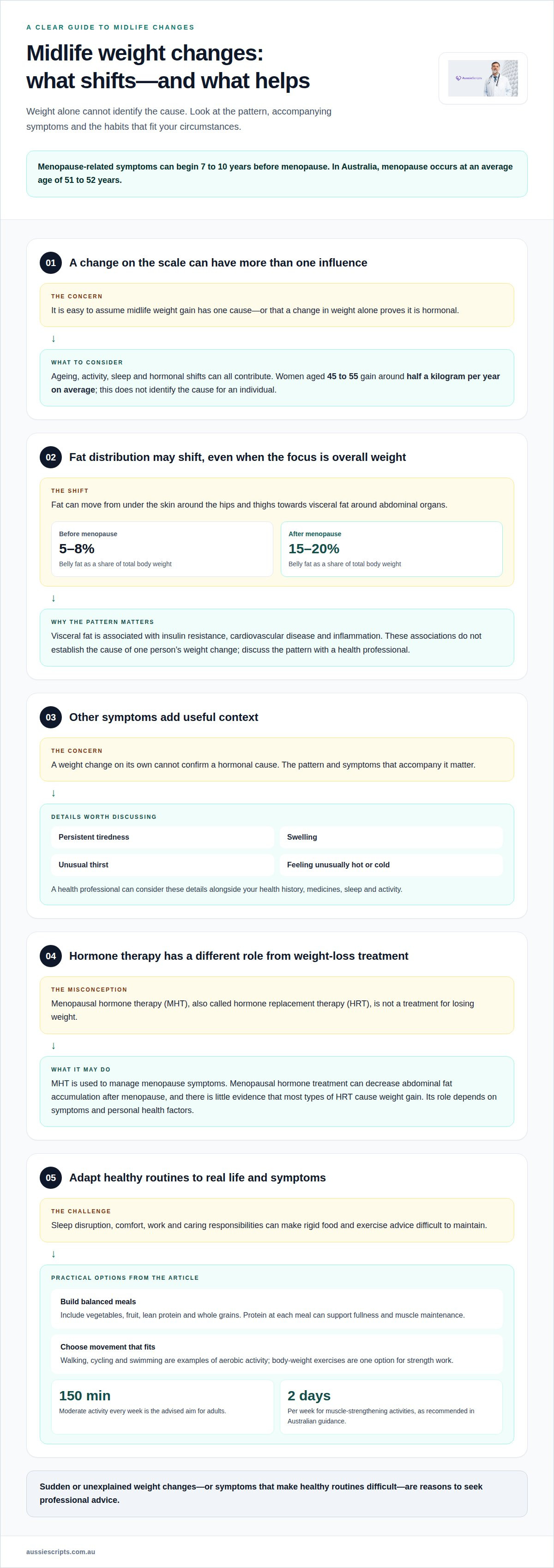
Weight changes can be frustrating, particularly when your usual habits haven’t changed. A shift in weight alone doesn’t confirm a hormonal cause, so the pattern and accompanying symptoms matter. Changes around the abdomen, persistent tiredness, swelling, unusual thirst, or feeling unusually hot or cold are useful details to discuss with a health professional.
This article explains what may contribute to midlife weight gain, when menopause-related changes can start, and which symptoms deserve attention. It also covers practical approaches to weight management, the role and limits of hormone therapy, and when an online consultation may help you consider your next steps.
Key Takeaways
- Midlife weight changes can reflect shifts in hormones, metabolism, activity and fat distribution, so weight alone can’t identify the cause.
- Hormone therapy may help manage menopause symptoms, but it isn’t a weight-loss treatment. Understand its potential benefits and limits.
- Notice changes that accompany weight gain, such as persistent tiredness, swelling, unusual thirst or feeling unusually hot or cold.
- Seek professional advice about sudden or unexplained weight changes, or when symptoms make healthy routines difficult.
- Learn why nutrition and exercise advice may need to be adapted to your symptoms, health and circumstances.
Can hormone therapy prevent weight gain?
Hormone therapy is not a weight-loss treatment, but it may affect menopause symptoms and abdominal fat accumulation. Understanding what changes during perimenopause can help distinguish hormonal effects from other influences on weight.
Menopause-Related Weight and Fat Changes
Menopause-related weight and fat changes describe shifts in overall weight and where the body stores fat during perimenopause and after menopause. Women aged 45 to 55 gain around half a kilogram per year on average. That change can reflect several influences, including ageing, activity, sleep and hormonal shifts, rather than one cause alone.
Fat distribution can shift too. Before menopause, belly fat accounts for 5% to 8% of total body weight; after menopause, it accounts for 15% to 20%. Fat may move from under the skin around the hips and thighs towards visceral fat around abdominal organs. This matters because visceral fat is associated with insulin resistance, cardiovascular disease and inflammation.
Hormonal and Metabolic Changes
Hormonal and metabolic changes involve shifts in hormone levels and the way the body uses energy during menopause. Declining oestrogen can contribute to a slower metabolism and changes in body fat, while age-related changes in muscle mass and daily activity may also affect energy needs.
Insulin resistance can be associated with high blood glucose, lipid abnormalities and more fat stored around the stomach. These associations do not establish the cause of an individual’s weight change. A doctor can consider the pattern alongside your health history, medicines, sleep, exercise and other symptoms before discussing lifestyle or treatment options.
Oestrogen and Weight Changes
Oestrogen influences body processes, including fat distribution, and its levels decline during the menopause transition. Estradiol production decreases after menopause, which may contribute to weight changes and greater abdominal fat storage.
Menopausal hormone therapy (MHT), also called hormone replacement therapy (HRT), is used to manage menopause symptoms, not to help people lose weight. There is little evidence that most types of HRT cause weight gain, and menopausal hormone treatment can decrease abdominal fat accumulation after menopause. Its role should be considered alongside symptom relief and personal health factors.
Treatment Risks and Side Effects
Hormone therapy and prescription weight-loss medicines can cause unwanted effects. Possible risks depend on the medicine, your health history and other treatments. A doctor should review these factors and explain potential benefits, limitations and side effects before treatment begins. Don’t start, stop or change prescribed treatment without professional advice.
When assessing an Australian online clinic, look for clearly identified Australian-registered doctors, a genuine clinical consultation, and a review of your health history and medicines. Treatment offered without an assessment of your individual circumstances does not provide the same basis for a considered clinical decision.
When does menopause weight gain start?
Menopause-related weight changes can begin during perimenopause, before menstrual periods stop. In Australia, menopause occurs at an average age of 51 to 52 years, while symptoms can start seven to 10 years earlier. Timing varies, so changes in appetite, activity and sleep can be useful context when considering weight management.
Lifestyle Counselling and Nutrition
Lifestyle counselling considers eating patterns, movement, sleep and daily routines together, rather than treating one meal or exercise session as the whole answer. A practical starting point is to review a typical day: breakfast, snacks, drinks, work activity and evening meals. This can show where small changes to food intake or routine might fit comfortably.
A balanced eating pattern can include vegetables, fruit, lean protein and whole grains. Protein at each meal can support fullness and muscle maintenance. If your diet is low in fibre, increase it gradually and drink plenty of water to reduce the chance of bloating. These changes can be easier to maintain than a crash diet.
Healthy Eating and the Mediterranean Pattern
A Mediterranean-style eating pattern centres on plant foods, whole grains and lean protein. For example, a meal could combine vegetables, wholegrain bread and fish or legumes. Food choices can vary; the key is to build meals from nourishing options and consider portion size and overall intake.
Home cooking can make ingredients and portions easier to manage. Prepare a vegetable-based meal with a protein source, and keep convenient options available for busy days. Weight management depends on your overall eating pattern, not a single food or a strict rule about one ingredient.
Exercise and Physical Activity
Physical activity supports weight management and health, while strength work helps preserve muscle. Australian Government Department of Health and Aged Care guidance recommends muscle-strengthening activities on two days per week. Walking, cycling and swimming are examples of aerobic activities; body-weight exercises are one option for strength work.
Adults are also advised to aim for 150 minutes of moderate activity every week. This can be divided across the week to suit work and caring responsibilities. Start with a manageable walk, then build a routine that includes aerobic movement and strength exercises. If menopause symptoms disrupt sleep or comfort, adapting the timing or type of activity can help maintain consistency.
Healthy weight management is not a fixed treatment plan. A clinic-based or online consultation can help connect nutrition, activity, symptoms and medical history into a practical approach. The useful next step is to identify which parts of your lifestyle feel sustainable, then discuss persistent difficulties with a health professional.
When to seek advice from a GP or other health professional
Seek medical advice for sudden or unexplained weight changes, especially alongside extreme tiredness, swelling, excessive thirst, or feeling unusually hot or cold. These symptoms can point to issues beyond menopause. A GP can review when they began, your medical history, medicines and eating patterns, then decide whether further assessment is appropriate.
There isn’t one test that explains every hormonal weight change. A health professional may consider tests as part of an assessment, depending on symptoms and medical history. A clinician may also review medicines and other possible causes. Test results need to be considered alongside physical symptoms, rather than treated as a diagnosis on their own.
An online doctor can assess symptoms, medical history and current medicines through a virtual consultation. Australian-registered doctors can prescribe treatment when clinically appropriate, based on that assessment. Some concerns require a physical examination or tests that cannot be completed during a virtual appointment, so the clinician can advise on suitable follow-up.
Professional advice can also help when weight remains difficult to manage despite consistent changes to eating and activity. A dietitian or doctor can shape an eating plan around your preferences, health conditions and routine. For example, meals might include protein, fibre-rich vegetables or whole grains, and sources of healthy fats, while taking overall intake and balance into account.
Maintaining a healthy weight can support general health, mobility and everyday physical function. The aim isn’t a particular body shape, but a sustainable approach that supports wellbeing. Personalised nutrition advice can help identify workable changes, such as adding protein to breakfast or gradually increasing fibre with water, rather than relying on restrictive dieting.
If weight gain is concentrated around the abdomen, a health professional can assess associated risks. Visceral fat is linked with insulin resistance, cardiovascular disease and inflammation. Insulin resistance can also be associated with high blood glucose and lipid abnormalities. These links don’t prove that abdominal weight caused a specific health problem, but they give a GP relevant factors to consider during assessment.
Arrange an appointment if symptoms interfere with sleep, exercise or eating well, or if concerns persist despite lifestyle changes. Bring a clear account of weight changes, symptoms and medicines to support the discussion. A GP can consider these details when deciding whether tests, dietetic advice or treatment options are appropriate for you.
Limitations of conventional dieting and exercise advice
General advice to eat less and move more can overlook menopause symptoms, health conditions and daily constraints. A calorie target alone doesn’t show whether a routine is sustainable or helps preserve muscle. For example, hot flushes, poor sleep or joint discomfort can make a previously manageable exercise plan harder to follow. A useful program accounts for these factors rather than treating everyone’s circumstances as identical.
Weight management usually involves balancing food intake with physical activity, but crash diets aren’t recommended. Severe restriction can make a plan difficult to maintain and leave less room for nutritious foods. Instead, review a typical day of eating and identify practical adjustments, such as replacing a highly processed snack with fruit and yoghurt. Protein at meals can support muscle maintenance and fullness, while vegetables and whole grains add fibre.
Exercise advice should distinguish aerobic activity from strength training. Brisk walking, cycling and swimming are aerobic activities; resistance bands and body-weight movements can strengthen muscles. Australian Government Department of Health and Aged Care guidance recommends muscle-strengthening activity on two days per week. Strength work matters because maintaining muscle mass supports physical function and contributes to metabolism.
Intensity and starting capacity affect which activity plan is appropriate. Adults are advised to do 2.5 to 5 hours of moderate-intensity physical activity each week, or 1.25 to 2.5 hours of vigorous-intensity activity. These are alternatives, not a requirement to complete both ranges. A brisk walk may suit someone rebuilding a routine, while vigorous activity may not suit someone managing pain or significant fatigue.
A combined program can include aerobic movement and strength exercises, adjusted around symptoms and recovery. For example, you could break walks into shorter sessions and do resistance exercises on separate days. Aim for a pattern you can repeat, not an intense start followed by missed sessions. If your health or previous exercise experience affects safe participation, discuss the plan with a doctor before increasing intensity.
Conventional advice can miss contributors beyond food and exercise. Poor sleep can disrupt hormones that regulate hunger and fullness, while day-to-day stress may affect routines. Improving sleep habits and setting aside time to relax can complement activity and nutrition changes. If weight remains difficult to manage despite sustained adjustments, professional assessment can help identify other factors that may need attention.
Symptoms associated with hormonal weight gain
Weight changes alone can’t identify a hormonal cause. Consider the pattern alongside other symptoms, including changes in abdominal fat, sleep, energy, appetite or temperature comfort. For example, gradual weight gain alongside menopause symptoms differs from a sudden, unexplained change. A symptom pattern helps a health professional decide what to assess, but it doesn’t confirm a diagnosis.
Menopause-related weight gain often gathers around the abdomen. This change can occur alongside declining oestrogen levels and shifts in metabolism. Fat stored around abdominal organs is called visceral fat. It is associated with insulin resistance, cardiovascular disease and inflammation, so abdominal changes offer useful context for a medical discussion, not a diagnosis on their own.
Some symptoms deserve prompt attention because they can have causes beyond menopause. Discuss sudden or unexplained weight change with a GP, especially if you also have extreme tiredness, swelling, excessive thirst, or feel unusually hot or cold. These details can help distinguish a menopause-related pattern from other health concerns. Note when each symptom began and whether it is changing.
Sleep and appetite changes can also affect weight management. Poor sleep during menopause can elevate cortisol and disrupt hormones involved in hunger and fullness. A change in appetite may affect eating patterns, while fatigue can make regular activity harder. Consider these factors together rather than assuming that reduced willpower or one food explains weight gain.
Metabolic symptoms need careful interpretation. Insulin resistance can be associated with high blood glucose, lipid abnormalities and increased stomach fat. These signs need clinical context; weight distribution alone cannot establish insulin resistance. A doctor can review your symptoms, medicines and medical history, then consider whether blood tests or another assessment are appropriate.
Hormone therapy may relieve menopause symptoms for some people, but it isn’t a weight-loss treatment. If symptoms are affecting sleep, exercise or eating well, discuss the benefits and limitations of treatment with a health professional. When considering hormonal weight gain solutions online, focus on services that include clinical assessment rather than treating weight change as a diagnosis. An online assessment can help organise your symptoms and history for clinical review. Discuss weight changes with a doctor when you need support interpreting symptoms.
Aussie Scripts: Weight Loss Consultation
Aussie Scripts offers a Weight Loss Consultation for people seeking professional guidance about weight changes. During a virtual consultation, an Australian-registered doctor can consider your symptoms, health history, medicines and current lifestyle. This can help you discuss possible contributors and practical management options suited to your circumstances.
A consultation may help if weight changes persist, symptoms affect your routines, or general advice hasn’t addressed your concerns. The doctor can discuss whether further assessment or treatment options are appropriate. A prescription isn’t automatic; any treatment decision depends on clinical assessment.
To discuss weight changes with a doctor, book a Weight Loss Consultation with Aussie Scripts.
Make your next step a focused conversation
Before exploring hormonal weight gain solutions online, decide what you want help with first: understanding symptoms, reviewing treatment options, or building a manageable plan. A concise record of changes in weight, sleep, appetite, activity and medicines can make a clinical discussion more focused. Include what has changed and what you hope to improve.
Aussie Scripts offers a Weight Loss Consultation to discuss weight management with an Australian-registered doctor. The platform also offers Standard Script, Express Script and Medical Certificate services for other healthcare needs. Any treatment recommendation depends on a professional assessment of your circumstances.
If you’re ready to discuss your concerns, contact Aussie Scripts for support. A clear first conversation can help you identify a practical next step and move forward with informed support.
Frequently Asked Questions
What causes weight gain in midlife?
Midlife weight gain can reflect changes in hormones, muscle, activity, sleep, appetite, medicines and health. These influences can overlap, so the timing and pattern matter. For example, weight changes after starting a medicine may call for a medication review, while changes accompanying menopause symptoms need a different context. A GP can consider these factors together rather than assuming menopause is the only cause.
How can I balance the hormones that affect weight?
There isn’t a general method for balancing hormones without first identifying a relevant health issue. Regular meals, protein-rich foods, physical activity and adequate sleep support overall health, but they don’t replace assessment or treatment for a diagnosed condition. Avoid starting hormone products or supplements based on weight changes alone. Discuss your symptoms, medicines and treatment options with a GP, who can decide whether testing is appropriate.
Why can weight change during perimenopause?
Perimenopause involves changing reproductive hormone levels, which can coincide with shifts in fat distribution, sleep and appetite. Weight may also change as muscle mass, daily movement or eating patterns change. For example, night-time symptoms that interrupt sleep can affect energy and routines the following day. Tracking changes in periods, symptoms and weight can help a clinician understand their timing and assess possible contributors.
What hormones and medical conditions can cause weight gain?
Thyroid disorders and conditions involving insulin regulation can affect weight, while menopause-related oestrogen changes can influence fat distribution. Some medicines and other health conditions can also contribute. Weight gain by itself can’t identify which factor is involved. A clinician considers symptoms, medical history and current medicines, then selects tests based on that assessment rather than automatically ordering a broad hormone panel.
Which evidence-based treatments help with weight gain from PCOS, thyroid disorders, menopause, or other hormonal changes?
Treatment depends on the underlying condition and the person’s health needs. PCOS and thyroid disorders require condition-specific medical assessment; menopause hormone therapy is used to manage menopausal symptoms, not as a weight-loss treatment. Nutrition and physical activity can support weight management alongside appropriate care. Prescription weight-loss medicines are considered through clinical assessment, including relevant health history and potential risks.
What are the Australian rules for online prescriptions for weight-loss medicines such as semaglutide or tirzepatide?
Online prescribing requires a clinical assessment, and a prescription is issued only when considered appropriate. In Australia, Wegovy is TGA-approved for chronic weight management in eligible adults with a BMI of at least 30 kg/m², or at least 27 kg/m² with a weight-related comorbidity. The PBAC has recommended a proposed PBS listing for people with obesity and established cardiovascular disease, subject to pricing and risk-sharing arrangements. Wegovy remains available on private prescription and is not yet PBS-subsidised for weight loss. Ozempic is PBS-listed for specific diabetes indications.
When should someone with unexplained weight gain see a GP or endocrinologist in Australia?
Seek medical advice for sudden or unexplained weight change, especially with symptoms such as unusual thirst, swelling, extreme tiredness, or feeling unusually hot or cold. A GP can review the pattern, medicines and health history, and decide whether tests or specialist assessment are warranted. An endocrinologist may be involved when clinical findings suggest a hormone-related condition that needs specialist evaluation.
What lifestyle changes can help manage hormone-related weight gain?
Choose changes that fit your everyday routine: include protein at meals, add vegetables and whole grains, and increase fibre gradually with water. Combine aerobic movement, such as walking, with strength exercises that support muscle. Sleep routines and stress-management activities can also support appetite regulation and consistency. For example, prepare a balanced lunch in advance, then take a regular walk that suits your schedule.
Disclaimer
The information provided by AussieScripts is for general informational purposes only and does not constitute medical advice, diagnosis, or treatment. For advice tailored to your specific symptoms or health concerns, please consult one of our doctors or your regular GP.
