How to Discuss Weight Loss, Health Risks, and Care With Your Doctor
Learn how to talk to your doctor about your weight, discuss health risks, prepare questions and explore a respectful care plan that supports your wellbeing.

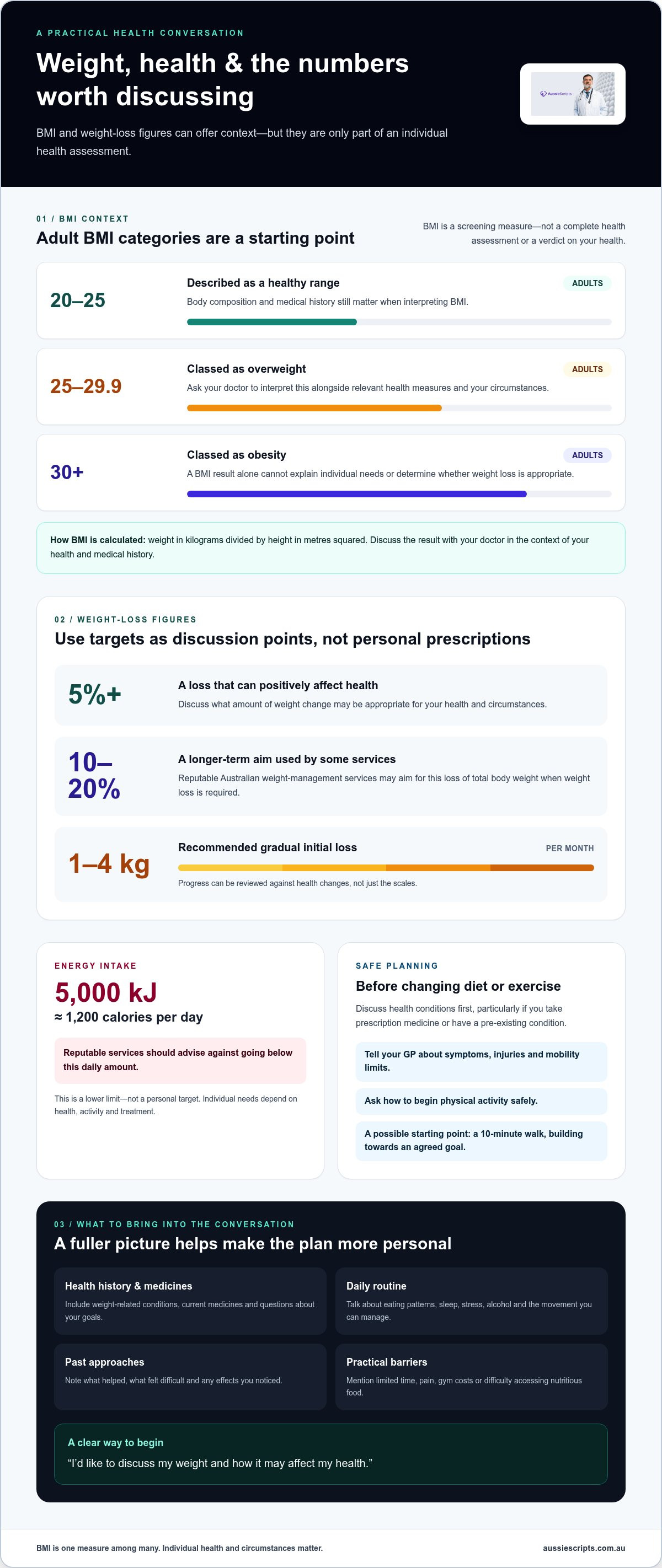
Your BMI is a starting point, not a verdict. For adults, a BMI of 25 to 29.9 is classed as overweight, while a BMI of 30 or higher is obesity, according to the World Health Organization. Knowing how to talk to your doctor about your weight can help you understand what those categories mean for your health and whether weight loss may be appropriate for you.
It’s reasonable to want a clear, respectful conversation, especially if discussing weight feels uncomfortable or difficult. Your health, medical history, medicines and past experiences all matter, so a number alone can’t explain your individual needs.
This guide explains how to prepare for an appointment, raise health concerns and discuss possible next steps. You’ll also learn how to review a plan that isn’t working and find supportive care, keeping the conversation focused on your wellbeing and goals.
Key Takeaways
- Prepare a brief health history, note previous approaches and write down the questions you want answered.
- Discuss medical conditions, medicines, sleep, stress and practical barriers before changing your eating or activity routine.
- If a plan isn’t working, identify what is getting in the way and revisit the approach with your doctor.
- You can ask for a respectful, collaborative conversation and seek a different doctor or specialist if you don’t feel supported.
- Explore tailored support, including a Specialist Referral when additional clinical input may help.
1. Assessing whether weight loss may be appropriate
Begin by asking whether weight loss could improve a specific health concern, rather than focusing only on appearance. Standard adult BMI categories classify a BMI of 30 or higher as obesity, according to the World Health Organization. A BMI of 25 to 29.9 is classed as overweight. BMI is calculated by dividing weight in kilograms by height in metres squared, but it’s a screening measure, not a complete health assessment.
BMI is a screening tool, and its interpretation depends on individual circumstances. An adult BMI between 20 and 25 is described as a healthy range, but body composition and medical history also matter. At an appointment, ask your doctor to interpret your BMI alongside relevant health measures. If you’ve had rapid weight gain, share when it began, possible causes, and previous weight-loss attempts. Those details can help identify what to assess next.
Weight is influenced by more than food and physical activity. Genetics can contribute to obesity, while anxiety and depression can affect weight and eating patterns. Tell your doctor about changes in mood, sleep, appetite, stress, medicines or daily movement. For example, mention if weight gain coincided with starting a medicine or going through a stressful period. This context makes the conversation more useful than discussing a number alone.
Set a health-focused goal with your doctor. The amount of weight that may be appropriate depends on your health and circumstances. A loss of five percent or more can positively affect health, and reputable Australian weight-management services may aim for a longer-term loss of 10 to 20% of total body weight when weight loss is required. Gradual initial loss of around one to 4 kilograms a month is recommended. Progress can be reviewed against health changes, not just the scales.
Ask about safe energy intake before trying a restrictive diet. Reputable weight-management services should advise against daily energy intake below 5,000 kJ, equivalent to 1,200 calories per day. This is a lower limit, not a personal target. Your needs depend on health, activity, and treatment. If you’re considering meal-replacement products or major dietary changes, include that plan in your discussion.
If excess weight is affecting your health or other approaches haven’t helped, raise medication as a possible topic. Ask what benefit is expected, what side effects may occur and whether treatment could worsen an existing condition. Weight-loss medicines aren’t suitable for everyone. A clear plan should cover monitoring and what to do if side effects occur, alongside realistic health goals.
2. Discussing health conditions before changing diet or exercise
A GP may review your blood pressure, cholesterol and blood sugar when discussing body weight. They may also consider whether an underlying health condition contributes to weight changes. These checks help connect weight management with your wider health, including concerns such as type 2 diabetes or high blood pressure.
Before your appointment, note your health history, current medicines, weight-related conditions and questions about your goals. Include details of previous approaches: what helped, what felt difficult and any effects you noticed. Booking a longer appointment can leave more time to discuss weight and possible health checks.
Start directly: “I’d like to discuss my weight and how it may affect my health.” You could also ask, “Could we review what changes would be appropriate for me?” Raise weight near the start of the appointment so it isn’t left until the end. If you feel anxious, say so and explain what would make the discussion more comfortable.
Describe your daily routine in practical terms. Note when you usually eat, how sleep and stress affect your habits, how much alcohol you drink and what exercise you can manage. Explain barriers, such as gym costs, pain during activity, limited time or difficulty accessing nutritious food. These details help your doctor consider options suited to your circumstances, rather than suggesting changes that are hard to maintain.
Discuss health conditions before changing your diet or starting an exercise programme, particularly if you take prescription medicine or have a pre-existing condition. Tell your GP about symptoms, injuries, mobility limits and any advice you’ve received about physical activity. Ask whether your plan should include both strength and cardiovascular exercise, and how to begin safely. A suitable starting point might be a 10-minute walk, building towards an agreed activity goal.
Set a specific goal that you can review. You might want more energy, better blood sugar management or less discomfort when moving, rather than focusing only on a target weight. Ask how progress will be reviewed and what adjustments could help if work, caring responsibilities or symptoms disrupt your routine. Raise any difficulty accessing nutritious food or exercise early, so the plan accounts for it.
If structured clinical support would help you discuss goals and options, a Weight Loss Consultation may be a relevant next step. Use the appointment to raise your health history, current concerns and questions about a suitable plan.
3. Adjusting treatment when a plan is not working
If results have stalled, review the plan rather than simply repeating it. Tell your doctor what you’ve tried, how well it fitted your routine and what changed. For example, explain whether work shifts disrupted meals or joint pain limited physical activity. This helps identify whether the approach was unsuitable or whether specific barriers can be addressed.
Ask to review the plan’s goals and how progress is measured. Body weight is one measure, but related health concerns may matter too. If blood pressure, blood sugar or mobility were part of your goals, discuss those changes as well. Agree on what to review next and when you’ll revisit the plan.
No single weight-management approach works for everyone. Your doctor can consider your circumstances, health conditions and previous treatments when discussing adjustments. Options may include changes to eating habits or physical activity, structured support, medication or a combination of approaches. If you’re overweight or living with obesity, ask how each option fits your health needs, preferences and routine.
If progress has been limited, explain what felt manageable and what didn’t. A plan that relies on a gym may not suit you if cost, location or mobility is a barrier. A different activity routine or more practical food changes may be easier to maintain. An obesity specialist can also develop a personalised treatment plan to address individual needs.
Discuss costs before starting or changing treatment. Some health insurance plans exclude weight-loss medicines, so they won’t cover them regardless of a patient’s weight. Ask what your policy covers and whether medicine costs are separate from other care. Pharmacists, pharmacy administrators or social workers may be able to help explain medicine costs and available support.
Make a specific request at your next appointment: “This part of the plan isn’t working. What could we adjust?” Identify an obstacle, such as side effects, difficulty maintaining a routine or limited access to suitable food. Then ask which change to try first and how you’ll assess whether it helps. This keeps the discussion focused on practical decisions.
If your plan includes medicine, promptly report side effects and changes in other health conditions. Don’t change a prescribed dose or stop treatment without discussing it with your doctor. Ask what follow-up is needed and which symptoms require attention. Clear instructions make it easier to weigh possible benefits against risks.
A review should leave you with a plan you understand and can follow. Before you finish, summarise the agreed changes, any support involved and the next review point. If a treatment no longer suits your health or circumstances, say so directly. The next step is to reassess the approach, not assume that one unsuccessful strategy rules out effective weight management.
4. Finding a supportive doctor or specialist
Choose a GP you can speak with openly about weight, health and personal goals. A supportive appointment makes room for questions about lifestyle, symptoms and overall health, rather than focusing only on a number. You might ask, “Can we discuss what a healthy weight could mean for my health?” Notice whether the GP listens and explains options clearly.
If you leave an appointment feeling dismissed, prepare a specific example before raising the issue again. For instance, explain that you asked about joint pain during exercise but didn’t get practical guidance. You can request a second opinion or find a GP whose approach better suits your comfort level and goals. Your regular doctor can remain a first contact for obesity-related concerns or symptoms.
Different professionals can support different parts of a weight-management plan. In Australia, an accredited practising dietitian can tailor nutrition and dietary advice to your needs. A psychologist may help address eating patterns, stress or body image concerns. An exercise physiologist can adapt physical activity to your abilities and health needs. Ask your GP which type of support fits the challenge you want to address.
A specialist may help if your GP can’t provide enough support for your weight-management goals. Obesity specialists are trained to diagnose and treat obesity using available therapies. Your GP can discuss whether a specialist referral is appropriate, particularly when health conditions or previous treatments make planning more complex. Support from other care professionals may also help you follow a treatment plan.
Support doesn’t have to come from appointments alone. Local and online support groups can offer practical encouragement during weight management. Look for a group where discussion stays respectful and focuses on sustainable habits, not shame or rapid results. You could also ask someone you trust to help with a specific goal, such as preparing meals together or joining you for a walk.
Body image deserves attention alongside physical health. If concerns about appearance, eating or weight-related comments affect your daily life, tell your GP directly. You might say, “I want to discuss my health without focusing on appearance,” or ask for language that feels respectful. A psychologist can help explore how body image concerns affect mood, behaviour and participation in care.
Before choosing ongoing support, identify what you want to achieve. Note whether your priority is nutrition, emotional wellbeing, movement or managing a health condition. Then ask how each professional’s role relates to that goal and how their advice will fit with your existing care. This gives you a practical basis for deciding whether the support is helping.
5. Weight stigma and doctor-patient communication
To discuss weight without feeling judged, say what would help you feel comfortable and keep the conversation focused on health. For example: “I’d like to discuss my health, and I feel anxious when the conversation focuses only on appearance.” You can ask your doctor to explain why weight is relevant to a particular symptom, test or treatment.
Weight can feel personal in a clinical appointment because it has social and aesthetic dimensions. Doctors are trained to ask permission before discussing weight. You can set boundaries too: request neutral language, explain which terms you prefer or ask to pause if the conversation becomes difficult. A clear request gives the appointment a practical direction.
Stigma can affect how patients seek care and share information. If past comments have made you avoid appointments or withhold details about eating, briefly describe that experience. For instance, tell your doctor that previous discussions left you feeling blamed, and ask to focus on specific health concerns and possible next steps.
Anchor the discussion in your priorities. You might say, “My main concern is how my weight relates to my blood pressure,” or “I want support with eating patterns without criticism.” These examples distinguish a health goal from social pressure or assumptions about appearance. Ask your doctor to explain how each recommendation relates to your concern.
Obesity is described as a chronic disease that requires lifelong management. In a survey across 11 countries, 88% of doctors agreed that obesity is a chronic disease. This framing can support a discussion about ongoing care rather than blame or personal failure. It also leaves room to discuss health conditions, treatment preferences and changes in circumstances.
Social beliefs can shape how people understand responsibility for weight. Over 8/10 people with obesity thought losing weight was solely their responsibility. If that belief makes it harder to ask for help, tell your doctor what support you need. You could request a shared plan that considers health, daily routines and barriers, rather than treating weight as a test of willpower.
If a comment feels dismissive, name its effect and redirect the conversation: “That wording makes it harder for me to discuss this. Can we focus on my health concern?” You can also ask for a second opinion if your concerns aren’t addressed constructively. A respectful discussion should leave you with clear information and a defined next step.
For structured support focused on weight-related health goals, consider a Weight Loss Consultation. Bring your concerns about communication and the kind of care you want to discuss.
Aussie Scripts: Standard Script
Aussie Scripts offers Standard Script as a digital option for prescription-related care following an appropriate clinical review. If your weight-management discussion raises a need for further specialist input, a Specialist Referral may help support that next step. The right option depends on the purpose of your request and the clinician’s assessment.
Use a consultation to explain your health concerns, current treatment and questions about ongoing care. Clear information helps the clinician understand your needs and consider an appropriate next step. Digital care can support access to healthcare, but it doesn’t replace emergency help or an in-person physical examination when one is needed.
Visit Aussie Scripts online to explore the available services.
Take the Next Step With a Clear Goal
Before your next appointment, choose one outcome you want from the conversation. It could be understanding a health concern, agreeing on a manageable next step or feeling heard when discussing weight. A brief note on your phone can help you state that priority clearly and keep the discussion focused.
Knowing how to talk to your doctor about your weight can make it easier to ask for care that respects your preferences. Be direct about the support you want and the language that feels comfortable. Your concerns deserve a clear, considered discussion.
Aussie Scripts offers Standard Script, Express Script and Medical Certificate services for digital healthcare needs. If you’d like to explore its services, contact Aussie Scripts. Take the next step at a pace that works for you.
Frequently Asked Questions
Am I overweight or obese?
For adults, a BMI of 25 to 29.9 is classed as overweight, while a BMI of 30 or higher is obesity, according to the World Health Organization. BMI uses weight and height, so it doesn’t describe your complete health picture by itself. Ask your GP to interpret the result alongside your medical history and concerns. Treat the category as a starting point for assessment, not a diagnosis.
Does my weight affect my health?
It can be associated with health concerns, but weight alone doesn’t show your individual risk. For example, weight loss may improve type 2 diabetes or high blood pressure for some people. Tell your GP which changes you’ve noticed, such as reduced mobility or changes in energy, and ask how they relate to your health. This keeps the discussion focused on your circumstances rather than assumptions based on body size.
How do I start a conversation with my doctor about weight?
A direct opening can make the appointment easier: “I’d like to understand whether my weight is affecting my health.” If you’re unsure how to talk to your doctor about your weight, add a specific concern, such as a recent change in mobility or family history you want considered. You can also say if weight discussions make you anxious and ask to keep the conversation focused on your health and care options.
What questions should I ask my GP about weight and health risks?
Ask which health concerns are relevant to you, what checks could clarify your risk and how any findings might affect your care. You could ask, “Could my weight be related to this symptom?” or “What change would make the greatest difference to my health?” Also ask how progress will be assessed beyond body weight. These questions turn a broad concern into practical next steps for your appointment.
How do doctors assess weight and obesity in Australia?
A GP can calculate BMI using your weight and height, then consider other information to understand your overall health. This may include blood pressure, cholesterol and blood sugar, as well as your health history and possible underlying contributors. In some cases, body composition may also be assessed. Together, these measures help your GP discuss whether weight management is relevant to your health and which further steps may be useful.
What weight-management options can an Australian GP recommend?
An Australian GP can discuss strategies suited to your health history, circumstances and previous treatments. Options may include tailored changes to eating habits and physical activity, referral to an accredited practising dietitian, or medication where appropriate. Ask about possible side effects and how treatment could interact with existing health conditions. If an approach is difficult to maintain, explain why so the plan can be reviewed.
Disclaimer
The information provided by AussieScripts is for general informational purposes only and does not constitute medical advice, diagnosis, or treatment. For advice tailored to your specific symptoms or health concerns, please consult one of our doctors or your regular GP.