How to get a medical certificate for university special consideration
Learn how to get a medical certificate for university special consideration. Check deadlines, evidence rules and telehealth requirements before you apply.
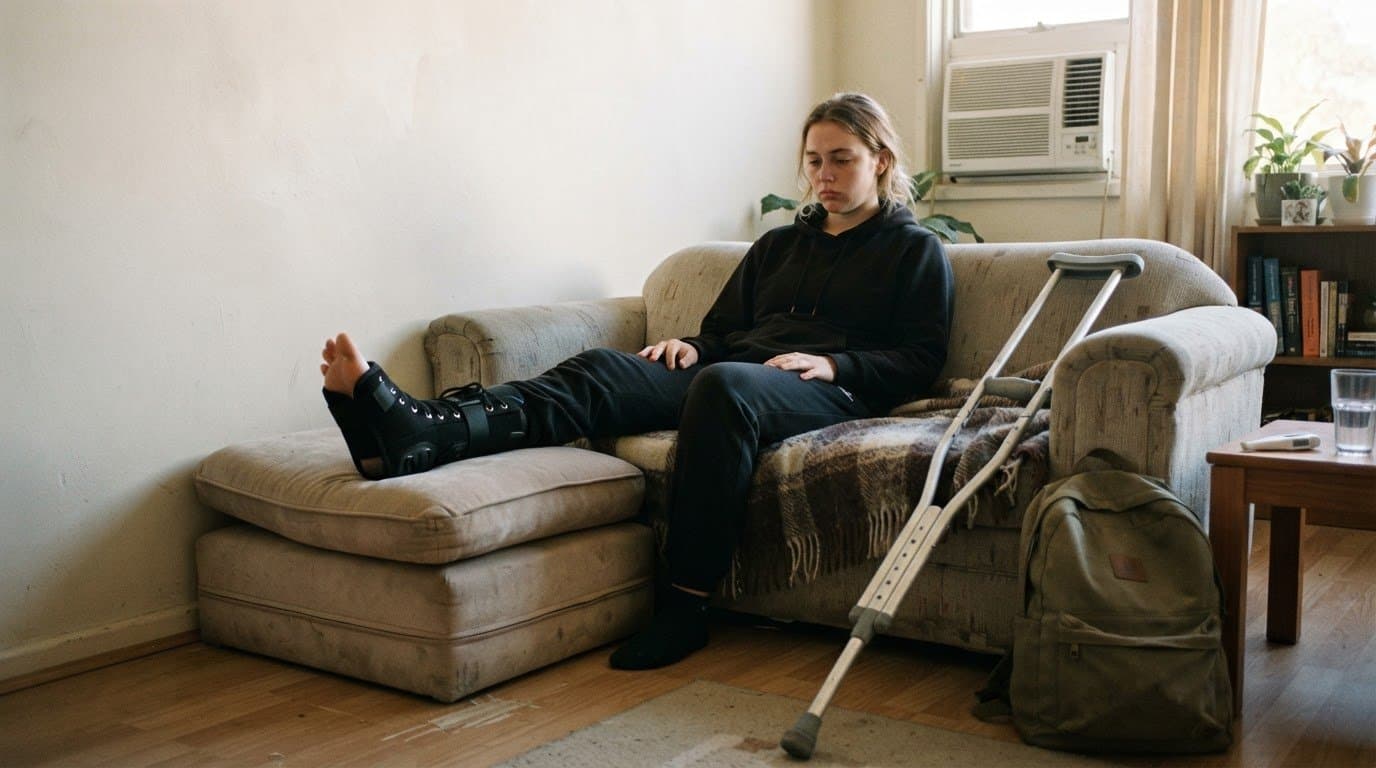
To get a medical certificate for university special consideration, arrange a consultation with a doctor who can assess your health and the dates it affected your studies. A certificate may be issued after a real-time phone or video consultation, but each university sets its own evidence rules. It supports your application; it does not decide whether you’re eligible.
If you become unwell before an assessment, it can be hard to know whether an online certificate will meet your university’s requirements. Acceptance depends on the assessment, the evidence your university accepts and whether it requires its own form to be completed by a doctor.
This guide explains how telehealth certificates work, when a doctor can complete university paperwork, and how medical evidence relates to extensions, missed classes and special consideration eligibility. Timing matters too. For example, UNSW requires a real-time phone or video consultation for certain applications involving a period longer than three days, a final exam or a timed assessment.
Key Takeaways
- Find your university’s application deadline first; time limits differ by institution and assessment type.
- Check whether your university requires a doctor to complete its form or accepts a medical certificate as supporting evidence.
- Online certificates may need to follow a real-time phone or video consultation, and university rules can vary.
- Distinguish a short assignment extension from special consideration, as their application steps and evidence requirements may differ.
- Include clear information about when you were affected and how your health disrupted the assessment.
Can the GP fill in my university's special consideration form?
Yes. A doctor can complete a university form if it asks a practitioner to assess your health and its impact. Australian universities set their own evidence rules, deadlines and application processes, so identify the requirements before booking a consultation.
A medical certificate must come from a practitioner who meets your university’s requirements. For example, UNSW requires a practitioner registered with the Australian Health Practitioner Regulation Agency (AHPRA); other universities set their own rules.
-
Check application deadlines and requirements
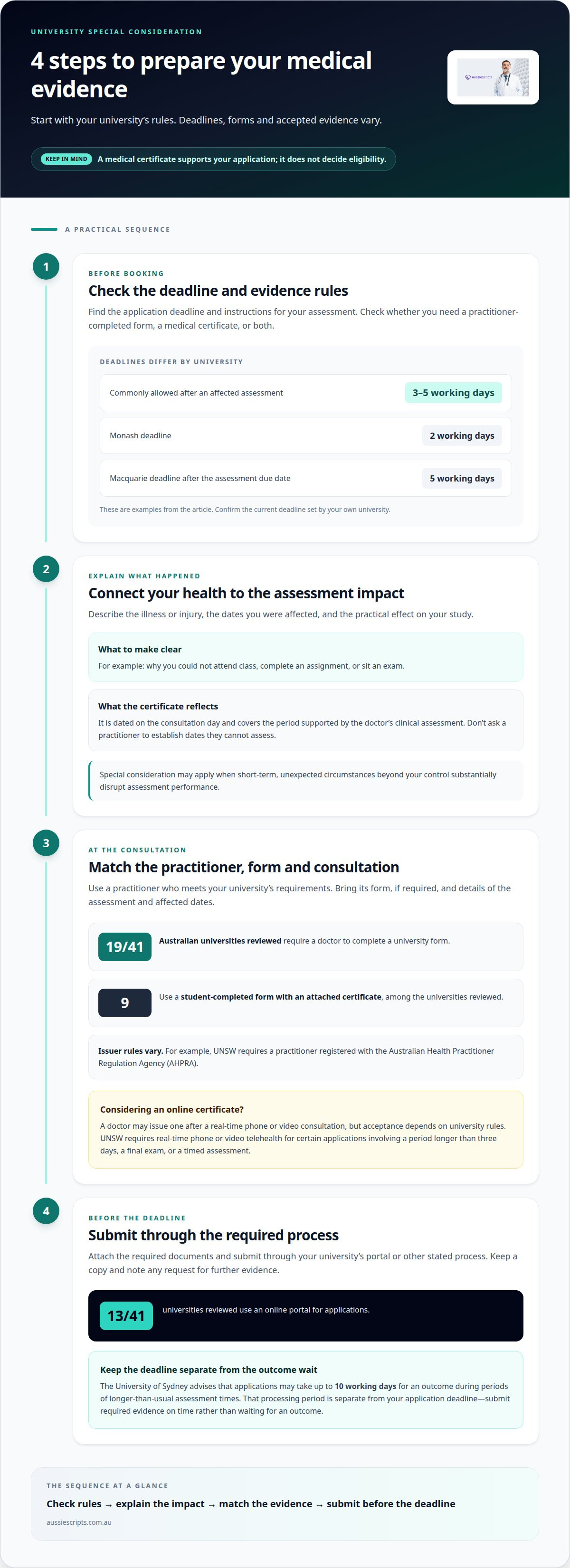
Find your university’s deadline and evidence instructions before preparing an application. Australian universities commonly allow 3 to 5 working days after an affected assessment, but the exact period varies: Monash’s deadline is 2 working days, while Macquarie’s is five working days after the assessment due date. Check whether you need a practitioner-completed form, a certificate, or both. Applications may go through an online portal; 13 of 41 universities reviewed use one.
-
Confirm illness or injury grounds
Describe the illness or injury and the dates it affected your studies. Special consideration may apply when short-term, unexpected circumstances beyond your control substantially disrupt your assessment performance. Explain the practical impact, such as being unable to attend class, complete an assignment or sit an exam. A certificate is dated on the consultation day and covers the period supported by the doctor’s clinical assessment. Don’t ask the practitioner to establish dates they cannot assess.
-
Identify an accepted certificate issuer
Ask your GP to complete the university’s form if its instructions require a practitioner’s assessment. Of 41 Australian universities reviewed, 19 require a doctor to complete a university form; nine use a student-completed form with an attached certificate. Forms commonly request the consultation date and affected period. Provide the form during the consultation, along with relevant assessment details, so the practitioner can document how your health affected attendance or academic work.
-
Allow time for assessment
Submit the application through the required portal or process before its deadline, with the supporting documents attached. Keep a copy of the submission and note any request for further evidence. The University of Sydney advises that applications may take up to 10 working days for an outcome during periods of longer-than-usual assessment times. That processing period is separate from your application deadline, so don’t wait for an outcome before submitting required evidence.
Can I get a medical certificate for uni online?
Yes, a doctor may issue a medical certificate after a real-time phone or video consultation. University rules determine whether they accept it, and some require in-person care. There’s no single Australian fee: the cost depends on the consultation and certificate requirements, with a quote provided after a request.
-
Check university certificate requirements
Read your university’s current rules for online medical documents before booking. UNSW requires a real-time consultation, not a certificate based only on an online questionnaire or form. Since its February 2026 update, UNSW requires phone or video telehealth when the impact period or extension sought exceeds three days, or the application concerns a final exam or timed assessment. Don’t assume another school follows the same conditions.
-
Prepare medical documentation and evidence
Tell the practitioner which assessment was affected, when your symptoms occurred and how they disrupted your studies. A certificate should reflect the consultation and clinical assessment, not simply repeat dates you request. The University of Sydney requires verifiable documents from an Australian practitioner registered with AHPRA. It accepts medical documents relating to in-person consultations, and telehealth certificates only when an in-person consultation was impractical.
- Check how the University of Sydney treats existing care relationships. It does not accept online certificates without a face-to-face consultation or an existing doctor-patient relationship. Its rules also say medical documents must verify information provided by a student’s regular overseas practitioner. These conditions make the consultation method and the practitioner’s ability to support the evidence relevant to acceptance.
- Consider Fit to Sit requirements before continuing an exam. Under UNSW’s Fit to Sit rule, a student is ineligible for special consideration if they continue a timed assessment beyond 80% of its scheduled time. UNSW College students cannot apply after sitting an exam or timed assessment. If illness begins during an assessment, the action you take at that point can affect whether your application proceeds.
- Use genuine, unaltered medical evidence. Australian universities may verify a certificate with the practice that issued it, and submitting falsified documents is treated as academic misconduct. Altering dates or details can undermine your application and trigger an academic misconduct process. Submit the original document through the required university process, with the relevant assessment information and dates.
For a certificate following a clinical assessment, you can arrange an online medical certificate consultation.
Assignment extensions and missed classes
Distinguish a short extension from special consideration before choosing an application process. Australian universities may offer simpler options for routine deadline changes, while illness affecting an assessment or class may require supporting evidence.
- Check whether a short extension applies. UNSW students don’t need supporting documentation to apply for a short extension. At the University of Sydney, students with a problem submitting non-exam work may be able to get a simple extension of up to 5 calendar days. From Session 1 2026, some Macquarie University assessments may qualify for an extension of up to 3 calendar days without a reason or supporting evidence. These are university-specific options, not a single Australian rule.
- Use the correct process for illness-related disruption. If illness prevents you from completing an assessment or attending class, read your university’s special consideration requirements. An extension and a special consideration application are different processes, and a medical certificate does not automatically change an assessment deadline. Submit the application and supporting documents your university requires. For a missed class, explain how the illness affected your attendance and include the relevant dates.
- Record the assessment details and deadline. Identify the affected assignment, exam or class, then follow the university’s instructions for that assessment type. The University of Newcastle’s Form A extension application is due by 11 pm on the assessment due date. A student dealing with a missed class should use the institution’s designated process rather than assume an assignment extension covers attendance. Keep your submission record so you can verify which application you lodged and when.
- Keep working where university guidance says to. UNSW College advises students with an assessment due on a set date to keep working and submit it while awaiting a special consideration outcome, rather than waiting for extension approval. Macquarie University also advises students to continue working and complete a finalised assessment as soon as they’re fit to do so. If illness makes this impractical, explain the impact in your application and provide the required supporting evidence.
For a missed class or affected assessment, distinguish the date of the event from the date you apply. This helps explain the disruption clearly and match your documents to the university’s process. A doctor’s certificate can support an application when medical evidence is required, but the university assesses the request under its own rules.
Eligibility for special consideration
Eligibility depends on your university’s rules, your circumstances and their effect on assessment. Use these steps to explain your situation and submit a complete special consideration application.
- Match your circumstances to the university’s eligibility criteria. UNSW considers short-term, unexpected circumstances beyond a student’s control that substantially disrupt assessment performance. Its criteria require circumstances to affect students during a critical study period for 3 consecutive days, or to meet an alternative assessment-related criterion. Macquarie University describes special consideration as support for short-term disruptions or exacerbations. Explain what happened and how it affected the specific assessment, rather than relying on a diagnosis alone.
- Connect the affected period to your assessment. Record the dates your illness or injury affected your studies, along with the due date, exam time or missed class. For a timed assessment, explain whether the circumstances arose before or during the exam. UNSW College students cannot apply after sitting an exam or timed assessment. Its guidance also says students who attend an event without informing the College within the first two weeks of term will not have that reason accepted.
- Complete the declaration with a clear timeline. The University of Sydney student declaration should describe the illness, injury, misadventure or special circumstances, and how long they lasted. Supporting documents should explain what happened, its impact on academic performance and the affected dates. Make sure the declaration matches the dates in your medical evidence. For example, if illness disrupted your preparation before an exam and your attendance on exam day, describe both impacts and when they occurred.
- Check what outcome you’re seeking and when to apply. Special consideration may lead to an adjustment permitted by your university’s rules; it doesn’t automatically remove assessment requirements. The process permits re-weighting only for assessments worth up to 25 per cent, provided learning outcomes and academic standards aren’t affected. Submit your application within your university’s deadline, which may be measured in working days. If you apply late, explain why you couldn’t apply earlier and provide supporting documents showing the impact.
- Keep your evidence consistent and specific to the assessment. Before submitting, match the circumstances, dates and affected work across your declaration and supporting documents. A certificate that records an illness without explaining its academic impact may not address every requirement. For a missed class, describe the effect on attendance or required participation. For an assignment, state which work was affected and how the circumstances interfered with completion.
Telehealth medical certificates
A telehealth consultation can provide medical evidence without an in-person appointment, but university acceptance rules differ. If you’re working out how to get a medical certificate for university special consideration, first match the consultation method and certificate details to your university’s requirements.
- Choose a real-time consultation when required. UNSW doesn’t accept certificates based only on an online questionnaire or form. Since its February 2026 update, it requires a real-time phone or video telehealth consultation when the impact period or extension sought is longer than three days, or the application concerns a final exam or timed assessment. A document generated without that clinical discussion won’t meet this requirement.
- Check how your university treats telehealth evidence. The University of Sydney accepts telehealth medical certificates only when an in-person consultation was impractical. Its requirements also say medical documents must relate to in-person consultations. For students relying on a regular overseas practitioner, the university requires Australian medical documents to verify the information provided. These conditions mean an online certificate is not automatically accepted for every academic application.
- Confirm the practitioner and evidence details. UNSW requires a medical certificate for special consideration to be issued by a practitioner registered with AHPRA. For UNSW College, documentation must be local or obtained through a telehealth consultation with an AHPRA-registered provider. Explain the affected assessment, relevant dates and impact during the appointment. The practitioner’s assessment supports the period stated on the certificate; it is not automatic proof of every date requested.
- Apply by the deadline if an appointment is unavailable. Submit your special consideration application within your university’s deadline, using the supporting evidence available and explaining your circumstances. If you apply late to UNSW, exceptional circumstances must explain why you could not apply on time. Late applications are accepted only before subject results are released, with documents confirming the circumstances’ impact and why timely submission was not possible. An appointment delay alone does not mean a late application will be accepted.
- Keep the certificate and application consistent. Match the assessment, affected period and impact described in your application to the information discussed during the telehealth consultation. If your university provides a form, include it in the consultation so the practitioner can address its fields. If you’re considering how to get a medical certificate for university special consideration online, you can arrange a medical certificate online consultation and provide the relevant assessment details.
Aussie Scripts: Medical Certificate
Aussie Scripts offers a Medical Certificate following a virtual consultation with an Australian-registered doctor. If illness has affected your studies, this offers a practical way to seek a clinical assessment and supporting documentation for your university application.
Have your university form and relevant assessment details ready for the consultation. The doctor assesses your circumstances and whether a certificate is clinically appropriate. Your university’s evidence rules still apply, so a certificate does not determine your eligibility or guarantee a particular outcome.
If you need medical documentation for special consideration, book a Medical Certificate assessment with Aussie Scripts.
Take the next step with a clear plan
Planning how to get a medical certificate for university special consideration starts with a practical step: arrange a clinical assessment and prepare the information your university needs. Keep the focus on your health, the affected study and the documentation your application requires. Clear, accurate details help the doctor understand your circumstances and support a consistent application.
If you’re ready to discuss a medical certificate, contact Aussie Scripts to take the next step. You can explain what has affected your studies and seek an assessment through the available telehealth process. Your university remains responsible for assessing its application requirements, while a practitioner assesses whether medical documentation is appropriate. Taking action promptly can help you move forward with your academic arrangements. You’ve identified what needs attention; now you can address it with a clear plan.
Frequently Asked Questions
Can I get a certificate for anxiety about an exam?
A doctor can assess anxiety symptoms and their effect on your ability to study or sit an exam. Explain when the symptoms occurred and what they prevented you from doing, such as attending an exam or preparing for it. A certificate reflects the practitioner’s clinical assessment; worry about an exam alone does not establish medical impact. Your university separately decides whether the evidence meets its special consideration criteria.
What dates can the certificate cover?
A medical certificate is dated on the day of the doctor’s consultation and covers the period supported by the clinical assessment. During the appointment, describe when your symptoms began, when they affected your studies, and the relevant exam or due date. The University of Melbourne’s health professional report covers a maximum of six weeks. A certificate should not imply that a practitioner assessed you on a date when no consultation occurred.
What evidence does an Australian university require for special consideration on medical grounds?
Requirements vary, so prepare the documents listed in your university’s application instructions. Evidence may need to describe the circumstances, affected dates and academic impact. For example, saying you were unwell may not explain why you missed an exam or could not submit an assignment. The University of Sydney requires supporting documents to detail what happened, its effect on academic performance and the dates affected.
How do I apply for special consideration at an Australian university?
Use your university’s designated application process and submit the required supporting documents with it. Describe the circumstance, identify the affected assessment and explain its impact. Some universities use an online portal; a review of 41 Australian universities found that 13 handled evidence through one. Keep a copy of your completed application and attachments, then monitor the university’s nominated channel for requests or an outcome.
What are the deadlines for submitting a special consideration application and medical certificate?
Deadlines depend on the university and assessment. Monash University sets a deadline of 2 working days after the assessment due date or exam. The University of Western Australia allows 3 calendar days, while UNE allows 5 working days after a final exam. Submit the application and required evidence within your institution’s stated period, not a deadline used elsewhere.
What details must a medical certificate include for university special consideration?
Use your university’s form or evidence checklist to identify the required details. Practitioner-completed forms commonly request the consultation date and the period you were affected; 18 of the 19 reviewed forms asked for both. Those same 18 forms asked for a stamp. Give the practitioner the relevant assessment date and explain the impact you need documented, so the certificate addresses the form’s fields accurately.
Can telehealth doctors issue medical certificates for university special consideration in Australia?
Yes, a doctor may issue a certificate after telehealth, but acceptance depends on your university’s rules and the consultation method. UNSW requires a real-time phone or video consultation in specified circumstances, including final exams and periods longer than three days. The University of Sydney accepts telehealth certificates only when an in-person consultation was impractical. Check the requirements for your assessment before relying on online evidence.
Can a university reject a medical certificate or require its own form?
Yes. A university may require its own practitioner-completed form or evidence that meets specific rules. In a review of 41 Australian universities, 19 required a doctor to complete a university form, while nine used a student-completed form with an attached certificate. A document may not meet the application requirements if it lacks requested details or uses an unaccepted consultation method, even when issued by a doctor.
Disclaimer
The information provided by AussieScripts is for general informational purposes only and does not constitute medical advice, diagnosis, or treatment. For advice tailored to your specific symptoms or health concerns, please consult one of our doctors or your regular GP.
