How to Get a Nicotine Vape Prescription in Australia
Learn how to get a prescription for nicotine vape Australia 2026, who may qualify, what telehealth involves and how pharmacy and state rules affect access.

A nicotine vape prescription isn’t simply an online form. In Australia, this pathway is generally intended for people who smoke and have not been able to quit with first-line treatments such as nicotine replacement therapy, varenicline or bupropion. A medical practitioner or nurse practitioner assesses whether it is appropriate, and state and territory rules can affect access.
If you’re working out how to get a prescription for a nicotine vape in Australia in 2026, the key is a clinical assessment, not just submitting a request. A telehealth consultation may let you discuss your smoking history, previous quit attempts and treatment options with a doctor remotely. This guide explains who may qualify, what an online assessment involves and how prescriptions fit alongside the pharmacy pathway, including where local rules differ.
Key Takeaways
- Nicotine vaping products are generally considered a second-line option when first-line quit-smoking treatments haven’t worked for you.
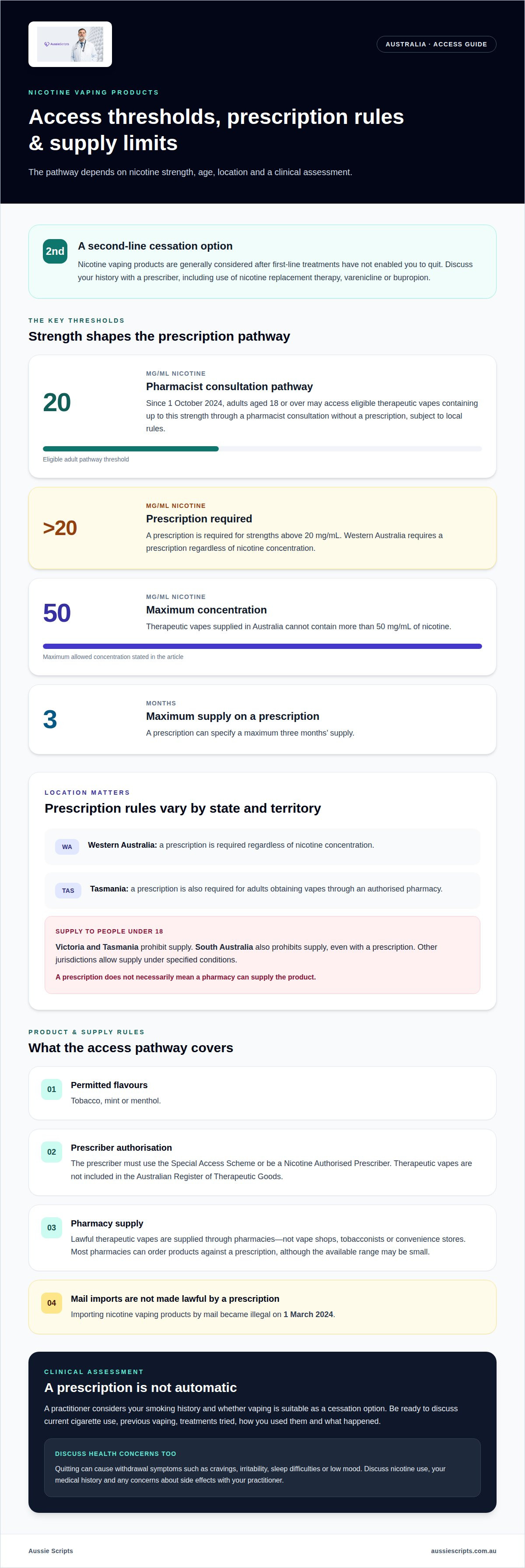
- For eligible adults, a pharmacist may supply therapeutic vapes containing up to 20 mg per mL after a consultation, but state and territory rules can differ.
- In Western Australia, a prescription is required regardless of nicotine concentration; Tasmania also has a prescription requirement for adults obtaining vapes through an authorised pharmacy.
- An online consultation can help you discuss your smoking history, previous quit attempts and treatment options with a doctor.
- Aussie Scripts’ Standard Script offers a digital healthcare pathway; the doctor assesses your circumstances and whether a prescription is appropriate.
Who can get a nicotine vaping prescription?
First, check whether a prescription is required for your age, the product’s nicotine strength and your state or territory. A prescriber will also consider your smoking history and whether vaping is suitable as a smoking cessation option.
Review prescription requirements
- Discuss your quit-smoking history with a prescriber. Nicotine vaping products are a second-line option after treatments such as nicotine replacement therapy, varenicline or bupropion haven’t enabled you to quit. Explain which methods you’ve tried, how you used them and what happened. Include your current cigarette use and previous vaping, so the assessment reflects your circumstances.
- Check whether your circumstances require a prescription. Since 1 October 2024, adults aged 18 or over may access eligible therapeutic vapes containing up to 20 mg per mL through a pharmacist consultation without a prescription. A prescription is required for strengths above 20 mg per mL. Western Australia requires a prescription regardless of nicotine concentration; Tasmania also requires one for adults obtaining vapes through an authorised pharmacy.
- Ask about the rules if you’re under 18. State and territory restrictions differ, and a prescription doesn’t necessarily mean a pharmacy can supply the product. Victoria and Tasmania prohibit supply to people under 18; South Australia also prohibits supply, even with a prescription. Other jurisdictions allow supply under specified conditions, so age and location affect eligibility.
Check product and access requirements
- Discuss the product, strength and quantity during the assessment. Therapeutic vapes supplied in Australia cannot contain more than 50 mg/mL of nicotine, and permitted flavours are tobacco, mint or menthol. A prescription can specify a maximum three months’ supply. The prescriber must use the Special Access Scheme or be a Nicotine Authorised Prescriber, because therapeutic vapes aren’t included in the Australian Register of Therapeutic Goods.
- Use a pharmacy for supply, not an ordinary online retailer. Lawful therapeutic vapes are supplied through pharmacies, not vape shops, tobacconists or convenience stores. Most pharmacies can order products against a prescription, although the available range may be small. A prescription doesn’t make it lawful to import nicotine vaping products by mail, which became illegal on 1 March 2024.
- Plan separately for travel and discuss health concerns. Travellers entering Australia may bring medicines and medical devices for personal consumption under a travellers exemption, using a prescription from an Australian or foreign doctor. Before treatment, discuss nicotine use, your medical history and any concerns about side effects. Quitting can cause withdrawal symptoms such as cravings, irritability, sleep difficulties or low mood.
In short, access depends on the product’s strength, your age and where you live. For eligible adults, the pharmacist pathway covers certain lower-strength products. Other circumstances may require a prescription and clinical assessment.
Can I request a quit smoking prescription online?
Yes. A telehealth consultation can assess your smoking history and discuss suitable smoking cessation treatments. Before the appointment, prepare a clear account of previous quit attempts.
Consider first-line treatments
- List the treatments you’ve already tried. First-line smoking cessation options include nicotine replacement therapy, varenicline and bupropion. Note the product or medicine, how you used it and whether it helped you manage cravings. This gives the doctor useful context when discussing next steps. Nicotine vaping is generally considered a second-line option when first-line treatments haven’t enabled you to quit.
- Discuss alternatives and preferences. Ask how medication options compare with behavioural strategies for your situation. You could identify situations linked to smoking, such as a work break or driving, then plan a different response. Include concerns about side effects, previous medicine experiences and any other treatments you’re using. These details help the doctor assess treatment suitability rather than treating a request for a script as an automatic approval.
Access smoking cessation support
- Use telehealth to discuss your quit plan. During an online appointment, explain how often you smoke, when cravings occur and what has made earlier attempts difficult. Be direct about your goal, whether that’s quitting cigarettes or reviewing cessation options. A doctor can use this information alongside your medical history when assessing whether a prescription is appropriate.
- Add practical support between appointments. Write down smoking triggers and choose a specific alternative action for each one, such as taking a short walk during a usual cigarette break. Tell a trusted person what support would help. If withdrawal brings cravings, irritability, sleep difficulties or low mood, include those experiences in your treatment discussion.
- Contact an Australian support service if you need ongoing guidance. Quitline can be reached on 137 848. You can use the call to discuss smoking cessation support and practical strategies alongside medical care. If you want to review treatment options by telehealth, an online smoking cessation consultation provides a setting to discuss your quit history and next steps.
Before seeking a quit-smoking prescription online, gather a list of your current medicines and a brief record of past quit attempts. This helps the clinician focus on your smoking pattern, treatment preferences and the support that may suit your plan.
Doctor assessment of treatment eligibility
Before your consultation, prepare a clear account of your cigarette use, previous quit attempts and treatments. The clinician uses this information to assess whether nicotine vaping products are appropriate and what guidance you may need.
Arrange a clinician assessment
- Choose a medical practitioner or nurse practitioner for the assessment. Describe your smoking pattern, previous vaping and the approaches you’ve tried to quit. For example, explain whether nicotine replacement therapy, varenicline or bupropion helped, caused problems or proved difficult to use. Specific details help the clinician understand why you’re seeking another treatment option.
- Explain your goal and current circumstances. Say whether you’re aiming to stop cigarettes, reduce smoking or manage cravings during a quit attempt. Include medicines you currently take and any health concerns you want considered. The assessment is a clinical discussion, not an automatic route to a script or a particular device.
- Ask how prescribing requirements apply. Doctors prescribing nicotine vaping products need to use the Special Access Scheme, SAS B or C, or be a Nicotine Authorised Prescriber. The prescriber also considers the product and proposed treatment. A prescription doesn’t oblige a pharmacy to supply a vape, because pharmacists assess whether supply is appropriate.
Discuss eligibility with a GP
- Ask your GP to review first-line treatment and counselling options. The Royal Australian College of General Practitioners recommends considering nicotine vaping products as a second-line smoking cessation therapy. Discuss whether nicotine replacement, varenicline or bupropion has been suitable for you before focusing on vaping. A GP can also help you consider behavioural support for situations that trigger cigarette cravings.
- Talk through how you would use the treatment. Explain whether you’ve used vaping products before, what you found manageable and what raised concerns. Ask how the proposed nicotine strength and product fit your quit plan. This helps make the consultation practical, especially if you’re comparing vaping with nicotine replacement or another cessation approach.
- Clarify the next step before ending the appointment. Ask whether the clinician’s assessment supports a prescription, whether further discussion is needed, and what the prescription would specify. If you take it to a pharmacy, the pharmacist makes a separate decision about supply. A useful example is confirming the prescribed product and nicotine concentration before attempting a purchase.
Raise any side effects or health concerns that could affect your treatment options. Nicotine withdrawal may include cravings, irritability, sleep difficulties, trouble concentrating, anxiety or low mood. Describe any symptoms you experienced during previous quit attempts.
How the telehealth consultation and prescription process works
Prepare your details before booking so the clinician can focus on your smoking cessation needs. A telehealth consultation assesses your circumstances, but it does not guarantee a prescription.
Review the telehealth consultation process
- Gather details for the consultation. Write down your current tobacco use, previous quit attempts and treatments you’ve tried. Include medicines you take and any side effects or concerns you want to discuss. This gives the clinician a clearer picture than a brief request for a script alone.
- Explain your reason for seeking treatment. Describe whether you’re quitting smoking, trying to manage cravings or comparing cessation options. Be specific about what has and hasn’t worked, such as nicotine replacement or a previous behavioural strategy. Clear answers help the clinician assess whether nicotine vaping is suitable to discuss.
- Use the appointment to ask practical questions. Discuss the proposed treatment, the product and nicotine strength, and what the prescription would specify if one is appropriate. The prescriber must follow the relevant prescribing pathway for therapeutic vaping products. A consultation is an assessment, not a promise that a prescription will be issued.
- Separate the prescription from pharmacy supply. If a prescription is issued, take it to a pharmacy for assessment and dispensing. The pharmacist decides whether supply is appropriate and explains what products are available. A prescription doesn’t itself mean a particular vape will be supplied, so discuss product details before relying on a specific option.
Allow for consultation turnaround time
- Plan around appointment availability and clinical review. Turnaround depends on when a consultation can be arranged and whether the clinician has the information needed to assess your case. Complete the intake accurately and keep your phone or online appointment details accessible. Missing treatment history or unanswered questions can mean the clinician needs more information.
- Ask about fees before proceeding. Consultation fees depend on the case and are provided after a quote request; factors include the consultation and assessment required. Review the fee information before confirming an appointment, and distinguish the consultation charge from any separate pharmacy purchase. No medicine or vaping product is included automatically in a telehealth consultation.
- Keep time for the next step. After the appointment, allow for the prescription to be prepared if clinically appropriate, then contact a pharmacy about dispensing. Supply depends on the pharmacist’s assessment and the product available through the pharmacy. Avoid planning a quit date around an assumed script or supply time; make a separate cessation plan with the clinician.
Before the consultation ends, confirm the clinician’s recommendation, the next steps and any questions that remain. This gives you a clearer plan for quitting, follow-up and any pharmacy discussion.
Online consultations with Australian-registered doctors
Telehealth lets you discuss smoking cessation remotely with an Australian-registered doctor. Prepare for a clinical conversation, not an automatic prescription.
- Confirm the consultation is with an Australian-registered doctor. Before the appointment, check who will assess your request and how the consultation will take place. A digital form can collect background information, but your treatment discussion should address your circumstances. Use the appointment to explain your goal, current smoking and previous quit attempts.
- Prepare a concise health and treatment summary. List medicines you take, nicotine replacement you’ve tried and any concerns about side effects. Include prior vaping or experience with a device, if relevant. For example, note whether cravings were strongest after meals or during work breaks. These specifics help the doctor understand your patient history and priorities.
- Use the appointment to compare suitable options. Ask how nicotine vaping products fit alongside other smoking cessation approaches. Discuss whether an alternative treatment may better match your health history, preferences or previous experience. The doctor can explain relevant benefits and risks, then assess whether a prescription is clinically appropriate. The online format doesn’t remove the need for that assessment.
- Ask how the prescription would work if one is appropriate. Clarify what product and nicotine strength it covers, and what steps follow the consultation. A prescription is not the same as pharmacy supply. The pharmacist separately assesses whether supply is appropriate and explains what products are available through the pharmacy.
- Make comfort part of the discussion. Tell the doctor if you feel uneasy discussing smoking, nicotine use or a previous unsuccessful quit attempt. You can bring written notes and refer to them during the appointment. A practical example is keeping your questions about treatment, side effects and follow-up in one list, so you don’t forget them.
- Leave with a clear plan. Before ending the consultation, summarise the agreed next step: continue another treatment, consider a prescription pathway or seek further clinical guidance. Ask what to do if cravings or withdrawal symptoms affect your quitting plan. If online medical support suits your needs, discuss smoking cessation options online.
Telehealth offers convenient access to a clinical discussion, while the doctor still assesses your history and treatment needs. Bring specific questions about nicotine vaping products, alternatives and pharmacy supply to make the appointment more useful.
Aussie Scripts: Standard Script
Aussie Scripts’ Standard Script is a digital option for people seeking a routine prescription assessment. If you’re considering smoking cessation treatment, explain your quit-smoking history and ask whether a prescription is clinically appropriate. A nicotine vaping prescription is not automatic: the doctor’s assessment and applicable Australian requirements guide the outcome.
Prepare a concise summary of treatments you’ve tried, your current smoking pattern and any health concerns. This helps the doctor assess your request and discuss suitable next steps. Aussie Scripts also offers Express Script, Medical Certificate and Specialist Referral services for other digital healthcare needs.
Visit aussiescripts.com.au to learn more about the Standard Script service.
Make your next step a clinical one
If you're working out how to get a prescription for a nicotine vape in Australia in 2026, treat the consultation as a chance to make a realistic quit plan, not simply obtain a script. Think about the change you want to make, the support that would help you follow through, and what you’ll do if cravings disrupt your routine. A clear plan can keep the focus on smoking cessation and your health, whether vaping is considered or another option suits better.
A prescription is a clinical decision based on your circumstances and applicable Australian requirements. To discuss your options through telehealth, Aussie Scripts offers Standard Script and Express Script services, as well as Medical Certificates. Choose the service that fits your digital healthcare needs, then prepare details about your health and previous treatments. Writing down your questions can help you make the most of the consultation.
Contact Aussie Scripts to discuss your options. Taking the next step with your questions prepared can help you move towards a more structured quit attempt.
Frequently Asked Questions
Can I get a vape prescription if I have never smoked?
Nicotine vaping prescriptions are intended as a smoking cessation option, not a starting point for people who do not smoke. If you’ve never smoked, explain your circumstances honestly during a medical assessment rather than seeking a nicotine script for general use. A doctor considers the purpose of treatment and your health history; a request alone does not establish that nicotine vaping products are suitable.
Is vaping an effective quitting aid?
Vaping may help some smokers quit, but it isn’t a guaranteed outcome or a first-line treatment. One comparison reports that, at six months, six out of 100 smokers using nicotine replacement therapy had quit, compared with nine or 10 out of 100 using a vaping device. Those figures describe a group comparison, not an individual prediction. Discuss cessation options with a clinician.
Am I eligible for a prescription?
You may be considered if you smoke and have not been able to quit with first-line treatments such as nicotine replacement therapy, varenicline or bupropion. A clinician assesses your smoking history, previous treatment attempts, medicines and health concerns. They also consider whether nicotine vaping is clinically appropriate and whether the relevant prescribing pathway applies. Requesting a particular product or script does not establish eligibility.
Can someone under 18 legally obtain a therapeutic vape?
Access depends on the state or territory, and a prescription doesn’t permit supply everywhere. Victoria, South Australia and Tasmania prohibit supply to people under 18. In Tasmania, a practitioner may prescribe, but pharmacists can’t supply the product to someone under 18. In the ACT, NSW, NT, Queensland and Western Australia, prescribing and supply may be permitted under applicable conditions.
How do I get started?
If you’re exploring how to get a prescription for a nicotine vape in Australia in 2026, start by writing down your cigarette use, previous quit attempts and treatments you’ve tried. Then arrange an assessment with a medical practitioner or nurse practitioner to discuss your health and cessation options. Bring a current medicines list and note any concerns, such as withdrawal symptoms or past side effects.
What are Australia's 2026 rules for accessing nicotine vaping products by prescription?
In 2026, eligible adults may access certain therapeutic vapes containing up to 20 mg per mL through a pharmacist consultation without a prescription. A prescription is required for strengths above that level, and Western Australia requires one regardless of strength. Therapeutic vapes supplied in Australia cannot exceed 50 mg/mL. Pharmacy supply is limited to tobacco, mint or menthol flavours.
Can adults get nicotine vape prescriptions from any Australian doctor in 2026?
No. A doctor prescribing nicotine vaping products must use the Special Access Scheme, SAS B or C, or be a Nicotine Authorised Prescriber. Nurse practitioners may also prescribe where applicable requirements allow. The clinician’s prescribing authority and your state or territory’s rules matter. A regular doctor’s consultation alone does not mean they can issue every type of nicotine vape prescription.
How do you get a prescription for a nicotine vape in Australia, step by step?
To understand how to get a prescription for a nicotine vape in Australia in 2026, first record your smoking history and previous cessation treatments. Next, book an assessment with a doctor or nurse practitioner and discuss your health, quit attempts and treatment options. If a prescription is clinically appropriate, the authorised prescriber specifies the product and strength. Take it to a pharmacy, where the pharmacist assesses whether supply is appropriate.
Disclaimer
The information provided by AussieScripts is for general informational purposes only and does not constitute medical advice, diagnosis, or treatment. For advice tailored to your specific symptoms or health concerns, please consult one of our doctors or your regular GP.