How to Get a Retin-A Script: Everything You Need to Know
Learn how to get a script for Retin-A cream in Australia, what to discuss with a doctor, who may be suitable, and get practical tretinoin safety tips.

To learn how to get a script for Retin-A cream in Australia, arrange a consultation with an Australian doctor: topical tretinoin is a Schedule 4 prescription-only medicine. The doctor assesses whether it may suit your skin concerns and health circumstances. After a telehealth consultation, an approved prescription may be sent by SMS if clinically appropriate. A prescription isn’t automatic, and tretinoin should be used under medical supervision.
Tretinoin may be considered for acne, pigmentation and signs of sun-related ageing, but suitability depends on your circumstances and a clinician’s assessment. This guide explains how to request a prescription, what skin concerns tretinoin may address, how it compares with other retinoids and practical precautions for using it. You’ll also learn what to discuss during a consultation, including irritation, sun protection and pregnancy considerations. Prescription access depends on clinical suitability, not simply on requesting a particular product.
Key Takeaways
- Discuss your skin concern, treatment history and current medicines so the clinician can assess whether tretinoin may be appropriate.
- Tretinoin may be considered for acne, pigmentation and signs of sun-related ageing; the right approach depends on the concern being treated.
- Learn how gradual introduction and daily SPF 50+ can form part of careful tretinoin use.
- Raise pregnancy or plans to become pregnant during the consultation, as Australian ReTrieve product information identifies tretinoin as pregnancy category D.
- Aussie Scripts offers Standard Script and Express Script for digital prescription requests, with any prescription subject to clinical assessment.
Table of Contents
How Can a Doctor Help You Get a Tretinoin Prescription in Australia?
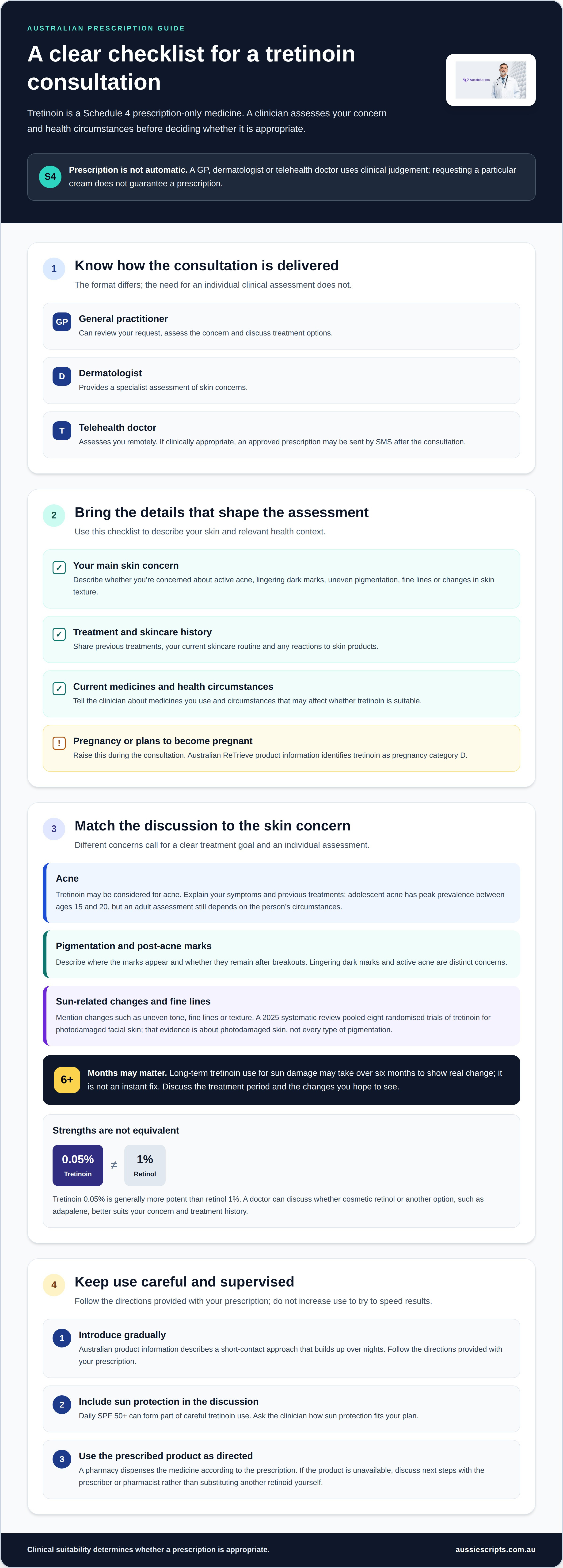
In Australia, topical tretinoin is a Schedule 4 prescription-only medicine. A GP, dermatologist or telehealth doctor assesses your skin concern and health information before deciding whether a prescription is clinically appropriate.
GP or Dermatologist Consultation
A GP or dermatologist can discuss tretinoin and assess the concern you want treated, such as acne or pigmentation. They may ask about your skincare routine, previous treatments, current medicines and any reactions to skin products. A dermatologist offers a specialist assessment; a GP can provide an initial review. Neither can guarantee a prescription just because you request a specific cream.
Getting a Tretinoin Prescription Through a Telehealth Consultation
A telehealth doctor reviews your request remotely and considers information such as your symptoms, treatment history and relevant health circumstances. If clinically appropriate, an Australian doctor may send an approved prescription by SMS after the consultation. Telehealth can avoid an in-person appointment, but the prescribing decision still depends on the clinical assessment, not the consultation format.
Consultation options differ in how the assessment is delivered, not in the need for clinical judgement. A doctor may recommend another approach if tretinoin does not suit your concern or circumstances.
| Option | Assessment format | Useful distinction |
|---|---|---|
| GP | Consultation with a general practitioner | Can assess the request and discuss treatment options |
| Dermatologist | Specialist skin consultation | Provides specialist assessment of skin concerns |
| Telehealth doctor | Remote consultation | An approved prescription may be sent by SMS if clinically appropriate |
Choose a consultation format that lets you clearly explain your skin concern and treatment history to the doctor.
After a prescription is issued, a pharmacy dispenses the medicine according to its details. The pharmacist can explain the product supplied and clarify the directions on the prescription. If that product is unavailable, discuss the next step with the prescriber or pharmacist rather than substituting another retinoid yourself.
Alternatives include adapalene and cosmetic retinol. A doctor can discuss whether either option better suits your skin concern and treatment history.
A tretinoin prescription does not automatically mean the medicine is PBS-subsidised. Eligibility depends on the PBS listing for the specific product and indication, so ask the dispensing pharmacist about the prescription being filled.
Consultation and cream costs depend on the practitioner, appointment type, prescribed formulation and pharmacy. The consultation and medicine are separate expenses, and the selected product affects the pharmacy cost.
Acne, pigmentation and signs of aging
Tretinoin may be considered for acne, uneven pigmentation and visible signs of sun-related ageing. These concerns have different causes, so start by explaining the skin change you want addressed. Active acne and lingering dark marks, for example, are not the same concern. A clinician can assess which is present and whether tretinoin suits your circumstances.
Acne and post-acne marks
Acne is one reason a clinician may discuss topical tretinoin. Adolescent acne has peak prevalence between 15 and 20 years of age, but an adult consultation still needs to consider the person’s symptoms and treatment history. If dark marks remain after breakouts, describe them separately from active spots. That distinction helps frame the treatment goal rather than treating every change as acne.
Pigmentation and sun-related changes
Pigmentation can appear as uneven areas of skin tone, while sun-related changes may include texture changes and fine lines. A 2025 systematic review pooled eight randomised trials of tretinoin for photodamaged facial skin. This evidence concerns photodamaged skin, not every type of pigmentation. Explain where the marks appear and how they developed, so the clinician can assess whether tretinoin is a suitable option.
Timeframes matter too. Long-term tretinoin use for sun damage may take over six months to show real change. It is not an instant fix for a mark before an event. Discuss the treatment period and the changes you hope to see, then follow the prescribed plan rather than increasing use to accelerate results.
Fine lines and ageing
Ageing concerns can involve fine lines, uneven tone and changes in skin texture. Tretinoin 0.05% is generally more potent than retinol 1%, so those percentages should not be treated as equivalent strengths. DermNet describes rapid collagen loss in the first five years after menopause. Mentioning menopausal changes during assessment can help give context to concerns about skin ageing.
Focus the discussion on your main concern: acne, pigmentation or sun-related signs of ageing. A clinician can weigh your treatment goal against your skin history and explain whether tretinoin is appropriate. If your concern is cosmetic, ask how prescription tretinoin compares with cosmetic retinol. Both the product’s strength and the reason for treatment matter.
Tretinoin use, sun protection and gradual introduction
Starting tretinoin gradually may help manage the adjustment period. Australian product information describes a short-contact approach that builds up over nights. Follow the directions provided with your prescription rather than applying it more often to speed results. Your clinician can explain how the plan relates to your concern and what to do if irritation develops.
Build use gradually
Dryness, flaking and redness may occur during the first six to eight weeks, making it harder to judge how well your skin is tolerating treatment. A gradual introduction gives you a structured way to observe changes while following the prescribed directions. If irritation concerns you, discuss it with the prescriber instead of changing the schedule yourself.
The short-contact approach described in Australian product information begins with brief exposure, then builds up over nights. Follow the exact directions in your product information and from your clinician. Don’t assume another person’s routine applies to your prescription. Strength, formulation and skin response can differ, so use the plan provided for your treatment.
Protect skin from sun exposure
Use SPF 50+ every day while using tretinoin. Daily sun protection is a practical part of treatment, not a step reserved for hot weather. Include it in your routine on days that seem overcast or when you spend time outdoors. If sun exposure is likely, plan protection alongside your prescribed tretinoin use.
Sun protection also matters when tretinoin is being used for sun-related skin changes. Improvement may take 6-12 months, so consistent care is more relevant than expecting an immediate change. Keep using sun protection throughout that period and follow your clinician’s directions. Tretinoin does not replace measures that limit further sun exposure.
Set realistic expectations
Changes from tretinoin develop gradually, and visible results may take time. For sun damage, long-term use may take over six months to show real change. Early dryness or redness during the first six to eight weeks is not a reason to increase or stop treatment without guidance. Ask the prescriber how to assess progress for your concern.
Keep your routine clear while introducing tretinoin. Follow the prescribed schedule, use SPF 50+ daily, and note changes such as persistent redness or flaking. These observations give your clinician concrete information if you need advice. The aim is steady use under professional direction, not faster application. If the routine feels difficult to maintain, discuss the concern before altering it.
Pregnancy warnings
Australian ReTrieve product information identifies tretinoin as pregnancy category D. If you’re pregnant, planning pregnancy or think you could be pregnant, raise this with the prescriber before starting or continuing a tretinoin prescription. The category is a reason to discuss treatment directly with the prescriber, rather than relying on skincare advice for other retinoids. Explain your circumstances clearly during the consultation.
What to discuss with the prescriber
Tell the prescriber whether you’re pregnant, planning pregnancy or concerned about possible pregnancy. Include when you started tretinoin, how often you use it and the product strength shown on the packaging. Also name the reason it was prescribed, such as acne, pigmentation or wrinkles. These details help the prescriber understand your treatment and why you’re using it.
Ask the prescriber for clear directions that account for your pregnancy circumstances. Don’t assume an earlier prescription remains suitable if your circumstances change. If pregnancy becomes a concern during treatment, contact the prescriber promptly for advice about your medicine and next steps. Keep the packaging handy so you can identify the exact tretinoin formulation.
Check the exact product information
Product details matter. Australian ReTrieve information identifies tretinoin as category D, so check the name on your own packaging rather than assuming every cream has identical instructions. If the label, prescription and advice you received seem inconsistent, pause and seek clarification from the prescriber or dispensing pharmacist. Give them the product name and strength.
For a telehealth consultation, include pregnancy-related information in your medical history and raise it directly with the doctor. A written message alone may leave important context unclear. Explain whether you’re currently using tretinoin or considering starting it. The doctor can then assess your request in light of the product details and your circumstances.
A cosmetic goal, such as reducing a wrinkle, doesn’t remove the need to discuss pregnancy before treatment. The reason for using tretinoin and its pregnancy category are separate considerations. Ask how the product information applies to your situation, and make sure you understand the directions before using the cream. If you received the prescription earlier, tell the prescriber about any change in your circumstances before relying on it.
Keep the discussion practical. Tell the clinician the product name, strength, reason for use and whether you’re pregnant or planning pregnancy. A pharmacist can clarify the written directions and product details when dispensing the cream. For example, have the ReTrieve packaging or prescription information ready. Identifying the product clearly helps keep advice specific to the medicine being considered.
What information should I provide during a consultation about tretinoin?
A clear account helps the doctor assess your tretinoin request. Describe your skin concern, treatments you’ve tried, current products and relevant health circumstances. For example, explain whether you’re seeking help for active acne, lingering pigmentation or sun-related changes. Say what you hope treatment will address rather than focusing only on a particular cream.
Describe the concern and treatment history
Explain where the concern appears, when you first noticed it and whether it has changed. For acne, say whether you have active breakouts, marks left after spots or both. List previous prescription and non-prescription treatments, including what you stopped and why. If a product caused redness or flaking, describe the reaction and when it happened.
List products, medicines and relevant circumstances
Give the doctor a complete picture of your current skincare and medicines. Include cleansers, moisturisers, cosmetic retinol and any acne treatments. If you’ve used tretinoin before, provide the product name and strength shown on its packaging. Common prescription strengths include 0.025%, 0.05% and 0.1%; don’t assume a previous strength suits your current concern.
Mention allergies, previous skin reactions and health circumstances that could affect treatment. Say whether you’re pregnant, planning pregnancy or concerned about possible pregnancy. Australian ReTrieve product information identifies tretinoin as pregnancy category D, so this detail matters in the assessment. Include any relevant changes since an earlier prescription instead of relying on an old treatment plan.
Prepare concise, useful details
Before a telehealth or in-person appointment, organise the information into a short list. This can help you explain the issue clearly and avoid overlooking details during the consultation.
- Your main concern, such as acne, pigmentation or fine lines.
- Products and medicines you currently use, including cosmetic retinol.
- Previous treatments, their effects and any irritation you experienced.
- The tretinoin product name and strength, if you have used it before.
- Pregnancy-related information and other relevant health circumstances.
For example, “I used a retinol product and developed redness” is more useful than saying only that skincare didn’t suit you. Concrete details help the doctor consider your treatment history alongside your current concern. They can also help distinguish a product reaction from a change in your skin condition.
Keep the product packaging or a clear photo available if you’re unsure of a name or strength. To discuss your request through an online consultation, start a consultation request and provide the relevant details for clinical assessment.
Aussie Scripts
Aussie Scripts connects patients with Australian-registered doctors for virtual consultations and prescription requests. If you’re considering tretinoin, a doctor can assess your request and relevant health information; any prescription depends on clinical suitability. Standard Script and Express Script let you submit a prescription request, but neither guarantees a particular medicine.
Use the consultation to explain your skin concern, previous treatments, current medicines and any pregnancy-related circumstances. Clear information helps the doctor assess your request and decide on an appropriate next step. If tretinoin isn’t suitable, the consultation can still help clarify your options.
For help with a prescription request, contact Aussie Scripts.
Take the next step with a clear consultation request
If you’re deciding how to get a script for Retin-A cream, focus on a clinician’s assessment rather than a particular product. Explain the skin concern you want addressed and provide relevant treatment and health details. This gives the doctor the context to consider your request and discuss an appropriate path forward.
Aussie Scripts offers Standard Script and Express Script for prescription requests, as well as Medical Certificates. These services support different healthcare needs, while a tretinoin prescription remains subject to clinical assessment. A request starts a consultation; it does not guarantee a specific medicine.
Before submitting your request, prepare a concise account of your concern, current skincare and previous treatments. Include any relevant pregnancy-related circumstances or past reactions so they can be considered. Clear details can help make the consultation more focused.
Contact Aussie Scripts about your options and take the next step when you’re ready.
Frequently Asked Questions
Is Retin-A (tretinoin) cream prescription-only in Australia?
Yes. Topical tretinoin is a Schedule 4 prescription-only medicine in Australia, so a prescription is required before a pharmacy can dispense it. Retin-A is a brand name often used when discussing tretinoin, but the product supplied depends on the prescription. For example, take the exact product name and strength on your prescription to the pharmacy to help avoid confusion between tretinoin and cosmetic retinol.
How can a doctor help me get a prescription for tretinoin cream in Australia?
A doctor can assess your skin concern, treatment history, current medicines and relevant health circumstances, then decide whether tretinoin is appropriate. Be specific: explain whether you’re seeking treatment for active acne or marks left after breakouts. If a doctor considers a prescription clinically appropriate, they can issue one. The consultation is an assessment, not automatic approval for a particular cream.
Can an Australian GP prescribe Retin-A, or do I need a dermatologist?
A GP can assess your request, so you don’t automatically need to see a dermatologist. The GP will consider your skin concern, previous treatments and relevant health information before deciding on a suitable next step. A dermatologist offers specialist assessment for skin concerns that need it. For example, explain whether you’re concerned about ongoing acne, pigmentation or both, so the clinician understands what you want addressed.
Can an Australian telehealth service arrange a consultation about a tretinoin prescription?
Yes. An Australian telehealth consultation can remotely assess a tretinoin request. Aussie Scripts connects patients with Australian-registered doctors for virtual consultations and prescription requests. Explain your concern and provide relevant health information during the assessment. If clinically appropriate, an Australian doctor may send an approved prescription by SMS after the consultation. A telehealth appointment doesn’t guarantee a tretinoin prescription.
Who should not use tretinoin cream, including during pregnancy or breastfeeding?
Pregnancy requires particular care: Australian ReTrieve product information identifies tretinoin as pregnancy category D. If you’re pregnant or planning pregnancy, discuss tretinoin with a clinician before use. If you’re breastfeeding, raise this with the prescriber before starting or continuing treatment so advice can account for your circumstances and the exact product. Share the product name and strength, especially if you’re asking about a cream prescribed earlier.
What are the common side effects and sun-safety precautions when using tretinoin cream?
Dryness, flaking and redness may occur during the first six to eight weeks of tretinoin use. Follow the directions supplied for your prescription, and contact the prescriber if irritation is difficult to manage. Use SPF 50+ every day while using tretinoin. For example, include sun protection in your morning routine rather than using it only on days planned outdoors.
What are the costs of a GP or dermatologist consultation and tretinoin cream in Australia?
Costs depend on the practitioner, appointment type, formulation and pharmacy. The consultation and cream are separate expenses.
Disclaimer
The information provided by AussieScripts is for general informational purposes only and does not constitute medical advice, diagnosis, or treatment. For advice tailored to your specific symptoms or health concerns, please consult one of our doctors or your regular GP.