How to handle social situations when quitting smoking
Learn how to handle social situations when you quit smoking with plans for cravings, supportive conversations and simple ways to enjoy smoke-free gatherings.

A social invitation doesn’t have to become a smoking trigger. Knowing how to handle social situations when you quit smoking starts with a plan: prepare a simple response if someone offers you a cigarette, choose an alternative such as gum or water, and step away briefly if a craving builds.
It’s normal for nicotine withdrawal and familiar social cues to make quitting feel harder at first. Symptoms are usually most intense during the first 3 days, while a craving often lasts only a few minutes. A prepared response can help you get through that moment without having to avoid every gathering.
This guide explains how to manage withdrawal, ask friends and family for practical support, and navigate situations where other people are smoking. You’ll also find activity ideas and simple ways to keep your hands or attention occupied, so you can make social plans while sticking with your decision to quit.
Key Takeaways
- Tell friends and family what kind of support helps, such as not offering cigarettes and avoiding pressure or lectures.
- If alcohol is a trigger, choose a different pub activity or make plans that don’t centre on drinking.
- Reduce exposure to smoking cues by taking breaks away from smoking areas and choosing social settings that feel manageable.
- Plan activities that keep your hands occupied, such as a class, a walk or time outdoors.
- Keep simple alternatives like gum or a water bottle within reach when you’re spending time with people who smoke.
Table of Contents
- 1. What are some of the nicotine withdrawal symptoms associated with quitting tobacco?
- 2. How can I get help if I’m having trouble dealing with nicotine withdrawal or triggers?
- 3. How can I resist the urge to smoke when I’m around smokers?
- 4. Planning activities that keep your hands busy
- 5. Alternatives to smoking during social situations
- Aussie Scripts: Smoking Cessation Consultation
1. What are some of the nicotine withdrawal symptoms associated with quitting tobacco?
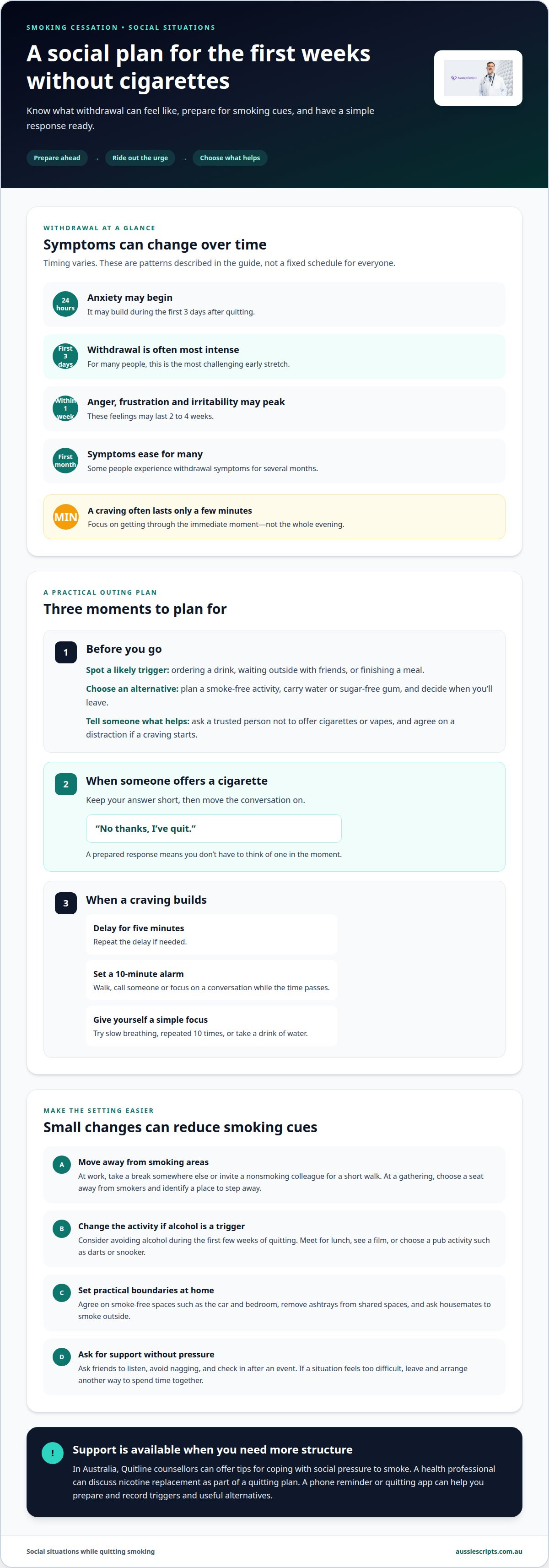
Nicotine withdrawal can affect mood and comfort while you’re quitting tobacco. Symptoms are usually most intense during the first 3 days after quitting. Anxiety may begin within 24 hours and build over those first 3 days. Anger, frustration and irritability may peak within 1 week and last 2 to 4 weeks. For many people, symptoms ease during the first month, though some experience them for several months.
Withdrawal and cravings can make conversations or gatherings harder to manage. Tell friends and family what you’re experiencing and what would help. For example, ask them not to offer cigarettes or vapes, and agree on a quick distraction if a craving starts. A short walk, a glass of water or changing the subject can help you ride out the urge without making the gathering about smoking.
Be specific about the support you want. You might say, “I’m trying to quit, so please don’t offer me tobacco, even if I ask.” Ask someone you trust to check in after a social event or help you leave if a situation feels difficult. Support can remain useful weeks or months later, because cravings and setbacks may still happen. Encouragement works better than pressure: ask people to listen, avoid nagging and recognise your effort.
If someone in your household smokes, agree on practical boundaries rather than expecting them to quit for you. You could make the car and bedroom smoke-free, remove ashtrays from shared spaces and ask housemates to smoke outside. Explain that quitting is your personal decision, not a judgement of their behaviour. Build support outside home, too: a workmate, friend or new hobby can provide smoke-free company.
If you smoke or vape, support someone trying to quit by not offering cigarettes or vapes. Avoid smoking or buying tobacco products around them, and keep shared spaces smoke-free where you can. You could also decide to quit together, if that suits you both. Don’t lecture them after a setback. Ask what they need next, then help them return to their plan without blame.
Professional and digital support can add structure. In Australia, Quitline counsellors can offer tips for coping with social pressure to smoke. A health professional can discuss nicotine replacement as part of a quitting plan. For day-to-day prompts, set a phone reminder to prepare a response before an event, or record triggers and helpful alternatives in a quitting app. Choose support that feels practical, private and easy to use.
2. How can I get help if I’m having trouble dealing with nicotine withdrawal or triggers?
At a party, pub or social event, choose an alternative before a craving starts. A plan for how to handle social situations when you quit smoking can include meeting a supportive friend, choosing a smoke-free activity and deciding when you’ll leave. Cravings usually last only a few minutes, so focus on getting through the immediate moment rather than the whole evening.
Before going out, identify the situation most likely to trigger smoking. It might be ordering a drink, waiting outside with friends or finishing a meal. Tell someone you trust what would help, such as changing the subject or suggesting a walk. Carry a water bottle or a quit aid you already use, and prepare a short response if someone offers you a cigarette.
If drinking is closely associated with smoking for you, consider avoiding alcohol during the first few weeks of quitting. You can still make social plans: meet a friend for lunch, see a film or choose a pub activity such as darts or snooker. Changing the activity can interrupt the familiar link between alcohol, company and cigarettes.
When a craving arrives, give yourself a specific task. Set a 10-minute alarm and use the time to walk, call someone or focus on a conversation. You can also delay acting for five minutes, then repeat the delay if needed. A slow breathing exercise, repeated 10 times, can provide a simple focus while the urge passes.
Withdrawal can affect your mood as well as bring on cravings. If you feel tense or irritable during a gathering, step away from the conversation and take a short walk. A glass of water, a healthy snack or sugar-free gum can occupy your attention. Ask a friend to listen rather than lecture, and explain whether you’d prefer company or a few quiet minutes.
Supporters can make your plan easier to follow. They might suggest a walk, bring vegetable sticks or mints, or help you switch to another activity. If a social setting feels too difficult, leave and arrange a different way to spend time together. Knowing how to handle social situations when you quit smoking includes choosing when to stay and when to step away.
If triggers keep disrupting your quit attempt, speak with a health professional or contact Quitline for advice on social pressure and quitting strategies. Note which setting caused difficulty and what helped, then use that information to plan your next outing. A short record can show whether a different activity, support person or approach to nicotine replacement may be useful.
3. How can I resist the urge to smoke when I’m around smokers?
Tell friends or coworkers you’ve decided to quit, and ask them not to offer cigarettes or vape products. If someone offers one, say, “No thanks, I’ve quit,” then move the conversation on.
Plan for shared spaces before you encounter them. At work, take your break somewhere other than the usual smoking area, or invite a nonsmoking colleague for a short walk. At a gathering, choose a seat away from smokers and identify a comfortable place to step away. These choices reduce exposure to smoking cues and time in smoke-filled areas.
Seeing friends smoke or vape can trigger an urge, even when they don’t intend to pressure you. If a particular friend or group makes the early days or weeks difficult, pause those visits temporarily. Suggest another way to stay in touch, such as meeting for lunch or taking a walk. You can explain that this change supports your decision to quit, rather than criticising their behaviour.
Ask friends to respect a clear request: “Please don’t smoke beside me, and don’t offer me one.” If they forget, repeat the request calmly and move away from the smoking area. A supportive friend can help change the subject, walk with you or leave with you. If the pressure continues, shorten the visit and arrange a smoke-free activity next time.
Alcohol can make smoking cues harder to manage for some people. Consider avoiding it during the first few weeks of quitting, especially if drinking and smoking were linked in your routine. If you go to a pub, choose an activity away from the smoking area, such as darts or snooker. You can also meet friends somewhere that doesn’t centre on alcohol.
After quitting, caffeine can have a stronger effect. For example, replace one of your usual coffees with water or a decaffeinated option, particularly if caffeine makes you feel unsettled. Keep a drink in hand during work breaks or social events. It gives you a simple alternative while others smoke.
Plan how you’ll leave a gathering if stress rises or smoking feels difficult to resist. Arrange your own way home, or tell someone you trust that you may leave early. You don’t need to avoid every social event. Smoke-free breaks, clear boundaries with friends and changed routines can make time around smokers more manageable while you continue quitting.
4. Planning activities that keep your hands busy
During quitting smoking, plan activities that give your hands a clear task. At a barbecue, help prepare food or arrange plates instead of standing where people smoke. At home, try a puzzle, sketching or a simple craft while talking with friends. A practical task can shift attention away from familiar smoking cues. Planning how to handle social situations when you quit smoking can start with choosing one activity before you leave home.
Choose social plans before a craving or trigger appears. A movie, a class or time in nature gives the gathering a focus beyond smoking. For example, invite a friend to a weekend class, then organise transport and meeting details in advance. If you’re trying to stop smoking, a planned activity can help you stay engaged without following the group outside.
Match the activity to the trigger. If waiting around prompts you to smoke, choose something with a clear role, such as keeping score during a game or serving snacks. If driving is associated with tobacco, plan a podcast or playlist for the trip. These small changes replace part of the routine instead of relying on willpower alone.
Before leaving, write down the situations that may test your plan. For example, note “after dinner”, “friends stepping outside” or “waiting for a ride”. Pair each trigger with an action you can start immediately:
- After a meal, clear plates or help prepare tea.
- At a game, keep score or deal the cards.
- During a break, walk somewhere away from the usual smoking spot.
Remove smoking reminders from the places you control. Put ashtrays away, clear tobacco products from a bag and keep an activity ready near the sofa. If you live with smokers, agree on smoke-free areas and choose a different room for hobbies or conversations. Having an alternative ready makes it easier to take the next step.
Plan an exit strategy as well as an activity. Decide how you’ll leave if a gathering becomes difficult, and arrange transport before you go. You might tell a trusted friend, “I may head off early if people start smoking.” If temptation rises, walk around the block or stay somewhere else for a night or two. Leaving the immediate trigger gives you space to return to your plan.
Keep the plan realistic. Choose one activity you enjoy, one person who can join you and one backup if plans change. For instance, bring a book to a café, then call a friend if you’re waiting alone. Knowing how to handle social situations when you quit smoking also means reviewing what helped after an outing and using that insight to plan your next smoke-free activity.
5. Alternatives to smoking during social situations
Choose an alternative that matches what you miss about smoking. If your hands feel idle, hold a glass of water or use a stress ball. If you miss the mouth movement, try sugar-free gum or a mint. When someone nearby is smoking, step away and start a different conversation. A specific substitute is easier to use than making a decision under pressure.
For social breaks, keep the routine but change the action. Walk with a colleague, sit somewhere smoke-free or use the break to send a message. If you’re with someone who is smoking, chew gum or carry a water bottle. These alternatives give you something to do without holding a cigarette or joining the smoking group.
Separate everyday substitutes from nicotine replacement. Gum, mints and water can occupy your mouth, but they don’t provide nicotine. Over-the-counter nicotine gum and lozenges are available in 2- and 4-milligram strengths. Product directions explain how to use them; a health professional can help you consider suitable quit aids and use them appropriately. They can support a plan to stay quit, but aren’t social props.
Prepare a small “social kit” before leaving home. Pack sugar-free gum, mints, a refillable water bottle and any quit aid you already use. Keep the items in an easy-to-reach pocket rather than a bag you might leave behind. At a barbecue, for example, take your drink with you as you move between conversations. That way, an alternative is close at hand when cigarettes appear.
Use a short script alongside your substitute. Say, “I’m not smoking, thanks,” then take a sip of water or offer to help with the next activity. If someone passes around cigarettes, keep your hands occupied with a plate or phone. The script clearly declines the offer, while the action helps you move into another part of the gathering.
Notice which need is strongest in each situation. A cigarette after dinner may be linked to finishing a meal, while a work break may be about stepping away from a desk. Replace the cue with a chosen action: clear the table, walk to a smoke-free area or stretch before returning to work. A useful replacement changes the routine, not just the object in your hand.
If withdrawal makes social situations difficult, structured professional guidance can help you plan suitable quit aids and alternatives. Explore support for a smoking cessation plan if you want help adapting your approach. Keep the takeaway simple: select one hand activity, one mouth alternative and one response to cigarette offers before each event.
Aussie Scripts: Smoking Cessation Consultation
Aussie Scripts offers a Smoking Cessation Consultation for people who want professional support with quitting. It may be a helpful next step if withdrawal, nicotine cravings or social triggers are making your plan difficult to follow.
During a virtual consultation, you can discuss your smoking habits, situations that prompt cravings and approaches you’ve tried. This gives an Australian-registered doctor relevant context to consider your needs and discuss suitable support. If you’re considering nicotine replacement or another treatment, raise it during the consultation so you can discuss it as part of your quit plan.
Keep a brief note of common triggers, such as work breaks or social events, and the alternatives you’ve tried. This can help make the conversation focused and useful. Contact Aussie Scripts to discuss a Smoking Cessation Consultation.
Make your next social plan work for you
Your approach to how to handle social situations when you quit smoking can change as you learn what feels manageable. After an outing, take a moment to consider what helped and what made quitting harder. Use that insight to shape your next plan, whether that means choosing a different setting, adjusting your routine or asking someone for specific support. A difficult moment doesn’t have to define your next social event. Make one practical change at a time.
If you’d like professional guidance for your quit plan, a Smoking Cessation Consultation can provide an opportunity to discuss your circumstances with a doctor. Aussie Scripts also offers Standard Script, Express Script and Medical Certificate services. Contact Aussie Scripts for support if you’d like to discuss your next step. You can keep building a social routine that supports your decision to quit.
Frequently Asked Questions
Are there alternative methods to help people deal with nicotine withdrawal?
Yes. Nicotine replacement can reduce withdrawal while you practise new responses to social cues. Behavioural strategies include changing routines, seeking support and planning smoke-free activities. For example, if the end of a meal prompts a cigarette, move straight to clearing the table or making tea. A health professional can help you consider suitable quitting options and how they fit your circumstances.
How can I get help if I’m having trouble dealing with nicotine withdrawal or triggers?
Combine practical support with professional advice. In Australia, Quitline counsellors can offer guidance for managing social pressure to smoke. Before speaking with a counsellor or health professional, note the situations that prompt cravings, what you’ve tried and what feels difficult. This might include work breaks, meals or social events. A brief record makes the conversation more specific and helps you identify patterns over time.
How can I resist the urge to smoke when I’m around smokers?
Reduce the immediate cue and focus on something else. Move to a different area, start a conversation away from smoking, or take a smoke-free break with a colleague. If you’re attending a gathering, arrange to meet a supportive friend there and agree on a signal if you want to leave. These steps can help you manage exposure without making every social interaction off-limits.
What are some of the nicotine withdrawal symptoms associated with quitting tobacco?
Nicotine withdrawal can involve cravings, anxiety, anger, frustration and irritability. Symptoms are usually most intense during the first 3 days after quitting, and anxiety may begin within 24 hours. Irritability can peak within 1 week and may last 2 to 4 weeks. Keep a brief daily note of symptoms and situations, so you can spot patterns and prepare for difficult moments.
What are some of the triggers for tobacco use?
Triggers can include seeing someone smoke, being offered a cigarette, taking a familiar work break or linking tobacco with alcohol. Everyday routines can become cues, too, such as finishing dinner or waiting outside a venue. Identify the moment just before the urge appears. Then pair that cue with a replacement action, such as changing location, calling someone or starting a different task.
What can I do about anger, frustration, and irritability after I quit?
Notice the feeling early and pause before responding. Irritability associated with quitting may peak within 1 week and last 2 to 4 weeks. If a conversation becomes tense, say you need a short break, then walk or get some water. Let people close to you know that quiet support helps more than criticism. If symptoms feel difficult to manage, discuss them with a health professional.
What social situations can trigger smoking cravings after quitting?
Cravings may arise during work breaks with smokers, at gatherings where cigarettes are offered, or around friends who smoke or vape. A pub visit can be a cue if drinking and smoking were part of the same routine. Even stepping outside with a group can bring back an established pattern. Before an event, consider the setting, who will be there and which moments may feel challenging.
What are practical ways to avoid smoking when drinking alcohol?
If alcohol and cigarettes were linked for you, choose a different plan while quitting. Meet friends for a meal or an activity that doesn’t centre on drinking, or choose a pub activity away from smoking areas. Tell a friend beforehand that you’re avoiding cigarettes and ask them not to offer one. If the urge becomes difficult to manage, leave and switch to a smoke-free activity.
Disclaimer
The information provided by AussieScripts is for general informational purposes only and does not constitute medical advice, diagnosis, or treatment. For advice tailored to your specific symptoms or health concerns, please consult one of our doctors or your regular GP.