How to Lose Weight With a Thyroid Condition
Learn how to lose weight with a thyroid condition safely, understand treatment, avoid extra thyroid hormone, and build sustainable habits with guidance.

Thyroid hormone treats an underactive thyroid; it is not a weight-loss shortcut. Understanding how to lose weight with a thyroid condition starts with appropriate treatment. Taking extra hormone can cause serious side effects, including palpitations, anxiety and heart rhythm problems, and any weight lost may return when treatment stops.
Weight changes alongside fatigue, constipation or feeling unusually cold can be frustrating. Treating hypothyroidism may help address weight linked to the condition, but it may not explain all weight gain or lead to substantial weight loss on its own.
This article explains how thyroid treatment affects weight, why increasing hormone doses is unsafe for weight loss, and how food choices, activity and gut health fit into a balanced approach. It also explains why persistent symptoms or weight concerns may warrant a review of thyroid treatment with a healthcare professional.
Key Takeaways
- Thyroid-related weight changes are often only part of the picture; once hormone levels are in the normal range, weight management follows the same principles as for people without thyroid problems.
- Use follow-up blood tests to assess whether hypothyroidism treatment is keeping thyroid levels balanced as your weight changes.
- Choose sustainable eating and activity habits rather than extreme calorie restriction, which may affect thyroid hormone production.
- Consider how gut health and nutrient intake relate to thyroid hormone conversion, alongside clinical treatment.
- A tailored Weight Loss Consultation can help you discuss your goals and how thyroid treatment fits into a broader weight-management approach.
Can thyroid hormone be used to help me lose weight?
Thyroid hormone treats an underactive thyroid, but extra hormone is not a safe way to lose weight. Thyroid levels affect metabolism, while weight also reflects the balance between energy used and energy taken in.
If thyroid levels are normal, consider other influences on weight, including food intake, activity and fluid retention. Weight gain as the only symptom is less likely to be caused solely by hypothyroidism.
Basal Metabolic Rate and Energy Balance
Basal metabolic rate (BMR) is the energy your body uses over time while at rest. It contributes to the balance between energy used and energy consumed, which influences body weight. A higher BMR uses more energy at rest, while a lower BMR uses less. This helps explain why hypothyroidism can make weight management harder, but BMR is only one part of the picture.
Thyroid Hormones and Metabolism
The thyroid gland produces T3 and T4, hormones that help the body use energy, stay warm and support organs such as the brain and heart. These hormones affect how quickly the body burns calories and produces energy. Higher thyroid hormone levels raise BMR; lower levels reduce it. That relationship matters when assessing weight changes, but it doesn't make thyroid hormone an appropriate weight-loss treatment.
Hypothyroidism, Hashimoto’s, and Weight
Hypothyroidism means the thyroid produces too little hormone, which can slow metabolism and contribute to weight gain. Hashimoto’s matters in this context when it leads to hypothyroidism: weight effects relate to the resulting low hormone levels, not simply the condition’s name. Fatigue can also make regular activity harder. The amount of weight linked to thyroid changes varies with the severity of hypothyroidism.
Hyperthyroidism has the opposite relationship: high thyroid hormone levels can raise BMR, and some people lose weight. Increased appetite can also lead to weight gain, so weight change alone does not show whether thyroid levels are high or low. Treatment for hyperthyroidism commonly reverses its effect on weight, and lost weight may return.
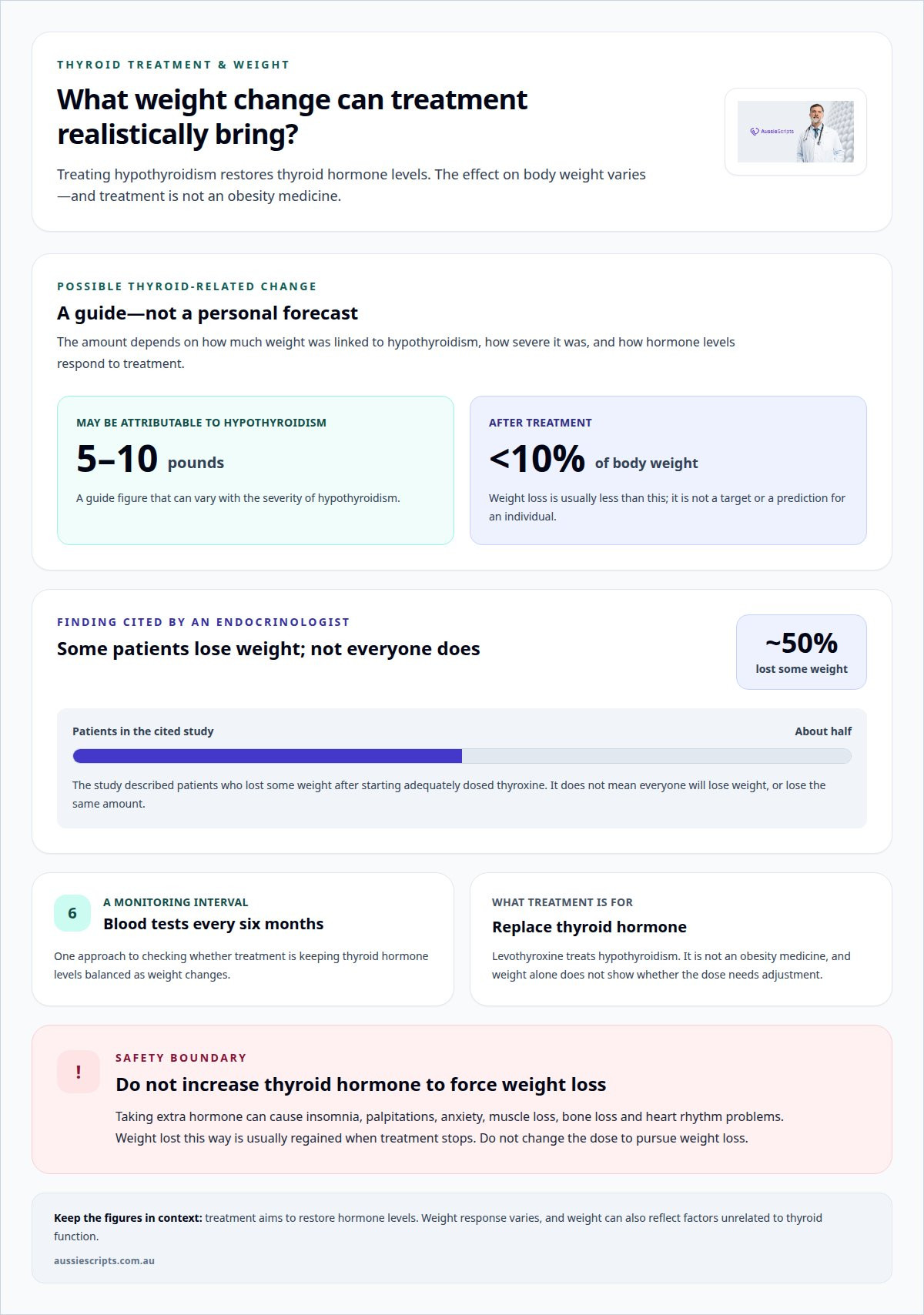
Taking extra thyroid hormone to raise metabolism is not a safe shortcut. It can cause insomnia, palpitations, anxiety, muscle loss, bone loss and heart rhythm problems. Excess hormone can break down muscle protein as well as body fat. Weight lost this way is usually regained when treatment stops, so do not change the dose to pursue weight loss.
How much weight can I expect to lose once the hypothyroidism is treated?
There is no single amount of weight change that applies to everyone with an underactive thyroid. It depends on how much weight was linked to the condition, its severity and how hormone levels respond to treatment. Levothyroxine replaces thyroid hormone and treats hypothyroidism; it is not an obesity medicine.
As a guide, around 5-10 pounds of weight may be attributable to hypothyroidism, depending on its severity. Weight loss after treatment is usually less than 10% of body weight. These figures describe possible thyroid-related changes, not a target or a prediction for an individual. Weight can also reflect factors unrelated to thyroid function.
An endocrinologist has cited a study in which about 50% of patients lost some weight after starting adequately dosed thyroxine. This does not mean that everyone will lose weight, or that the same amount is expected. Treatment aims to restore hormone levels, and the scale may respond differently from symptoms such as fatigue or cold sensitivity.
There is no single safe rate of weight loss that suits every adult in Australia. A sustainable pace depends on health, starting weight, eating patterns, activity and whether thyroid hormone levels are stable. Gradual changes to meals and exercise can support progress without using excess thyroid hormone to force faster results.
Monitoring treatment and weight
Regular blood tests help assess whether hypothyroidism treatment is keeping hormone levels balanced as weight changes. One approach to monitoring treatment is blood testing every six months. Symptoms, test results and treatment response help determine whether the current plan remains appropriate; weight alone does not show whether the dose needs adjustment.
Using excess thyroid hormone for weight loss can break down muscle protein as well as body fat. This can undermine strength and body composition rather than produce a sustainable result. Thyroid hormone treats hypothyroidism, not obesity; treatment and hormone levels need monitoring over time.
When to seek medical advice
Speak with a GP about weight changes alongside fatigue, constipation or cold sensitivity, or if symptoms continue during treatment. An endocrinologist may be involved when thyroid management needs specialist assessment. A GP can review your symptoms, treatment and blood-test results, then determine whether further assessment or a referral is appropriate.
In Australia, Wegovy is TGA-approved for chronic weight management in eligible adults with a BMI of at least 30 kg/m², or at least 27 kg/m² with a weight-related comorbidity. It is available on private prescription and isn’t PBS-subsidised. The PBAC has recommended a proposed PBS listing for a limited group with obesity and established cardiovascular disease, but that listing process isn’t complete. Ozempic is PBS-listed for specific diabetes indications, not weight loss.
A Weight Loss Consultation can provide a setting to discuss weight goals and how thyroid treatment fits into a broader plan.
How Can I Fight Obesity If I Have Hypothyroidism?
Hypothyroidism can contribute to weight gain, but it rarely explains every change. Managing weight means considering symptoms, treatment, food and activity together.
How Hypothyroidism Can Contribute to Weight Gain
Hypothyroidism is an underactive thyroid that can slow metabolic rate and contribute to weight gain. Some additional weight may reflect salt and water rather than body fat. If weight gain is the only symptom, it is less likely to be caused solely by the thyroid. Fatigue can also make everyday movement and planned exercise harder.
Other symptoms provide useful clinical context. An underactive thyroid may also cause dry skin, constipation, cold sensitivity, joint pain, muscle weakness, hoarseness, irregular menstrual periods or fertility issues. Untreated hypothyroidism can slow the heart rate, increase the risk of heart problems and raise cholesterol levels. These symptoms matter beyond their effect on weight.
Weight Changes After Treatment
Once treatment brings thyroid hormone levels into the normal range, people generally have the same ability to gain or lose weight as those without thyroid problems. Treatment may reduce weight linked to salt and water, but it does not automatically address weight gained for other reasons. Consider eating habits, activity and symptoms together when deciding on next steps.
A practical approach to how to lose weight with a thyroid condition looks beyond the scale. Notice whether your routine, symptoms or energy levels change as treatment continues. These details can help distinguish weight concerns that may relate to thyroid function from other influences on body weight.
Exercise With Fatigue
Fatigue can affect which activities feel manageable, so choose movement that suits your energy. Walking, swimming or cycling are examples of light activities you can introduce gradually. Build a routine around what feels achievable rather than forcing a demanding workout. Resistance training can also help build muscle mass and support metabolism.
Most people should aim for 2 ½ hours of exercise per week. A consistent routine can be adapted to your energy and symptoms. Exercise intolerance can persist for some people despite adequate thyroxine replacement. If fatigue limits activity, pacing may be more practical than pushing through a difficult session.
Diet and Exercise for Weight Loss
No single diet or exercise programme suits everyone with a thyroid condition. Consider meals with lean protein, healthy fats and complex carbohydrates from vegetables and legumes. Limit pasta, bread, white rice and sweets rather than relying on them as everyday staples. A balanced, sustainable pattern is more useful than a rigid menu.
If you are considering how to lose weight with a thyroid condition, combine manageable food choices with regular movement. For example, someone experiencing fatigue might start with walking and add resistance exercises as energy allows. Adapt the routine to symptoms and treatment rather than assuming every weight change comes from a thyroid disorder.
Avoiding extreme low-calorie diets
Severe calorie restriction can work against thyroid health rather than support sustainable weight management. A more useful approach combines adequate nourishment with realistic food choices and routines.
Risks of Extreme Low-Calorie Diets
An extremely low-calorie diet sharply restricts energy intake and may trigger a stress response that lowers thyroid hormone production. This matters because thyroid hormones influence metabolism. Instead of severely restricting food, build a pattern around nourishing meals and sustainable changes. There is no single diet or exercise programme recommended for everyone with thyroid disorders, so an approach that suits one person may not suit another.
Intermittent fasting is not essential for weight management. If someone chooses an overnight eating break, the suggested interval is at least 12 hours between the last bite one day and the first bite the next. Some guidance extends this to 16 hours, but people with diabetes are advised not to fast for more than 12 hours. The eating window should also end at least 2 hours before bedtime.
Foods to Eat and Avoid
For a practical meal pattern, include complex carbohydrates from vegetables and legumes alongside lean protein and healthy fats. Limit pasta, bread, white rice and sweets rather than relying on them as everyday staples. These choices support balanced eating without requiring a restrictive menu or fixed calorie target.
Thyroid health also depends on adequate nutrient intake. Iodine, selenium and zinc are among the nutrients commonly highlighted for thyroid support; magnesium, iron, B vitamins and vitamin C are also included in nutritional approaches. Brazil nuts provide selenium, but eat them in moderation rather than treating one food as a complete solution.
Food timing can be adjusted without skipping meals or imposing a severe restriction. For example, someone who finishes dinner well before bedtime can keep a consistent overnight break while still eating nourishing meals during the day. An eating window ending at least 2 hours before bed is one suggested structure, not a requirement for every patient.
Sleep and stress management also influence whether a food plan feels sustainable. A recommended target is 8 hours of high-quality sleep, while blue light-blocking glasses after sunset are suggested for people using electronic devices. These habits do not replace treatment for thyroid disorders, but they can sit alongside a balanced nutrition plan.
Choose changes you can maintain: add vegetables or legumes to meals, reduce frequent sweets, and avoid extreme calorie cuts. If fasting, diabetes matters: keep the fast to no more than 12 hours. A consistent, nourishing pattern is a more appropriate basis for weight management than trying to force rapid change through severe restriction.
Gut health and thyroid hormone conversion
Thyroid hormone conversion is one part of how the body uses hormones made by the thyroid gland. Gut health, stress and treatment monitoring can all be relevant when assessing thyroid disease and weight concerns.
The thyroid gland produces thyroxine (T4) and triiodothyronine (T3). The body converts T4 into T3, and gut health may be one aspect to consider when discussing thyroid hormones. This is why gut function may form part of a broader discussion about thyroid hormones. It doesn’t mean that gut changes alone diagnose thyroid disease or explain why someone may gain weight.
The liver is also involved in hormone conversion. Nutrients such as iodine, selenium and zinc support thyroid health, while magnesium, iron, B vitamins and vitamin C are associated with thyroid and metabolic function. These nutrients do not replace treatment for clinical hypothyroidism. A varied eating pattern can support general nutrition, but supplements or restrictive diets are not substitutes for assessing hormone levels.
Stress may also be relevant: high cortisol can inhibit thyroid hormone conversion. This is one factor to consider, not a diagnosis or proof that stress explains weight changes. Discuss ongoing stress, symptoms and treatment together during a clinical review rather than changing thyroid medication based on weight alone.
Blood tests help assess thyroid function and whether medication management may be needed when clinical hypothyroidism is detected. Results within a broad reference range may not be optimal for weight management, so symptoms and test results need to be considered together. If thyroid function is not corrected, a repeat blood test and medication review may help guide the next clinical decision.
Do not change an Oroxine dose without medical advice. Taking excess thyroid hormone to pursue weight loss can cause palpitations, anxiety and heart rhythm issues, among other problems. It can also lead to muscle loss. Treatment aims to manage the thyroid disorder, not raise hormone levels beyond what is needed for thyroid care.
For example, if fatigue and weight concerns continue despite treatment, discuss both symptoms and recent thyroid results with your doctor. This gives the review a clearer focus than weight alone and can help identify whether thyroid treatment, another health factor or a broader weight-management approach needs attention.
If you want to discuss how thyroid treatment fits into your weight goals, book a Weight Loss Consultation.
Aussie Scripts: Weight Loss Consultation
Aussie Scripts offers a Weight Loss Consultation to discuss weight goals and how thyroid treatment fits into a broader plan. It may be a useful next step if you are managing hypothyroidism, finding weight changes difficult to understand or considering weight-management options alongside existing care.
In a virtual consultation, you can discuss your health and concerns with an Australian-registered doctor. This can help clarify possible next steps and whether a weight-management approach suits your circumstances. A consultation does not replace ongoing thyroid monitoring or specialist care when needed.
Contact Aussie Scripts to discuss a Weight Loss Consultation.
Make your next step a workable plan
A practical approach to how to lose weight with a thyroid condition starts with a goal you can assess beyond the scales. For example, focus on a meal pattern you can maintain or movement that fits your routine. Notice what feels sustainable and what creates obstacles, so future adjustments reflect your experience rather than short-term pressure.
Keep your next health discussion focused. Describe the outcome you want, the habits you are ready to work on and any questions you still have about treatment. You can also decide what progress means to you, such as sticking with your routine or changes in how everyday activities feel. A clear personal measure can help keep the plan relevant.
If professional support would help you shape your goals into a weight-management discussion, contact Aussie Scripts about a Weight Loss Consultation. A considered next step can make the process more manageable. Start with one change that feels practical, then build from there.
Frequently Asked Questions
What is the relationship between thyroid and weight?
Thyroid hormones influence how quickly your body uses energy, so changes in hormone levels can affect weight. For example, someone with low thyroid hormone levels may find weight management harder, while high levels can increase energy use. However, thyroid function is only one influence on body weight. Eating patterns, activity and other health factors also matter, so weight change alone can’t diagnose a thyroid disorder.
Why do I gain weight when hyperthyroidism is treated?
Weight lost during hyperthyroidism is often regained after treatment because high thyroid hormone levels can increase the body’s energy use. As treatment brings hormone activity under control, that increased energy expenditure falls. Appetite can also affect weight: some people with hyperthyroidism eat more, influencing their weight before and during treatment. Follow-up care helps assess symptoms and treatment response together.
What is the thyroid gland?
The thyroid is a small gland at the lower front of the neck. It produces hormones that help the body use energy, stay warm and support organs including the brain, heart and muscles. These hormones also influence metabolism. A thyroid condition may affect hormone production, but tiredness or weight change alone cannot establish a diagnosis.
What is Hashimoto’s disease?
Hashimoto’s disease is an autoimmune condition that affects the thyroid gland. It can lead to hypothyroidism when thyroid hormone production becomes low. A person may then experience symptoms of an underactive thyroid, although symptoms vary and can have other causes. Assessment considers symptoms alongside thyroid blood-test results; weight change alone does not confirm Hashimoto’s or show how thyroid function is changing.
How does hypothyroidism affect weight and metabolism?
Hypothyroidism can slow metabolism and contribute to weight gain, but it does not explain every case. Some weight change may reflect salt and water accumulation rather than body fat. If weight gain occurs alongside fatigue, constipation or feeling unusually cold, discuss these symptoms with a GP. If weight is the only change, other influences on energy balance and health may also need consideration.
Can levothyroxine or other thyroid medicines cause weight loss, and how should they be taken?
Levothyroxine treats hypothyroidism, but it is not a weight-loss medicine. Some people lose weight after starting an appropriate dose, while others may not. Take thyroid medicine according to the instructions for your prescription, and do not increase or change the dose to affect weight. If your weight or symptoms change during treatment, discuss the pattern and relevant blood-test results with your treating doctor.
Is it safe to use thyroid medication or supplements for weight loss?
No. Taking extra thyroid hormone to lose weight can cause serious effects, including palpitations, anxiety, insomnia, muscle loss and heart rhythm problems. Weight lost through excess hormone is usually regained when treatment stops. Nutrients such as iodine, selenium and zinc support thyroid health, but supplements should not replace assessment or prescribed treatment. Discuss supplements and medication changes with a healthcare professional before using them.
Disclaimer
The information provided by AussieScripts is for general informational purposes only and does not constitute medical advice, diagnosis, or treatment. For advice tailored to your specific symptoms or health concerns, please consult one of our doctors or your regular GP.
