How to Maintain Weight Loss After Medication With Daily Habits
Learn how to maintain weight loss after medication with filling meals, regular exercise and weekly weight checks to spot changes early and build lasting habits.
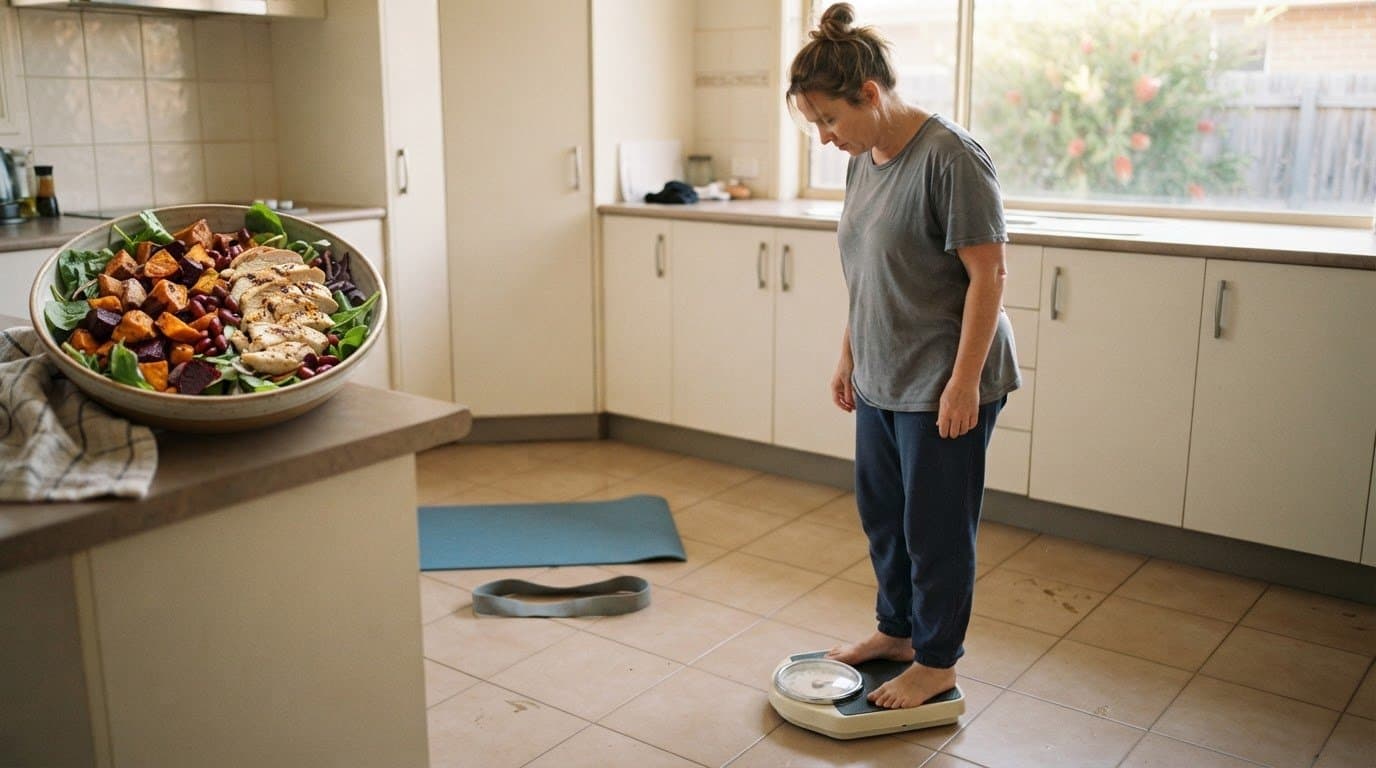
What if the key to maintaining weight loss after medication is not chasing a lower number, but noticing changes early? Knowing how to maintain weight loss after medication starts with consistent habits and a weekly weight check, which can help you spot a gradual trend rather than react to daily fluctuations. A maintenance range of around 2 kg can allow for normal changes.
It’s understandable to worry about regaining weight after stopping treatment. Eating patterns that support fullness and regular physical activity can help with weight maintenance, but the most effective habits are those that suit your health and routine.
This article explains how satisfying meals, exercise and weekly weight checks can support a practical maintenance plan. It also covers how to interpret changes over time, when to seek professional support and how an Aussie Scripts Weight Loss Consultation can help you discuss next steps with an Australian-registered doctor.
Key Takeaways
- Plan for appetite and craving changes before stopping GLP-1 medication, and discuss ongoing treatment with a clinician.
- Meals that prioritise filling foods, alongside mindful eating, can support satiety and more sustainable habits.
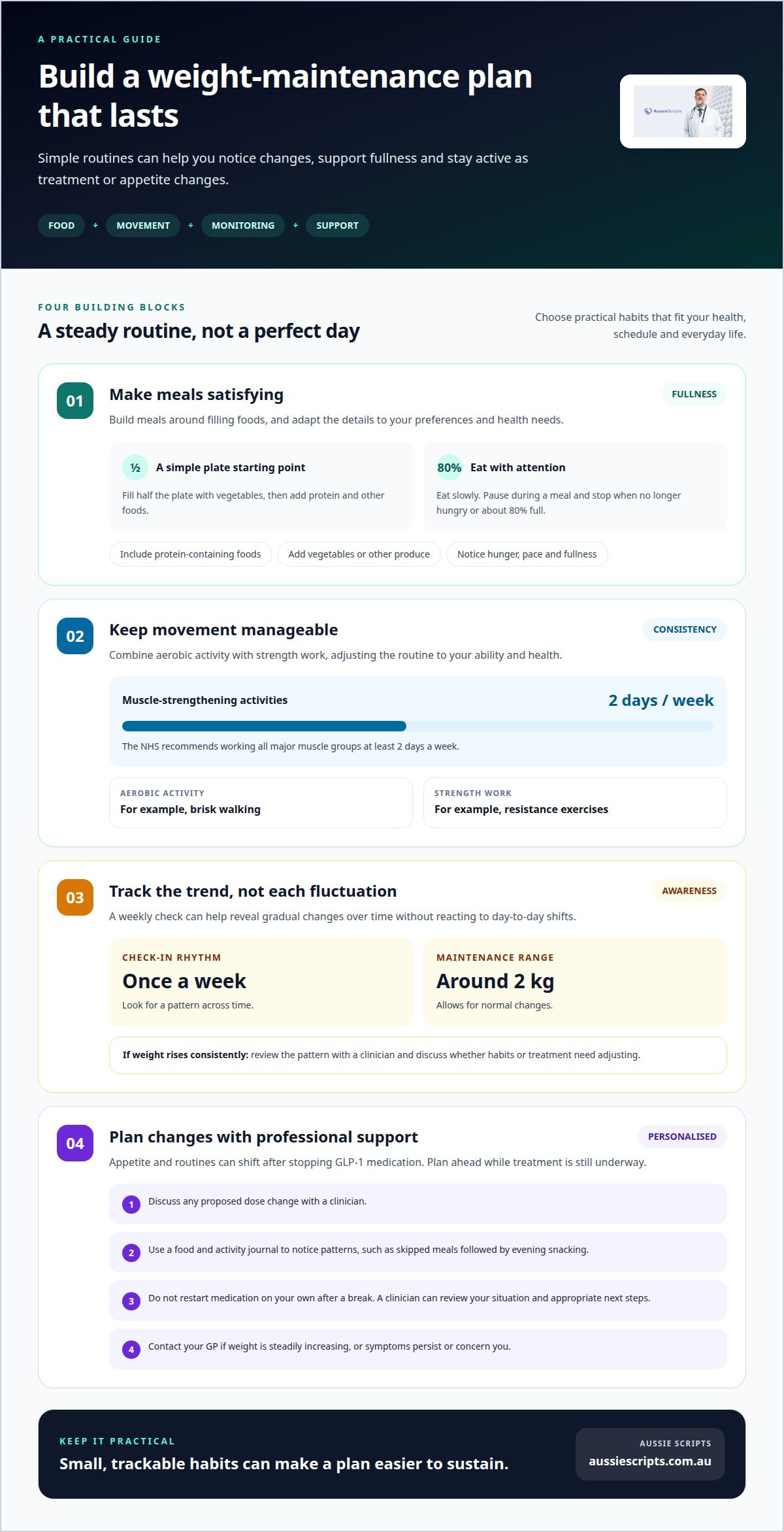
- The NHS recommends muscle-strengthening activities for all major muscle groups at least 2 days a week.
- Build aerobic activity and resistance training into a routine that fits your health, schedule and maintenance goals.
- Weighing yourself once a week can help you notice gradual changes, while a range of around 2 kg allows for normal fluctuations.
Table of Contents
- Is it possible to keep the weight off after stopping weight-loss medication?
- How a clinician can support eating for satiety through volumetric eating
- Strength training and physical activity
- Aerobic exercise and resistance training
- Weekly weight monitoring and maintenance ranges with professional guidance
- Aussie Scripts: Weight Loss Consultation
Is it possible to keep the weight off after stopping weight-loss medication?
Some people regain weight after stopping GLP-1 medication, including semaglutide. Planning ahead can help address appetite changes, eating habits and activity as treatment changes.
Planning for Weight Maintenance
Weight-maintenance planning means preparing for life after medication while treatment is still underway. It matters because appetite and routines can shift after stopping, making established habits important. Discuss any proposed dose change with a clinician. Some people may be able to taper after 6-12 months, while others may need long-term treatment.
Ongoing costs can include medication and consultations. Wegovy is approved by the TGA for chronic weight management in eligible adults, including those with BMI ≥30 kg/m², or BMI ≥27 kg/m² with a weight-related comorbidity. Separately, the PBAC recommended only a proposed PBS listing for people with obesity and established cardiovascular disease, subject to pricing and risk-sharing arrangements. Wegovy has not yet been listed on the PBS, and the listing process is underway. It is currently available on private prescription, not PBS-subsidised for weight loss. Ozempic is PBS-listed semaglutide for specific diabetes indications; that does not mean Wegovy is PBS-subsidised.
Appetite Changes and Weight Regain
After stopping, appetite may increase and cravings may become more noticeable. Some people regain some or all of the weight lost after stopping semaglutide or other GLP-1s, particularly without ongoing diet and lifestyle habits. A food and activity journal can help identify patterns, such as skipped meals followed by evening snacking.
Don’t restart medication on your own after a break. A clinician can review why treatment stopped, your current symptoms and appropriate next steps. Contact your GP if your weight is steadily increasing or symptoms persist or concern you. An assessment can consider changes over time, eating patterns and other health factors.
Diet and Activity Habits After Stopping
Maintenance habits include balanced meals, physical activity and regular monitoring. Include protein-containing foods and vegetables or other produce at meals. Protein needs vary, including for people with kidney disease, so individual advice matters. For example, adding a protein source and vegetables to lunch may make it more satisfying.
Continue aerobic activity and strength training to support muscle maintenance. A routine might combine brisk walking with resistance exercises two or three times weekly, adjusted to your ability and health. Weighing once a week can help reveal gradual changes. If your weight rises consistently, review the pattern with a clinician and discuss whether your habits or treatment need adjusting.
How a clinician can support eating for satiety through volumetric eating
Volumetric eating prioritises foods with more water and fibre, helping meals feel substantial. A clinician can review usual meals and suggest practical changes that suit individual health needs. One starting point is filling half the plate with vegetables, then adding protein and other foods. Produce takes up more stomach space while providing fewer calories, water and fibre, which can help support fullness after losing weight. These strategies can inform a discussion about how to maintain weight loss after medication without relying on rigid food rules.
Sweets can still be part of your diet while taking semaglutide. A clinician can discuss portions, timing and how they fit into meals. For example, noting whether a sweet snack follows a skipped lunch can reveal a pattern without labelling foods as forbidden. Protein-containing meals may help slow digestion after stopping semaglutide. A clinician can help you choose meals that suit your preferences, appetite and relevant health conditions.
Mindful eating means paying attention to hunger, pace and fullness during a meal. A practical approach is to pause halfway through lunch and assess whether hunger remains, rather than eating automatically. The guide recommends eating slowly and stopping when no longer hungry or when about 80% full. A clinician can help turn that into an achievable goal, such as practising the pause at one meal each day.
Eating triggers can include stress, routines or food availability. A brief food and mood record can help identify whether late-night eating follows a stressful workday or a long gap between meals. A clinician can use these patterns to discuss realistic alternatives, such as planning a filling afternoon snack. Small, trackable goals can also support motivation without making one difficult day feel like failure.
Time-restricted eating is another approach to discuss with a healthcare professional before making changes. Eating windows may be 12, 10 or 8 hours per day, but a set schedule may not suit everyone. A clinician can consider medication, health needs and daily routines before discussing whether it is appropriate. They can also help maintain adequate protein and support muscle, particularly if appetite or food choices change while taking treatment or after stopping. This tailored discussion can help clarify how to maintain weight loss after medication in a way that fits the person’s circumstances.
Strength training and physical activity
Regular exercise can support weight maintenance after treatment. A plan that combines aerobic activity with strength work can fit into daily life and help you build consistency.
Professional Guidance on Strength Training and Weight-Bearing Activity
Professional guidance matches strength and weight-bearing exercise to a person’s ability, routine and health needs. The NHS says adults should do muscle-strengthening activities that work all major muscle groups on at least 2 days a week. A clinician can discuss how to include movements such as chair squats, wall push-ups or carrying groceries, and how to adapt them to current fitness.
Strength sessions can use body weight, resistance bands or weights. A professional can help plan a gradual routine and identify practical ways to work major muscle groups, such as the legs, back, chest and arms. Strength training can help maintain muscle mass during weight maintenance. If you’re new to exercise, discuss starting with manageable movements before increasing effort.
Planning Physical Activity with Professional Support
Physical activity planning turns general targets into a routine that suits the individual. The Centers for Disease Control and Prevention says adults need at least 150 minutes of moderate-intensity physical activity a week, such as 30 minutes a day, 5 days a week. A clinician can help map that target onto activities such as brisk walking, cycling or dancing.
A workable plan accounts for your schedule and current activity. For example, if weekdays are busy, you might divide walks into shorter sessions across the week. A provider can help fit exercise alongside strength work, rather than treating one workout as the whole plan. You can discuss adjustments if an activity is difficult to sustain.
Tracking food and activity can make these discussions more specific. A daily journal might record walks, strength sessions and meals, helping you identify patterns that affect your energy or routine. If your activity drops during a demanding work week, the record can help you and your clinician discuss a realistic change, such as scheduling a walk after lunch. Focus on repeatable actions, not isolated studies or short bursts of effort.
Aerobic exercise and resistance training
A balanced activity plan can combine aerobic movement with resistance exercise. Professional guidance can help make these habits realistic for weight management after treatment.
Professional Guidance on Aerobic Exercise for Maintenance
Aerobic exercise raises your heart rate through sustained movement, such as brisk walking or cycling. A professional can help select an activity and schedule that suit your health, preferences and routine. For example, if you prefer walking, you might plan regular walks instead of relying on occasional intense sessions. A consistent plan can support weight maintenance after losing weight.
The right starting point depends on your current activity and health conditions, including obesity or diabetes. A clinician can discuss how to build activity gradually and adapt it if symptoms or physical limitations affect participation. A plan that fits daily life is easier to maintain than one built around activities you dislike.
Professional Guidance on Resistance Training and Strength Exercise
Resistance training uses muscles against force, such as body weight, bands or weights. A professional can help match exercises to your ability and identify a suitable routine. For example, a session might include chair squats, wall push-ups and resistance-band exercises. This planning can support muscle maintenance while aerobic activity contributes to an overall weight-management routine.
Individual guidance can also account for changing needs during or after receptor agonist treatment. A clinician can discuss exercise alongside medication and other health factors, rather than treating training as a replacement for care. For example, diabetes can shape which activity plan is appropriate.
A practical programme can include 30 minutes of resistance training twice a week, a routine described as a good option for maintenance. The specific movements and effort can be adjusted to experience and ability. Someone new to weights might begin with body-weight movements before adding resistance, while a person with established habits may use bands or weights.
A professional can also help connect aerobic and resistance sessions without overloading the weekly schedule. For example, brisk walking on several days and two strength sessions can distribute activity across the week. The plan should account for work, recovery and preferred activities. A simple activity record can show whether sessions are happening and where adjustments may help.
Medication can support appetite management, but exercise planning addresses a different part of weight management. A GLP-1 receptor agonist does not determine which activities suit every person. Clinician-supported planning can account for health conditions, current fitness and personal goals, then review whether the routine remains manageable as treatment changes.
Weekly weight monitoring and maintenance ranges with professional guidance
Weighing once a week gives you a consistent view of your weight after stopping treatment. A clinician can review the trend alongside your eating and activity patterns, rather than treating one reading as a complete measure of progress.
Normal weight fluctuations can occur, so a maintenance range of around 2 kg or 4 lb provides room for variation. Agreeing on a personal range with a clinician gives you a reference point while losing weight and during maintenance. A single measurement outside that range is different from a sustained upward trend.
Choose the same day and similar conditions for each weekly measurement. Record the result alongside relevant context, such as a change in routine or a missed exercise session. At a review, a clinician can compare several readings and discuss whether your habits or treatment need attention. This is more useful than reacting to one isolated increase.
Weight is one measure, not the only one. Measuring weight, waist circumference and hip circumference every week can provide information used to calculate the Body Roundness Index. A clinician can help interpret these measures together and explain what changes mean for your individual weight-management plan. Keep your measurement routine consistent so you can make useful comparisons.
A GLP-1 receptor agonist can affect appetite and fullness during treatment. After stopping, changes in appetite can influence eating patterns and weight. Tracking weekly measurements alongside food and activity notes helps connect the effects of treatment with daily routines. For example, an increase that follows a disrupted meal pattern gives a clinician a specific point to discuss.
Chronic disease and other health factors also matter when interpreting weight changes. Bring a clear record to a clinical review, including the date treatment stopped and when a rising trend began. This helps distinguish gradual change from normal variation and supports a focused discussion about next steps. If your weight moves beyond the agreed range across several weekly checks, review the pattern rather than waiting for a larger change.
The key is consistency, not frequent checking. One measurement each week, an agreed maintenance range and a record of relevant habits give you and your clinician practical information. Use the range as a prompt for review, not a pass-or-fail target. This makes monitoring a useful part of maintaining weight after medication.
Aussie Scripts: Weight Loss Consultation
Aussie Scripts’ Weight Loss Consultation lets you discuss weight maintenance and treatment questions with an Australian-registered doctor through a virtual consultation. It may be a useful next step if your appetite, weight trends or medication plans have changed and you want professional input tailored to your circumstances.
Use the consultation to raise specific points, such as a rising trend across weekly weigh-ins, changes in eating habits or concerns about stopping or restarting medication. A doctor can assess the information you provide and discuss appropriate next steps. This does not guarantee a particular treatment or prescription. Decisions depend on clinical suitability and the consultation.
If you need a prescription, Aussie Scripts also offers Standard Script and Express Script. These options are for requesting an online prescription through the platform. A request does not mean a medicine will be prescribed: an Australian-registered doctor assesses your circumstances and whether prescribing is clinically appropriate. A script request is not a substitute for discussing weight regain or medication changes during a Weight Loss Consultation.
A Medical Certificate is a separate option for readers who need medical documentation following a consultation. It serves a different purpose from a prescription or a weight-management discussion. Consider which service fits your need: discussing maintenance or medication is a consultation matter, while a script request relates to a prescription assessment.
To make a consultation more focused, describe the treatment you’ve used, when it changed and how your appetite or weight pattern has shifted. Include relevant questions about food habits and activity. These details give the doctor context to assess your situation, but don’t replace clinical judgement or guarantee a specific outcome. If you mainly need a prescription, choose the script option that fits your request.
Professional support can be useful while you establish routines after medication. You may also need to discuss ongoing treatment or a change in your circumstances. Aussie Scripts’ Weight Loss Consultation is the option for a clinical discussion about weight management. Standard Script, Express Script and Medical Certificate address different needs and are not interchangeable.
Contact Aussie Scripts to discuss the next step for your weight-management care.
Frequently Asked Questions
Can structured programs sustain weight loss post-GLP-1?
Structured programs can help people build skills that support weight maintenance after GLP-1 treatment. They may cover meal planning, nutrition, physical activity, stress management and behaviour change. For example, a program can help someone plan for workday meals and identify routines that disrupt sleep or eating. These supports complement clinical care; they do not guarantee a particular weight outcome or replace medication decisions made with a prescriber.
Can you stop weight-loss medication cold turkey?
Don’t stop or change a weight-loss medicine without discussing it with the prescriber. The appropriate approach depends on the medicine, your treatment history and your individual health circumstances. A planned conversation can cover why you’re stopping, what changes to watch for and how follow-up will work. If you’ve missed a dose or interrupted treatment, ask the prescriber how to proceed rather than restarting or adjusting doses on your own.
How can a healthcare professional help prevent weight regain after GLP-1 use?
A healthcare professional can help identify changes that may make regain more likely and agree on a response. For example, they can review whether a new work schedule has led to skipped meals or reduced activity. They can also discuss appetite changes, ongoing treatment options and follow-up arrangements. Bring a clear timeline of medication changes and concerns so the discussion focuses on your circumstances rather than a generic plan.
Listen to GLP-1 Basics: When is it time to stop?
There is no single stopping point that suits everyone taking a GLP-1 medicine. Some people may be able to taper after 6-12 months, while others may need long-term treatment. A review can weigh treatment response, health needs and changes in appetite or weight. Use that discussion to clarify the reason for stopping, whether tapering is appropriate and what support will continue afterward.
How common is weight regain after stopping semaglutide or tirzepatide, and how quickly does it occur?
Weight regain can happen after stopping semaglutide or other GLP-1 medicines, but the timing and amount vary. A Danish study presented at the European Congress on Obesity included 2,246 participants; gradual tapering was followed by maintenance of lost weight for at least six months. That finding does not establish a universal result or a comparable rate for tirzepatide. Individual treatment and habits matter.
Should weight-loss medication be tapered or stopped suddenly, and what do Australian guidelines recommend?
Don’t assume every weight-loss medicine should be stopped in the same way. A prescriber can determine whether tapering or another approach suits the medicine and your treatment history. Care should reflect individual circumstances, not treat one study as a universal rule. Before making a change, agree on a stopping plan, what to do if your appetite shifts and when to review your progress.
How often should a healthcare professional monitor weight and health markers after stopping obesity medication?
How often you monitor should reflect your health, treatment history and changes after stopping. At follow-up, discuss weight trends alongside relevant health markers and any new symptoms, rather than relying on a single measurement. For example, a clinician may want to review sooner if your weight is rising steadily or your health concerns have changed. Agree on a review schedule with the professional overseeing your care.
What alternatives to medication help maintain weight loss, including dietitian and structured lifestyle programs in Australia?
Options include support from a dietitian and structured lifestyle programs focused on nutrition, meal planning, activity, stress management and behaviour change. These can turn broad goals into practical routines, such as planning balanced meals around shift work. A healthcare professional can help determine which support suits your needs and how it fits with other care. Non-medication approaches can support maintenance, but they don’t replace clinical advice about treatment.
Disclaimer
The information provided by AussieScripts is for general informational purposes only and does not constitute medical advice, diagnosis, or treatment. For advice tailored to your specific symptoms or health concerns, please consult one of our doctors or your regular GP.