Maintaining Weight Loss After Mounjaro With Lasting Habits
Plan for maintaining weight loss after stopping Mounjaro. Learn why appetite increases and how to build lasting habits to keep weight off without medication.

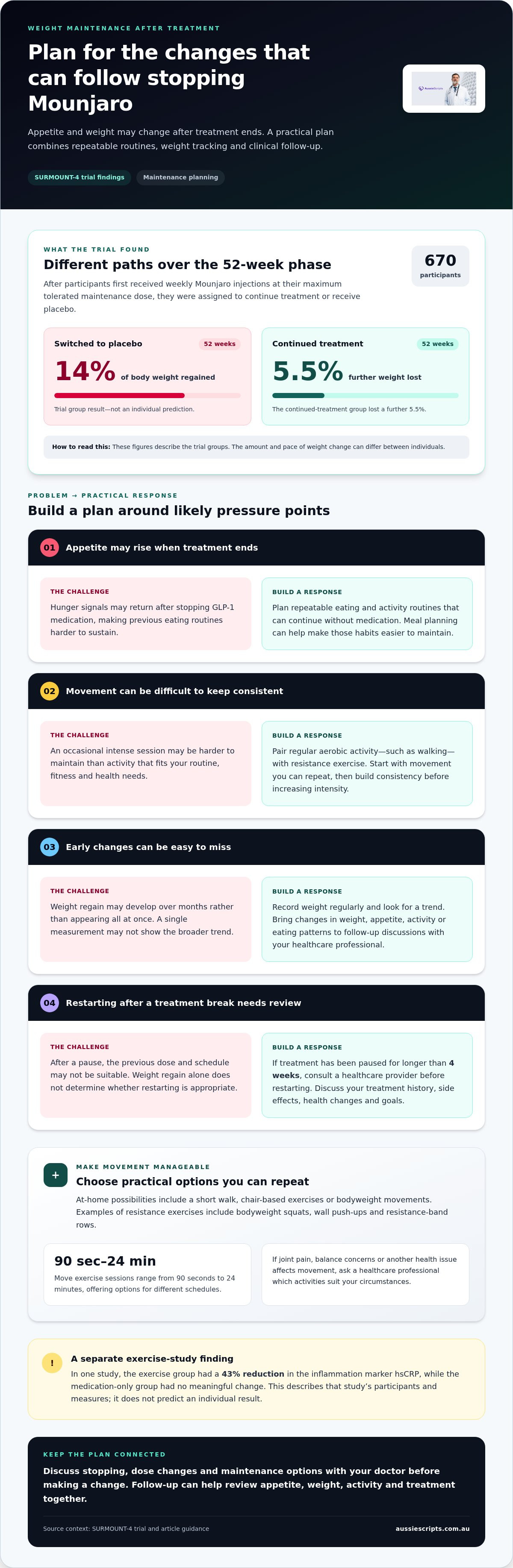
In the SURMOUNT-4 trial, participants switched to placebo regained 14% of their body weight over 52 weeks. Weight regain after stopping Mounjaro is common, as appetite-suppressing effects ease when treatment ends. Maintaining weight loss after stopping Mounjaro therefore involves planning for changes in hunger and weight, not relying on willpower alone.
If your appetite increases after stopping Mounjaro, it can feel discouraging, especially after working hard to lose weight. A rise on the scales does not erase your progress, but it can be a sign to review your routines and ongoing support.
This article explains why appetite and weight may rise, how regular movement can support maintenance, and what to discuss with your doctor before changing or stopping treatment. It also covers supervised planning, including whether dose changes or continued treatment may be appropriate for you.
Key Takeaways
- Plan for appetite changes after treatment ends by building routines that can continue without medication.
- Combine regular movement with resistance exercise to support fitness and help preserve muscle.
- Start sustainable activity habits during treatment rather than waiting until you stop.
- Discuss stopping, dose changes and ongoing maintenance options with your doctor before making a change.
- Track your weight regularly so you can notice trends early and raise them during follow-up discussions.
Do you gain weight back after stopping Mounjaro?
Weight regain is common after stopping tirzepatide, although the amount and pace vary. Trial findings highlight why a maintenance plan matters alongside decisions about medication.
This video discusses weight regain and sustainable habits after stopping treatment:
Weight Regain Study Findings
The SURMOUNT-4 trial examined whether weight loss continued after treatment stopped or was maintained with ongoing medication. According to Eli Lilly, 670 participants received weekly Mounjaro injections at their maximum tolerated maintenance dose before assignment to continue treatment or receive placebo. In the trial’s 52-week phase, the placebo group regained 14% of body weight, while participants who continued treatment lost a further 5.5%. These findings show that weight regain can follow treatment withdrawal, even after substantial progress.
GLP-1 treatment can help manage appetite while it is used, but medication isn’t a permanent substitute for habits that support health. Adults should consider how changes to eating, activity and follow-up care fit their circumstances. A plan for maintaining weight loss after stopping Mounjaro should account for appetite changes and include a way to respond if weight begins rising.
Amount and Timing of Regain
Weight regain describes weight returning after treatment ends, and it can develop over months rather than appearing all at once. In SURMOUNT-4, participants assigned to placebo regained 14% of their body weight during the 52-week phase. That figure describes the trial group, not an individual prediction. The amount a person regains may differ from the trial result.
There is no single timetable that applies to every adult. Hunger signals may return after stopping GLP-1 medication, which can affect food intake and make previous routines harder to sustain. Changes may show up gradually in weight tracking, clothing fit or eating patterns. Regularly recording weight can help identify a trend early, rather than relying on a single measurement. That gives you a clearer basis for discussing changes with your healthcare professional.
Restarting Treatment After Regain
Restarting Mounjaro means resuming medication after a break, and it should be planned with a healthcare professional. If treatment has been paused for longer than 4 weeks, consult a healthcare provider before restarting. The previous dose and schedule may not be suitable after a gap. Explain when treatment stopped, any side effects, changes in health and whether blood sugar management is also a concern.
Weight regain alone does not determine whether restarting treatment is appropriate. A prescriber can review your treatment history, health goals and reasons for stopping, then discuss suitable options. Do not restart leftover medication or change a dose independently. Discuss lifestyle support as part of the same plan, so treatment decisions and daily routines work together.
Mounjaro’s cost in Australia depends on the prescribed dose and supply arrangement, so there is no single price for every adult. PBS subsidy depends on the indication and eligibility, so do not assume weight-loss treatment is subsidised. Ask your prescriber whether your prescription meets the applicable PBS criteria and what the expected private cost would be if it does not.
Movement support and at-home exercise plans
Pairing regular movement with practical meal planning can support weight maintenance after tirzepatide. For adults living with obesity, a plan is more workable when it fits their health needs, daily routines and available support.
For diet and exercise, combine balanced meals with regular aerobic activity and resistance exercises. Build a repeatable weekly routine, then adjust it with clinical guidance to suit your fitness and health needs.
At home, keep movement accessible. A short walk, chair-based exercises or bodyweight movements can help establish a routine without specialist equipment. Exercise sessions available through Move range from 90 seconds to 24 minutes, giving people options that fit different schedules. Start with an activity you can repeat, then build consistency before increasing intensity.
Resistance exercises can complement walking or other aerobic activity. Bodyweight squats, wall push-ups and resistance-band rows, for example, use different muscle groups. If joint pain, balance concerns or another health issue affects your movement, ask a healthcare professional which activities suit your circumstances. Aim for a sustainable routine, not an occasional intense session that is difficult to maintain.
Studies show that supervised exercise can support health beyond weight change. In one study, the exercise group had a 43% reduction in the inflammation marker hsCRP, while the medication-only group had no meaningful change. This finding relates to that study’s participants and measures; it doesn’t predict an individual result. It does illustrate why movement can matter alongside medication and lifestyle changes.
Meal planning can make these habits easier to maintain. Choose a few meals you can prepare reliably, include vegetables and protein sources, and keep convenient options on hand for busy days. A simple weekly plan can also help you spot situations that disrupt eating routines, such as long workdays or unplanned meals. Adjust portions and food choices to your needs rather than following a restrictive plan that is hard to sustain.
Follow-up is another part of the plan. Regular clinical appointments can give you space to discuss changes in appetite, weight, activity and treatment. Bring practical notes, such as which movements felt manageable and where meal planning became difficult. The World Health Organization says intensive behavioural interventions involving healthy diet and physical activity may be offered to adults living with obesity prescribed GLP-1 therapies.
Support groups and counselling can address barriers that exercise plans alone may not resolve. A group can provide shared structure, while counselling can help identify emotional or behavioural patterns affecting food choices. If ongoing clinical guidance would help you plan weight-management care, consider weight-loss consultation support as part of your next steps.
Why appetite and weight may increase after stopping Mounjaro
After treatment ends, appetite and eating patterns may change. As hunger signals return, eating patterns may change and weight gain can follow.
Appetite Changes After Stopping
After stopping Mounjaro, hunger may feel stronger as the medication’s effects wear off. Familiar portions or meal routines may no longer feel as satisfying. Tirzepatide acts on appetite pathways during treatment; stopping removes that support. Notice changes such as more snacking, larger servings or stronger hunger between meals. These patterns can show when existing habits may need adjusting.
Appetite changes can also affect food choices. For instance, someone who previously felt comfortable waiting until lunch might now feel hungry earlier. Planning a filling breakfast or a prepared snack can make that shift easier to manage. Weight gain is not caused by one meal; repeated changes in intake and activity can influence longer-term weight trends. Track appetite alongside weight to see whether a change in routine is helping.
Protein can support meal satisfaction and help preserve muscle during weight loss. A practical approach is to include a protein source at each meal, such as eggs at breakfast, beans at lunch or fish at dinner. Research guidance in the supplied facts suggests 25-35 grams per meal, and 1.2-1.6 grams per kilogram of body weight daily. Individual needs differ, so discuss targets with a health professional, especially if you have other dietary needs.
Fibre and Appetite Regulation
Fibre is the part of plant foods that supports fullness and regular digestion. Including beans, oats, vegetables, fruit or whole grains can make meals more satisfying. A suggested daily target is 25-35 grams. This gives you a practical food-planning measure, rather than relying on appetite alone when medication-related effects change.
Add fibre to meals gradually through foods you already enjoy. Try berries in oats, lentils in soup or vegetables in a sandwich. Pairing these foods with protein can make a meal more filling. A varied plate can also make lifestyle changes more sustainable than restrictive rules. Note which combinations help you feel satisfied between meals.
Use these habits to respond to appetite changes, not to suppress hunger at any cost. Plan meals around predictable parts of your day, keep nutritious options available and note when cravings or hunger increase. If your weight begins to rise alongside a sustained appetite change, bring those observations to your next clinical discussion. This gives your healthcare professional concrete information to review your maintenance plan.
Building exercise habits before stopping medication
Starting a movement routine during treatment gives you time to find activities that fit your health and everyday schedule. The aim is to make exercise a regular part of life, rather than a response to changes on the scales.
Exercise Evidence for Weight Maintenance
Evidence on exercise and weight maintenance supports consistent activity as part of a broader behaviour-change plan. Short, regular sessions can be easier to repeat than occasional intense workouts. A walk after lunch on workdays, for example, may fit better than relying on a long weekend workout. Choose activities you can continue if your schedule or treatment changes.
Keep a simple record to see what helps your routine stick. Note the activity, when you did it and practical barriers, such as weather or limited time. If a planned walk becomes difficult, an indoor alternative can help maintain the habit. Your record also gives you something specific to discuss during a health review.
Exercise and Muscle Retention
Resistance training uses muscles against a force, such as your body weight or an exercise band. It can help build muscle and improve how the body handles blood sugar during tirzepatide treatment. This makes strength work relevant beyond weight change, especially for people managing diabetes or monitoring blood sugar with their clinician.
Choose movements that match your current ability, such as standing up from a sturdy chair or pressing gently against a wall. Focus on control and comfortable technique rather than increasing difficulty quickly. If pain or another health concern limits a movement, discuss adaptations with a healthcare professional. Note which exercises feel manageable and which need adjusting.
Exercise Recommendations and Habit Building
Build a habit by linking activity to a reliable cue and making the first step easy. Set out walking shoes near the door or schedule a short movement break after a regular daily task. If you miss a planned session, return at the next opportunity instead of treating one interruption as a reason to stop.
Add variety without making the plan complicated. You might alternate walking with home-based resistance movements, then adjust the mix as your confidence and capacity change. Keep the routine realistic during busy weeks and identify an easier option for low-energy days. Weight-loss injections should accompany behavioural change, not replace it. Before changing medication, review with your healthcare professional how exercise fits your health and daily routine.
Safe stopping and maintenance-dose discussions with a doctor
In Australia, long-term weight management after Mounjaro involves ongoing lifestyle support and clinician-supervised treatment decisions. Discuss stopping or maintenance-dose options with your prescriber before changing treatment.
Discussing Safe Stopping With a Doctor
A discussion about stopping is a chance to review your reasons, health needs and options before changing medication. This matters because appetite changes and weight regain can follow treatment withdrawal. Bring a clear account of side effects, treatment benefits and concerns, such as cost or difficulty continuing. Also discuss diabetes management, other medicines and the eating or exercise habits you can sustain.
Mounjaro can remain in the body for around 25 to 30 days after treatment stops. That doesn’t mean its effects will end on a predictable day for everyone. If reducing the dose is medically appropriate, the reduction should be gradual and supervised by a healthcare professional. Don’t change the dose or restart leftover medication independently.
Use the appointment to agree on what happens next. Ask how follow-up will work, what changes in appetite or weight to record, and when to raise concerns. A simple log of medication use, side effects, meals and activity can help. It gives the prescriber specific information to consider, rather than relying on memory during a short appointment.
Guidance on Long-Term Weight Management
Long-term weight management brings together treatment decisions, sustainable eating, movement and follow-up. Stopping medication can change appetite, while daily routines continue to influence weight. There is no single stopping schedule that suits everyone. A clinician can consider your treatment history, health priorities, side effects and risk factors before discussing a plan.
Ask how the plan will address both weight and related health concerns, including blood sugar where relevant. If you have diabetes, clarify how stopping or changing treatment affects your diabetes care. Record weight trends and appetite changes, then bring those observations to follow-up. A single increase can have several causes, so patterns over time offer more useful context.
Keep exercise and eating habits in the discussion, rather than treating them as separate tasks once medication ends. Identify a regular activity you can continue and meals that remain practical on busy days. If side effects made eating or movement difficult during treatment, explain which routines were affected. Your prescriber can consider this context when discussing continued treatment, dose changes or other support.
Prepare questions before the appointment: what to do if hunger returns, how to report side effects, and when to review progress. A weight loss consultation can help you discuss treatment and maintenance planning with a doctor.
Aussie Scripts: Standard Script
Aussie Scripts offers Standard Script for online prescription requests, assessed by an Australian-registered doctor. If you need to discuss medication after weight loss, this service lets you present your health history and treatment needs for clinical review. A prescription depends on the doctor’s assessment and what is appropriate for your circumstances.
Prepare details about your current or previous treatment, side effects and any changes in appetite or weight. This context can support a focused discussion about next steps. Standard Script is for prescription requests and does not replace ongoing follow-up with your usual healthcare team.
To request a prescription review, start a Standard Script request with Aussie Scripts.
Make your next step part of the plan
Maintenance does not depend on having a perfect routine. Choose one practical adjustment you can sustain, such as setting a regular time for movement or planning meals for busy days. Bring that specific goal to your next clinical discussion. A clear, manageable focus can make maintaining weight loss after stopping Mounjaro feel more structured and help you identify what needs attention as circumstances change.
For prescription or weight-management support, Aussie Scripts offers Standard Script, Express Script and Medical Certificate services. A doctor can assess your circumstances and discuss appropriate options through a consultation. This can be a useful next step if you are reviewing treatment or deciding what to raise with your healthcare professional.
Contact Aussie Scripts to discuss your options. Keep the plan practical, review it as your needs change, and take the next step at a pace you can maintain.
Frequently Asked Questions
What happens when you stop taking Mounjaro?
After stopping, arrange follow-up to review your health goals and any conditions being managed alongside your weight. Bring your current medication list and recent health measurements to the appointment. If you use Mounjaro as part of diabetes care, include your blood sugar records and ask how your diabetes plan should be reviewed. This helps ensure the next steps address your overall health, not only changes on the scales.
Is Weight Regain Inevitable After Mounjaro?
No, weight regain is not inevitable, and one change on the scales does not establish a lasting trend. Look at patterns over time alongside factors such as routine, sleep, eating and activity. If you notice a sustained change, note when it began and what else changed in your day-to-day life. These details can make a follow-up conversation more specific and help identify practical adjustments.
Is it harder to maintain weight after Mounjaro than "normal" weight loss?
It can feel different, but comparisons with “normal” weight loss are difficult because studies may involve different participants, treatments and follow-up periods. Your maintenance needs depend on factors such as how much weight you lost, health conditions and daily routines. Rather than comparing yourself with someone else, use your own progress over time to identify what is changing and what support may help.
What did the research find about stopping Mounjaro?
Research found that weight regain can occur after participants stop tirzepatide, while participants who continued treatment had different outcomes. These are group-level findings from a controlled study, not a forecast for an individual. Apply them as a reason to plan follow-up, not as a deadline or expected result. Ask your clinician how the study’s findings relate to your treatment history and health priorities.
What causes weight regain after stopping tirzepatide?
Weight can rise when eating and activity patterns shift after treatment changes. For example, frequent takeaway meals during a busy period may affect overall intake, while an injury can interrupt regular movement. Stress, changes in routine and food availability can also shape habits. Identifying what has changed in your circumstances helps focus a maintenance plan on relevant barriers, rather than assuming one cause explains every increase.
Should Mounjaro be tapered or stopped suddenly?
Discuss stopping or changing Mounjaro with your prescriber rather than setting a schedule yourself. Before the appointment, write down your current dose, when you last took it, why you want to stop, and any symptoms or side effects. Mention other medicines and relevant health conditions, too. This information helps the clinician assess your circumstances and discuss an appropriate treatment plan.
Can switching to a lower dose or another weight-loss medicine prevent regain?
A lower dose or a different medicine may be discussed as part of an individual treatment plan, but neither guarantees that weight regain will be prevented. The prescriber will consider your health history, response to treatment, side effects and other medicines. Do not overlap treatments or change doses on your own. Ask what monitoring and follow-up would accompany any proposed change.
Disclaimer
The information provided by AussieScripts is for general informational purposes only and does not constitute medical advice, diagnosis, or treatment. For advice tailored to your specific symptoms or health concerns, please consult one of our doctors or your regular GP.
