Managing chronic illness remotely through monitoring and daily routines
Managing chronic illness from a remote location? Track symptoms, medicines, build routines and use telehealth to support ongoing care in rural Australia.
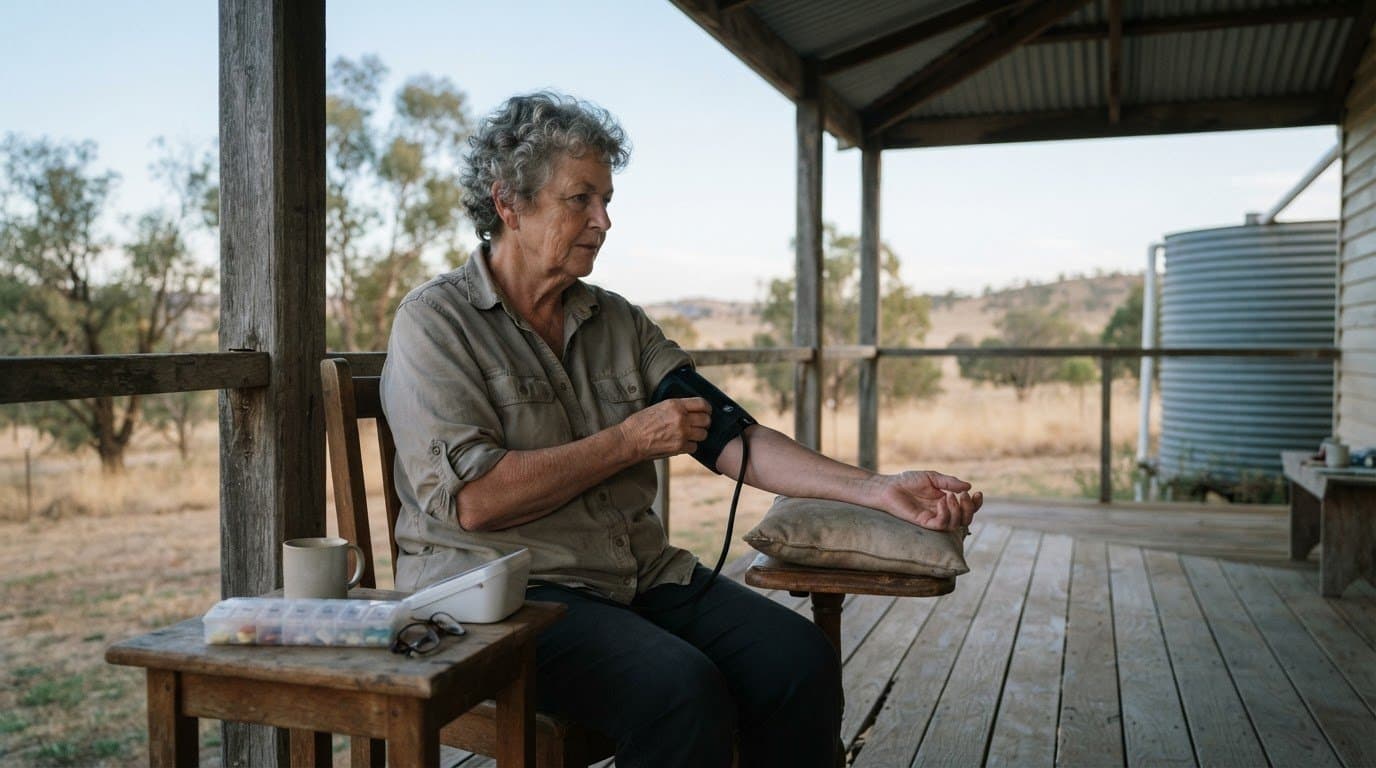
Distance changes how chronic care is organised, but not the need for consistent care. Managing chronic illness from a remote location can involve tracking symptoms and medicines, maintaining daily routines and using remote consultations to stay connected with health professionals. These steps support an existing care plan; they don’t replace clinical assessment when your health changes.
If you live in a rural or remote area of Australia, travel and access to local services can make regular follow-up harder to organise. A practical routine that fits your day, along with a clear way to share health changes with your care team, can help.
This article explains how remote monitoring, medication tracking and everyday habits can support ongoing management, and what to consider when making them part of your routine. It also covers planned telehealth follow-ups and when an online consultation may help with a prescription or specialist referral. The goal is a workable approach that supports continuity of care without treating technology as a substitute for professional oversight.
Key Takeaways
- Learn how remote monitoring can help track changes in symptoms and vital signs, and support earlier clinical follow-up.
- Build consistent routines for medicines and health observations so useful information is ready to share with your care team.
- Explore practical ways to manage chronic conditions in rural and remote Australia, including planned telehealth follow-ups.
- Understand how everyday activity, sleep and other lifestyle habits can fit into a chronic condition management plan.
- Find out how online consultations, prescription services and specialist referrals may support ongoing care.
Remote monitoring and early complication detection
Telehealth monitoring combines planned clinical contact with measurements taken at home, helping people in rural Australia track their health between appointments.
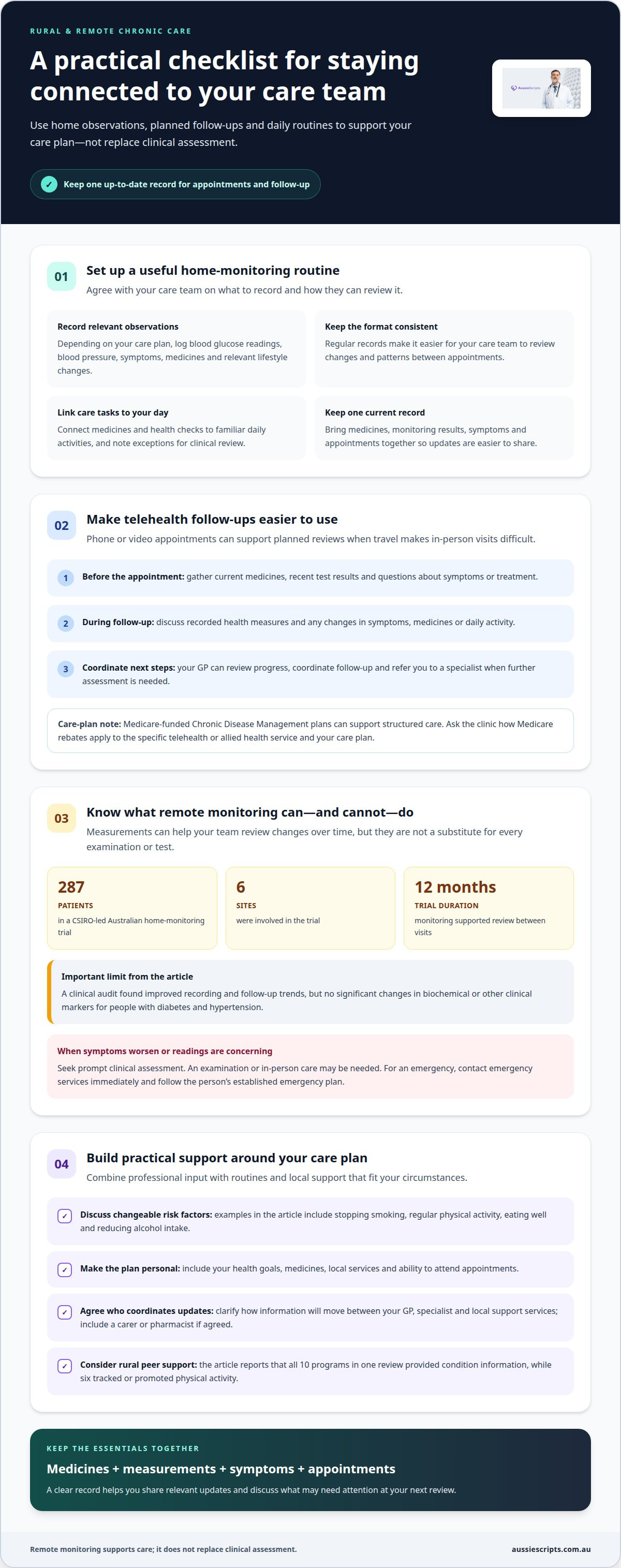
Medicare-funded Chronic Disease Management plans can support structured care and ongoing input from health professionals. For telehealth or allied health appointments, ask the clinic how Medicare rebates apply to the specific service and your care plan.
People in remote Australia can arrange regular GP and specialist appointments by phone or video where available. A GP can coordinate follow-up and refer a patient to a specialist when further assessment is needed.
Telehealth Monitoring for Chronic Conditions
Telehealth monitoring uses remote consultations and recorded health measures to support chronic disease management. For diabetes, this can include sharing blood glucose readings, medicine use and changes in activity with a care team. A CSIRO-led Australian home-monitoring trial involved 287 patients across six sites over 12 months. Monitoring supports review between visits, but does not replace clinical assessment.
Sharing Results With the Care Team
Remote monitoring is most useful when measurements are recorded consistently and shared in a format the care team can review. You might log blood glucose readings, blood pressure, symptoms, medicines and relevant lifestyle changes, then discuss patterns during a telehealth appointment. Agree with your care team on what to record and how to share it, so observations can inform clinical follow-up.
Detecting Complications and Knowing When In-Person Care Is Needed
Remote monitoring can reveal changes over time, but home readings cannot replace every examination or test needed to assess a complication. A clinical audit of a remote project found improved recording and follow-up trends, but no significant changes in biochemical or other clinical markers for people with diabetes and hypertension. New or worsening symptoms, concerning readings or a need for examination require prompt clinical assessment, including in person when indicated.
For an emergency involving a chronic illness complication, contact emergency services immediately and follow the person’s established emergency plan. Keep their condition, medicines and recent readings available for responders, and state the location clearly when arranging help or transport.
To coordinate care, keep one up-to-date record of medicines, monitoring results, symptoms and appointments. Share relevant updates with your local clinic and specialist. If agreed, include a carer or pharmacist in communications so changes and follow-up actions are clear.
Chronic condition prevention and management in rural and remote Australia
Care in rural Australia can combine local clinical support, telehealth and practical self-management. A prevention plan should reflect the person’s condition, access to services and daily circumstances.
Telehealth Service Options
Telehealth uses phone or video consultations to connect people with health professionals when travelling to appointments is difficult. It can support planned follow-ups, symptom discussions and coordination with local services. Rural peer-support programs may combine telecommunications with face-to-face meetings, giving members opportunities to share condition-management strategies and connect in person.
Before an appointment, gather your current medicines, recent test results and questions about symptoms or treatment. A GP can use this information to review progress, adjust care or consider specialist input. Medicare-funded Chronic Disease Management plans can provide a structured approach involving a team of health professionals.
Preventing and Managing Chronic Conditions
Prevention focuses on risk factors that can be changed, while long-term management supports people already living with a condition. Examples include stopping smoking, regular physical activity, eating well and reducing alcohol intake. For someone with type 2 diabetes, a care plan can connect lifestyle changes with prescribed medicines and regular GP reviews.
Rural peer support can add practical learning and social connection to clinical care. A review of rural programs found that all 10 provided participants with information about their chronic condition, while six tracked or promoted physical activity. These approaches can help people build skills and maintain routines alongside professional care.
Some chronic conditions, including kidney disease and stroke, can develop in connection with controllable risk factors. A GP Management Plan can outline treatment and support needs, helping you and your care team organise follow-up around your circumstances. The plan is most useful when it reflects your health goals, medicines, local services and ability to attend appointments.
If you have several care needs, agree on who coordinates updates between your GP, specialist and local support services. Keep your medicines list current and note changes in symptoms or daily activity before your next review. These steps make it easier to discuss what is working and where your care plan may need attention.
When an online medical consultation is relevant to a separate prescription or referral need, explore online medical support.
Daily routines and medication tracking
A repeatable routine can make medicines and health checks easier to manage between appointments. Link each task to a familiar daily activity, then note any exceptions for clinical review.
Building Daily Routines
A daily routine links care tasks to regular activities, such as taking prescribed medicine with breakfast. This can reduce missed steps and create a consistent record for health professionals. Keep monitoring equipment somewhere practical and follow the schedule agreed with your treating team. If work, travel or changing symptoms disrupt your routine, note what changed.
Use a simple sequence: review your care plan, take any requested measurement, take medicines as prescribed, then record relevant symptoms. For example, a person with diabetes might check blood glucose with breakfast if that timing is part of their clinical plan. Connected devices can store readings, but you still need to know how results reach your care team.
Set reminders around existing routines rather than relying on memory alone. A phone alarm can prompt a medicine dose, while a paper calendar can mark appointments or repeat tests. If you miss a dose, record it and follow the instructions provided by your prescriber or pharmacist. Don’t double a dose unless the medicine instructions say to do so.
Tracking Medications
Medication tracking means keeping an up-to-date record of prescribed medicines, doses and changes. It helps a GP, specialist or pharmacist understand what you are taking when reviewing symptoms or monitoring results. Include prescription medicines and relevant changes, such as a new dose or a medicine that has stopped, following your prescriber’s directions.
Keep the list in one accessible place, such as a notebook or secure digital record. During a telehealth appointment, compare it with the medicines you are taking and report missed doses, side effects or difficulty obtaining a repeat prescription. This gives the clinician useful context when deciding whether further review or a change to your care plan is appropriate.
Connected monitoring is most useful when a reading leads to a clear next step. Agree with your care team on which results to share, how to send them and what to do if a result is unusual. For example, you could send a device reading before a scheduled review, then discuss a pattern rather than relying on one isolated measurement. Keep device instructions and care-plan guidance together.
Lifestyle modification recommendations
Lifestyle changes can support chronic disease prevention and complement clinical treatment for people already diagnosed. Build them around your daily circumstances, health goals and care-plan advice. For example, someone with cardiovascular disease might discuss activity, food choices and sleep with their GP, then record agreed changes for later review.
Physical activity can be adapted to location and ability. The recommendation is at least 30 minutes of moderate exercise on most days, such as a brisk walk on a safe local route or gardening at a steady pace. A patient with pain, breathlessness or limited mobility can discuss suitable activity with a health professional before changing their routine.
- Choose an activity that fits the local environment and the patient’s capacity.
- Record activity and symptoms, such as unusual breathlessness, for clinical discussion.
- Aim for 7-9 hours of sleep per night and note persistent sleep disruption.
- Try five minutes of focused breathing to reduce tension during a stressful day.
Food choices, smoking and alcohol use can also form part of prevention planning. For example, if you smoke, you can discuss quitting support with a GP. If you are changing your diet, note practical barriers such as limited local options. The aim is to identify realistic changes and review how they fit with treatment, not replace prescribed care.
A health record can make these changes easier to discuss. Note the date, activity, sleep pattern and any symptoms that affect daily function. For cardiovascular disease, you might record a change in walking tolerance or when chest discomfort occurs, then share that information during a clinical review. A record can help reveal patterns, but it cannot diagnose a complication.
When it suits your care plan, make one agreed change at a time. For instance, if you have a sedentary routine, you could add a regular walk, note how it feels and bring the record to your next GP appointment. If a lifestyle change coincides with new or worsening symptoms, document the timing and seek clinical advice. This gives your care team useful context when reviewing prevention or treatment.
To make focused breathing easier to incorporate, choose a point in the day when tension is noticeable and set aside 5 minutes. Keep the practice simple: pause, direct attention to the breath, and return attention to it when it wanders. It can be treated as one option within a broader plan, rather than a replacement for activity, sleep, food choices or clinical care. If a particular setting makes the pause difficult, consider another time or place that fits the day.
A brief note can record when you practised, what was happening beforehand and whether your tension felt different afterward. Share that context with a GP or other health professional if it is relevant to your care plan. The record need not turn the exercise into a performance target; it can simply help you decide whether the approach feels manageable alongside other agreed changes. If focused breathing does not suit you or raises concerns, discuss alternatives with your care team and keep the rest of your plan under review.
What telehealth services are available for chronic illness management in rural and remote Australia?
Telehealth can connect people in rural and remote Australia with clinicians for planned reviews, treatment discussions and care coordination. The right format depends on the purpose: a phone appointment may suit a straightforward follow-up, while video can help a clinician discuss visible symptoms or demonstrate a technique.
A GP telehealth appointment can review a chronic condition, discuss symptoms and coordinate next steps. Before the consultation, prepare a current medicines list, recent test results and key questions. If your symptoms have changed since your last review, describe when they began and how they affect daily activities. This gives the GP relevant context to decide whether further assessment is needed.
Specialist appointments by phone or video can support ongoing care when travelling to an appointment is difficult. A GP may refer you when specialist input is needed, then coordinate information between the specialist and local clinic. Keep appointment summaries and treatment recommendations together so the next clinician can understand decisions and follow-up actions.
Allied health support may also form part of chronic condition care. Depending on your needs, this could involve discussing movement, nutrition or daily function with an appropriate health professional. Medicare-funded Chronic Disease Management plans support structured care involving a team of professionals. The plan can help clarify each provider’s role and the goals being addressed.
Remote monitoring can combine scheduled consultations with health measurements taken at home. For example, you might use a home device to record readings, then discuss trends during a planned review. Agree on which results matter, how to share them and what to do if a reading or symptom changes. A device alone cannot interpret results clinically.
Some rural peer-support programs combine telecommunications with face-to-face meetings. A group member might join a phone session to share practical ways of living with a condition, then attend an in-person meeting when available. Peer support can complement clinical care, but it does not replace diagnosis, treatment or urgent assessment.
Choose the appointment format around the clinical task. A clinician may recommend in-person assessment if examination, testing or immediate care is needed. For a suitable online consultation about a prescription or referral, start an online consultation.
The Australian trial found home monitoring reduced healthcare system costs by 24 per cent over the year. During its 12-month period, the trial found a 53 per cent decrease in hospital admissions and a 76 per cent reduction in hospital length of stay.
Aussie Scripts
Aussie Scripts provides virtual consultations with Australian-registered doctors for specific healthcare needs. If you are managing a chronic condition remotely, an online prescription, medical certificate or specialist referral assessment may help with a particular task. These services do not replace ongoing monitoring, a personalised care plan or in-person assessment when required.
A Standard Script or Express Script may suit a request for a prescription review. A doctor assesses the request and decides whether a prescription is clinically appropriate. A consultation does not guarantee a prescription. Have your current medicine details and relevant health information ready so the doctor can consider your request in context.
A Medical Certificate may be appropriate if illness affects your capacity to work or study and you need documentation. The doctor considers the consultation and information you provide before deciding whether a certificate is suitable. It is separate from treatment planning and does not replace follow-up with the clinician managing your chronic condition.
A Specialist Referral may help when you need specialist input for a health concern. A referral can support the next step in care, while your usual GP or care team remains important for coordinating ongoing treatment. Bring relevant details about your condition and current care to the consultation so the doctor can assess your request.
These options address specific consultation needs, not every part of chronic illness management. They do not provide remote vital-sign monitoring, emergency care or an in-person physical examination. For a sudden or severe complication, seek urgent medical care rather than relying on an online consultation. For routine follow-up, continue using the care arrangements established with your treating team.
Before starting a consultation, identify the task you need help with and have relevant health details ready. For a prescription request, have the medicine information available; for a referral, explain the concern and why specialist input is being considered. The doctor can assess your request and determine an appropriate next step.
If an online consultation fits your current need, contact Aussie Scripts to discuss the next step.
Make your next care step practical
Managing chronic illness from a remote location is easier when you know what to do next. Choose one issue to raise at your next appointment, such as a medicine question, a referral need or how to maintain follow-up when travel is difficult. A focused discussion can help you identify suitable support within your existing care arrangements.
Keep your current health information accessible before an online consultation. Clear details about your request help the doctor assess what may be appropriate. An online appointment is not a substitute for emergency care or an in-person assessment when needed, so choose the right care pathway for the urgency of your concern.
If a virtual consultation could help with a prescription request, medical certificate or specialist referral, contact Aussie Scripts to discuss your next step. Continue working with your treating team on ongoing monitoring and care planning. A practical plan can help you move forward with confidence, wherever you live.
Frequently Asked Questions
How can you manage a chronic illness while living remotely in Australia?
Managing a chronic illness from a remote location works best with an agreed care plan and reliable ways to stay in touch with your health team. Keep a current list of medicines, allergies and key contacts together. If internet access is unreliable, arrange a phone-based backup for appointments and updates. Tell your GP who to contact if you cannot attend a review or need help coordinating care.
How can remote patients get prescriptions and medicines delivered in Australia?
Start with a consultation so a doctor can assess whether a prescription is appropriate. If approved through Aussie Scripts, an eScript is sent by SMS and can be filled at a pharmacy. Aussie Scripts does not dispense or deliver medicines. Contact your chosen pharmacy about collection or delivery options, and arrange a repeat prescription before your current supply runs out.
Disclaimer
The information provided by AussieScripts is for general informational purposes only and does not constitute medical advice, diagnosis, or treatment. For advice tailored to your specific symptoms or health concerns, please consult one of our doctors or your regular GP.
