Managing Duromine Side Effects Long Term: Relief and Risks
Tips for managing duromine side effects long term. Learn how to ease common symptoms like dry mouth, understand safety limits, and recognize warning signs.

Dry mouth and constipation are recognised side effects of phentermine, the active medicine in Duromine. When managing Duromine side effects long term, remember that treatment in Australia should not exceed three months and requires medical review after a defined course. Common symptoms may settle, but persistent or worsening effects need discussion with a healthcare professional.
These symptoms can be uncomfortable, and it’s reasonable to want practical ways to ease them while staying alert to risks. This guide explains why dry mouth and constipation can occur, what may help with common side effects, and how Duromine compares with other phentermine brands such as Adipex.
You’ll also learn which symptoms need prompt action. Shortness of breath, chest pain, fainting, leg swelling or an unexplained reduction in exercise tolerance while taking phentermine warrants immediate treatment discontinuation and specialist investigation.
Key Takeaways
- Dry mouth and constipation are recognised phentermine side effects; learn which everyday measures may help ease these symptoms.
- In Australia, Duromine is contraindicated during MAOI use and for 14 days after taking an MAOI. Alcohol should also be avoided while taking phentermine.
- Know the serious warning signs, including shortness of breath, chest pain, fainting, leg swelling or unexplained reduced exercise tolerance, which require immediate treatment discontinuation and specialist investigation.
- Duromine treatment should not exceed three months in Australia and requires medical review after a defined course.
- Adipex and Duromine contain phentermine, so their potential side effects overlap; the article explains why brand differences don’t remove the need to monitor symptoms.
Does phentermine cause dry mouth and constipation?
Yes. Dry mouth and constipation are recognised side effects of phentermine, the active medicine in Duromine. Other common effects include insomnia, headache, tremor, dizziness, restlessness, diarrhoea, taste changes, itchy skin or hives, and a small increase in heart rate and blood pressure. Symptoms vary, so note when they begin and whether they persist or worsen.
Duromine is used in Australia as a short-term adjunct to a medically monitored weight-reduction regimen for obesity. It is indicated for patients with a BMI of 30 kg/m² or greater. Treatment may also be initiated for people with a BMI of 25 to 29.9 kg/m² when their risk of morbidity from disorders is increased. For anyone managing Duromine side effects long term, the treatment limit matters: use should not exceed three months and requires medical review after a defined course.
For a clinical overview of Duromine and phentermine, watch this video:
For dry mouth, keep water nearby and take regular sips throughout the day. Sugar-free gum or lozenges may help stimulate saliva. Choose water rather than alcohol, which should not be consumed while taking phentermine. If dry mouth makes eating, swallowing or speaking difficult, note the symptom and raise it during a medical review.
Changes in food, fluid intake and daily movement can affect constipation. Add fibre-rich foods such as vegetables, fruit, legumes and whole grains, and maintain regular activity where appropriate. Note bowel changes alongside other symptoms. Persistent constipation, worsening discomfort or a new symptom warrants clinical review, rather than simply increasing a medicine or adding a laxative.
Check medicines and health conditions
Phentermine must not be taken with a monoamine oxidase inhibitor (MAOI), or within 14 days after taking one. Tell the prescriber about current medicines and recent MAOI use before treatment. This restriction matters even if the medicine was stopped, because the 14-day interval still applies.
Discuss health conditions that could affect safe use, including hypertension or other cardiovascular disease. Phentermine can slightly increase heart rate and blood pressure, so existing hypertension is relevant to treatment decisions. Take Duromine in the morning at breakfast, as evening dosing can contribute to insomnia. If dry mouth, constipation or another effect persists or worsens, seek a medical review rather than adjusting the dose yourself.
Serious side effects, including pulmonary arterial hypertension
Phentermine can rarely cause serious effects beyond dry mouth or constipation. Promptly report new agitation, hallucinations or other marked mood and behaviour changes. Misuse and dependence are also recognised risks, particularly when treatment continues for more than a few weeks. This makes the intended treatment duration and regular medical oversight important parts of obesity care.
Pulmonary hypertension is a serious condition involving high pressure in the blood vessels between the heart and lungs. Symptoms can include shortness of breath, chest pain, fainting, leg swelling or reduced ability to exercise. While taking phentermine in Australia, these symptoms warrant immediate treatment discontinuation and specialist investigation. Don’t dismiss a new decline in exercise tolerance as ordinary weight-related fatigue.
Evidence about pulmonary hypertension needs careful interpretation. A case-control study found an increased risk of primary pulmonary hypertension with anorectic agents other than phentermine when used for more than three months. That finding does not establish the same risk for phentermine. However, pulmonary hypertension remains listed among rare but serious phentermine side effects, so compatible symptoms call for prompt attention rather than watchful waiting.
Heart valve damage has a distinct historical context. In the late 1990s, valve damage and leakage were identified when phentermine was used with fenfluramine or dexfenfluramine for weight loss. The combinations became known as fen-phen. Fenfluramine and dexfenfluramine were taken off the market after the combinations were associated with damaged, leaky valves that forced the heart to work harder. This combination history should not be misrepresented as proof that phentermine alone caused those cases.
Other serious effects include dangerously high blood pressure or heart rate. Existing heart disease or hypertension is therefore important to disclose during treatment discussions. Seek urgent assessment for severe or rapidly worsening symptoms, including chest pain, fainting, or breathlessness. For potentially life-threatening symptoms, call 000 in Australia.
Keep a clear record of changes: note the symptom, when it began, whether it is worsening, and any effect on ordinary activity. Include changes in mood, breathing, chest discomfort, or swelling, not only familiar effects such as dry mouth. A concise record helps a clinician assess the pattern and decide what investigation is needed. For treatment decisions involving weight and medicine risks, a weight loss consultation can provide an opportunity to discuss the concerns with a doctor.
Side effects and serious cardiovascular symptoms
Phentermine is a stimulant, so changes in sleep, mood, heart rate and blood pressure matter during weight loss treatment. For adults aged 18 to 60 taking no other medication and without other medical conditions, possible effects include high blood pressure, restlessness and insomnia. That profile doesn’t describe every patient, but it shows why new symptoms deserve attention.
Timing can affect sleep. Duromine should be taken in the morning; taking it after lunchtime may make it difficult to sleep at night. Record the dose time alongside sleep changes, such as trouble falling asleep or waking repeatedly. Restlessness and insomnia can also affect concentration and routine activities. Don’t compensate for poor sleep by changing the dose yourself.
Cardiovascular symptoms need a different response from manageable sleep disruption. While taking phentermine in Australia, shortness of breath, angina, fainting, lower limb oedema or unexplained worsening of exercise tolerance warrants immediate treatment discontinuation and specialist investigation. These signs may indicate a serious cardiovascular problem. New breathlessness during an ordinary walk or swelling in the lower legs, for example, should not be dismissed as a normal part of weight loss.
A small increase in heart rate and blood pressure is among the common side effects, but severe or worsening symptoms require medical attention. Note when they began, what activity you were doing and whether they recur. Record chest discomfort, palpitations, dizziness or faintness. These details help show whether a brief change is becoming a pattern that affects cardiovascular function.
- Sleep: Record the morning dose time and any insomnia or restlessness.
- Heart and circulation: Note breathlessness, angina, fainting, leg swelling or reduced exercise tolerance, then stop treatment and seek specialist investigation.
- Mood: Report new or worsening agitation, hallucinations or behaviour changes promptly.
Combination treatment also needs careful review. Take phentermine and Ozempic (semaglutide) together only if the prescriber recommends it. In most cases, taking more than one weight-loss medicine at a time isn’t recommended. Give the prescriber a complete list of medicines and supplements, including anything started after phentermine, so potential interactions can be considered.
For ongoing weight-loss treatment discussions, a weight loss consultation can help you review symptoms, medicine combinations and cardiovascular concerns with a doctor.
If symptoms are new or worsening, consult a healthcare provider rather than waiting for a routine review. Describe what has changed and when it began, and mention any medicines or supplements you take. This advice applies even if the symptoms seem manageable; a healthcare provider can assess them and advise on next steps. If you experience potentially life-threatening side effects while taking phentermine, call triple zero (000) or your local emergency number immediately.
For non-urgent health advice in Australia, you can call Healthdirect on 1800 022 222 if breathlessness, chest pain, fainting, leg swelling or reduced ability to exercise occurs while taking Duromine. If symptoms feel severe or potentially life-threatening, call triple zero (000) or your local emergency number immediately. Keep the symptom details available when seeking advice, including whether the problem is getting worse or happening again.
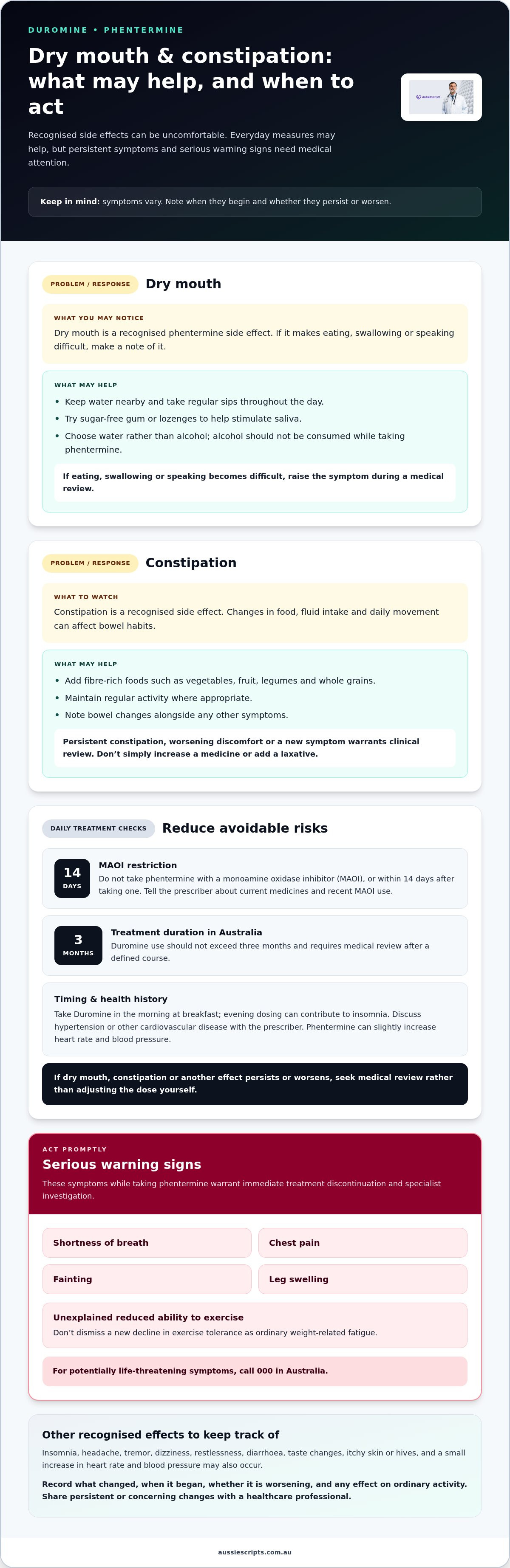
Constipation and headache relief
Manage Duromine side effects by recording symptoms and discussing persistent problems with your doctor. Don’t change the dose yourself; any dose change should be part of a medical review that considers side effects and treatment response.
For constipation, build a consistent routine around meals, fluids and movement. Gradually add fibre-rich foods such as pears, vegetables, beans and whole grains. Drink water regularly, and include a walk or other suitable activity in your day. A simple diary can track bowel movements, food changes and when constipation began. This gives your doctor specific details rather than a general report that your bowels feel different.
Persistent constipation deserves review, especially if it worsens or disrupts daily activities. Phentermine may contribute, but other medicines, dietary changes and health conditions can also affect bowel habits. Share a full medication list, including non-prescription products, with your doctor. Don’t start a laxative or make a major diet change without considering your health conditions and current medicines.
Headache is another recognised phentermine side effect. Note its timing, severity, duration and any accompanying symptoms. For example, record whether it starts after the morning dose, follows a missed meal or occurs with dizziness. Rest in a quiet space and maintain regular fluid intake. Raise a new, persistent or worsening headache with your doctor, particularly if it affects normal activities.
Don’t increase, reduce or take an extra Duromine dose to respond to a headache or constipation. Higher phentermine doses, such as 37.5 milligrams (mg), may be more likely to cause side effects than lower doses. Your doctor can weigh symptom severity, treatment benefit, dose and other medicines before deciding whether a change is appropriate. A symptom diary helps make that review specific.
People with type 2 diabetes who take diabetes medicines should test blood sugar before and during phentermine treatment. Weight loss can cause low blood sugar, so readings help identify a change that might otherwise be mistaken for a headache or general discomfort. Keep the readings with your medication and symptom notes, then discuss unusual results with your treating professional.
- For constipation: Track bowel changes, gradually add fibre-rich foods, drink water and keep up suitable movement.
- For headache: Record timing and related symptoms; seek review if it persists, worsens or limits daily function.
- For dose decisions: Bring symptom notes, blood sugar readings where relevant, and your medicine list to the doctor.
Many Duromine side effects settle over time, but persistent or worsening symptoms need medical review. In Australia, phentermine treatment requires medical review at least every 3 months. Use that appointment to discuss constipation, headache, diabetes readings and whether the current dose remains suitable.
Adipex and Duromine side effects
Adipex and Duromine are phentermine medicines, so their potential side effects overlap. For Australian readers, the key difference is the treatment context: Duromine use is short term and medically monitored.
Common Long-Term Side Effects
Side effects that can continue during treatment include dry mouth, constipation, insomnia, headache, restlessness and increased blood pressure or heart rate. Taking phentermine for more than a few weeks also increases the risk of addiction and dependence. Ongoing symptoms should prompt a review, not a decision to extend treatment independently. Track changes in sleep, bowel habits, mood and exercise tolerance so you can describe their effects clearly.
Alternatives for Persistent Side Effects
If side effects persist, a doctor can reassess phentermine treatment and discuss other weight-management approaches. A review can consider symptom severity, blood pressure, sleep disruption, treatment response and other medicines. Don’t switch to Adipex assuming a different brand will remove phentermine-related effects. Likewise, don’t change the dose or combine weight-loss medicines without the prescriber’s direction. The practical next step is a review of your full treatment plan.
Treatment Duration and Safety
In Australia, Duromine treatment should not exceed three months and requires medical review after a defined course. Phentermine is used short term, for a few weeks, to manage obesity. This limit matters even if weight loss continues or symptoms feel manageable: neither is a reason to extend treatment yourself. Discuss the end of the course and ongoing weight management with your treating doctor before continuing or restarting.
Monitoring and Follow-Up
Follow-up during Duromine treatment includes regular healthcare check-ups every few weeks to months, with medical review at least every 3 months in Australia. Bring a current medicine list and notes on sleep, mood, blood pressure symptoms, bowel changes and exercise tolerance. A doctor can assess treatment response and emerging concerns. People with type 2 diabetes taking diabetes medicines should test blood sugar before and during treatment, because weight loss can cause low blood sugar.
Fenfluramine and dexfenfluramine were associated with heart-valve damage when combined with phentermine in the fen-phen combinations. That history concerns combination treatment, not proof that Adipex and Duromine differ in side-effect risk. For a discussion of other treatment approaches, consider an alternative medicine consultation.
If you have concerns about whether treatment remains suitable, speak with your healthcare provider. Phentermine is typically prescribed for short-term use, and longer use requires careful medical supervision. Keep the prescriber informed if treatment continues beyond the intended short-term course, so they can review the situation and guide next steps.
Many Duromine side effects settle over time, but contact your healthcare provider if symptoms persist or worsen. Describe which symptoms are continuing or changing and how they affect you. Don’t wait for symptoms to settle without seeking advice if they become more troublesome. A provider can assess the reported effects and advise on the next step in your care.
Aussie Scripts: Standard Script
Aussie Scripts offers Standard Script for people seeking online prescription support through a virtual consultation with an Australian-registered doctor. If you’re experiencing ongoing Duromine side effects, discuss them with a doctor before changing or continuing treatment. A consultation can help you raise your symptoms, current medicines and questions about next steps. Standard Script is not emergency care and doesn’t replace urgent assessment for serious symptoms such as chest pain or fainting.
Use this service when you need prescription-related support rather than urgent medical attention. The doctor considers your circumstances during the consultation, and any prescription decision depends on clinical assessment. To learn more or get in touch, visit Aussie Scripts online.
Make your next treatment discussion count
Use your next appointment to turn symptom tracking into a clear plan. A concise record of changes, questions and treatment priorities can keep the discussion focused on what matters to you. Managing Duromine side effects long term also means reviewing whether your current approach remains suitable, rather than simply tolerating persistent discomfort.
If you need support with an online prescription request or related documentation, Aussie Scripts offers Express Script and Medical Certificate services. These are separate from urgent assessment and don’t replace care for severe or rapidly worsening symptoms.
Choose the next step that fits your needs, and bring your concerns into a professional discussion. Explore Aussie Scripts’ online services and take a considered step towards your health goals.
Frequently Asked Questions
What serious side effects of Duromine need urgent medical attention?
Seek urgent medical attention for chest pain, shortness of breath, fainting, leg swelling, or a sudden decline in exercise tolerance while taking Duromine. These symptoms need prompt assessment, not a routine appointment. Stop treatment and seek specialist investigation if they occur. For a potentially life-threatening emergency in Australia, call 000. Also report severe agitation, hallucinations, or marked behaviour changes promptly, especially if they affect safety or normal daily activities.
Does long-term Duromine use affect blood pressure or heart health?
Phentermine can increase blood pressure and heart rate, and rare serious effects include dangerously high readings and pulmonary hypertension. Longer treatment also raises concerns about dependence, which is one reason duration and review matter. If you have a blood pressure monitor, record readings as directed by your clinician and bring the pattern to your review. Report new palpitations or reduced exercise capacity rather than relying on a single reading to judge heart health.
Can Duromine cause dependence, tolerance, or withdrawal symptoms?
Phentermine treatment for more than a few weeks increases the risk of addiction and dependence. Don’t take extra doses or extend treatment to maintain weight loss, and tell your doctor if you feel you need more medicine for the same effect. If you’re considering stopping, discuss the plan and any symptoms with your prescriber. Mood changes, agitation or difficulty managing use deserve prompt attention rather than self-adjusting the dose.
Which medicines, supplements, foods, or conditions can make Duromine side effects worse?
MAOIs are a key interaction: Duromine is contraindicated during MAOI use and for 14 days after taking one. Avoid alcohol while using phentermine. Tell your prescriber about every medicine and supplement, particularly other weight-loss medicines; phentermine and Ozempic should be combined only on prescriber advice. Hypertension and cardiovascular disease also matter. If you have type 2 diabetes and use diabetes medicines, monitor blood sugar before and during treatment because weight loss can lower it.
Disclaimer
The information provided by AussieScripts is for general informational purposes only and does not constitute medical advice, diagnosis, or treatment. For advice tailored to your specific symptoms or health concerns, please consult one of our doctors or your regular GP.