Managing perimenopause symptoms with telehealth in Australia
Learn how managing perimenopause symptoms with telehealth works in Australia, what to discuss with a GP, care options and when to seek assessment.
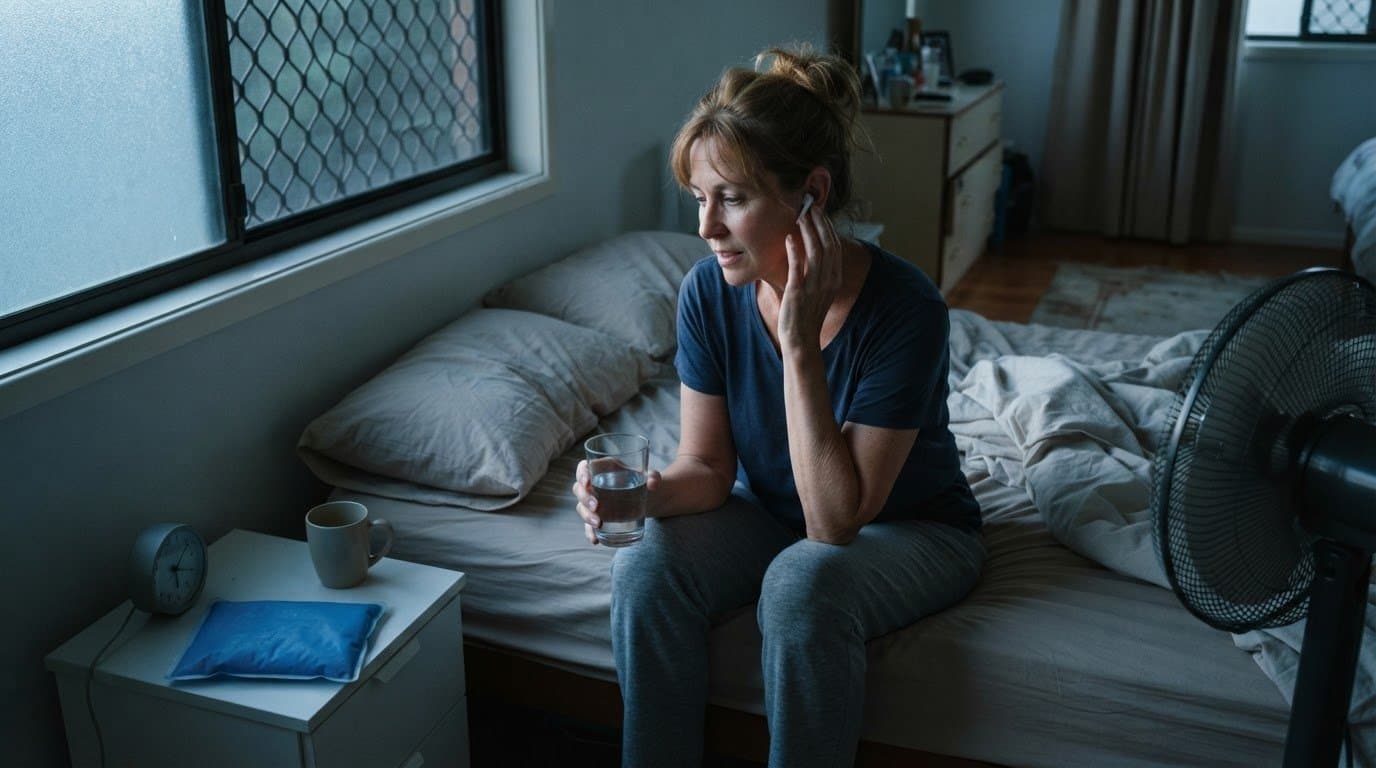
Could symptoms that seem unrelated, from hot flushes to disrupted sleep or mood changes, share a cause? Perimenopause is the transition towards menopause. Managing perimenopause symptoms with telehealth can start with a GP assessing your symptoms, health history and menstrual changes, then discussing suitable options for your needs.
Perimenopause affects people differently. Symptoms may include hot flushes and night sweats, sleep problems, mood changes and vaginal symptoms. A GP can assess what may be contributing and explain possible options, including lifestyle measures or medical treatments.
This article explains what perimenopause is, which symptoms may occur and how a telehealth GP consultation can support assessment and care in Australia. It also covers information to prepare for an appointment and when symptoms may need further medical assessment.
Key Takeaways
- Perimenopause can involve changes to periods and symptoms such as hot flushes, sleep disruption and mood changes. Tracking what you experience can help a GP assess the pattern.
- Healthdirect Australia defines menopause as 12 months without a menstrual period; symptoms and menstrual changes help provide context during an assessment.
- A telehealth GP can review your health history and symptoms, consider whether further assessment is needed, and discuss suitable management options.
- Lifestyle measures involving sleep, activity, nutrition and stress may form part of a symptom-management plan alongside medical options.
- After reading, you’ll have a clearer sense of what to discuss in a telehealth consultation and when symptoms may need further medical assessment.
Table of Contents
Can I get menopause treatment online in Australia?
Yes. An Australian telehealth GP can assess menopause-related concerns, discuss hormonal and non-hormonal options, and decide whether treatment is appropriate. The consultation considers your symptoms, menstrual changes, health history and reason for seeking care.
Healthdirect Australia defines menopause as 12 months without a menstrual period. It typically occurs in Australia between ages 45 and 55 years, according to Healthdirect Australia. Premature ovarian insufficiency may result in menopause before age 40 years, according to Healthdirect Australia. These distinctions help a GP understand whether symptoms and period changes fit the expected transition or need further assessment.
Menopause doesn’t automatically mean pregnancy is impossible during perimenopause. People who don’t want to become pregnant are advised to use contraception until they have had 12 consecutive months without a period, according to Healthdirect Australia. Raise contraception and changing periods during a telehealth consultation, especially if bleeding patterns have changed.
Hormonal Treatment Options
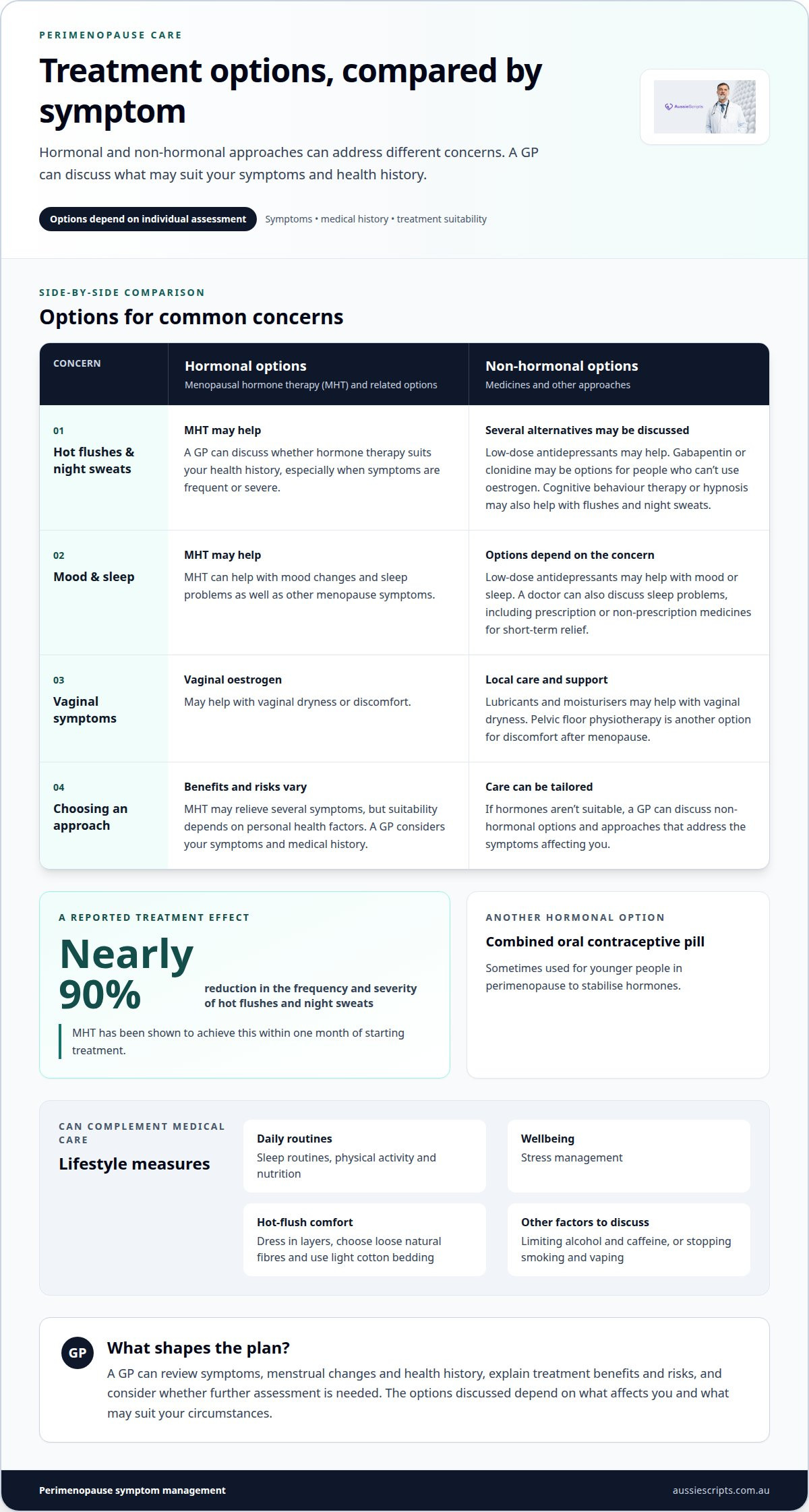
Menopausal hormone therapy (MHT) can help with hot flushes, night sweats, mood changes, sleep problems and vaginal symptoms. For frequent or severe hot flushes and night sweats, a GP can discuss whether hormone therapy suits your health history. MHT has been shown to reduce the frequency and severity of hot flushes and night sweats by nearly 90% within one month of starting treatment.
Options depend on the symptoms being treated. Vaginal oestrogen may help with vaginal dryness or discomfort. A combined oral contraceptive pill is sometimes used for younger people in perimenopause to stabilise hormones. A GP considers your symptoms and medical history before discussing a treatment plan.
Non-Hormonal Options and Trade-Offs
MHT may relieve several symptoms, but its benefits and risks depend on personal health factors. A GP can explain these considerations and how your health history affects the decision. If hormones aren’t suitable, low-dose antidepressants may help with mood, hot flushes or sleep; gabapentin or clonidine may also be options for people who can’t use oestrogen.
Non-hormonal approaches include cognitive behaviour therapy or hypnosis for hot flushes and night sweats. For vaginal dryness, lubricants and moisturisers may help; pelvic floor physiotherapy is another option for discomfort after menopause. You can also discuss sleep problems with a doctor, including prescription or non-prescription medicines for short-term relief.
Lifestyle measures can complement medical care. A GP may discuss sleep routines, physical activity, nutrition, stress management, limiting alcohol and caffeine, or stopping smoking and vaping. Practical steps for hot flushes include dressing in layers, choosing loose natural fibres and using light cotton bedding. Since these options address different symptoms, focus the consultation on what affects you and what may suit your circumstances.
Can a telehealth GP help with perimenopause and menopause?
Yes. In Australia, a telehealth GP can assess symptoms, discuss management options and plan follow-up. A video consultation allows a clinician to take a health history, consider symptoms in context and build a relationship with the patient. This can help when changes affect sleep, work or daily routines, but travelling to an appointment is difficult. A GP can also explain what can be assessed remotely and when an in-person review may be needed.
Support can cover perimenopause, menopause and postmenopause. During perimenopause, a GP can consider menstrual changes alongside symptoms and their effect on daily life. After menopause, the discussion may focus on continuing or new concerns, such as vaginal discomfort or bladder issues. Managing perimenopause symptoms with telehealth can help organise concerns into practical next steps. If assessment requires a physical examination, video care alone cannot provide it.
Some telehealth services focus on menopause care, while general telehealth services address a broader range of health concerns. Either way, the appointment should involve clinical assessment, not an automated treatment recommendation. A clinician can ask about symptom patterns, existing conditions, medicines and family medical history. This information helps frame a discussion of options and whether further assessment or follow-up is appropriate.
In Australia, telehealth clinicians must be licensed in the state where the patient is located. When choosing menopause care, look for a clinician who can explain how symptoms inform assessment, discuss treatment benefits and risks, and outline follow-up. Menopause-specific training can support a focused conversation, particularly when symptoms overlap or treatment decisions involve other health conditions. The clinician should also explain the limits of remote assessment and how care can be coordinated with your usual GP.
Before the consultation, prepare a concise summary of your main concerns. Include examples such as changes in bleeding, night sweats, sleep disruption, mood changes or vaginal symptoms. Note when each began and how it affects daily activities. A list of current medicines and relevant health conditions can provide useful context. You don’t need to diagnose yourself; describe what has changed so the GP can assess it.
During the appointment, state your priorities first. You might want to discuss sleep, bleeding changes or whether a symptom needs investigation. The GP can clarify details, explain what can be assessed by video and identify when another form of care is needed. Managing perimenopause symptoms with telehealth works best as a clinical conversation: ask for a clear summary, agreed next steps and any follow-up plan. This can support continuity if you discuss the assessment with another clinician.
Personalised symptom assessment and management plans
A telehealth assessment connects symptom patterns with menstrual changes, health history and daily impact. This context helps shape a practical management plan.
Personalised Symptom Assessment
Perimenopause is usually assessed through symptoms and menstrual changes rather than a single test. A GP may ask when symptoms began, how they vary and what they affect, such as sleep or concentration. A concise symptom summary can focus the consultation and help distinguish the main concerns from changes that may need separate assessment.
Blood tests may help rule out other causes, including thyroid, iron or prolactin issues. Hormone levels can fluctuate daily during perimenopause, making hormone blood tests unreliable as standalone diagnostic tests. A clinician may review your health conditions and family medical history, then arrange blood work when appropriate. Memory or cognitive changes also deserve assessment and advice.
Risk Factors and Treatment Suitability
Treatment options depend on your symptoms and broader health context. Before discussing a plan, a GP can consider current and past conditions, family medical history and medicines. These details help assess whether a treatment may be suitable and what alternatives could be relevant. Share mental health concerns too, as mood symptoms can affect wellbeing and daily function.
Low libido can have several contributing factors, including stress, relationship dynamics, body image or certain medicines, as well as menopause-related symptoms. Explaining what has changed can help the clinician consider these influences together. If hormone therapy is being considered, the discussion should cover personal suitability, expected symptom targets and ongoing review, rather than treating one symptom in isolation.
Care Coordination and Follow-Up
Telehealth can support ongoing menopause care, but some concerns need in-person assessment. A GP can identify when symptoms require examination or another investigation, then coordinate next steps with in-person healthcare. Persistent or worsening symptoms, for example, may need a broader clinical review alongside the telehealth discussion. Clear documentation helps connect the assessment with any recommended follow-up.
Follow-up gives the clinician a chance to review symptom changes and treatment effects. After starting menopausal hormone therapy, follow-up is commonly scheduled at 3 months, then reviewed every 6-12 months after the initial review. At these appointments, report what has improved, what remains difficult and any new concerns. That information helps shape adjustments to the management plan and supports comprehensive care over time.
Lifestyle factors including sleep, stress, nutrition and activity
Lifestyle guidance can complement medical care during perimenopause. A GP can discuss practical options for sleep, nutrition, activity and stress, then relate them to the symptoms affecting daily life.
Lifestyle Guidance
Useful guidance reflects symptoms and personal preferences. For hot flushes or night sweats, options include layered clothing, loose natural fibres, light cotton bedding, cold water, a cool shower or a cold pack. A GP can help identify which measures fit your routines and living conditions, rather than offering a generic checklist.
Sleep routines are another part of symptom support. A clinician can discuss habits that support sleep and how disrupted rest may interact with stress and mood. Nutrition guidance may include improving diet and maintaining a healthy weight. Physical activity and mental wellbeing also matter, as do limiting alcohol and caffeine or stopping smoking and vaping.
Lifestyle Support
Perimenopause-related mood symptoms can be addressed through support from someone trusted, physical activity, sleep strategies, mindfulness or relaxation. A GP can discuss which approaches feel manageable and whether extra support is appropriate. Lifestyle changes can complement other care, but don’t replace assessment when symptoms persist or interfere with daily activities.
Brain fog may affect concentration, memory or organisation. Regular exercise, brain-challenging activities and a healthy diet can form part of lifestyle support. Avoiding smoking and alcohol, and recording dates or reminders, may help with day-to-day demands. A telehealth discussion can connect these strategies with your main concerns, such as missed appointments or difficulty concentrating at work.
Muscle and joint aches can also affect activity. Regular stretching and low-impact movement, including walking, swimming or cycling, may help ease aches during or after perimenopause. Heat packs are suggested for sore muscles, while cold packs may help with inflammation. A clinician can discuss how activity and comfort measures fit alongside other symptoms and health considerations.
A practical plan can bring these areas together. For example, someone experiencing night sweats, poor sleep and low mood could discuss cooling measures, sleep routines and mental wellbeing in one appointment. Nutrition, exercise and strength training, stress management and sleep hygiene are common areas of menopause care. A GP can help prioritise options according to the symptoms that matter most and review progress during ongoing care.
Keep guidance realistic. A routine that conflicts with work, caring responsibilities or physical limitations may be difficult to maintain. Discuss those constraints during the consultation so recommendations account for daily life. If symptoms change, such as increasing joint pain or worsening sleep, raise this at follow-up; it may affect which lifestyle supports are most relevant.
Common perimenopause symptoms
Perimenopause can affect several body systems, and symptoms may change over time. Look at the pattern, not just one isolated change. A doctor can assess symptoms alongside menstrual changes, health history and their effect on daily activities.
Changes to periods: Menstrual cycles may become irregular, with changes in timing or flow. Note whether bleeding patterns have shifted and whether the change occurs alongside other symptoms. New, persistent or worsening concerns deserve medical assessment rather than being automatically attributed to the menopause transition.
Hot flushes and night sweats: These can disrupt daytime activities and sleep. Record when they occur and how they affect rest or concentration. Menopausal hormone therapy can help reduce hot flushes and night sweats, while non-hormonal options may also be discussed with a doctor.
Sleep and mood changes: Sleep problems can occur alongside mood changes, including feeling more anxious or low. Poor sleep may also make work and everyday tasks harder to manage. Tell the doctor whether mood or sleep changes are new, persistent or connected with night sweats.
Vaginal and bladder symptoms: Vaginal dryness or discomfort can occur during the transition. Bladder issues can also arise during or after menopause. Treatment options are available, so describe what has changed and how it affects your comfort or routine. A doctor can discuss suitable care and whether further assessment is needed.
Memory, concentration and libido: Some people notice memory or cognitive changes, sometimes described as brain fog. A doctor can assess these concerns and offer advice. Low libido may relate to menopause symptoms, but stress, relationship dynamics, body image and certain medicines can also contribute. Sharing these factors gives the consultation a clearer picture.
Joint and muscle aches: Aches can affect movement and usual activities. New, worsening or persistent joint pain during perimenopause is a reason to speak with a doctor. Mention where the pain occurs, when it began and whether it limits walking, exercise or daily tasks. These details can help guide assessment.
People may experience one symptom or several together, and the mix can shift during the transition. No single symptom list confirms perimenopause on its own. A clear summary helps a doctor consider timing, menstrual changes, health history and other possible causes. If a concern needs care beyond a telehealth assessment, the doctor can discuss an in-person review or referral.
Aussie Scripts
Aussie Scripts connects patients with Australian-registered doctors for virtual consultations. If a discussion about perimenopause raises a need for a prescription or specialist input, a doctor can assess the situation and consider appropriate next steps. Available options include Standard Script, Express Script and Specialist Referral. These services support parts of a care journey, but they don’t replace a comprehensive menopause assessment or in-person review when one is needed.
For questions about symptoms or treatment, use a consultation to explain your concerns and relevant health history. The doctor can assess what support is appropriate, including whether a referral is suitable. To discuss your next step, contact Aussie Scripts.
Choose a manageable next step
Managing perimenopause symptoms with telehealth starts with deciding what you want help with first. You might prioritise sleep disruption, mood changes or questions about treatment. Bringing that priority to a consultation can focus the discussion and clarify what follow-up may be useful.
Aussie Scripts can support related healthcare needs through its Standard Script, Express Script and Medical Certificate offerings. These services are separate from a comprehensive perimenopause assessment, so discuss symptoms and treatment decisions with a doctor who can assess your circumstances.
If you’re ready to discuss your care or an appropriate next step, contact Aussie Scripts. Taking one clear concern to a professional is a practical way to move forward.
Frequently Asked Questions
What Is Perimenopause?
Perimenopause is the transition leading up to menopause, when menstrual patterns and symptoms can change. It doesn’t follow the same course for everyone. One person, for example, may first notice changing periods, while another seeks advice about sleep or mood changes. A GP can assess the timing and combination of symptoms, then consider whether they fit this transition or need investigation for another cause.
What is menopause?
Healthdirect Australia defines menopause as 12 months without a menstrual period. It marks a point in the transition, rather than a single symptom or a result from a hormone test. If periods stop and later restart, or bleeding changes in a way that concerns you, discuss the pattern with a doctor. The timing and circumstances help guide whether further assessment is needed.
Can MHT (HRT) be prescribed via telehealth?
A telehealth consultation can provide an opportunity to discuss menopausal hormone therapy (MHT), sometimes called hormone replacement therapy (HRT). The clinician can review symptoms, health history and treatment considerations remotely. Whether a prescription is appropriate depends on clinical assessment. The consultation may also identify a need for further tests or an in-person review before a treatment decision.
What are common perimenopause symptoms and when should you seek medical care?
Symptoms can include changing periods, hot flushes, night sweats, sleep disruption, mood changes, vaginal symptoms, joint aches or memory concerns. Seek medical advice when a symptom persists, worsens, affects daily activities or is difficult to explain. Ongoing joint pain or bladder changes, for example, warrant a discussion with a doctor. A clinician can assess whether symptoms may relate to perimenopause or need another explanation.
Can Australian GPs prescribe menopausal hormone therapy via telehealth?
A telehealth GP can assess symptoms and discuss MHT, while prescribing decisions depend on the individual clinical assessment. Sharing consultation notes with your usual GP can connect the discussion with your broader care. The assessment may cover health conditions, family medical history and treatment preferences. A telehealth appointment can also clarify whether an in-person review or additional investigation should come first.
What tests or assessments are needed before treating perimenopause symptoms?
Assessment usually starts with symptoms, menstrual changes and relevant health history. Blood tests may be used to investigate other possible causes, including thyroid, iron or prolactin issues. Hormone levels can fluctuate during perimenopause, so a hormone blood test isn’t reliable as a standalone diagnostic test. The clinician may also consider current medicines, family history and screening history when discussing treatment suitability.
How do you choose a reputable Australian telehealth provider for perimenopause care?
Look for a service that connects you with a fully registered and insured Australian doctor licensed in the state where you’re located, and offers clinical consultation rather than an automated recommendation. Check that the appointment allows discussion of symptoms, health history, treatment options and follow-up. Menopause-specific knowledge can support focused questions. A clear process for coordinating with your usual GP is useful when care or prescribing involves more than one clinician.
What symptoms require an in-person appointment rather than telehealth?
An in-person appointment may be needed when assessment depends on a physical examination or an investigation that cannot be completed remotely. A telehealth GP can identify that limitation and explain the next step. Persistent or worsening joint pain should also be discussed with a doctor. If symptoms change during follow-up, describe what changed and how it affects daily activities so the clinician can reassess the care plan.
Disclaimer
The information provided by AussieScripts is for general informational purposes only and does not constitute medical advice, diagnosis, or treatment. For advice tailored to your specific symptoms or health concerns, please consult one of our doctors or your regular GP.