Managing Saxenda Side Effects: When to Seek Help
Learn practical tips for managing side effects of Saxenda. Spot common symptoms, identify warning signs, and know exactly when to seek urgent medical care.

Nausea or constipation can be uncomfortable, but how do you know when a Saxenda side effect needs medical attention? Managing side effects of Saxenda starts with recognising which symptoms are commonly reported and which need prompt assessment.
It’s reasonable to feel unsure if symptoms affect your appetite, hydration or daily routine. Some gastrointestinal effects are common, but severe or persistent symptoms shouldn’t be dismissed. Saxenda, the brand-name liraglutide product, was discontinued in Australia after December 2025. If you have concerns about past use or treatment with liraglutide, speak with a healthcare professional before making decisions about your care.
This guide covers practical ways to respond to common effects, warning signs that need urgent medical attention, and what to tell your prescriber. It also explains how a weight management consultation with a doctor can help assess your symptoms and discuss appropriate next steps. A consultation supports clinical assessment but doesn’t guarantee a particular prescription or treatment outcome.
Key Takeaways
- Managing side effects of Saxenda starts with noting what you’re experiencing and how it affects eating, drinking and daily activities.
- Learn which common symptoms may respond to simple comfort measures and when to discuss them with a prescriber.
- Recognise warning signs that need prompt medical review, and call 000 for an emergency.
- Prepare for a doctor discussion by recording when symptoms began, how often they occur, their severity and any changes.
- A weight management consultation with an Australian-registered doctor can assess your concerns and discuss appropriate next steps.
Managing Saxenda Side Effects: What Symptoms Can Occur?
A side effect is an unwanted effect that may occur during treatment. It doesn’t automatically mean the medicine caused a particular symptom, and it isn’t a diagnosis. The Australian Saxenda Consumer Medicine Information and Product Information list possible effects, but each person’s experience can differ. The severity of a symptom and its impact on your health matter as much as its name.
In brief: Saxenda can be associated with gastrointestinal symptoms such as nausea, vomiting, diarrhoea, constipation and stomach discomfort. These are possible effects, not outcomes every user will experience. A symptom list alone can’t establish the cause or determine whether treatment is suitable for you.
For a general overview of liraglutide, see Liraglutide (Saxenda) Wikipedia. For advice about a specific symptom, refer to Australian medicine information and speak with a doctor.
The video below discusses Saxenda side effects. Use it as general context, not as a substitute for individual medical advice.
Which Saxenda side effects are commonly reported?
Australian product information identifies nausea, vomiting, diarrhoea, constipation and stomach discomfort among possible gastrointestinal effects. Stomach discomfort may be described in different ways, including feeling unsettled or having abdominal discomfort. Other reported effects include headache, dizziness, fatigue and injection-site reactions. This is a summary, not a complete list. Consult the current Consumer Medicine Information for full details.
These effects don’t happen to everyone, and their frequency or intensity can vary. One person may have mild nausea, while another may notice a different symptom or none of these. A symptom’s presence doesn’t show that it is harmless. Consider how severe it is, whether it persists or changes, and whether it affects eating, drinking or usual activities. The sections below explain how to respond and when to seek medical help.
Why can side effects feel different for each person?
Treatment response and tolerability are individual clinical matters. People can differ in which symptoms they notice and how disruptive those symptoms feel. Other health factors and medicines may also be relevant to a doctor’s assessment, so don’t assume another person’s experience predicts yours. Avoid changing a dose or making treatment decisions based on someone else’s account.
Managing side effects of Saxenda means considering your symptoms in context, not matching them to a checklist to reach a diagnosis. A symptom list can help you describe what’s happening, but it can’t determine the cause or decide whether Saxenda is appropriate for you. If you’re uncertain, record what you’ve noticed and discuss it with a healthcare professional. Seek help sooner if symptoms are severe, persistent or concerning.
How to Manage Common Saxenda Side Effects Safely
Simple comfort measures may help with mild symptoms, but they can’t replace clinical advice or guarantee relief. Keep the current Australian Consumer Medicine Information (CMI) available and follow the instructions provided for your treatment. If symptoms persist, worsen or interfere with drinking enough fluid, contact your prescriber. Don’t change, delay or stop a dose without discussing it with them.
Practical steps for nausea and stomach discomfort
If nausea or stomach discomfort is mild, try smaller meals and bland, low-fat foods such as crackers or rice. Avoid lying down straight after eating, and take fluids regularly if you can. These measures may make symptoms easier to manage, but they won’t work for everyone. Follow any dietary advice you’ve received for other health conditions.
Keep a brief record instead of relying on memory. Note when the discomfort occurs, how intense it feels, how long it lasts and whether it affects meals, sleep or usual activities. Include what you ate or drank around that time if it seems relevant. This helps your prescriber assess the pattern without assuming Saxenda caused the symptom.
Responding to vomiting, diarrhoea or constipation
Vomiting and diarrhoea can make it harder to maintain fluid intake. Note how often they occur and whether you can keep fluids down. For constipation, adequate fluids and fibre may help, provided these are appropriate for you. Don’t start medicines or supplements, or make major diet changes to treat symptoms, without advice from a healthcare professional.
Contact your prescriber if vomiting, diarrhoea or constipation persists, worsens, affects your ability to drink or manage daily activities, or leaves you concerned. If you can’t keep fluids down or feel acutely unwell, seek medical advice promptly rather than relying on home measures. A clinician can assess the situation and advise what to do next.
Use a simple response plan:
- For mild symptoms: Try suitable comfort measures and note the timing, severity and effect on eating or drinking.
- If symptoms continue or get worse: Contact your prescriber for individual advice.
- If symptoms are severe or concerning: Seek medical assessment promptly. Don’t wait for a symptom log to be complete.
These steps may help with comfort and make it easier to explain what’s happening. They don’t determine whether a dose or treatment should change. That decision needs to be made with a healthcare professional who can consider your symptoms and circumstances. Don’t use another person’s experience as a guide to your own dosing.
If side effects are affecting your weight management care, a weight management consultation gives you an opportunity to discuss your concerns with an Australian-registered doctor. The doctor will assess your situation and determine appropriate next steps. A consultation doesn’t guarantee a particular treatment outcome.
Serious Saxenda Side Effects: When to Seek Medical Help
Use the severity and speed of change to guide your next step. Some symptoms need emergency help; others call for prompt medical review or a discussion with your prescriber. Don’t try to diagnose the cause yourself. The Australian Saxenda Consumer Medicine Information and Product Information describe warning signs, but only a clinician can assess what they mean for you.
Severe or rapidly worsening symptoms require urgent assessment. If you think you or someone else is experiencing an emergency in Australia, call 000. Don’t wait for an online consultation or a reply from your prescriber.
Symptoms that need urgent assessment
Seek urgent medical assessment for severe, persistent abdominal pain, particularly if it spreads to your back or occurs with vomiting. This can be a warning sign of pancreatitis, but symptoms alone can’t confirm the cause. Saxenda product information also describes gallbladder problems as a risk. Have new or significant abdominal symptoms assessed rather than assuming they’re a routine treatment effect.
Call 000 if symptoms are severe, rapidly worsening or make you feel in immediate danger. If you’re unsure whether the situation is an emergency, err on the side of urgent medical help. Don’t drive yourself if you’re too unwell to travel safely.
When to contact the prescriber promptly
Contact your prescriber promptly about a racing or unusually fast heartbeat, signs that may suggest reduced kidney function, or new or worsening mood changes, including depression. Also arrange medical review if you notice a lump or swelling in your neck, persistent hoarseness or difficulty swallowing. These symptoms can have different causes. A healthcare professional can assess them and decide whether further review is needed.
Seek advice promptly if symptoms persist, worsen or disrupt your ability to eat, drink or manage daily activities. Ongoing vomiting or diarrhoea deserves particular attention if you’re struggling to maintain fluid intake. Don’t dismiss a symptom as harmless or expected just because it appears in a side-effect list.
Use this action hierarchy:
- Emergency: Call 000 for severe or rapidly worsening symptoms, or if you believe there’s immediate danger.
- Prompt review: Contact a healthcare professional about warning signs such as severe persistent abdominal pain, a racing heartbeat, possible reduced kidney function, mood changes or neck and throat symptoms.
- Prescriber discussion: Raise symptoms that continue, worsen or interfere with eating, drinking or daily activities, even if they don’t feel like an emergency.
Managing side effects of Saxenda safely means acting on concerning changes instead of waiting to see if they pass. If symptoms are serious, seek urgent in-person medical assessment; telehealth is not emergency care. For less urgent concerns, tell your prescriber when the symptom began, how it has changed and how it affects you. Don’t change or stop a dose based on this list. Ask your prescriber for advice about treatment decisions.
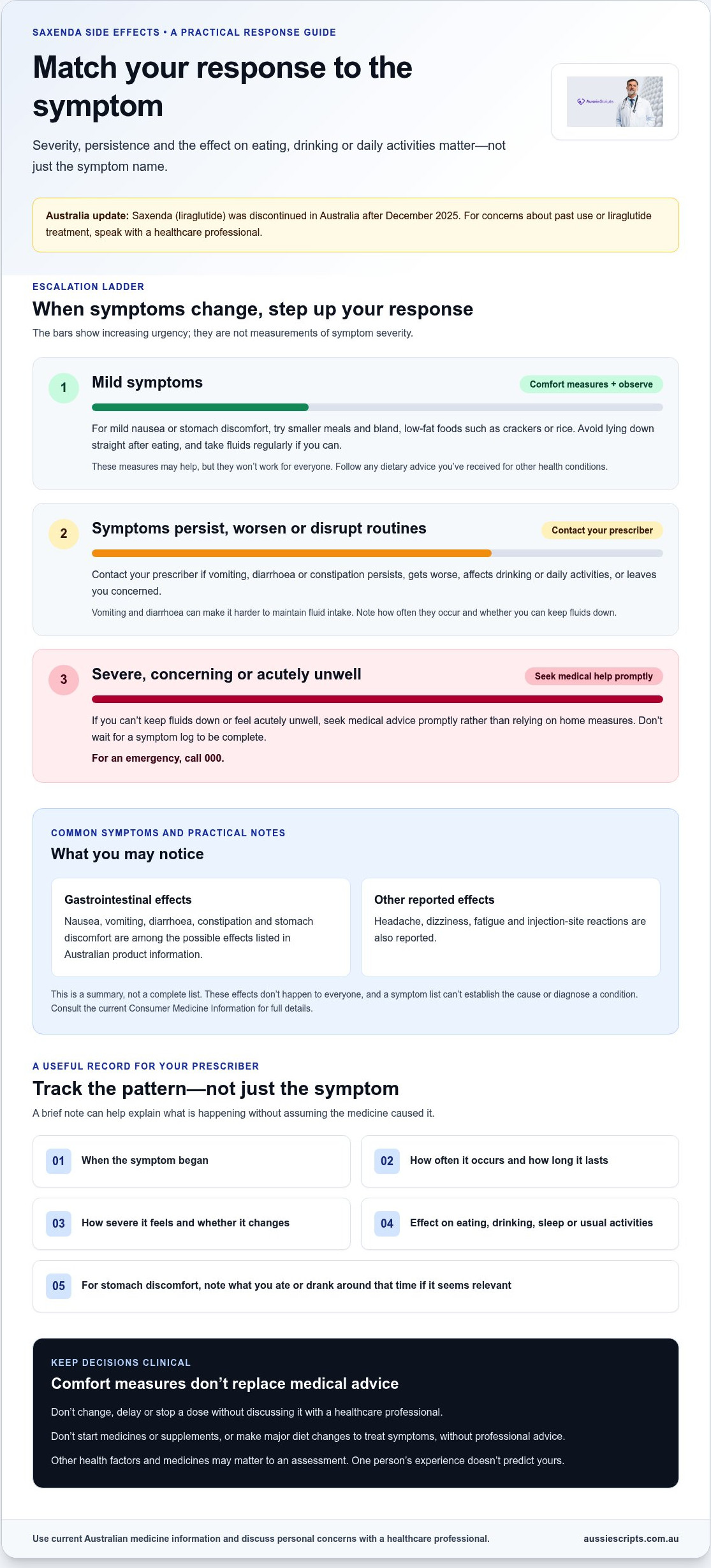
What to Track Before Discussing Saxenda Side Effects With a Doctor
A concise record can help your prescriber understand what has changed and how much it is affecting you. You don’t need to identify the cause or wait until you have a complete diary. If symptoms are severe or rapidly worsening, seek urgent medical help rather than delaying care to collect information.
Build a clear symptom record
Use a notebook or phone note to record each episode as accurately as you can. Include what you noticed and how it affected your routine. This information supports a clinical discussion; it isn’t a way to diagnose yourself or prove that a medicine caused a symptom.
- Note when it began. Record the date or approximate time the symptom first appeared, and whether it started before or during treatment.
- Describe frequency and duration. Note how often it occurs and how long each episode lasts. For example, say whether discomfort is occasional or present through much of the day.
- Rate severity and changes. Use plain language such as mild, moderate or severe, and note whether it is improving, worsening or changing in character.
- Record its practical impact. Include any effect on meals, fluid intake, sleep, work or usual activities. If you’re drinking less than usual or struggling to keep fluids down, state that clearly.
- Note relevant context. Record treatment or routine changes, including any change to your prescribed plan, and when they occurred. Include these as context, not as proof that they caused the symptom.
Prepare useful questions for your prescriber
Before the discussion, write down what you most need clarified. A short list can help keep the appointment focused, especially if you’re worried or uncomfortable. Bring a current list of medicines, including non-prescription products, and note relevant health conditions or allergies. Don’t leave out details because you’re unsure whether they matter. Your clinician can decide what is relevant.
Useful questions include:
- Which symptoms should prompt urgent medical care, and which can be discussed at a routine follow-up?
- Could my symptoms or their effect on eating and drinking mean my treatment plan needs clinical review?
- What information should I keep recording, and when should I follow up if symptoms continue?
Keep following your prescribed plan unless your clinician advises otherwise. Don’t independently change, delay or stop a dose because of a symptom or someone else’s experience. If you’re concerned about your treatment, ask your prescriber to review it with you. Managing side effects of Saxenda is safer when decisions are based on your symptoms, health history and an individual clinical assessment.
Arrange a weight management consultation to discuss treatment concerns with an Australian-registered doctor, who can assess your circumstances and determine appropriate next steps.
Discussing Saxenda Side Effects Through an Australian Weight Management Consultation
Saxenda was discontinued in Australia after December 2025, so it is no longer available for purchase. If you have concerns about symptoms experienced during past use, or need advice about weight management, a doctor can assess your circumstances and discuss suitable next steps. An online consultation is for clinical assessment, not emergency care or a guaranteed prescription.
What an online clinical assessment can help address
A weight management consultation gives you an opportunity to discuss what you experienced, when it happened and how it affected your health or routine. The doctor may consider your relevant medical history, current medicines and other details you provide. This context helps them assess the concern rather than relying on a symptom name alone.
An Australian-registered doctor makes clinical decisions based on your individual assessment. Depending on the information available, they may recommend an appropriate next step, such as further medical review or a discussion about weight management options. A consultation doesn’t establish a diagnosis automatically, guarantee that Saxenda is suitable, or promise a prescription or particular treatment decision. Aussie Scripts connects patients with doctors for assessment and does not dispense medicines.
For a useful discussion, describe whether the symptoms have resolved or are continuing, and mention any care you’ve already received. If you have medicine packaging or written instructions relevant to your concern, keep them available so you can accurately explain what you used. The doctor can clarify what information is needed and determine next steps based on the assessment.
Choose the right next step for your symptoms
Match the care pathway to how unwell you feel. If you’re experiencing an emergency or severe or rapidly worsening symptoms, call 000 in Australia. Don’t wait for an online appointment or use telehealth as a substitute for emergency care.
For a non-emergency concern, a weight management consultation offers a structured opportunity to discuss symptoms and receive clinical guidance. Be clear about what you’re seeking help with, and allow the doctor to assess your situation. They may advise a different next step if the concern requires care beyond the consultation.
Managing side effects of Saxenda involves more than deciding whether a symptom appears on a list. A clinician can consider its severity, timing, your health history and current medicines before advising you. If symptoms are urgent, seek emergency help first. If they’re non-urgent but concerning, a doctor’s assessment can help clarify what to do next without assuming a particular outcome.
Explore weight management consultations to discuss your concerns with an Australian-registered doctor.
Make Your Next Weight Management Decision With Confidence
Deciding what to do after a difficult experience with treatment can take careful thought. Rather than relying on online accounts or assuming the same approach will suit everyone, use your concerns as a starting point for an individual discussion about your health and goals. A clinician can help you consider appropriate next steps while you decide what questions to raise and information to share.
Managing side effects of Saxenda also means recognising when self-management is no longer enough. If a symptom is severe or rapidly worsening, call 000. For non-emergency concerns, you can seek an assessment through Aussie Scripts, an Australian telehealth service that connects patients with Australian-registered doctors. Its dedicated weight management consultations provide a pathway to discuss your situation. The doctor determines next steps based on the assessment, and no particular treatment outcome is guaranteed.
Explore weight management consultations to discuss your concerns with a doctor. A clear, informed conversation can help you move forward with a plan that reflects your individual needs.
Frequently Asked Questions
How long do Saxenda side effects usually last?
There’s no set duration that applies to everyone. Australian product information lists possible side effects, but it can’t predict how long a particular person’s symptoms will continue. When managing side effects of Saxenda, note whether symptoms are settling, persisting or changing, and how they affect daily life. Discuss them with your prescriber if they persist, worsen or disrupt eating or drinking. This general information isn’t an individual clinical assessment.
Can Saxenda side effects continue after stopping treatment?
Symptoms may vary in duration and timing after treatment ends, so it isn’t possible to predict an individual experience here. Contact your prescriber if symptoms continue after stopping, particularly if they’re severe, persistent or getting worse. Don’t stop or restart treatment independently based on general online advice. Saxenda was discontinued in Australia after December 2025. If your question relates to past use, tell the clinician when you last used it.
Can Saxenda cause hair loss?
Hair loss can have several possible causes, and you shouldn’t assume Saxenda is responsible without clinical assessment. If you notice new or ongoing hair loss, tell a clinician when it began and whether it has changed. Mention other symptoms, health changes and medicines as well. This context can help the clinician assess possible explanations and decide whether further review is appropriate.
Can Saxenda cause low blood sugar?
Low blood sugar risk depends partly on a person’s health and other medicines. Australian product information notes particular relevance for people with type 2 diabetes who also use insulin or a sulfonylurea medicine. If you notice symptoms that concern you, follow the advice your clinician has already given and seek medical guidance. Don’t change diabetes medicines or Saxenda instructions based on a general answer.
Can you take Saxenda with other medicines?
A clinician should review your other treatments before advising you about Saxenda. Share a current list of prescription medicines, non-prescription products and supplements, including how you take them. This helps the prescriber assess your circumstances against the relevant Australian product information. Don’t rely on a general online interaction list to decide what is safe, or start, stop or alter any medicine without advice from your clinician.
What should I do if I miss a Saxenda dose?
Check the current Australian Consumer Medicine Information and contact your prescriber for instructions that fit your situation. Don’t guess, take extra medicine or alter the prescribed plan to make up for a missed dose. Saxenda was discontinued in Australia after December 2025, so if this concerns treatment used previously, explain when the dose was missed and when you last used it when seeking advice.
Disclaimer
The information provided by AussieScripts is for general informational purposes only and does not constitute medical advice, diagnosis, or treatment. For advice tailored to your specific symptoms or health concerns, please consult one of our doctors or your regular GP.