Managing Weight Gain from Medication: Causes and Options
Managing weight gain from medication? Explore common causes, treatment effects and safe options to discuss with your doctor—never stop a prescription abruptly.

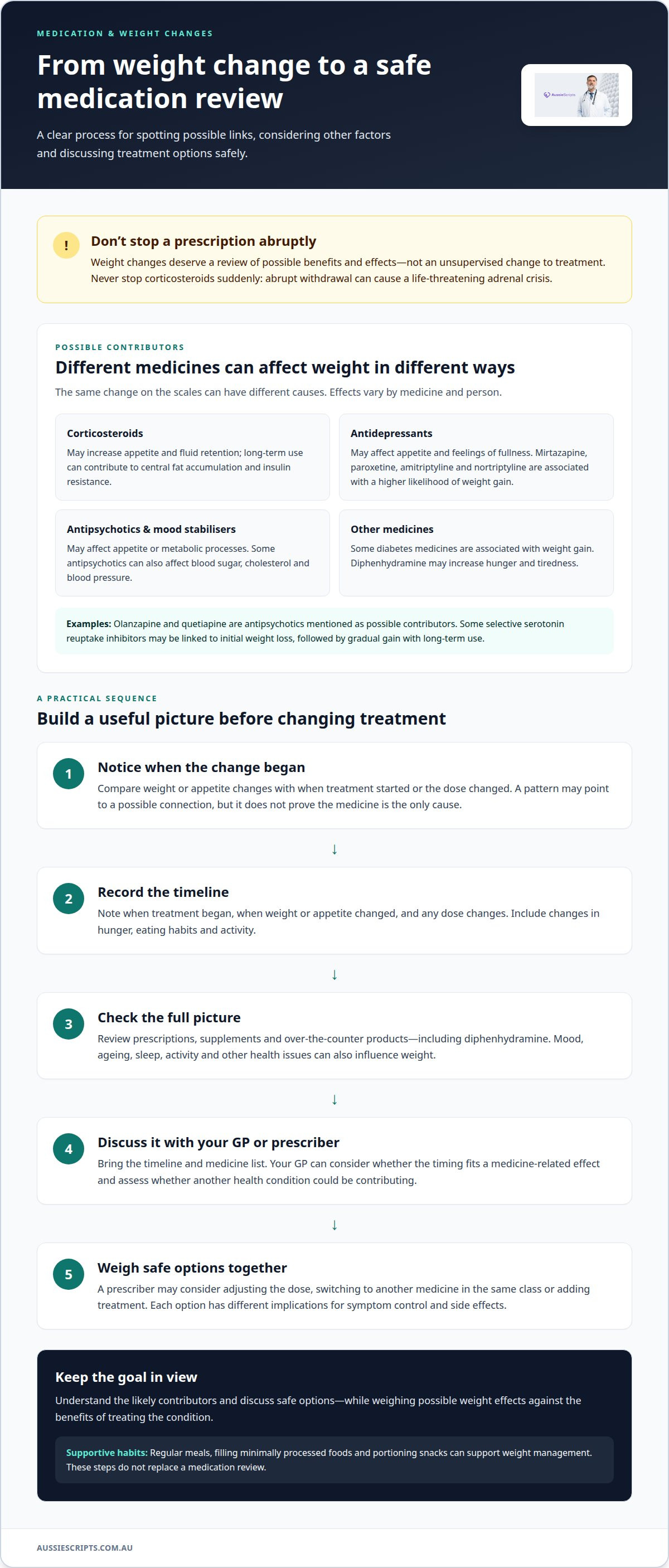
Weight gain can be a side effect of several medicine groups, including antidepressants, antipsychotics, mood stabilisers, corticosteroids and some diabetes medicines. Examples include mirtazapine, paroxetine, olanzapine and quetiapine, although people can respond differently to the same medicine. Managing weight gain from medication means weighing its possible effects against the benefits of treatment, not stopping a prescription abruptly.
If your weight has changed since you started a medicine, it’s reasonable to wonder whether the two are connected. The medicine may be a factor, but appetite, activity, mood and other health issues can also affect weight.
This article explains which medicines may contribute to weight gain, what may happen after stopping them, and which lifestyle or medication options to discuss with a doctor. It also explains why a medication review matters and how to approach changes safely, so you can have a focused conversation about your treatment.
Key Takeaways
- Weight changes during antidepressant treatment can relate to appetite, mood and activity as well as the medicine itself.
- Steroids may affect appetite, fluid retention and where body fat accumulates. Don’t stop them suddenly, as abrupt withdrawal can cause a life-threatening adrenal crisis.
- Some antipsychotics can affect blood sugar, cholesterol and blood pressure, making metabolic monitoring an important part of treatment.
- Sleep, alcohol, hydration and salt intake can all be relevant when reviewing weight changes and everyday health habits.
- A medication review can explore whether adjusting a dose, switching medicines or considering another option makes sense alongside lifestyle support.
Which medications cause weight gain?
Antidepressants, antipsychotics, mood stabilisers, corticosteroids and some diabetes medicines can contribute to weight gain. To assess whether a medicine may be involved, compare changes in weight and appetite with when treatment began, then discuss other possible factors with your GP.
Medication Effects on Appetite and Metabolism
Medicines can influence weight by changing appetite, metabolism, how the body handles nutrients, fat storage or fluid retention. The same change on the scales can have different causes, so it may call for a different response.
For example, corticosteroids can increase appetite and cause fluid retention. Long-term use can also contribute to central fat accumulation and insulin resistance. Some diabetes medicines are associated with weight gain. Antipsychotics, mood stabilisers and antidepressants may affect appetite or metabolic processes, but effects vary by medicine and person.
When appetite rises, plan regular meals and choose filling, minimally processed foods to support steadier blood glucose. Whole foods and fewer added sugars can make eating habits more consistent. Portion snacks instead of eating from the packet to keep track of intake more easily. These steps can support weight management, but they don’t replace a medication review.
Antidepressants and Antihistamines
Antidepressants can affect appetite and feelings of fullness, with weight changes varying by medicine and treatment duration. Mirtazapine, paroxetine, amitriptyline and nortriptyline are examples associated with a higher likelihood of weight gain. Some selective serotonin reuptake inhibitors may be linked to initial weight loss, followed by gradual gain with long-term use.
Appetite can also change as depression improves. Appetite returning or changes in physical activity may contribute to weight change, so the medicine may not be the only factor. Short-term antidepressant use can reduce impulsivity and increase feelings of fullness for some people, potentially reducing food intake. Don’t stop treatment because of weight changes. Discuss the medicine’s benefits and side effects with a doctor.
Diphenhydramine, an older antihistamine, may increase hunger and tiredness. Increased hunger can lead to eating more, while fatigue may reduce activity and energy expenditure. If you use it regularly and notice changes in appetite or weight, include it in a review of your medicines, including non-prescription products.
Identifying Medication-Related Weight Gain
A pattern between starting or changing a medicine and a shift in weight or appetite can point to a possible connection. Record when treatment began, changes in hunger, eating habits and activity, and when weight changes appeared. This timeline gives your GP specific details to consider.
Review your full medicine list, not just prescriptions. Include supplements and over-the-counter products such as diphenhydramine, and note recent changes in dose or routine. Other factors, including mood, ageing, sleep and activity, can also influence weight.
A GP can review these details and assess whether another health condition could be contributing. Bring your timeline and questions about appetite, metabolism or fluid retention to the appointment. The aim is to understand the likely contributors and discuss safe options, not to change a prescribed medicine without guidance.
Does weight loss happen after stopping medication?
Weight loss can follow stopping a medicine if its effects on appetite, fluid retention or metabolism ease. However, stopping treatment does not immediately remove stored fat or reverse every change in body composition.
Steroids and Fat Distribution
Corticosteroids can affect both overall weight and where the body stores fat, so the scales may not show the full picture. They can increase appetite, cause fluid retention and contribute to fat accumulation around the abdomen.
These effects matter because fluid and fat change differently over time. A change in swelling may alter weight without reflecting fat loss, while central fat accumulation may take longer to change. Long-term corticosteroid use can also contribute to insulin resistance. Never stop corticosteroids abruptly: sudden withdrawal can cause a life-threatening adrenal crisis.
Weight Changes After Stopping Medication
After stopping a medicine, weight change depends on which effects ease and which factors remain. If a medicine was increasing appetite, eating patterns may shift as that effect reduces. Weight associated with fluid retention may also change differently from weight linked to fat storage.
Selective serotonin reuptake inhibitors can have varied effects on appetite and weight during treatment. Changes after stopping them should be considered alongside mood, eating and activity, not attributed to withdrawal alone. The condition being treated matters too: untreated depression or other diseases can affect routines and appetite. Track changes over time and discuss them with the prescriber before altering treatment.
Medication Changes and Dosage Adjustments
A medication review weighs a medicine’s benefits against its effects on weight and the condition it treats. A prescriber may consider adjusting the dose, switching to another medicine in the same class or adding treatment. Each option has different implications for symptom control and side effects.
Bring a clear timeline to the discussion: when treatment began, when weight or appetite changed, and any dose changes. Include prescribed medicines, supplements and non-prescription products. This helps the prescriber assess whether the timing fits a medicine-related effect or another cause. Don’t reduce a dose or stop treatment independently, particularly for corticosteroids or medicines treating serious conditions.
Mood Stabilizers and Weight Changes
Mood stabilisers differ in how strongly they are associated with weight gain. Lithium, valproic acid and carbamazepine can contribute to weight changes, while lamotrigine has a lower association. Naming the specific medicine makes a review more useful than treating the whole group as having the same effect.
For lithium, possible contributors include changes in metabolism, increased intake of caloric drinks or medication-induced hypothyroidism. Record changes in eating, weight and treatment, then discuss them with the prescriber. Any treatment change needs to account for mood stability as well as weight. The aim is to address side effects without disrupting care for the condition being treated.
Why do antipsychotic medications worsen obesity-related diseases?
Antipsychotics can affect glucose metabolism, blood fats and blood pressure, alongside weight. Medication-related weight gain can increase the risk of metabolic syndrome, type 2 diabetes and cardiovascular disease.
For Australian readers, management centres on reviewing treatment and monitoring metabolic health with a GP or prescriber. Tell them about relevant family history, including diabetes, high blood sugar, cholesterol problems or heart disease.
Antipsychotics and Metabolic Health
Some antipsychotics can disrupt feelings of fullness and glucose metabolism, making insulin resistance more likely. Medicines associated with weight gain include olanzapine, clozapine, quetiapine and risperidone, as well as aripiprazole, chlorpromazine, pimozide and ziprasidone.
The effects extend beyond weight. Antipsychotics can impair glucose handling, increase cholesterol and triglyceride levels, and contribute to hypertension. When excess glucose is absorbed, the body may store it as fat, adding to diabetes-related concerns. These effects can compound existing risks, so metabolic health matters even when a person feels well.
A prescriber can review weight changes and consider monitoring blood sugar and cholesterol during treatment. The review should also consider the medicine’s benefits for the condition being treated, its side effects and any other medicines. Don’t stop a prescribed antipsychotic without medical advice, because treatment decisions must account for the underlying disorder.
Medical Weight Management and Allied Health Support
Medical weight management brings medication review and practical health support together. A GP or prescribing clinician can assess whether weight gain may be medicine-induced, review prescriptions and supplements, and consider the person’s metabolic risks.
Nutrition support can focus on filling whole foods, planned meals and portion awareness, rather than restrictive changes that are difficult to maintain. A dietitian can help adapt food choices to health needs and appetite changes. If increased cravings are difficult to manage, psychological support may help you develop strategies for responding to them.
Choose activities that fit your health conditions and current capacity. For example, walking after meals can add movement to an existing routine. A clinician can help adapt activity if pain, fatigue or another condition affects safe movement.
When to Speak to a Health Care Provider
Arrange a medication review if weight gain begins after treatment starts or changes, or if you notice other side effects. Bring a list of prescribed medicines, non-prescription products and supplements, along with a timeline of weight, appetite and dose changes.
Family history can affect which risks need closer attention. Tell the clinician if you or close family members have diabetes, blood sugar or cholesterol problems, or heart disease. This context helps guide assessment and decisions about monitoring.
There isn’t one activity or eating plan for every person taking antipsychotics. In Australia, discuss a coordinated approach with your GP and prescriber, including metabolic checks, medicine options and suitable allied health support.
Alcohol, sleep, water and salt intake
Alcohol, sleep, hydration and sodium intake can shape your daily routines while you manage medicine-related weight changes. Track these alongside your medicines, appetite and physical activity so a clinician can see how they fit together.
Sleep, Medication and Appetite
Sleep disruption can make regular eating and activity harder to maintain. Some people taking steroids experience insomnia or difficulty sleeping. Record when sleep changes begin and whether they coincide with a steroid dose or treatment change. This gives your prescriber a clearer picture than weight alone.
Sleep aids also deserve attention during a medication review. Diphenhydramine, an older antihistamine sometimes used for its sedating effect, can increase hunger and tiredness. Tiredness may reduce activity, while increased appetite can affect food intake. Include sleep aids and other non-prescription medicines on your medication list, not just prescriptions.
Mental health can affect sleep and eating patterns too. Depression, for example, can influence appetite and physical activity, while treatment may change those patterns as symptoms improve. Note changes in sleep, mood and eating together. This can help distinguish a single medication effect from several changes happening at once.
Water, Salt and Fluid Changes
Keep water intake steady through the day. A practical approach is to drink several large glasses or bottles of water, as thirst and routine can otherwise lead to inconsistent intake. Fluid retention can also affect the number on the scales, particularly with corticosteroids. Note visible swelling or a sudden change in weight and discuss it with your clinician.
Salt intake is another useful part of the review. The World Health Organization recommends adults limit daily sodium intake to 2000 milligrams. Packaged foods, sauces and takeaway meals can all contribute sodium, so compare food choices across a typical day. Avoid making major dietary changes without considering your health needs and current treatment.
Alcohol and Everyday Patterns
Include alcohol in your notes about food, sleep and medicines. Record when you drink, what you eat alongside it, and whether your sleep or appetite changes afterwards. For example, note if a late drink coincides with disrupted sleep or a changed breakfast routine. This is useful information for a medication review, not a reason to alter prescribed treatment.
Consistency is more useful than trying to change every habit at once. Choose one routine to monitor, such as bedtime, water intake or meals, and keep it steady while recording weight changes. Share your notes with your prescriber, especially if insomnia began during steroid treatment or a sleep aid increased hunger. Together, these details help put weight changes into context.
Discussing alternative medication options with a doctor
A GP medication review can assess whether a medicine contributes to weight change and whether alternatives suit your health needs. The decision balances side effects against control of the condition, including depression, diabetes or another disorder. Don’t stop or change a prescribed medicine yourself: abrupt changes can affect the condition being treated.
Prepare for the appointment with a current list of prescriptions, non-prescription medicines and supplements. Note when treatment began, any dose changes, shifts in appetite or weight, and changes in sleep, eating, activity or mental health. These details help the doctor identify patterns and consider other explanations. Mention family history and existing health conditions, since they can affect which options are appropriate.
For antidepressants, discuss how well treatment controls symptoms alongside weight concerns. Selective serotonin reuptake inhibitors differ in their effects, and the choice depends on your mental health needs and response. A doctor may consider a dose adjustment, a switch within the same medicine class or another treatment. Each option has potential benefits and drawbacks, including changes to symptom control and side effects.
A review can also consider whether a medicine with lower metabolic impact or a weight-neutral profile is suitable. This doesn’t mean a weight-neutral medicine is automatically the best choice. The condition being treated, other health risks and previous treatment responses all matter. If a medicine is essential for diabetes or another serious condition, preserving effective treatment remains part of the decision.
Metformin has been shown to help treat and prevent weight gain induced by psychotropic medicines. It isn’t a self-directed weight-loss option. A prescriber assesses whether it fits your diagnosis, current medicines and health profile before considering it. Bring questions about benefits, possible side effects and monitoring to the review rather than adding a medicine without clinical advice.
Lifestyle support can complement a medication plan. A GP may help set practical goals for meals, activity, sleep and stress, then consider referral for nutrition or psychological support. For example, a dietitian can help adapt meals to appetite changes, while a psychologist can support strategies for cravings. These approaches address day-to-day factors without replacing treatment for depression, diabetes or another condition.
If you want to explore complementary treatment approaches, an Alternative Medicine Consultation can provide a separate discussion. Keep your prescribing doctor involved in any decisions about prescribed medicines, including reuptake inhibitors or diabetes treatments.
Aussie Scripts: Standard Script
Aussie Scripts offers Standard Script for eligible prescription requests assessed through an online consultation. If a medicine may be affecting your weight, use the consultation to discuss your concerns and current treatment. A clinician can assess your request and determine an appropriate next step. Don’t stop or adjust medication on your own.
Bring a current medication list and note any changes in appetite, weight or side effects. This context can support a focused conversation. A prescription is subject to clinical assessment and eligibility.
For a suitable request, you can use Standard Script. If you prefer, visit Aussie Scripts online.
Take the next step with a treatment discussion
A practical approach to managing weight gain from medication starts with a clear discussion about your treatment priorities. Consider what you want addressed, such as reviewing a prescription, discussing weight-management support or arranging a referral. Keeping the conversation focused can help you use a consultation effectively and understand your options.
Aussie Scripts offers Standard Script, Express Script, Medical Certificate and Specialist Referral services through its online healthcare platform. These options support different needs, from a prescription request to a referral discussion. Any prescription request is subject to clinical assessment.
If you’re ready to discuss your situation, contact Aussie Scripts to discuss your options. Take the next step at a pace that feels manageable, with professional input guiding decisions about your care.
Frequently Asked Questions
How do you reverse weight gain from antipsychotics?
Start by reviewing the antipsychotic and your health priorities, rather than stopping treatment. Bring a record of weight changes, eating patterns and activity to the prescriber. Discuss monitoring blood glucose and cholesterol, along with practical nutrition and movement support. If the medicine is contributing, the prescriber can weigh symptom control against options such as an alternative with lower metabolic impact.
What about anti-anxiety medications and weight changes?
Traditional anti-anxiety medicines such as benzodiazepines have no clear link with weight gain. If your weight changes during treatment, include all medicines in the review rather than assuming the anti-anxiety medicine is responsible. Note when the change began and whether your eating, sleep, activity or mood also shifted. This timeline helps your GP assess possible contributors and decide what to discuss next.
Why do antidepressants cause weight changes?
Antidepressants can affect appetite, feelings of fullness and eating patterns, but the effects differ between medicines and people. Mood changes matter too: as depression improves, appetite may return, while depression itself can affect eating and activity. To give your doctor a useful picture, record when treatment began and note changes in hunger, meals and movement. Don’t stop an antidepressant without discussing its benefits and side effects.
Which medications commonly cause weight gain?
Antipsychotics, corticosteroids, some diabetes medicines, mood stabilisers and antidepressants are commonly associated with weight gain. Examples include olanzapine, lithium, mirtazapine and paroxetine. Some older antihistamines, including diphenhydramine, can increase hunger and tiredness. The medicine name alone doesn’t explain every change, so bring a complete list of prescriptions, over-the-counter products and supplements to a medication review.
What alternatives have a lower risk of weight gain?
Alternatives depend on the condition being treated and how well your current medicine works. A doctor can consider another medicine in the same class with a lower metabolic impact or a weight-neutral profile. For antidepressants, discuss symptom control as well as weight concerns. Ask what a change could mean for your treatment, side effects and follow-up, and don’t adjust the dose independently.
How can diet and exercise help manage medication-related weight gain?
A plan for managing weight gain from medication can start with regular meals, whole foods and activity that suits your health. Limit processed foods and added sugars, and portion snacks instead of eating from the packet. Walking after meals can add movement to your day. A dietitian can tailor food choices, while a GP can help set practical lifestyle goals alongside treatment.
What treatments can help with weight gain caused by antipsychotics or antidepressants?
Options include reviewing the dose, considering a lower-risk alternative and adding support for eating and activity. Metformin has been shown to help treat and prevent weight gain induced by psychotropic medicines, including some treatments for mental health conditions. It isn’t suitable as a self-directed treatment. A prescriber weighs its role against your diagnosis, other medicines and health needs before recommending a change or addition.
When should I speak to a GP or pharmacist about weight gain?
Speak with a GP when weight changes after starting or adjusting a medicine, or when other side effects appear. Managing weight gain from medication is easier to discuss with a clear timeline of treatment, appetite and daily routines. A pharmacist can help you understand your medicines and prepare questions. Bring details of prescriptions, non-prescription medicines and supplements so your GP can review the full picture.
Disclaimer
The information provided by AussieScripts is for general informational purposes only and does not constitute medical advice, diagnosis, or treatment. For advice tailored to your specific symptoms or health concerns, please consult one of our doctors or your regular GP.
