Menopause and HRT care by telehealth in Australia
Explore telehealth for menopause and HRT in Australia, including symptom assessment, consultation preparation, treatment considerations and follow-up care.

The dividing line between perimenopause and menopause is a full year without a period. According to the Australasian Menopause Society, menopause is confirmed after 12 consecutive months without one. Telehealth for menopause and HRT can give you a way to discuss symptoms and treatment considerations with a clinician.
It can be difficult to interpret changing periods and symptoms, particularly when they don’t follow a clear pattern. The 12-month milestone helps distinguish menopause from the transition leading up to it, but it doesn’t explain every symptom or determine which treatment is suitable.
This article explains the difference between menopause and perimenopause, what to prepare for a consultation, and how an online assessment may inform care. It also covers health considerations that can affect a discussion about HRT, including why a clinician needs to understand your medical history before considering treatment options. Telehealth can support assessment and follow-up, although some aspects of care may still require in-person attention.
Key Takeaways
- Menopause is confirmed after 12 consecutive months without a period, according to the Australasian Menopause Society; perimenopause describes the transition before that point.
- Prepare for a menopause consultation by noting your symptoms, menstrual changes, medical history and questions about treatment, including non-hormonal options.
- An online consultation with an Australian doctor can support a clinical discussion and assessment, but telehealth does not replace every aspect of in-person care.
- Assessment should consider your individual health history and treatment needs, with follow-up helping clinicians review how care is working.
- Include bone and cardiovascular health in discussions about menopause care, alongside symptom management and any relevant health checks.
Table of Contents
Perimenopause or menopause?
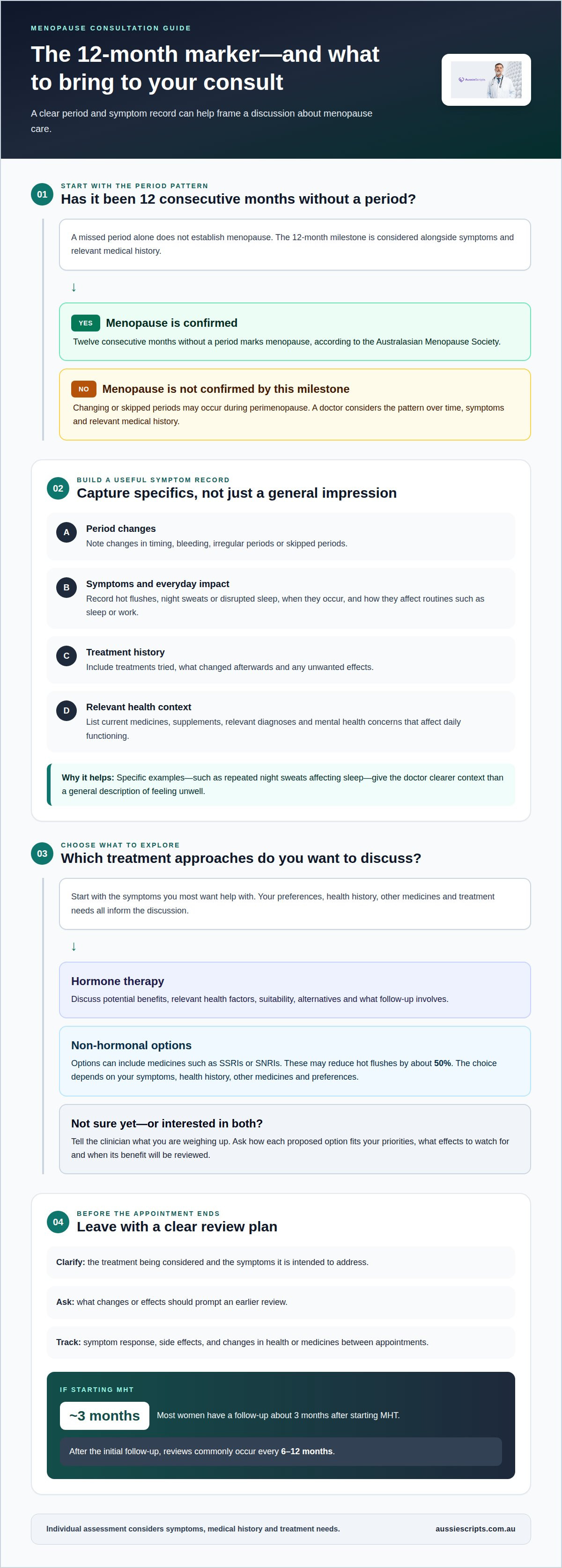
Perimenopause is the transition before menopause, when menstrual patterns and symptoms can change. Menopause is confirmed after 12 consecutive months without a period, according to the Australasian Menopause Society. A missed period alone does not establish that milestone. A doctor considers the pattern over time, alongside symptoms and relevant medical history.
Symptoms may include hot flushes, night sweats and disrupted sleep. They can occur as periods change, and their timing and intensity vary. Record when symptoms occur and how they affect daily activities, such as sleep or work. Note menstrual changes too, including irregular or skipped periods. Specific examples give the doctor more to review than a general impression.
A useful symptom record can include:
- Changes in period timing and bleeding.
- Hot flushes, night sweats or sleep disruption, with their effect on daily routines.
- Any treatment tried and whether symptoms changed afterwards.
- Questions about symptom relief, menopause treatment or follow-up.
Reviewing these details helps distinguish the transition from confirmed menopause and frame treatment around the symptoms affecting you most. For example, a record of repeated night sweats and poor sleep gives the doctor clearer context than simply saying you feel unwell. Symptoms may continue for several years, so changes over time are useful to track.
Follow-up appointments provide an opportunity to discuss whether symptoms have improved, persisted or changed. Most women have a follow-up about 3 months after starting MHT. After the initial follow-up, reviews commonly occur every 6-12 months. Between appointments, continue recording significant symptom changes and any treatment effects. Bring those details to each review so the doctor can consider whether the current approach remains appropriate.
Severe symptoms can affect attendance and work duties. During a medical consultation, explain their practical impact, including relevant dates and tasks you cannot manage. If you need work documentation, a Medical Certificate may be relevant. A doctor assesses your information and whether a certificate is appropriate. Your symptom record can help explain your circumstances. Telehealth consultations across Australia can support this discussion, but the assessment depends on the information you share and the clinician’s judgement.
What should I have ready for my menopause consult?
A focused appointment helps a doctor consider treatment options alongside your symptoms and health history. Before the consultation, prepare a current list of medicines, relevant diagnoses, previous treatments and your main questions. Include supplements and medicines prescribed for other conditions. If you have tried a treatment before, note what changed and any effects you experienced.
Start with what you most want help with. You might prioritise hot flushes, disrupted sleep or mood changes affecting work. Mention mental health concerns and changes to daily functioning, as these can shape the discussion. Be clear about whether you want to explore hormonal therapy, non-hormonal options or both. Your preferences help make the conversation practical.
Useful details to organise include:
- Your current medicines, supplements and relevant health conditions.
- The symptoms affecting you most, with a specific example of their impact.
- Past menopause treatments, including benefits or unwanted effects.
- Your questions about treatment risks, expected review and next steps.
Non-hormonal treatment options can include medicines such as selective serotonin reuptake inhibitors (SSRIs) or serotonin-noradrenaline reuptake inhibitors (SNRIs). These may reduce hot flushes by about 50%. The choice depends on your symptoms, medical history, other medicines and treatment preferences. Ask how a proposed option fits your priorities, what effects to watch for and when its benefit will be reviewed.
Hormone therapy is one treatment pathway to discuss. A clinician considers potential benefits alongside your health factors and reasons for treatment. Share relevant diagnoses and previous reactions to medicines. Ask how suitability will be assessed, what alternatives are available and what follow-up involves. No single option suits everyone, so ask the clinician to explain the reasoning behind the proposed plan.
Agree on a review plan before the appointment ends. Record the treatment being considered, the symptoms it targets and any changes that should prompt an earlier review. At follow-up, discuss symptom response, side effects and changes in your health or medicines. If the first approach is unsuitable or ineffective, this information can help the clinician reassess options rather than repeat the same plan.
Menopause treatment can affect more than physical symptoms, so include relevant mental health concerns in the discussion. For example, tell the doctor if anxiety or low mood is affecting sleep or everyday tasks. A clear account of your priorities, treatment history and health context supports an individualised review. Use the appointment to clarify the next step and how ongoing care will be assessed.
Can I get menopause treatment online in Australia?
Yes. Australian doctors can assess menopause symptoms by telehealth and discuss suitable care. An online appointment can support assessment and follow-up, but it does not replace every aspect of in-person medical care.
Online consultation access
Telehealth consultations can connect patients across Australia with a doctor, including people in regional areas. Initial appointments can take 45-60 minutes, allowing time to review perimenopause symptoms, medical history and treatment priorities. A real-time video consultation supports direct discussion, unlike a questionnaire-only process. Compared with a general GP appointment, a menopause-focused service centres the discussion on menopause symptoms and treatment; a GP may also consider broader health concerns.
Pre-consultation checks and prescriptions
Before an initial appointment, a service may collect your medical history and ask about symptoms, medicines and relevant screening. A clinician may recommend tests before discussing MHT or HRT. The online process typically involves submitting health information, attending an assessment and discussing whether treatment is appropriate. A prescription may follow the clinical assessment, but completing an online form alone does not establish suitability.
For a first prescription discussion, mention previous hormone use and any significant health conditions. The clinician weighs this information, treatment goals and possible risks before deciding whether to prescribe or recommend further assessment. Follow-up appointments help review response and consider adjustments. The research supports an initial consultation of 45-60 minutes and follow-up consultations of 20 minutes in some services.
An express prescription pathway is not the same as a comprehensive menopause consultation. It may suit a straightforward repeat request, but new or changing symptoms call for clinical review and consideration of your medical history. Fees also vary by service and appointment type. Consider the consultation, any follow-up and whether the service includes a full assessment, rather than treating a prescription as the only cost or outcome.
Provider and Medicare considerations
For menopause and HRT care, look for an Australian doctor-led service that reviews your medical history and offers a real-time consultation. A menopause clinic or a GP with menopause expertise can provide a focused discussion. Compare the consultation process, follow-up arrangements and scope of assessment. When choosing a telehealth clinician, check that they can provide care where you are located.
Medicare does not automatically cover an appointment just because it happens online. Whether a rebate applies depends on your eligibility and the service billed, so consider the consultation fee and any Medicare rebate separately. Ask how the appointment is billed before proceeding. A video consultation can support assessment and treatment planning, while examinations or tests may require arrangements beyond telehealth.
After the consultation, follow the agreed clinical plan and attend scheduled reviews. If symptoms change or treatment raises concerns, share those details with the clinician. This record helps inform the next assessment and whether further tests, another treatment discussion or in-person care is appropriate.
Clinician assessment and individualised care
Menopause hormone therapy decisions in Australia should account for symptoms, medical history and individual treatment needs. A clinician can explain the options and arrange follow-up to review your care.
Personalised clinician assessment
A comprehensive assessment starts with the symptoms affecting daily life, such as hot flushes or disrupted sleep. The clinician reviews your medical history, current medicines and previous treatments, then considers whether further testing is appropriate before treatment. Ask how the evidence supports each option and which factors influence suitability. This helps make the plan specific to your health profile rather than a standard response to one symptom.
Evidence-informed care should also account for your priorities. For example, discuss whether symptom relief, avoiding particular side effects or limiting treatment changes matters most to you. If the initial assessment raises a question that requires specialist expertise, a Specialist Referral can support access to further clinical input. The clinician should explain what the referral addresses and how it relates to your ongoing plan.
Rural access to menopause care
Telehealth can connect people in rural areas with clinicians without requiring every discussion to happen in a clinic. It can support symptom reviews, treatment conversations and follow-up, especially when travel makes repeated appointments difficult. You still need an assessment suited to your circumstances. Tests, examinations or other care may require local arrangements. Discuss how results and follow-up will be coordinated before relying on remote reviews alone.
For example, someone who lives far from a specialist can use a video appointment to discuss hot flushes and treatment response. If the clinician needs more information, they can explain the next assessment step and how it fits into the care plan. Telehealth is useful when clinically appropriate and when there is a clear process for care it cannot provide.
Ongoing care and monitoring
Ongoing menopause care tracks whether symptoms improve, persist or change, and whether treatment remains suitable. A follow-up can review benefits, side effects, new health information and changes since the last appointment. The Australasian Menopause Society recognises MHT as the most effective treatment for vasomotor symptoms such as hot flushes and night sweats. That does not mean it is suitable for everyone.
Ask what the review plan includes, who will assess progress and when to raise a concern. Some services use ongoing membership, while others charge for each appointment. The practical difference is whether care is organised through a recurring arrangement or separate consultations. Compare what follow-up and monitoring each model includes. Reviews are particularly useful when symptoms change or a treatment adjustment needs assessment.
There is no single treatment plan for everyone. A clear record of symptoms, treatment response and health changes helps the clinician assess your care at each review. If your needs exceed a telehealth clinician’s scope, the next step may involve local assessment or specialist input.
Bone and cardiovascular health
Menopause appointments can cover more than symptom relief. Discuss bone, cardiovascular, cognitive and mental health concerns, especially when existing conditions or treatment changes affect your care.
For bone and cardiovascular health, give the clinician relevant medical history and describe any changes you have noticed. Mention a previous diagnosis, treatment or test result if it affects your care. This context helps the clinician consider whether monitoring or additional assessment belongs in your plan. It can also help distinguish menopause-related concerns from issues that need separate attention.
Routine health checks remain part of care during the menopause transition. Keep up with routine mammograms while receiving telehealth menopause care. If you have questions about screening or a recent result, raise them during your appointment. The clinician can consider that information alongside your history and discuss whether further assessment or a referral is appropriate.
There is no single monitoring schedule that fits everyone. Discuss which checks are relevant to your circumstances, what each is intended to assess and who will review the results. A treatment change or new health concern, for example, may affect what the clinician recommends next. Telehealth can support these discussions, but it does not replace every aspect of in-person care.
Describe cognitive changes with a clear example, such as difficulty concentrating at work or forgetting a familiar task. Explain when you noticed the change and whether it affects daily activities. This gives the clinician a useful starting point for assessment. If the concern requires input beyond the consultation, a specialist referral may be a next step.
Menopause can coincide with other health conditions and treatments. Share relevant diagnoses, medicines and recent changes, including care for cardiovascular or mental health concerns. For example, a new medicine or a change to an existing treatment may affect the discussion about menopause care. A clinician can consider these factors together rather than reviewing symptoms in isolation.
Mental health deserves direct discussion too. Describe changes in mood, anxiety, sleep or daily functioning, and explain how long they have affected you. These details help the clinician understand the impact of symptoms throughout your menopause journey. If you feel unsafe or need urgent help, telehealth is not emergency medical care; seek urgent local assistance.
Privacy matters during an online appointment. Choose a private setting where you can speak freely, and avoid sharing health details on a device or network you do not trust. Ask how consultation notes and personal health information are stored and accessed. Before the appointment, have relevant records ready so you can discuss sensitive details directly with the clinician.
If your assessment indicates a need for specialist input, request a Specialist Referral to support the next step in your care.
Aussie Scripts
Aussie Scripts can support the next step after a clinician has assessed your menopause-related health needs. If you need an eligible prescription, its Standard Script or Express Script may be relevant. A Specialist Referral can help you access further clinical input when recommended. These services address specific healthcare needs; they do not replace a comprehensive menopause assessment or ongoing specialist care.
Use your consultation’s clinical plan to guide what support you need. If you are unsure which next step fits, contact Aussie Scripts to discuss its services. For urgent symptoms or emergency care, seek appropriate local medical assistance.
Make your next care step clear
Turn your consultation into a practical plan for ongoing care. Track changes that matter to you and decide what you want to address at your next review. This can make future discussions more focused without assuming one treatment will suit every stage.
When choosing telehealth for menopause and HRT care, consider continuity too. Think about how you will discuss changing symptoms, treatment effects and wider health concerns with a clinician. Ask what should prompt a review and how follow-up will work. If you need an examination, testing or urgent attention, use an appropriate in-person or urgent care pathway rather than relying on an online appointment alone.
Where a prescription, certificate or referral is the relevant next step after clinical assessment, Aussie Scripts offers options to support that need. Contact Aussie Scripts about menopause care to discuss a suitable next step. A clear plan can help you approach ongoing care with confidence.
Frequently Asked Questions
Can MHT (HRT) be prescribed via telehealth?
Yes, a clinician may prescribe MHT after assessing your symptoms, medical history and treatment needs. A telehealth appointment does not guarantee a prescription. The clinician may need more information or tests before deciding whether treatment is suitable. If a prescription is issued, ask how it will be provided and what follow-up is planned. The assessment, not the online format, guides the decision.
Can a telehealth GP order bone density and other investigations?
A telehealth GP can discuss whether investigations are appropriate and may arrange requests as part of clinical care. The type of test depends on your symptoms, health history and the question being assessed. For example, a discussion about bone health may lead to further assessment. Sample collection or imaging takes place through the relevant service, and results need clinical review.
Do I need a referral for a menopause telehealth appointment?
You can usually book a menopause telehealth appointment without first obtaining a referral. A referral may be relevant if you need specialist care or another clinician is coordinating your treatment. Bring details of any existing specialist involvement, for example, so your telehealth doctor can understand the wider care plan. A referral for further care is separate from the appointment itself.
How does telehealth menopause care work in Australia?
Telehealth for menopause and HRT care usually starts with an online booking and a clinical consultation with an Australian doctor. The doctor reviews your concerns, relevant history and treatment goals, then discusses suitable next steps. Depending on your needs, these may include investigations, a treatment discussion or follow-up. Keep a record of medicines and recent health changes so you can give the clinician useful context.
Can Australian doctors prescribe HRT through telehealth?
Australian doctors can consider an HRT prescription during telehealth care when the consultation supports that decision. The doctor assesses your circumstances rather than issuing medicine automatically. Tell the clinician about previous hormone treatment, other medicines and any changes since your last review. If the information available does not support a safe decision, further assessment may be needed before prescribing is considered.
How much do menopause telehealth consultations and HRT cost in Australia?
Costs vary between services and depend on what the consultation includes. Consider whether the fee covers an initial assessment, follow-up appointments or just one consultation. The medicine itself may have a separate cost, and investigations can be billed separately too. Before choosing an appointment, ask how Medicare applies to that specific consultation and whether a rebate is available in your circumstances.
What are the benefits and risks of HRT for menopause symptoms?
The Australasian Menopause Society recognises MHT as the most effective treatment for vasomotor symptoms, including hot flushes and night sweats. Benefits and potential risks depend on individual health factors and the treatment being considered. Discuss your medical history, priorities and concerns with the clinician. Ask how the plan will be reviewed and what changes should prompt another discussion.
Who should avoid HRT or have an in-person assessment before starting it?
There is no single rule that identifies everyone who should avoid HRT. Before discussing suitability, a clinician needs to assess relevant health history, current medicines and individual risk factors. An in-person assessment may be needed if examination, testing or other care cannot be completed remotely. Tell the doctor about significant diagnoses or new symptoms so they can decide whether telehealth alone is appropriate.
Disclaimer
The information provided by AussieScripts is for general informational purposes only and does not constitute medical advice, diagnosis, or treatment. For advice tailored to your specific symptoms or health concerns, please consult one of our doctors or your regular GP.