Online consultations for DVT prevention, symptoms and care
An online consultation for deep vein thrombosis prevention can review risks, explain symptoms and guide next steps. Suspected DVT needs prompt medical care.

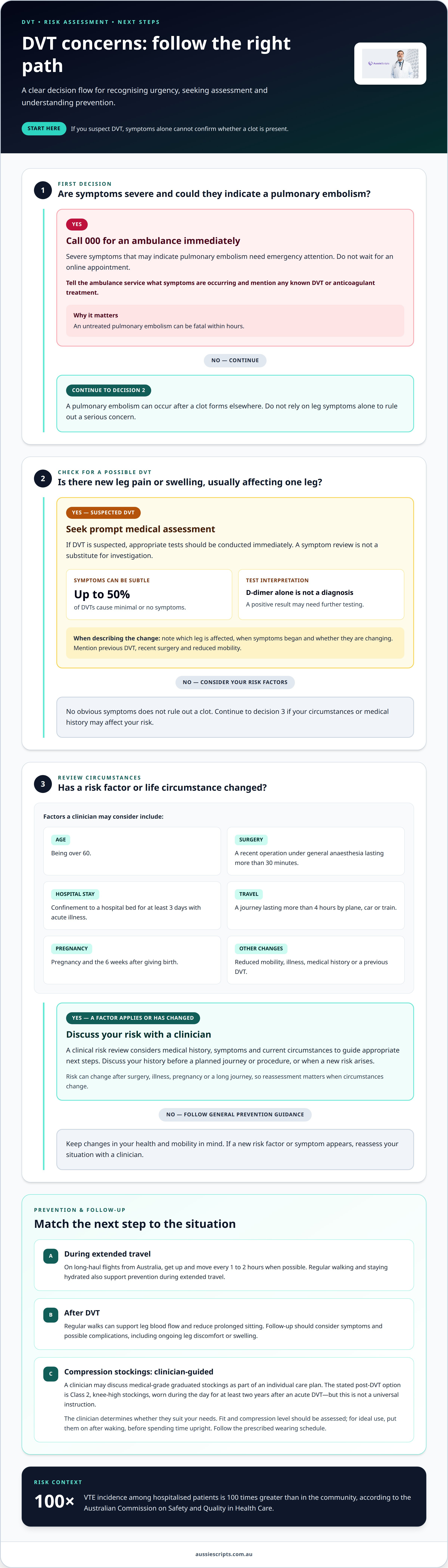
Up to 50% of deep vein thromboses cause no symptoms or only minimal ones, so the absence of obvious signs doesn’t rule out a clot. When symptoms do occur, they usually affect one leg. An online consultation for deep vein thrombosis prevention can help you discuss your risk factors and appropriate next steps, but suspected DVT needs prompt medical assessment.
It’s reasonable to want clear guidance on what to watch for and how prevention works. This guide covers common DVT and pulmonary embolism warning signs, the role of compression stockings, and how an online review may support risk discussions, referrals and follow-up care. If you have severe symptoms that may indicate a pulmonary embolism, call 000 for an ambulance immediately, as advised by Healthdirect Australia.
Key Takeaways
- A clinical risk review considers factors such as recent surgery, reduced mobility, travel and medical history, then helps identify appropriate next steps.
- VTE incidence among hospitalised patients is 100 times greater than in the community, according to the Australian Commission on Safety and Quality in Health Care.
- Compression stockings and leg elevation may form part of care, with the right approach depending on the person’s circumstances.
- Regular movement supports blood flow, while blood-thinning treatment requires professional oversight and follow-up.
- The Australian Commission on Safety and Quality in Health Care Standard calls for a discharged patient’s VTE care plan to reach their GP or ongoing clinical provider within 48 hours of discharge.
Table of Contents
What is Deep Vein Thrombosis (DVT)?
DVT is a blood clot in a deep vein, most often in the calf or thigh. Risk assessment considers medical history, current symptoms and changes in circumstances.
DVT Definition and Pulmonary Embolism Risk
A deep vein thrombosis is a clot in a deep vein, commonly in the leg. It matters because part of the clot can travel through the bloodstream and block an artery in the lung, causing a pulmonary embolism. This is a form of venous thromboembolism (VTE). Up to 50% of DVTs cause minimal or no symptoms, so symptoms alone may not reveal a clot.
Risk factors include being over 60, a recent operation under general anaesthesia lasting more than 30 minutes, or confinement to a hospital bed for at least 3 days with acute illness. A journey lasting more than 4 hours by plane, car or train can also increase risk. Pregnancy and the 6 weeks after giving birth are relevant medical history.
Symptom and Risk Assessment
Assessment considers symptoms, medical history and risk factors together, rather than relying on one sign. A clinician may ask about leg pain or swelling, previous DVT, recent surgery, pregnancy, mobility and long-distance travel. This helps determine whether suspected DVT needs urgent investigation and whether prevention should be considered. A positive D-dimer test alone does not diagnose DVT; further testing may be needed.
On long-haul flights from Australia, reduce prolonged immobility by getting up and moving every 1 to 2 hours when possible. Regular walking and staying hydrated also support prevention during extended travel.
Risk can change after surgery, illness, pregnancy or a long journey, so reassessment matters when circumstances change. The Australian Commission on Safety and Quality in Health Care states that VTE incidence among hospitalised patients is 100 times greater than in the community. Hospital care therefore includes attention to changing VTE risk and prevention needs.
Seek personalised prevention advice if you have had DVT before, are pregnant, have recently had surgery or have another risk factor. Discuss your history before a planned journey or procedure, or when a new risk arises, so prevention advice reflects your circumstances.
After DVT, regular walks can support leg blood flow and reduce prolonged sitting. A clinician may also discuss compression stockings as part of an individual care plan. Follow-up should consider symptoms and possible complications, including ongoing leg discomfort or swelling.
DVT symptoms and pulmonary embolism warning signs
DVT symptoms usually affect 1 leg, although they can rarely involve both. A change may be noticeable or mild, so symptoms alone cannot confirm a clot. Note which leg is affected and when symptoms began. Describe whether they are changing over time. These details help a doctor understand the concern and decide what assessment is needed.
Compare symptoms with your usual state instead of relying on one observation. A clinician may ask which leg is affected, when the change started and whether it has progressed. Mention previous DVT and relevant risk factors, such as recent surgery or reduced mobility. A clear timeline helps distinguish a new concern from an ongoing symptom.
Symptoms alone do not establish a diagnosis. If DVT is suspected, appropriate tests should be conducted immediately. A positive D-dimer result alone does not definitively diagnose DVT, and further testing may be needed. A symptom review is an assessment step, not a substitute for investigation or a reason to start treatment independently.
A pulmonary embolism occurs when a clot travels through the bloodstream and blocks an artery in the lung. Symptoms that raise concern for pulmonary embolism need urgent attention, particularly if they are severe. Don’t wait for leg symptoms before responding to a serious concern. A pulmonary embolism can occur after a clot forms elsewhere.
In Australia, call 000 for an ambulance immediately if a suspected pulmonary embolism causes severe symptoms, as advised by Healthdirect Australia. This is an emergency response, not a situation to manage through an online appointment. Tell the ambulance service what symptoms are occurring and mention any known DVT or anticoagulant treatment.
If symptoms are not severe but you suspect DVT, seek prompt medical assessment rather than relying on an online symptom review. Explain what has changed, when it began and any history of clots or other relevant medical details. If a clinician suspects DVT, immediate testing can determine whether a clot is present and guide appropriate care.
If you take anticoagulants for an existing clot, report new or worsening symptoms to a medical professional. Don’t change or stop prescribed treatment based only on how your leg feels. A doctor can consider the symptom pattern, previous diagnosis and current treatment when deciding whether further assessment is needed.
Time matters: an untreated pulmonary embolism can be fatal within hours, so act immediately if severe symptoms occur.
Compression stockings
Compression stockings apply graduated pressure to support blood flow through the leg veins. Their suitability depends on your condition and care plan.
Compression Stocking Use
Medical-grade graduated stockings may be recommended after DVT to help reduce blood pooling in the legs. The stated post-DVT option is Class 2, knee-high stockings, worn during the day for at least two years after an acute DVT. This duration and style are not a universal instruction for everyone; a clinician determines whether they suit the individual’s needs.
Timing can affect how stockings fit. For ideal use, put them on after waking, before spending time upright. Follow the prescribed wearing schedule, and have the fit and compression level assessed. If a stocking is difficult to apply or feels unsuitable, discuss it with a clinician instead of switching to a different class on your own.
Compression therapy means using graduated pressure to support circulation in the legs. Stockings are one form of this approach, but they do not diagnose or treat a clot. After DVT, the suggested Class 2 knee-high option and daytime wear should be considered within the broader care plan. The clinician can determine whether compression is appropriate for the person’s condition.
Compression Therapy and Leg Elevation
Leg elevation may be a supportive measure for someone experiencing DVT symptoms. Raise the affected leg so the foot is higher than the hip. This position may help reduce pooling while you follow your clinical care plan. Elevation is not a substitute for assessment if a clot is suspected or symptoms are changing.
Compression stockings and elevation work differently: stockings apply graduated pressure, while elevation changes the leg’s position. For example, someone resting with a symptomatic leg can raise the foot above hip level if advised. A clinician can determine whether either measure is suitable alongside other care. Don’t treat these measures as replacements for prescribed anticoagulants.
Notice how the stocking feels during wear, including any change in comfort, fit or leg symptoms. Share these details at follow-up, especially if swelling changes or the stocking becomes difficult to apply. The right compression approach depends on your condition, the stocking’s fit and the clinical plan, not simply on having had DVT.
Online telehealth consultations for blood-clot risks
A telehealth review can help organise your risk history and identify appropriate next steps. It cannot replace urgent assessment when a clot is suspected. An online consultation for deep vein thrombosis prevention is most useful for discussing non-emergency concerns and determining what assessment may be needed.
Booking and Preparation for a Telehealth Consultation: What Patients Can Expect
A focused consultation considers your symptoms, medical history and current risk factors. Be ready to describe previous DVT, recent surgery, pregnancy, reduced movement, long-distance travel and current medicines. Mention anticoagulants, compression stockings and supplements, including omega-3 products, so the clinician can consider them during the review. For an online consultation for deep vein thrombosis prevention, a clear timeline of symptoms can also help the discussion.
Telehealth consultation costs depend on the service and individual case, and are given after a quote request. Whether Medicare rebates apply depends on the service and eligibility, so a rebate should not be assumed for every appointment.
Risk Assessment, Testing, and Treatment
A clinician can review risk factors and advise whether in-person assessment or testing is needed. D-dimer is a blood test used during assessment, but a positive result alone does not diagnose DVT. Further testing may be required. If symptoms suggest an immediate medical problem, telehealth is not a substitute for urgent care.
Blood-thinning medicines, or anticoagulants, can help prevent an existing clot from growing and further clots from forming. They also carry bleeding risks and require professional oversight. Don’t start, stop or change anticoagulant treatment without medical advice. Tell the clinician about prescribed medicines and any previous bleeding concerns.
Prevention Advice and Options
Regular movement supports blood flow. During long periods of sitting, get up and move every 1 to 2 hours when possible. Walking can be included in a prevention plan suited to your health and mobility. Blood pressure and omega-3 intake may also come up in a general health review, but neither should replace an assessment of clot risk.
Research cited on omega-3 intake suggests a dose between 2 and 3 grams per day may be beneficial, but that is not a DVT prevention prescription. Discuss supplements with a clinician, particularly if you take anticoagulants or have concerns about bleeding.
Compression stockings or preventive anticoagulants may be considered according to a person’s risk and clinical circumstances. For hospital patients, the Australian Commission on Safety and Quality in Health Care Standard includes VTE risk assessment within 24 hours of admission. Stockings and medicines are not automatic choices; the prevention plan depends on the assessment.
Referral and ongoing management
A referral connects suspected or diagnosed DVT with the assessment and follow-up needed for care. For suspected DVT, hospital referral for an ultrasound scan should occur within 24 hours. The scan helps establish whether a clot is present; a referral itself does not confirm the diagnosis or replace the investigation.
After hospital treatment, continuity matters. The Australian Commission on Safety and Quality in Health Care Standard calls for a discharged patient’s VTE care plan to be communicated to their general practitioner or ongoing clinical provider within 48 hours of discharge. That information supports follow-up by making the treatment plan clear to the clinician continuing care.
A discharge plan should document prescribed medicines, their doses and the treatment duration when VTE prophylaxis continues after discharge. For a diagnosed DVT, anticoagulant treatment may last 3 to 6 months, sometimes longer. The appropriate duration depends on the clinical circumstances, including whether the clot was provoked, unprovoked or recurrent.
Follow-up can review symptoms, treatment and changes in your health. Persistent leg swelling or new discomfort, for example, should be discussed as part of ongoing care. A clinician can also consider mobility, recent surgery and other factors that may affect clotting risk or your ability to follow the plan.
Monitoring depends on the anticoagulant prescribed. People taking warfarin may need regular prothrombin time tests to monitor their INR and check that the dose is appropriate. Report medicine changes and any bleeding concerns at follow-up, as these details can affect the management plan.
Keep your care plan available for appointments with your GP or ongoing clinical provider. It should state which anticoagulant is prescribed, its dose and intended duration, as well as any VTE prevention medicines used at discharge. If treatment instructions or follow-up arrangements are unclear, seek clarification from the clinician responsible for your care.
People diagnosed with DVT may need anticoagulant medication for at least a few months, unless their doctor advises otherwise. Follow the intended duration as directed, and ask the clinician responsible for your care to clarify any uncertainty. If your doctor gives different instructions, make sure the care plan reflects them.
Aussie Scripts
Aussie Scripts provides online consultations with Australian-registered doctors for non-emergency healthcare needs, including questions about DVT prevention. A clinician can consider the information you provide and advise on appropriate care within the consultation’s scope. An online review is not a substitute for urgent assessment if a blood clot or pulmonary embolism is suspected.
For a suspected pulmonary embolism with severe symptoms, call 000 for an ambulance immediately. Suspected DVT may also need prompt in-person assessment and testing. In those situations, don’t wait for a routine online consultation. Telehealth can support healthcare access, but it cannot perform an ultrasound or replace emergency care.
Where a consultation concerns a suitable medical need, Aussie Scripts offers Standard Script and Express Script services. A prescription is not automatic: a doctor considers the clinical information and whether prescribing is appropriate. These services should not be taken as a promise of anticoagulant treatment or a way to start, stop or alter blood-thinning medicine without medical oversight.
If the next step involves specialist input, a Specialist Referral may help connect care with that need. A referral is useful when further expertise or assessment is appropriate, but it does not itself diagnose DVT or provide the tests needed to confirm a clot. Share relevant medical history and existing treatment during consultation so the doctor can consider the information provided.
A Medical Certificate is another available service where a certificate is appropriate to the consultation. It is separate from DVT diagnosis and treatment. The consultation should focus on the health concern and the appropriate outcome, rather than assuming a certificate or prescription will be issued.
For a non-urgent concern, an online consultation can provide a professional review and help clarify a suitable next step. Keep urgent symptoms separate from routine care, and follow the clinical plan for any diagnosed clot, prescribed medicine or specialist follow-up. Choose the service that matches the need being assessed.
For help with a non-emergency healthcare need, contact Aussie Scripts.
Frequently Asked Questions
What are the symptoms of a DVT?
DVT can cause pain, tenderness, swelling or a change in colour in the affected leg. Symptoms usually affect one leg, though both legs can rarely be involved. Some clots cause few noticeable symptoms, so feeling well does not rule them out. If symptoms raise concern, seek medical assessment rather than relying on appearance or discomfort to determine whether a clot is present.
Is a DVT dangerous?
Yes. A DVT can become dangerous if part of the clot travels through the bloodstream and blocks an artery in the lung, causing a pulmonary embolism. Severe suspected pulmonary embolism symptoms require an immediate call to 000 for an ambulance in Australia. DVT also needs medical assessment because clinicians may need tests to confirm the clot and decide on appropriate treatment.
What is a blood clot?
A blood clot is a mass of blood components that can partly or fully block a blood vessel. A clot in a deep vein is called deep vein thrombosis. If a piece travels through the bloodstream and blocks an artery in the lung, it can cause a pulmonary embolism. The clot’s location and effects determine the medical concern.
Can an online doctor consultation in Australia assess risk of deep vein thrombosis (DVT)?
Yes. An online consultation for deep vein thrombosis prevention can review symptoms, medical history and factors such as previous DVT, recent surgery, pregnancy or reduced mobility. This can help identify an appropriate next step, but a remote review cannot confirm a clot. Suspected DVT may require prompt in-person assessment and imaging, while severe suspected pulmonary embolism symptoms need an immediate call to 000.
What questions and tests are used to assess DVT risk during a telehealth consultation?
A clinician may ask when symptoms began, which leg is affected, whether symptoms are changing and whether you have had DVT before. They may also ask about recent surgery, pregnancy, travel, mobility and medicines. A D-dimer blood test may form part of the assessment, but a positive result alone does not diagnose DVT. Further investigation, including imaging, may be needed.
Can Australian telehealth doctors prescribe DVT prevention medication, such as anticoagulants?
A doctor may consider anticoagulants when clinically appropriate, but a telehealth review does not automatically lead to a prescription. The decision depends on your history, current circumstances and potential risks. If DVT is suspected, assessment and diagnostic testing take priority. Don’t start, stop or change anticoagulant treatment without medical advice, and seek urgent care for emergency symptoms.
What are the risks and side effects of anticoagulants used to prevent DVT?
Bleeding is an important risk of anticoagulant treatment. Combining anticoagulants with aspirin or anti-inflammatory medicines such as ibuprofen or naproxen can cause serious complications. Some herbal and vitamin supplements may also affect bleeding risk. Tell the prescribing doctor about medicines and supplements you take, and ask before adding a new product. Follow the prescribed plan rather than adjusting doses yourself.
Disclaimer
The information provided by AussieScripts is for general informational purposes only and does not constitute medical advice, diagnosis, or treatment. For advice tailored to your specific symptoms or health concerns, please consult one of our doctors or your regular GP.