Online hair loss treatment for men and eligibility
Explore online hair loss treatment for men, common causes, assessment steps and eligibility factors to learn when prescription options may be suitable.
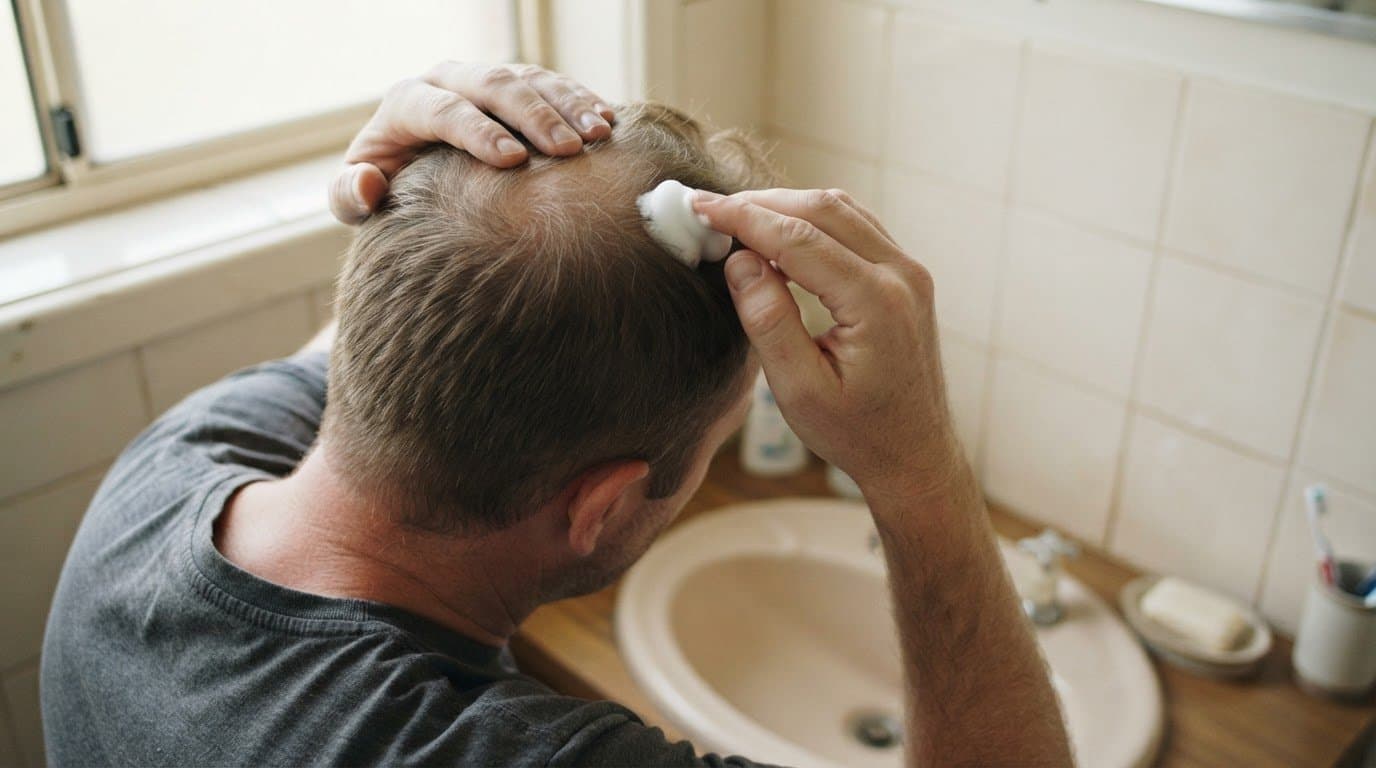
Could the pattern of hair loss matter more than how much hair you’ve lost? Often, yes. Male pattern hair loss commonly starts with a receding hairline at the temples or thinning on the crown and is associated with androgenetic alopecia. Online hair loss treatment for men begins with a clinician reviewing your symptoms and relevant health information. Treatment is considered only if the assessment supports it.
It’s reasonable to want a clear answer without an unnecessary in-person appointment. An online medical assessment can help a doctor understand when the hair loss began, how it is changing and whether the pattern suggests a treatable cause. Eligibility isn’t automatic, and a prescription isn’t guaranteed.
This guide explains common causes of hair loss in men, what an online assessment may involve and which factors can affect treatment eligibility. It also covers what to expect from treatment options, including why further assessment may be needed if your symptoms suggest a cause other than male pattern hair loss. The key is matching the approach to the cause, rather than treating every kind of shedding as the same condition.
Key Takeaways
- Recognise how male pattern hair loss can differ from other causes of shedding.
- Learn which treatment approaches may be considered for a receding hairline or thinning crown.
- Understand what a medical assessment may review before treatment is considered.
- See which factors can affect whether prescription treatment is suitable for you.
- Find out how an online consultation can support the next step in your care.
Table of Contents
Can male pattern baldness actually be treated?
Male pattern baldness can often be managed, although treatment does not cure androgenetic alopecia. The approach depends on the pattern and likely cause of hair loss, as well as whether treatment is suitable.
Follicular Miniaturization and Androgenetic Alopecia
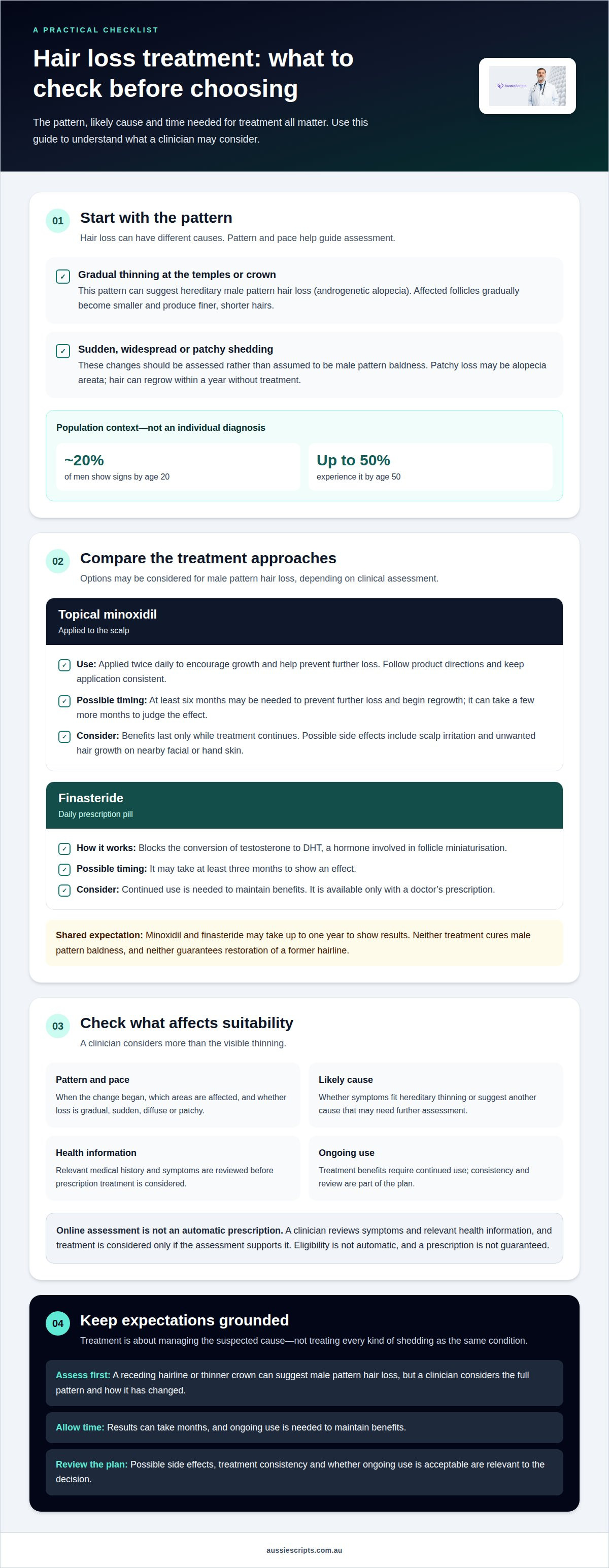
Androgenetic alopecia is the medical term for hereditary male pattern hair loss. In this condition, affected follicles gradually miniaturise, producing finer, shorter hairs over time. Look at the pattern: thinning commonly appears at the temples or crown, while the sides and back are generally spared. These changes can help distinguish gradual pattern loss from other forms of shedding.
Prevalence increases with age. Around 20% of men show signs of male pattern baldness by age 20, and up to 50% experience it by age 50. The figures describe population patterns, not an individual diagnosis. A receding hairline or thinner crown can suggest androgenetic alopecia, but a clinician also considers how quickly the change developed and whether loss is diffuse or patchy.
Minoxidil for Male Pattern Hair Loss
Topical minoxidil is one treatment option for male pattern hair loss. It is applied to the scalp twice daily to encourage hair growth and help prevent further loss. Follow the product directions and keep application consistent. Mayo Clinic says visible growth usually appears after several months if minoxidil works, and lasts only while treatment continues.
Set realistic expectations about timing and ongoing use. Minoxidil may need at least six months before further loss is prevented and regrowth begins; it can take a few more months to judge its effect. Benefits require continued use. Possible side effects include scalp irritation and unwanted hair growth on nearby facial or hand skin. These details matter when weighing a long-term treatment plan.
Managing and Slowing Hair Loss
Finasteride is another treatment option for men with male pattern hair loss. It is a daily prescription pill that blocks the conversion of testosterone to DHT, a hormone involved in follicle miniaturisation. Mayo Clinic notes that finasteride may take at least 3 months to show an effect. Continued use is needed to maintain benefits, so consistency and review are relevant parts of treatment.
No treatment cures male pattern baldness, but suitable options can help manage progression. A practical assessment considers the visible pattern, rate of change, possible side effects and whether ongoing treatment is acceptable. Finasteride and minoxidil may take up to 1 year to show results. Early assessment can help distinguish hereditary thinning from other causes, including patchy alopecia areata, which may regrow without treatment within a year.
What causes hair loss in men?
Which online hair loss treatments for men are available in Australia? Options include topical minoxidil and prescription finasteride, depending on the assessment. How effective are they, and how long can they take? Both may help manage male pattern thinning, but results take time and depend on continued use.
Hereditary androgenetic alopecia is a common cause of a receding hairline or thinning crown. Follicles become progressively smaller, producing finer hairs, and the pattern often develops gradually. Hair loss can also have other causes. Patchy loss, for example, may be alopecia areata, and hair can regrow within a year without treatment. Sudden or widespread shedding needs assessment rather than an assumption of male pattern baldness.
Stress can coincide with shedding, but it doesn’t explain every change in hair density. Hair loss can have causes beyond everyday habits, so changes in density may warrant assessment. Smoking has been associated with hair loss in a study of 1,000 male participants aged 20 to 35. These details help separate common beliefs from factors that may warrant discussion during a medical review.
For a receding hairline or crown thinning, topical minoxidil may encourage hair growth and help prevent further loss. Finasteride is a daily prescription pill used for male pattern hair loss. A clinician considers the pattern, medical history, possible side effects and whether treatment suits the person. Neither option guarantees restoration of a former hairline.
Timing is a key comparison point. Minoxidil may take at least six months to prevent further loss and begin regrowth, with additional months needed to judge its effect. Mayo Clinic says finasteride may take at least 3 months to show an effect. Either treatment needs consistent ongoing use to maintain benefits. Combining treatments may be considered, but suitability depends on clinical assessment, not simply on choosing more than one option.
Monthly costs depend on the medicine, formulation, supply quantity and whether treatment is repeated. No single monthly figure applies to every treatment plan. Before starting, clarify what the prescription covers, how the medicine is supplied and whether a repeat order involves another review. Subscription or repeat-order options are logistical arrangements; they don’t determine whether a medicine is clinically suitable.
Hair loss treatment addresses the suspected cause, not just the visible thinning. If a clinician decides a prescription is appropriate, a Standard Script request may be relevant for a prescription need.
Medical assessment and tests for hair loss
In Australia, a legitimate online assessment involves a medical consultation, not an automatic prescription. Finasteride is available only with a doctor’s prescription, and the clinician should review your symptoms before considering it.
The assessment starts with the pattern and timing of hair loss. A doctor may ask when thinning began, which areas are affected and whether shedding is sudden, gradual or patchy. They may also ask about relevant medical history, current medicines and family history. These details can help distinguish hereditary pattern baldness from other possible causes.
For an online appointment, clear images of the hairline, crown and affected areas can support the discussion. They show visible changes but cannot provide every finding available from a physical scalp examination. During an examination, a doctor may gently pull several dozen hairs to assess shedding. If an online assessment cannot establish the cause, further clinical assessment may be needed before treatment is considered.
Prepare concise details about the changes you have noticed: when they started, whether the pattern has changed, and any recent illness or medication changes. List current medicines and known allergies. Specific examples, such as a newly receding temple or a distinct patch, give the doctor useful context. Share accurate information rather than relying on a photograph alone.
How can men tell whether an online hair loss provider and medicine are legitimate in Australia? Look for a consultation with an Australian-registered doctor and a prescription decision based on your health information. A medicine supplied without appropriate medical assessment is not the same as doctor-reviewed treatment.
Prescription and delivery are separate steps. A prescription does not confirm that a medicine can be delivered to every address in Australia. Delivery arrangements depend on how the prescription is fulfilled and the destination. Confirm the dispensing and delivery process before relying on a delivery timeframe; an online consultation alone does not establish one.
Check the medicine name and directions against the prescription. Minoxidil may cause scalp irritation or unwanted hair growth on nearby facial or hand skin. Oral minoxidil may cause serious heart-related effects, including pericarditis, pericardial effusion and tamponade. These risks make medical oversight important, particularly if symptoms develop during treatment.
A sound online assessment follows clear clinical steps: collect relevant history, review the hair-loss pattern, consider possible causes and explain the treatment decision. For example, sudden patchy shedding may need a different assessment from gradual temple recession. A prescription is appropriate only when the doctor’s review supports that treatment.
Online doctor consultations and prescription requests
An online consultation lets a doctor assess your hair-loss concerns remotely. It can be convenient, but a prescription still depends on clinical suitability.
Online Treatment Plans and Practitioner Consultations
A treatment plan starts with a doctor reviewing the reason for your request. For example, gradual thinning at the temples may prompt a discussion of hereditary hair loss and available options. The clinician considers your health information, current medicines and treatment goals before recommending a course of action. A plan should explain the intended treatment, how to use it and what follow-up may involve.
Hair follicles respond gradually, so regrowth isn’t assessed after a single application or dose. A clinician can explain how to monitor progress and when a review may be appropriate. The plan should also cover relevant risks and what to do if you notice a concerning reaction. These details help distinguish a personalised recommendation from an automatic product supply.
Telehealth Process and Discreet Delivery
A typical telehealth process has clear stages: submit a request, provide relevant medical information and have a doctor assess it. The doctor may ask follow-up questions if details about the pattern or timing are unclear. If a prescription is clinically appropriate, the next steps depend on how it is dispensed and delivered. A consultation alone doesn’t guarantee a prescription or a particular delivery method.
Discreet delivery concerns privacy during fulfilment, not the clinical decision itself. Packaging, delivery notifications and collection arrangements can differ between dispensing services. For example, a notification may appear on a shared phone even when a parcel is unmarked. Keep delivery preferences and privacy needs in mind, without assuming every service uses the same arrangements.
Before starting an online request, organise the details that help a doctor assess the concern. Note when hair loss began, whether it is changing and which areas are affected. Include current medicines, relevant health conditions and previous hair-loss treatments. A clear example, such as a widening part or a receding temple, is more useful than simply describing “hair loss”.
During the consultation, explain what matters most to you. One person may prioritise slowing further thinning; another may be concerned about side effects or long-term use. The doctor can weigh these preferences against clinical factors and explain suitable options. Ask for clarification if the proposed directions, review plan or prescription details are unclear.
Telehealth reduces the need to attend a clinic for the initial discussion, but it does not replace professional judgement. If the pattern suggests another cause or needs examination, the doctor may recommend further assessment. This helps align convenience with safe care, rather than treating every change in hair growth as the same condition.
Hair loss treatment eligibility
Eligibility depends on whether the hair-loss pattern and health information support a particular treatment. A doctor reviews the likely cause, medical history, current medicines and potential side effects before deciding whether treatment is appropriate.
For male pattern hair loss, gradual thinning around the temples or crown may fit androgenetic alopecia. A clinician also considers the timing and distribution of the change. Patchy loss can have another cause, such as alopecia areata, and may regrow without treatment within a year. Treatment suitable for hereditary thinning may not suit a different pattern.
Finasteride is a prescription medicine for men, so a request alone doesn’t establish eligibility. The doctor weighs the expected benefit against the person’s health information and ability to continue treatment. Minoxidil is another option, but scalp irritation or unwanted hair growth on nearby facial or hand skin may affect whether someone prefers it. A treatment plan should address these practical considerations.
Tell the clinician about current medicines, relevant health conditions, previous hair-loss treatments and any known reactions. For example, someone who has already experienced scalp irritation with minoxidil should include that detail in the assessment. Accurate information helps the doctor consider treatment suitability and explain relevant risks. Don’t treat an online questionnaire as a diagnosis or assume it guarantees a prescription.
When should a man see a GP or dermatologist instead of using online hair loss treatment? Arrange an in-person assessment if hair loss is patchy, changes suddenly or doesn’t resemble gradual temple or crown thinning. A clinician can examine the scalp and investigate causes an online review may not resolve.
Online care may be less suitable when the cause remains unclear or the assessment needs a physical examination. A doctor may recommend further evaluation rather than prescribe treatment. That is a meaningful eligibility outcome: it helps avoid treating a symptom as male pattern baldness when the pattern suggests another cause.
Approval and suitability are different questions. A medicine’s approval for a particular use doesn’t mean it is right for every person with thinning hair. The doctor’s decision considers the suspected cause, relevant health details and possible side effects. Eligibility is assessed individually, not determined by age or a receding hairline alone.
Before a consultation, organise a brief timeline of the changes, the areas affected and treatments already tried. Include medicines and health details that could affect the decision. If you want a broader medical review, consider an online consultation, where a doctor can assess the information provided and determine an appropriate next step.
Aussie Scripts: Weight Loss Consultation
Aussie Scripts offers a Weight Loss Consultation for people seeking medical support with weight management. It is a separate service, not a treatment for male pattern hair loss. Hair-loss concerns should be assessed on their own clinical merits, with treatment considered according to the likely cause and your health information.
If weight management is also a concern, this consultation may be a relevant next step. A virtual consultation connects you with an Australian-registered doctor to discuss that concern and possible care. For a prescription request relating to an assessed medical need, Standard Script and Express Script are also available. Contact Aussie Scripts to discuss the service that fits your needs.
Choose a considered next step
The right next step for online hair loss treatment for men is a clinical review that connects your concerns with a suitable care pathway. If you’re considering a prescription, share relevant health information and ask what the consultation can assess. A prescription is appropriate only when the clinician’s assessment supports it.
Aussie Scripts offers Standard Script, Express Script and Medical Certificate services. These are distinct offerings, and the appropriate option depends on your needs and the assessment. Contacting Aussie Scripts about hair loss can help clarify whether an available service fits your request; it doesn’t replace assessment for symptoms that need in-person review.
Contact Aussie Scripts about hair loss to discuss your next step. A clear, clinically guided decision can help you move forward with confidence.
Frequently Asked Questions
Are there side effects?
Yes. Hair-loss treatments can cause side effects, and the type depends on the medicine. Topical minoxidil may cause irritation where it is applied, and unwanted hair growth can appear on nearby skin. If you notice a new or worsening reaction, record when it began and discuss it with a clinician before changing treatment. Possible side effects are one reason suitability and follow-up matter.
What about other options?
Other approaches include low-level laser therapy and hair transplant surgery, though they suit different circumstances. A few small studies suggest low-level laser therapy may improve hair density, but more research is needed to establish its long-term effects. Surgery can involve risks such as bleeding, bruising, swelling and infection. Hereditary hair loss may also continue after a transplant, and more than one procedure may be needed.
What is DHT and why does it matter?
DHT is a hormone involved in male pattern hair loss. Finasteride works by blocking the conversion of testosterone to DHT, reducing its influence on hair follicles. This helps explain why finasteride is considered for hereditary thinning rather than every type of shedding. Hair loss linked to another cause, for example, may need a different assessment and care plan.
What causes male pattern hair loss and how is it diagnosed?
Male pattern hair loss is commonly associated with androgenetic alopecia, a hereditary condition. A clinician considers the distribution and progression of thinning, then looks for other explanations if the pattern is unusual. Distinct patches, for example, differ from gradual temple recession. Assessment may include reviewing health history and examining the scalp; further evaluation can help when the cause remains uncertain.
Can Australian men get finasteride or minoxidil online, and what prescription rules apply?
Australian men can request an online medical assessment, but finasteride requires a doctor’s prescription. A request doesn’t automatically result in a prescription: the doctor considers whether the medicine suits the person’s health information and symptoms. Minoxidil is also used for hair loss, but the appropriate product and directions depend on its formulation. A legitimate online service includes clinical review as part of the process.
How do online hair loss services in Australia assess patients and prescribe treatment?
An online service gathers information about the hair-loss pattern, timing, relevant medical history and current medicines. A clinician reviews those details and may ask follow-up questions before deciding whether treatment is suitable. Sudden or patchy shedding, for example, may need a different pathway from gradual thinning. If the information doesn’t support an online decision, the clinician may recommend an in-person assessment.
What are the side effects and risks of finasteride and minoxidil for men?
Minoxidil may cause scalp irritation or unwanted hair growth on nearby facial or hand skin. Oral minoxidil may cause serious heart-related effects, including pericarditis, pericardial effusion and tamponade. Finasteride also requires a clinician’s review of possible risks and personal health factors before prescribing. Report concerning symptoms to a healthcare professional, and don’t assume one medicine’s safety profile applies to another formulation.
How much do online hair loss consultations and treatments cost in Australia?
Costs depend on the consultation service, prescribed treatment, formulation and supply arrangements. The consultation fee and medicine cost may be separate, so check what a quoted fee covers before proceeding. Aussie Scripts offers prescription services, but the appropriate service depends on the clinical request. A prescription assessment doesn’t include the pharmacy’s medicine charge; pharmacies supply medicines and may charge separately.
Disclaimer
The information provided by AussieScripts is for general informational purposes only and does not constitute medical advice, diagnosis, or treatment. For advice tailored to your specific symptoms or health concerns, please consult one of our doctors or your regular GP.