Online Pre-travel Health Check-up for Australian Travellers
Book a pre-travel health check-up online to get advice tailored to your destination, itinerary and health history, and learn what to prepare before you travel.

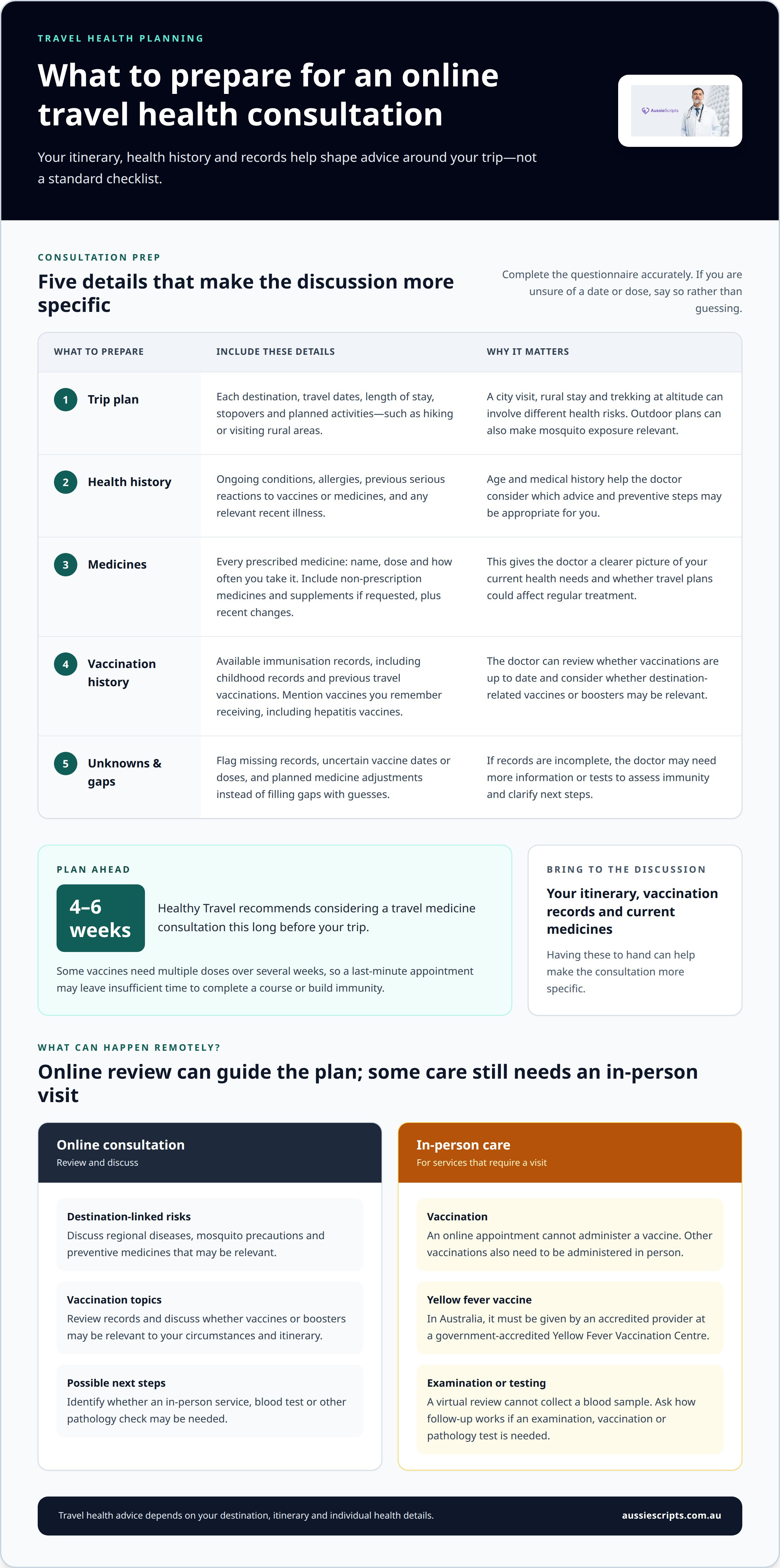
A travel health plan starts with your itinerary, not a standard checklist. A pre-travel health check-up online can use a health and travel questionnaire to help shape a consultation around your destination, length of stay, planned activities, medical history and previous vaccinations. Having your itinerary, vaccination records and current medicines to hand can help make the discussion more specific. Some vaccines need multiple doses over several weeks, so Healthy Travel recommends considering a travel medicine consultation 4-6 weeks before your trip.
It’s reasonable to want clear advice without adding unnecessary appointments to your preparations. In a virtual consultation, a doctor can review your health information, discuss risks linked to your destination and explain whether vaccinations, preventive medicines or further checks may be relevant. Some vaccines, including yellow fever vaccine in Australia, must be administered by an accredited provider at a government-accredited Yellow Fever Vaccination Centre. An online consultation may therefore be one part of the process, not the whole process.
This guide explains how an online travel medicine consultation works, what information to prepare, what a health assessment may cover and how to plan for common risks such as traveller’s diarrhoea, mosquito-borne illness and influenza. It also explains when to arrange a consultation so you have time to act on the advice before departure.
Key Takeaways
- Use your destination, itinerary and health history to guide the topics covered in a travel health consultation.
- Prepare your medication details and vaccination history so the doctor can assess your needs more efficiently.
- Learn which overseas health risks may affect your plans and what preventive steps to discuss.
- Understand practical food and water precautions to help reduce the chance of illness while travelling.
- Find out what can affect the cost of an online consultation in Australia before you plan your travel health care.
Table of Contents
What’s involved in a pre-travel health check?
A travel health check tailors medical advice to your destination, itinerary and health history. It may cover vaccinations, preventive medicines and whether you need an in-person service.
Personalised and Destination-Specific Advice
A doctor considers where you’re travelling, how long you’ll stay and what you plan to do. A city visit, a rural stay and trekking at altitude can involve different health risks. Advice also depends on your age, medical history and previous vaccinations, so recommendations vary between travellers.
Destination-specific advice may cover diseases found in the region, mosquito precautions and preventive medicines. For example, a doctor may discuss malaria prevention for travel to a tropical country with a high malaria risk. Some trips may also call for blood tests or other pathology checks to assess immunity or screen for infections.
Travel Vaccinations and Immunisation Records
Bring your immunisation history, including available childhood records and details of previous travel vaccinations. Depending on your circumstances and destination, a doctor may review whether vaccinations for measles, mumps, rubella, whooping cough and polio are up to date. A flu shot may also be discussed if you’re travelling during flu season.
Depending on your itinerary, recommendations may include vaccines or boosters for yellow fever, typhoid, hepatitis A or B, or cholera. The Vaccine Hub Travel Map can help you see destination-related vaccination recommendations. The right advice also depends on your medical history and previous doses, not just your destination.
In Australia, yellow fever vaccine can only be administered by an accredited provider at a government-accredited Yellow Fever Vaccination Centre. An online appointment can discuss whether vaccination may be relevant, but you’ll need to visit a centre in person to receive it. Ask the accredited centre about the required vaccination documentation and certificate process.
Booking Timing and Online Check-Up Limitations
Book early enough to allow for any recommended vaccination schedule. Healthy Travel recommends considering a travel medicine consultation 4-6 weeks before your trip. Some vaccines require multiple doses over several weeks, so a last-minute appointment may leave insufficient time to complete a course or build immunity.
An online check-up relies on the details and records available during the consultation. To assess a provider’s credentials, look for the doctor’s name and Australian registration details, then check them against the official practitioner register. Ask how follow-up is handled if you need an examination, vaccination or pathology test.
Do I need an in-person appointment for travel vaccines or a yellow fever certificate? Yes. Yellow fever vaccination must take place at an accredited centre, and other vaccinations also need to be administered in person. A virtual review can identify topics to discuss, but it can’t administer a vaccine or collect a blood sample.
Online advice also depends on accurate information about your health, medicines and previous doses. If your records are incomplete, the doctor may need more information or tests to assess immunity. Use the consultation to clarify what can be addressed remotely and which parts of your travel health plan require in-person care.
Online travel and health questionnaire
An online questionnaire gives the doctor a structured starting point for your travel medicine consultation. It links your destination and itinerary with your health history, current medicines and previous vaccinations. A pre-travel health check-up online can use these details to shape the discussion around your circumstances. Complete every field accurately, including details that may seem unrelated to travel. For example, a long-term condition can affect which advice is appropriate.
Start with the trip itself. Include each destination, travel dates, length of stay, stopovers and planned activities, such as hiking or visiting rural areas. These details help the doctor consider different risks across a multi-country itinerary. Mention whether you’ll stay in urban accommodation or spend time outdoors, where mosquito exposure may be relevant.
Next, provide your health information. Include ongoing conditions, allergies, previous serious reactions to vaccines or medicines, and any relevant recent illness. List vaccinations you remember receiving, including hepatitis vaccines, and share available immunisation records if the form allows. If you’re unsure of a date or dose, say so rather than guessing. Accurate details help the doctor assess your situation.
List every prescribed medicine, including its name, dose and how often you take it. Add non-prescription medicines and supplements if requested. This information helps the doctor consider whether your travel plans could affect your regular treatment. Mention recent changes, such as a new medicine or planned adjustment, so the consultation reflects your current health needs.
Are online travel health consultations covered by Medicare or private health insurance? Coverage isn’t automatic and depends on the service and your policy. Before booking, confirm likely out-of-pocket costs with the relevant insurer or provider, and ask whether you’ll need documentation to assess a claim.
What should I prepare before an online travel doctor appointment? Have your itinerary, available vaccination records, medicine list and relevant medical history ready. Keep your travel insurance details nearby if you want to discuss cover for existing conditions or medical emergencies. Being prepared can make it easier to explain your circumstances and clarify which questions need attention.
Review the questionnaire before submitting it. Check that destination names and dates match your itinerary, and include regular medicines and known allergies. If your plans change after submission, tell the doctor during the consultation. A revised route or added activity may change the advice relevant to your trip. A pre-travel health check-up online is most useful when the information reflects your current plans.
Use the appointment to clarify how your information will guide recommendations. Ask how advice relates to your individual medical history, whether an in-person assessment or testing may be needed, and how to manage regular medicines overseas. If you have a separate general health concern, explore online healthcare options relevant to that issue.
Common health risks overseas
Travel-related illness risks depend on the destination, season and planned activities. A general health plan may not address risks in tropical regions, mosquito-prone areas or high-altitude locations. During a telehealth appointment, discuss each stop on your itinerary and how long you’ll spend there. Australia’s Smartraveller travel health advice can help you identify destination-specific precautions and infectious disease risks.
Measles is highly contagious. More than 90% of people who aren’t immune and are exposed to it will develop symptoms. Review your vaccination history before travelling, particularly if your plans involve crowded transport or busy public places. Traveller’s diarrhoea is another common concern, affecting up to 40% of travellers. A doctor can discuss ways to reduce exposure and what steps to take if illness develops.
Mosquitoes can transmit diseases including dengue and malaria in some destinations. Around 400 million people are infected with dengue virus each year, and around a quarter develop symptoms. Malaria causes approximately 400,000 to 600,000 deaths annually worldwide. Destination and itinerary matter: a doctor may recommend preventive malaria medication for travel to a tropical country with high malaria risk. Pack insect repellent containing DEET or picaridin when visiting regions where mosquito-borne illnesses are common.
Altitude is another risk for travellers planning mountain activities. Avoid ascending from low elevation to more than 2,800 m in one day. Once at 3,000 m, sleep no higher than 500 m above your current sleeping elevation each night. Discuss your route and overnight elevations during your appointment. A gradual itinerary can help reduce the risk of altitude illness.
Vaccination needs also vary by destination. Yellow fever is relevant to some travel plans, but its vaccine must be administered at a government-accredited Yellow Fever Vaccination Centre in Australia. A remote consultation can help identify whether you need destination-specific vaccination advice. It cannot administer the vaccine or replace an appointment at an accredited centre.
Use the consultation to connect each risk with a practical decision: review your measles vaccination history, discuss mosquito precautions for dengue, consider malaria prevention and plan overnight stops for altitude. Check Smartraveller for health precautions and infectious disease risks specific to your destination. Include travel dates and activities, since a short city stay and an extended rural trip may involve different exposures.
Travel insurance is another part of preparing for overseas health needs. Before departure, review its medical emergency cover, exclusions and requirements for pre-existing conditions. If you become unwell overseas, seek appropriate local medical care rather than relying on a pre-travel telehealth discussion. The earlier appointment can help you prepare, but it doesn’t provide treatment during an emergency abroad.
Food and water safety
Food and water precautions are worth discussing during travel health planning, especially for destinations where local sanitation differs from home. Traveller’s diarrhoea affects up to 40% of travellers, according to Healthy Travel’s pocketbook. Tell the doctor where you’ll stay, how you’ll eat and whether your itinerary includes remote areas. These details help make advice relevant to your trip.
Use a simple decision process when choosing meals. Prefer food that is freshly prepared and served hot, and take care with raw or undercooked items. For example, choose a cooked meal over uncooked seafood if you’re unsure how it was handled. Wash or sanitise your hands before eating, particularly after using public transport or visiting a market.
Plan for drinking water based on local conditions. If you’re unsure whether tap water is suitable, choose sealed bottled water and check that the seal is intact. Use treated or boiled water where appropriate, including for brushing your teeth. Ask about ice in drinks, as it may be made from water with a different source. Keep a safe drinking option available during long transfers.
Food choices can be harder to manage on a multi-stop itinerary. A hotel breakfast, a street-food meal and a remote-area excursion can raise different practical questions. Discuss those plans with a doctor before departure. Ask what precautions make sense in each setting and how to respond if diarrhoea or vomiting begins. A general travel plan should also account for your medical history and regular medicines.
Keep food and water precautions separate from vaccination decisions. Typhoid immunisation may be discussed for some destinations, but it doesn’t replace careful food and water choices. When discussing whether vaccination is appropriate, your doctor can consider your itinerary, previous immunisation and relevant health history. Mention planned rural stays, local transport and organised food tours.
Plan a practical routine before leaving Australia. Pack hand sanitiser for times when soap and water aren’t available, and identify where you can get safe drinking water on travel days. Choose meals from places where you can assess how food is handled and served. These steps turn general advice into decisions you can use during a busy itinerary.
Ask which symptoms should prompt medical attention and how your travel insurance applies if you become unwell overseas. Review cover for medical emergencies and any requirements related to pre-existing conditions. If you become ill, follow the care instructions provided by a local health professional. A pre-travel discussion helps you plan, but it doesn’t replace assessment or treatment when symptoms occur.
How much does an online travel doctor consultation cost in Australia?
There isn’t one standard cost for an online travel doctor consultation in Australia. The price depends on the case and is provided after a quote request. Factors may include the consultation’s scope, your itinerary, medical history and whether further assessment is needed. A straightforward discussion about one destination may involve different work from a complex trip with several stops and health concerns.
Separate the consultation fee from other travel health expenses. Vaccinations, pathology tests and medicines may involve additional charges, depending on what’s recommended and where it’s provided. For example, an online appointment may cover a discussion about typhoid vaccination, while the vaccine is administered separately. Before committing, ask what the consultation fee includes and whether follow-up discussions are included.
Compare like with like when reviewing a quote. Check whether it covers a doctor’s review of your questionnaire, a discussion of your itinerary and written advice. If you’re travelling to multiple countries, ask whether each destination is included in the quoted scope. A low headline fee may not reflect the total cost if you need tests or in-person services afterwards.
Medicare and private health insurance are separate from the provider’s fee. Don’t assume either will cover an online travel medicine consultation. Ask the provider what you’ll pay, then ask Medicare or your insurer whether a benefit applies to your specific appointment. If your insurer requires an itemised receipt or other documentation, establish that before booking.
Prepare your details before requesting a quote. Include your destinations, travel dates, relevant medical history, current medicines and the questions you need answered. This information helps define the consultation’s scope. A traveller asking about one destination and routine vaccination records may need a different discussion from someone with chronic conditions, several stops or plans for remote travel.
Clarify extra costs before the appointment. If the doctor recommends a blood test, vaccination or in-person assessment, ask which service is separate and where it must take place. For example, yellow fever vaccination must be administered at a government-accredited Yellow Fever Vaccination Centre in Australia. That visit is separate from an online discussion about destination-related health risks.
Use the quote to understand what you’re paying for, not just the appointment format. A clear breakdown helps you plan for the consultation and any separate travel health expenses. For a different ongoing health concern, you can explore online healthcare options suited to that need.
Aussie Scripts
Aussie Scripts may be useful for a separate healthcare need that comes up while planning your trip. Its online services include Standard Script, Express Script, Medical Certificate and Specialist Referral. These options address specific prescription, documentation or referral needs, rather than replacing destination-specific travel medicine advice or vaccinations.
For example, if you need a medical certificate or specialist referral for another health matter, use the relevant service. A travel health plan involving vaccines, malaria prevention or yellow fever certification calls for advice and services suited to those needs.
Contact Aussie Scripts to discuss which listed service may fit your healthcare need.
Plan your next healthcare step
Use your travel plans to decide what needs professional attention before departure. A pre-travel health check-up online can help structure a discussion, but it doesn’t replace services that require an in-person visit. Keep travel-related advice separate from other healthcare needs that arise while preparing for a trip.
If you need a separate prescription, medical certificate or referral, choose the relevant online service for that need. Aussie Scripts provides these options through digital healthcare. For travel-specific vaccination advice, use a consultation suited to travel medicine and arrange any required in-person care separately.
Contact Aussie Scripts about your healthcare needs and take the next step in preparing for your trip.
Frequently Asked Questions
How does a virtual Travel Medicine Consultation work?
A virtual Travel Medicine Consultation starts with a review of your travel plans and health details. The doctor discusses relevant risks, medicines and preventive steps, then explains whether you need further in-person care. Have your itinerary and available health records ready. If you need an examination, vaccination or pathology test, the online discussion can help identify that next step, but it can’t provide these services remotely.
Can you offer recommendations regarding vaccinations and immunisations?
During a travel medicine consultation, a doctor can discuss vaccination recommendations based on your destination, health history and immunisation records. Recommendations may include routine or destination-related vaccines. This discussion is not the same as receiving a vaccine: administration takes place in person. In Australia, yellow fever vaccination must be administered by an accredited provider at a government-accredited Yellow Fever Vaccination Centre.
Does consulting with you mean I don't need to see my usual doctor before I travel overseas?
No. An online consultation doesn’t automatically replace care from your usual doctor. Your GP may know how a chronic condition, previous test result or regular medicine affects your travel plans. Share any travel advice with your usual doctor, especially if you need ongoing care or a treatment review. Keeping your regular clinician informed can support continuity before and during your trip.
What does a pre-travel health check-up in Australia include?
A pre-travel health check can cover destination-related health risks, vaccination history and preventive measures relevant to your plans. The doctor may also discuss regular medicines, medical conditions and whether you need tests or an in-person appointment. For example, a trip involving remote stays may raise different practical questions from a short urban visit. The consultation’s focus depends on the information you provide.
Can I get a travel health consultation online in Australia?
Yes, travel health advice can be discussed by telehealth in Australia. A doctor can review your travel plans and health information remotely, then explain suitable next steps. Online care has limits: it can’t administer vaccines, collect samples or provide a physical examination. If your situation requires one of these services, the consultation can identify the need for an in-person appointment.
Which travel vaccines can be prescribed or administered after an online consultation in Australia?
An online consultation can help identify vaccines to discuss for a destination, such as typhoid, hepatitis A or B, or yellow fever. The consultation itself doesn’t administer a vaccine. A doctor considers factors such as previous doses and your health before advising on next steps. In Australia, yellow fever vaccine must be given by an accredited provider at a government-accredited Yellow Fever Vaccination Centre.
What health advice is recommended for travel to different destinations?
Advice should reflect the places you’ll visit, your activities and your health needs. A stop in a tropical region may prompt a discussion about mosquito precautions or malaria prevention, while high-altitude plans raise different considerations. The Australian Government’s Smartraveller provides destination-specific information about health precautions and infectious disease risks. Use it alongside personalised medical advice, particularly if your itinerary includes several countries.
How do Australian online travel clinics compare with GP or in-person travel clinics?
Online consultations offer a remote way to discuss travel plans and health history. A GP may also consider your broader medical record and ongoing care. In-person clinics can provide services that require physical attendance, such as vaccination or examination. The right format depends on what you need: remote discussion may suit advice, while vaccination, testing or examination requires an appropriate in-person service.
Disclaimer
The information provided by AussieScripts is for general informational purposes only and does not constitute medical advice, diagnosis, or treatment. For advice tailored to your specific symptoms or health concerns, please consult one of our doctors or your regular GP.