Online referral to an allergist in Australia: who can refer and when
Learn who can provide an online referral to an allergist in Australia, how long referrals last, what to include, and what to expect from triage and wait times.

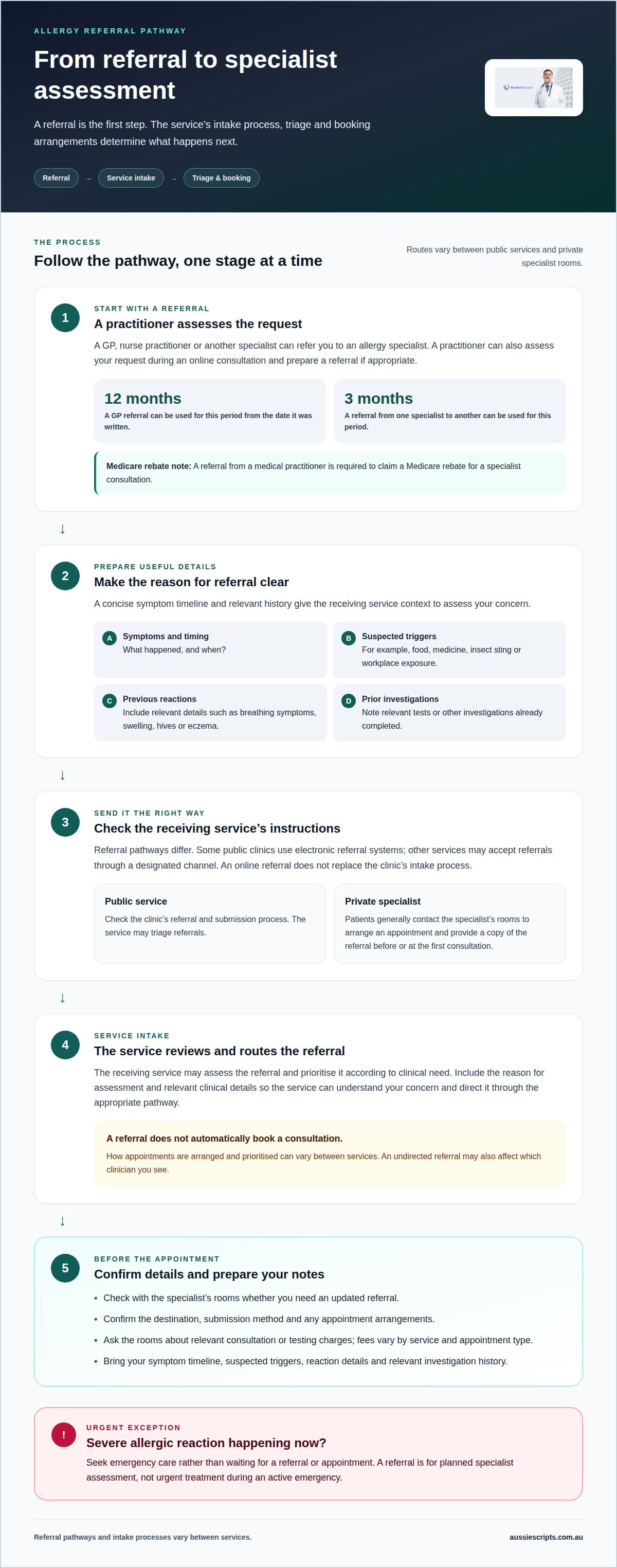
A GP, nurse practitioner or another specialist can refer you to an allergy specialist in Australia. A GP referral can be used for 12 months from the date it was written; a referral from one specialist to another can be used for three months. After an online referral to an allergist is sent, the receiving service may triage it, while private patients need to contact the specialist’s rooms and provide a copy of the referral before or at their first appointment.
A referral is an important first step, but it does not automatically book your consultation. The process can vary between services, including how they accept referrals and prioritise appointments.
This guide explains what may happen next, who can refer you, what information to include and why a referral might not be accepted. It also covers wait times and practical steps to help you understand the pathway before you proceed.
Key Takeaways
- A GP, nurse practitioner or another specialist can refer you, but referral validity depends on who wrote it: GP referrals can be used for 12 months, while specialist-to-specialist referrals can be used for three months.
- Include clear details about your symptoms, suspected triggers, relevant reactions and previous investigations so the receiving service can assess the referral.
- Referral pathways differ between services. Check that the referral is sent in the format the receiving clinic accepts.
- Referrals may be triaged according to clinical priority, and an undirected referral may affect which clinician you see.
- Waits can be longer for non-urgent referrals, particularly when registrar availability is limited or consultant wait lists differ.
GP and specialist referrals to allergy and immunology services
A GP, nurse practitioner or another specialist can refer you to an allergy specialist in Australia. The referral route and booking process depend on the service. Some public clinics use electronic referral systems, while private specialist rooms may ask you to arrange your own appointment and send the referral directly.
A GP referral can be used for 12 months from the date it was written. A referral from one specialist to another can be used for three months. Check with the specialist’s rooms whether you need an updated referral before your appointment. A referral from a medical practitioner is also required to claim a Medicare rebate for a specialist consultation.
Finding an Allergy Specialist
ASCIA’s specialist directory can help you find allergy specialists and relevant immunology services. Use its listings to identify clinicians whose work matches your reason for referral, then consider the service’s location and appointment process. The directory also identifies GPs with RACGP Recognition of Extended Skills in Allergy, which may help you find an appropriate clinician.
Public and private pathways can differ. Public services may have specific referral and triage processes. Private patients generally contact the specialist’s rooms to arrange an appointment and provide a copy of the referral before or at the first consultation. Check the destination and submission instructions before sending it.
Online Referral Options
A practitioner can assess your request during an online consultation and prepare a referral if appropriate. The receiving service may require an electronic referral or another submission method. Confirm the intended service’s requirements and address the referral correctly. An online format does not replace the receiving clinic’s intake process.
To check an online doctor’s or allergist’s Australian registration, search the practitioner’s name on the Australian Health Practitioner Regulation Agency public register. Match the name and profession, then review the registration details. This verifies the individual practitioner, rather than relying only on a clinic or platform name.
When comparing public and private options, consider the referral pathway, appointment arrangements and likely out-of-pocket costs. Consultation and testing fees vary by service and appointment type. Ask the specialist’s rooms about relevant charges before booking. A Medicare rebate for a specialist consultation depends on having a referral from a medical practitioner. It does not mean every consultation or test is covered.
Before your consultation, prepare a short symptom timeline and note suspected triggers, previous reactions and relevant investigations. For example, record whether symptoms followed a food, medicine or insect sting. These details help the referring practitioner explain why you need specialist assessment and give the receiving service useful context.
When to see a clinical immunology/allergy specialist
A referral may be appropriate when allergy symptoms need specialist assessment, testing or treatment. Clinical immunology services also assess some immune system problems, including recurrent or unusual infections and swellings.
If a severe allergic reaction or anaphylaxis is happening now, seek emergency care rather than waiting for a referral or appointment. A referral supports planned specialist assessment, not urgent treatment during an active emergency.
Suspected or confirmed IgE-mediated allergy to food, medicines, insects or occupational allergens can be a reason for referral. A specialist may assess a previous severe reaction and consider further evaluation or treatment. For food allergy, this may include a medically supervised oral food challenge. For suspected drug allergy, a specialist may consider a supervised drug challenge.
Insect allergy may warrant assessment for venom immunotherapy. Respiratory allergy may lead to consideration of allergen immunotherapy. These treatments require specialist assessment, so include the suspected trigger and reaction details when discussing a referral with a practitioner.
Other reasons for referral may include severe atopic dermatitis, also called eczema, and chronic urticaria, or hives. Angioedema, which involves episodes of swelling, may also prompt specialist review. Suspected immune deficiency is another reason to consider assessment, particularly when infections or swellings are recurrent or unusual.
Allergy services may provide clinical assessment and investigations such as skin prick testing or lung function testing. At the clinic described in the service information, each test takes about 20 minutes. The clinic asks patients to stop oral antihistamines 48 hours before an appointment because they can interfere with skin prick testing. Follow the preparation instructions provided by the service conducting your test.
Before an appointment, write down the suspected trigger, reaction and timing. Note whether symptoms followed a food, medicine, insect sting or workplace exposure. Include any breathing symptoms, swelling, hives or eczema, and record relevant previous investigations. This gives the practitioner concrete information to assess the reason for referral and helps the specialist service understand your concern.
Referral pathways vary between public allergy services. Some use an electronic referral system, while others accept referrals through a designated channel. Intake teams assess referrals and may triage them by priority. Include the reason for assessment and relevant clinical details so the service can understand your concern and direct it through the appropriate pathway.
Information to include in a referral
A clear referral connects your symptoms with the reason for specialist assessment. Ask the referring practitioner to describe the suspected allergy or immune concern, its effect and any relevant clinical history. For example, a suspected food allergy needs more detail than “reaction after eating”.
Describe the symptoms and suspected trigger precisely. Include what happened, when it started, how long it lasted and whether symptoms returned. For a food allergy, name the food and describe the reaction. For breathing symptoms, note possible exposures such as pollen, animals, mould or workplace materials.
Give a concise timeline. For example, explain whether a rash followed a medicine, swelling occurred after an insect sting, or breathing symptoms recur in a particular setting. Include the time between exposure and reaction. This helps the practitioner distinguish a single event from a repeated pattern during the clinical assessment.
Include relevant health conditions and treatment history. Mention conditions such as asthma, eczema or another chronic disease, as well as any previous severe allergic reaction. List medicines used for symptoms and whether they helped. If a treatment caused side effects, describe what happened rather than simply naming the medicine.
Previous investigations can help the specialist understand what has already been assessed. Include relevant test reports, discharge summaries or clinical letters, if available. For suspected food allergy, attach records of previous assessments or supervised challenges. For breathing concerns, include relevant lung function results or previous treatment details.
Make the referral’s purpose explicit. State whether the assessment concerns diagnosis, ongoing symptoms, possible testing or treatment options. For example, describe a suspected insect allergy alongside the sting reaction and any subsequent symptoms. A referral for chronic hives should note their pattern and any associated swelling.
Before submission, review the patient’s identifying and contact details, the receiving service and the reason for referral. Add the referring practitioner’s details and signature through the relevant referral process. Missing contact information or an unclear destination can make clinic follow-up harder.
Keep the document focused and readable. Group symptoms, history, treatments and attached results under clear labels. A practitioner arranging an online referral to an allergist can use these details to explain why specialist review is sought. You can prepare a symptom timeline and medication list before your consultation.
Reasons referrals may not be accepted
Public allergy clinics in Australia can use different referral pathways. A referral may not be processed if it arrives through a channel the receiving service does not accept. There is no single submission method for every public hospital clinic, so identify the intended service and follow its instructions.
Some public hospital clinics accept online referrals, but this depends on the clinic’s process. Some services use electronic referral systems, while others accept referrals by email or fax. A clinic that specifies one route may not process a referral sent another way. For example, not every public allergy service accepts referrals by email.
Check the submission channel before sending the referral. Some services accept email referrals for particular clinics, while others require a different method. If the service specifies fax or an electronic system, sending the document by email may prevent it from reaching the correct intake process. Use the channel specified for the intended clinic.
The destination matters too. A referral directed to the wrong service may need redirection before assessment. For example, confirm whether the intended clinic handles adult or paediatric referrals and whether it is the relevant immunology and allergy service. Clear destination details help the clinic route the document appropriately.
Public services triage referrals rather than booking every patient in arrival order. An undirected referral may be allocated through the service’s general pathway, including to a registrar. Triage also considers priority. Limited detail about the clinical concern can make assessment harder, so describe the reason for review and include relevant history.
Before submission, the referring practitioner can review the patient’s identifying details, destination, reason for referral and supporting clinical information. Then use the clinic’s stated submission route. Keep a copy of the referral and any confirmation received. This makes it easier to respond if the service asks for clarification or reports that the document has not arrived.
If a service returns or redirects a referral, read its instructions and correct the specific issue. It may involve the submission channel, destination or missing clinical details. For example, if the clinic requires an electronic referral, resubmit through that pathway rather than sending another email. Follow the service’s instructions so the referral enters its intended triage process.
Referral wait times
There is no single wait time for allergy appointments across Australia. Public services triage referrals, and the clinic’s priority assessment affects when an appointment is offered. An online referral does not determine your position or appointment timing. The receiving service, referral details and clinical priority shape the next step.
Sydney Local Health District triages all referrals to its Clinical Immunology and Allergy service. Undirected referrals go to the registrar, and most are seen by the registrar. Wait-list times for these referrals may be long because registrar availability is limited. A referral addressed to a particular consultant follows the relevant service pathway, where non-urgent wait times can differ between consultants.
The Royal Melbourne Hospital also triages Immunology and Allergy referrals according to priority. Referral information helps the service assess the clinical concern. Include the reason for referral, relevant history and supporting details, such as recurring asthma symptoms or reactions to a suspected trigger. A clear account helps the triage team understand the issue.
For a public clinic, allow for triage before an appointment is arranged. Receipt of a referral does not mean an appointment has been booked. Follow the clinic’s instructions about confirmation or next steps. Some public allergy services ask patients to confirm appointments one or two days before they are scheduled.
If your referral is undirected, ask the referring practitioner which service received it and how the clinic will communicate. For Sydney Local Health District, undirected referrals are allocated to the registrar. If a particular consultant is intended, the referral should identify that destination and follow the service’s referral pathway.
While waiting, keep a record of symptoms and changes. Note asthma episodes, suspected triggers, treatment used and any further reactions. Share significant changes with your treating practitioner, who can review the clinical information. If the clinic requests additional details, respond through its stated channel so the referral can be considered with complete information.
Private specialist appointments involve a different booking step: patients contact the specialist’s rooms to arrange an appointment and provide a copy of the referral before or at the first consultation. The referral does not set a universal waiting period. Ask the rooms about their appointment process, and keep the referral and relevant clinical records available.
Need the referral step arranged? Start an online specialist referral request for a medical practitioner to assess.
Aussie Scripts: Standard Script
Aussie Scripts offers a Specialist Referral for patients who need a referral pathway after learning what allergy services require. In an online consultation, an Australian-registered doctor can review your request and assess whether a specialist referral is appropriate. Provide clear details about your symptoms, suspected triggers and relevant medical history to support the assessment.
A referral is a starting point, not an allergy diagnosis or specialist appointment. You still need to follow the receiving clinic’s submission and booking process. If you need an online referral assessment, consider Aussie Scripts’ Specialist Referral service as a practical next step.
Contact Aussie Scripts to learn more about requesting a Specialist Referral.
Keep your referral moving
Treat the referral as an active handover, not a document to file away. Keep a copy, note the receiving clinic and submission date, and organise relevant records in one place. If symptoms change while you wait, record what changed and discuss it with your treating practitioner. This gives your next clinical conversation a clear starting point.
An online referral to an allergist can begin the specialist pathway, while your notes help explain what has happened since it was sent. Keep the clinic’s instructions accessible so you can respond to requests and manage appointment arrangements without searching through old messages.
Aussie Scripts offers a Specialist Referral, as well as Standard Script, Express Script and Medical Certificate services for separate healthcare needs. If you’re ready to discuss a referral, contact Aussie Scripts about referrals. Take the next step with your referral details and symptom notes prepared.
Frequently Asked Questions
What happens after I get a referral?
The receiving clinic reviews the referral and decides how it fits its intake pathway. Keep the referral copy and clinic correspondence together, especially if the service asks for more information. If you receive an appointment offer, follow its booking instructions and note any preparation requirements. A referral starts the specialist pathway, but does not confirm an appointment or specify what the assessment will involve.
What should be included in a referral?
A useful referral explains the clinical concern clearly rather than only naming a suspected allergy. For example, describe what happened after a particular food, medicine or insect sting, and whether symptoms returned. Include relevant conditions, treatments tried and available test reports. A concise timeline can help distinguish a one-off reaction from recurring symptoms, while supporting documents give the specialist context for the requested assessment.
Which Australian doctors can provide an online referral to an allergist?
A GP or other medical practitioner can provide a referral, as can a nurse practitioner or another specialist. For a digital referral, the practitioner assesses your history and reason for seeking specialist care before preparing it. The practitioner should be registered in Australia. You can check their registration by searching their name on Ahpra’s public register.
How do telehealth GP referrals to allergists work in Australia?
In a telehealth consultation, you explain your symptoms, relevant history and reason for requesting specialist care. The practitioner reviews that information and may prepare a referral when appropriate. The referral then needs to reach the intended clinic through its accepted channel. For example, one service may use an electronic referral pathway, while another specifies a different submission method.
What information or tests should you provide when requesting an allergy referral online?
Describe the suspected trigger, reaction, timing and any treatment used. For example, note whether breathing symptoms appeared after an exposure or hives followed a medicine. Share existing test reports or hospital documents if available. A test is not a prerequisite for asking about a referral. Your practitioner can use your history and available records to assess what information belongs in the referral.
How long does an online allergist referral take in Australia?
The referral assessment and the wait for a specialist appointment are separate steps. Appointment timing depends on the receiving service’s triage and capacity. Public allergy services can have long waits for undirected referrals when registrar availability is limited, and non-urgent waits can vary between consultants. A referral does not provide a fixed appointment date, so keep clinic messages and submission details accessible.
What does an online GP consultation and allergist appointment cost in Australia?
There is no single cost covering both stages. An online GP consultation and a private allergist appointment are separate services, and testing may involve another charge. The total depends on which consultations and investigations are needed. A referral does not pay the specialist’s fee. Medicare may provide a rebate for an eligible specialist consultation when the required referral is in place, but this does not mean the full cost is covered.
Can Medicare cover telehealth referrals and private allergist visits in Australia?
A referral from a medical practitioner is required to claim a Medicare rebate for a specialist consultation. That requirement is separate from whether a telehealth GP consultation itself attracts a rebate. A referral also does not guarantee that Medicare will cover the full specialist fee or any tests. Keep your referral and Medicare details available when arranging the specialist appointment.
Disclaimer
The information provided by AussieScripts is for general informational purposes only and does not constitute medical advice, diagnosis, or treatment. For advice tailored to your specific symptoms or health concerns, please consult one of our doctors or your regular GP.
