Sleep, light and medical advice for preventing jet lag
Managing jet lag with medical advice can help you plan sleep, light and caffeine around travel, assess sleep aids, and know when to seek help for symptoms.
Jet lag can be reduced, but it can’t always be prevented. Managing jet lag with medical advice can help you plan sleep timing, light exposure and caffeine use around your trip, while considering whether melatonin or other sleep aids are appropriate for you. Jet lag commonly follows travel across more than three time zones, when your body clock is out of step with local time.
It’s understandable to want a clear plan before travelling, especially if you need to be alert soon after arrival. Sleep timing and light can support adjustment to a new time zone. Caffeine may help with daytime alertness, but using it too late can interfere with sleep.
This article explains how travel direction affects sleep and light strategies, what to consider with caffeine and melatonin, and when to speak with a doctor. It also explains how medical advice can help if symptoms persist, worsen or make adjustment difficult.
Key Takeaways
- Shift sleep timing towards your destination before travelling, taking into account whether you’re flying east or west.
- Use caffeine selectively for daytime alertness, and avoid it close to bedtime so it’s less likely to disrupt sleep.
- Light exposure can support body-clock adjustment, but useful timing depends on your travel direction and destination time zone.
- Melatonin and sleeping medicines can have risks. A doctor can help assess whether they’re suitable and how to use them safely.
- Seek medical advice if symptoms worsen, persist beyond a week after travelling, or you’re concerned your body isn’t adjusting.
Table of Contents
1. Adjusting sleep routines to a new time zone
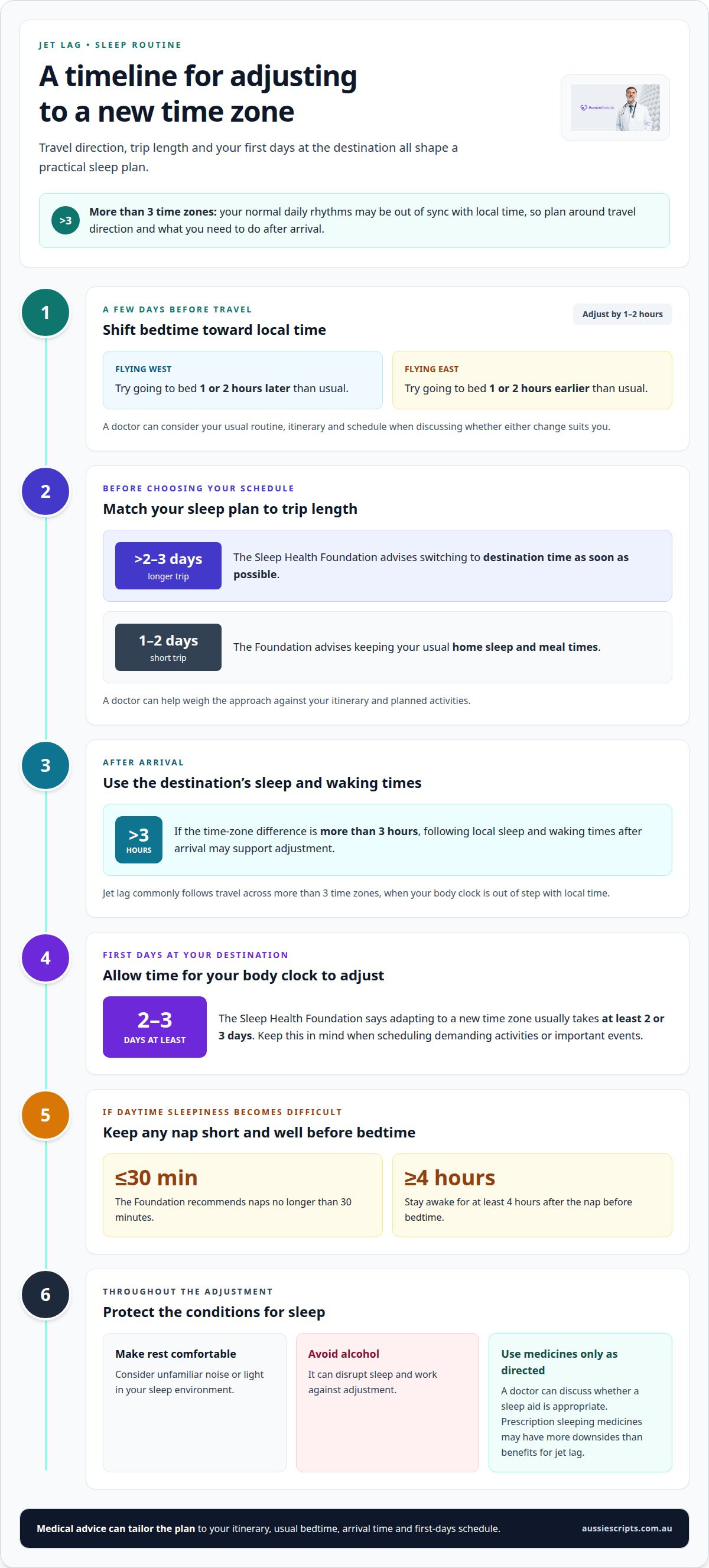
A doctor can consider your travel itinerary, usual bedtime and arrival time when discussing changes to your sleep routine. Jet lag occurs when your normal daily rhythms are out of sync with the destination’s time zone. It commonly follows travel across more than three time zones. For a large time difference, the plan should account for your travel direction and what you need to do during your first days abroad.
If the time-zone difference is more than three hours, following the destination’s sleep and waking times after arrival may support adjustment. The Sleep Health Foundation advises switching to destination time as soon as possible on trips longer than two or three days. For trips lasting only a day or two, it advises keeping your usual home sleep and meal times. A doctor can consider which approach fits your itinerary and planned activities.
Travel direction can shape how you prepare. A few days before travelling west, going to bed an hour or two later than usual may help. Before travelling east, going to bed an hour or two earlier may help. These changes aim to shift your sleep towards local time. Your doctor can consider your usual routine and schedule when discussing whether either adjustment suits you.
After arrival, allow time for adjustment before scheduling demanding activities. The Sleep Health Foundation says adapting to a new time zone usually takes at least 2 or 3 days, so consider that when planning important events. If daytime sleepiness becomes difficult, a short nap may help alertness. The Foundation recommends naps no longer than 30 minutes and staying awake for at least 4 hours afterwards before bedtime.
A comfortable setting also matters when you’re trying to sleep somewhere new. Choose an environment that feels suitable for rest, and consider practical disruptions such as unfamiliar noise or light. Avoid alcohol, which can disrupt sleep. A doctor can discuss whether a sleep aid is appropriate, but prescription sleeping medicines may have more downsides than benefits for jet lag. Use medicines only as directed by a healthcare provider, not as an improvised way to force a new bedtime.
Jet lag is linked to a changed body clock, including shifts in the timing of the sleep-related hormone melatonin. A doctor can review when your symptoms started, your travel direction and your usual sleep pattern. A sleep study does not replace this travel and symptom history. If sleep difficulties also occur outside travel, discuss whether further sleep assessment is relevant. This helps distinguish travel-related disruption from a separate concern without assuming every tired traveller needs testing.
2. Caffeine timing and alertness
Caffeine may help manage daytime sleepiness, but timing matters. The Sleep Health Foundation says tea and coffee take about 20 minutes to improve alertness, with effects lasting up to 4 hours. That can be useful during a local daytime slump. A late drink, however, may carry its alerting effect into the intended sleep period and make adjustment harder.
For a practical timing guide, the Sleep Health Foundation advises avoiding tea or coffee for at least 2 hours before bedtime. A doctor can consider your destination’s bedtime, planned wake time, usual caffeine intake and medicines when discussing a suitable routine. For example, someone arriving in the morning may need a different plan from someone reaching their destination near bedtime.
Daytime sleepiness can make caffeine tempting throughout the day. Try not to rely on repeated drinks to push through each low-energy period. Caffeine can support alertness, but it doesn’t replace sleep or reset your internal body clock. A clinician can help weigh its short-term benefit against the risk of disrupting sleep later.
Hydration is another part of travel planning. Drink plenty of water, and remember that avoiding caffeine and alcohol after arrival can help reduce dehydration. Alcohol can also disrupt sleep, so using it to relax before bed may work against the adjustment you’re aiming for. On a flight or after landing, water is a more suitable choice for hydration.
Exercise may also support daytime alertness. The Sleep Health Foundation advises exercising during daylight, particularly in the early morning or late afternoon, and avoiding activity close to bedtime. A daylight walk is one example. Caffeine and exercise may help you stay alert during the day, but avoid both in the evening so they’re less likely to interfere with sleep.
Your caffeine plan should account for more than the time of day. A doctor can discuss how your travel schedule, sleep timing and caffeine habits fit together, including whether you’re relying on coffee to mask persistent symptoms. Mention your usual tea, coffee or other caffeinated drinks, and when you typically have them. This gives the discussion practical detail without assuming one schedule suits every traveller.
If jet lag symptoms affect your ability to work, Aussie Scripts’ Medical Certificate service may be relevant. A certificate is separate from advice about caffeine, hydration or sleep, so discuss ongoing symptoms with a doctor as needed.
3. Light exposure and body-clock adjustment
Your body clock follows a 24-hour rhythm, and light helps signal when to be awake. After travel, daylight at the destination can support adjustment to local time. The useful timing depends on your direction of travel and the time difference. A doctor can review your itinerary and usual sleep schedule to discuss when light exposure may fit your plan.
For eastward travel across 3 to 5 time zones, timing matters particularly in the morning. Avoid bright daylight first thing after arrival, then seek bright light from mid-morning to late morning. Several hours of bright light during that later window may help your body adjust to the earlier local time. A clinician can use your departure and arrival times to relate that advice to your trip.
Eastward travel may also call for preparation before departure. One approach is to wake an hour earlier than usual and get at least one hour of light exposure each day before the trip. The aim is to shift towards an earlier sleep and waking schedule. Discuss this plan with a doctor alongside your itinerary, especially if the proposed light period conflicts with your usual commitments or sleep routine.
Westward travel calls for a different light pattern. Evening light at your destination may help your body adapt to a later time zone. A clinician can consider the destination’s local day and your arrival time when discussing when to seek light. Timing matters because bright light at the wrong part of the day may not support the adjustment you’re aiming for.
Some plans begin before the flight. Light therapy can start up to three days before travel to help with adjustment after arrival. The schedule should reflect your destination and travel direction, rather than rely on a generic rule. Bring your itinerary to a medical discussion so the timing can be considered alongside your usual wake time and sleep routine.
For example, someone travelling east might discuss waking earlier and getting light before the trip, followed by carefully timed daylight after landing. Someone travelling west might instead focus on evening light at the destination. These examples show why one sunlight schedule won’t suit every journey. Your arrival time, time-zone change and planned sleep period all affect the timing.
You can combine daylight with movement during adjustment. The Sleep Health Foundation advises exercising during daylight, particularly in the early morning or late afternoon, and not close to bedtime. A walk is one practical example. Keep activity aligned with local daytime, then protect your planned sleep period so movement and light don’t work against your new schedule.
4. Melatonin and medical advice
Melatonin may help some people adjust faster after crossing time zones, but timing matters. A healthcare provider can discuss its potential benefits and risks alongside your travel direction, planned bedtime and usual sleep pattern. Taking it at the wrong time may not support the sleep schedule you’re aiming for. It isn’t a substitute for planning sleep around your flight.
Melatonin can cause dizziness, headaches, daytime sleepiness, loss of appetite, nausea and disorientation. According to healthdirect, taking too much as a supplement can also cause these effects and, rarely, mood swings. Don’t combine it with alcohol. A doctor or pharmacist can help assess possible interactions with medicines and whether melatonin is suitable for you.
Timing should follow the intended local sleep period. One approach is taking melatonin 30 minutes before planned sleep, or asking a healthcare professional about the appropriate timing. After eastward travel, melatonin may be taken nightly in the new time zone until you’re adjusted to local time. Your destination and bedtime matter more than simply taking it at the same hour as before travel.
Dose also needs care. A melatonin dose as small as 0.5 milligram may be as effective for jet lag as 5 milligrams or higher. Some studies suggest doses of 5 milligrams or higher may be better at making a person sleep. These points don’t establish one dose for everyone. Ask a healthcare provider to weigh the intended effect, your medicines and possible side effects rather than increasing a supplement dose yourself.
Melatonin and sedatives aren’t interchangeable choices. The Sleep Health Foundation advises minimising sedatives and sleeping tablets because they can become a habit and cause more problems than temporary jet lag. Sleeping medicines may help some people sleep longer, yet daytime symptoms can persist. Possible effects include nausea, vomiting, amnesia, sleepwalking, confusion and morning sleepiness. Sleeping tablets aren’t recommended during a flight because of the possibility of an emergency.
A clinician can help you decide whether melatonin fits your plan or whether sleep timing and daylight are more suitable. Bring your itinerary and a list of medicines, including supplements. Mention whether symptoms affect daytime activities such as work or exercise, and whether your eating or appetite has changed. These details help frame the advice around your travel and sleep pattern.
For eastward travel, ask about taking melatonin at your planned bedtime in the destination and continuing nightly until you adjust. Avoid alcohol while taking it, and don’t add sedatives without professional advice. If you experience daytime sleepiness or dizziness, consider how it affects activities requiring alertness. Medical guidance can help you understand these risks before using melatonin during the days after arrival.
5. When to consult a doctor
Managing jet lag with medical advice can help when symptoms concern you, interfere with daily activities or leave you feeling that your body isn’t adjusting. Contact a healthcare provider if symptoms don’t go away or get worse more than one week after travelling. This gives you a clear point to seek individual advice instead of continuing with the same approach while symptoms persist.
Consider speaking with a doctor sooner if symptoms affect work, concentration or planned activities after you arrive. Jet lag can affect mood, concentration, and physical and mental performance. Describe what is disrupting your day, when the effects began and whether they’re improving. This information helps the clinician assess the travel context and consider whether another health concern may also need attention.
A consultation before departure may help you prepare for a demanding trip. Bring your itinerary, including departure and arrival times, destination and travel direction. Explain when you need to be alert, such as if you’ll be working soon after landing. The doctor can use these details to discuss prevention strategies and whether medicine or another sleep aid may be suitable.
For a useful assessment, describe your usual sleep routine and what has changed since travelling. Include any medicines or supplements you take, as well as what you’ve already tried for jet lag. For example, note whether you used a sleep aid or melatonin and how you felt afterwards. These details help the clinician consider possible risks and interactions before discussing next steps.
Ask a healthcare provider before trying an herbal supplement or alternative therapy. Some therapies may interact with medicines or cause side effects. Share the product name and ingredients, if available, and mention any medicines or sleep aids you use. This keeps the discussion focused on the specific product rather than treating all supplements as equivalent.
If you’re struggling to sleep, a doctor can discuss whether medicine or another sleep aid could help. The choice depends on your symptoms, travel schedule, medicines and possible daytime effects. Prescription-strength sleeping pills may have more downsides than benefits for jet lag. Sleeping medicines may improve sleep while daytime symptoms continue, so describe both your nights and your daytime alertness.
A discussion about managing jet lag with medical advice can also help you plan for future trips if symptoms recur. Explain how previous journeys affected your sleep and how long recovery took. If symptoms worsen, persist beyond one week after travelling or leave you concerned, contact a healthcare provider. Seek a personalised assessment rather than relying only on general travel strategies.
Aussie Scripts: Medical Certificate
Aussie Scripts’ Medical Certificate may be relevant if jet lag symptoms affect your ability to work or meet other responsibilities. It addresses documentation needs, not jet lag treatment or advice about sleep medicines. For ongoing or worsening symptoms, seek medical advice from a doctor who can assess your situation and discuss suitable next steps.
If an illness affects your ability to work, a Medical Certificate may help with documentation. A doctor’s assessment determines whether one is appropriate. It does not replace urgent care when symptoms require immediate attention.
For information about this service, contact Aussie Scripts.
Plan your next step before travel
Before your next trip, include your travel schedule in the health conversation. A clear itinerary can help a doctor consider your arrival time, planned commitments and any medicines or supplements you use. This gives you a practical basis for discussing whether sleep or light adjustments suit your plans, rather than making last-minute changes when you’re already tired.
Managing jet lag with medical advice is most useful when the discussion focuses on your own travel pattern and health needs. If symptoms affect work or another responsibility, consider whether documentation is also relevant. Aussie Scripts offers Standard Script, Express Script and Medical Certificate services, with clinical assessment guiding whether a service is appropriate.
For advice about the next step, contact Aussie Scripts. A considered plan can make your travel preparation clearer and help you approach the journey with confidence.
Frequently Asked Questions
Can you prevent it?
Jet lag can’t always be prevented, but planning may reduce its effects. Before booking demanding activities, allow time at your destination for your body to adjust. If an event is difficult to reschedule, consider arriving early enough to rest beforehand. Your travel direction, time-zone change and sleep routine all affect how you might feel, so treat prevention as preparation rather than a guarantee.
Does taking melatonin work for jet lag?
Melatonin may help some people adjust faster after a time-zone change, but it doesn’t work the same way for everyone. Its usefulness depends partly on timing relative to sleep in the new time zone. Before using it, discuss your medicines and health circumstances with a healthcare provider. Melatonin can cause side effects, and you should avoid alcohol while taking it.
How can a doctor help you avoid jet lag?
A doctor can help you plan around your itinerary, usual sleep routine and travel direction. For example, if work or an important event follows your arrival, discuss the timing before departure. A provider can also review whether caffeine, melatonin or another sleep aid needs particular care. Bring details of your route and medicines so the advice reflects your circumstances.
How common is jet lag?
Jet lag is a recognised travel-related problem, particularly after crossing more than three time zones. Its likelihood and severity vary with the journey and the person. Symptoms may be more severe after eastward travel than westward travel, while some travellers experience little disruption. A long flight alone doesn’t determine whether jet lag will occur. The change between your normal daily rhythm and destination time matters.
How can medical advice help you get over jet lag?
Medical advice can help you decide what to do if symptoms disrupt sleep or daytime activities. A doctor can review your travel history, medicines and symptoms, then discuss whether a sleep aid or another approach is suitable. This can be useful if you’re considering supplements, since some may interact with medicines. Seek professional advice if symptoms worsen or don’t resolve after your trip.
How is jet lag diagnosed?
Assessment starts with your travel context and symptoms. Tell the clinician when you travelled, which time zones you crossed, when symptoms began and how your sleep has changed. For example, difficulty sleeping during local night and sleepiness during the day may fit a disrupted body clock after travel. The clinician can consider this history alongside other health factors that might explain your symptoms.
How long does it take to get over?
Adjustment usually takes at least 2 or 3 days, according to the Sleep Health Foundation. Recovery can take longer depending on the time-zone change and how your sleep responds at the destination. The body may take from a few days to a few weeks to acclimatise. If you’re not improving, or you’re concerned about your symptoms, seek medical advice rather than relying on a general timeline.
How long does jet lag last?
Jet lag symptoms often improve within a few days, although they can last longer. Crossing five time zones may result in symptoms lasting up to 5 days, and some people may take up to one week to feel fully recovered. These are possible timeframes, not a personal prediction. Track whether symptoms are easing after arrival, and contact a healthcare provider if they worsen or persist beyond one week.
Disclaimer
The information provided by AussieScripts is for general informational purposes only and does not constitute medical advice, diagnosis, or treatment. For advice tailored to your specific symptoms or health concerns, please consult one of our doctors or your regular GP.