Smoking cessation support and aids for FIFO workers
Explore support for quitting smoking for FIFO workers, including nicotine replacement, expert guidance and digital tools for a roster-ready quit plan.

A quit plan that fits around a FIFO roster can be more practical than relying on willpower alone. Support for quitting smoking for FIFO workers can include professional guidance, discussion of nicotine replacement options to manage cravings, and ongoing digital contact. Shift patterns and time away from home can make quitting feel harder, so a plan should account for the situations that may challenge you.
It’s understandable to want support that remains accessible on site and between swings. Quitting can offer health and financial reasons to reconsider smoking, and a difficult attempt doesn’t have to be the end of the process.
This article covers quit aids and professional support, ways to build motivation, peer experiences, and digital tools that can help you stay engaged. It also looks at practical reasons to quit and how ongoing support can fit around FIFO work.
Key Takeaways
- Learn how nicotine replacement options and professional support may help manage cravings during a quit attempt.
- Identify work, stress and social situations that can affect motivation, then explore ways a quit plan can account for them.
- See how former smokers’ experiences can offer practical perspective without assuming every quit attempt follows the same path.
- Explore health and financial reasons to stop smoking, including changes that can begin after quitting.
- Consider how phone-based and other digital support can help maintain contact with quit resources across FIFO swings.
Table of Contents
1. Nicotine replacement therapy
Nicotine replacement therapy (NRT) can help manage cravings during a quit attempt. Options include nicotine gum and lozenges; a doctor or pharmacist can discuss medicines suited to your needs. Combining nicotine products with professional support can help with quitting. For FIFO workers, that support can take worksite routines, time off and roster changes into account.
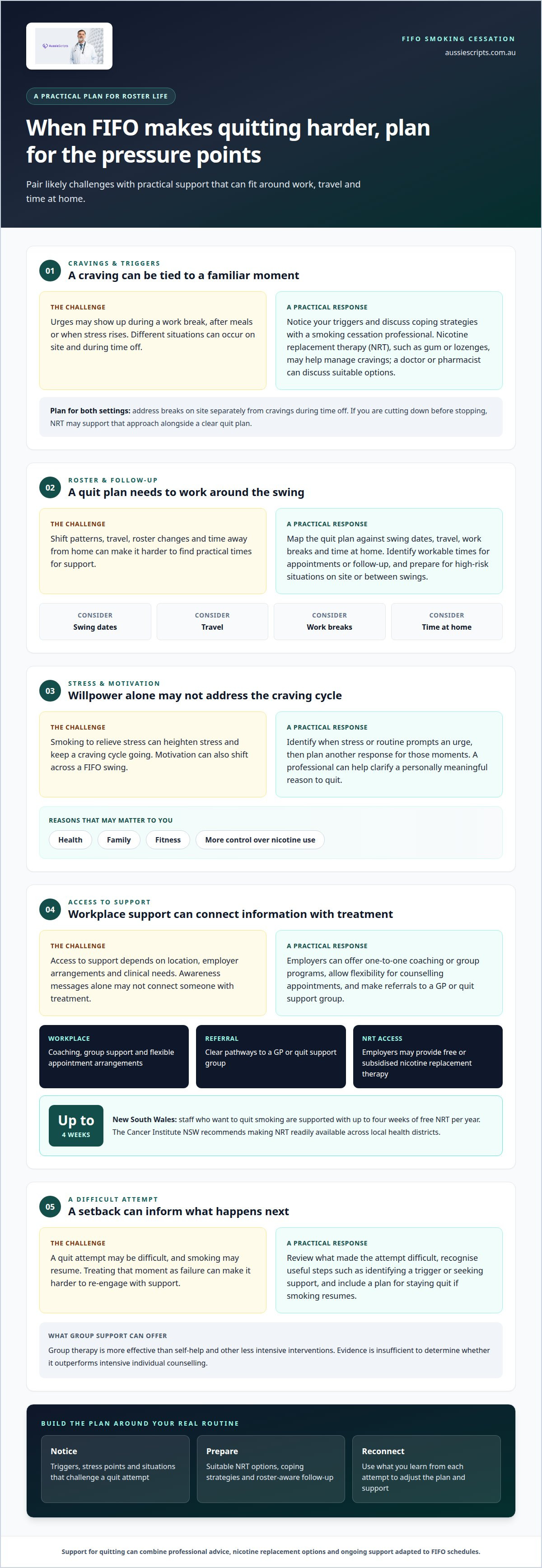
A smoking cessation professional can help connect cravings with specific triggers. For example, you might notice urges during a break, after meals or when stress rises. The professional can discuss suitable NRT options and help you plan for these moments during a swing. If you’re cutting down before stopping, NRT may support that approach alongside a clear quit plan.
Access depends on your location, employer arrangements and clinical needs. Employers can support workers by providing free or subsidised NRT and making referral pathways clear. In New South Wales, staff who want to quit smoking are supported with up to four weeks of free NRT per year. The Cancer Institute NSW recommends making NRT readily available across local health districts.
Can FIFO employers or mining companies provide workplace smoking cessation programs? Yes. Employers can offer one-to-one coaching or group programs, allow flexibility for counselling appointments, and make referrals to a GP or quit support group. These measures connect workplace education with treatment, rather than relying on awareness messages alone.
How can a professional help manage cravings and triggers during FIFO swings? They can discuss your smoking patterns, identify likely triggers and help you consider coping strategies and NRT for those situations. For example, your plan might address breaks on site separately from cravings during time off.
How can a professional help plan a quit attempt around a roster? They can map your quit plan against swing dates, travel, work breaks and time at home, then identify practical times for appointments or follow-up. You and the professional can also plan for high-risk situations that may arise on site or between swings.
Are there services specific to FIFO workers in Western Australia, Queensland or other mining regions? Workplace programs and individual support can be adapted to FIFO schedules, while access may depend on employer and local arrangements. Support for quitting smoking for FIFO workers can combine professional advice, discussion of NRT and group or individual support.
Group support gives you contact with people facing similar challenges. Group therapy is more effective than self-help and other less intensive interventions, while evidence is insufficient to determine whether it outperforms intensive individual counselling. A positive program treats each quit attempt as useful learning and includes a plan for staying quit if smoking resumes.
2. Motivating people to try quitting
Motivation can change across a FIFO swing, so support should connect your quit attempt to reasons that matter to you. A professional can help clarify whether your priority is health, family, fitness or greater control over nicotine use. That reason can be a practical reference point when stress or routine prompts an urge to smoke. The aim is not pressure, but a clear, personally relevant reason to begin.
Stress deserves specific attention in a quit plan. Smoking to relieve stress can heighten stress and keep a craving cycle going. A professional can help identify when that cycle is most likely, such as before a shift, during a difficult workday or after a tense call home. Your plan can include another response for those situations, rather than relying on motivation alone.
Workplace education can make the first step easier to understand. Employers can share information about the health benefits of quitting and practical ways to start. A campaign around World No Tobacco Day or National Quit Week can give workers a visible prompt to consider quitting. Materials can explain nicotine cravings, professional support and how to arrange a conversation around a roster. Cancer-related information can also be part of health education, presented clearly and without relying on fear.
Family involvement may add meaningful support, especially when smoking is part of shared routines at home. A worker may discuss quitting together with family members, or ask them to support a specific goal during time off. The tips also recommend involving children under 11 as champions for parents and other relatives who smoke. For FIFO families, this can make the quit attempt a shared conversation, while keeping responsibility for the plan with the adult who is quitting.
Employers can integrate behaviour-change strategies into broader workforce wellness programs. For example, a wellbeing session could connect stress management with information about quit support and practical next steps. A quitline can be one point of contact to discuss support, while a professional can help tailor a plan to the worker’s circumstances. To make that conversation more accessible, online smoking cessation support can be considered alongside workplace and family encouragement.
Motivation is also shaped by how progress is discussed. A useful conversation focuses on steps you can recognise, such as identifying a trigger or seeking support, rather than treating one difficult day as failure. If a previous attempt didn’t last, reviewing what made it difficult can inform your next plan. This keeps the focus on workable changes and can help you re-engage with support.
3. Peer stories from former smokers
Employers can invite former smokers to share their experiences as part of workplace quit-smoking support. For FIFO workers, a story from someone familiar with camp routines, roster changes or travel days may feel more relevant. The purpose is to offer practical perspective, not a formula for success. Each person’s tobacco use, reasons for quitting and support needs can differ, even within one crew.
A useful session focuses on decisions and circumstances rather than dramatic claims. A former smoker might describe what prompted their quit attempt, which work or home situations felt difficult, and what support they used. For example, they could explain how they handled a smoke break after a shift. The facilitator can connect that example to professional support and options available to participants.
Structure matters. A facilitator can agree on a clear topic, invite the speaker to describe their experience, then allow time for questions. A session might explore preparing for a quit attempt, responding to cravings or returning to support after a setback. Keeping the conversation focused helps participants take away relevant ideas without suggesting that one person’s approach will suit everyone.
Peer stories can also help a workplace make its programs more responsive. If workers repeatedly mention particular triggers, such as long drives to site or social smoking during time off, that feedback can guide future education. Later sessions can address those situations. This turns personal experience into a useful discussion, while a health professional remains the right source for individual clinical advice.
For remote crews, sessions may be held in person or remotely, depending on workplace arrangements. A recorded story can offer flexible access, while a live discussion lets participants ask questions directly. Either format should avoid pressuring people to share personal details. Workers can listen without speaking, and the facilitator can explain how to access individual support after the session.
Former smokers should be encouraged to share both useful strategies and what they found challenging. A balanced account might explain that a worker sought support after an earlier attempt, then adjusted their plan around roster demands. It should not promise a particular outcome or imply that motivation alone is enough. Participants can choose one idea to discuss with a professional, such as managing a trigger during their next swing.
Peer sessions work best as one part of broader support, not a replacement for tailored care. Employers can combine them with education, professional guidance and clear referral pathways. For FIFO workers, this makes lived experience a starting point for a relevant conversation, while leaving room for each person to choose support that fits their circumstances.
4. Reasons and benefits for quitting
For FIFO workers, a personal reason can make quitting feel relevant to daily life. You might want easier breathing during physical tasks, more time without planning smoke breaks or less smoking-related spending. Smoking can cost a person thousands of dollars each year in Australia. The financial impact can be part of a practical quit conversation, without assuming the same priorities matter to everyone.
Some changes begin soon after stopping. A person’s blood pressure and heart rate begin to lower 20 minutes after quitting smoking. Lung function can improve, and breathing can become easier within weeks. These timelines can give a worker concrete milestones to discuss with a health professional. They are general effects, not a promise of a specific outcome for every person.
Health concerns may also shape your decision. If you’re worried about cancer, breathing or cardiovascular health, you can discuss those concerns during professional counselling. The conversation can connect your reason for quitting with a suitable treatment plan, including support for cravings and difficult situations. A practical approach addresses your smoking pattern and circumstances rather than relying on warnings alone.
Triggers deserve attention too. If smoking is closely linked with alcohol, a professional can help you plan for social situations where that connection may prompt an urge. Coffee or a familiar break routine can also become associated with smoking. Identifying these connections helps shape a plan around real moments, such as time off between swings or a catch-up after travelling home.
Some workers may also want to stop vaping, or may use both tobacco and vaping products. A health professional can discuss your use and help identify what support may be appropriate. Quit support services can help people quit smoking and vaping, and stay quit. A useful next step is a conversation that clarifies your goal and the situations most likely to affect it.
Your reasons can change during a quit attempt. You might begin with breathing as your main priority, then find family or financial considerations become more motivating. Keeping those reasons visible in your plan can help reconnect you with your decision when cravings arise. Follow-up can also help review progress and barriers rather than judging the attempt as an all-or-nothing outcome.
Quitting is not simply a test of willpower. Smoking addiction requires strategies, and a professional can help match them to your needs. If a previous attempt ended with smoking again, the experience can show which situations need more support. That information can guide your next treatment conversation and keep the focus on a workable path forward.
5. Digital health tools and ongoing support
FIFO rosters can interrupt regular appointments, so digital support can help maintain contact between swings. Smoking cessation support delivered by phone or smartphone application has been explored in small studies of acceptance and commitment therapy. Those studies found higher engagement and promising quit rates compared with usual care. The findings are encouraging, but they don’t establish the same result for every worker.
A digital plan works best when it connects with professional support. You and a professional can agree on useful check-ins, identify when cravings tend to arise, and plan follow-up around work and time off. For example, a remote appointment before a swing can review likely triggers, while a conversation after it can address what changed. This keeps the plan connected to actual roster demands.
Does Quitline offer after-hours, callback or online support for FIFO rosters? Don’t assume those options are available for every roster or service. Your quit plan should specify the support channels and appointment times arranged for you, with digital or remote contact considered where it fits.
Digital tools can also support continuity between formal sessions. Workplace health programs may use digital tools and employee engagement materials to keep quit support visible. For instance, you might receive a scheduled reminder about an upcoming counselling session or a prompt to reconnect with your agreed support contact. Tools should reinforce professional care, not replace assessment or tailored advice.
Smoking addiction can involve changing cravings and difficult situations across a swing. A professional can use remote sessions to review which situations were challenging, whether your support plan was practical, and what should change next. That review can include smoking or vaping goals. It also gives you a way to discuss a lapse without treating it as the end of your quit attempt.
Ongoing support should cover staying quit, not just getting started. A professional can help you plan for likely triggers during travel, camp routines or time at home, then revisit the plan as circumstances change. This makes digital contact useful for continuity rather than a one-off exchange. For workers across Australia, the key is a support arrangement that remains accessible through roster changes.
Choose a digital approach that has a clear role: scheduled professional follow-up, access to suitable support between sessions, or workplace materials that reinforce the plan. The next step is to connect the worker’s roster, preferred contact method and quit goals in a practical support plan. Discuss ongoing quit support when professional guidance would help coordinate those needs.
Aussie Scripts: Smoking Cessation Consultation
Aussie Scripts’ Smoking Cessation Consultation offers FIFO workers a professional next step when they want tailored support. In a virtual consultation, a fully registered and insured Australian doctor can discuss your smoking patterns, cravings, past quit attempts and roster demands. This gives the conversation a practical focus, including challenges that may arise on site or during time off.
If you’re considering nicotine replacement or other treatment options, discuss your circumstances and goals with the doctor. They can provide clinical guidance and outline appropriate next steps based on the consultation. A planned conversation may also help you prepare for triggers across changing work and home routines.
Contact Aussie Scripts to discuss a Smoking Cessation Consultation.
Make your next step fit your roster
A quit attempt can start with one focused decision: what support would make your next swing more manageable? A professional conversation can help turn that decision into a plan shaped around your work pattern, personal priorities and likely challenges. Useful support for quitting smoking for FIFO workers should be practical to access and adaptable as circumstances change.
You don’t need to have every detail worked out before seeking help. Consider what you want to discuss, such as past attempts, cravings, smoking triggers or how to keep follow-up workable around your roster. A Smoking Cessation Consultation gives you a setting to discuss your needs and possible next steps with a doctor.
Choose a first step that feels clear and manageable, then build from there. Discuss your quit-support needs with Aussie Scripts and take the next step towards a plan that fits your working life.
Frequently Asked Questions
Need some reasons to quit?
Start with a reason that matters to your life, rather than choosing one because others expect it. You might want more control over breaks, less planning around cigarettes or greater confidence during physical work. A former quit attempt can also show what matters most to you. Share that priority with a health professional, who can help connect it to a realistic support plan.
Need support now?
Aussie Scripts offers a Smoking Cessation Consultation to discuss your goals and support needs with an Australian-registered doctor. Regular services operate 6 am to midnight every day. Telehealth on-demand is available 24 / 7, including public holidays. The platform typically responds within 15 minutes. These are service access details, not a guarantee of a particular clinical outcome or treatment.
What free quit smoking support services are available in Australia?
Free support may be available through your employer’s workplace program, including coaching, group support or free or subsidised nicotine replacement therapy. What’s offered depends on workplace arrangements. In New South Wales, staff who want to quit smoking are supported with up to four weeks of free nicotine replacement therapy per year. Ask your workplace health team what support applies to your role and roster.
How can FIFO workers get professional smoking cessation support while on site?
Remote professional support can help workers discuss quitting without relying on an in-person appointment at their worksite. Aussie Scripts’ Smoking Cessation Consultation is a telehealth option. You can raise practical details such as site routines, roster changes and access to private time for a consultation. The doctor can discuss your circumstances and relevant next steps during the clinical assessment.
What are the health benefits and withdrawal symptoms of quitting smoking?
After quitting, blood pressure and heart rate begin to lower within 20 minutes, and lung function can improve, making breathing easier within weeks. Cravings and withdrawal feelings may occur during a quit attempt. A doctor or pharmacist can discuss medicines, gum and lozenges that may help reduce them. If withdrawal concerns affect work or sleep, raise them during a professional consultation.
Disclaimer
The information provided by AussieScripts is for general informational purposes only and does not constitute medical advice, diagnosis, or treatment. For advice tailored to your specific symptoms or health concerns, please consult one of our doctors or your regular GP.