Success Stories With Non-Injectable Weight Loss Medication: What Results Last
Explore success stories with non-injectable weight loss medication, what results may last, side effects, weight regain and the role of ongoing medical support.

Success stories with non-injectable weight loss medication may describe gradual weight changes, side-effect management and efforts to maintain progress. Results from trials of injectable medicines should not be treated as expected outcomes for non-injectable options: the medicine and treatment plan matter.
It’s reasonable to question whether weight-loss medication sounds too good to be true, especially when personal stories focus on dramatic changes. A useful success story is about more than a number on the scales. It explains the treatment, the challenges involved and what happened when the person’s approach changed.
This article explains how to assess reported results, consider side effects and weight regain, and understand the role of maintenance and medical supervision. It also outlines how a consultation with an Australian medical practitioner can help assess whether an approach suits your health history and goals.
Key Takeaways
- Personal success stories show individual experiences, not a guaranteed result. Compare them with evidence for the specific medicine and formulation.
- Weight regain can happen after treatment stops, so consider how ongoing support and maintenance fit into a treatment plan.
- Side effects can affect whether a medicine is suitable and manageable. Discuss symptoms and health concerns during medical supervision.
- Set expectations around health and sustainable habits, not only a target number on the scales.
- A medical consultation can help assess treatment suitability, health history and goals, including concerns about disordered eating.
Weight regain after stopping treatment
Oral and injectable weight-loss medicines are not interchangeable. Results depend on the medicine, dose, treatment duration, consistency and a patient’s health. The figures below come from research into injectable semaglutide. They do not show that oral medicines produce the same results or establish which route works better.
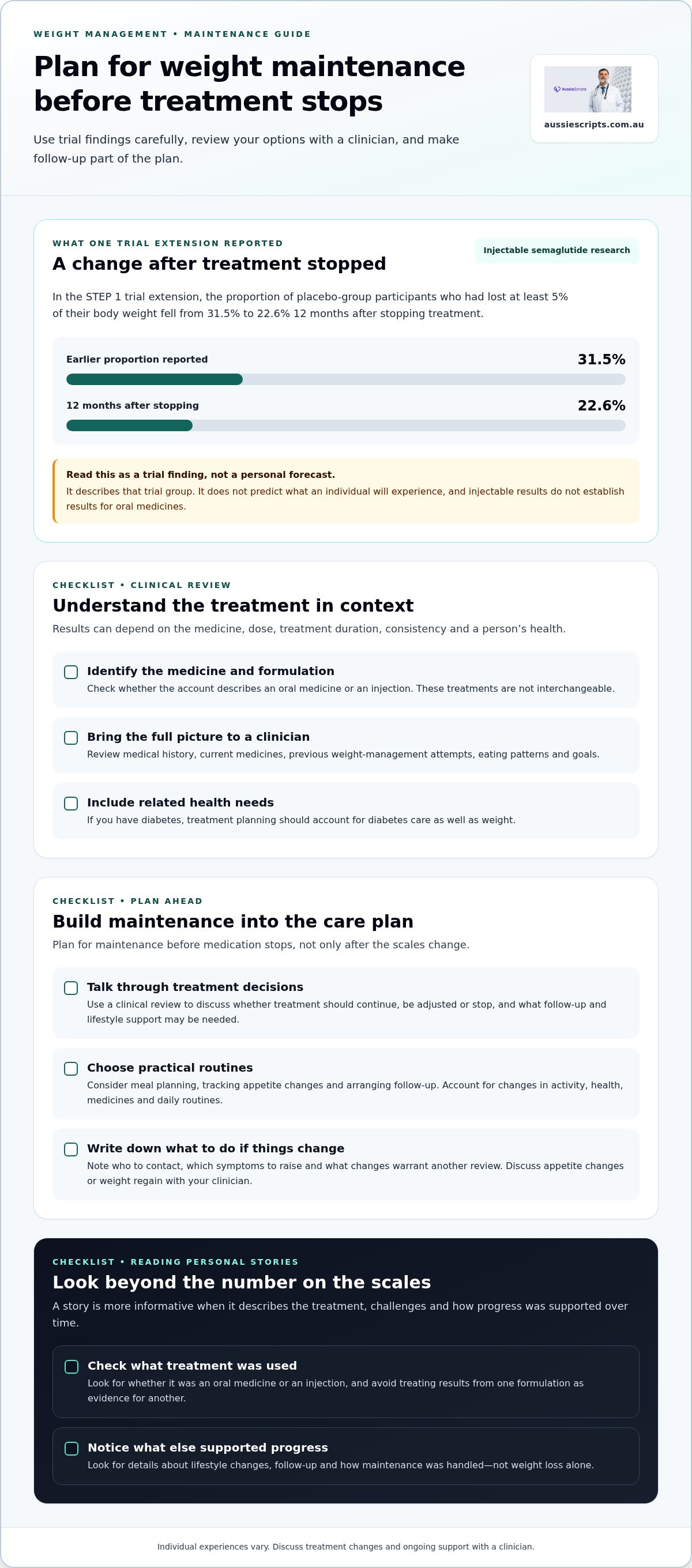
Weight regain can follow treatment withdrawal. In the STEP 1 trial extension, 12 months after stopping treatment, the proportion of placebo-group participants who had lost at least 5% of their body weight fell from 31.5% to 22.6%. This finding describes that trial group. It doesn’t predict what any individual patient will experience after stopping a medicine.
Stopping treatment can change the conditions that supported weight loss. Appetite may return, making previous eating patterns harder to manage. Weight can also change alongside activity, health, medication use or daily routines. For someone with diabetes, treatment planning should account for diabetes care as well as weight.
An assessment can help identify what may support a sustainable plan. A clinician can review medical history, current medicines, previous weight-management attempts, eating patterns and goals. Patients can also discuss side effects, appetite changes and any weight regain since treatment began or ended. These details inform decisions about continuing, adjusting or stopping treatment, as well as follow-up and lifestyle support.
Weight management may involve non-surgical or surgical approaches. Non-surgical care can combine medicine, nutrition changes, physical activity and ongoing clinical support. Surgery is a separate option, considered in light of a person’s health and circumstances. Either approach requires a plan for follow-up. Patients can discuss how appetite, eating routines and other factors may affect what support is sustainable.
Plan for maintenance before medication stops, not only after the scales change. Patients can identify practical routines that fit their lives, such as meal planning, tracking appetite changes and arranging follow-up. A written plan can note who to contact, which symptoms to raise and what changes warrant another review. These steps can help people respond early if weight begins to return.
Read success stories with non-injectable weight loss medication in their treatment context. Check whether the story describes an oral medicine or an injection, what else supported progress and how maintenance was handled. Results are more informative when the account includes treatment details, lifestyle changes and follow-up, rather than weight loss alone.
Adverse effects and safety concerns
Oral weight-loss medicines can have side effects, and the specific effects depend on the medicine and the patient’s health. Injectable medicines such as tirzepatide have different administration considerations, so experiences with them are not evidence about oral medicines. For any prescribed treatment, discuss expected effects, relevant health conditions and what to do if symptoms develop.
Personal accounts often omit important details. Before treatment, patients can discuss their current medicines, medical history and pregnancy plans with a clinician. This can help identify factors that may affect suitability or require a change to the plan. During treatment, note new symptoms and when they occur, then raise them at follow-up rather than changing the dose independently.
Pregnancy planning is a specific safety consideration. Patients are advised to stop semaglutide and tirzepatide 2 months before pregnancy, and liraglutide 1 month before pregnancy. Advice about pregnancy timing can vary by medicine, so it shouldn’t be assumed to apply to every oral weight-loss medicine. Anyone planning pregnancy should discuss the prescribed medicine and timing with their clinician.
Long-term safety also needs context. UCSF expert Koliwad says vascular and cardiac issues linked to fen-phen became apparent five to 10 years after its initial popularity. Fen-phen is not evidence that current medicines carry the same risks. It does illustrate why safety monitoring matters over time, rather than relying only on early experiences or short-term results.
Route matters when comparing side effects. Weekly injections, including injectable treatments such as tirzepatide, involve an administration step that oral medicines don’t. Andrea Mullinax was prescribed anti-nausea medication to take as needed while using a GLP-1 injection. Her experience is an individual example, not proof that every patient will need the same support or experience the same effects.
A practical safety plan can include three steps: know the prescribed medicine and dose, record symptoms and when they occur, and seek clinical advice about concerns before changing treatment. Discuss mental wellbeing too. Changes in mood, distress about eating or weight, and difficulty following the plan are relevant when a clinician assesses ongoing care.
For a review of treatment suitability and side effects, a medical weight-loss consultation can provide a clinical setting to discuss health history, current medicines and concerns.
Potential risks vary with the medicine and a patient’s health, medical history, other medicines and pregnancy plans. Discuss new symptoms and changes in mood or wellbeing with a clinician. Ongoing follow-up can help monitor safety over time.
Weight-loss expectations and body image
Weight change is one measure of treatment, not the whole outcome. For oral medicines, expectations depend on the specific medicine and treatment plan.
Consultation and weight-loss expectations
A clinical consultation connects a person’s health history and goals with possible treatment options. Discuss previous attempts, current medicines, diabetes, nutrition, activity and body-image concerns. Improving mobility, for example, may matter as much as reaching a target weight. This conversation can help set practical measures of progress and identify support that fits daily life.
There is no single fixed cost for oral weight-loss medication in Australia. The amount depends on the medicine and dose, and whether it is prescribed privately or subsidised for an eligible indication. Consultation fees are separate from medicine costs.
Wegovy is approved by the TGA for chronic weight management in eligible adults with a BMI of at least 30 kg/m², or at least 27 kg/m² with a weight-related comorbidity. Wegovy is an injectable medicine, not an oral option. It is available in Australia on private prescription and is not yet PBS-subsidised. The PBAC recommended a proposed PBS listing for a limited population with obesity and established cardiovascular disease, subject to pricing and risk-sharing arrangements. The listing process has not been completed, so patients should expect to pay the private prescription price unless and until a PBS listing takes effect. Ozempic is PBS-listed for specific diabetes indications, not weight loss.
Timing of medication results
There is no single reliable timeline for results from oral weight-loss medication. Progress depends on the medicine, dose, consistency, appetite response and lifestyle changes. An early change in appetite does not necessarily mean body weight will change straight away. Follow-up can help assess trends and whether treatment remains suitable.
Trial results for injectable medicines shouldn’t be used as predictions for oral options. For example, the 56-week SCALE trial studied injectable liraglutide 3.0 mg daily. Mean weight loss was 8.0%, compared with 2.6% with placebo. Those results describe that treatment and trial period, not an expected outcome or timeline for oral medication.
Body-image goals also deserve attention during treatment. Andrea Mullinax’s weight-loss goal was 160 pounds, but one person’s target doesn’t define success for another. Patients can discuss progress beyond appearance, including mobility, energy and sustainable nutrition. If constipation or another symptom affects eating or daily activities, include it in clinical reviews.
When reading personal accounts, identify the medicine and whether it was taken orally or injected. Then consider the treatment period, support and lifestyle changes described. That context helps distinguish one person’s experience from a realistic expectation for your own care.
Long-term weight maintenance
Maintenance is an ongoing plan, not simply the final stage of weight loss. For someone taking medication, it can include regular reviews, routines that support nutrition and activity, and decisions about continued treatment. The right approach depends on the medicine and the person’s health. A success story is more useful when it explains these details, not only a change in weight.
Victoria Newcom encouraged patients to track what they consume and when, either mentally or in writing. A written record can help connect appetite with routines, such as skipped meals, work schedules or changes in activity. Patients can discuss these observations with a practitioner during reviews. Tracking is not a measure of success or failure; it provides practical information about patterns and possible support.
Try recording a few specific details:
- Meals, snacks and drinks, with approximate timing.
- Changes in appetite and situations that affect eating.
- Medication use and any effects noticed.
- Movement, sleep routines and changes to daily schedules.
A record can help a practitioner distinguish a short-term fluctuation from a persistent change. It does not measure hormones, diagnose a cause or replace clinical assessment. Instead, it gives patients examples to discuss, such as appetite returning after treatment changes or meal planning becoming difficult during busy workdays. A practitioner can consider these details alongside health history and the treatment plan.
Semaglutide also features in personal accounts of maintenance, but the route matters. Andrea Mullinax expects to take semaglutide for life to maintain her weight loss. This describes her own ongoing treatment. It does not show that every patient needs lifelong medication or that oral medicine will produce the same outcome. Check which medicine and form a story describes before drawing comparisons.
For oral treatment, maintenance planning should account for how the medicine is taken and whether the routine fits daily life. Patients can note missed doses, appetite changes and practical barriers, then discuss them during a review. Do not change a prescribed plan based on another person’s story. Decisions about continuing, adjusting or stopping treatment should consider the medicine, health factors and the patient’s experience.
Use clinical evidence and personal accounts for different purposes. Clinical evidence describes results in studied groups; a personal story shows one person’s experience. Neither answers every question about maintenance. A useful review can consider progress, nutrition, activity, side effects and the person’s priorities. If appetite or weight changes, noting when the change began gives the practitioner a clearer starting point for discussion.
Medical supervision and eating-disorder risks
Medical supervision connects obesity treatment with a patient’s wider health, not weight alone. Before considering medication, a clinician can review medical history, current health, previous weight-management efforts and goals. For example, a patient taking other medicines can discuss how they fit into a proposed plan. An assessment also provides an opportunity to raise concerns about eating, body image or past disordered eating.
Discuss eating-disorder concerns directly before and during treatment. Tell the clinician about restrictive eating, binge episodes, vomiting, laxative use or intense distress about food and weight. These examples do not establish a diagnosis, but they can guide further assessment. A focus on weight through medication may be unsuitable if it increases harmful behaviours or delays care for an eating disorder.
Clinical support can involve more than a prescriber. A dietitian may help patients plan nutrition that supports health without rigid food rules. A mental health professional can address distress, compulsive behaviours or anxiety linked to eating. With the patient’s consent, practitioners can coordinate care. Support should reflect the person’s needs rather than treat medication as a stand-alone solution.
At follow-up, describe specific changes instead of reporting only a scale reading. For example, mention missed meals, growing fear of certain foods, eating in secret or exercise that feels compulsory. Also report changes in mood, appetite and daily functioning. These details help the clinical team assess whether the plan supports overall wellbeing or needs review.
Surgery is a separate consideration from medication. A discussion about surgery should include the person’s medical history, goals, nutrition and readiness for ongoing follow-up. Medication, dietary support and surgical care are not interchangeable, and different professionals may be involved. A clinician can explain which considerations apply without assuming one approach suits everyone.
Patients can prepare for a review by noting:
- Current medicines and any effects affecting eating or daily routines.
- Changes in eating patterns, mood, appetite or body-image concerns.
- Previous weight-management approaches and what made them difficult.
- Questions about the role of a dietitian or mental health support.
Bring your notes to a practitioner and ask how progress will be assessed beyond body weight. A plan should include a way to discuss new symptoms, eating concerns and treatment changes. If a patient’s relationship with food worsens, that is clinically relevant information, not a failure of willpower. Clear, early communication helps the care team respond to the problem.
Aussie Scripts: Standard Script
Aussie Scripts offers Standard Script for people seeking an assessment of a prescription request. If you are considering ongoing weight-management treatment, a medical review can assess your health history, current medicines and whether a prescription is appropriate. Treatment decisions depend on clinical suitability, not personal success stories alone.
A Standard Script request does not replace ongoing medical supervision or guarantee a particular medicine. Share relevant health information during your consultation and discuss concerns about side effects, maintenance or treatment changes. This helps the doctor consider your request in context.
For prescription support, visit aussiescripts.com.au.
Make your next step a considered one
Use success stories with non-injectable weight loss medication as prompts for questions, not templates for your own treatment. Before deciding, write down what matters to you: your health priorities, concerns about side effects, eating patterns and the follow-up you need. A clinician can consider these alongside your medical history and discuss whether an approach suits your circumstances.
Aussie Scripts offers Standard Script, Express Script and Medical Certificate services. For weight-management support, a consultation provides an opportunity to discuss your goals and treatment questions with a doctor. The next step is a conversation focused on your needs, not a promise of a particular medicine or result.
Contact Aussie Scripts to discuss your options. A clear, informed discussion can help you move forward with confidence.
Frequently Asked Questions
Are the New Weight Loss Drugs Too Good to Be True?
No medicine guarantees dramatic or lasting weight loss, and a personal account can’t predict another person’s outcome. Results depend on the specific medicine, how it’s used, health factors and accompanying care. Treat unusually striking stories as individual experiences, not typical expectations. Check whether the account names the medicine and whether it was oral or injectable before comparing it with your own treatment options.
Is It Safe Long-Term?
Long-term safety depends on the medicine, the person’s health and continued clinical review. A treatment that suits someone initially may need reassessment if their health, other medicines or side effects change. Keep a current list of medicines and report new symptoms, including changes that affect daily activities. A practitioner can consider these details when reviewing continued use, rather than relying on a success story alone.
What oral weight loss medications are approved in Australia?
Approval applies to specific medicines and uses, so distinguish an oral product’s status from that of injectable treatments. Wegovy is approved in Australia for chronic weight management in eligible adults, but it is an injection, not an oral medicine. Ozempic is also injectable semaglutide and is PBS-listed for specific diabetes indications. It is not PBS-subsidised for weight loss; approval and subsidy are separate matters.
What are real-world success stories with non-injectable weight loss medication?
A real-world story describes one person’s experience, not an average result. For example, writer Elna Baker lost 110 pounds, but that figure alone doesn’t identify the medicine, route, treatment period or other changes involved. To judge whether a story relates to oral treatment, look for the medicine’s name and route, plus details about support and maintenance. Don’t assume an injection story predicts tablet results.
How much weight do people typically lose with oral weight loss medications?
There is no typical amount that applies across all oral medicines. Outcomes depend on the medicine, dose, duration, consistency, health factors and lifestyle. A useful comparison matches the same medicine and formulation, and distinguishes trial averages from an individual result. Ask what outcome is measured, over what period, and whether the figures describe oral treatment rather than an injectable medicine.
How can Australians access oral weight loss medication through a GP or specialist?
Start with a consultation to discuss your medical history, current medicines, previous weight-management approaches and goals. A GP or specialist can assess whether treatment is clinically suitable and explain any follow-up needed. Aussie Scripts also offers weight management consultations through virtual care with Australian-registered doctors. A prescription is issued only when the doctor’s assessment supports it.
What lifestyle changes help maintain weight loss after medication?
Build routines that remain workable when appetite or schedules change. For example, plan meals around shift work, keep practical food options available and choose regular movement that fits your health and daily routine. Avoid relying on strict rules that are difficult to maintain. During busy periods, review which habits are slipping and adjust your routine with support from your healthcare team.
Disclaimer
The information provided by AussieScripts is for general informational purposes only and does not constitute medical advice, diagnosis, or treatment. For advice tailored to your specific symptoms or health concerns, please consult one of our doctors or your regular GP.