Telehealth care for premature ejaculation treatment
Explore telehealth for premature ejaculation treatment, with confidential care for men, behavioural techniques, medication options and clear next steps.

Premature ejaculation often means ejaculating within about 1 minute of starting sex, especially when it happens repeatedly and causes distress. Telehealth for premature ejaculation treatment can provide a confidential way to discuss the concern and possible care with a doctor.
It can be difficult to raise sexual health concerns, and timing is only part of the picture. Control, how often it happens, personal distress and related health factors all matter when considering what may help.
This article explains premature ejaculation and how online care may cover behavioural techniques, medication and other treatment options. It also explores how stress, anxiety and related health concerns may affect sexual performance, so you can understand what a consultation may involve and which options could be discussed.
Key Takeaways
- Understand how clinicians assess premature ejaculation, including its pattern, impact and possible related health factors.
- Explore behavioural approaches such as stop-start practice and pelvic floor exercises, and how practice with a partner may fit.
- See how an online health assessment and doctor consultation can support a discussion about treatment options.
- Learn what to consider when discussing medication and non-drug approaches, including how personal health factors shape care.
- Follow the usual steps of an Australian telehealth consultation, from sharing health information to discussing appropriate next steps.
What is premature ejaculation?
Premature ejaculation usually means ejaculation happens sooner than intended, often within 1 minute of starting sex. It becomes a concern when it happens repeatedly, feels difficult to control, or causes distress. A medical assessment considers more than timing, including the pattern and its effect on sexual wellbeing.
During an Australian telehealth assessment, you can describe when the concern began, how often it occurs, and whether it happens with every partner or in particular situations. A doctor may ask about ejaculation control, erection difficulties, medicines, general health, stress and relationship concerns. These details help guide the discussion of possible causes and suitable next steps.
Stress, anxiety and depression can affect sexual performance and may be associated with ejaculating earlier than intended. Relationship concerns, including communication and intimacy, can also play a role. Obesity, diabetes, hypertension and cardiovascular disease may contribute to sexual health concerns, including erectile dysfunction or premature ejaculation.
Australian telehealth consultations let you discuss symptoms, medical history and treatment options remotely. Compared with an in-person clinic visit, a phone or video appointment avoids travel, but it cannot provide a physical examination.
See a GP or specialist in person if the doctor considers a physical examination or testing necessary, or if your symptoms need assessment beyond a remote consultation. An in-person visit allows the clinician to examine you directly, which a phone or video consultation cannot do.
Online GP consultations may use a written health assessment followed by a video meeting to discuss symptoms and options. A phone consultation can also support a clinical conversation, particularly when video is unavailable or unsuitable. Before the appointment, organise a clear account of symptoms and relevant medical history to make the discussion specific.
Check the consultation fee before proceeding. The fee covers the clinical assessment, while any medicine, testing, specialist appointment or follow-up may involve separate charges. Don’t assume a telehealth appointment is free or automatically eligible for a Medicare rebate.
After reviewing your history, a doctor may discuss behavioural techniques, medication, counselling or topical treatments. Options depend on the assessment and related health factors. For example, erection difficulties may affect which treatments are considered. Telehealth for premature ejaculation treatment offers a way to raise these concerns and discuss a suitable care pathway.
Behavioural techniques and practice with a partner
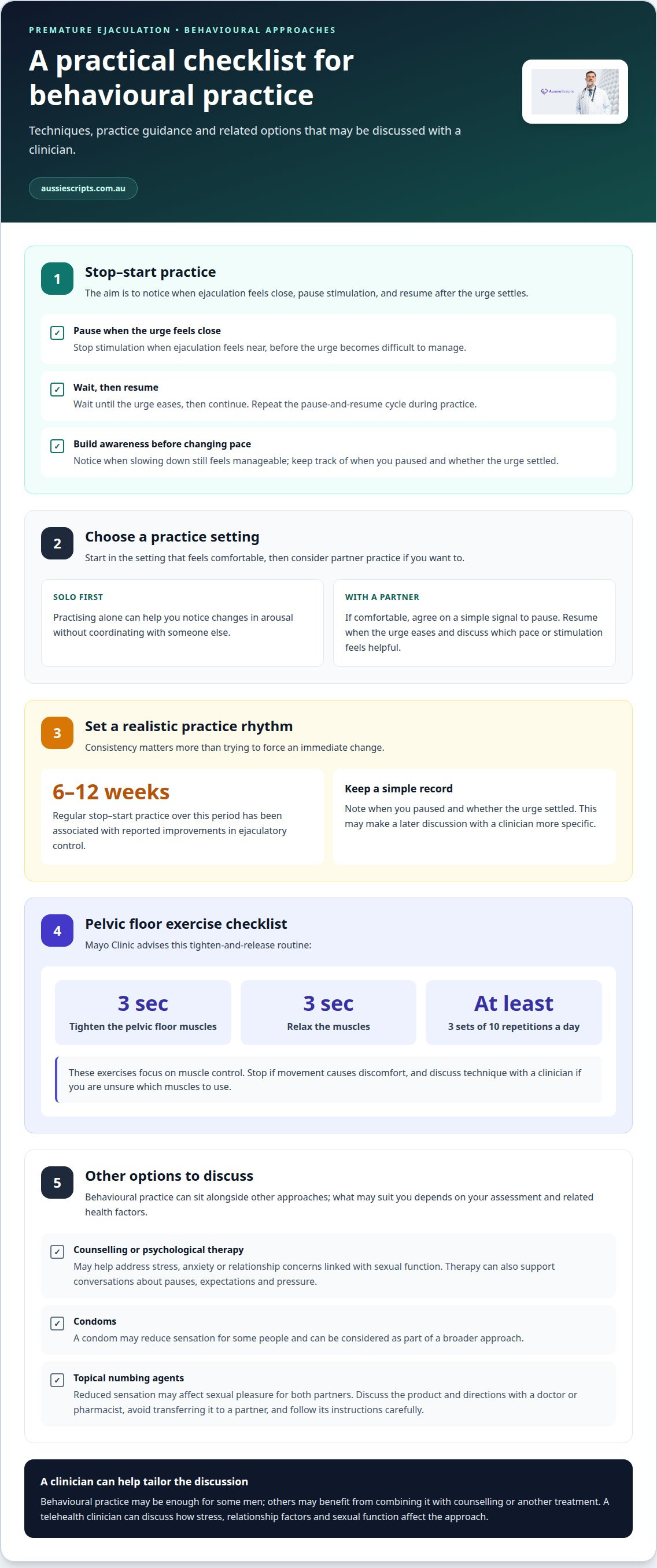
Behavioural techniques aim to improve awareness and control during sexual activity. The stop-start method is one practical example: pause stimulation when ejaculation feels close, then wait until the urge settles before resuming. Repeating this pause-and-resume cycle during practice can help you notice when slowing down may still feel manageable.
Practise the stop-start technique alone first, then with a partner if you feel comfortable. Solo practice can help you notice changes in arousal without coordinating with someone else. With a partner, agree on a simple signal to pause. Resume when the urge has eased, and discuss which pace or type of stimulation feels helpful.
Consistency matters more than trying to force an immediate change. Regular stop-start practice over 6-12 weeks has been associated with reported improvements in ejaculatory control. Keep track of what happens during practice, such as when you paused and whether the urge settled. This can make a later conversation with a clinician more specific.
Pelvic floor exercises are another option. Mayo Clinic advises tightening the pelvic floor muscles for three seconds, then relaxing them for three seconds. Aim for at least three sets of 10 repetitions a day, according to Mayo Clinic. These exercises focus on muscle control. Stop if the movement causes discomfort, and discuss technique with a clinician if you’re unsure which muscles to use.
Psychological therapy or counselling may help address stress, anxiety or relationship concerns linked with sexual function. A doctor may discuss these factors alongside behavioural practice, rather than treating timing as the only issue. If mental health concerns affect daily life or intimacy, describe their impact during a clinical conversation. Therapy can also help partners discuss pauses, expectations and pressure.
A condom may reduce sensation for some people and can be considered as part of a broader approach. If you use a topical numbing agent, reduced sensation may affect sexual pleasure for both partners. Discuss the product and its directions with a doctor or pharmacist. Avoid transferring a topical product to a partner, and follow its instructions carefully.
Behavioural practice may be enough for some men, while others may benefit from combining it with counselling or other treatment. A telehealth clinician can discuss how stress, relationship factors and sexual function affect the approach. If a separate concern needs specialist input, a specialist referral may be a relevant next step.
Convenience of online sexual health care
Online care can make it easier to discuss sexual symptoms without travelling to a clinic. The process may include a written assessment, followed by a doctor consultation by video.
Video or Phone Assessment
A structured online assessment gives the doctor context before the consultation. Describe when ejaculation concerns began, how often they occur, and whether they happen in particular situations. Include your medicines and relevant health conditions. These details help focus the appointment on your symptoms and possible next steps.
A video appointment allows a face-to-face conversation on screen. A phone consultation can suit patients who prefer speaking without video. In either format, choose a private space and have your medication list ready. Before the appointment, note the main concern you want addressed.
Use the consultation to explain what you have tried, such as stop-start practice or a topical product. Mention any effects or discomfort. A doctor can then discuss whether other treatment options warrant consideration. An online assessment supports a clinical conversation, but it does not provide a physical examination.
Online Follow-Up
Follow-up gives you a chance to discuss how an agreed approach is working. For example, report whether behavioural practice feels manageable or whether a treatment caused an unwanted effect. Bring specific observations rather than relying on a general impression. This helps keep the next discussion focused.
If medication is discussed, clarify how a prescription would be issued and how dispensing is handled. Ask about delivery arrangements if receiving treatment discreetly matters to you. Packaging and delivery processes can differ, so understand the arrangement before relying on home delivery. An online appointment alone does not establish those details.
Follow-up can also revisit related concerns, including stress, erection difficulties or changes in sexual function. Tell the doctor if your symptoms have changed since the initial assessment. A change in pattern may affect the discussion and whether further assessment is appropriate.
Online care is useful for discussing symptoms, reviewing progress and considering treatment remotely, but it may not suit every situation. A phone consultation cannot provide a physical examination. It can still help clarify the issue and identify whether an in-person assessment is the next step.
Patients can use the assessment to set out when ejaculation concerns began, how often they occur, and whether they arise in particular situations, alongside medicines and relevant health conditions. The video meeting then gives them an opportunity to discuss possible treatments with a doctor, with those details available to guide the conversation. Preparing the main concern beforehand can keep the discussion centred on the issue that prompted care.
Describe approaches you have already tried and any effects or discomfort to give the doctor useful context. A phone consultation offers a straightforward way to discuss the concern. Having relevant details ready can make it easier to explain your symptoms and discuss whether an in-person assessment may be needed.
Medication and non-drug treatment options
Treatment options may include oral medicines, topical anaesthetics and behavioural approaches. The choice depends on symptoms, related erectile dysfunction, anxiety, medical history and potential side effects.
Oral Medications
Medicines used for premature ejaculation include dapoxetine and some selective serotonin reuptake inhibitors, or SSRIs. Options described in clinical reviews include paroxetine, sertraline and fluoxetine. The listed regimens vary: paroxetine is 10-40 mg/day, sertraline 50-200 mg/day, and fluoxetine 20-40 mg/day. These are treatment examples, not instructions to start or change medication yourself.
Dapoxetine is listed at 30-60 mg, taken 1-3 hours before intercourse. A clinician considers the person’s health, current medicines and symptoms before discussing whether an oral medicine is suitable. Don’t share prescription medicines or adjust a prescribed dose without clinical advice.
Non-Drug Treatment Options
Behavioural practice, counselling and pelvic floor training can be considered without oral medication. These approaches may address arousal awareness, communication, stress or anxiety. A doctor can discuss whether a combined plan suits your symptoms and circumstances. Topical anaesthetic medicines are another option; they reduce sensation rather than directly changing the underlying pattern.
Use topical products carefully and follow their instructions. Numbing agents may reduce feeling and sexual pleasure for both partners. Discuss the product, how to apply it and the possibility of transfer to a partner with a doctor or pharmacist before use.
Medication Risks and Side Effects
Risks differ by medicine, dose and personal health factors. Topical anaesthetics can reduce sensation for both partners, as Mayo Clinic explains. Oral medicines may also have side effects, so discuss concerns, other medicines and relevant health conditions before treatment begins. Report any unwanted effect during follow-up, especially if it affects sexual function or general wellbeing.
Tramadol can become habit-forming with long-term use and must not be combined with an SSRI. Disclose your current medicines and do not add treatments without professional guidance.
Medication Contraindications
Medicine interactions and your health history can affect whether a treatment is appropriate. The Mayo Clinic says tramadol cannot be used in combination with an SSRI. Tell the doctor about all medicines you take, including any treatment for erectile dysfunction, when discussing a prescription.
There isn’t one suitable medicine for every patient. A doctor weighs symptoms, medical history, anxiety, other medicines and potential side effects. This assessment helps determine whether medication, a non-drug approach or a combination may be appropriate.
What steps are involved in getting premature ejaculation treatment through Australian telehealth?
An Australian telehealth appointment usually starts with an online health assessment, followed by a consultation with a doctor. Each step helps organise the discussion and clarify possible next actions.
- Choose an appointment format. Select a phone or video consultation, then complete the requested intake questions. Provide accurate contact details and describe the main concern clearly. If the form asks about current medicines or health conditions, include relevant information so the doctor has context for the consultation.
- Describe the concern and its pattern. Explain when the issue began, how often it occurs, and whether it happens in specific situations. Mention any erection difficulties, stress or anxiety affecting sexual function. Clear details help distinguish a longstanding pattern from a recent change and keep the conversation focused on your circumstances.
- Discuss health history and current medicines. Tell the doctor about relevant diagnoses, treatments and previous approaches, such as behavioural practice or topical products. Include medicines used for other conditions. This information matters because health factors and interactions can affect which treatment options are appropriate to discuss.
- Review the options together. The consultation can cover behavioural techniques, counselling, topical anaesthetics and oral medicines. Ask how an option is used, what effects to watch for, and how progress can be discussed. A prescription is not automatic; the doctor considers the information provided before deciding on suitable care.
- Clarify the next step. If treatment is discussed, confirm the instructions and how follow-up will take place. For prescribed medicine, understand how the prescription is issued and what dispensing arrangements apply. If the doctor needs information that cannot be assessed remotely, an in-person appointment or referral may form part of the next step.
Keep a brief record between appointments. Note changes in symptoms, any unwanted effects, and whether you followed a technique or treatment as discussed. These observations give the doctor concrete information during follow-up, rather than relying only on a general impression.
Telehealth is not a substitute for every type of assessment. A physical examination cannot happen over a phone or video call. If the doctor identifies a need for examination or further assessment, the care plan can address that requirement instead of treating a remote appointment as the whole process.
For a structured start, begin an online health assessment and prepare the details you want to discuss with the doctor.
Aussie Scripts
Aussie Scripts provides access to Australian-registered doctors through virtual consultations. If you’re considering a prescription or need specialist input, its Standard Script, Express Script and Specialist Referral services may be relevant next steps. A doctor assesses the information you provide and determines appropriate care. A prescription or referral isn’t automatic, and telehealth cannot provide an in-person physical examination.
Use the consultation to explain your symptoms, current medicines and previous treatments. This gives the doctor context to discuss appropriate options and whether further assessment is needed. Choose the relevant service on Aussie Scripts to get started.
Make your next conversation focused
Before pursuing telehealth for premature ejaculation treatment, decide what you want help with first. You might want to understand a change in sexual function, discuss possible treatment, or address its effect on confidence or a relationship. Naming your main priority can keep the appointment centred on what matters to you.
It can also help to consider what a useful outcome would look like. You may want to understand available options or know what to discuss at follow-up. Be direct about your preferences and concerns. A clear conversation gives the doctor useful context for considering an appropriate next step.
If you’re ready to discuss care, contact Aussie Scripts to discuss care. Taking the first step can help you move towards a more informed plan.
Frequently Asked Questions
Is PE medication effective?
Medication can help some people delay ejaculation, but the effect varies by treatment and individual. Clinical trial data cited in reviews found dapoxetine increased ejaculation time by 2.5 to 3 times compared with placebo. That result does not predict an individual outcome. A prescriber weighs symptoms, other medicines and health history when deciding whether medication is a suitable option.
Is online PE treatment suitable for me?
Online care may suit you if you can describe your symptoms and discuss your health history remotely. For example, explain whether the concern is longstanding or has changed, and list your medicines. A doctor can assess whether a remote consultation is appropriate. If your situation requires a physical examination, an online appointment cannot provide one.
Why is ED medication sometimes prescribed for PE?
Medicines for erectile dysfunction may be considered when erectile dysfunction and premature ejaculation occur together. They aren’t a first-line treatment for premature ejaculation on their own, and PDE5 inhibitor monotherapy has no effect on intravaginal ejaculation latency time. The reason for considering one is the combined concern, not ejaculation timing alone.
Will PE medication automatically give me an erection?
No. Medicines for premature ejaculation don’t automatically cause an erection. Medicines prescribed for erectile dysfunction address a different concern, and their use doesn’t guarantee an erection or ensure delayed ejaculation. Tell the doctor whether you also have erection difficulties. This distinction helps the doctor assess your concerns and discuss suitable treatment options.
Can premature ejaculation be treated through telehealth in Australia?
Yes. An Australian telehealth consultation can provide an assessment and discussion of possible care, including behavioural approaches or medication. The doctor considers your symptoms and relevant health history before deciding on next steps. A remote appointment can’t include a physical examination, so an in-person assessment may be needed if examination or further evaluation is required.
Which Australian telehealth providers treat premature ejaculation?
Aussie Scripts connects patients with Australian-registered doctors through virtual consultations. A doctor can assess the information you provide and discuss an appropriate next step. The consultation doesn’t guarantee a particular diagnosis, medicine or prescription. If you’re considering telehealth, focus on whether the doctor can review your symptoms and relevant health information, and explain what happens if remote care isn’t suitable.
What treatments for premature ejaculation can Australian telehealth doctors prescribe?
Depending on the assessment, a doctor may discuss prescription medicines such as SSRIs or dapoxetine, as well as topical anaesthetics. Behavioural techniques and counselling are non-prescription approaches that may also form part of a care plan. The doctor considers other medicines and health factors before deciding what to prescribe. A prescription isn’t automatic, and options vary by individual circumstances.
Can telehealth doctors prescribe dapoxetine or other premature ejaculation medicines in Australia?
A telehealth doctor can assess whether dapoxetine or another medicine is appropriate, but prescribing depends on clinical assessment. Dapoxetine is identified as TGA-approved in Australia and is available in 30 mg and 60 mg tablet strengths. TGA approval and PBS subsidy are separate matters. Discuss your current medicines and relevant health history before considering any prescription treatment.
Disclaimer
The information provided by AussieScripts is for general informational purposes only and does not constitute medical advice, diagnosis, or treatment. For advice tailored to your specific symptoms or health concerns, please consult one of our doctors or your regular GP.