Ways lifestyle changes can support weight maintenance after Duromine
Discover how to avoid rebound weight gain after Duromine with simple lifestyle habits, balanced nutrition, daily movement, and ongoing healthcare support.

Maintaining your weight after Duromine depends on the habits and support you continue when treatment ends. To understand how to avoid rebound weight gain after Duromine, focus on balanced eating, regular activity and behaviour changes you can sustain. In Australia, Duromine is a short-term adjunct to a medically monitored weight-reduction plan, and treatment should not exceed three months.
It’s understandable to worry that your appetite or weight may increase after stopping medication. A practical maintenance plan can help you respond early: keep meals structured, build activity into your routine, notice patterns that affect eating, and discuss follow-up with a health professional.
This article explains how nutrition, exercise, behaviour strategies and professional support can work together as you transition off Duromine. It also covers when a GP, dietitian or psychologist may help you adjust your plan if your weight begins to rise.
Key Takeaways
- Build eating and activity routines you can maintain after treatment, rather than relying on medication alone.
- Use a food-and-mood journal to notice situations and emotions that may influence eating habits.
- Plan follow-up with health professionals so nutrition, behaviour and medical support can work together.
- Remember that Duromine is a short-term adjunct to a medically monitored weight-reduction plan, not a long-term maintenance strategy.
- Track weight trends and revisit your maintenance habits early if your weight starts to rise.
1. Combining phentermine with diet, exercise and behavioural changes
Duromine supports a weight-reduction regimen; it doesn’t replace its lifestyle components. In Australia, it is indicated as a short-term adjunct in a medically monitored regimen for obesity at a BMI of 30 kg/m² or greater. Treatment should not exceed three months. Use that period to establish eating and activity routines you can continue after treatment ends.
Other options have different regulatory and subsidy statuses. Wegovy is TGA-approved in Australia for chronic weight management in eligible adults with a BMI of 30 kg/m² or higher, or 27 kg/m² or higher with a weight-related comorbidity. TGA approval is not PBS listing. The PBAC recommended a proposed listing for a limited population with obesity and established cardiovascular disease, subject to pricing and risk-sharing arrangements. The listing process has not been completed, and Wegovy is not PBS-subsidised for weight loss. Ozempic is the PBS-listed semaglutide brand for specific diabetes indications.
Dr Kidd’s video reviews Duromine and the habits that support weight maintenance after treatment.
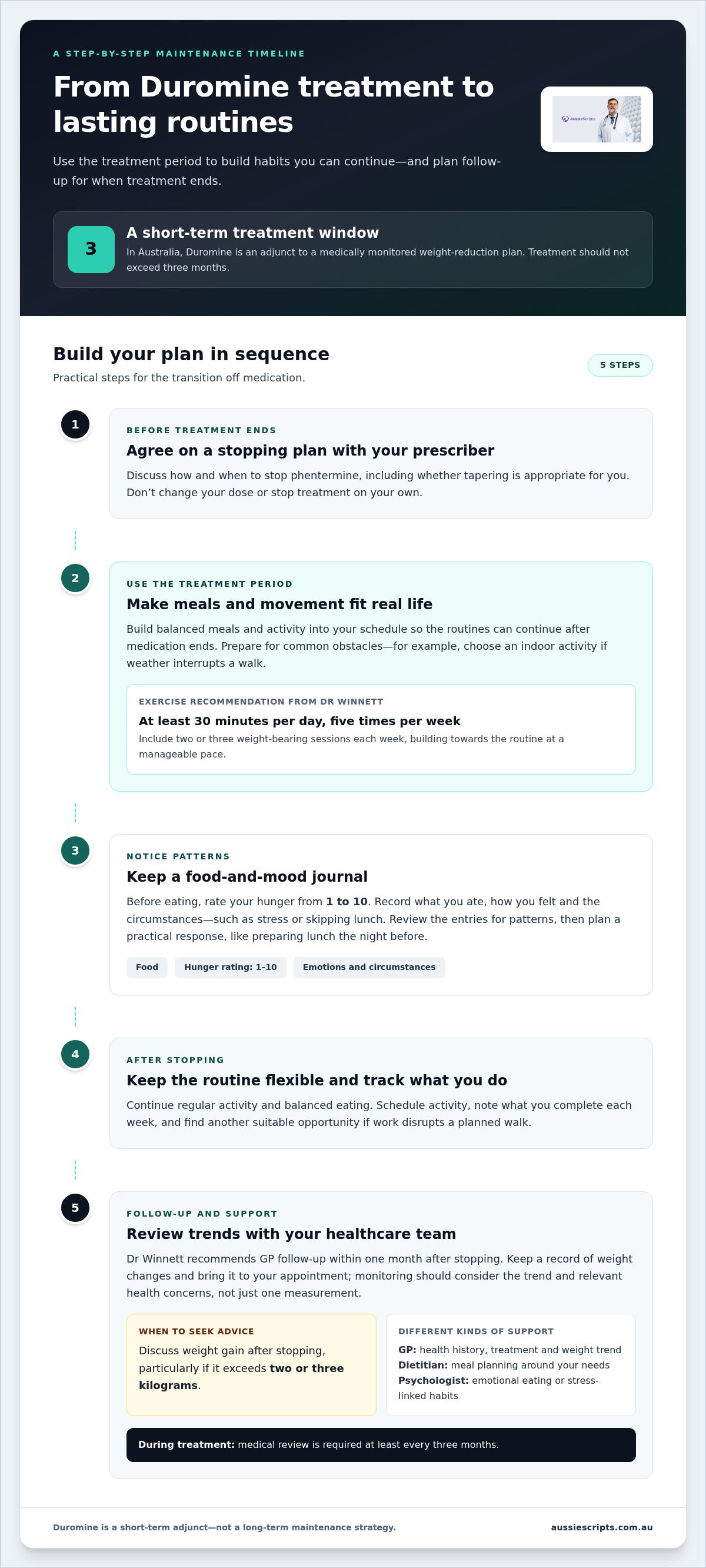
Stopping Duromine safely depends on your treatment history and prescriber’s advice. Discuss stopping phentermine with your prescriber, particularly after prolonged use. Don’t change your dose or stop treatment on your own. Discuss a stopping plan with your prescriber, including whether tapering is appropriate for you.
For maintenance, plan meals and activity that fit your daily schedule. Prepare a balanced lunch before a busy workday, or choose an indoor activity when weather interrupts a walk. Dr Winnett recommends at least 30 minutes of exercise per day, five times per week, including two or three weight-bearing sessions each week. Build towards that routine at a manageable pace.
Behaviour changes can help reveal eating triggers. Keep a food-mood journal and rate hunger from 1 to 10 before eating. Record what you ate, your emotions and circumstances, such as stress or skipping lunch. Review the entries for patterns, then plan a response, like preparing lunch the night before. This makes behaviour changes practical and specific.
Continue being active after medication ends, adapting your routine when needed. Schedule activity and note what you complete each week. If work disrupts a planned walk, find another suitable opportunity that day. Pair regular movement with balanced eating and a realistic plan for common obstacles. These steps can help make lifestyle habits independent of prescribed treatment.
2. Dietitian, psychologist and medical support
Weight management after Duromine can involve different types of support. A dietitian can help you plan meals around your needs, while a psychologist can help with emotional eating or habits linked to stress. Your GP can review your health history, treatment and weight trend. Together, these professionals can address practical, behavioural and medical factors.
Medicare and private health insurance coverage varies by service. Benefits depend on eligibility and policy terms, so coverage for a dietitian or psychologist appointment isn’t automatic. Consider the type of appointment and your circumstances when planning follow-up care.
During Duromine treatment, medical review is required at least every three months. After stopping, Dr Winnett recommends GP follow-up within one month. Monitoring should consider your weight trend and relevant health concerns, not just one measurement. Keep a record of changes and bring it to your appointment.
Seek medical advice if your weight rises after stopping, particularly if the gain exceeds two or three kilograms. Also discuss side effects that affect your daily activities. Tell your GP about other medicines and supplements, your medical history, and any changes since treatment began. This context can help inform a review of possible interactions and next steps.
Follow the prescribed dosage. Don’t increase the dose or take it more often if Duromine seems less effective. Tolerance may reduce its effect, and your prescriber can advise whether treatment should be discontinued. Duromine should not be combined with other appetite suppressants. Avoid alcohol while taking it, as it can increase side effects such as dizziness.
If you miss a dose, don’t take a double dose to make up for it. If you miss a morning dose, take Duromine no later than lunchtime. Record missed doses and side effects, then discuss recurring problems with your healthcare provider instead of changing the dosage yourself.
Ongoing support can help turn clinical advice into a workable maintenance plan. An Aussie Scripts Weight Loss Consultation may be a useful next step for discussing weight-management concerns and appropriate medical follow-up.
A coordinated approach can help keep long-term weight maintenance in view beyond medication reviews. The recommended multidisciplinary support includes a dietitian, psychologist and GP or specialist. These professionals can contribute different perspectives as patients work on maintaining weight loss, and can help keep follow-up focused on both practical and clinical needs. Sharing relevant updates across appointments may also help the care team consider the overall picture rather than treating each concern in isolation. Medical review remains part of this support: patients receiving Duromine require medical review at least every 3 months.
A Danish study involving 2,246 patients found that patients who tapered off weight-loss medication slowly kept the lost weight off for at least six months. This finding concerns the patients in that study and does not guarantee the same outcome for everyone. People taking phentermine should discuss side-effect management with a healthcare provider rather than adjust their doses themselves. If a morning dose of Duromine is missed, it should be taken no later than lunchtime, and a missed dose should not be made up by taking a double dose. These details are useful to raise with a healthcare provider when discussing treatment and follow-up.
3. Duromine as a short-term adjunct to a weight-reduction regimen
Duromine is an adjunct: it supports a broader weight-reduction plan rather than replacing its other parts. In Australia, treatment is short term and medically monitored. That distinction matters after the prescription ends. The routines built during treatment, including meal planning, activity and follow-up, form the basis of ongoing weight management.
Phentermine can assist with weight loss while you follow the agreed plan. Research estimates that it helps people lose approximately one extra pound per week on average. Weight loss is greatest during the first few weeks of therapy. These figures describe average effects, not an individual’s expected result. Consider progress alongside eating patterns, activity and health needs.
Duromine modified-release capsules release phentermine continuously over 10 to 14 hours in the gastrointestinal tract. Take the medicine only as prescribed, and don’t alter its timing or dosage to chase faster weight loss. The product information advises avoiding evening dosing because it may induce insomnia. Poor sleep can disrupt daily routines, so raise sleep changes with the prescriber rather than adjusting treatment independently.
Medical monitoring helps keep treatment appropriate as your weight and health change. Discuss blood pressure, cardiovascular history, other medicines and side effects with your prescriber. These details help inform clinical decisions about continuing or ending therapy. Duromine should not be combined with other appetite suppressants. Don’t increase the dose if its effect appears to diminish; tolerance can reduce its weight-loss effect, and discontinuation may be considered with medical advice.
Use the treatment period to practise maintenance decisions. For example, if a busy workday leads to takeaway meals, plan a practical alternative before your next shift. If rain interrupts a walk, choose an indoor activity instead. These examples make your routine less dependent on ideal conditions. The aim is to carry workable habits forward, not to rely on medication to manage every change.
As treatment ends, keep the same meal and activity structure, adjusting it to your circumstances. Track weight trends and note changes in appetite, sleep or exercise that affect your routine. A sudden change can prompt an earlier conversation with your healthcare professional. Avoid unsupervised medication changes or restrictive eating. A considered transition gives you time to identify which habits need support and maintain your plan without Duromine.
4. Calorie deficit and lifestyle changes
A calorie deficit means taking in less energy than your body uses. This can support weight loss, but maintaining the change after Duromine requires a sustainable routine. A practical answer to how to avoid rebound weight gain after Duromine is to make small, repeatable adjustments rather than sharply cutting meals. Review a typical day, identify where extra snacks or large portions occur, then choose one change, such as serving dinner onto a plate before sitting down.
Phentermine can reduce appetite during treatment. After you stop taking it, your appetite may feel different, so prepare with planned meals and convenient options. Keep ingredients for a simple lunch on hand rather than relying on takeaway during a busy workday. A consistent meal pattern makes food choices easier when hunger returns and helps you notice whether unplanned eating is becoming more frequent.
Use a brief food record to identify changes that fit your day. Note meals, snacks and situations that lead to unplanned eating, such as skipping lunch before a late meeting. Then choose a specific response: pack lunch the night before or plan an afternoon snack. The record is a practical way to spot patterns, not a reason to judge your food choices.
Balanced meals can make a calorie deficit more manageable. Consider how drinks, snacks and portion sizes add up across the day, and choose meals that provide nourishment and satisfaction. If you tend to eat while watching television, portion your food before sitting down. This makes your intended serving more visible and can help you stay attentive to your meal.
Your health conditions should guide dietary changes. If you have diabetes, discuss meal adjustments with your doctor to ensure they fit your diabetes management and other treatment. Share your medication list and relevant health history before making major changes. Your doctor can consider your circumstances, including appetite changes after phentermine, when discussing a suitable weight-management approach.
Build activity into your routine with options that suit your health and schedule. Walk to a nearby errand, or choose an indoor activity if the weather disrupts outdoor plans. Keep a record of activity and planned meals, then review what you can maintain. If you’re considering how to avoid rebound weight gain after Duromine, use that review to identify one habit to strengthen and one obstacle to address.
A calorie deficit should come from consistent choices, not extreme restriction. Skipping meals to make up for a larger dinner can leave you hungry later and make planned eating harder. Instead, return to your usual meal structure at the next opportunity. If your appetite, eating patterns or weight change after stopping Duromine, note what has shifted and discuss it with your doctor.
5. How much weight regain is common after stopping Duromine?
There isn’t one weight-regain figure that applies to everyone after Duromine. The amount depends on changes in appetite, eating patterns, activity and other factors affecting weight. A University of Copenhagen study offers a useful comparison, but it examined participants stopping a particular weight-loss drug, not Duromine. Its results shouldn’t be treated as a prediction of what an individual will regain after phentermine treatment.
In that study, participants who didn’t exercise regained 6 kg one year after stopping the drug. Participants who maintained regular exercise regained 2.5 kg over the same period. The difference highlights the value of continued activity, but it doesn’t establish a Duromine-specific average. Use the figures as context for planning, not as a target or a forecast for your own weight.
After stopping Duromine, look for a trend rather than reacting to one measurement. Weigh yourself under similar conditions and record each result with its date. For example, compare readings taken at the same time of day on the same scales. If a change persists across measurements, review what else has shifted, such as meal routines, activity or appetite. This gives you a clearer basis for deciding what to adjust.
Dr Winnett recommends follow-up if weight gain exceeds two or three kilograms after stopping medication. Treat that change as a reason to review your maintenance plan, not as a measure of failure. Bring your weight record and note changes in eating or exercise. A GP can consider these details alongside your medical history and help determine whether further support is appropriate.
Set a practical response before your weight begins to rise. If your regular walks have stopped, schedule them again and record completed sessions. If meals have become less structured, plan meals for the coming days and review portions. These steps address observable changes instead of relying on a strict diet or unsupervised medication. Discuss ongoing concerns with a health professional, particularly if weight changes accompany other health concerns.
For support with weight changes after Duromine, book a Weight Loss Consultation to discuss your concerns and an appropriate next step. Bring your recent weight records, treatment history and notes about activity or eating patterns. Those details can help make the conversation focused and practical.
Dr Winnett recommends GP follow-up within one month of stopping weight-loss medication. Arrange that review even if your weight hasn’t noticeably changed, so you can discuss the transition and agree on what to monitor. Before your appointment, note any return of hunger, changes in usual portions, shifts in activity, and questions about ongoing support. Bring your weight records and details of the medication and when you stopped it.
Use the follow-up to create a maintenance plan that fits your routine, rather than waiting until a sustained increase feels difficult to manage. Ask what changes should prompt another review and which habits are realistic to continue. If new or concerning symptoms arise, contact a health professional rather than relying on weight readings alone. A timely conversation can help you respond early and keep treatment decisions guided by your individual circumstances.
Aussie Scripts: Standard Script
Aussie Scripts’ Standard Script provides access to a virtual consultation with an Australian-registered doctor for routine prescription needs. If you have questions about medication after Duromine, discuss your treatment history and current concerns with a doctor. A consultation does not guarantee a prescription; medication decisions depend on clinical assessment.
Bring a current list of medicines and note any side effects or changes since treatment. This helps the doctor understand your situation and discuss appropriate next steps. For ongoing weight-management support, continue the lifestyle and follow-up plan discussed with your healthcare professional.
Visit aussiescripts.com.au to learn about the Standard Script service.
Make your maintenance plan your next priority
Weight maintenance is an ongoing process, not a final stage of treatment. If you’re considering how to avoid rebound weight gain after Duromine, choose one routine to strengthen this week, such as planning meals ahead or scheduling regular activity. Record what works, then build on it gradually. If your appetite or weight trend changes, use your notes to guide a focused conversation with a health professional.
Aussie Scripts offers Standard Script, Express Script and Medical Certificate services through its digital healthcare platform. If you need to discuss a prescription-related concern with an Australian-registered doctor, a Standard Script consultation may be relevant. The appropriate next step depends on your healthcare needs and clinical assessment.
Contact Aussie Scripts for support and take the next step towards a practical maintenance plan.
Frequently Asked Questions
How can a doctor help maintain weight loss after Duromine treatment?
A doctor can review your progress and adapt your maintenance plan to changes in health, appetite or medication. Before an appointment, note weight changes, current medicines and concerns that have emerged since treatment ended. This gives the doctor useful context for discussing next steps and whether additional support, such as input from a dietitian or psychologist, could help address barriers to maintaining your progress.
What are the risks and withdrawal effects of stopping Duromine?
Stopping phentermine after prolonged use can carry a risk of withdrawal symptoms, and prolonged treatment may increase the risk of dependence. Don’t extend treatment, change your dose or stop abruptly without discussing it with your prescriber, particularly after taking it for more than a few weeks. Explain how long you’ve used Duromine and any changes you’ve noticed; your prescriber can advise on an appropriate stopping plan.
Disclaimer
The information provided by AussieScripts is for general informational purposes only and does not constitute medical advice, diagnosis, or treatment. For advice tailored to your specific symptoms or health concerns, please consult one of our doctors or your regular GP.