Weight-loss plateau: What to review with medical help
See what defines a plateau and explore overcoming a weight loss plateau with medical help by reviewing food, activity, medicines and health factors over time.

A flat scale reading doesn’t automatically mean your weight-loss efforts have stopped working. A plateau is a sustained lack of progress, assessed through trends in average body weight, body-fat percentage or waist measurements over at least two consecutive weeks. A couple of unchanged weigh-ins alone aren’t enough to identify one.
It’s reasonable for progress to slow as your body and routines change. A practical approach to overcoming a weight loss plateau with medical help is to review what may be affecting your results before making further changes.
This article explains what defines a plateau and what to review with a medical professional, including food portions, eating and activity patterns, medication and metabolic factors. You’ll learn which details can guide an informed next step and when a clinical review may be useful.
Key Takeaways
- A plateau is a sustained pause in progress, not just a couple of unchanged weigh-ins. Look at trends in weight and other measures over time.
- Review food portions and eating patterns before making further changes. A clear record can help reveal shifts that are easy to miss.
- Include drinks, everyday movement and exercise in the review, since small routine changes can affect progress.
- Weight loss can change energy needs as body size and composition change. A medical review can help assess possible metabolic or hormonal factors.
- Use persistent symptoms such as fatigue, weakness or hair loss as a reason to discuss the plateau with a medical professional.
1. Reviewing food intake and portion sizes
To restart progress safely, track meals and drinks each day, then review portions and energy intake with a medical professional. Avoid reducing intake below 1,200 calories per day. A clinician or dietitian can assess your food record, exercise routine and health needs before recommending changes.
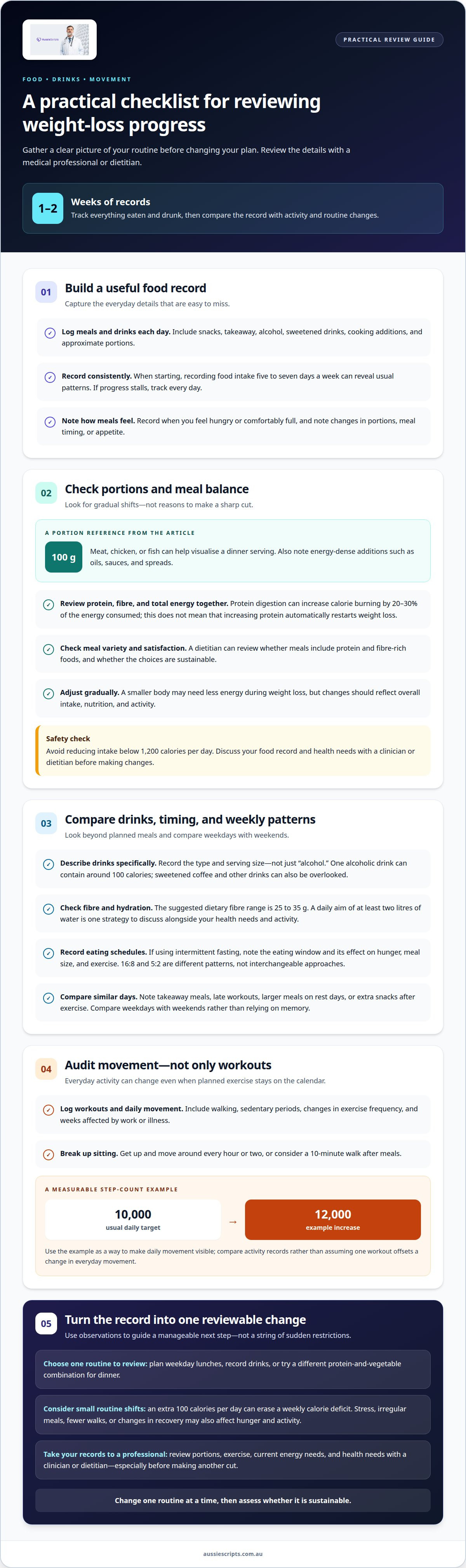
Start with a consistent record. When beginning a weight-loss effort, recording food intake five to seven days a week can reveal usual patterns. If progress stalls, track every day so snacks, cooking additions and drinks are less likely to be missed. Include approximate portions and note when meals leave you hungry or comfortably full. The aim is to identify patterns, not make every meal perfect.
Portions can shift without being obvious. Compare what you usually serve with a practical reference: 100g of meat, chicken or fish can help visualise a serving at dinner. Also record energy-dense additions, such as oils, sauces and spreads. For example, a larger pour of cooking oil changes a meal’s energy intake even when the main ingredients stay the same. A dietitian can use these details to discuss realistic adjustments.
Protein is another part of the review. Digestion of protein can increase calorie burning by 20-30% of the energy consumed, and protein-containing meals may support fullness. That doesn’t mean increasing protein automatically restarts weight loss. Review protein alongside fibre, total energy intake and the foods you can sustain. A dietitian can assess whether your meals meet suitable protein and fibre goals without relying on restrictive changes.
Adjust energy intake gradually rather than reacting to a short pause with a sharp cut. During weight loss, a smaller body may need less energy, but further reductions should reflect your overall intake, nutrition and activity. One weight-loss programme advises eating and drinking at least 5000 kJ per day. Treat this as a practical floor from that programme, not a personalised target for every person.
For a medical review, bring your food record and note any recent changes in portions, meal timing or appetite. Ask how these details fit with your exercise routine and current energy needs. If you’ve already reduced portions substantially, share that before making another cut. This stepwise review can help distinguish overlooked intake from a need to adjust the wider plan while supporting adequate nourishment and steady progress.
2. Reviewing food, drink and activity patterns
Food records can reveal how habits shift between planned meals and busy days. Track everything eaten and drunk for one to two weeks, including takeaway meals, snacks, alcohol and sweetened drinks. Compare weekdays with weekends. A routine change, such as ordering takeaway after a late workout, may help explain why progress has slowed.
Include drinks in the same record as meals. One alcoholic drink can contain around 100 calories, so several drinks across a week can affect total energy intake. Note the drink type and serving size rather than recording only “alcohol”. For example, a sweetened coffee after exercise or a second glass of wine may be easy to overlook when reviewing food alone.
Review the balance and variety of meals, not just calories. A dietitian can assess whether your usual choices include fibre-rich foods and protein, and whether meals keep you satisfied. The suggested dietary fibre range is 25 to 35 g. If lunch is often a low-fibre snack, try planning a more substantial option, such as vegetables, beans and a protein source. Varying ingredients can make healthy meals easier to sustain without relying on restrictive rules.
Hydration and eating schedules also matter to the overall pattern. A daily aim of at least two litres of water is one strategy to discuss alongside your health needs and activity. If you use intermittent fasting, record the eating window and how it affects hunger, meal size and exercise. A 16:8 schedule is one example, while a 5:2 pattern uses a different weekly structure. These approaches aren’t interchangeable, so assess how each fits your routine and nutritional needs.
Compare food records with activity records. Note workouts, walking, sedentary periods and changes in exercise frequency. This helps distinguish a planned training schedule from a week when work or illness reduced movement. Compare similar weeks rather than assuming one workout offsets a change in everyday activity. If your log shows larger meals on rest days or extra snacks after exercise, discuss practical adjustments with a dietitian.
A useful review turns observations into one manageable strategy. For example, plan weekday lunches, record drinks, or choose a different protein-and-vegetable combination for dinner. Change one routine at a time, then assess whether it is sustainable. A Weight Loss Consultation can support a clinical review of eating and activity patterns when you need help deciding what to adjust.
Lapses in eating and activity routines
Small routine changes can affect the energy balance that supports losing weight. An extra 100 calories per day can erase a weekly calorie deficit, so look for shifts in eating, movement and recovery before making major changes. A stressful week, irregular meals or fewer walks may also affect hunger and activity. Record what changed, then choose one practical adjustment to discuss with a health professional.
Start with everyday movement, not only planned workouts. Desk-based work can mean long periods of sitting, even when exercise sessions remain on the calendar. Get up and move around every hour or two. Another option is a 10-minute walk after meals. These short bouts can add activity to an otherwise sedentary day without requiring a new gym routine.
Step counts can help make daily movement visible. If your usual target is 10,000 steps per day, increasing it to 12,000 is one example of a measurable change. Adding 2,000 steps per day through low-intensity movement is another strategy. Build movement into regular tasks, such as walking while taking a phone call or choosing a longer route between errands. Increase gradually if pain, fatigue or another health concern affects your ability to move.
Strength training can support muscle maintenance while losing weight. Exercises such as weightlifting provide a different stimulus from walking or cycling. A 15-minute session can be a manageable starting point, while the broader recommendation is strength training two to four days per week. If you already train, review consistency, recovery and exercise selection before adding more sessions. A sudden increase may be difficult to sustain, especially during periods of stress or poor sleep.
For aerobic activity, one recommendation is at least 150 minutes of moderate activity per week or 75 minutes of vigorous activity per week. More activity, reaching 300 minutes per week, may offer greater health benefits and assist with weight loss or maintaining weight loss. These are reference points, not a reason to push through symptoms. Choose activity that fits your health, current fitness and schedule.
Review lapses without treating them as failure. If a missed workout leads to several inactive days, plan a shorter alternative, such as a 10-minute walk. If stress increases hunger, note when it happens and whether meal timing or sleep has changed. People already exercising or resistance training can consider adding one to two days of exercise per week, provided the change fits their current plan. A clinician can help assess whether eating, activity, stress or recovery is the main factor to address.
4. Metabolic adaptation and energy requirements
As body weight decreases, energy needs can change. A smaller body requires less energy to maintain, which can lower basal metabolic rate. An intake that once supported weight loss may later maintain a stable weight. Reviewing energy needs is one part of overcoming a weight loss plateau with medical help. A clinician can assess whether your current eating and activity patterns fit your changing needs.
Muscle mass also affects energy use. Losing muscle during weight loss can lower metabolism and reduce the energy your body burns. Review strength training, nutrition and changes in physical function together. If your weight stays stable while body fat decreases and muscle increases, the scale alone may not show the full change. A body composition scan can help assess whether this pattern is occurring.
Persistent fatigue, hair loss, weakness or noticeable muscle loss are important details to raise during a medical review. These symptoms can indicate nutritional or hormonal concerns. Explain when they began and whether they changed alongside your eating or activity. A clinician may consider thyroid or cortisol issues as part of the assessment. Symptoms alone don’t establish a cause, so they need to be considered within the broader clinical picture.
After four to six weeks of a true plateau, metabolic assessments may be especially useful. Resting metabolic rate testing measures the calories a person burns at rest. The result can inform energy needs, but it doesn’t explain every factor affecting progress. A clinician also considers body composition, food intake, movement, health history and symptoms before interpreting it.
A DEXA scan can provide a detailed assessment of body composition, including fat and muscle distribution. It may help clarify whether stable weight coincides with less body fat and more muscle. The scan doesn’t replace a review of nutrition or daily activity. Results are most useful when interpreted alongside changes in strength training, exercise and eating patterns.
For overcoming a weight loss plateau with medical help, prepare a clear account of recent weight trends, exercise changes and symptoms such as fatigue or weakness. Include relevant changes in eating and medication use. This helps a clinician decide whether metabolic testing, a body composition assessment or a nutrition review may benefit your plan. Avoid severe calorie cuts based only on a suspected slowdown. A measured assessment can identify which factors deserve attention and guide practical next steps for your health.
5. Definition and identification of a weight-loss plateau
A weight-loss plateau means progress has stalled despite continued effort. One practical definition is at least two consecutive weeks without a decline in average body weight, body-fat percentage or waist measurements. Two unchanged weigh-ins alone aren’t enough: day-to-day weight can fluctuate, so compare consistent measurements and trends.
A plateau can feel frustrating during a weight-loss journey, especially when your intake and exercise routine seem unchanged. Early weight loss can include water loss as the body uses glycogen for energy. Later, a smaller body needs less energy, which may slow progress. A brief pause doesn’t automatically mean your plan has stopped working.
To identify a possible plateau, record weight under consistent conditions and review the average rather than reacting to an isolated reading. Check whether waist measurements or body-fat estimates are changing too. If weight remains stable for more than 12 weeks despite diligent tracking, seek medical advice. Discuss sooner if the pause comes with persistent fatigue, weakness, hair loss or other concerning physical changes.
In Australia, weight-loss medicines and bariatric surgery are different treatment approaches. Medicines require medical assessment and monitoring; surgery is a procedure with separate eligibility, recovery and risk considerations. The appropriate option depends on your health needs and clinical assessment, not a plateau alone.
Medicare or private health insurance coverage depends on the service and your circumstances; don’t assume coverage for every medicine, appointment or bariatric procedure. There is no single cost for weight-loss medicines or specialist appointments. Wegovy is available on private prescription and is not yet PBS-subsidised. The PBAC has recommended a proposed PBS listing for people with obesity and established cardiovascular disease, subject to pricing and risk-sharing arrangements, but the listing process is not complete. Ozempic is PBS-listed for specific diabetes indications, not as PBS-subsidised Wegovy for weight loss.
Risks also differ by treatment. Weight-loss medicines can cause side effects, while bariatric surgery involves procedural risks and follow-up needs. The specific risks depend on the medicine or procedure and your health, so discuss them during clinical assessment before deciding.
A Weight Loss Consultation can help you review a stalled trend and discuss suitable next steps with medical oversight.
A true plateau may require three weeks of stalled progress to identify; although commonly experienced about 6 months into a plan, it can occur 4 weeks in or 4 months in.
Aussie Scripts: Medical Certificate
Aussie Scripts offers a Weight Loss Treatment consultation for people seeking medical guidance after weight-loss progress stalls. You can discuss your eating and activity patterns, symptoms, health history and possible next steps with an Australian-registered doctor.
Bring a clear account of your recent weight trend and any changes in appetite, medication or exercise. This context can help the doctor assess whether further review or treatment is appropriate. If you need documentation for an absence from work due to illness, you can also request a Medical Certificate following a consultation and clinical assessment.
For support reviewing a plateau, contact Aussie Scripts to arrange a Weight Loss Consultation.
Choose a clear next step
Set one practical goal for your next clinical discussion. For example, decide whether you want to focus on meal planning, movement, symptoms or treatment options. A focused conversation can turn a broad concern into a manageable plan, with priorities based on your health and daily routine.
Overcoming a weight loss plateau with medical help can start with sharing what has changed and what you’ve already tried. Bring the questions that matter most to you, including how progress will be reviewed and what adjustments are appropriate. You don’t need to resolve every factor at once; a clear first step can make the process easier to follow.
Contact Aussie Scripts to discuss a Weight Loss Consultation. Keep your next step focused, practical and suited to your circumstances.
Frequently Asked Questions
What is a weight-loss plateau?
A plateau is a period when your overall measurements stop trending down despite continued weight-loss efforts. To distinguish it from ordinary fluctuation, compare average weight and, where available, waist measurements or body-fat estimates across consistent check-ins. For example, two isolated readings taken after different meals or at different times don’t show the same pattern as repeated measurements taken under similar conditions.
Are plateaus normal or even good?
Plateaus can occur during a weight-loss journey and don’t automatically mean something is wrong. They aren’t inherently good or bad: their significance depends on your health, nutrition and other measures of progress. For example, stable weight alongside improved strength or changing body composition may tell a different story from a stall accompanied by persistent fatigue. Discuss the broader pattern rather than judging progress by the scale alone.
What medical causes can make weight loss stall, such as thyroid problems or medication side effects?
Thyroid or cortisol issues can be among the hormonal factors considered during a clinical review. A clinician may also review your medicines and whether any could affect appetite, energy or weight. Don’t stop or change prescribed treatment on your own. Bring a current medication list and describe when the plateau or symptoms began, so those details can be considered alongside your eating and activity history.
Which Australian health professionals can help with a weight loss plateau, and how do you get a referral?
A GP can review your health history, symptoms and treatment options; a dietitian can assess nutrition and eating patterns. Start by discussing the plateau and your goals with a GP. If specialist input is appropriate, ask about a referral and what information to provide. A referral doesn’t arrange an appointment or cover a specialist’s fees, so clarify the next steps when it’s issued.
What tests might an Australian GP order to investigate a weight loss plateau?
Testing depends on your symptoms and clinical history; there isn’t one test that explains every plateau. If body composition is relevant, a DEXA scan can assess fat and muscle distribution, while resting metabolic rate testing measures energy use at rest. A GP may consider other investigations when symptoms suggest hormonal or nutritional concerns. Explain changes such as persistent fatigue or weakness to help guide the assessment.
What are the Australian eligibility rules for prescription weight loss medicines such as semaglutide or tirzepatide?
Eligibility depends on the specific medicine and clinical assessment, not on having a plateau alone. In Australia, Wegovy is TGA-approved for chronic weight management in eligible adults with BMI ≥30 kg/m², or BMI ≥27 kg/m² with a weight-related comorbidity. That approval is separate from PBS subsidy: Wegovy isn’t yet PBS-subsidised for weight loss. A clinician assesses whether a medicine is suitable for an individual.
How do dietitians and exercise physiologists help overcome a weight loss plateau?
A dietitian can review food records, portions, energy intake, protein and fibre goals, and help plan sustainable adjustments. The material does not provide a role for exercise physiologists.
Disclaimer
The information provided by AussieScripts is for general informational purposes only and does not constitute medical advice, diagnosis, or treatment. For advice tailored to your specific symptoms or health concerns, please consult one of our doctors or your regular GP.