Weight loss solutions for shift workers in Australia through smarter meals
Explore weight loss solutions for shift workers australia with flexible meal planning, batch cooking and movement tips built around changing rosters and rest.

The most practical weight loss solutions for shift workers in Australia start with a meal routine that fits your roster, not a standard daytime schedule. Plan satisfying meals and snacks around work and sleep, prepare food ahead, and fit movement into times when your energy allows. Consistency matters more than following the same timetable on every shift.
Night work can make it harder to plan meals, manage cravings and exercise when you’re tired. A flexible approach can reduce last-minute food decisions without demanding a perfect routine.
This guide explains how to adjust meals on work and rest days, prepare balanced food in advance, and plan exercise and drinks around changing shifts. You’ll find practical ways to adapt to your roster and rest, along with guidance on when a weight loss consultation may help you develop an approach suited to your circumstances.
Key Takeaways
- Match meal timing and portions to work shifts and rest days rather than forcing the same routine every day.
- Batch-cook and freeze practical meals so balanced options are ready when your roster leaves little time to prepare food.
- Build regular meals around a mix of food groups to support more planned choices during long shifts.
- Fit movement around your energy and sleep schedule, choosing manageable activity times instead of relying on a rigid routine.
- Plan drinks across your shift and rest period, with attention to hydration and how caffeine or sugary drinks fit your routine.
1. Adjusting food intake on work and rest days
According to Australia’s TGA, Wegovy is approved for chronic weight management in eligible adults with a BMI of 30 kg/m² or higher, or 27 kg/m² or higher with a weight-related comorbidity. PBAC recommended a proposed PBS listing for people with obesity and established cardiovascular disease, subject to pricing and risk-sharing arrangements. Wegovy is not yet PBS-listed or subsidised for weight loss. Ozempic is PBS-listed for specific diabetes indications, not weight loss. Wegovy is available on private prescription, so patients should expect to pay the private prescription price unless and until a PBS listing takes effect.
Night shifts and rotating rosters can disrupt usual meal timing and sleep. Appetite cues may feel less predictable, while changing start times can make planned eating harder. For example, someone finishing work at 7 am may need to plan food around the end of the shift and the sleep period that follows. Use the roster, rather than daytime meal conventions, to choose when meals fit.
For practical weight loss solutions for shift workers in Australia, compare a workday with a rest day before adjusting portions. A long shift can mean more time awake and more chances to eat. Guidance suggests adding 1-2 snacks or a meal on work days or long shifts, then having one less snack on rest days to account for that extra food. Avoid turning this adjustment into skipped meals or sharp restriction after work.
Make the change specific. Write down your shift start and finish times, planned sleep and usual meals for a typical workday. Decide where an extra snack or meal could fit, such as a prepared meal before work or fruit and cut vegetables during your shift. On a rest day, remove one planned snack if you ate extra during work, rather than automatically cutting a main meal. This ties the adjustment to your routine.
A pilot study asked participants to avoid eating overnight during a five-hour window on night shifts. That was a pilot approach, not a universal rule for shift workers. If you’re considering a food-free window, account for your shift, meals and sleep. Aim for a routine you can sustain rather than copying a study protocol without considering your circumstances.
Australians can discuss weight management with a GP and ask whether dietitian input or Medicare-supported care may be relevant. Bring a sample roster and a record of meals across work and rest days. These details can make the discussion more practical, including how to adjust food intake while protecting recovery sleep.
2. Batch cooking and freezing meals
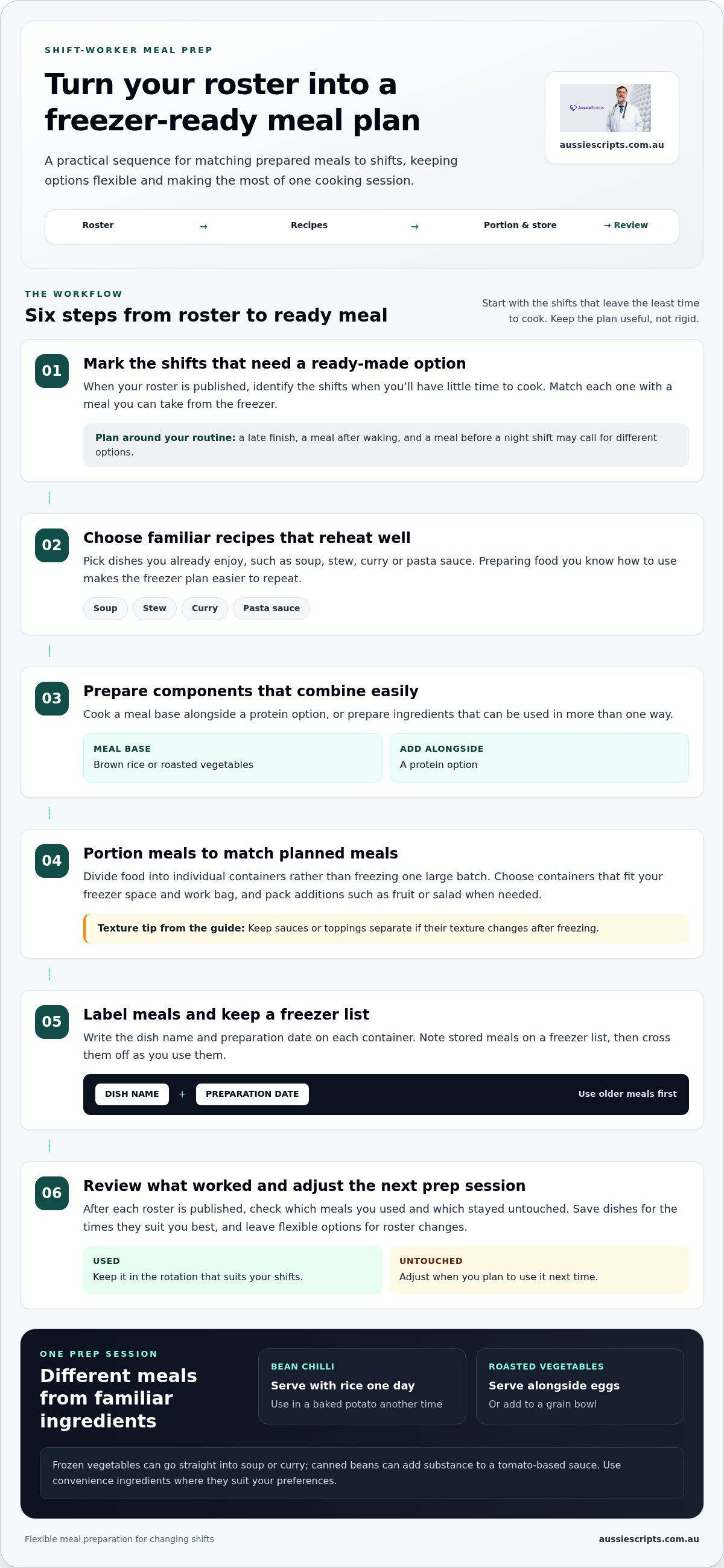
Batch cooking turns roster planning into ready-to-heat meals. Choose recipes you already enjoy, then prepare portions for specific shifts. For example, make a vegetable and lentil stew for a meal before work. Freeze portions separately so you can take out only what you need. This reduces last-minute decisions when shops are closed or cooking feels difficult after a shift.
Start with the roster, not a generic weekly menu. Mark the shifts when you’ll have little time to cook, then match each one with a freezer meal. After a late finish, a container of soup might suit you once you wake. Before a night shift, try a meal of rice, vegetables and chicken. Keep flexible options for roster changes, so prepared food remains useful rather than becoming a rigid schedule.
Build each recipe from ingredients that combine easily. For example, cook a pot of bean chilli and serve it with rice one day, then use it in a baked potato another time. Roast vegetables can accompany eggs or go into a grain bowl. These variations make use of one preparation session while giving meals different textures and flavours.
- Choose recipes: Select familiar dishes that reheat well, such as soup, stew, curry or pasta sauce.
- Prepare components: Cook a base, such as brown rice or roasted vegetables, alongside a protein option.
- Portion meals: Divide food into containers that match your planned meal, rather than freezing one large batch.
- Label clearly: Add the dish name and preparation date, so you can identify older meals first.
- Keep a freezer list: Note each stored meal and cross it off when used.
Use containers that fit your freezer space and work bag. Stackable containers can make it easier to see which meals are available. If you take food to work, pack any additions, such as fruit or salad, so the meal feels complete. Keep sauces or toppings separate if their texture changes after freezing.
Make preparation manageable by using convenience ingredients where useful. Frozen vegetables can go straight into soup or curry, while canned beans can add substance to a tomato-based sauce. Read labels when comparing packaged ingredients, and choose options that suit your preferences. The aim is a repeatable system, not a complicated cooking project.
After each roster is published, review which meals you used and which stayed untouched. Adjust your next cooking session accordingly. If a dish suits a pre-shift meal but not your appetite after work, reserve it for earlier. This feedback helps keep your freezer aligned with your actual routine.
3. Eating regular meals and balanced food groups
A regular meal pattern gives you planned opportunities to eat across a changing roster. Guidance for shift workers recommends three meals each day, plus snacks, to help avoid unhealthy food choices. Treat “each day” as your waking day, which may begin in the afternoon before a night shift. A meal after waking, another before work and one during the shift can form a workable pattern.
Australian healthy-eating and physical activity guidance supports a balanced routine: choose varied foods from the main food groups and include movement in your week. For a shift worker, make this practical by building meals from vegetables or fruit, a grain food and a protein source. For example, combine brown rice, mixed vegetables and eggs, or choose wholegrain toast with beans and sliced tomato.
Use a simple meal check before packing food. Ask whether it includes a filling base, a protein food and vegetables or fruit. A tuna and salad sandwich on wholegrain bread, with fruit alongside, is one example. For a vegetarian option, pair lentils with vegetables and grain. These combinations make planning a complete meal easier than relying on snack foods alone.
- Before work: Choose a meal that suits your appetite, such as oats with fruit or eggs with vegetables.
- During work: Pack a meal with separate components, such as rice, chickpeas and roasted vegetables.
- After work: Keep a simple option ready, such as soup with wholegrain bread, if you’re hungry before sleep.
Snacks can bridge long gaps between planned meals. Choose an option with more than one food component, such as yoghurt with fruit or crackers with hummus and cut vegetables. Put the portion in a container instead of eating straight from a large packet. This makes the amount visible and helps distinguish a planned snack from repeated grazing.
Keep meal timing flexible but the sequence predictable. If a rotating roster changes your usual meal times, shift the same pattern to match your waking hours. For example, if you wake in the afternoon, have a first meal before leaving home, a packed meal during work and a lighter meal after your shift. Adjust the timing around hunger, planned sleep and shift demands.
A short food record can show whether your meals are balanced across work and rest days. Note what you ate, its main components and when. If the record shows a shift made up mostly of snack foods, prepare a meal with vegetables, a grain and protein for the next similar shift. Reviewing these details can help you make steady adjustments without changing every meal at once.
4. Fitting exercise around shift schedules
Plan activity around sleep and roster demands, rather than forcing a fixed class time. A worker finishing at 7 am may prefer a gentle walk after waking, not before daytime sleep. If fatigue makes planned exercise unrealistic, move it to a better point in the roster. Consistency comes from choosing a repeatable opportunity, not pushing through exhaustion.
Use the shift pattern to set a simple activity plan. For four night shifts from 11 pm to 7 am, for example, protect the post-shift sleep period and schedule movement after waking. On a day off, choose an activity that fits available energy, such as walking, cycling or a home strength session. Start with a manageable session and build it into the routine.
Helen, a shift worker who leaves for day shifts at 5 am, illustrates why timing needs to be personal. An early start may make a pre-work workout impractical. A short walk after work or movement during a break may fit better, provided it doesn’t interfere with sleep or safe travel. If tiredness regularly prevents exercise, reduce the session or change its timing instead of abandoning the plan.
Anchor meals and snacks to the sequence of your shift. Before leaving, pack a meal and a snack for a suitable break. On a night shift, that might mean a meal before work, a prepared meal during the shift and fruit or yoghurt as a snack. Keep the timing flexible if breaks move, and don’t treat exercise as a reason to skip planned food.
- Before a shift: Choose light movement if it helps you feel ready, such as a walk or gentle stretching.
- After a shift: Prioritise sleep if exercise would delay rest or increase fatigue.
- On days off: Use a walk, bike ride or home activity to maintain a repeatable routine.
Shift workers need enough sleep to feel rested and function safely, but there isn’t one schedule that suits every roster. After night work, reduce light and noise in the bedroom, keep the room dark and follow a consistent wind-down routine before sleep.
Fasting can make it difficult for some workers to match food intake with a demanding shift. Meal replacements may not suit everyone’s appetite or routine, while supplements can have risks, including interactions with medicines. Don’t use these as automatic shortcuts. Choose ordinary planned meals and snacks, and discuss a specific fasting, replacement or supplement plan with a qualified health professional, especially if you take medication.
Because you try to exercise during the day but often don’t because of tiredness, treat that pattern as information about timing, not a failure of effort. Your 4 night shifts per week, from 11 pm to 7 am, give you a recurring schedule to plan around; daytime exercise does not need to be the default.
Try placing movement at a point that feels manageable around your shifts. On days when you’re very tired, choose a shorter, easier option or leave exercise for another point in the roster. The aim is to find a realistic opportunity without adding pressure or cutting into the rest you need.
5. Hydration and limiting caffeine or sugar
Plan drinks alongside meals and snacks. Fill a reusable water bottle before leaving home, then keep it accessible during work. If your shift has limited breaks, drink during available pauses rather than waiting until it ends. A bottle can also help you notice whether you’ve had water during a busy period.
Make water your regular drink, and include it with packed meals and snacks. If plain water feels repetitive, try it chilled or add a slice of lemon. Tea and coffee can fit into a shift, but note when you drink them and whether they affect your sleep after work. Keep track by recording drinks beside meals in a simple shift diary.
Caffeine can help some people feel more alert, but its timing matters if you’re trying to sleep after a night shift. Set a personal cut-off before your planned sleep, then choose water or a caffeine-free drink later. For example, if coffee late in the shift makes it harder to wind down at home, move your last coffee earlier on the next rostered night.
Energy drinks and sweetened coffees can add sugar without replacing a meal. Check product labels before buying a drink and compare the listed sugar content. A large flavoured coffee on the way to work followed by an energy drink during the shift is an easy pattern to spot in a diary. Try replacing one of those drinks with water or unsweetened tea.
- Before work: Fill your bottle and pack water beside your meal.
- During the shift: Take drinks during breaks and track coffee or energy drinks.
- Before sleep: Choose a non-caffeinated drink if caffeine disrupts your wind-down routine.
Keep a brief record over several shifts, noting the drink, approximate time and how you rested afterwards. This can reveal patterns, such as having coffee near the end of a night shift. Change one habit at a time so you can see which adjustment fits your roster and sleep routine.
Hydration needs can vary with activity, work conditions and individual health. If your role involves physical work or a hot environment, plan access to water during your shift. Follow workplace arrangements for breaks, and seek individual health advice if a condition or treatment affects your fluid intake. A clear plan helps you manage drinks without relying on sugary options for every dip in energy.
Aussie Scripts: Standard Script
Aussie Scripts offers Standard Script for people who need a prescription reviewed through an online medical consultation. Meal planning, hydration and exercise can support weight management, but they don’t replace clinical advice about prescribed treatment. If your current medication needs review or a repeat prescription, provide relevant details about your health and treatment during the consultation. A doctor can assess your request and determine whether a prescription is appropriate. A Standard Script is not a weight-loss plan or a substitute for urgent care. Keep following your agreed treatment plan, and discuss changes with a health professional rather than adjusting medication yourself. If you need prescription support, visit Aussie Scripts.
Make your next roster easier to manage
Choose one adjustment to test during your next roster, such as preparing a meal before work or moving a walk to after waking. Note how it fits with your energy, appetite and sleep. Keep changes that work and revise those that create extra pressure. A routine that adapts to changing shifts is more useful than a strict plan that suits only one week.
Practical weight loss solutions for shift workers in Australia should account for individual health, treatment and daily responsibilities. If you want clinical support with weight management, an Aussie Scripts Weight Loss Consultation lets you discuss your circumstances and possible next steps with a doctor. For prescription-related questions, use a consultation to discuss your current treatment rather than changing medication independently.
Contact Aussie Scripts to explore the appropriate online consultation for your needs. Contact Aussie Scripts today and take the next step towards a routine that works with your roster.
Frequently Asked Questions
What weight loss strategies work best for Australian shift workers?
Strategies that fit your actual roster are easier to maintain than fixed daytime routines. Choose a small change, such as recording meals across a roster cycle or planning a fallback meal for an unexpected shift change. Review what works as your schedule changes. If weight management feels difficult or you’re considering medication, a clinician can discuss your health history, current medicines and suitable options.
What meal timing and healthy snacks are recommended for overnight shifts?
Plan meals around waking, work and sleep instead of relying on a standard breakfast, lunch and dinner timetable. For an overnight shift, pack a substantial meal for a break and a portable snack for later, such as fruit with yoghurt or vegetables with hummus. If your break moves, keep the food available and eat when practical rather than skipping a meal and arriving home overly hungry.
What exercise plans are realistic for workers with rotating or overnight schedules?
A realistic plan includes flexible options for different roster days. Keep a short indoor routine for days when leaving home feels impractical, and choose a walk or bike ride when you have more time. Place activity after waking or on a rest day if exercising before sleep disrupts recovery. If you’re very tired, choose gentle movement or rest, then resume your plan when alert.
How can Australian shift workers plan meals and exercise around changing rosters?
Use the published roster to map work periods, sleep opportunities, meals and movement in one calendar. Add a backup meal and a short activity option for shifts that change at short notice. For example, keep shelf-stable ingredients at home and a walking route near work. When the roster updates, move the plan rather than abandoning it, and note which arrangements remain workable.
Disclaimer
The information provided by AussieScripts is for general informational purposes only and does not constitute medical advice, diagnosis, or treatment. For advice tailored to your specific symptoms or health concerns, please consult one of our doctors or your regular GP.
