What happens to medication benefits when you stop weight-loss treatment?
Learn what happens when you stop taking weight loss pills: appetite changes, possible weight regain and how to plan your next steps carefully with a clinician.

Stopping weight-loss medication doesn’t usually cause classic withdrawal, but its effects fade over time. When considering what happens when you stop taking weight loss pills, expect appetite and cravings to potentially return, with weight regain a common possibility after treatment ends.
It’s reasonable to expect that stopping a medicine will simply reverse its benefits. In practice, changes may unfold over several weeks as the medicine leaves your body, and the timing and extent of appetite or weight changes can vary. If you also have diabetes, changes in blood sugar are another factor to plan for with your healthcare professional.
Weight-loss medicines are generally intended to support long-term management, rather than being started and stopped whenever weight fluctuates. This article explains what may happen to appetite, weight and side effects after stopping, whether tapering may be appropriate, and how long-term treatment can shape expectations. It also explains why a planned transition and ongoing health review matter.
Key Takeaways
- Appetite and cravings may return as medication effects fade, so plan for changes rather than assuming benefits will continue unchanged.
- Weight regain is common after stopping semaglutide or tirzepatide, but the amount and pace vary.
- Weight-loss medicines may be part of long-term management; stopping or tapering should be planned with a healthcare professional.
- Stopping GLP-1 medication usually doesn’t cause classic withdrawal, though blood sugar may rise for people living with diabetes.
- Some digestive side effects may ease after stopping, while they can recur if treatment is restarted.
Table of Contents
- What happens when you stop taking weight-loss drugs?
- Managing expectations and long-term treatment
- Is there such a thing as 'withdrawal' from weight-loss medication?
- Withdrawal-like feelings and loss of medication benefits
- Do weight loss symptoms or side effects return after stopping medication?
- Aussie Scripts: Weight Loss Consultation
What happens when you stop taking weight-loss drugs?
A practical answer to what happens when you stop taking weight loss pills is that appetite support can fade and weight may return. The changes depend on the medicine and your health circumstances, so a planned review can help you understand what to expect.
Weight regain after stopping medication
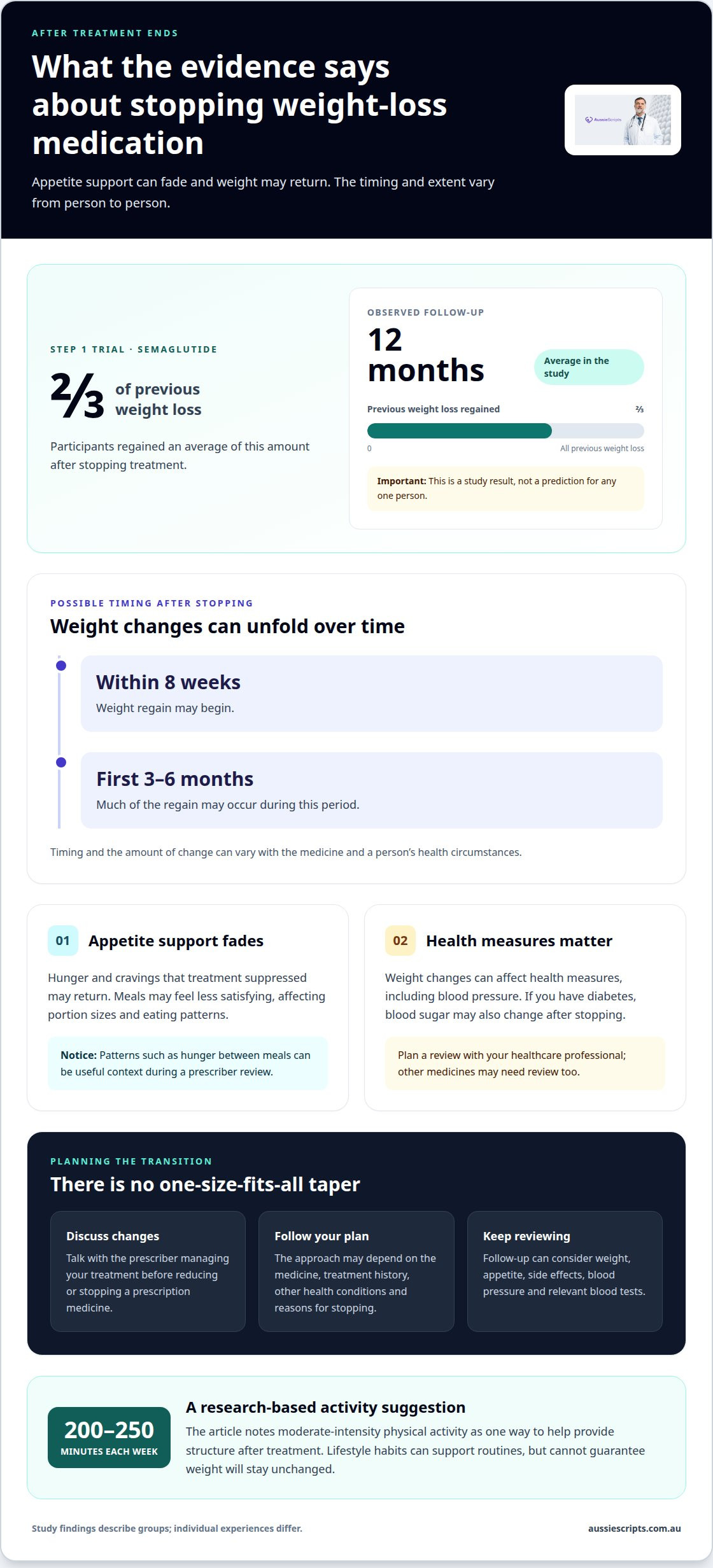
Weight regain means putting back some weight lost during treatment after medication stops. In the STEP 1 trial, participants regained an average of two thirds of their previous weight loss within 12 months of stopping semaglutide. This is a study result, not a prediction for each person. Regain may begin within eight weeks, with much occurring during the first three to six months.
Semaglutide is the active medicine in Wegovy and Ozempic; tirzepatide is another weight-loss medicine. After treatment ends, the medicines’ effects on appetite and fullness fade. Weight changes can also affect health measures, including blood pressure, so follow-up can consider more than the scales alone.
Appetite and cravings after stopping
After GLP-1 medication stops, appetite and cravings that treatment suppressed may return as its effects fade. These medicines act on the brain and gut to support fullness. Without that effect, meals may feel less satisfying, which can change portion sizes and eating patterns.
If you’re considering what happens when you stop taking weight loss pills, increased hunger is one change to plan for. Notice patterns, such as hunger between meals, and keep regular meals and nutritious, high-fibre foods in your routine. Tracking appetite can also give a prescriber useful context during a review.
Guidance for reducing or stopping medication
In Australia, discuss stopping or reducing a prescription weight-loss medicine with the prescriber who manages your treatment. There is no one-size-fits-all tapering protocol for GLP-1 medicines. The plan may depend on the medicine, your treatment history, other health conditions and why you want to stop. Follow your prescription directions rather than changing the dose yourself.
If you have diabetes, ask how stopping could affect blood sugar and whether your other medicines need review. Follow-up with a GP can monitor weight and relevant blood tests after treatment ends. Share changes in appetite, side effects and blood pressure readings so the review reflects your health needs.
Risks of abruptly stopping prescription pills
The effects of stopping abruptly depend on the medicine. Don’t assume phentermine has the same effects after stopping as semaglutide or tirzepatide. Discuss your specific prescription and circumstances with the prescriber before changing or stopping it. Appetite support may fade, making changes in cravings and eating harder to manage.
Lifestyle support can help maintain routines after injections or pills stop, but it can’t guarantee weight will stay unchanged. Regular meals, quality sleep, nutritious foods and activity that builds or maintains muscle can provide structure. One research-based suggestion is 200 to 250 minutes of moderate-intensity physical activity each week. A planned review can help adapt these habits as appetite and weight change.
Managing expectations and long-term treatment
Semaglutide treatment does not have one universal end point. Clinical trials have studied it for weight loss for up to 104 weeks, while decisions about ongoing treatment depend on response, health needs and tolerability.
What treatment duration can show
Time on medication alone doesn’t predict the same result for everyone. In a semaglutide study, almost 14% of participants had not lost 5% of their body weight, even after taking the medicine for more than one year. That finding shows why progress and treatment goals need regular review, rather than assuming a longer course will produce the same outcome for every person.
Results can also change over time. In research on liraglutide, participants had lost about 8% of their weight after one year, while the average loss was 6% by three years. These figures describe that study, not a forecast for an individual taking semaglutide. They do show why weight, eating patterns, side effects and health markers matter alongside the treatment timeline.
Long-term treatment for obesity
GLP-1 medicines are intended for long-term maintenance use, rather than repeated starts and stops as weight fluctuates. That approach frames obesity treatment as ongoing management: the aim is to assess how the medicine supports weight and related health needs, then review whether its benefits and drawbacks still fit.
For example, a person whose weight has stabilised may still need a treatment review if appetite, blood sugar or another health measure changes. Someone experiencing troublesome side effects may need a different discussion from someone responding well. Laboratory-based research also suggests that repeatedly stopping and restarting GLP-1 treatment could make it less helpful when restarted. This is an early research finding, not a reason to change a prescribed plan without clinical input.
Setting realistic expectations
Some people may be able to taper off weight-loss medication after 6-12 months, while others may need longer-term treatment. The duration should reflect treatment response and health needs, not a target date alone. In Australia, Wegovy is TGA-approved for chronic weight management in eligible adults, but that approval does not mean every person will use it for the same length of time.
Discussing treatment goals during a weight-loss medication review can help keep expectations practical. A useful review considers weight trends, eating habits, blood sugar where relevant, side effects and the reasons for continuing or changing treatment. This makes the decision about duration part of an ongoing management plan, rather than a test of willpower or a measure of personal success.
Is there such a thing as 'withdrawal' from weight-loss medication?
Stopping a GLP-1 medicine usually doesn’t cause classic withdrawal symptoms. The effects that supported appetite control and metabolic health can fade, so monitor changes in hunger, body composition and health markers.
Body composition and cardiometabolic changes
Body composition describes the balance of fat and muscle, while cardiometabolic health includes measures such as blood pressure, cholesterol and blood sugar. Some muscle loss can occur after weight loss, whether treatment involved medication or not. Weight regained after semaglutide or tirzepatide is mostly fat, which can return faster than skeletal muscle.
This difference matters because the scales don’t show which tissue has changed. For example, someone whose weight rises after stopping treatment may also experience changes in blood pressure or cholesterol. Regular clinical reviews can assess these measures alongside weight, rather than treating the scale as the only sign of health.
Hunger and blood sugar changes
GLP-1 medicines affect appetite and blood sugar through actions involving the brain, gut and pancreas. As treatment effects fade, hunger can return, while blood sugar may rise for someone already living with diabetes. That combination can affect eating patterns and diabetes management, so a change in appetite is relevant beyond food choices alone.
For example, someone who previously felt full after a smaller meal may find it easier to finish larger portions. If they also have diabetes, their usual blood glucose pattern may change after stopping. Discuss these changes during a health review, including whether other medicines need adjustment. Don’t treat a returning appetite as proof that treatment has failed.
Blood pressure and cholesterol changes
Weight regain after stopping GLP-1 medication can coincide with increases in blood pressure and cholesterol. After weight regain, these measures may return towards their previous levels. This can matter for someone whose readings improved while losing weight, even if they feel well and don’t notice a physical symptom.
Repeated cycles of stopping and restarting treatment can also bring fluctuations in blood pressure, heart rate, and how the body handles sugars and fats. These shifts may place stress on the cardiovascular system. A practical follow-up should consider a person’s weight trend and relevant health measurements together, especially if they have a history of diabetes or cardiovascular disease.
Returning symptoms and side effects
Classic withdrawal is not usually expected after stopping GLP-1 medication, but treatment-related effects can change. Gastrointestinal side effects such as nausea, vomiting, diarrhoea, constipation, stomach pain, bloating and heartburn may resolve after stopping. They can take about six weeks to cease, so symptoms might not disappear immediately.
Gastrointestinal side effects may be more likely to occur again after restarting treatment. If you stop because nausea or another digestive problem is difficult to manage, that experience should inform any discussion about restarting. Track the symptom, when it occurs, and how it affects eating or daily activities. This record gives a clinician clearer context for reviewing treatment and health changes.
Withdrawal-like feelings and loss of medication benefits
After stopping a GLP-1 medicine, a return of hunger or weight gain can feel like withdrawal. It is generally a loss of the medicine’s effects, rather than classic withdrawal symptoms. Wegovy and Ozempic contain semaglutide, which mimics a gut hormone involved in appetite, fullness and blood sugar regulation. As the medicine leaves the body, those effects fade, so the change can feel noticeable even without a withdrawal syndrome.
Why people stop treatment
People stop weight-loss medication for different reasons, including side effects, treatment decisions or difficulty continuing a plan. Research trials report that 6% to 13.5% of participants stopped tirzepatide or semaglutide, primarily because of side effects. Nausea or other digestive symptoms can make eating and daily routines harder. Tell the prescriber what is driving the decision, rather than changing the dose without a plan.
That conversation can help distinguish a temporary problem from a reason to reconsider treatment. For example, if nausea is the main concern, the prescriber can review symptoms and the medicine schedule. If treatment has slowed because weight loss has plateaued, review the treatment goals and progress instead. The right next step depends on the medicine, its effects and your health needs.
Medication, tapering and surgery
Injectable GLP-1 medicines mimic hormones that influence appetite, blood sugar and how quickly food leaves the stomach. Stopping removes that support; it doesn’t automatically replace it with another treatment. Bariatric surgery is a separate treatment option, not a direct substitute for an injection. The decision involves discussing the person’s health, goals and preferences with qualified clinicians.
Some people ask whether gradually reducing the medicine could ease the transition. There is no established, one-size-fits-all tapering protocol for GLP-1 medicines, so dose changes need a clinical plan. In a Danish study, participants who tapered gradually maintained their lost weight for at least six months. That finding describes the study participants; it doesn’t establish a universal taper schedule or outcome.
Planning for the change
Before stopping, discuss the reason, timing and follow-up plan with the prescriber. Include any side effects, appetite changes, other medicines and health conditions such as diabetes. If treatment stops, regular eating routines, nutritious meals, sleep and exercise can provide practical support. They don’t reproduce a medicine’s effects, but they can help maintain structure as appetite changes.
For example, plan meals around familiar foods and keep activity consistent rather than reacting to one increase in hunger. Track changes in appetite and weight to give your next review useful context. If you’re considering bariatric surgery, raise that separately with your healthcare team; a medication taper and a surgical assessment are different decisions.
Do weight loss symptoms or side effects return after stopping medication?
After stopping a weight-loss medicine, changes can involve either treatment side effects or the return of symptoms the medicine helped manage. These are different experiences. For example, nausea may ease when treatment ends, while appetite may increase as the medicine’s effects fade. Identifying which change is happening can make follow-up discussions more useful.
Digestive side effects after stopping
GLP-1 medicines can cause digestive side effects, including nausea, vomiting, diarrhoea, constipation, stomach pain, bloating and indigestion or heartburn. These effects may resolve after treatment stops, but they don’t always disappear immediately. Side effects may take about six weeks to cease after the medicine is stopped, so note whether symptoms are improving, unchanged or worsening during that period.
A short symptom record can make the pattern clearer. Write down the symptom, when it occurs and whether it affects eating or daily activities. For example, note whether nausea follows meals or constipation continues after stopping treatment. Share this information with a healthcare professional, particularly if symptoms persist or interfere with normal routines.
What may return when treatment ends
Appetite, cravings and weight-related changes are not the same as medication side effects. They can return as the medicine’s effects on appetite and fullness fade. You may notice hunger between meals, for example, rather than nausea or stomach discomfort. Distinguishing these changes helps avoid treating every post-treatment symptom as withdrawal.
For someone living with diabetes, blood sugar may also rise after stopping a GLP-1 medicine. That change needs attention as part of diabetes care, not as a digestive side effect. Keep a record of relevant changes and discuss them during a health review. The type of medicine, the reason for stopping and other health conditions all inform that conversation.
If treatment is restarted
Digestive side effects may be more likely to occur again when weight-loss medication is stopped and restarted. For example, someone who previously experienced nausea may notice it return after restarting. Don’t restart or change a prescribed dose based on an old schedule; discuss the interruption and previous side effects with the prescriber first.
That review can cover the original reason for stopping, the length of the break, current symptoms and any other medicines. If side effects are affecting treatment decisions, a weight-loss consultation can provide a setting to discuss next steps with a clinician. This helps distinguish symptoms that may ease after stopping from changes that need separate management.
Aussie Scripts: Weight Loss Consultation
Aussie Scripts’ Weight Loss Consultation lets you discuss stopping or changing weight-loss medication with an Australian-registered doctor. It may be useful if your appetite has returned, side effects are affecting treatment, or you’re unsure how to approach ongoing management.
During a virtual consultation, you can explain your treatment history, current medicines, health conditions and reasons for considering a change. The doctor can assess your circumstances and discuss appropriate next steps. If a prescription is clinically appropriate, the doctor can consider it as part of the consultation. A review can also help you prepare questions about follow-up and managing changes after treatment ends.
Contact Aussie Scripts to discuss a Weight Loss Consultation.
Make your next treatment decision with a clear plan
Knowing what happens when you stop taking weight loss pills can help frame your next decision, but your priorities matter as much as the number on the scales. Consider what you want treatment to support, which changes affect daily life, and what progress means to you. These points can keep a review focused on your needs rather than one weigh-in or a short-term fluctuation.
Before discussing your options, identify the main issue you want addressed. It might be treatment tolerability, uncertainty about continuing, or concern about changes since stopping. A written list of priorities can make it easier to explain what matters and understand the options discussed. Your treatment plan can then reflect both your health goals and practical considerations.
If you’re ready to discuss your next step, contact Aussie Scripts for support. A clear conversation can help you move forward with a plan that fits your circumstances.
Frequently Asked Questions
Can you restart a GLP-1?
Yes, restarting may be considered, but don’t resume an old dose without clinical advice. The prescriber needs to know how long treatment was interrupted, which medicine and dose you used, and whether you had side effects. For example, a break caused by persistent nausea calls for a different discussion than one caused by a missed appointment. A review can help determine a suitable next step.
How can you avoid gaining weight when you stop?
You can support weight maintenance with consistent routines, though no routine guarantees your weight won’t change. Plan meals before hunger peaks, keep nutritious options available, and choose regular activity you can sustain. For example, a weekly meal plan can reduce reliance on unplanned takeaway when appetite increases. Track changes in eating and activity, then raise persistent shifts at a follow-up rather than making sudden changes to medication.
What symptoms can occur after stopping weight-loss medication?
Some people notice increased hunger or cravings, while digestive side effects may ease. These are different changes: hunger may reflect fading appetite support, while nausea or constipation may relate to treatment itself. If you also have diabetes, blood sugar can change after stopping a GLP-1 medicine. Record when symptoms began and how they affect meals, sleep or usual activities to make a clinical review more specific.
How much weight do people regain after stopping semaglutide or tirzepatide?
Across studies, people regained an average of about 37% of the weight they had lost during the year after stopping treatment. This is an average, not a forecast for every person; the amount varies with treatment, health and ongoing support. For example, regaining a portion of lost weight doesn’t mean all progress has disappeared. Follow weight trends alongside health measures, rather than judging change from one reading.
Can you stop weight-loss pills suddenly, or should you taper the dose?
Don’t decide to stop or taper a prescription medicine without discussing it with the prescriber. The right approach depends on the specific medicine, why you’re stopping, other health conditions and any side effects. There isn’t a universal taper schedule for GLP-1 medicines. Bring your current dose and treatment history to the discussion, and clarify what to do if you’ve already missed doses.
What happens after stopping orlistat?
Orlistat is a different medicine from GLP-1 treatments, so their effects after stopping shouldn’t be assumed to match. Your experience depends on why you took it, your eating patterns and any symptoms during treatment. If you’re stopping orlistat, ask the prescriber or pharmacist how to manage the change and whether your other medicines or health needs affect the plan. Don’t use another medicine’s stopping instructions for orlistat.
How can you maintain weight loss after stopping medication?
Build a routine around meals, movement and sleep that remains workable without medication. For example, set regular meal times and plan grocery choices before the week gets busy. Include activity that supports strength and fitness, and monitor gradual changes in weight or eating habits. If a routine becomes difficult to sustain, adjust one part at a time and discuss ongoing barriers during a health review.
When should you contact a doctor after stopping weight-loss medication?
Arrange a review if appetite, weight, blood sugar or side effects change after stopping, particularly if you have diabetes or another ongoing health condition. Contact a clinician sooner if symptoms persist, worsen or interfere with eating and daily activities. Tell them which medicine you took, your last dose, when changes began and any other medicines you use. This information helps focus the assessment on your circumstances.
Disclaimer
The information provided by AussieScripts is for general informational purposes only and does not constitute medical advice, diagnosis, or treatment. For advice tailored to your specific symptoms or health concerns, please consult one of our doctors or your regular GP.